Takis Nutrition Facts: What’s Really Inside Every Bag 2026
Takis nutrition facts reveal a snack that delivers 140 calories, 8 grams of total fat, and 190 milligrams of sodium in a single 1-ounce (28g) serving of about 12 rolled chips. That serving size sounds modest until you factor in how rarely anyone stops at twelve pieces.
The sodium number is where the real story begins. The Dietary Guidelines for Americans 2020-2025 set the daily sodium limit for adults at 2,300 milligrams. A single realistic eating session with Takis, closer to two or three servings, puts you at 380 to 570 milligrams of sodium, which is 17 to 25 percent of that daily ceiling in one snack. For anyone managing blood pressure, that context matters.
This article covers the full nutritional breakdown per serving, what the numbers mean against recognized daily values, how different Takis flavors compare side by side, what the ingredient list actually contains, and a clear honest answer to whether Takis fit into a diet in any reasonable way. The goal is to give you numbers you can actually use, not just copy from the back of a bag.
Takis Nutrition Facts: The Complete Overview
Takis nutrition facts per standard 1-ounce (28g) serving show 140 calories, 8g total fat, 1g saturated fat, 0g trans fat, 0mg cholesterol, 190mg sodium, 17g total carbohydrates, 1g dietary fiber, less than 1g total sugars, and 2g protein.
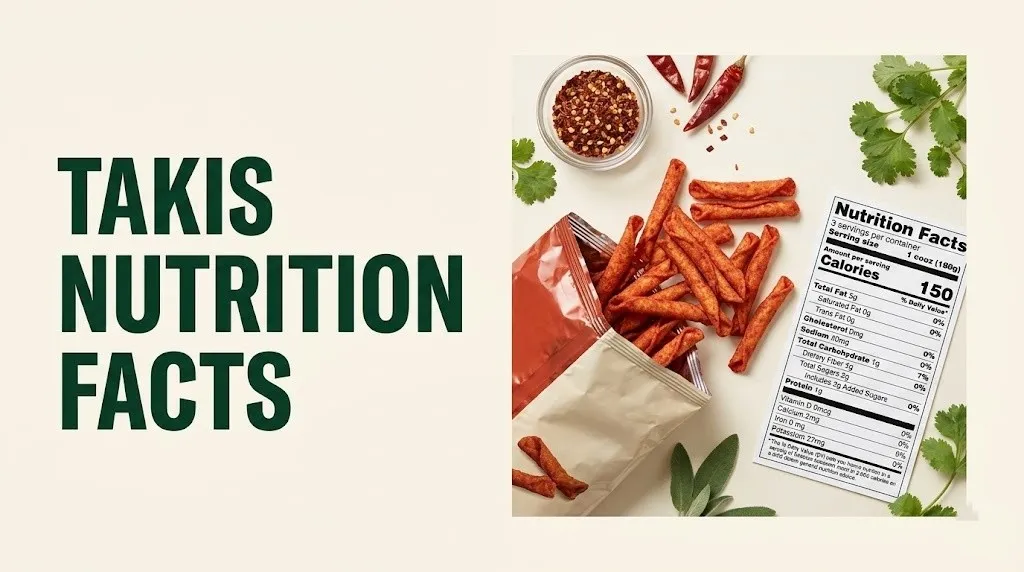
The USDA FoodData Central database records these values for Takis Fuego as the reference variety, which is also the best-selling flavor. Understanding the full nutritional profile requires looking beyond calories. The breakdown below places every macro and micro value against the percent daily value (%DV) established by the U.S. Food and Drug Administration, which defines 5% DV or less as low and 20% DV or more as high.
| Nutrient | Per 1 oz Serving (28g) | % Daily Value |
|---|---|---|
| Calories | 140 | Based on 2,000 cal diet |
| Total Fat | 8g | 10% |
| Saturated Fat | 1g | 5% |
| Trans Fat | 0g | 0% |
| Cholesterol | 0mg | 0% |
| Sodium | 190mg | 8% |
| Total Carbohydrates | 17g | 6% |
| Dietary Fiber | 1g | 4% |
| Total Sugars | less than 1g | Not established |
| Protein | 2g | Not established |
| Calcium | 20mg | 2% |
| Iron | 0.36mg | 2% |
| Potassium | 90mg | 2% |
The per-serving numbers look manageable. The challenge is that Takis are sold in bags designed for more than one serving, and the eating experience, particularly the heat and acid of the flavoring, is built to make stopping difficult.
Individuals managing diabetes should note that the 17g carbohydrate per serving comes almost entirely from refined corn masa flour with minimal fiber to slow glucose absorption. A registered dietitian nutritionist (RDN) can help determine how Takis fit within a carbohydrate budget for blood glucose management.
Takis Small Bag Nutrition Facts
A Takis small bag typically contains 2 oz (56g), which equals two standard servings based on the manufacturer’s 1-oz serving definition.
That means the small grab-and-go bag delivers approximately 280 calories, 16g total fat, 2g saturated fat, 380mg sodium, 34g total carbohydrates, 2g dietary fiber, and 4g protein when eaten in its entirety. Most people treat a small bag as a single-serving unit, which means the numbers double relative to what the label shows on the back.
| Bag Size | Weight | Servings Per Bag | Total Calories | Total Sodium |
|---|---|---|---|---|
| Mini snack bag | 1 oz (28g) | 1 | 140 | 190mg |
| Small grab bag | 2 oz (56g) | 2 | 280 | 380mg |
| Party size bag | 9.9 oz (280g) | approximately 10 | 1,400 | 1,900mg |
The gap between “one serving” and “one bag” is the single most important thing to understand when reading Takis nutrition information. Food labels are required by the FDA to list nutrition per serving, not per package. For single-serve snack foods, the serving size is often set far below what a typical person actually consumes.
Children and teens, who represent a large share of Takis consumers, are at particular risk of consuming the full small bag in one sitting. Their daily sodium needs are lower than adults, making the 380mg total for a small bag proportionally higher relative to their intake targets, which are addressed in more detail in the Takis for Kids section below.
Takis Nutrition Facts and Ingredients: What’s on the Label
Takis nutrition facts and ingredients together tell a more complete story than either alone, because the ingredient list explains where the sodium, fat, and flavor intensity actually come from.
The primary ingredients in Takis Fuego are: corn masa flour (processed corn treated with lime), palm oil and/or soybean oil, seasoning blend (which includes salt, chili pepper, citric acid, sugar, monosodium glutamate, onion powder, and artificial flavors), and artificial colors Red 40 and Yellow 6.
Key ingredients by function:
- Corn masa flour: The base structure. Provides carbohydrates, minimal fiber, and trace iron and calcium from the nixtamalization process (lime treatment of corn).
- Palm oil/soybean oil: The frying medium. Contributes all 8g of total fat per serving. Palm oil is higher in saturated fat than soybean oil.
- Salt and monosodium glutamate (MSG): The two primary sodium contributors. MSG provides approximately 12% sodium by weight versus table salt’s 39%, but both add to the total sodium load.
- Citric acid: Provides the sharp sour punch characteristic of Takis. Also serves as a preservative.
- Chili pepper powder: Delivers capsaicin, the compound responsible for the heat sensation. Present in small amounts.
- Red 40 (Allura Red AC) and Yellow 6 (Sunset Yellow): Artificial food dyes that create the distinctive red-orange coating. Both are FDA-approved food colorings, though the Center for Science in the Public Interest (CSPI) has flagged them for potential sensitivity concerns in some children.
- Artificial flavors: A catch-all term covering proprietary flavor compounds not required to be individually listed.
Individuals with MSG sensitivity, though this condition is far less common than popularly believed, may notice headaches or flushing after consuming MSG-containing foods at higher serving amounts.
Takis Fuego Nutrition Facts: The Most Popular Flavor Broken Down
Takis Fuego nutrition facts per 1-oz (28g) serving: 140 calories, 8g total fat, 1g saturated fat, 190mg sodium, 17g carbohydrates, 1g dietary fiber, and 2g protein.
Fuego is the original and most widely sold Takis variety, and its nutritional profile serves as the baseline against which all other flavors are compared. The name translates to “fire” in Spanish, reflecting the heat-forward chili-lime flavor profile that made Takis a cultural phenomenon starting in Mexican school markets in the early 2000s.
The heat in Fuego comes from chili pepper powder containing capsaicin, the same compound found in hot peppers. At the quantities present in Takis seasoning, the capsaicin content is quite small. Research published in the British Journal of Nutrition has examined capsaicin’s effects on metabolic rate and appetite, but the amounts in a snack food serving are far below those used in clinical studies, so attributing any metabolic effect to Takis would be overstating what the evidence supports.
The caloric density of Takis Fuego is approximately 500 calories per 100g, which is comparable to most fried corn and potato chip products. That caloric density is high relative to volume, meaning a small physical amount delivers a large calorie count, which is a relevant consideration for anyone managing weight.
People following a vegan diet should note that Takis Fuego does not contain declared animal-derived ingredients on the standard label, but the product is not certified vegan, and manufacturing cross-contact with dairy-containing products may occur depending on the production facility.
Takis Calories Per Serving: What 140 Calories Actually Means
One serving of Takis contains 140 calories, with the majority coming from fat (72 calories from fat, representing 51% of total calories) and carbohydrates (approximately 68 calories from carbs).
That calorie-from-fat percentage is the part most people don’t calculate. Roughly half the calories in Takis come from fat, not carbohydrates, even though they look and feel like a carb-heavy snack. The frying process is responsible for this. Corn masa starts as a relatively lean starch, but absorbing oil during frying transforms the fat-to-carb ratio substantially.
Think of it like this: a plain steamed corn tortilla and a fried rolled corn chip start with essentially the same base ingredient. The tortilla delivers around 60 to 70 calories with minimal fat. The fried and seasoned chip version triples the calorie count per equivalent weight, almost entirely because of absorbed frying oil.
For context relative to daily energy needs:
| Daily Calorie Need | 1 Serving of Takis | 2 Servings | % of Daily Calories at 2 Servings |
|---|---|---|---|
| 1,600 kcal (sedentary female) | 140 (8.75%) | 280 | 17.5% |
| 2,000 kcal (reference adult) | 140 (7%) | 280 | 14% |
| 2,400 kcal (active adult) | 140 (5.8%) | 280 | 11.7% |
| 1,200-1,400 kcal (child 4-8 yrs) | 140 (10-11.7%) | 280 | 20-23% |
Individuals following a calorie-restricted diet for weight management need to account for the fact that Takis provide minimal satiety per calorie. The low fiber content (1g per serving), absence of protein beyond 2g, and high fat content means hunger returns relatively quickly after eating them.
Key Takeaway: One serving of Takis is 140 calories with half those calories coming from fat due to the frying process, and most people consume two or more servings per eating occasion, which quickly accounts for a meaningful portion of a daily calorie budget.
Takis Sodium Content: The Number That Matters Most
Takis contain 190 milligrams of sodium per 1-ounce serving, which represents 8% of the FDA’s reference daily value of 2,300mg for a 2,000-calorie diet.
That 8% figure sounds low. It stops sounding low when you consider realistic consumption patterns. Two servings bring sodium to 380mg. Three servings bring it to 570mg. At three servings, a single snack session has consumed nearly 25% of the Dietary Guidelines’ daily ceiling and 38% of the American Heart Association’s recommended limit of 1,500 milligrams per day for individuals with cardiovascular risk factors including hypertension, chronic kidney disease, or a family history of heart disease.
The AHA’s 1,500mg recommendation applies to a substantial portion of the American adult population. According to the Centers for Disease Control and Prevention (CDC), approximately 47% of U.S. adults have hypertension, putting them in a population for whom the more conservative sodium target is directly relevant.
Sodium sources in Takis by ingredient type:
- Sodium chloride (table salt): The primary sodium contributor in the seasoning blend
- Monosodium glutamate (MSG): A secondary sodium contributor in the seasoning; contains less sodium per gram than table salt but still adds meaningfully
- Sodium in corn masa base: Trace amounts from processing
For individuals with stage 3 or higher chronic kidney disease, dietary sodium restriction is often a clinical priority. A nephrologist or renal dietitian can provide specific sodium targets based on GFR (glomerular filtration rate) and individual kidney function status, and Takis at any serving above one would warrant discussion in that dietary counseling context.
Takis Fat Content and Saturated Fat: What the Numbers Show
Takis contain 8 grams of total fat per 1-oz serving, with 1 gram of that being saturated fat, representing 5% of the FDA’s daily value for saturated fat.
The primary fat source is palm oil and/or soybean oil used in frying. Palm oil is notable because it is relatively high in palmitic acid, a saturated fatty acid, compared to most vegetable oils. However, because Takis list “palm oil and/or soybean oil,” the exact oil blend varies by production batch, and the resulting saturated fat content can shift slightly between batches.
The Dietary Guidelines for Americans 2020-2025 recommend keeping saturated fat below 10% of total daily calories. On a 2,000-calorie diet, that ceiling is approximately 22 grams of saturated fat per day. One serving of Takis contributes 1g saturated fat, which is 4.5% of that 22g daily limit. At three servings, the contribution is 3g saturated fat, or about 13.6% of the daily limit from one snack alone.
Takis contain zero grams of trans fat per label declaration. This aligns with the FDA’s 2018 ban on partially hydrogenated oils (the primary source of artificial trans fats in processed foods), which took full effect for manufacturers by 2020.
The 0mg cholesterol listed on the Takis label reflects the plant-based nature of the frying oil. Corn, oil, and seasoning blends do not inherently contain dietary cholesterol. This can be a relevant consideration for individuals following a cholesterol-conscious diet who want to know whether Takis specifically add cholesterol load, which they do not.
Takis Carbs and Protein Breakdown
Each 1-oz serving of Takis provides 17 grams of total carbohydrates, 1 gram of dietary fiber, less than 1 gram of sugar, and 2 grams of protein.
The carbohydrate foundation is corn masa flour, which is ground corn that has been nixtamalized (soaked and cooked in an alkaline solution, traditionally lime water). Nixtamalization improves the bioavailability of niacin (vitamin B3) from corn, which is why historically corn-dependent populations that adopted nixtamalization did not develop pellagra, the niacin deficiency disease. That said, the niacin contribution from a single serving of Takis is nutritionally minimal in practice.
The fiber content of 1g per serving is low. For comparison, the Dietary Guidelines for Americans 2020-2025 recommend 25 to 38 grams of dietary fiber daily for adults, depending on age and sex. One serving of Takis contributes approximately 2.6 to 4% of that daily fiber need, which is negligible.
The protein content of 2g per serving is similarly low. Corn masa is not a protein-dense ingredient. Snack chips generally are not meaningful protein sources, and Takis are no exception.
| Nutrient | Per 1 oz (28g) | % of Recommended Daily Intake (Adults) |
|---|---|---|
| Total Carbohydrates | 17g | approximately 6% of 275g reference |
| Dietary Fiber | 1g | 2.6 to 4% of 25 to 38g target |
| Total Sugars | less than 1g | Well below 50g added sugar limit |
| Protein | 2g | approximately 3.4% of 56g male / 4.4% of 46g female RDA |
People with type 2 diabetes tracking carbohydrate intake should note that the 17g carbohydrates per serving, with only 1g fiber, means the net digestible carbohydrate impact is approximately 16g per serving, which is a meaningful portion of a typical 45 to 60g carbohydrate per meal target recommended by the American Diabetes Association.
Key Takeaway: Takis provide 17g of carbohydrates with minimal fiber and only 2g of protein per serving, making them low in nutritional substance per calorie and a poor fit for satiety or blood sugar stability goals.
How to Read a Takis Nutrition Label
Reading the Takis nutrition label accurately requires understanding that all values listed are per single serving (1 oz/28g), not per bag, and that the first line to check is “Servings Per Container” before interpreting any other number.
The FDA’s updated Nutrition Facts label format, which became mandatory for most manufacturers by January 2021, requires that “Servings Per Container” and “Serving Size” appear prominently at the top. For a 2-oz small bag of Takis, the label reads “About 2” servings per container. Many consumers read the calorie line (140) and assume it applies to the entire bag.
To read a Takis label correctly:
- Find “Servings Per Container” at the very top and note the number before reading anything else.
- Multiply all nutrient values by the number of servings you plan to eat, not by the servings per container.
- Check the sodium line specifically. It is the nutrient most likely to exceed recommended daily amounts at realistic Takis consumption levels.
- Look at the % Daily Value column. The FDA defines 5% DV or less as low and 20% DV or more as high for any nutrient.
- Note that %DV is based on a 2,000-calorie reference diet. Your personal calorie needs may be higher or lower, which shifts how these percentages apply to you.
- Scroll to the ingredients list, which appears below the nutrition table, and identify the first three ingredients. These are present in the greatest quantity by weight: corn masa flour, oil, and seasoning.
The 2021 FDA label update also added a separate line for “Added Sugars,” which Takis lists at less than 1g per serving, distinguishing natural sugars from corn from any sugars added during processing. This distinction matters for people tracking added sugar intake as part of metabolic or dental health goals.
Takis Blue Heat and Nitro Nutrition Facts Compared
Takis Blue Heat and Nitro have nearly identical caloric and macronutrient profiles to Takis Fuego, with the primary differences being the seasoning blend, artificial colorings, and flavor intensity rather than meaningful changes in fat, sodium, or calorie content.
All Takis varieties use the same corn masa flour base and similar frying processes, which is why the foundational nutrition numbers stay close across flavors. The sodium content does shift slightly between flavors, and Takis Nitro, with its habanero seasoning, tends to carry marginally higher sodium per serving than Fuego.
| Takis Flavor | Calories (1 oz) | Total Fat | Sodium | Carbs | Protein |
|---|---|---|---|---|---|
| Fuego (original) | 140 | 8g | 190mg | 17g | 2g |
| Blue Heat | 140 | 8g | 160mg | 17g | 2g |
| Nitro | 150 | 9g | 210mg | 17g | 2g |
| Crunchy Fajita | 140 | 8g | 150mg | 18g | 2g |
| Zombie (cucumber) | 130 | 7g | 130mg | 18g | 2g |
Blue Heat uses Blue 1 and Red 40 to achieve its distinctive color, making it relevant to note for individuals monitoring artificial dye consumption. Nitro’s slightly higher fat content (9g vs. 8g) likely reflects a marginally different seasoning-to-oil ratio in the habanero coating.
Crunchy Fajita is notably the lowest-sodium variety among mainstream Takis flavors at approximately 150mg per serving, and Zombie tends to come in lowest across multiple nutrients. For someone who enjoys Takis but wants to make a more moderate sodium choice between flavors, these two variants represent the lower end of the sodium range.
Key Takeaway: Takis flavors are nutritionally nearly identical at the macro level, with Nitro running slightly higher in fat and sodium and Zombie and Crunchy Fajita being the lowest-sodium options in the lineup.
Are Takis Bad for You?
Takis are not toxic or dangerous in small amounts, but their nutritional profile reflects the characteristics of an ultra-processed snack food: high in sodium, high in refined carbohydrates, low in fiber, and low in vitamins and minerals relative to calories.
Calling any food categorically “bad” ignores serving size, frequency, and overall dietary pattern. A single 1-oz serving of Takis eaten occasionally as part of a diet otherwise rich in vegetables, whole grains, lean proteins, and adequate fiber is unlikely to produce measurable negative health outcomes in a healthy adult. That is the honest, accurate framing.
The concern is not acute toxicity but habitual consumption patterns. Research published in the American Journal of Clinical Nutrition has found associations between frequent ultra-processed food consumption and increased cardiovascular disease risk, higher all-cause mortality, and poorer diet quality overall. Takis fit the NOVA classification system’s definition of ultra-processed food, which is defined by the presence of ingredients not typically used in home cooking (such as maltodextrin, artificial flavors, and artificial colors) and by industrial processing methods.
What “bad” actually means in practice for Takis:
- High sodium per realistic serving (380 to 570mg for 2 to 3 servings) is a genuine dietary concern for anyone managing blood pressure or cardiovascular health.
- Minimal satiety per calorie means they do not effectively reduce hunger, making overconsumption likely once opened.
- No meaningful micronutrient contribution: the 2% DV for iron and calcium per serving does not represent a practical dietary source of either mineral.
- The acidic seasoning (citric acid plus chili) may irritate the esophagus and stomach lining in individuals with acid reflux or gastritis, particularly at large serving amounts.
Takis and High Blood Pressure
People with hypertension should be aware that consuming two to three servings of Takis delivers 380 to 570 milligrams of sodium, which represents 16 to 25 percent of the general daily sodium limit and 25 to 38 percent of the American Heart Association’s 1,500-milligram cardiovascular risk threshold.
Dietary sodium is one of the most well-established modifiable risk factors for hypertension and cardiovascular disease. According to a 2021 analysis published in The BMJ, reducing daily sodium intake by 1,000mg lowers systolic blood pressure by approximately 4 to 5 mmHg in individuals with hypertension. That reduction is clinically meaningful and comparable to the effect of some blood pressure medications at low doses.
Takis, eaten at common consumption amounts of two or more servings, contribute meaningfully to daily sodium loads in hypertensive individuals. The combination of salt and MSG in Takis seasoning means the sodium arrives in two chemical forms, both of which raise serum sodium and affect fluid retention and blood pressure through the same physiological pathway: increased extracellular fluid volume and increased cardiac preload.
This does not mean Takis must be completely eliminated from the diet of someone with hypertension. It means they need to be accounted for accurately within a daily sodium budget. A cardiologist or registered dietitian nutritionist working with a hypertensive patient can help establish a practical snack substitution strategy that accounts for specific sodium targets based on blood pressure medication type and individual cardiovascular risk profile. The key is accurate tracking rather than blanket avoidance, though frequent Takis consumption (daily or near-daily) is genuinely incompatible with strict sodium targets for most high-risk individuals.
Takis for Kids and Daily Sodium Limits
Takis are not recommended as a regular snack for children under age 10, primarily because a single small bag delivers sodium levels that represent a disproportionately high percentage of a child’s lower daily sodium limit.
The American Academy of Pediatrics (AAP) and the Dietary Guidelines for Americans 2020-2025 specify age-based sodium limits that are significantly lower than adult recommendations. Children aged 1 to 3 years have an Adequate Intake (AI) of 800mg sodium daily. For children aged 4 to 8, it rises to 1,000mg daily, and for ages 9 to 13, it is 1,200mg daily.
| Age Group | Daily Sodium Limit (AI) | Sodium in 1 Takis Small Bag (2 servings) | % of Daily Limit from One Small Bag |
|---|---|---|---|
| Children 1 to 3 yrs | 800mg | 380mg | 47.5% |
| Children 4 to 8 yrs | 1,000mg | 380mg | 38% |
| Children 9 to 13 yrs | 1,200mg | 380mg | 31.7% |
| Adults | 2,300mg | 380mg | 16.5% |
A single small bag of Takis eaten by a 6-year-old consumes nearly 38% of their entire daily sodium budget. Eating two small bags, which is not unusual in a school cafeteria snacking context, brings the sodium total to 760mg, or 76% of a 4 to 8-year-old’s daily limit.
The chili seasoning and citric acid in Takis also pose a gastric irritation risk in younger children, and the artificial colorings Red 40 and Yellow 6 have been associated with behavioral sensitivity in some children in observational research, though the evidence for a direct causal link remains debated. A pediatrician can discuss age-appropriate snack sodium targets with parents and help establish snack guidelines appropriate for a child’s specific health status and dietary pattern.
Can You Eat Takis on a Diet?
Takis can fit into a calorie-controlled diet if consumed in a genuinely measured single serving (1 oz/28g) and accounted for within daily calorie and sodium budgets, but their low satiety value makes it harder in practice than it sounds on paper.
The 140 calories per serving is not an unusually high number for a snack. Many reasonable snack options, including a small apple with peanut butter or a portion of mixed nuts, come in at a similar calorie range. The difference is nutritional density. Those alternatives provide fiber, protein, healthy fats, and micronutrients that Takis do not.
For weight loss specifically, the effectiveness of a food within a caloric deficit depends partly on whether it reduces hunger effectively. Takis, with only 1g fiber and 2g protein per serving, score poorly on satiety. Research in appetite regulation consistently shows that high-fiber, high-protein snacks reduce subsequent meal intake more effectively than low-fiber, high-fat snacks. Takis fall into the latter category.
Practical considerations for including Takis in a diet:
- Pre-portion into a bowl before eating. Never eat from the bag directly. This is the single most effective behavioral strategy for managing serving size with any chip product.
- Pair Takis with a protein or fiber source (a hard-boiled egg, a handful of raw vegetables, or a small portion of cottage cheese) to improve the satiety profile of the snack.
- Track sodium alongside calories. For anyone in a calorie deficit while also watching sodium, Takis sodium contribution from even one serving needs to be calculated into a daily total.
- Consider frequency honestly. Once or twice a month as an occasional snack is a different dietary scenario than daily after-school consumption.
Takis Ingredients and Artificial Additives
The Takis Fuego ingredients list reads: corn masa flour, palm and/or soybean oil, seasoning (salt, chili pepper, maltodextrin, citric acid, sugar, monosodium glutamate, hydrolyzed soy protein, onion powder, artificial flavors), and artificial colors Red 40 and Yellow 6.
Each ingredient serves a specific functional role in the final product, and understanding them removes the mystery from the label.
- Maltodextrin: A processed starch derived from corn. Used as a carrier for flavoring compounds and to improve the cling of seasoning powder to the chip surface. Rapidly digestible and glycemically similar to table sugar, it does not contribute meaningfully to fiber.
- Hydrolyzed soy protein: Adds umami depth to the seasoning. Also a source of glutamate, which works alongside MSG to create the intense savory flavor profile characteristic of Takis.
- Monosodium glutamate (MSG): A sodium salt of glutamic acid, an amino acid naturally occurring in many foods including tomatoes, parmesan cheese, and mushrooms. MSG is FDA-recognized as Generally Recognized As Safe (GRAS). The belief that MSG causes “Chinese Restaurant Syndrome” has not been confirmed in well-designed, double-blind clinical research.
- Red 40 (Allura Red AC) and Yellow 6 (Sunset Yellow): FDA-approved synthetic food dyes. The European Food Safety Authority (EFSA) requires a warning label on foods containing these dyes noting potential effects on activity and attention in children. The FDA has not adopted this requirement in the United States, citing insufficient causal evidence. Parents of children with known sensitivities to artificial dyes may wish to take note of their presence in Takis.
- Artificial flavors: Proprietary, not disclosed individually. Likely include compounds that enhance the perception of lime and chili heat.
Individuals with soy allergies should be aware that hydrolyzed soy protein is present in Takis seasoning. While hydrolysis reduces the allergenic proteins in soy, highly allergic individuals should consult their allergist before consuming products containing hydrolyzed soy protein.
Key Takeaway: Takis contain MSG, maltodextrin, hydrolyzed soy protein, and artificial dyes Red 40 and Yellow 6, all of which are FDA-approved but warrant attention for individuals with soy allergies, artificial dye sensitivities, or parents monitoring children’s additive intake.
Takis vs Other Chips: Nutrition Comparison
Compared to mainstream chip options, Takis Fuego rank among the higher-sodium products per serving, comparable to Flamin’ Hot Cheetos, and are broadly similar in calories and fat to standard tortilla chip brands.
The comparison below uses 1-oz (28g) servings for consistency across all products.
| Snack (1 oz / 28g) | Calories | Total Fat | Saturated Fat | Sodium | Fiber | Protein |
|---|---|---|---|---|---|---|
| Takis Fuego | 140 | 8g | 1g | 190mg | 1g | 2g |
| Flamin’ Hot Cheetos | 170 | 11g | 1.5g | 250mg | 1g | 2g |
| Doritos Nacho Cheese | 140 | 7g | 1g | 210mg | 1g | 2g |
| Tostitos (plain, baked) | 120 | 3g | 0g | 115mg | 1g | 2g |
| Lay’s Classic Potato Chips | 160 | 10g | 1.5g | 170mg | 1g | 2g |
| Popchips (sea salt) | 120 | 4g | 0g | 140mg | 1g | 2g |
| Trader Joe’s Organic Corn Chips | 130 | 6g | 0.5g | 55mg | 1g | 2g |
Takis are not the worst performer in this comparison by any single nutrient. Flamin’ Hot Cheetos exceed Takis in calories, fat, and sodium per serving. Doritos Nacho Cheese carry more sodium at 210mg per serving versus Takis Fuego’s 190mg.
Where Takis distinguish themselves from the middle of this pack is in the combination of high sodium plus artificial coloring plus MSG plus citric acid in a product that is engineered specifically for high repeat consumption. The flavor profile, intensely sour, spicy, and salty simultaneously, appears calibrated to override normal satiety signals more aggressively than milder flavored options.
The lowest-sodium options in this comparison are Trader Joe’s Organic Corn Chips at 55mg per serving and Tostitos baked at 115mg per serving, both of which provide a corn-based snack with substantially less sodium. For someone who wants the experience of a corn chip with significantly reduced sodium impact, plain baked tortilla chips with fresh salsa represent a genuinely reasonable substitution.
Frequently Asked Questions About Takis Nutrition Facts
How many calories are in one serving of Takis?
One standard serving of Takis Fuego, which is 1 ounce (28 grams) or approximately 12 rolled chips, contains 140 calories.
Approximately half of those calories come from fat (72 calories from fat), with the remainder primarily from carbohydrates.
Most people consume two to three servings per eating occasion, which brings the realistic calorie count to 280 to 420 calories from Takis alone.
How much sodium is in a small bag of Takis?
A standard 2-oz small bag of Takis Fuego contains approximately 380 milligrams of sodium, based on two servings at 190mg each.
That amount equals roughly 16.5% of the Dietary Guidelines for Americans’ 2,300mg daily limit for adults.
For individuals following the American Heart Association’s more conservative 1,500mg daily target due to cardiovascular risk, a small bag represents about 25% of their daily sodium budget.
Are Takis gluten-free?
Takis are made primarily from corn masa flour and do not contain wheat, rye, or barley as declared ingredients on the standard label.
However, Takis products are not certified gluten-free, and the manufacturer does not guarantee absence of cross-contact with gluten-containing ingredients at production facilities.
Individuals with celiac disease or non-celiac gluten sensitivity should contact Barcel (the manufacturer) directly for current facility cross-contact information before consuming Takis.
What are the main ingredients in Takis Fuego?
The primary ingredients in Takis Fuego are corn masa flour, palm oil and/or soybean oil, and a seasoning blend containing salt, chili pepper, maltodextrin, citric acid, sugar, monosodium glutamate, and hydrolyzed soy protein.
Artificial colors Red 40 and Yellow 6 are also present, providing the distinctive red-orange coating.
Individuals with soy allergies should note that hydrolyzed soy protein appears in the seasoning blend.
Are Takis safe for kids to eat?
Takis are not toxic and pose no acute safety risk for most children when consumed occasionally and in small amounts.
The primary concern for children is sodium content: a single 2-oz small bag delivers 380mg sodium, representing 31 to 38% of the daily sodium limit for children aged 4 to 13 as recommended in the Dietary Guidelines for Americans 2020-2025.
Regular or daily consumption of Takis by children could meaningfully contribute to exceeding age-appropriate sodium targets, which warrants discussion with a pediatrician for families where Takis are a frequent snack item.
How do Takis compare to regular tortilla chips in sodium?
Takis Fuego contain 190mg sodium per 1-oz serving compared to approximately 55 to 115mg in plain unflavored tortilla chip varieties.
The sodium difference comes from the heavily seasoned coating on Takis, which includes both salt and monosodium glutamate versus the simple salt used in standard tortilla chips.
For a lower-sodium corn chip alternative that delivers a similar eating experience, plain baked tortilla chips with fresh salsa provide significantly less sodium per serving while maintaining a corn-based snack format.
The Bottom Line on Takis Nutrition
Takis are what the nutrition label says they are: a fried, heavily seasoned corn chip with 140 calories, 8g fat, and 190mg sodium per 1-oz serving. The numbers are honest. The challenge is that the serving size on the label rarely matches what anyone actually eats in a single sitting.
For healthy adults eating them occasionally and tracking serving sizes honestly, Takis are an indulgence, not a crisis. For children, for people managing hypertension, and for anyone who finds it impossible to stop at twelve chips, the sodium and calorie accumulation across realistic consumption amounts is worth taking seriously. The small bag is two servings, not one.
Read the label with the servings-per-container number first. Pre-portion if you choose to eat them. Know your daily sodium budget, and know where this snack fits in it.