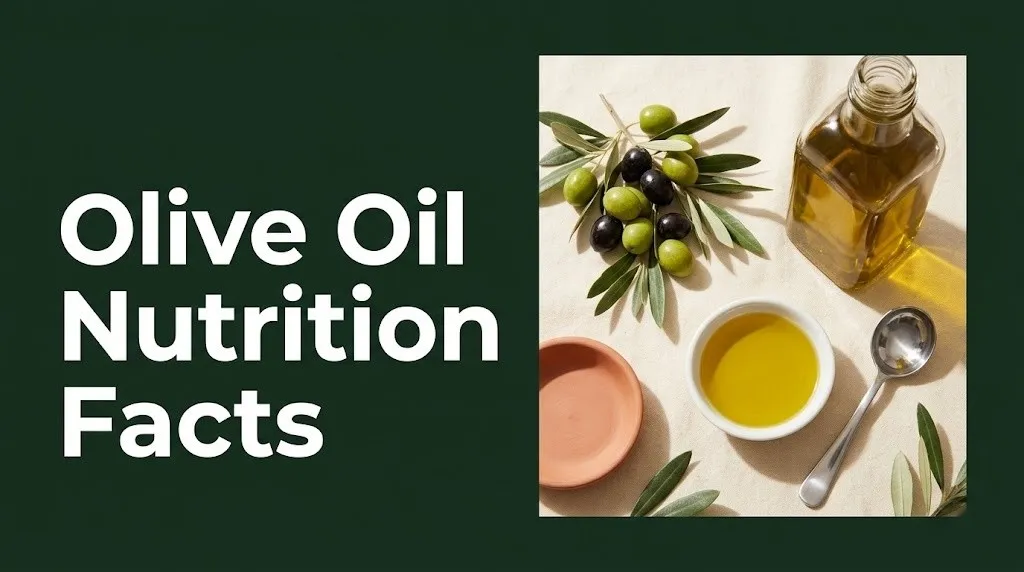
Olive Oil Nutrition Facts: Calories, Fats, and Vitamins
Olive oil nutrition facts reveal a food that is almost entirely fat, yet the type of fat it delivers is one of the most well-studied dietary fats for cardiovascular health. One tablespoon of olive oil contains 119 calories, 13.5 grams of total fat, zero grams of protein, and zero grams of carbohydrates, according to the USDA FoodData Central database.
That fat profile matters because nearly three-quarters of it is oleic acid, a monounsaturated fatty acid that the American Heart Association specifically identifies as a preferable replacement for saturated fat in the diet. The remaining fat comes primarily from polyunsaturated and saturated fatty acids in smaller portions. Beyond fat, olive oil delivers measurable amounts of vitamin E and vitamin K, along with a class of plant compounds called polyphenols that do not appear on the standard nutrition label but are among the most researched aspects of olive oil’s dietary value.
This article covers the full macro and micronutrient breakdown per tablespoon, explains what each type of olive oil actually delivers nutritionally, examines the specific bioactive compounds behind olive oil’s documented health associations, addresses how cooking temperature affects the nutritional profile, and answers the most practical questions real people have before adding olive oil to their daily diet.
Olive Oil Nutrition Facts: The Full Breakdown
A single tablespoon of olive oil (13.5 grams) delivers 119 calories with a nutrient profile almost entirely defined by its fat content.
The USDA FoodData Central database provides the following values per 1 tablespoon (13.5g) serving of generic olive oil:
| Nutrient | Amount Per Tablespoon | % Daily Value |
|---|---|---|
| Calories | 119 kcal | 6% |
| Total Fat | 13.5g | 17% |
| Monounsaturated Fat | 9.8g | Not established |
| Polyunsaturated Fat | 1.4g | Not established |
| Saturated Fat | 1.9g | 10% |
| Trans Fat | 0g | 0% |
| Protein | 0g | 0% |
| Carbohydrates | 0g | 0% |
| Fiber | 0g | 0% |
| Vitamin E (alpha-tocopherol) | 1.9 mg | 13% |
| Vitamin K (phylloquinone) | 8.1 mcg | 7% |
| Cholesterol | 0 mg | 0% |
| Sodium | 0.3 mg | 0% |
Olive oil contains no meaningful amounts of calcium, iron, magnesium, or B vitamins. Its nutritional contribution to a diet comes from its fatty acid composition and its fat-soluble compounds rather than from a broad micronutrient profile.
The standard serving size on most commercial olive oil labels is 1 tablespoon (14 mL, approximately 13.5g). Some nutrition analyses use 100g as a reference point, which equals roughly 7.4 tablespoons and contains approximately 884 calories. Serving size context matters because olive oil is calorie-dense by definition: all dietary fats deliver 9 calories per gram, compared to 4 calories per gram from protein or carbohydrates.
People managing caloric intake should note this density. Using olive oil in cooking does not require reducing it to trace amounts, but awareness of portion size prevents significant untracked calorie accumulation in a diet where multiple tablespoons are used daily across different meals.
Olive Oil Calories Per Tablespoon
One tablespoon of olive oil contains 119 calories, all of which come from its 13.5 grams of fat.
Because all fats deliver exactly 9 calories per gram, this calorie count applies consistently across all types of olive oil, from extra virgin to light. Refining or filtering olive oil does not remove fat. What changes between types is the polyphenol content, flavor intensity, and smoke point, not the caloric density.
Calorie tracking tools sometimes list olive oil at values ranging from 116 to 124 calories per tablespoon. That variation reflects differences in how laboratories measure the exact gram weight of a “tablespoon,” which can range from 13 to 14.3 grams depending on the density of the specific oil. The USDA FoodData Central standard of 119 calories per 13.5g tablespoon is the most widely used reference.
Think of olive oil like a concentrated energy source: one teaspoon (roughly one-third of a tablespoon) delivers approximately 40 calories. That scale helps put everyday cooking into perspective when olive oil is used for sauteing, dressing, or dipping.
For individuals following a Mediterranean dietary pattern, the Dietary Guidelines for Americans 2020-2025 recommend including healthy oils like olive oil as part of total fat intake, which is recommended to fall between 20% and 35% of total daily calories. For a 2,000-calorie diet, that is 44 to 78 grams of total fat per day, meaning 3 to 6 tablespoons of olive oil would represent a substantial portion of that allowance if used exclusively.
People following low-calorie, very low-fat, or medically supervised weight-loss diets should discuss total fat intake goals with a registered dietitian, who can help determine an appropriate daily olive oil allocation based on total calorie targets and individual health conditions.
Olive Oil Fat Content Explained
Olive oil is composed almost entirely of fat, and the type of fat it contains is the single most nutritionally consequential aspect of its profile.
The fat in olive oil breaks down into three categories:
- Monounsaturated fatty acids (MUFAs): 9.8g per tablespoon, primarily as oleic acid (C18:1). This represents approximately 73% of total fat content. Oleic acid is the dominant fat in olive oil and the compound most studied for its role in cardiovascular and metabolic health.
- Polyunsaturated fatty acids (PUFAs): 1.4g per tablespoon, composed mainly of linoleic acid (omega-6) with a small amount of alpha-linolenic acid (omega-3). Olive oil is not a meaningful source of omega-3 fatty acids compared to fatty fish or flaxseed.
- Saturated fatty acids (SFAs): 1.9g per tablespoon, primarily palmitic acid. This amount is relatively low compared to butter (approximately 7g per tablespoon) or coconut oil (approximately 12g per tablespoon).
Olive oil contains no trans fats and no dietary cholesterol.
The American Heart Association identifies the high proportion of monounsaturated fat in olive oil as beneficial because replacing saturated fats with MUFAs is associated with improved LDL cholesterol profiles in the research literature. The mechanism involves the effect of oleic acid on cholesterol transport pathways, which is covered in the cholesterol section of this article.
People following very low-fat diets prescribed for specific medical conditions, such as certain types of pancreatitis or severe fat malabsorption disorders, should consult with a gastroenterologist before including significant amounts of any dietary fat, including olive oil, because even healthy fats stimulate bile production and pancreatic enzyme activity.
Key Takeaway: One tablespoon of olive oil delivers 119 calories and 13.5g of fat, with nearly 73% of that fat coming from oleic acid, a monounsaturated fatty acid associated with cardiovascular benefit. All types of olive oil, from extra virgin to light, contain identical calorie and fat amounts per tablespoon.
Olive Oil Vitamins and Minerals
Olive oil provides two fat-soluble vitamins in measurable amounts per tablespoon: vitamin E and vitamin K.
Beyond those two, olive oil does not contribute meaningfully to daily mineral intake. It contains trace amounts of sodium (0.3 mg per tablespoon) and negligible quantities of calcium, iron, potassium, magnesium, phosphorus, or zinc. The nutritional value of olive oil from a micronutrient standpoint is essentially defined by vitamin E and vitamin K, plus the bioactive polyphenol compounds that do not appear on standard nutrition labels.
Olive oil does not provide vitamins A, C, D, or any B vitamins. This distinguishes it clearly from foods that deliver a broader micronutrient spectrum. Its value in a diet comes primarily from its fatty acid profile and polyphenol content rather than from serving as a micronutrient-dense food.
| Vitamin | Amount Per Tablespoon | Daily Value % | Primary Function |
|---|---|---|---|
| Vitamin E (alpha-tocopherol) | 1.9 mg | 13% | Antioxidant, membrane protection |
| Vitamin K (phylloquinone) | 8.1 mcg | 7% | Blood clotting, bone metabolism |
The fat-soluble nature of both vitamins E and K means they are absorbed efficiently when consumed with dietary fat, which olive oil itself provides. This makes olive oil a self-contained absorption vehicle for these two vitamins, unlike water-soluble vitamins that require no fat to absorb.
For people taking multivitamins or individual fat-soluble vitamin supplements, the vitamin E and K in olive oil are generally not a concern at typical serving sizes. However, individuals on vitamin K-sensitive medications such as warfarin should maintain consistent olive oil intake rather than dramatically increasing or decreasing it, because consistency in dietary vitamin K intake directly affects anticoagulant dosing stability.
Olive Oil Vitamin E Content
One tablespoon of olive oil delivers 1.9 mg of vitamin E in the form of alpha-tocopherol, which represents approximately 13% of the Daily Value for vitamin E in adults.
Vitamin E functions as a fat-soluble antioxidant in the body. Its primary role is protecting cell membranes and low-density lipoprotein (LDL) particles from oxidative damage by neutralizing free radicals. According to the NIH Office of Dietary Supplements, the Recommended Dietary Allowance (RDA) for vitamin E is 15 mg per day for adults, which means a single tablespoon of olive oil provides about one-eighth of that daily target.
Olive oil is a moderate source of vitamin E, not a high-dose source. Foods with higher alpha-tocopherol content per serving include wheat germ oil (approximately 20 mg per tablespoon), sunflower oil (approximately 5.6 mg per tablespoon), and almonds (approximately 7.3 mg per ounce).
The NIH Office of Dietary Supplements states that the Tolerable Upper Intake Level (UL) for supplemental vitamin E is 1,000 mg per day for adults. Dietary vitamin E from food sources like olive oil does not approach this threshold, even with generous daily use.
People with fat malabsorption conditions, including those with Crohn’s disease, celiac disease, or cystic fibrosis, may have reduced absorption of fat-soluble vitamins including the alpha-tocopherol in olive oil. A physician specializing in gastroenterology or a registered dietitian can assess whether dietary vitamin E intake is adequate and whether supplemental forms are warranted for individuals with documented malabsorption.
The vitamin E in extra virgin olive oil tends to be better preserved than in refined olive oils because the refining process that produces pure or light olive oil can reduce tocopherol content through heat and chemical treatment.
Olive Oil Vitamin K Content
One tablespoon of olive oil contains approximately 8.1 mcg of vitamin K in the form of phylloquinone (vitamin K1), representing about 7% of the Daily Value based on the reference daily intake of 120 mcg for adult men and 90 mcg for adult women established by the NIH.
Phylloquinone is the primary dietary form of vitamin K found in plant foods and plant-derived oils. It plays a central role in activating clotting proteins in the blood coagulation cascade, as well as activating proteins involved in bone mineralization. Olive oil is not a high-dose source of vitamin K, but it contributes consistently to daily intake for people who use it regularly.
The NIH Office of Dietary Supplements notes that no Tolerable Upper Intake Level has been established for dietary vitamin K from food sources. The absence of a UL reflects that dietary phylloquinone from foods like olive oil has not been associated with toxicity in the research literature.
The critical practical consideration for vitamin K and olive oil centers on anticoagulant therapy. People taking warfarin (Coumadin) need to maintain a consistent day-to-day intake of dietary vitamin K because this medication works by inhibiting vitamin K-dependent clotting factor synthesis. Sudden large increases or decreases in vitamin K intake from any food source can shift the INR (International Normalized Ratio) used to monitor anticoagulant effect. Anyone on warfarin who wants to start consuming olive oil daily should discuss this with the prescribing physician or a clinical pharmacist, bringing a log of typical daily fat and oil intake to that appointment.
People who rarely consume any dietary fat or oil may have lower baseline vitamin K intakes than average, which can affect coagulation monitoring if they suddenly add multiple tablespoons of olive oil to their daily meals.
Key Takeaway: Olive oil provides 1.9 mg of vitamin E (alpha-tocopherol) and 8.1 mcg of vitamin K (phylloquinone) per tablespoon. Neither amount reaches a level of concern for healthy adults, but people on warfarin should keep their olive oil intake consistent day to day because vitamin K directly affects anticoagulant dosing stability.
Olive Oil Polyphenols and Antioxidants
Olive oil contains a class of plant-derived phenolic compounds called polyphenols that do not appear on the standard nutrition facts label but are among the most scientifically studied aspects of its dietary value.
The primary polyphenols in olive oil include oleocanthal, oleuropein, hydroxytyrosol, and tyrosol. Total polyphenol content in olive oil is measured in milligrams per kilogram (mg/kg) and varies dramatically by olive oil type, processing method, geographic origin, and storage age. Extra virgin olive oil (EVOO) typically contains between 150 and 400 mg/kg of total phenolic compounds, while refined olive oils (pure, light) may contain fewer than 10 mg/kg due to heat and chemical processing.
The European Food Safety Authority (EFSA) approved a health claim in 2011 stating that olive oil polyphenols contribute to the protection of blood lipids from oxidative stress when a minimum daily intake of 5 mg of hydroxytyrosol and its derivatives (from at least 20 grams of EVOO) is consumed as part of a balanced diet. This remains one of the few polyphenol-specific health claims approved by a major regulatory body.
Polyphenols in olive oil function by donating electrons to neutralize free radicals, reducing oxidative modification of LDL cholesterol particles, and modulating inflammatory signaling pathways in cells. The degree to which polyphenols survive digestion and reach systemic circulation varies by individual and by the specific compounds involved, which is why researchers distinguish between polyphenol content of the oil itself and polyphenol bioavailability in the body.
Storage and light exposure reduce polyphenol content over time. Olive oil stored in dark glass or tin containers away from heat retains more phenolic compounds than oil stored in clear plastic bottles on sun-exposed store shelves. This matters nutritionally because polyphenol degradation is ongoing from the moment of pressing.
Oleic Acid in Olive Oil
Oleic acid, a monounsaturated omega-9 fatty acid with the chemical designation C18:1n-9, makes up between 55% and 83% of total fat content in olive oil, depending on olive variety, growing region, and harvest timing.
Oleic acid is the single most abundant fatty acid in olive oil, averaging approximately 9.8 grams per tablespoon. This makes olive oil one of the richest dietary sources of this specific fatty acid compared to other commonly used cooking oils. For context:
| Oil | Oleic Acid (Approximate % of Total Fat) |
|---|---|
| Olive oil | 55-83% |
| Avocado oil | 50-70% |
| Canola oil | 55-65% |
| Sunflower oil (high-oleic) | 75-90% |
| Coconut oil | 5-7% |
| Butter | 26-29% |
In the body, oleic acid incorporates into cell membranes and can influence membrane fluidity, which affects how receptors on cell surfaces respond to hormones and signaling molecules. Research published in the American Journal of Clinical Nutrition has found associations between diets high in oleic acid and improved insulin sensitivity markers, though most of this evidence comes from observational studies of Mediterranean dietary patterns rather than oleic acid isolate trials.
Oleic acid is also notably more resistant to oxidation than polyunsaturated fatty acids at cooking temperatures, which is one reason olive oil performs better under moderate heat than oils with higher PUFA content like corn or soybean oil. This oxidative stability is a function of the molecular structure of monounsaturated fats, which have only one double bond susceptible to oxidation, compared to the multiple double bonds in polyunsaturated fats.
People with type 2 diabetes may benefit particularly from dietary patterns that emphasize monounsaturated fats like oleic acid over saturated fats, according to research reviewed by the American Diabetes Association, though the primary recommendation remains an overall healthy dietary pattern rather than a focus on any single fatty acid.
Oleocanthal and Anti-Inflammatory Properties
Oleocanthal is a phenolic secoiridoid compound found exclusively in extra virgin olive oil that produces the characteristic peppery or stinging sensation at the back of the throat when EVOO is consumed neat or as a drizzle.
That throat burn is not accidental: oleocanthal inhibits the same COX-1 and COX-2 enzymes that ibuprofen inhibits. A study published in the journal Nature in 2005 by researchers at the Monell Chemical Senses Center first identified this mechanism, noting that oleocanthal and ibuprofen produce similar COX-inhibition effects at their respective concentrations. The comparison generated significant scientific interest because it provided a molecular mechanism linking regular EVOO consumption to reduced inflammatory markers.
The research on oleocanthal and inflammation has progressed substantially since that initial finding. Studies published in Nutrients and the European Journal of Nutrition have examined oleocanthal’s effects on NF-kB inflammatory pathway activity, arthritis-related markers, and neurodegenerative disease models. These findings are classified as emerging evidence: mechanistically plausible and supported by cell and animal studies, but not yet confirmed by large-scale human randomized controlled trials targeting oleocanthal specifically.
| Evidence Level | What It Means for Oleocanthal Claims |
|---|---|
| Mechanistic (lab-confirmed) | COX enzyme inhibition confirmed in vitro |
| Animal model evidence | Anti-inflammatory effects in rodent models |
| Human observational | Associated with reduced inflammatory markers in EVOO-consuming populations |
| Human RCT (oleocanthal-specific) | Limited; most trials test EVOO as a whole rather than oleocanthal isolates |
Oleocanthal content in olive oil is highly variable. A throaty, peppery sensation when tasting EVOO is a reasonable (though informal) signal of higher oleocanthal content. Certified extra virgin olive oils from Tuscany, Crete, and parts of Spain tend to register higher phenolic concentrations, though this varies by harvest year and producer.
People with aspirin sensitivity or known NSAID reactions should not assume that oleocanthal in dietary olive oil poses an equivalent pharmacological risk at normal serving sizes. The concentrations achieved through dietary consumption are far lower than therapeutic ibuprofen doses.
Key Takeaway: Oleocanthal, the compound that causes the peppery sensation in high-quality extra virgin olive oil, inhibits the same COX-1 and COX-2 enzymes as ibuprofen. This mechanism is well-established in laboratory settings, though large human trials specifically on oleocanthal are still limited.
Olive Oil and Heart Health
Olive oil’s relationship with heart health is one of the most extensively researched dietary associations in nutritional science, anchored significantly by the landmark PREDIMED trial (Prevencion con Dieta Mediterranea).
The PREDIMED study, published in the New England Journal of Medicine in 2013 and conducted across Spain with over 7,400 participants at high cardiovascular risk, found that a Mediterranean diet supplemented with extra virgin olive oil (approximately 4 tablespoons per day) was associated with a 30% relative reduction in major cardiovascular events (heart attack, stroke, cardiovascular death) compared to a low-fat control diet over approximately 5 years. This is observational evidence from a dietary pattern trial, not evidence that olive oil alone produces this outcome, but it represents the strongest long-term dietary intervention data connecting EVOO consumption to cardiovascular outcomes in high-risk adults.
The proposed mechanisms connecting olive oil to cardiovascular protection include:
- Oleic acid reducing LDL particle oxidation by incorporating into LDL membranes and providing some resistance to oxidative modification
- Polyphenols (particularly hydroxytyrosol and oleuropein) inhibiting platelet aggregation, which reduces blood clotting tendency
- Oleocanthal and other anti-inflammatory compounds reducing systemic inflammatory markers including C-reactive protein (CRP)
- Oleic acid favorably influencing endothelial function (the health and reactivity of blood vessel walls)
The Dietary Guidelines for Americans 2020-2025 place olive oil within the “healthy oils” category and recommend it as a primary fat for the overall dietary pattern rather than as a supplement or remedy.
For people with existing cardiovascular disease, olive oil should be considered one component of a broader dietary approach rather than an independent treatment. A cardiologist or a registered dietitian specializing in cardiac nutrition can help determine appropriate total fat intake and dietary fat sources as part of a medically supervised heart-health plan.
Olive Oil and Cholesterol
Olive oil does not contain dietary cholesterol, and regular consumption is associated with improvements in LDL and HDL cholesterol profiles in the research literature.
The mechanism works through two parallel pathways. First, oleic acid, when substituted for saturated fat in the diet, is associated with reductions in LDL cholesterol (often called “bad” cholesterol) without reducing HDL cholesterol (often called “good” cholesterol). This contrasts with the effect of very low-fat diets, which can lower both LDL and HDL simultaneously. Second, the polyphenols in extra virgin olive oil specifically protect LDL particles from oxidative modification. Oxidized LDL is the form that contributes to atherosclerotic plaque formation, so reducing LDL oxidation may offer cardiovascular benefit beyond simply lowering LDL concentration.
A meta-analysis published in Nutrients in 2019 examining 27 randomized controlled trials found that olive oil consumption was associated with statistically significant reductions in total cholesterol and LDL cholesterol compared to control diets higher in saturated fat. The strength of this association was greatest in studies using extra virgin olive oil rather than refined olive oil, suggesting that polyphenol content contributes independently beyond the fatty acid profile.
The American Heart Association recommends replacing saturated fats with monounsaturated and polyunsaturated fats as a strategy to improve cholesterol profiles. Olive oil, given its oleic acid content, fits within this recommendation.
People with familial hypercholesterolemia (a genetic condition causing very high LDL levels) should not rely on dietary changes alone to manage cholesterol and require the guidance of a physician, often in collaboration with a registered dietitian, to determine whether statin therapy or other medical interventions are appropriate alongside dietary fat modifications.
Extra Virgin Olive Oil Nutrition Facts
Extra virgin olive oil (EVOO) meets the strictest quality and chemical standards of any olive oil type, and its nutrition facts per tablespoon are identical in calories and macronutrients to other olive oils, but meaningfully different in polyphenol and vitamin E content.
Per the International Olive Council (IOC) standards, EVOO must be produced by mechanical cold-pressing or centrifugation without heat or chemical solvents, and must have a free fatty acid content of no more than 0.8% oleic acid and a peroxide value (a measure of oxidation) of no more than 20 milliequivalents per kilogram.
| Nutrient/Property | Extra Virgin Olive Oil | Pure/Refined Olive Oil | Light Olive Oil |
|---|---|---|---|
| Calories (per tbsp) | 119 kcal | 119 kcal | 119 kcal |
| Total Fat (per tbsp) | 13.5g | 13.5g | 13.5g |
| Polyphenol Content | 150-400 mg/kg | 10-50 mg/kg | Less than 10 mg/kg |
| Vitamin E (approx.) | 1.9-2.2 mg/tbsp | 1.5-1.9 mg/tbsp | 1.5-1.8 mg/tbsp |
| Free Fatty Acid Level | Maximum 0.8% | May exceed 1% | Higher, refined down |
| Smoke Point | 375-405°F (190-207°C) | 390-470°F (199-243°C) | 465-470°F (240-243°C) |
| Processing Method | Cold-pressed, mechanical | Refined with heat/solvents | Highly refined, blended |
| Flavor | Fruity, peppery, grassy | Mild, neutral | Very mild, nearly tasteless |
EVOO delivers the most phenolic compounds per serving because minimal processing preserves oleocanthal, oleuropein, and hydroxytyrosol. From a pure calorie and fat standpoint, choosing EVOO over light olive oil does not change caloric intake. The difference is in the accompanying bioactive compound content, which the current research suggests may matter for cardiovascular and anti-inflammatory outcomes.
For people purchasing olive oil primarily for calorie control rather than polyphenol content, all types are equivalent. For those seeking the maximum researched dietary benefit aligned with the Mediterranean dietary pattern, EVOO is the type studied most extensively in clinical trials.
Key Takeaway: Extra virgin olive oil has the same calories and fat per tablespoon as pure or light olive oil, but contains 15 to 40 times more polyphenols. The documented cardiovascular and anti-inflammatory research on olive oil is primarily based on extra virgin varieties, not refined types.
Virgin Olive Oil Nutrition Facts
Virgin olive oil occupies the quality tier directly below extra virgin olive oil and shares most of its nutritional characteristics, with some differences in phenolic content and free fatty acid levels.
Per International Olive Council standards, virgin olive oil is produced by mechanical pressing without chemical refining but is allowed to have a free fatty acid content of up to 2.0% (compared to the 0.8% maximum for EVOO). It may have a slightly less complex flavor profile than EVOO and a marginally lower polyphenol content, though it retains far more phenolic compounds than refined or pure olive oil.
| Property | Virgin Olive Oil | Extra Virgin Olive Oil |
|---|---|---|
| Production Method | Cold-pressed, mechanical | Cold-pressed, mechanical |
| Free Fatty Acid Max | 2.0% | 0.8% |
| Peroxide Value Max | 20 meq/kg | 20 meq/kg |
| Polyphenol Content (approx.) | 100-300 mg/kg | 150-400 mg/kg |
| Calorie Content | 119 kcal/tbsp | 119 kcal/tbsp |
| Total Fat | 13.5g/tbsp | 13.5g/tbsp |
| Vitamin E | ~1.8-2.1 mg/tbsp | ~1.9-2.2 mg/tbsp |
Virgin olive oil is less commonly found in US retail stores compared to EVOO and pure olive oil, though it is available through specialty food importers and online retailers. From a nutritional standpoint, it is closer to EVOO than to refined olive oil in its bioactive compound content.
The nutrition facts label on a commercial bottle of virgin olive oil will show identical calories, fat grams, and vitamin E percentages to EVOO because the USDA standardized label format does not capture polyphenol or phenolic compound data. Consumers who want to distinguish between types based on polyphenol content need to look for certifications, harvest date stamps, and chemical analysis documentation from producers rather than relying on standard label data.
People who find the stronger, more peppery flavor of EVOO unpleasant for certain cooking applications may find virgin olive oil a reasonable middle ground that retains meaningful polyphenol content with a milder flavor profile.
Olive Oil Smoke Point and Cooking Nutrition
The smoke point of an oil is the temperature at which it begins to visibly smoke and break down, producing potentially harmful compounds including acrolein, aldehydes, and free radicals from oxidized fatty acids.
Extra virgin olive oil has a smoke point of approximately 375 to 405°F (190 to 207°C). This is lower than refined olive oil (approximately 390 to 470°F) and significantly lower than avocado oil (approximately 520°F). However, research published in the American Chemical Society’s journal Acta Scientific Nutritional Health in 2018 found that EVOO’s high phenolic content and monounsaturated fat composition made it more resistant to oxidative degradation during cooking than its smoke point alone would suggest, outperforming several higher-smoke-point oils including some seed oils on oxidative stability measures.
How cooking method changes olive oil’s nutritional profile:
- Pan-sauteing at moderate heat (below 375°F / 190°C): Polyphenol content reduces by 20 to 40% depending on duration and temperature, but the oil remains stable and does not generate significant oxidative breakdown products.
- Roasting in the oven (350-400°F / 175-205°C): Similar polyphenol loss to sauteing; oil remains largely intact for short roasting times under 30 minutes.
- Deep frying (above 375°F / 190°C): Polyphenol content drops sharply (up to 75% in some analyses); oxidation increases; repeated reuse of frying oil accelerates degradation significantly.
- Drizzling raw on food: Maximum polyphenol retention; no heat degradation; the preferred method for preserving EVOO’s full bioactive compound profile.
- Storage before use: Polyphenols degrade from light and heat exposure during storage, independent of cooking.
Olive oil’s oleic acid backbone makes it meaningfully more stable at moderate cooking temperatures than polyunsaturated fat-dominant oils like flaxseed or walnut oil, which are not appropriate for any cooking application above very low heat.
People who cook at very high temperatures regularly (wok cooking, high-heat searing, deep frying) may want to consider refined olive oil or avocado oil for those applications, while using EVOO exclusively for dressings, finishing drizzles, and low-to-medium heat cooking to preserve polyphenol intake.
Olive Oil vs Avocado Oil Nutrition
Both olive oil and avocado oil are predominantly monounsaturated fat sources, but they differ in polyphenol content, smoke point, vitamin profile, and flavor, which affects how each fits into a diet.
| Property | Olive Oil (EVOO) | Avocado Oil (refined) |
|---|---|---|
| Calories per tablespoon | 119 kcal | 124 kcal |
| Total Fat | 13.5g | 14g |
| Monounsaturated Fat | 9.8g (73%) | 9.9g (71%) |
| Saturated Fat | 1.9g | 1.6g |
| Polyunsaturated Fat | 1.4g | 1.9g |
| Vitamin E | 1.9 mg (13% DV) | 1.9 mg (13% DV) |
| Vitamin K | 8.1 mcg (7% DV) | Negligible |
| Polyphenols | 150-400 mg/kg (EVOO) | 10-50 mg/kg (refined) |
| Smoke Point | 375-405°F | ~520°F |
| Flavor | Fruity, peppery | Mild, buttery |
Calorie and fat content are essentially identical between the two oils. The meaningful differences lie elsewhere: olive oil (particularly EVOO) delivers substantially more polyphenols than commercially refined avocado oil, while avocado oil offers a significantly higher smoke point better suited to high-heat cooking methods.
For everyday salad dressings, dipping, and low-to-medium heat cooking, extra virgin olive oil provides a stronger polyphenol profile and is backed by a larger body of human clinical research than avocado oil at this point in time. For high-heat applications like searing at above 400°F or deep frying, refined avocado oil’s thermal stability offers a practical advantage.
The research base for olive oil’s health associations is far more extensive than for avocado oil specifically. Most avocado oil health claims draw on olive oil research due to the similar fatty acid composition, which is a reasonable parallel but not a direct equivalence. People following evidence-based cardiovascular dietary patterns should recognize that EVOO has the stronger direct evidence base.
Key Takeaway: Olive oil and avocado oil are nearly identical in calories, fat, and vitamin E per tablespoon. EVOO leads in polyphenol content and has a stronger direct research base for cardiovascular health, while refined avocado oil’s higher smoke point makes it better suited for high-heat cooking above 400 degrees Fahrenheit.
How Much Olive Oil Per Day
There is no single universal daily olive oil dose established by a regulatory body, but research evidence and dietary guidelines provide practical reference points.
The PREDIMED trial, the largest and most cited human intervention study on olive oil and health outcomes, used approximately 4 tablespoons (50-60 mL) per day of extra virgin olive oil as the supplemental amount in the Mediterranean diet arm. This produced significant cardiovascular benefit in high-risk adults over 5 years. However, this amount was consumed within a broader Mediterranean dietary pattern, not added on top of an otherwise unchanged diet.
Practical guidance from the research and dietary guidelines:
- The Dietary Guidelines for Americans 2020-2025 recommend healthy oils as part of total fat intake (20 to 35% of daily calories). For a 2,000-calorie diet, 2 to 4 tablespoons of olive oil per day can fit within this range.
- The American Heart Association recommends replacing saturated fats with oils like olive oil rather than simply adding oil on top of existing intake.
- Most registered dietitians suggest starting with 1 to 2 tablespoons per day for general health maintenance and scaling up within an overall dietary fat budget based on individual caloric needs.
Who may need to modify typical daily amounts:
- People managing obesity or following calorie-restricted diets: Each additional tablespoon adds 119 calories. Portion-controlled use matters.
- People with pancreatitis or fat malabsorption disorders: Higher daily fat intakes may exacerbate symptoms. A gastroenterologist should guide appropriate fat intake levels.
- People following a low-FODMAP or specific elimination diet: Olive oil is generally low-FODMAP, but the total fat load may affect symptom tolerance in people with irritable bowel syndrome at higher quantities.
- Older adults: Higher caloric density of olive oil can support adequate caloric intake in older individuals at risk of unintentional weight loss, making it a practically useful calorie-dense addition to meals.
A practical starting point is 1 to 2 tablespoons daily, used consistently in place of other dietary fats rather than added on top of them.
Frequently Asked Questions About Olive Oil Nutrition
How many calories are in a tablespoon of olive oil?
One tablespoon of olive oil (approximately 13.5 grams) contains 119 calories, all from fat.
This calorie count is consistent across all olive oil types, from extra virgin to light, because refining changes polyphenol content but does not remove fat.
Per the USDA FoodData Central database, one teaspoon of olive oil contains approximately 40 calories.
What vitamins are in olive oil?
Olive oil contains two fat-soluble vitamins: vitamin E (alpha-tocopherol) at 1.9 mg per tablespoon and vitamin K (phylloquinone) at 8.1 mcg per tablespoon.
It does not contain vitamins A, C, D, or any B vitamins in meaningful amounts.
According to the NIH Office of Dietary Supplements, one tablespoon of olive oil provides approximately 13% of the adult Daily Value for vitamin E.
Is extra virgin olive oil healthier than regular olive oil?
Extra virgin olive oil contains 15 to 40 times more polyphenols than refined or light olive oil, while having identical calorie and fat content per tablespoon.
The cardiovascular research most frequently cited, including the PREDIMED trial published in the New England Journal of Medicine, was conducted specifically with extra virgin olive oil.
If polyphenol intake is a health priority, EVOO is the type with the strongest evidence base; if the goal is purely a neutral-flavored cooking oil, refined olive oil serves the same calorie and fat purpose.
Does cooking with olive oil destroy its nutrients?
Heat reduces olive oil’s polyphenol content: moderate cooking below 375°F (190°C) causes roughly 20 to 40% polyphenol loss, while high-heat frying can reduce polyphenols by up to 75%.
The vitamin E content of olive oil is also partially degraded at prolonged high temperatures, though moderate cooking retains most of it.
Oleic acid, the primary monounsaturated fat, is relatively heat-stable and remains largely intact during typical home cooking at moderate temperatures.
How much olive oil should I eat per day?
Research evidence, including the PREDIMED trial, used approximately 4 tablespoons per day of extra virgin olive oil within a Mediterranean dietary pattern to achieve cardiovascular outcomes.
For most healthy adults managing total caloric intake, 1 to 2 tablespoons daily, used in place of other dietary fats rather than added on top of them, is a practical and research-aligned starting point.
People with medical conditions affecting fat metabolism or those on calorie-restricted diets should discuss specific daily olive oil targets with a registered dietitian.
Is olive oil safe for people with high cholesterol?
Olive oil is associated with favorable cholesterol changes in the research literature: oleic acid, when substituted for saturated fat, is associated with reduced LDL cholesterol without lowering HDL cholesterol.
A meta-analysis published in Nutrients in 2019 reviewing 27 randomized controlled trials found that olive oil consumption was associated with statistically significant reductions in total cholesterol and LDL cholesterol compared to saturated fat-dominant control diets.
People with genetic cholesterol disorders like familial hypercholesterolemia should not rely on dietary fat changes alone and require physician-guided management that may include statin therapy alongside dietary modifications.
Olive oil earns its place in a health-focused diet not through any single dramatic nutrient, but through the combination of oleic acid, polyphenols, vitamin E, and vitamin K working within an overall dietary pattern. The nutrition facts per tablespoon are clear: 119 calories, 13.5g of fat, 13% of the Daily Value for vitamin E, and a polyphenol profile that varies dramatically by type and production method.
The most practical takeaway is to use extra virgin olive oil for dressings, finishing drizzles, and moderate-heat cooking, keep portion sizes aligned with your total caloric needs, and treat it as a consistent replacement for saturated fats rather than an addition on top of them.
What you choose to do with that tablespoon matters as much as the tablespoon itself. Use it with that understanding, and you are working with one of the most evidence-backed dietary fats available.