Steak Nutrition Facts: What’s Really in Every Bite
A 3-ounce cooked serving of lean top sirloin delivers approximately 26 grams of protein, less than 2 grams of saturated fat, and a concentrated dose of vitamin B12, zinc, and heme iron — making steak nutrition facts far more nuanced than the simple “protein and fat” summary most people rely on. Understanding exactly what is in your steak, and how the cut, cooking method, and sourcing affect those numbers, turns a routine dinner decision into an informed nutritional choice.
Red meat consumption in the US remains substantial. According to the USDA Economic Research Service, Americans consume an average of approximately 57 pounds of beef per year per person. The nutritional profile of that beef varies enormously depending on the cut, the animal’s feed, and how the meat is cooked.
This article breaks down every major nutritional component of steak, from the calorie and macro numbers to the bioactive compounds most sources never mention. You’ll find cut-by-cut comparisons, cooking method effects, health context grounded in named research, and specific guidance for people with particular dietary goals or health conditions.
Steak Nutrition Facts: The Complete Overview
Steak nutrition facts center on three defining characteristics: high-quality complete protein, a meaningful concentration of key micronutrients, and a fat content that varies dramatically by cut and cooking method.
The USDA FoodData Central database records that a 3-ounce (85g) cooked serving of lean top sirloin provides approximately 160 calories, 26g of protein, 5g of total fat, and 0g of carbohydrates. That same serving delivers 58% of the daily value for vitamin B12, 41% of the daily value for zinc, and significant amounts of selenium, phosphorus, and niacin.
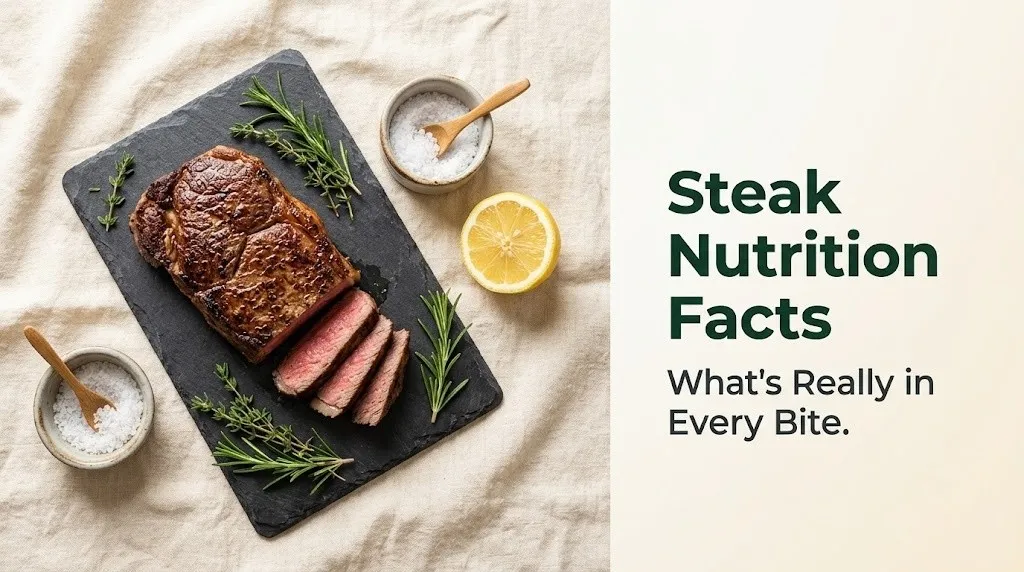
Steak is what nutritionists classify as a nutrient-dense food — meaning it delivers a high concentration of essential nutrients relative to its calorie content. A fatty ribeye tells a different story, with the same 3-ounce cooked serving providing closer to 225 calories and 16g of fat. The word “steak” covers a wide nutritional range.
Think of the different cuts of steak as different products that happen to share the same name. A tenderloin and a ribeye come from the same animal, but their fat content, calorie count, and micronutrient concentrations differ enough to affect dietary planning, particularly for people managing saturated fat intake or total calorie goals.
Quick Tip:
- Always verify which cut is listed when reading any steak nutrition label or database entry. “Steak” alone is not a nutritional specification.
- The USDA standard serving size for cooked beef is 3 ounces (85g). Restaurant steaks typically run 6 to 16 ounces, which doubles or quintuples the nutritional figures.
- When tracking nutrition at a restaurant, dividing your portion mentally into 3-ounce segments (roughly the size of a deck of playing cards) helps calibrate reasonable estimates.
Calories in Steak Per Serving
A 3-ounce cooked serving of steak ranges from approximately 140 to 270 calories, depending entirely on the cut selected and the amount of fat trimmed before or after cooking.
The USDA FoodData Central database records the following calorie ranges for 3-ounce cooked servings:
| Cut | Calories (3 oz cooked) | Total Fat (g) | Protein (g) |
|---|---|---|---|
| Eye of round | 141 kcal | 4g | 25g |
| Top sirloin (lean) | 160 kcal | 5g | 26g |
| Tenderloin | 175 kcal | 8g | 24g |
| Flank steak | 158 kcal | 7g | 24g |
| T-bone | 172 kcal | 9g | 23g |
| Ribeye (choice) | 225 kcal | 16g | 22g |
These numbers apply to cooked servings without added butter, oil, or sauces. A restaurant steak cooked in butter adds 100 to 200 calories depending on the amount used.
The common 6-ounce restaurant portion doubles every figure. A 6-ounce lean sirloin reaches approximately 320 calories. A 6-ounce ribeye can approach 450 calories before any sauces or sides are considered.
Individual calorie needs vary based on body size, activity level, and overall dietary pattern. A registered dietitian can calculate the specific calorie target appropriate for your goals and help place steak within a wider eating plan.
Steak Macros: Protein, Fat, and Carbohydrates
Steak contains zero carbohydrates and zero dietary fiber. Its macronutrient profile is built entirely around protein and fat, making it a fundamentally different food type than grain or plant-based protein sources.
Protein is steak’s defining nutritional feature. A 3-ounce cooked serving of lean beef provides 24 to 26 grams of complete protein — meaning it contains all nine essential amino acids in proportions the human body can use directly. The leucine content is particularly relevant. Leucine is the amino acid most directly responsible for triggering the mTOR (mechanistic target of rapamycin) signaling pathway, which initiates muscle protein synthesis. A 3-ounce serving of beef provides approximately 2 grams of leucine, which research suggests meets the threshold needed to maximally stimulate muscle protein synthesis in a single meal.
Fat content in steak is where the nutritional story becomes more complicated. Total fat ranges from about 4 grams per 3-ounce serving in the leanest cuts (eye of round, top round) to 16 grams in a well-marbled ribeye. Saturated fat follows a similar pattern: approximately 1.5 grams in lean top round to 6 grams or more in a ribeye.
The fat in beef is not exclusively saturated. Approximately 40-50% of the fat in beef is monounsaturated fat, primarily oleic acid — the same fatty acid that makes olive oil favorable from a cardiovascular standpoint. The remaining fat breaks down into a mix of saturated fats (palmitic and stearic acid) and small amounts of polyunsaturated fat.
Stearic acid, one of beef’s primary saturated fats, is worth noting specifically. A 2019 review published in the American Journal of Clinical Nutrition found that stearic acid does not raise LDL cholesterol the way palmitic acid does — a nuance that rarely appears in general discussions of red meat and saturated fat.
Key Takeaway: Steak’s protein profile is genuinely complete and leucine-rich, making it one of the more efficient dietary protein sources per gram. Its fat content, however, varies so widely by cut that “steak” is not a useful nutritional category without specifying the cut.
Steak Micronutrients: Vitamins and Minerals
Steak is one of the most micronutrient-dense animal proteins available, delivering several vitamins and minerals in amounts that matter clinically, not just nominally.
According to the USDA FoodData Central database, a 3-ounce cooked serving of top sirloin provides:
| Micronutrient | Amount per 3 oz (85g) | % Daily Value | Primary Function |
|---|---|---|---|
| Vitamin B12 | 1.4 mcg | 58% DV | Neurological function, red blood cell formation |
| Zinc | 4.5mg | 41% DV | Immune function, enzyme activity, wound healing |
| Selenium | 28mcg | 51% DV | Antioxidant enzyme production, thyroid function |
| Niacin (B3) | 6.2mg | 39% DV | Energy metabolism, DNA repair |
| Phosphorus | 210mg | 17% DV | Bone mineral density, ATP energy production |
| Iron | 1.6mg (heme) | 9% DV | Oxygen transport, hemoglobin synthesis |
| Potassium | 315mg | 7% DV | Fluid balance, nerve transmission |
| Vitamin B6 | 0.4mg | 24% DV | Amino acid metabolism, neurotransmitter synthesis |
These numbers reflect a lean cut. Fattier cuts like ribeye contain similar micronutrient levels but deliver them alongside significantly more fat and calories.
One important individual variation: people with chronic kidney disease (CKD) need to monitor potassium and phosphorus intake carefully. Steak’s phosphorus content is relevant for individuals on a renal diet. A registered dietitian specializing in renal nutrition can help determine appropriate beef serving sizes and frequency for people managing CKD.
Heme Iron in Steak and How It Compares to Plant Iron
Steak is one of the best dietary sources of heme iron, the form of iron found exclusively in animal muscle tissue, which the body absorbs at a rate of 15 to 35 percent — significantly higher than the 2 to 20 percent absorption rate of non-heme iron found in plant foods like spinach, lentils, and fortified cereals.
The distinction between heme and non-heme iron is not a minor detail. It fundamentally changes how much iron you actually absorb from a given food. Eating 100 grams of cooked sirloin provides approximately 1.9mg of heme iron. At a 25% average absorption rate, your body takes in roughly 0.47mg of usable iron. To absorb the same amount from cooked lentils (2.4mg non-heme iron per 100g at a 7% average absorption rate), you would need to eat considerably more and absorb it under optimal conditions.
According to the NIH Office of Dietary Supplements, the RDA for iron is 8mg per day for adult men and postmenopausal women, and 18mg per day for premenopausal women aged 19 to 50. A 3-ounce serving of steak contributes meaningfully toward these targets, particularly for women who are at higher risk for iron deficiency.
Steak also contains what researchers call the “meat factor” or “meat protein factor.” Compounds in beef muscle tissue actually enhance the absorption of non-heme iron consumed in the same meal. Eating a small amount of beef alongside iron-rich plant foods can increase the total iron absorbed from the plant foods as well.
People with hereditary hemochromatosis, a genetic condition causing excess iron absorption, should discuss red meat frequency with their physician, as elevated iron intake accelerates iron overload. A physician can confirm hemochromatosis status through a serum ferritin test and transferrin saturation measurement.
Steak Vitamin B12 Content
A 3-ounce cooked serving of beef steak provides approximately 1.4 to 2.4 mcg of vitamin B12 (cobalamin), depending on the cut, which represents 58 to 100 percent of the adult daily recommended intake of 2.4 mcg per day set by the NIH Office of Dietary Supplements.
Vitamin B12 is essential for the synthesis of myelin, the protective sheath surrounding nerve fibers, for red blood cell formation, and for DNA synthesis. Without adequate B12, nerve damage, megaloblastic anemia, and cognitive impairment can develop, often insidiously over months or years before symptoms become obvious.
Steak is one of the most concentrated and reliable dietary sources of B12 because B12 occurs naturally only in animal products. The body absorbs B12 from food through a two-step process involving a protein called intrinsic factor, produced in the stomach. People with pernicious anemia, atrophic gastritis, or prior gastric surgery may produce insufficient intrinsic factor and cannot absorb dietary B12 effectively regardless of how much steak they consume. A gastroenterologist or physician can assess B12 absorption capacity through blood tests and, if needed, recommend intramuscular B12 supplementation using hydroxocobalamin or cyanocobalamin.
Strict vegans and people following plant-based diets get essentially zero dietary B12, making supplementation with cyanocobalamin or methylcobalamin necessary. From a B12 standpoint, a single 3-ounce serving of steak provides what no plant food naturally delivers.
Key Takeaway: Steak is one of the most concentrated dietary sources of heme iron and vitamin B12. Both nutrients are absorbed more effectively from beef than from plant-based sources, making steak particularly relevant for people at risk of iron deficiency or B12 insufficiency.
Zinc in Steak and Immune Function
A 3-ounce cooked serving of beef steak provides approximately 4 to 5 milligrams of zinc — representing 36 to 45 percent of the adult RDA of 11mg per day for men and 8mg per day for women, as stated by the NIH Office of Dietary Supplements.
Zinc’s role in the immune system is well-documented and specific. The mineral is required for the normal development and function of neutrophils, natural killer cells, and T-lymphocytes. It acts as a cofactor for over 300 enzymatic reactions in the body, including those involved in DNA synthesis and cell division. Low zinc status impairs immune response speed and effectiveness.
Beef is consistently ranked among the best dietary sources of bioavailable zinc. The zinc in animal protein, including steak, is bound in a form the body absorbs more readily than the zinc in plant foods like legumes and whole grains, where phytic acid binds zinc and reduces absorption. A 2020 systematic review published in Nutrients confirmed that bioavailability of zinc from animal sources is substantially higher than from plant-based sources at equivalent gram amounts.
The Tolerable Upper Intake Level (UL) for zinc is 40mg per day for adults, per the NIH Office of Dietary Supplements. Reaching this level through dietary beef alone is extremely unlikely. However, people who take zinc supplements alongside a diet regularly including red meat should track combined intake, as chronic excess zinc can interfere with copper absorption and cause neurological symptoms over time.
Vegetarians and vegans absorb zinc less efficiently and may need dietary intake 50% above the standard RDA to achieve equivalent zinc status, according to the Academy of Nutrition and Dietetics.
Creatine and Carnosine in Beef
Two bioactive compounds in steak that almost no nutrition database lists on a label — creatine and carnosine — have documented physiological roles that are directly relevant to energy metabolism and exercise performance.
Creatine (in its dietary form, which the body converts into phosphocreatine) is present in raw beef at approximately 0.35 to 0.5 grams per 100 grams, meaning a 3-ounce (85g) raw serving provides roughly 0.3 to 0.45 grams of creatine. Cooking reduces this amount somewhat. Phosphocreatine is the primary energy currency for short, explosive muscular efforts — the same mechanism targeted by creatine monohydrate supplements. While the amounts from dietary steak are smaller than typical supplement doses (3 to 5 grams per day), regular consumption contributes to the body’s creatine pool and partially explains why omnivores tend to have higher baseline muscle creatine stores than vegetarians.
Carnosine (beta-alanyl-L-histidine) is a dipeptide found at approximately 0.3 grams per 100 grams of raw beef. Carnosine functions as an intracellular buffer, helping muscle fibers maintain pH balance during intense exercise when lactic acid accumulates. It also has antioxidant properties. A 2019 review in the British Journal of Nutrition found that dietary carnosine from meat consumption contributes meaningfully to muscle carnosine concentrations, particularly in people who do not supplement with beta-alanine (the precursor used in standalone supplements).
Neither creatine nor carnosine appears on a standard nutrition label, yet both compounds help explain why beef has a documented performance advantage for strength athletes beyond its protein content alone. These are compounds you simply cannot get from plant-based proteins in equivalent amounts.
Steak Nutrition by Cut: Ribeye, Sirloin, Flank, and Tenderloin
Choosing a cut of steak is effectively choosing a nutritional profile. The differences between cuts are significant enough to shift a steak from a lean, protein-forward meal to a high-fat, high-calorie one.
According to USDA FoodData Central, the nutritional breakdown per 3-ounce cooked serving for major cuts is:
| Cut | Calories | Protein (g) | Total Fat (g) | Sat. Fat (g) | Zinc (mg) | Iron (mg) |
|---|---|---|---|---|---|---|
| Eye of round | 141 | 25 | 4 | 1.4 | 3.8 | 1.5 |
| Top sirloin (lean) | 160 | 26 | 5 | 2.0 | 4.5 | 1.6 |
| Flank steak | 158 | 24 | 7 | 2.9 | 3.5 | 1.7 |
| Tenderloin (filet) | 175 | 24 | 8 | 3.1 | 3.2 | 1.9 |
| T-bone | 172 | 23 | 9 | 3.6 | 3.7 | 1.8 |
| New York strip | 190 | 25 | 10 | 4.0 | 4.2 | 1.8 |
| Ribeye (choice) | 225 | 22 | 16 | 6.4 | 3.9 | 1.6 |
The phrase “1 steak nutrition facts” in searches reflects how people actually think about eating: one steak, not 3 ounces. A restaurant ribeye often weighs 12 to 16 ounces raw (yielding 9 to 12 ounces cooked), which means multiplying the figures above by 3 to 4 to get the actual meal numbers.
For people managing cardiovascular risk or total calorie intake, eye of round and top sirloin represent the most favorable balance of high protein to low saturated fat. For people prioritizing flavor and who are tracking macros less strictly, a smaller ribeye portion can still fit within a balanced eating plan.
Key Takeaway: The cut of steak you choose matters as much as the protein it delivers. Lean cuts like top sirloin and eye of round provide more protein per calorie than ribeye, while ribeye delivers superior flavor with significantly more saturated fat. Knowing the numbers lets you make the trade-off intentionally.
How Cooking Method Changes Steak Nutrition
Cooking method changes steak’s calorie count, fat content, and, at high temperatures, its safety profile in ways that matter for both daily nutrition and long-term health.
Fat loss during cooking is one underreported nutritional benefit. Grilling or broiling steak causes fat to drip away from the meat, reducing total fat content by 15 to 20 percent compared to the raw value. Pan-frying reverses this effect: fat stays in contact with the meat (and the added oil or butter adds its own calories). A steak cooked in two tablespoons of butter gains approximately 200 extra calories and 23 grams of fat before it reaches the plate.
Protein and micronutrient retention across cooking methods:
| Cooking Method | Fat Change | Calorie Change | HCA/PAH Risk | Best For |
|---|---|---|---|---|
| Grilling (direct flame) | Decreases 15-20% | Decreases slightly | High (charring) | Lean cuts |
| Broiling (oven) | Decreases 10-15% | Decreases slightly | Moderate | All cuts |
| Pan-frying (no added fat) | Minimal change | Minimal change | Low | Tender cuts |
| Pan-frying (with butter/oil) | Increases | Increases | Low | Flavor-focused |
| Sous vide (low temp) | Minimal change | Minimal change | Very low | Precision cooking |
| Stewing/braising | Fat renders into broth | Depends on broth use | Very low | Tough cuts |
Heterocyclic amines (HCAs) and polycyclic aromatic hydrocarbons (PAHs) form when beef is cooked at high temperatures (above approximately 300°F / 149°C) or exposed to open flames and smoke. The International Agency for Research on Cancer (IARC) classifies red meat as a Group 2A probable carcinogen, with the evidence largely derived from studies on high-temperature cooking and high consumption. Research from the American Journal of Clinical Nutrition suggests that marinating steak in antioxidant-rich mixtures (rosemary extract, citrus-based marinades) before high-heat grilling can reduce HCA formation by up to 87 percent in some controlled conditions.
Cooking to medium (145°F / 63°C internal temperature, as recommended by the USDA for whole beef cuts) balances food safety with minimal HCA formation. Well-done and charred preparations carry the highest compound exposure.
Grass-Fed vs Grain-Fed Steak Nutrition Differences
Grass-fed beef and grain-fed beef differ in their fatty acid profiles more than in their protein or micronutrient content, and understanding the difference helps calibrate realistic expectations.
The most consistently documented nutritional difference: grass-fed beef contains higher concentrations of omega-3 fatty acids and conjugated linoleic acid (CLA). A 2010 review published in Nutrition Journal found that grass-fed beef provides approximately two to five times more omega-3 fatty acids per serving than grain-fed beef. However, the absolute amounts are still modest. A 3-ounce serving of grass-fed beef provides approximately 50 to 80mg of total omega-3 fatty acids — compare this to a 3-ounce serving of salmon, which provides 1,500 to 2,000mg. Grass-fed beef is a better source of omega-3s than grain-fed beef, but it is not a primary dietary omega-3 source by any realistic standard.
CLA (conjugated linoleic acid) content is notably higher in grass-fed beef, with some research suggesting two to three times the CLA concentration. CLA has been associated with modest effects on body composition in research settings, but the evidence remains preliminary and the amounts from dietary beef are substantially below the doses studied in controlled trials.
| Nutrient | Grass-Fed (3 oz) | Grain-Fed (3 oz) | Difference |
|---|---|---|---|
| Total omega-3s | ~75mg | ~30mg | 2-5x higher |
| CLA | ~0.4g | ~0.15g | 2-3x higher |
| Vitamin E | Slightly higher | Standard | Modest |
| Total protein | ~24-26g | ~24-26g | No meaningful difference |
| Zinc, B12, iron | Similar | Similar | No meaningful difference |
Grass-fed beef typically costs 25 to 50 percent more per pound. From a pure nutritional standpoint, the premium buys a better fatty acid profile but not a fundamentally different protein or micronutrient experience. People who prioritize animal welfare, environmental sustainability, or a more favorable omega-3 profile will find the cost difference meaningful. People primarily focused on protein and micronutrients will get essentially the same result from quality grain-fed lean cuts.
Key Takeaway: Grass-fed steak delivers a meaningfully better omega-3 and CLA profile than grain-fed, but both provide equivalent protein, B12, zinc, and heme iron. The nutritional advantage of grass-fed is real but smaller than marketing typically suggests.
Is Steak Healthy? Saturated Fat and Heart Health Explained
Whether steak is “healthy” depends on the cut, the frequency of consumption, the overall dietary pattern, and the individual’s cardiovascular risk profile — not on a single yes-or-no verdict.
The conversation around steak and heart health centers primarily on saturated fat. The American Heart Association recommends limiting saturated fat to 5 to 6 percent of total daily calories for people managing cardiovascular risk — roughly 11 to 13 grams per day on a 2,000-calorie diet. A 3-ounce lean sirloin contributes approximately 2 grams of saturated fat, fitting comfortably within that range. A 6-ounce ribeye contributes approximately 12 grams — nearly the full daily limit in a single cut of meat.
The Dietary Guidelines for Americans 2020-2025 recommend keeping saturated fat below 10% of total daily calories for the general population and suggest choosing lean protein sources and varying protein foods. Lean, unprocessed beef fits within these guidelines when consumed in standard serving sizes and as part of a diet rich in vegetables, fiber, and unsaturated fats.
One nuance the headline discussions miss: stearic acid, a primary saturated fat in beef, behaves differently than palmitic acid. Research published in the American Journal of Clinical Nutrition confirms that stearic acid does not raise LDL cholesterol — a detail that complicates the blanket “saturated fat raises cholesterol” narrative when applied to beef specifically.
The IARC classifies unprocessed red meat as Group 2A: “probably carcinogenic to humans,” based on limited evidence, primarily from epidemiological data at high consumption levels. This is a lower-certainty classification than Group 1 (definite carcinogen), and it does not establish a safe consumption threshold. The association is strongest with processed red meat (bacon, sausage, hot dogs) and with high-temperature charred preparations. Unprocessed, lean, moderately cooked steak carries a different risk profile than the studies most frequently cited in this context.
Steak and Cholesterol: What the Research Actually Says
A 3-ounce cooked serving of lean beef steak contains approximately 70 to 80 milligrams of dietary cholesterol — a number that has prompted decades of concern but requires important context.
The relationship between dietary cholesterol and blood cholesterol is more complicated than the “eat cholesterol, raise cholesterol” model that dominated nutrition guidance for most of the 20th century. The Dietary Guidelines for Americans 2020-2025 no longer set a specific numerical limit on dietary cholesterol, noting that available research does not support a direct, consistent relationship between dietary cholesterol intake and blood LDL cholesterol in most people.
For approximately 70 to 75 percent of people, dietary cholesterol has little to no effect on blood cholesterol levels. The liver adjusts its own cholesterol production to compensate for dietary intake. The remaining 25 to 30 percent, termed “hyper-responders,” do experience a rise in blood cholesterol in response to dietary cholesterol, according to research in the Journal of Nutrition.
What matters more for blood LDL levels is the saturated fat content of the diet overall — and even there, the specific type of saturated fat matters (palmitic acid vs. stearic acid). Lean cuts of steak, consumed in standard portions and without saturated-fat-heavy accompaniments, are unlikely to meaningfully affect LDL cholesterol for most people.
People with familial hypercholesterolemia, a genetic condition that impairs the liver’s ability to clear LDL from the bloodstream, are an important exception. A cardiologist managing lipid levels in someone with familial hypercholesterolemia will typically advise a more conservative approach to red meat frequency and cut selection, combined with pharmaceutical lipid management.
Key Takeaway: Dietary cholesterol in steak is not the primary cardiovascular concern the older guidelines suggested. For most people, the saturated fat content and overall dietary pattern matter far more than the cholesterol milligrams in a 3-ounce serving of lean beef.
Steak for Muscle Building and Athletic Performance
Steak earns a legitimate place in a muscle-building diet, and the reasons go beyond its protein content alone.
The leucine content of beef protein is approximately 2 grams per 3-ounce serving. Leucine is the amino acid that most directly triggers the mTOR pathway — the cellular signaling cascade that initiates muscle protein synthesis. Research published in the American Journal of Clinical Nutrition suggests that approximately 2 to 3 grams of leucine per meal is the threshold needed to maximally stimulate muscle protein synthesis in healthy adults. A single 3-ounce serving of steak reaches or approaches this threshold; a 6-ounce serving exceeds it.
Steak also contributes dietary creatine (approximately 0.3 to 0.45 grams per 3-ounce serving, before cooking losses). Research on creatine supplementation consistently shows improvements in strength, power output, and recovery from high-intensity exercise. Dietary creatine from beef contributes to the body’s phosphocreatine pool, which is one reason omnivores consistently show higher baseline muscle creatine concentrations than vegetarians in head-to-head comparisons.
For strength and power athletes, the iron content in steak is also directly performance-relevant. Iron is required for hemoglobin synthesis, and hemoglobin carries oxygen to working muscles. Low iron status — even before frank anemia develops — reduces aerobic capacity, endurance, and recovery speed. The heme iron in steak, absorbed at 15 to 35 percent efficiency, makes it one of the most effective dietary strategies for maintaining iron status in athletes with high training loads.
Timing is worth considering. Consuming protein within two hours after resistance training — including steak as part of a post-workout meal — aligns with the period of heightened muscle protein synthesis, though research suggests total daily protein intake matters more than precise timing for most people not training at an elite level.
Steak for Weight Loss: How It Fits a Calorie-Controlled Diet
Steak can fit into a weight-loss diet, and the research on high-protein eating patterns provides a clear mechanism for why lean cuts work well within a calorie deficit.
Protein has the highest thermic effect of any macronutrient — meaning the body burns approximately 20 to 30 percent of protein calories during digestion and metabolism, compared to 5 to 10 percent for carbohydrates and 0 to 3 percent for fats. Eating a 160-calorie serving of lean sirloin (26g protein) costs the body roughly 32 to 48 calories in digestion, netting fewer usable calories than the label suggests.
Protein also has a well-documented satiety effect. According to a 2015 review in the American Journal of Clinical Nutrition, higher dietary protein intake reduces hunger hormone levels (specifically ghrelin) and increases satiety hormone concentrations (including peptide YY), leading to lower voluntary calorie intake at subsequent meals. Including a protein source like lean steak in a meal increases the chance you’ll eat less at the next one.
The calorie math for a weight-loss-friendly steak meal:
| Meal Option | Protein | Calories | Saturated Fat |
|---|---|---|---|
| 3 oz top sirloin + vegetables | 26g | ~250 kcal | ~2g |
| 3 oz ribeye + vegetables | 22g | ~325 kcal | ~6g |
| 6 oz top sirloin + vegetables | 52g | ~410 kcal | ~4g |
| 6 oz ribeye + vegetables | 44g | ~550 kcal | ~12g |
Lean cuts (top sirloin, eye of round, flank) fit most calorie targets when portioned at 3 to 6 ounces and paired with non-starchy vegetables. Fatty cuts can fit too, but they require more careful portioning.
People following low-carbohydrate or ketogenic dietary patterns often eat steak in larger portions, and total calorie awareness remains the controlling variable for weight change regardless of dietary pattern. A registered dietitian can help design a protein-forward eating plan that uses lean steak strategically within your specific calorie target.
Key Takeaway: Lean steak supports weight loss through its high protein content, strong satiety effect, and meaningful thermic effect. The key is choosing lean cuts and tracking the actual portion size, not just the cut name.
Steak Nutrition for Specific Groups: Pregnancy, Iron Deficiency, and High-Protein Diets
Steak’s nutritional profile is particularly relevant for several population groups where specific nutrients are either in high demand or require careful monitoring.
During pregnancy, iron and vitamin B12 needs increase substantially. The RDA for iron during pregnancy rises to 27mg per day, nearly triple the 9mg recommended for adult men, according to the NIH Office of Dietary Supplements. Heme iron from lean beef is one of the most bioavailable sources available. A 6-ounce serving of lean sirloin provides approximately 3.2mg of highly absorbable heme iron — a meaningful contribution when daily needs are elevated. Vitamin B12 needs during pregnancy are 2.6 mcg per day. A 3-ounce serving of beef provides 1.4 mcg, contributing meaningfully toward this target. Pregnant individuals should discuss food safety considerations around steak doneness with their obstetric provider, as the USDA recommends cooking whole beef cuts to an internal temperature of 145°F (63°C) with a 3-minute rest time.
For people with iron deficiency anemia, lean beef is a first-line dietary recommendation from registered dietitians. The combination of heme iron and the “meat protein factor” — which enhances absorption of non-heme iron eaten in the same meal — makes steak a strategic addition to an iron-recovery eating plan. A physician should confirm iron deficiency through a serum ferritin test and complete blood count before designing a dietary intervention.
People following high-protein diets (1.6 to 2.2 grams of protein per kilogram of body weight, a range commonly cited in sports nutrition research) can use lean steak as a primary protein source without exceeding current dietary guidance on red meat, provided portion sizes are managed and the diet includes plenty of fiber, vegetables, and unsaturated fats.
People with chronic kidney disease (CKD) require individualized guidance. Steak’s phosphorus, potassium, and protein content may need modification depending on the stage of CKD. A registered dietitian specializing in renal nutrition should guide red meat inclusion for anyone with a formal CKD diagnosis, as standard nutrition guidance does not apply in this population.
Frequently Asked Questions About Steak Nutrition
How many calories are in a 6 oz steak?
A 6-ounce cooked lean sirloin steak contains approximately 320 calories, while a 6-ounce ribeye contains approximately 450 calories.
The exact calorie count depends on the cut selected, whether it is trimmed of visible fat, and whether butter or oil is used in cooking.
According to USDA FoodData Central, calories in cooked beef range from about 141 to 225 calories per 3-ounce serving depending on the cut, so a 6-ounce portion doubles these figures.
Which cut of steak has the most protein?
Top sirloin consistently provides the highest protein-to-calorie ratio among common cuts, delivering approximately 26 grams of protein in a 3-ounce cooked serving.
Eye of round is a close second, with approximately 25 grams of protein per 3-ounce cooked serving at the fewest calories of any common cut.
Ribeye, despite its popularity, provides slightly less protein per serving (approximately 22 grams) because a larger proportion of its weight comes from fat.
Is steak a good source of iron?
Yes, steak is one of the best dietary sources of heme iron, the form absorbed at 15 to 35 percent efficiency compared to 2 to 20 percent for plant-based iron.
A 3-ounce cooked serving of sirloin provides approximately 1.6 milligrams of heme iron, contributing 9 percent of the daily value based on an 18mg reference.
People with iron deficiency or iron deficiency anemia, particularly premenopausal women and pregnant individuals, benefit specifically from heme iron’s superior bioavailability compared to plant sources.
How does grilling change the nutrition of steak?
Grilling reduces the fat content of steak by 15 to 20 percent as fat drips away from the meat during cooking, slightly lowering total calories compared to the raw value.
High-temperature grilling, particularly with direct flame contact or charring, generates heterocyclic amines (HCAs) and polycyclic aromatic hydrocarbons (PAHs), compounds the IARC has associated with cancer risk in epidemiological research.
Marinating steak before grilling in antioxidant-rich marinades (rosemary, citrus, herbs) and avoiding charring reduce HCA formation and maintain the protein and micronutrient integrity of the meat.
Is grass-fed steak more nutritious than grain-fed?
Grass-fed steak contains two to five times more omega-3 fatty acids and higher levels of conjugated linoleic acid (CLA) per serving than grain-fed beef, according to a review published in Nutrition Journal.
Protein, vitamin B12, zinc, and heme iron content are essentially equivalent between grass-fed and grain-fed beef when comparing the same cut.
The nutritional advantage of grass-fed beef is real but modest in absolute terms, particularly for omega-3s, where fish remains a far more concentrated source.
How often should you eat steak for health benefits without increasing health risks?
Current dietary guidance, including the Dietary Guidelines for Americans 2020-2025, does not set a specific weekly limit for unprocessed lean red meat but recommends varying protein sources and keeping saturated fat below 10 percent of total daily calories.
Most registered dietitians and the Academy of Nutrition and Dietetics suggest that 1 to 3 servings of lean unprocessed red meat per week fits within a health-supportive diet for most adults without cardiovascular disease or elevated cancer risk.
People with existing cardiovascular disease, familial hypercholesterolemia, or a personal or family history of colorectal cancer should discuss individualized red meat frequency with a cardiologist, oncologist, or registered dietitian before making dietary changes based on general population guidance.
The Practical Bottom Line on Steak
Steak earns its place on the plate when you choose the right cut, size the portion accurately, and cook it with some awareness of temperature. Lean cuts like top sirloin, eye of round, and flank steak deliver 24 to 26 grams of complete protein per 3-ounce serving, a substantial B12 contribution, highly bioavailable heme iron, and meaningful zinc and selenium — all within a calorie range that fits most eating plans.
The numbers only work in your favor when the portion matches a 3-ounce serving rather than a 16-ounce restaurant plate. The nutrition facts of one steak depend entirely on which steak, how large, and how it was cooked.
Use the cut-by-cut comparison in this article to match your steak choice to your actual nutritional goal. If you’re managing cardiovascular risk, lean cuts and moderate portion sizes are the move. If you’re building muscle or recovering from iron deficiency, steak is one of the most nutritionally efficient tools available from animal protein sources.