
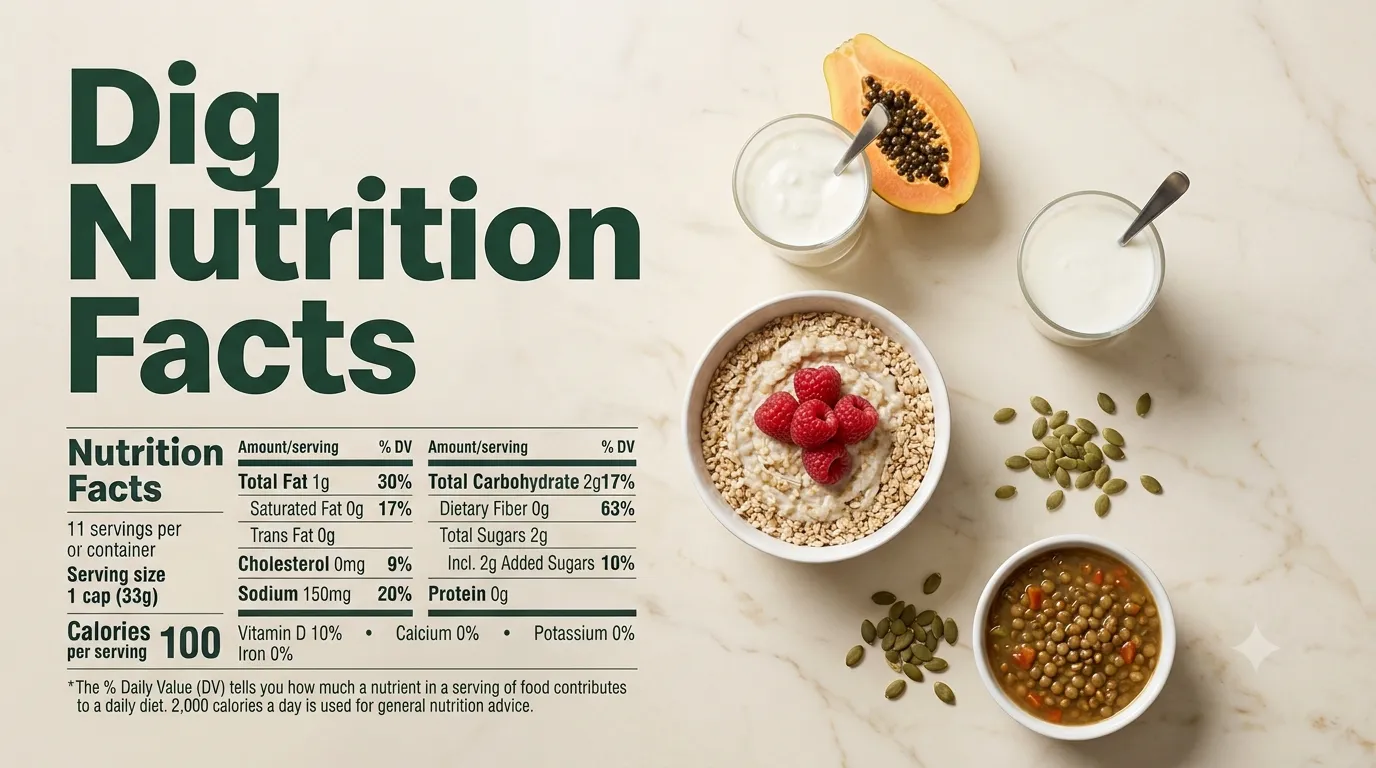
Dig Nutrition Facts 2026: Fiber, Enzymes, and Gut Data
Dig nutrition facts are the specific, quantified data points behind the broad advice to “eat more fiber” or “try probiotics.” This is not another list of foods that are vaguely good for your stomach. It is a breakdown of the exact grams of soluble and insoluble fiber, the colony-forming units in probiotic foods, and the milligram amounts of magnesium your digestive tract relies on to function. You need these numbers to move from knowing a food is healthy to understanding what dose of a nutrient you are actually getting.
According to the USDA FoodData Central database, the difference between a meal that regulates digestion and one that slows it down often comes down to a specific gap in grams of fiber or milligrams of magnesium. The Academy of Nutrition and Dietetics states that the vast majority of adults in the United States do not meet the Adequate Intake for dietary fiber, falling short by an average of 10 to 15 grams per day. This deficit has a direct, measurable mechanical consequence on intestinal transit time.
This article will give you the data tables that other guides leave out. You will see the side-by-side comparison of soluble and insoluble fiber in common foods. You will learn the CFU counts you should look for on a yogurt label. You will understand the mechanism by which magnesium sulfate attracts water into the colon. You will also see how heat destroys digestive enzymes in food and how to plan a day of eating that hits your fiber, magnesium, and hydration targets without supplementation.
dig nutrition facts
Dig nutrition facts encompass the quantitative profile of dietary fiber, probiotics, prebiotics, digestive enzymes, magnesium, and water found in foods that directly influence the human gastrointestinal tract. The foundational element is dietary fiber, which is the indigestible portion of plant cell walls that regulates bowel motility, feeds the gut microbiota, and binds cholesterol for excretion.
The official Adequate Intake for fiber, set by the National Academy of Medicine, is 38 grams per day for men aged 19 to 50 and 25 grams per day for women in the same age range. After age 50, these numbers drop to 30 grams for men and 21 grams for women because of decreased food intake. This is the baseline target. The average American consumes approximately 15 to 18 grams of fiber daily. The deficit is not trivial. It means the colon is receiving less bulk, which translates directly to slower transit time and harder stools. The mechanical role of insoluble fiber in stimulating peristalsis cannot be replicated by a supplement without the water that dietary fiber binds to.
Beyond fiber, the nutritional matrix that supports digestion includes magnesium, a mineral that acts as an osmotic agent and a muscle relaxant. The NIH Office of Dietary Supplements sets the RDA for magnesium at 420 milligrams for men and 320 milligrams for women. Water intake is the final non-negotiable variable. Without adequate water, soluble fiber becomes a paste, and insoluble fiber becomes a plug. The National Academy of Medicine sets the Adequate Intake for total water at 3.7 liters for men and 2.7 liters for women. This includes water from food and beverages.
Key Takeaway: Dig nutrition facts center on the 38-gram fiber target, the 420-milligram magnesium RDA, and 3.7 liters of daily water, and most people miss the fiber target by double digits.
digestive health nutrition
Digestive health nutrition refers to the strategy of consuming foods that support the mechanical, chemical, and microbial functions of the gastrointestinal system. The three pillars are bulking agents for motility, probiotic organisms for the colonic ecosystem, and enzyme-containing foods for chemical breakdown of macronutrients before they reach the lower intestine.
The bulking mechanism is driven by insoluble fiber. Cellulose, hemicellulose, and lignin are long-chain polysaccharides that resist human digestion. They scrape the intestinal wall, triggering the mechanoreceptors that initiate the peristaltic wave. Without this physical stimulation, the gut becomes sluggish. A 2020 meta-analysis in the Journal of the American Academy of Nutrition and Dietetics confirmed that for every gram of insoluble fiber consumed, the risk of constipation decreases measurably. This is a direct dose-response relationship that makes fiber one of the few nutrients where a specific daily gram target is established by a named national academy.
The chemical breakdown mechanism depends on digestive enzymes. Amylase, lipase, and proteases are produced endogenously by the salivary glands, stomach, and pancreas. However, specific foods contribute exogenous enzymes that can assist in the stomach’s fundus before gastric acid denatures them. Papain from papaya and bromelain from pineapple are cysteine proteases that remain active at the pH of the stomach for a limited time. They cleave peptide bonds in dietary protein, reducing the work the pancreas must do to produce trypsin and chymotrypsin. This is not a replacement for pancreatic function but a supplementary aid.
The microbial ecology of the colon is the third pillar. The term “gut health” is scientifically defined by the diversity and density of the colonic microbiota. A healthy colon contains approximately 100 trillion bacteria, dominated by the Firmicutes and Bacteroidetes phyla. Short-chain fatty acids like butyrate, propionate, and acetate are the metabolic byproducts of fiber fermentation by these bacteria. Butyrate is the primary fuel source for colonocytes, the cells lining the colon. Without it, the intestinal barrier becomes permeable, a state of dysfunction that is increasingly linked to systemic inflammation.
nutrition facts for gut health
Nutrition facts for gut health are the specific gram, milligram, and colony-forming unit values that define whether a food is clinically relevant for the digestive system. A food is not “good for gut health” in a generic sense. It is good because it contains a measurable amount of a compound that triggers a specific physiological response.
The probiotic content of fermented foods is the clearest example. To be classified as a probiotic food, a product must contain live microorganisms in sufficient numbers to confer a health benefit. The International Scientific Association for Probiotics and Prebiotics (ISAPP) requires that a probiotic product deliver at least 1 billion colony-forming units (CFUs) per serving. Commercial yogurt typically contains between 1 and 10 billion CFUs of Lactobacillus acidophilus and Bifidobacterium bifidum per cup. Kefir contains a more diverse consortium, often with over 30 strains and a total count exceeding 50 billion CFUs per cup. This is not marketing. It is a quantifiable microbiological density that clinical trials use as a standard comparator.
Prebiotic content is measured in grams of inulin, fructooligosaccharides, or galactooligosaccharides. A clove of garlic contains approximately 1.8 grams of inulin. A medium onion provides 1.2 grams. An underripe banana contains 6 to 8 grams of resistant starch, which functions as a prebiotic fiber that bypasses small intestinal digestion and is fermented in the colon. The dose at which prebiotics reliably stimulate Bifidobacterium growth in human trials is 3 to 5 grams per day.
The water content of food is also a nutritional fact. A cucumber is 95.2 percent water by weight. A cup of cooked oatmeal is 83.6 percent water. These water contributions count toward the total daily Adequate Intake. When you eat a high-fiber cereal without this intrinsic water, you must compensate by drinking more fluid. The matrix of water bound to fiber in whole foods is physiologically different from drinking a glass of water alongside a fiber cracker.
Key Takeaway: A food earns the label “gut-healthy” because it delivers a specific dose: 1 billion CFUs of probiotics, 3 grams of prebiotic fiber, or 95 percent water content to bind and move insoluble fiber.
foods for digestion
Foods for digestion fall into four functional categories, each with a distinct mechanism of action and a specific set of nutritional numbers that define their potency. The categories are: high-residue foods that provide insoluble fiber for mechanical stimulation, fermented foods that deliver live microbes, water-dense foods that support the movement of bulk, and enzyme-rich foods that assist chemical digestion.
The first category is represented by wheat bran, which contains approximately 24 grams of fiber per 100-gram serving, of which the vast majority is insoluble cellulose and hemicellulose. This is the most concentrated bulking agent in the food supply. A tablespoon of wheat bran in oatmeal transforms the transit time of the meal. Legumes, particularly lentils, provide 15.6 grams of fiber per cup cooked, split roughly equally between soluble and insoluble fractions. This dual action makes lentils simultaneously a bulking agent and a prebiotic.
The second category is fermented dairy and vegetables. Kefir made from whole milk contains 11 grams of protein and 50 billion CFUs of probiotics per cup. Kimchi and sauerkraut made through traditional lacto-fermentation contain Lactobacillus plantarum and Leuconostoc mesenteroides, species that survive gastric acid passage and transiently colonize the small intestine. The CFU count in raw sauerkraut is approximately 1 to 10 billion per half-cup, but pasteurization kills all live organisms.
The third category includes high-water-content foods like cucumber, zucchini, and watermelon. These foods contribute fluid to the colonic contents, keeping the fiber hydrated and soft. A dehydrated colon extracts water from the stool, leading to impaction. The fourth category is tropical fruits. Papaya contains papain at approximately 20 to 30 milligrams of active enzyme per 100 grams of fruit. Pineapple contains bromelain at approximately 10 to 20 milligrams per 100 grams. These are not trace amounts. They are physiologically active doses that can reduce gastric emptying time for a high-protein meal.
best foods for digestive system
The best foods for the digestive system are those that combine multiple digestive mechanisms into a single matrix. Oats, for example, contain 8 grams of fiber per cup, but the specific fiber, beta-glucan, is a soluble fiber that absorbs water and forms a gel. This gel slows gastric emptying, which improves the absorption of nutrients in the small intestine, and then acts as a prebiotic in the colon.
Fatty fish, particularly salmon, is not often listed on digestive health guides, but it should be. Salmon contains zero fiber, but it is the richest food source of vitamin D, with 526 IU per 100-gram serving. The vitamin D receptor is expressed on intestinal epithelial cells and immune cells in the gut-associated lymphoid tissue. According to a 2021 study in the journal Gut Microbes, vitamin D sufficiency is associated with increased gut microbial diversity and a higher abundance of butyrate-producing bacteria. The mechanism is the regulation of antimicrobial peptide secretion by Paneth cells.
The combination of yogurt and berries is another synergistic digestive meal. The yogurt provides 10 billion CFUs of Bifidobacterium and 12 grams of protein. The berries provide 4 grams of fiber and polyphenols that are metabolized by the colonic bacteria into bioactive phenolic acids. These acids have anti-inflammatory effects on the colonic epithelium.
Bone broth is a food with a digestive benefit that is often exaggerated but has a specific nutritional basis. Broth simmered for 12 hours or more contains approximately 6 to 12 grams of protein per cup, primarily in the form of gelatin and collagen peptides. Glycine, the most abundant amino acid in collagen, stimulates gastric acid secretion. For an older adult with hypochlorhydria, a cup of bone broth before a meal can provide the glycine that primes the stomach for protein digestion. This is not a cure for reflux. It is a specific amino acid stimulating a specific gastric function.
Key Takeaway: The best digestive foods combine mechanisms, like oats with both fiber and prebiotic beta-glucan, or salmon with vitamin D for microbial diversity and protein for gastric acid stimulation.
fiber nutrition facts
Fiber nutrition facts are the quantitative breakdown of total dietary fiber into its soluble and insoluble fractions, measured in grams per standard serving. The physiological effect of a fiber depends entirely on which fraction dominates the food. A food with mostly insoluble fiber accelerates transit. A food with mostly soluble fiber forms a gel and slows digestion.
Total dietary fiber on a nutrition label is the sum of both fractions. The FDA defines dietary fiber for labeling purposes as non-digestible soluble and insoluble carbohydrates with 3 or more monomeric units that are intrinsic and intact in plants or isolated and synthetic fibers that have a demonstrated beneficial physiological effect. The approved isolated fibers include beta-glucan, psyllium husk, cellulose, and guar gum.
Fiber Content Comparison Table (per serving)
Food (Serving)
Total Fiber (g)
Soluble Fiber (g)
Insoluble Fiber (g)
Primary Mechanism
Lentils (1 cup cooked)
15.6
7.8
7.8
Bulking and prebiotic
Oat Bran (1 cup, raw)
14.5
7.2
7.3
Gel formation, bile acid binding
Black Beans (1 cup)
15.0
5.4
9.6
Colonic fermentation
Apple (1 medium, with skin)
4.4
1.8
2.6
Pectin prebiotic, mechanical bulking
Wheat Bran (1/2 cup)
12.4
1.2
11.2
Mechanical stimulation of peristalsis
Psyllium Husk (1 tbsp)
6.0
5.4
0.6
Gel formation, stool water retention
The distinction between soluble and insoluble is clinically relevant for specific conditions. Irritable bowel syndrome with diarrhea responds better to soluble fiber, which gels the stool. Irritable bowel syndrome with constipation responds better to insoluble fiber, which stimulates motility. The data in this table allows you to choose the dominant fraction based on your specific symptom profile.
how much fiber per day
The Adequate Intake for fiber is 38 grams per day for men aged 19 to 50 and 25 grams per day for women aged 19 to 50, set by the National Academy of Medicine. These numbers are not the minimum required to prevent deficiency. They are the intake level associated with a reduced risk of coronary heart disease and optimal laxation based on the available epidemiological evidence.
Achieving 38 grams of fiber requires planning. A day that hits this target looks like this: one cup of cooked oatmeal for breakfast provides 4 grams. A cup of black bean soup for lunch provides 15 grams. A medium pear with skin as a snack provides 5.5 grams. A dinner plate with one cup of cooked quinoa and half a cup of broccoli provides 8 grams. A quarter cup of almonds as an evening snack provides 4.5 grams. The total is approximately 37 grams. This is a diet built entirely around whole plant foods.
The daily fiber target cannot be met by eating a standard Western diet pattern of processed grains, meat, and dairy. An 8-ounce serving of beef contains zero grams of fiber. A cup of milk contains zero grams of fiber. A white bread sandwich contributes 1 gram. A fast-food meal might contain 3 grams total. The deficit is structural to the food supply and must be corrected by intentional food choices.
Increasing fiber intake by more than 5 grams per day without a corresponding increase in water can cause bloating, gas, and constipation. The colonic bacteria require time to upregulate the enzymes that ferment the increased fiber load. A registered dietitian can help you structure a fiber titration schedule that adds 3 to 5 grams per week until the target is reached without gastrointestinal discomfort.
soluble vs insoluble fiber foods
Soluble fiber dissolves in water to form a viscous gel. Insoluble fiber does not dissolve and passes through the digestive tract largely intact. The physiological roles are entirely different, and understanding which foods deliver which fraction is the key to targeting specific digestive symptoms.
Soluble fiber is found in oats, barley, legumes, apples, citrus fruits, carrots, and psyllium. The specific soluble fibers are beta-glucan in oats, pectin in apples, and gums in legumes. The mechanism is binding. Soluble fiber binds to bile acids in the small intestine, forcing the liver to pull LDL cholesterol from the blood to synthesize replacement bile acids. The FDA has authorized a health claim that 3 grams of beta-glucan per day from oats can reduce the risk of heart disease. Soluble fiber also slows the absorption of glucose, reducing the postprandial glycemic response.
Insoluble fiber is found in wheat bran, vegetables, nuts, beans, and whole grains. The specific compounds are cellulose, hemicellulose, and lignin. These fibers are mechanically abrasive. They scrape the intestinal mucosa, stimulating mucus production and peristalsis. The clinical application is for constipation. Insoluble fiber draws water into the colonic lumen by osmosis, but not by forming a gel. The water remains free to soften the stool, and the fiber physically pushes against the intestinal wall.
The ratio of soluble to insoluble fiber in a food determines its net effect on bowel function. Oat bran is roughly 50 percent soluble and 50 percent insoluble. Wheat bran is approximately 90 percent insoluble and 10 percent soluble. Lentils are roughly 50 percent soluble and 50 percent insoluble, making them a balanced bulking and prebiotic source. A person with alternating bowel habits benefits from foods with a balanced ratio.
Key Takeaway: Use soluble fiber to slow transit and bind bile acids, and insoluble fiber to mechanically stimulate a sluggish colon, with lentils and oat bran offering a balanced ratio for mixed symptoms.
probiotic food nutrition
Probiotic food nutrition is defined by the genus, species, and strain of live microorganisms, quantified by colony-forming units per gram, and the viability of those organisms at the point of consumption. The nutrition facts panel on a yogurt container tells you the protein, fat, and sugar content, but it is the live culture statement that tells you whether the product is clinically relevant.
The minimum effective dose for a probiotic food to impact digestive health is 1 x 10^9 CFUs per serving, as established by the ISAPP. The label must specify the genus, species, and strain. “Contains live and active cultures” is a generic statement that guarantees nothing. Lactobacillus acidophilus NCFM is a specific strain with clinical trial data. Bifidobacterium lactis HN019 is a specific strain with published studies on intestinal transit time.
The CFU count declines over the shelf life of the product. A yogurt produced 4 weeks ago with an initial count of 10 billion CFUs may contain only 1 billion viable organisms by the time you eat it. Storage temperature matters. Probiotic foods must be kept refrigerated between 35 and 40 degrees Fahrenheit. Exposure to temperatures above 45 degrees for more than a few hours accelerates bacterial death.
Probiotic Food CFU Comparison (per 1 cup serving, approximate)
Food
Dominant Strains
Approximate CFUs
Notes
Yogurt (plain, whole milk)
L. acidophilus, B. bifidum
1 to 10 billion
Verify live culture statement on label
Kefir (plain)
L. kefiranofaciens, L. acidophilus, S. thermophilus
30 to 50 billion
More strain diversity than yogurt
Sauerkraut (raw, refrigerated)
L. plantarum, L. mesenteroides
1 to 10 billion per 1/2 cup
Pasteurized sauerkraut contains zero CFUs
Kimchi (raw)
L. plantarum, L. brevis
10 to 50 billion per 1/2 cup
Also contains prebiotic fiber from vegetables
Miso (unpasteurized)
A. oryzae, L. acidophilus
1 billion per tbsp
Do not boil miso; heat kills all bacteria
The live culture content of pasteurized foods is exactly zero. The heat of pasteurization, which exceeds 145 degrees F, kills all vegetative bacterial cells. Shelf-stable sauerkraut in a can or jar that has been heat-treated is nutritionally a vegetable, not a probiotic food. The live culture must be added after pasteurization, or the food must be consumed raw.
fermented foods nutrition facts
Fermented foods nutrition facts combine the baseline macronutrient and micronutrient profile of the raw ingredient with the metabolic byproducts of the fermentation process. Fermentation adds bioactive compounds that did not exist in the original food, including organic acids, bacteriocins, and in some cases, B vitamins synthesized by the fermenting organisms.
Kefir is a fermented dairy product with a nutrition profile that differs from unfermented milk. A cup of plain whole milk kefir contains 9 grams of protein, 8 grams of fat, 11 grams of carbohydrates, and 150 calories. The fermentation process reduces the lactose content because the kefir grains contain bacteria that produce the enzyme lactase. A cup of kefir contains approximately 50 percent less lactose than the milk it was made from.
Sauerkraut is fermented cabbage. A half-cup serving of raw sauerkraut contains 1 gram of protein, 0 grams of fat, 3 grams of carbohydrates, and 2 grams of fiber, for a total of 15 calories. The fermentation process produces lactic acid, which gives sauerkraut its sour taste and lowers its pH to below 4.0, a level at which pathogenic bacteria cannot survive. The vitamin C content of raw sauerkraut is approximately 15 milligrams per half-cup, which is 20 percent of the Daily Value. This is higher than the vitamin C content of raw cabbage because fermentation concentrates the ascorbic acid.
Miso is fermented soybean paste. A tablespoon contains 2 grams of protein, 1 gram of fat, 4 grams of carbohydrates, and 34 calories. The fermentation organism, Aspergillus oryzae, produces enzymes that break down the soy proteins into amino acids, making them more bioavailable. Miso also contains approximately 630 milligrams of sodium per tablespoon, which is 27 percent of the Daily Value. This high sodium content is the primary nutritional trade-off for miso’s probiotic and enzymatic benefits.
Key Takeaway: Fermentation changes the nutritional facts of a food, reducing lactose in kefir, adding vitamin C to sauerkraut, and increasing the bioavailability of soy protein in miso while concentrating its sodium.
prebiotic foods list and benefits
Prebiotic foods are defined by the ISAPP as substrates that are selectively utilized by host microorganisms conferring a health benefit. In practical nutritional terms, prebiotics are fibers that human enzymes cannot digest but that Bifidobacterium and Lactobacillus species can ferment in the colon. The specific compounds are inulin, fructooligosaccharides, galactooligosaccharides, and resistant starch.
The required dose for a prebiotic effect is 3 to 5 grams per day. A medium raw Jerusalem artichoke provides 3.5 grams of inulin. A medium leek provides 1.8 grams. A clove of garlic provides 1.8 grams. A medium underripe banana provides 6 to 8 grams of resistant starch, a prebiotic fiber that is converted to butyrate by colonic bacteria with unique efficiency.
The primary benefit of prebiotic fermentation is the production of short-chain fatty acids. Butyrate is the energy source for colonocytes. Acetate is absorbed into the portal vein and metabolized by the liver. Propionate is absorbed and influences hepatic gluconeogenesis. The systemic effects of prebiotics extend beyond the colon. A 2019 randomized controlled trial in the American Journal of Clinical Nutrition found that inulin supplementation increased calcium absorption by 12 percent in adolescents, an effect attributed to the acidification of the colonic contents by short-chain fatty acids, which increases the solubility of calcium.
Prebiotics are not uniformly beneficial. For a person with small intestinal bacterial overgrowth or IBS, fermentable fibers can exacerbate bloating, gas, and abdominal pain. A low-FODMAP diet, which restricts fermentable carbohydrates, is a clinically validated intervention for these conditions. A registered dietitian can help reintroduce prebiotic foods systematically to identify individual tolerance thresholds.
digestive enzymes in food
Digestive enzymes in food are proteins that catalyze the hydrolysis of macronutrients outside the body’s endogenous production by the pancreas. The most well-characterized food enzymes are papain from papaya, bromelain from pineapple, actinidin from kiwi, and amylase from sprouted grains.
Papain is a cysteine protease extracted from the latex of unripe papaya. It cleaves peptide bonds with broad specificity, meaning it breaks down most dietary proteins. A 100-gram serving of fresh papaya contains approximately 20 to 30 milligrams of active papain. The enzyme is active in the acidic environment of the stomach but denatures after 30 to 45 minutes at pH below 2.0. The clinical application is the digestion of a protein-rich meal. A 2018 study in the Journal of Medicinal Food found that a papaya enzyme preparation reduced post-meal bloating and gastric fullness in patients with functional dyspepsia.
Bromelain is a mixture of proteases from the pineapple stem. A 100-gram serving of fresh pineapple contains approximately 10 to 20 milligrams of bromelain. Bromelain retains activity from pH 3.0 to 9.0, making it more stable across the digestive tract than papain. Both papain and bromelain are destroyed by heat above 158 degrees Fahrenheit. Canned pineapple and cooked papaya contain no active enzymes.
Actinidin from kiwi is notable because it digests not only protein but also enhances the digestion of gluten. A 2022 study in the journal Nutrients found that actinidin accelerated the breakdown of the 33-mer gliadin peptide, which is resistant to human proteases and contributes to the immunogenicity of gluten. For a person with non-celiac gluten sensitivity, consuming fresh kiwi alongside a gluten-containing meal is an evidence-based strategy to support gluten digestion, though it does not replace a gluten-free diet for those with celiac disease.
magnesium for digestion
Magnesium for digestion works through two distinct mechanisms. First, magnesium acts as an osmotic laxative. When magnesium oxide or magnesium citrate reaches the colon, the unabsorbed portion draws water into the intestinal lumen, increasing the volume and softening the consistency of the stool. Second, magnesium regulates the calcium-dependent contraction and relaxation of smooth muscle in the intestinal wall.
The RDA for magnesium is 420 milligrams per day for men and 320 milligrams per day for women. Food sources deliver magnesium in a matrix that is absorbed with 30 to 40 percent efficiency. A quarter cup of pumpkin seeds contains 190 milligrams of magnesium. A cup of cooked spinach contains 157 milligrams. A cup of cooked black beans contains 120 milligrams. The Dietary Guidelines for Americans 2020-2025 identifies magnesium as a nutrient of public health concern because intake is consistently below the Estimated Average Requirement.
Magnesium supplements for constipation are a pharmacological intervention, not a dietary one. Magnesium citrate at a dose of 300 to 600 milligrams is a standard over-the-counter laxative. The mechanism is osmotic. The magnesium ion is poorly absorbed, so it remains in the intestinal lumen, where it attracts water. The increased luminal volume stretches the colon wall, triggering the peristaltic reflex.
Magnesium oxide has a lower bioavailability than magnesium citrate or glycinate but a stronger osmotic effect because more of the dose remains in the gut. Magnesium glycinate is highly absorbable and is the preferred form for correcting a systemic deficiency without causing diarrhea. The Tolerable Upper Intake Level for magnesium from supplements is 350 milligrams per day. Exceeding this level from supplements, but not from food, causes diarrhea and can, in extreme cases, lead to hypermagnesemia in people with impaired kidney function.
Key Takeaway: Magnesium pulls water into the colon to trigger a bowel movement, and pumpkin seeds deliver nearly half the RDA, but supplement doses above the 350-milligram UL must be managed carefully.
water and digestion
Water and digestion are linked by the biophysics of solubility and transport. Every enzymatic reaction in digestion occurs in an aqueous solution. Water is the solvent for salivary amylase, the medium for gastric acid, and the vehicle that carries the chyme through the small intestine and colon. Insufficient water intake is a direct and common cause of slow-transit constipation.
The National Academy of Medicine sets the Adequate Intake for total water at 3.7 liters per day for men and 2.7 liters per day for women. These figures include water from all beverages and the water content of food. The water content of food is a substantial contributor. A cup of watermelon contains 140 milliliters of water. A cup of cooked oatmeal contains 200 milliliters. A person eating a diet rich in whole fruits and vegetables may obtain 20 to 30 percent of their total water from food.
The relationship between fiber and water is mechanical. Soluble fiber absorbs water and forms a gel. This gel matrix must be hydrated to function. Consuming a tablespoon of psyllium husk without adequate water creates a viscous mass that can obstruct the esophagus or small intestine. The FDA requires a warning label on psyllium products stating that they must be taken with at least 8 ounces of liquid.
The colon is the primary site of water absorption in the digestive tract. Approximately 1.5 liters of water enter the colon each day, and all but 100 to 200 milliliters are absorbed. When total body water is low, the colon extracts additional water from the luminal contents to maintain plasma volume. The result is dry, hard stools. The clinical recommendation is simple and non-negotiable. Every gram of fiber consumed requires an additional 15 to 20 milliliters of water beyond basal needs.
digestive health diet plan
A digestive health diet plan structures the intake of fiber, probiotics, prebiotics, and water across a 24-hour period in doses that avoid gastrointestinal distress while meeting the Adequate Intake targets. The plan is built around the principles of fiber titration, prebiotic spacing, and probiotic timing.
A one-day template that meets the 38-gram fiber target for men and the 25-gram target for women can be structured as follows. For breakfast, 1 cup of cooked steel-cut oats with 1 tablespoon of wheat bran and half a cup of raspberries provides 10 grams of fiber, 5 grams soluble and 5 grams insoluble. A cup of plain kefir on the side provides 50 billion CFUs of probiotics and 11 grams of protein.
For a mid-morning snack, one medium pear with the skin provides 5.5 grams of fiber and 84 percent water by weight. For lunch, a bowl with 1 cup of cooked lentils, half a cup of quinoa, and a cup of steamed spinach provides 17 grams of fiber and 280 milligrams of magnesium. The fiber here is a balanced mix of soluble prebiotic fiber from lentils and insoluble fiber from spinach.
For an afternoon snack, a quarter cup of almonds provides 4.5 grams of fiber and 100 milligrams of magnesium. For dinner, a 4-ounce serving of baked salmon with a cup of roasted Brussels sprouts provides 6 grams of fiber and 526 IU of vitamin D. The total for the day is approximately 43 grams of fiber, 500 milligrams of magnesium, and 2.5 liters of water from food and beverages.
This plan introduces fiber in a gradual titration. A person currently eating 15 grams of fiber per day should not jump to 43 grams. A registered dietitian would recommend adding 3 to 5 grams per week, monitoring for bloating, and increasing water intake by 8 ounces for every additional 5 grams of fiber. The probiotic and prebiotic components are spaced across the day to avoid a single large fermentable load.
gut microbiome diet
A gut microbiome diet is designed not just to feed the host but to cultivate a diverse and metabolically active colonic microbial community. The nutritional targets are 30 or more different plant species per week, a prebiotic dose of 5 grams per day, and a daily intake of polyphenols that reach the colon undigested.
A 2018 study in the journal Cell Host & Microbe found that participants who consumed 30 or more different types of plant foods per week had a significantly more diverse gut microbiome than those who consumed 10 or fewer. The diversity metric is the Shannon index, a statistical measure of species richness and evenness. A higher score is associated with resilience against pathogenic infection and a lower risk of antibiotic-associated diarrhea.
The polyphenol content of food is a microbiome variable that is underrepresented in standard nutrition facts. Polyphenols are not absorbed in the small intestine. Approximately 90 percent of dietary polyphenols reach the colon, where they are metabolized by bacteria into phenolic acids with anti-inflammatory properties. The polyphenol content of a cup of blueberries is 560 milligrams. A cup of black beans contains 480 milligrams. A square of 85 percent dark chocolate contains 600 milligrams. These compounds are not listed on nutrition facts panels but are quantifiable.
The microbiome diet also restricts the food that pathogenic bacteria feed on. A diet high in saturated fat and low in fiber shifts the gut microbial composition toward Bilophila wadsworthia, a bacterium that metabolizes bile acids and produces hydrogen sulfide, a compound that damages the intestinal barrier. The dietary recommendation is not to eliminate fat but to consume it alongside fiber-rich plant matter that supports competing bacterial species that produce butyrate instead of hydrogen sulfide.
Key Takeaway: The gut microbiome diet target is 30 different plants per week, 5 grams of prebiotic fiber daily, and a regular intake of polyphenol-rich foods like blueberries and dark chocolate that reach the colon undigested.
Frequently Asked Questions About Digestive Nutrition
What are the best foods for digestion based on nutrition facts?
The best foods are those with quantifiable digestive support, including lentils for their 15.6 grams of fiber per cup, kefir for its 50 billion CFUs of probiotics, and pumpkin seeds for their 190 milligrams of magnesium per quarter cup.
These numbers are sourced from the USDA FoodData Central database.
Papaya and pineapple provide measurable amounts of papain and bromelain, respectively, which assist gastric protein digestion.
How many grams of fiber do I need for good digestion?
The National Academy of Medicine sets the Adequate Intake at 38 grams per day for men aged 19 to 50 and 25 grams per day for women.
This is the intake level associated with optimal laxation and reduced coronary heart disease risk.
You should add fiber to your diet at a rate of 3 to 5 grams per week to avoid gas and bloating.
What is the difference between soluble and insoluble fiber?
Soluble fiber dissolves in water to form a gel that slows digestion, binds bile acids, and lowers blood cholesterol.
Insoluble fiber does not dissolve and mechanically stimulates the intestinal wall to accelerate the movement of food through the digestive tract.
Oat bran is a balanced source, while wheat bran is predominantly insoluble.
How many CFUs are in a cup of yogurt?
A cup of commercial yogurt contains between 1 and 10 billion colony-forming units of Lactobacillus and Bifidobacterium species.
Kefir contains 30 to 50 billion CFUs and a more diverse range of bacterial and yeast species.
Pasteurized yogurt or heat-treated fermented foods contain zero live probiotics.
What does magnesium do for your digestive system?
Magnesium works as an osmotic laxative by drawing water into the colon, which increases stool volume and triggers the peristaltic reflex.
It also acts as a smooth muscle relaxant, which can help relieve the cramping associated with functional constipation.
Food sources include pumpkin seeds with 190 milligrams per quarter cup, and the supplement dose for laxation is 300 to 600 milligrams of magnesium citrate.
Can digestive enzymes from food help with bloating?
Yes, the enzymes papain from papaya and bromelain from pineapple are cysteine proteases that break down dietary protein in the acidic environment of the stomach.
A 2018 study found that a papaya enzyme preparation reduced post-meal bloating in patients with functional dyspepsia.
Heat destroys these enzymes, so canned pineapple and cooked papaya have no active enzyme function.
The digestive system operates on a straightforward mechanical, chemical, and microbial basis. Give it 38 grams of fiber, 3.7 liters of water, and 420 milligrams of magnesium, and peristalsis works. Add 5 grams of prebiotic fiber, and the butyrate-producing bacteria in your colon thrive. Include 50 billion CFUs from kefir, and you supplement that community with a known consortium of beneficial microbes.
Your next step is to audit your current intake against these targets. Track your fiber grams for three days. Compare your total to the 38-gram or 25-gram Adequate Intake. If there is a gap, fill it with lentils, oats, or wheat bran. If your water intake is low, add a glass of water for every 5 grams of fiber you add. You now have the numbers. The intervention is simply eating to meet them.