Pumpkin Pie Nutrition Facts: Slice Breakdown and Swaps
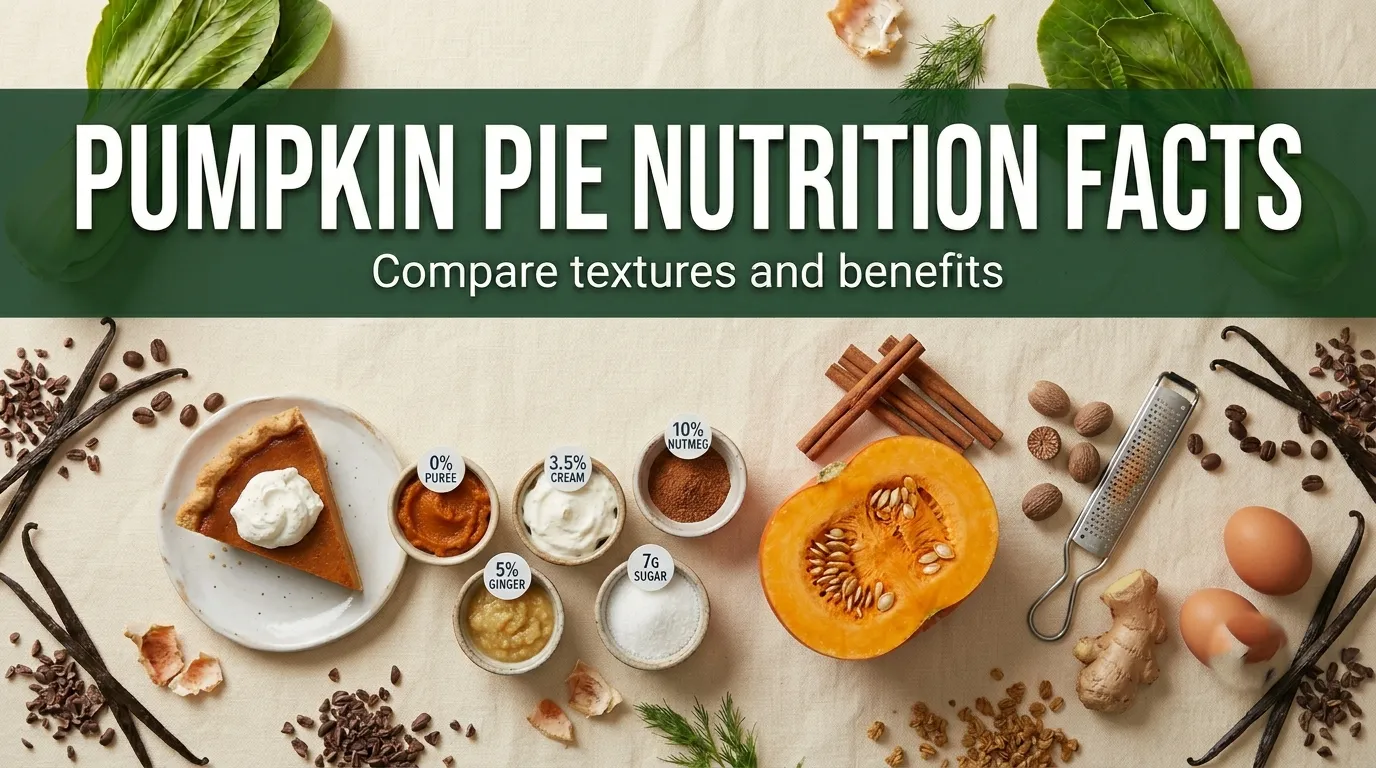
A standard slice of pumpkin pie contains about 323 calories, 17 grams of fat, 42 grams of carbohydrate, and 25 grams of sugar, but it also delivers 50 percent of your daily vitamin A needs in a single serving. Understanding pumpkin pie nutrition facts means recognizing this is a nutrient-dense dessert that’s still a dessert. The custard filling provides genuine nutritional value from real pumpkin, eggs, and milk. The crust and the added sugar are the caloric anchors that hold it back.
The holiday season puts pumpkin pie directly in your path, and you need the actual numbers to make a decision you feel good about. The USDA FoodData Central database records that one-eighth of a 9-inch commercially prepared pie provides 323 calories and a full 50 percent of the Daily Value for vitamin A, almost entirely from the beta-carotene in the pumpkin. That’s more vitamin A than a serving of most green vegetables, delivered in a dessert. The challenge is the 25 grams of sugar and the butter-laden crust that come along with it.
This article deconstructs the pie into its three components: the crust, the filling, and the spices. You’ll see how homemade compares to store-bought, how pumpkin pie stacks up against pecan and apple pie in a head-to-head table, and exactly what ingredient swaps can cut the sugar and saturated fat without ruining the holiday experience. You’re not here to be told dessert is forbidden. You’re here to learn how to make it work.
What Are the Pumpkin Pie Nutrition Facts?
The core pumpkin pie nutrition facts for one slice of a standard 9-inch pie include 323 calories, 6 grams of protein, 17 grams of total fat, 42 grams of carbohydrate, 2.4 grams of fiber, and a micronutrient profile highlighted by 448 micrograms of vitamin A as retinol activity equivalents. This nutritional snapshot comes directly from the USDA FoodData Central database for commercially prepared pumpkin pie. A homemade version may vary by 10 to 20 percent depending on the recipe’s specific amounts of sugar, cream, and butter.
The fat in pumpkin pie is a mix of saturated and unsaturated fat. The crust is the primary source of solid fat, typically from butter, lard, or shortening. The filling contributes fat from the eggs and the evaporated milk or heavy cream. A slice contains roughly 6 to 8 grams of saturated fat, which is 30 to 40 percent of the American Heart Association’s recommended daily limit of 20 grams for a 2,000-calorie diet. This is not a heart-healthy food. It’s a once-in-a-while indulgence that carries a saturated fat load worth noting.
The carbohydrate content is split nearly evenly between starch and sugar. The starch comes from the flour in the crust. The sugar comes from the added sugar in the recipe, typically brown or granulated, plus the natural sugars in the pumpkin and the lactose in the milk. The Dietary Guidelines for Americans 2020-2025 recommend limiting added sugar to less than 10 percent of daily calories, or about 50 grams on a 2,000-calorie diet. A single slice of pumpkin pie with 25 grams of sugar uses up half of that daily budget.
Calories in a Slice of Pumpkin Pie
A standard 1/8 slice of a 9-inch pumpkin pie contains 323 calories, but the range can span from 250 calories for a crustless or lighter recipe to over 450 calories for a deep-dish or cheesecake-style variation. The calories in a slice of pumpkin pie are not fixed. They are a product of the recipe. Store-bought pies tend to cluster around the 320 to 340 calorie mark because manufacturers standardize the fat and sugar for consistency. A homemade pie made from a traditional family recipe with heavy cream and an extra-thick butter crust can easily hit 400 calories.
Understanding where the calories come from helps you make targeted modifications. The crust accounts for roughly 40 to 45 percent of the total calories. A standard butter-and-flour pie crust contributes about 130 to 150 calories to each slice. The filling accounts for the remaining 55 to 60 percent, with the sugar and evaporated milk being the primary calorie contributors. The pumpkin itself is remarkably low in calories. A half-cup of plain pumpkin puree contains only 42 calories. The calorie density of pumpkin pie is not the pumpkin’s fault.
| Pie Type | Slice Calories | Fat (g) | Sugar (g) |
|---|---|---|---|
| Standard Commercial | 323 | 17 | 25 |
| Homemade Traditional | 380 | 22 | 28 |
| Crustless or Graham Cracker | 250 | 10 | 20 |
| Deep-Dish with Whipped Cream | 480 | 28 | 35 |
Whipped cream is a silent calorie amplifier. A generous dollop of canned or homemade whipped cream adds 50 to 80 calories and 5 to 7 grams of fat. A scoop of vanilla ice cream on a warm slice can push the total dessert past 550 calories. The pie itself is manageable. The toppings are what turn a slice into a meal’s worth of energy.
Key Takeaway: A standard slice is 323 calories. The crust is 40 to 45 percent of that. Ditch the whipped cream or cut a smaller sliver to stay in control.
Pumpkin Pie Macronutrient and Sugar Breakdown
The macronutrient and sugar breakdown of a pumpkin pie slice is 42 grams of carbohydrate, 25 grams of sugar, 17 grams of fat, and 6 grams of protein. The carbohydrate number is the one that gets the most attention from people tracking macros or managing diabetes. The sugar number is the one the American Heart Association cares about most. The fat number is a mix of butter from the crust and dairy from the filling.
The protein content, while modest at 6 grams, is complete. It comes from the eggs and the milk proteins casein and whey in the evaporated milk. This is not a high-protein food, but the protein is of good quality and contributes to the satiety that pumpkin pie provides compared to a sugar-only dessert like a fruit sorbet. The fat, protein, and fiber together slow gastric emptying, giving pumpkin pie a lower glycemic response than its sugar content alone would predict.
The added sugar in a standard recipe is typically 15 to 20 grams of the total 25 grams. The remaining 5 to 10 grams come from the lactose in the milk and the naturally occurring sugars in the pumpkin. The FDA’s updated Nutrition Facts label requires manufacturers to break out added sugars separately. If you buy a store-bought pie, you can see the exact split. If you make your own, you control the split. Reducing the sugar in the recipe by one-third is often undetectable to taste, especially with the spices providing flavor complexity.
Pumpkin Pie Crust Nutrition Deconstructed
A traditional pumpkin pie crust is made from all-purpose flour, a solid fat such as butter or shortening, salt, and cold water, and it contributes approximately 140 empty calories, 9 grams of fat, and 14 grams of refined carbohydrate per slice with virtually no vitamins or minerals. The pumpkin pie crust nutrition profile is the weakest link in the dessert. It is the single component with the lowest nutritional density and the highest concentration of saturated fat and refined starch.
Flour-based pie crust is a processed carbohydrate. The wheat endosperm is separated from the bran and germ during milling, removing the fiber, B vitamins, iron, and phytochemicals that made the whole grain nutritionally valuable. What remains is starch, a small amount of protein in the form of gluten, and water. The solid fat coats the flour proteins and prevents gluten development, which creates the flaky texture but also embeds saturated fat directly into a rapidly digestible carbohydrate matrix.
The type of fat matters. Butter provides saturated fat and cholesterol. Shortening, particularly older formulations, may contain partially hydrogenated oils and trans fats, which the FDA has now largely phased out of the food supply but which can still appear in some commercial baked goods. A 2018 FDA ban on partially hydrogenated oils made trans fats far less common, but imported or artisanal pies may not comply. A homemade crust with butter is a known quantity. A store-bought crust or pie shell has an ingredient list you must read.
Key Takeaway: The crust is 140 calories of refined flour and saturated fat with almost no nutritional return. It is the first place to hack for a healthier pie.
Pumpkin Pie Filling Nutrition: The Real Pumpkin Content
The pumpkin pie filling delivers the genuine nutritional value of the dessert, with real pumpkin puree providing beta-carotene, fiber, potassium, and vitamin C. The pumpkin pie filling nutrition is built on a foundation of Cucurbita pepo, the same winter squash that, on its own, is a nutritional powerhouse. A half-cup of plain pumpkin puree contains 42 calories, 3.6 grams of fiber, 1.4 grams of protein, and 190 percent of the Daily Value for vitamin A.
The evaporated milk in the filling adds calcium, vitamin D, and additional protein. Two large eggs contribute 12 grams of complete protein to the whole pie, along with choline for brain health and lutein for eye health. The filling is not the problem. It’s a baked custard with real nutritional merit. The problem is that the filling is sweetened with three-quarters of a cup to a full cup of sugar for a standard 9-inch pie.
A practical piece of label literacy involves checking whether a store-bought pie uses “pumpkin” or “pumpkin pie filling.” The latter is a pre-sweetened, pre-spiced product that contains added sugar and sometimes corn syrup. The ingredient list on a can of pumpkin pie filling reads: pumpkin, sugar, water, spices, salt. You are better off buying plain pumpkin puree, whose sole ingredient is pumpkin, and adding your own sugar and spices at a level you control.
Vitamin A and Beta-Carotene in Pumpkin Pie
A single slice of pumpkin pie provides approximately 448 micrograms of retinol activity equivalents of vitamin A, which is 50 percent of the Daily Value, derived almost entirely from the provitamin A carotenoid beta-carotene in the pumpkin. The vitamin A and beta-carotene in pumpkin pie make it one of the few desserts that can legitimately claim to be a good source of a vitamin. The deep orange color of the filling is the beta-carotene, the same pigment found in carrots and sweet potatoes.
The conversion of beta-carotene to retinol, the active form of vitamin A, is not a one-to-one process. The NIH Office of Dietary Supplements states that 12 micrograms of dietary beta-carotene are required to produce 1 microgram of retinol. The fat in the pie crust and the evaporated milk significantly enhances the absorption of this fat-soluble vitamin. Beta-carotene is absorbed into enterocytes and cleaved into retinal by the enzyme beta-carotene 15,15′-dioxygenase. The fat is not optional. It’s part of the absorption mechanism.
Vitamin A is essential for the visual cycle, specifically the regeneration of rhodopsin in the rod cells of the retina. It also regulates gene expression in immune cells and maintains the integrity of epithelial barriers. A slice of pumpkin pie is not a vitamin supplement, and it should not be rationalized as such. However, the vitamin A it provides is genuinely bioavailable and physiologically meaningful. A 2019 study in the American Journal of Clinical Nutrition confirmed that beta-carotene absorption from cooked, pureed pumpkin is efficient when consumed with dietary fat.
Key Takeaway: Pumpkin pie gives you half a day’s vitamin A in one slice, and the fat in the crust helps you absorb it. That’s real nutrition hiding in a dessert.
Pumpkin Pie Spices: Cinnamon, Ginger, Nutmeg Benefits
The classic pumpkin pie spice blend of cinnamon, ginger, nutmeg, and cloves contains bioactive compounds with documented effects on post-meal blood glucose, inflammation, and gastric motility. The pumpkin pie spices are not just flavorings. They are concentrated sources of phenolic compounds and volatile oils that have been studied in randomized controlled trials for their metabolic effects. The tablespoon of spice blend in a pie is not a therapeutic dose, but it is a genuine dietary contribution.
Cinnamon contains cinnamaldehyde, a compound that has been shown to improve insulin sensitivity in some human trials. A 2013 meta-analysis published in the Journal of Medicinal Food found that cinnamon intake was associated with a statistically significant reduction in fasting blood glucose. The mechanism appears to involve the activation of the insulin receptor tyrosine kinase and the translocation of glucose transporter type 4 to the cell surface. The amount of cinnamon in a slice of pie is roughly half a gram, far less than the 1 to 6 grams used in clinical studies.
Ginger contains gingerol, a pungent phenolic that accelerates gastric emptying and has anti-nausea properties. Nutmeg contains myristicin, a compound with mild sedative effects in high doses. Cloves contain eugenol, which has topical anesthetic and mild anti-inflammatory properties. A teaspoon of ground cloves has an oxygen radical absorbance capacity score that exceeds that of blueberries on a per-gram basis. The spices in pumpkin pie are not just tradition. They are functional plant compounds that your body recognizes and responds to.
Homemade vs Store-Bought Pumpkin Pie Nutrition
Homemade pumpkin pie typically has 10 to 15 percent fewer calories and sugar than store-bought versions because you control the sugar amount and the fat source, and you can eliminate the preservatives and industrial stabilizers. The homemade vs store-bought pumpkin pie nutrition comparison is a clear win for the home kitchen. A store-bought pie is engineered for shelf stability, uniform texture, and maximum sweetness at minimum cost.
Commercial pies often use palm oil or interesterified soybean oil in the crust instead of butter. These fats are shelf-stable and cheap but lack the short-chain fatty acids and fat-soluble vitamins present in butter. The filling in a commercial pie may contain high fructose corn syrup in addition to or instead of cane sugar, depending on the manufacturer’s formulation. The ingredient list on a frozen pumpkin pie can run to 30 items, including mono- and diglycerides, polysorbate 60, and artificial flavor.
| Feature | Homemade | Store-Bought |
|---|---|---|
| Crust Fat | Butter (your choice) | Palm oil, shortening |
| Sweetener | Cane sugar, honey, maple | Corn syrup, cane sugar |
| Spices | Freshly ground blend | Pre-mixed with anti-caking agents |
| Preservatives | None | Potassium sorbate, sodium benzoate |
| Control | Complete | None |
Making your own pie takes time. The nutritional return on that time investment is a dessert made from whole ingredients without the additives. You can also modify the recipe. Reducing the sugar by a quarter-cup and using a graham cracker crust with a light brush of butter immediately improves the fat and sugar profile relative to the standard commercial product.
Key Takeaway: Homemade pie wins on ingredient quality and customizability. Store-bought wins on convenience. The nutritional gap is about 40 calories and 5 grams of sugar per slice.
Pumpkin Pie vs Apple Pie: A Nutrition Comparison
Pumpkin pie has fewer calories, less sugar, and more vitamin A than apple pie, but apple pie has slightly more fiber from the fruit. The pumpkin pie vs apple pie nutrition comparison favors pumpkin on most metrics, primarily because of the custard filling’s protein and fat content and the higher water content of the pumpkin compared to the cooked-down apple filling.
| Per Slice | Pumpkin Pie | Apple Pie |
|---|---|---|
| Calories | 323 | 370 |
| Total Fat | 17 g | 18 g |
| Sugar | 25 g | 30 g |
| Fiber | 2.4 g | 3.5 g |
| Protein | 6 g | 3 g |
| Vitamin A | 50% DV | 2% DV |
The protein difference is driven by the eggs and milk in the pumpkin custard. Apple pie filling is fruit, sugar, and starch. There is minimal protein. The fiber difference favors apple pie because whole apple slices contribute more structural fiber than pumpkin puree. The sugar difference is often a function of the double-crust apple pie, which has a top layer of sweetened dough that the single-crust pumpkin pie lacks. If you are choosing between the two for a single slice on a holiday plate, pumpkin is the better nutritional bet.
Pumpkin Pie vs Sweet Potato Pie vs Pecan Pie
Pumpkin pie and sweet potato pie are nutritionally comparable, with sweet potato pie having slightly more fiber and vitamin A, while pecan pie is a calorie and sugar bomb containing nearly 500 calories and 30 grams of sugar per slice. The pumpkin pie vs sweet potato pie vs pecan pie comparison is a study in extremes. The custard-based pies cluster together. The nut pie is in a different category entirely.
| Per Slice | Pumpkin | Sweet Potato | Pecan |
|---|---|---|---|
| Calories | 323 | 340 | 500 |
| Total Fat | 17 g | 16 g | 27 g |
| Sugar | 25 g | 28 g | 30 g |
| Fiber | 2.4 g | 3 g | 2 g |
| Protein | 6 g | 5 g | 6 g |
Pecan pie is held together by corn syrup and sugar, with the pecans providing healthy unsaturated fats and a small amount of fiber and protein. The calorie density of pecan pie is due to the fat from the nuts plus the liquid sugar binder. A slice of pecan pie has roughly the same calories as two slices of pumpkin pie. The American Heart Association recommends limiting added sugar and saturated fat, and pecan pie overshoots on both metrics. If you love pecan pie, have a sliver. The difference between a half-slice and a full slice is over 200 calories.
Key Takeaway: Pumpkin and sweet potato pie are nutritional cousins. Pecan pie is in a caloric league of its own. Choose pumpkin for the best balance.
Is Pumpkin Pie Healthy? An Honest Dietitian Perspective
Pumpkin pie is a nutrient-dense dessert that provides vitamin A, protein, and fiber from real food ingredients, but its sugar and saturated fat content keep it firmly in the “once-in-a-while” category rather than the “healthy everyday food” category. The question “is pumpkin pie healthy” cannot be answered with a simple yes or no. It depends on the definition of healthy. If healthy means nutrient-dense per calorie, pumpkin pie performs better than almost any other pie. If healthy means a food you can eat freely without metabolic consequence, no dessert qualifies.
A registered dietitian would frame pumpkin pie as a reasonable holiday choice with genuine nutritional merits. The pumpkin is a vegetable. The eggs and milk are high-quality protein sources. The spices are bioactive. The 323 calories are manageable. The 25 grams of sugar are a splurge but not a disaster on a special occasion. The Academy of Nutrition and Dietetics endorses the concept of “all foods fit” within an overall healthy eating pattern. Pumpkin pie fits. It simply does not fit every day.
The context of the entire meal matters. If your Thanksgiving plate is roasted turkey breast, green beans, a baked sweet potato, and a slice of pumpkin pie, the meal’s total nutritional profile is excellent. If your plate is two slices of pie, a dinner roll, and a scoop of mashed potatoes with gravy, the meal lacks balance. The healthiness of pumpkin pie is partly intrinsic and partly about what else you ate that day. It is a better choice than most holiday desserts, but it is still a dessert.
Pumpkin Pie and Diabetes: What You Should Know
A slice of pumpkin pie contains 42 grams of carbohydrate and 25 grams of sugar, which will raise blood glucose, but the fat and protein in the custard slow the absorption, making the glycemic response more gradual than a pure sugar dessert. The pumpkin pie and diabetes conversation requires precision. This is not a food to eat without planning, but it is also not a food that must be categorically avoided by someone with well-managed diabetes.
The glycemic index of pumpkin pie is estimated to be moderate, around 55 to 60. The fat from the crust and the protein from the eggs and milk delay gastric emptying, spreading the glucose absorption over a longer period. A certified diabetes educator would advise a patient to count the 42 grams of carbohydrate as part of their meal plan, to pair the pie with a source of lean protein and non-starchy vegetables, and to consider taking a 15-minute walk after the meal to help shuttle glucose into muscle cells via contraction-mediated glucose uptake.
The spice blend matters here, too. Cinnamon, as noted earlier, has a small but real effect on insulin sensitivity. A quarter-teaspoon of cinnamon in a slice of pie is not a treatment, but it is a beneficial nudge in the right direction. A person with diabetes who chooses to eat pumpkin pie should monitor their blood glucose two hours post-meal. A single reading above 180 milligrams per deciliter is information, not a crisis, but it should inform future portion sizes and meal pairings. A physician or endocrinologist who manages your diabetes should be aware of your holiday eating patterns.
Key Takeaway: Plan for the 42 grams of carbohydrate. Walk after the meal. Check your blood sugar. Pumpkin pie can be managed with diabetes. It is not a forbidden food.
Pumpkin Pie for Weight Loss: Can It Fit?
A 323-calorie slice of pumpkin pie can fit into a weight loss plan if it is accounted for in the daily calorie budget and if it replaces other discretionary calories rather than being added on top of them. The pumpkin pie for weight loss question is about energy balance. A pound of body fat represents roughly 3,500 stored calories. A single slice of pie at 323 calories, consumed once per week during the holiday season, will not derail a consistent calorie deficit.
The risk is not the pie. The risk is the pattern. A Thanksgiving meal can exceed 3,000 calories, with the pie being only a fraction of the total. The leftovers that follow for three days afterward are the larger threat to weight loss progress. A practical strategy is to enjoy one slice on the holiday itself, pack one slice to take home, and freeze the rest. Pumpkin pie freezes well. A frozen, out-of-sight pie is far less likely to be eaten mindlessly than one sitting on the counter.
The protein content of pumpkin pie, 6 grams per slice, is higher than that of most desserts and contributes to satiety. A person who finishes their meal with a slice of pumpkin pie and a cup of black coffee may feel more satisfied and less likely to graze on cookies two hours later than someone who skipped dessert and feels deprived. The psychology of restriction is as important as the math. A planned, savored indulgence is metabolically and emotionally healthier than a cycle of denial and binge.
Healthy Pumpkin Pie Ingredient Swaps That Work
You can cut 80 to 100 calories and 8 to 10 grams of sugar per slice by swapping the traditional pie crust for a graham cracker or almond flour crust, reducing the sugar in the filling by one-third, and using evaporated skim milk instead of full-fat evaporated milk. These healthy pumpkin pie ingredient swaps are not extreme. They are small adjustments that preserve the texture and flavor of the classic pie while improving the nutritional profile.
The swaps that deliver the most nutritional impact target the crust and the sugar. A graham cracker crust made with half the butter called for in the recipe still holds together and provides a familiar flavor. An almond flour crust, pressed into the pan and pre-baked, eliminates the refined flour entirely and adds monounsaturated fat and vitamin E from the almonds. The filling modifications are even simpler. Replace the evaporated milk with evaporated skim milk. The protein content remains identical. The saturated fat drops by two-thirds.
- Crust: Graham cracker (use 3 tbsp melted butter instead of 6) or almond flour press-in
- Milk: Evaporated skim milk instead of whole evaporated milk
- Sugar: 2/3 cup instead of 1 cup (brown sugar or coconut sugar for flavor depth)
- Eggs: Keep them. They are the protein and structure backbone.
- Topping: Greek yogurt whipped with a touch of maple syrup instead of whipped cream
A person with celiac disease can use an almond flour or certified gluten-free oat flour crust. A person with lactose intolerance can use lactose-free evaporated milk or full-fat canned coconut milk. The custard will set with any of these substitutions. Pumpkin pie is remarkably forgiving.
Key Takeaway: Less butter in the crust, less sugar in the filling, and skim milk for the custard. You’ll save 100 calories a slice and still taste like the holidays.
How to Make a Lower Sugar Pumpkin Pie
To make a lower sugar pumpkin pie, reduce the granulated or brown sugar from 1 cup to 2/3 cup, add 1 teaspoon of vanilla extract to enhance perceived sweetness, and use a spice-forward blend that makes the sugar reduction undetectable. Learning how to make a lower sugar pumpkin pie is not a chemistry challenge. It is a flavor-balancing skill. The spices are doing most of the heavy lifting in the flavor profile. The sugar is a supporting actor.
Vanilla extract contains vanillin, a compound that binds to the same taste receptors as sweet compounds and amplifies the perception of sweetness without adding sugar. A pinch of salt similarly enhances the perception of sweetness by suppressing the bitter taste receptors on the tongue. The combination of reducing sugar by one-third, adding vanilla, and increasing the cinnamon by half a teaspoon results in a pie that most taste-testers cannot distinguish from a full-sugar version.
A sugar substitute is another option. Erythritol, allulose, and monk fruit sweetener blends can replace sugar in custard-based recipes without the bitter aftertaste that some substitutes produce in other applications. Allulose caramelizes and provides bulk, making it the closest functional substitute for sugar in baking. A pumpkin pie made with allulose will brown and set like a sugar-sweetened pie. Start with a blend of half sugar and half allulose if you are hesitant about the flavor of full substitutions.
How to Fit Pumpkin Pie into a Balanced Diet
Fitting pumpkin pie into a balanced diet means planning for it, enjoying it without guilt, and returning to your normal eating pattern at the next meal without compensatory restriction. The single most practical takeaway from this entire article is that dessert is not a dietary failure. It is a planned, accounted-for part of a complete eating pattern.
In the days surrounding a holiday, prioritize lean proteins, vegetables, and water. You are creating metabolic space for a richer meal and a slice of pie, not “earning” the pie through punishment. This framing matters. The Dietary Guidelines for Americans state that a healthy eating pattern is the sum of all foods and beverages consumed over time, not a single meal. One slice of pumpkin pie in a week of otherwise nutrient-dense eating is a rounding error.
Serve the pie on a small plate. Sit down. Eat it slowly with a fork and a cup of coffee or tea. You are eating a dessert that contains a vegetable, eggs, milk, and spices that have been part of human cuisine for centuries. You are not just consuming calories. You are participating in a cultural food tradition. The anxiety about the pie is often more damaging than the pie itself. Know the numbers, make your swaps if you want them, and then move on with your life.
Frequently Asked Questions About Pumpkin Pie
How many calories are in an average slice of pumpkin pie?
A standard 1/8 slice of a 9-inch pumpkin pie contains 323 calories.
Homemade versions can range from 250 to 400 calories depending on the recipe.
A crustless slice or one with a graham cracker crust can be closer to 250 calories.
Is pumpkin pie good for you?
Pumpkin pie provides real nutrition from pumpkin, eggs, and milk, including vitamin A, protein, and fiber.
It is high in added sugar and saturated fat, making it a reasonable occasional dessert, not an everyday health food.
The nutritional value is better than most other pies, but it is still a dessert.
Can diabetics eat pumpkin pie?
Yes, a person with well-managed diabetes can eat a slice of pumpkin pie as part of a planned meal.
The 42 grams of carbohydrate must be accounted for in the meal’s total carb count.
Pairing the pie with protein and a walk after the meal helps manage the blood glucose response.
Does pumpkin pie have real pumpkin in it?
Yes, a traditional pumpkin pie filling is made from pumpkin puree, which is cooked and pureed Cucurbita pepo.
Store-bought “pumpkin pie filling” also contains real pumpkin but is pre-sweetened and pre-spiced.
Check the label for “pumpkin puree” with the single ingredient “pumpkin” for the purest form.
Is pumpkin pie better for you than pecan pie?
Yes, pumpkin pie has significantly fewer calories, less fat, and less sugar than pecan pie.
A slice of pumpkin pie has 323 calories and 17 grams of fat, while pecan pie has 500 calories and 27 grams of fat.
If you are choosing between the two for health reasons, pumpkin pie is the clear winner.
Can you make pumpkin pie without evaporated milk?
Yes, you can substitute evaporated skim milk, lactose-free milk, full-fat canned coconut milk, or even silken tofu blended until smooth.
The custard needs a creamy, protein-rich liquid to set, and these alternatives all work structurally.
Coconut milk will add a subtle coconut flavor that pairs well with the spices.
You now know exactly what’s in a slice of pumpkin pie, from the crust to the custard to the spice blend. It’s a dessert with genuine nutritional value, a sugar and fat load worth planning around, and more flexibility for healthy swaps than almost any other baked good.
This holiday season, serve the pie. Make it yourself if you want to control the sugar and crust. Cut a reasonable slice, eat it slowly, and skip the guilt. Tomorrow is a normal day of normal eating, and your body knows the difference between a celebration and a pattern.