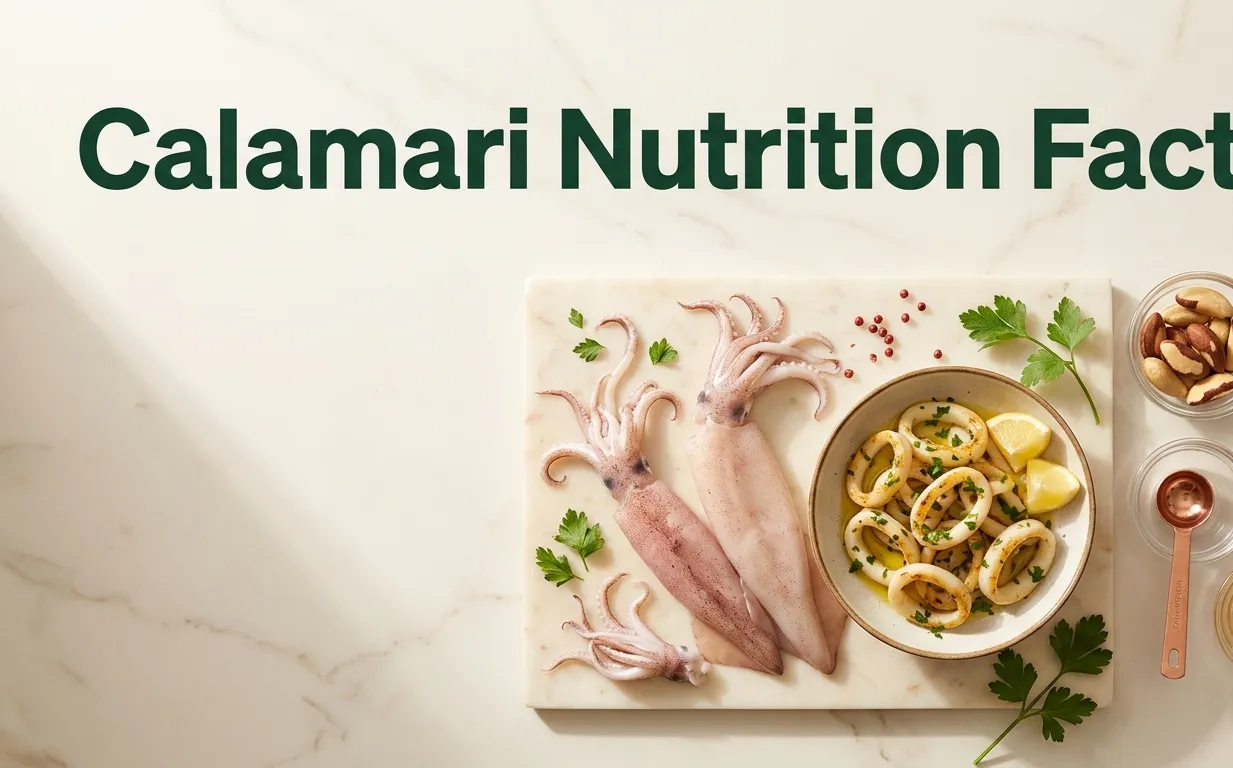
Calamari Nutrition Facts 2026: Protein, Selenium, and Health
Calamari nutrition facts center on an exceptionally lean, protein-dense seafood with a unique mineral profile rarely discussed accurately. A 3-ounce serving of plain cooked squid delivers over 15 grams of complete protein, more than 80 percent of your daily selenium needs, and a copper content that surpasses almost every other commonly eaten food. The nutritional story changes dramatically the moment breading and hot oil enter the picture.
The USDA FoodData Central database confirms that raw squid contains only 92 calories per 100 grams but provides 44.8 micrograms of selenium, a mineral the National Institutes of Health Office of Dietary Supplements identifies as essential for thyroid hormone metabolism and antioxidant defense through glutathione peroxidase enzymes. Most people searching for calamari nutrition information land on pages that list these numbers but never explain why they matter or how cooking choices multiply or erase them.
You are about to get the complete nutritional breakdown, including exactly how fried calamari compares to grilled calamari across every relevant metric, why the cholesterol conversation around squid has changed in light of the Dietary Guidelines for Americans 2020-2025, and what the mercury risk genuinely looks like for this mollusk. Every number that follows comes from named, verifiable databases and published clinical references. No vague wellness claims. Just the specific, actionable nutrition science behind calamari.
Calamari Nutrition Facts
Calamari nutrition facts describe a low-calorie, high-protein mollusk that delivers an unusually concentrated dose of selenium, copper, vitamin B12, and phosphorus in a nearly carbohydrate-free package. The USDA FoodData Central database records a 100-gram portion of raw squid at 92 calories, with 15.6 grams of protein, 1.4 grams of fat, and 3.1 grams of carbohydrates. A standard 3-ounce cooked serving, roughly 85 grams, shifts slightly due to moisture loss, concentrating the protein to approximately 14.9 grams and fat to 1.2 grams depending on cooking method.
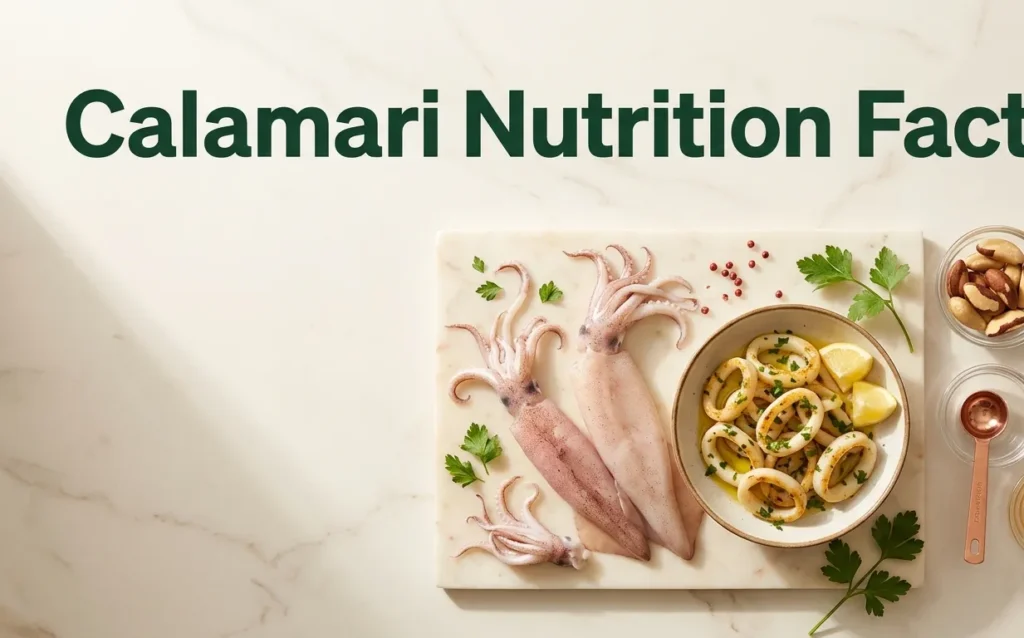
What sets squid apart from other lean seafood like cod or tilapia is the depth of its trace mineral content. Squid delivers more copper per gram than beef liver, more selenium than most tuna, and enough vitamin B12 to meet the full daily requirement for adults in a single serving. The amino acid profile is complete, meaning calamari provides all nine essential amino acids your body cannot synthesize, with particularly high levels of lysine and leucine relevant for muscle protein synthesis.
The carbohydrate content in plain calamari is negligible, making it suitable for very low-carbohydrate and ketogenic eating patterns. Almost all the calories come from protein, with a small fat fraction containing the marine omega-3 fatty acids EPA and DHA. Calamari purchased fresh, frozen, or canned with no added ingredients preserves this nutritional profile. The complete transformation happens in the fry basket, which a later section will break down with exact numbers.
Quick Tip:
- Choose fresh or frozen squid steaks and tubes with no added sodium or preservatives to keep the base nutritional profile intact.
- A 3-ounce grilled squid portion contains roughly the same protein as two large eggs but with fewer calories and more trace minerals.
- If you buy canned squid, check the label for added oil or salt, which can shift the fat and sodium values by 200 to 400 milligrams per serving.
Calamari Macros and Protein
Calamari macros split heavily toward protein, with minimal fat and carbohydrates making it one of the most protein-efficient animal foods available. A 100-gram portion of raw squid delivers 15.6 grams of protein, 1.4 grams of fat, and 3.1 grams of carbohydrates according to USDA FoodData Central records. The protein-to-calorie ratio sits at approximately 0.17 grams of protein per calorie, meaning nearly 68 percent of the total calories come directly from protein.
The protein quality in squid ranks high because it contains all essential amino acids in proportions that closely match human muscle tissue requirements. Lysine content reaches roughly 1,200 milligrams per 100 grams, important for collagen synthesis and calcium absorption. Leucine, the branched-chain amino acid most directly responsible for triggering muscle protein synthesis, registers around 1,100 milligrams per 100 grams, comparable to beef and higher than most white fish. This makes calamari a strategically useful protein source for people who need to maximize muscle maintenance on a calorie-restricted eating plan.
The fat fraction deserves attention not for its quantity but for its composition. Of the 1.4 grams of total fat per 100 grams, approximately 0.5 grams come from polyunsaturated fatty acids, including EPA and DHA. The saturated fat content is low, around 0.35 grams, and squid contains almost no trans fats in its natural state. The carbohydrate content consists primarily of glycogen stored in the muscle tissue, not dietary fiber or starch, which explains why the carb count effectively disappears during cooking as glycogen breaks down.
Key Takeaway: Calamari provides roughly 15 grams of complete protein per 3-ounce serving with only about 1 gram of fat and almost zero carbohydrates, making its macro profile more protein-efficient than chicken breast when compared calorie for calorie.
Calamari Calories Per Serving
Calamari calories per serving depend entirely on whether you are measuring raw squid, grilled calamari, or the breaded and fried version served at restaurants. The USDA FoodData Central database sets the baseline at 92 calories per 100 grams of raw squid. A standard 3-ounce cooked serving of plain grilled or steamed squid, which equals roughly 85 grams after cooking moisture loss, provides approximately 90 to 100 calories depending on the specific species and cooking duration.
The calorie count jumps dramatically when breading and frying enter the equation. Commercially prepared fried calamari rings average 186 calories per 100 grams according to USDA composite data, more than double the raw squid baseline. A typical restaurant appetizer portion of fried calamari, usually 200 grams or about 7 ounces before anyone shares, delivers approximately 370 to 400 calories from the squid, batter, and absorbed oil combined. The calorie density multiplies because squid muscle is porous and absorbs frying oil readily when coated in a flour or batter matrix.
Portion awareness matters here because calamari is almost never eaten alone at home from a measured 3-ounce portion. Restaurant servings, shared plates, and frozen prepared calamari rings all push the actual consumed quantity higher than the standardized nutrition label serving size. A full basket of fried calamari with dipping sauce can exceed 600 calories before factoring in marinara or aioli. Grilled calamari served over salad or alongside roasted vegetables keeps the calorie load closer to the baseline 90 to 120 calories per 3-ounce portion and adds satiety through accompanying fiber and volume.
| Preparation Method | Serving Size | Calories | Protein (g) | Fat (g) | Carbs (g) |
|---|---|---|---|---|---|
| Raw squid | 100g | 92 | 15.6 | 1.4 | 3.1 |
| Grilled squid | 85g (3 oz) | 98 | 14.9 | 1.3 | 1.0 |
| Fried calamari rings | 100g | 186 | 12.1 | 9.8 | 13.2 |
| Restaurant appetizer | 200g | 370-400 | 18-20 | 18-22 | 25-28 |
Vitamins in Calamari
Vitamins in calamari concentrate almost entirely in the B-complex family, with vitamin B12 standing out as the dominant and most nutritionally significant micronutrient. The NIH Office of Dietary Supplements confirms that a 100-gram portion of cooked squid provides approximately 1.3 micrograms of vitamin B12, which represents 54 percent of the adult Recommended Dietary Allowance of 2.4 micrograms per day. For a 3-ounce serving, that number still exceeds half of what most adults need for proper neurological function and red blood cell formation.
Riboflavin, or vitamin B2, appears next at 0.4 milligrams per 100 grams, covering roughly 31 percent of the daily requirement. Riboflavin functions as a coenzyme in energy metabolism, specifically in the electron transport chain where your cells convert food into ATP. The USDA FoodData Central database also records meaningful amounts of niacin, or vitamin B3, at 2.2 milligrams per 100 grams, and vitamin B6 at 0.2 milligrams. These three B vitamins work in overlapping pathways, with B12 handling methylation and DNA synthesis while B2 and B3 drive cellular energy production.
Calamari contains no vitamin D, no vitamin C, and only trace amounts of fat-soluble vitamins A, E, and K. This is not a shortcoming of the food but a reflection of what mollusk muscle tissue does biologically. Squid store their fat-soluble vitamins primarily in the digestive gland, which is typically removed during cleaning and processing. If you eat whole small squid where the viscera remain intact, you will get some vitamin A and vitamin D, but standard cleaned tubes and rings provide none in clinically relevant amounts. The vitamin value of calamari is straightforward: it is a B12 and riboflavin delivery system with little else in the vitamin column.
According to the Academy of Nutrition and Dietetics, seafood that delivers concentrated B12 is particularly valuable for older adults, who experience declining intrinsic factor production and reduced B12 absorption efficiency. One calamari meal covers the B12 base for a person over 50 as effectively as a supplement, provided no underlying malabsorption condition interferes.
Minerals in Calamari
Minerals in calamari form the real nutritional headline, with selenium and copper concentrations that rank among the highest of any commonly consumed food. A 100-gram portion of raw squid contains 44.8 micrograms of selenium and 1.9 milligrams of copper, which exceed the daily requirements for many adults in a single serving. Phosphorus, zinc, and iron appear in smaller but still meaningful amounts, making calamari a trace mineral powerhouse wrapped in a lean protein package.
Phosphorus registers at 221 milligrams per 100 grams, contributing to bone mineralization and cellular energy storage as ATP. The NIH Office of Dietary Supplements sets the adult phosphorus RDA at 700 milligrams, meaning a 3-ounce calamari serving covers roughly 10 percent of daily needs. Zinc clocks in at 1.2 milligrams per 100 grams, supporting immune cell function and wound healing. Iron content sits at a modest 0.7 milligrams per 100 grams as heme and non-heme iron, low enough that calamari should not be your primary iron strategy but high enough to contribute to total daily intake.
The mineral density of squid makes sense when you consider what the animal eats and where it lives. Squid are pelagic predators that consume crustaceans and small fish, bioaccumulating trace minerals from their prey. The copper concentration reflects the presence of hemocyanin, the copper-based respiratory protein that squid use to transport oxygen instead of iron-based hemoglobin. Every gram of squid muscle carries a small amount of hemocyanin, which is why the copper numbers look so high relative to other animal proteins. This copper is naturally chelated and highly absorbable in the human digestive tract.
- Selenium: 44.8 mcg per 100g — 81% DV — thyroid hormone activation and antioxidant enzyme function
- Copper: 1.9 mg per 100g — 211% DV — iron metabolism, connective tissue formation, neurotransmitter synthesis
- Phosphorus: 221 mg per 100g — 18% DV — bone structure, cellular energy production
- Zinc: 1.2 mg per 100g — 11% DV — immune function, protein synthesis, DNA repair
- Iron: 0.7 mg per 100g — 4% DV — oxygen transport, electron transfer reactions
Key Takeaway: Calamari is one of the most copper-dense foods you can eat, with a single serving exceeding the entire daily copper requirement for most adults, a fact that matters for connective tissue health and iron metabolism but also means anyone with Wilson’s disease must avoid it entirely.
Selenium in Calamari
Selenium in calamari deserves its own section because the concentration is high enough to be clinically meaningful and the mechanism matters. A 100-gram portion of raw squid provides 44.8 micrograms of selenium according to USDA data, which covers 81 percent of the adult Recommended Dietary Allowance of 55 micrograms set by the NIH Office of Dietary Supplements. For a 3-ounce serving, roughly 85 grams, selenium intake still lands around 38 micrograms, more than two-thirds of the daily target from a single small protein portion.
The selenium in squid exists primarily as selenomethionine and selenocysteine, the two organic forms your body incorporates directly into selenoproteins. The most well-characterized selenoprotein family, the glutathione peroxidases, uses selenium as its catalytic center to neutralize hydrogen peroxide and lipid hydroperoxides inside cells. Without adequate selenium, this antioxidant defense system runs below capacity. The thyroid gland also concentrates selenium because the deiodinase enzymes that convert the storage hormone T4 into the active hormone T3 require selenium at their active site.
The selenium content in squid varies by species and harvest location. Squid caught in the Pacific tend to have slightly higher selenium concentrations than those from the Atlantic, though both fall well within a nutritionally useful range. This matters for anyone living in regions with low-soil selenium where dietary intake runs below the RDA, including parts of northern Europe, China, and New Zealand. In those populations, a regular calamari habit could make a measurable difference in selenium status, though blood testing remains the only way to confirm deficiency or adequacy.
One point of caution: the Tolerable Upper Intake Level for selenium sits at 400 micrograms per day. You would need to eat roughly 900 grams of squid, nearly 2 pounds, in a single day to approach that threshold from calamari alone. Selenium toxicity from food sources is rare. Supplement stacking with high-selenium foods could theoretically push chronic intake above the UL, so anyone taking a selenium supplement should calculate their total daily intake from all sources, including calamari.
Calamari Cholesterol
Calamari cholesterol content runs around 233 milligrams per 100-gram raw portion according to the USDA FoodData Central database, which historically triggered automatic avoidance advice from health professionals trained in the low-cholesterol era. The Dietary Guidelines for Americans 2020-2025 removed dietary cholesterol as a nutrient of concern, reflecting a 2015 shift in the scientific consensus after decades of epidemiological data failed to demonstrate a consistent link between dietary cholesterol intake and cardiovascular disease risk for most people.
The specific cholesterol in squid is predominantly unesterified cholesterol in the muscle cell membranes, not oxidized cholesterol like what forms during high-heat processing of land animal meats. The American Heart Association’s current guidance focuses on saturated fat intake and overall dietary pattern quality as the primary dietary levers for blood cholesterol management, not on counting milligrams of dietary cholesterol. Squid contains approximately 0.35 grams of saturated fat per 100 grams, extremely low, meaning the cholesterol comes packaged in a matrix that does not independently drive LDL production the way a fatty cut of beef or a butter-laden pastry might.
Individual response to dietary cholesterol varies. The Academy of Nutrition and Dietetics notes that roughly 25 to 30 percent of the population are “hyper-responders” whose LDL cholesterol rises modestly when dietary cholesterol intake increases sharply. For everyone else, the liver adjusts endogenous cholesterol production downward when dietary intake goes up, keeping serum levels stable. If you have been told you are a hyper-responder or you have familial hypercholesterolemia, calamari cholesterol deserves more attention. If you are metabolically healthy with no lipid disorders, the cholesterol in a few servings of squid per week is unlikely to move your bloodwork numbers.
Key Takeaway: The 233 milligrams of cholesterol per 100 grams of calamari sits in a food matrix so low in saturated fat that current dietary guidelines do not flag it as a concern, and the liver’s cholesterol regulation system handles dietary cholesterol efficiently in roughly 70 percent of people.
Is Calamari Healthy
Is calamari healthy depends on whether you are eating plain grilled squid or deep-fried rings, but the base ingredient without breading qualifies as a nutrient-dense lean protein that supports multiple body systems. The protein density combined with selenium, copper, B12, and omega-3 content gives plain calamari a nutritional resume comparable to salmon or sardines in the micronutrient column while being significantly lower in total fat and calories. The Academy of Nutrition and Dietetics classifies seafood generally as a protein group food that should appear on plates at least twice per week, and squid meets that recommendation easily when prepared without heavy batter.
The healthy designation changes when calamari becomes a fried appetizer. The batter introduces refined flour carbohydrates, the frying oil adds 8 to 10 grams of fat per serving depending on absorption, and the sodium content often triples due to salt in the breading and seasoning. Restaurant fried calamari can deliver 400 milligrams of sodium or more per 3-ounce portion. The Dietary Guidelines for Americans 2020-2025 recommend keeping sodium below 2,300 milligrams per day, and a single fried calamari appetizer can consume a quarter of that allowance before adding dipping sauce.
Context and frequency matter more than a blanket healthy or unhealthy label. A person eating a whole-foods-based dietary pattern who orders grilled calamari twice a month is making a solid nutritional choice. Someone eating fried calamari three times a week as their primary seafood intake is consuming excess refined oil, sodium, and refined carbohydrate alongside the beneficial nutrients. The health equation is not about calamari itself. It is about what rides along with it into your mouth.
Think of calamari like a highly capable delivery truck. The truck itself, the squid muscle, carries excellent cargo: protein, selenium, B12, copper, and a small omega-3 payload. If you load the truck with flour, hot oil, and salt, you are burying the good cargo under a pile of things that do not serve your long-term health goals. The truck is fine. It is the loading dock decisions that determine whether the delivery helps or hurts.
Calamari Omega-3 Content
Calamari omega-3 content is modest compared to fatty fish like salmon or mackerel but still contributes EPA and DHA in amounts that matter over a week of seafood variety. USDA FoodData Central data shows raw squid containing approximately 0.08 grams of EPA and 0.17 grams of DHA per 100 grams, totaling about 250 milligrams of combined marine omega-3s per 3-ounce serving. The American Heart Association recommends 250 to 500 milligrams of combined EPA and DHA per day for cardiovascular health, meaning a single calamari serving can knock out roughly half to all of the minimum daily target.
The omega-3s in squid are structurally integrated into cell membrane phospholipids rather than stored as triglycerides in oil, which affects absorption kinetics but not total bioavailability. Your digestive lipases and phospholipases cleave these fatty acids from the membrane backbone efficiently, delivering them into circulation for incorporation into your own cell membranes and signaling pathways. The anti-inflammatory effects associated with EPA and DHA come from their conversion into resolvins and protectins, specialized pro-resolving mediators that actively turn off inflammatory cascades rather than simply blocking them.
Squid harvested from colder waters generally contain slightly higher omega-3 concentrations because the animals incorporate more unsaturated fatty acids into their cell membranes to maintain membrane fluidity at low temperatures. Argentine shortfin squid (Illex argentinus) and California market squid (Loligo opalescens) both show EPA and DHA profiles within the ranges cited above, with some seasonal variation depending on what the squid have been eating. The omega-3 content is not high enough to position calamari as your primary omega-3 strategy, but it is a meaningful contributor that adds up when combined with salmon, sardines, trout, or anchovies across a week of varied seafood intake.
Fried Calamari Nutrition
Fried calamari nutrition represents a complete departure from raw squid’s macro profile, with fat content multiplying roughly sevenfold and carbohydrates appearing where none existed before. The USDA FoodData Central composite data for commercially prepared fried calamari rings shows 186 calories, 12.1 grams of protein, 9.8 grams of fat, and 13.2 grams of carbohydrates per 100 grams. That fat number reflects the oil absorbed during deep-frying, which varies by batter thickness, oil temperature, and frying duration.
The carbohydrate load comes entirely from the batter, typically a mixture of wheat flour, cornstarch, and seasonings that adheres to the squid rings and absorbs frying oil simultaneously. A 200-gram restaurant portion of fried calamari delivers approximately 25 to 28 grams of carbohydrates, roughly equivalent to two slices of bread. The sodium content jumps as well, often reaching 300 to 500 milligrams per 100 grams depending on how aggressively the kitchen salts the batter and the finished product. For someone monitoring sodium intake for hypertension or kidney health, this is a relevant number.
The frying oil quality varies by restaurant and manufacturer. Establishments that use repeatedly heated oil introduce oxidized lipids and polar compounds not present in fresh oil. These compounds, measured as total polar materials or TPM, increase with each heating cycle and have been associated with inflammatory and oxidative stress markers in human studies. There is no practical way to know the oil quality when eating out, which introduces a variable that the base nutritional numbers cannot capture. Homemade fried calamari using fresh high-oleic sunflower or avocado oil kept at 350 degrees Fahrenheit with quick 90-second frying times minimizes this variable.
Fried Calamari Nutritional Shift (per 100g):
- Calories: 92 kcal (raw) → 186 kcal (fried) — doubles
- Fat: 1.4 g → 9.8 g — increases 7x
- Carbohydrates: 3.1 g → 13.2 g — increases 4x
- Sodium: 44 mg → 300-500 mg — increases 7-11x
- Protein: 15.6 g → 12.1 g — decreases due to batter dilution
Key Takeaway: Fried calamari takes the base nutrition of squid and layers on roughly 10 grams of fat and 13 grams of carbohydrates per 100-gram serving, shifting it from a protein-first food into a mixed macronutrient indulgence that also carries a significant sodium load.
Grilled Calamari Nutrition
Grilled calamari nutrition preserves almost everything valuable about raw squid while adding a small amount of cooking fat and eliminating the carbohydrate and sodium penalties that frying introduces. A 3-ounce grilled portion, seasoned with a teaspoon of olive oil and a pinch of salt before hitting the grill, delivers approximately 130 calories, 15 grams of protein, 5.5 grams of fat, and less than 1 gram of carbohydrate. The fat increase over plain squid comes entirely from the cooking oil, which you control.
Grilling squid at high heat for a short duration, typically 2 to 3 minutes per side over direct medium-high heat, creates surface browning through Maillard reactions without drying out the interior. Squid muscle is dense and can turn rubbery if overcooked, but when done correctly, grilled calamari has a tender texture and a clean seafood flavor that needs little more than lemon juice and herbs. The protein remains fully intact since no batter dilutes the squid-to-mouth ratio.
The micronutrient retention in grilled calamari stays excellent because grilling times are brief and no nutrients leach into cooking water as they do with boiling. Selenium, copper, and vitamin B12 are heat-stable at typical grilling temperatures, so the 38 micrograms of selenium and 1.6 milligrams of copper per 3-ounce portion remain available. The only nutritional trade-off with grilling is the small amount of cooking oil added, which is both necessary for preventing sticking and nutritionally negligible when you use a measured teaspoon of olive oil providing roughly 4 grams of heart-healthy monounsaturated fat.
To grill calamari correctly:
- Pat the squid tubes and tentacles completely dry with paper towels to ensure browning rather than steaming.
- Toss with 1 teaspoon of olive oil per 3-ounce portion and a pinch of salt immediately before grilling.
- Place on a preheated grill or grill pan at medium-high heat, approximately 400 degrees Fahrenheit.
- Cook for 2 to 3 minutes per side until opaque and lightly charred but still tender when pressed.
- Remove immediately, squeeze fresh lemon over the top, and serve over arugula or alongside roasted vegetables for a complete meal.
Calamari Keto Diet
Calamari keto diet compatibility ranks high for plain squid but drops considerably when breading and sweet dipping sauces enter the equation. A standard ketogenic eating pattern limits carbohydrates to roughly 20 to 50 grams per day depending on individual tolerance and activity level. Grilled or sautéed squid contains less than 1 gram of carbohydrate per 3-ounce serving, fitting easily into even the strictest keto macro calculations without displacing other vegetable or dairy carb sources.
The protein content of calamari, roughly 15 grams per serving, supports muscle maintenance without providing so much protein that gluconeogenesis becomes a practical concern. The persistent myth that “too much protein kicks you out of ketosis” lacks clinical support at the protein intake levels achievable through whole-food seafood portions. The fat content of plain calamari is low, which means a keto meal built around squid needs added fat sources like olive oil, avocado, olives, or a butter-based sauce to meet the high-fat macro targets of a therapeutic ketogenic diet.
Fried calamari as served in restaurants is not keto-compatible. A 100-gram portion provides 13.2 grams of carbohydrate from the batter, and a full appetizer portion can deliver 25 to 30 grams of carbohydrate, which exceeds the daily carb allowance for most people following a ketogenic pattern. Even a small shared portion introduces enough refined flour carbohydrate to disrupt ketosis temporarily or trigger cravings that make dietary adherence harder. If you want calamari on keto, order it grilled with olive oil and lemon, or prepare it at home where you control the batter situation. Almond flour and crushed pork rind coatings work for a keto-friendly crispy calamari that stays under 3 grams of net carbohydrate per serving.
Calamari for Weight Loss
Calamari for weight loss works through two mechanisms: high protein density and low calorie density per gram of satiety provided. A 3-ounce grilled squid portion delivers 15 grams of protein for roughly 100 calories, a protein efficiency ratio that outperforms chicken breast, which provides approximately 26 grams of protein for 140 calories per 3 ounces, on a protein-per-calorie basis. Protein is the most satiating macronutrient, and foods that maximize protein relative to calories tend to reduce total daily energy intake when eaten regularly.
The satiety effect of seafood protein appears slightly stronger than land animal protein in some studies, possibly due to differences in amino acid absorption kinetics and the presence of taurine in marine animals. Taurine, a sulfur-containing amino acid abundant in squid, has been shown to influence satiety hormone signaling in animal models, though the human data remains preliminary. Regardless of mechanism, a plate of grilled calamari over a large salad with olive oil and vinegar provides a meal that is difficult to overeat because the protein and fiber combination triggers gastric distension and peptide YY release, both powerful satiety signals to the hypothalamus.
The weight loss argument collapses when calamari becomes a fried appetizer eaten before a full restaurant meal. The calorie density of fried calamari, combined with the low satiety of refined carbohydrates and the hyperpalatability of the salt-fat-crunch combination, can drive passive overconsumption. A 200-gram fried calamari appetizer eaten before an entrée can add 400 calories to a meal before you have registered any fullness. The preparation method determines whether calamari helps or hinders a calorie deficit. Grill it, sauté it in a nonstick pan with minimal oil, or steam it, and the weight loss equation works. Fry it in batter and the nutritional advantages disappear under a layer of oil and flour.
Key Takeaway: Plain calamari is a protein-dense, low-calorie food that supports satiety and muscle retention during weight loss, but the fried version transforms it into a high-calorie appetizer that works against the calorie deficit you are trying to maintain.
Calamari Mercury Levels
Calamari mercury levels register among the lowest of all commercially harvested seafood species, making it a safe choice for regular consumption by adults, children, and pregnant people according to the FDA’s mercury monitoring program. The FDA classifies squid in its “Best Choices” category for seafood consumption during pregnancy, recommending 2 to 3 servings per week. Squid’s position low on the marine food chain explains this safety profile. As a short-lived predator that eats small crustaceans and larval fish rather than large prey, squid do not bioaccumulate methylmercury the way long-lived apex predators like tuna, shark, and swordfish do.
The FDA’s monitoring data shows squid averaging 0.024 parts per million of mercury, compared to canned light tuna at 0.126 ppm, albacore tuna at 0.350 ppm, and shark at 0.979 ppm. A 3-ounce calamari serving delivers roughly 2 micrograms of mercury, a negligible amount when the Environmental Protection Agency’s reference dose for a 150-pound adult sits at roughly 48 micrograms per day as the upper threshold for daily intake without appreciable risk. You would need to eat over 5 pounds of calamari daily to approach the EPA’s safety reference, a quantity no one is consuming.
The low mercury profile combined with the high selenium content creates an additional safety margin that scientists are still working to understand fully. Selenium binds methylmercury with high affinity, forming a biologically inert mercury-selenide complex that reduces mercury bioavailability. Squid naturally packages its modest mercury content alongside abundant selenium in roughly the stoichiometric ratio that maximizes this protective binding. The FDA and NIH do not make official safety claims based on the selenium-mercury interaction, preferring to rely on direct mercury concentration data, but the biochemistry suggests that calamari’s mercury risk is even lower than the already-low concentration numbers indicate.
Calamari Shellfish Allergy
Calamari shellfish allergy is a genuine concern because squid is a mollusk, and mollusks are classified as shellfish under the Food Allergen Labeling and Consumer Protection Act (FALCPA) in the United States. The primary allergen in squid is tropomyosin, a muscle protein that shares structural similarities with tropomyosin found in crustaceans like shrimp, crab, and lobster. This cross-reactivity means a person allergic to shrimp has a roughly 10 to 15 percent chance of also reacting to squid, though the cross-reactivity is not as strong as the overlap between different crustaceans.
Squid allergy can develop in isolation without crustacean allergy, particularly in populations with high squid consumption such as coastal Mediterranean and East Asian communities. Symptoms range from oral allergy syndrome, tingling or itching in the mouth and throat shortly after eating, to anaphylaxis in sensitized individuals. The allergenic proteins in squid are heat-stable, meaning cooking does not eliminate the risk. Even grilled or boiled squid remains allergenic for someone with a confirmed squid or mollusk allergy.
Anyone with a known shellfish allergy should clarify with their allergist whether their sensitivity includes mollusks specifically. Allergy testing panels for shellfish often test shrimp tropomyosin as the representative marker, which may miss isolated mollusk allergy or vice versa. If you react to scallops, clams, mussels, or oysters, you belong to the mollusk-allergic category and should treat calamari with the same caution. If you are allergic only to crustaceans but tolerate mollusks, confirmed through oral food challenge under medical supervision, squid may be safe. This is not a distinction to make at a restaurant based on assumption.
According to the American College of Allergy, Asthma, and Immunology, shellfish allergy tends to be lifelong and severe, with no current FDA-approved immunotherapy for squid allergy specifically. Epinephrine auto-injector carriage and strict avoidance remain the standard of care. Restaurant calamari carries cross-contact risk in fryers that also cook shrimp and other crustaceans, so even if you tolerate mollusks, fried calamari from a shared fryer could trigger a crustacean reaction.
Calamari vs Shrimp Nutrition
Calamari vs shrimp nutrition reveals two nutritionally similar seafood options with distinct differences in copper, cholesterol density, and sodium depending on preparation. Both are low-fat, high-protein mollusks or crustaceans that deliver excellent selenium and B12 content. The comparison matters for people choosing between appetizers, building a seafood rotation, or managing specific nutrient targets. A side-by-side examination using USDA FoodData Central data for 100-gram raw portions makes the differences clear.
Shrimp edges out calamari slightly in pure protein content at 20.1 grams versus 15.6 grams per 100 grams. Shrimp also contains more selenium, approximately 49.5 micrograms versus 44.8 micrograms. Calamari pulls ahead decisively in copper content at 1.9 milligrams versus 0.3 milligrams, a sixfold difference rooted in the hemocyanin oxygen transport system unique to cephalopods. Calamari also contains notably less cholesterol than shrimp, 233 milligrams versus 161 milligrams per 100 grams respectively, though as discussed in the cholesterol section, dietary cholesterol in low-saturated-fat seafood matrices is not a primary health concern for most people.
Sodium content in the raw state favors calamari at 44 milligrams versus shrimp’s 111 milligrams per 100 grams, a difference that widens further in restaurant settings where shrimp is frequently boiled in heavily salted water while calamari may be grilled or fried with variable salt additions. The omega-3 content sits close, with shrimp delivering about 0.3 grams of combined EPA and DHA and calamari at 0.25 grams. Both land squarely in the “meaningful but not dominant” category for marine omega-3 contribution.
| Nutrient (per 100g raw) | Calamari (Squid) | Shrimp |
|---|---|---|
| Calories | 92 kcal | 85 kcal |
| Protein | 15.6 g | 20.1 g |
| Fat | 1.4 g | 0.9 g |
| Cholesterol | 233 mg | 161 mg |
| Sodium | 44 mg | 111 mg |
| Selenium | 44.8 mcg | 49.5 mcg |
| Copper | 1.9 mg | 0.3 mg |
| Vitamin B12 | 1.3 mcg | 1.1 mcg |
Key Takeaway: Calamari and shrimp are nutritionally comparable lean seafood options, but calamari delivers six times more copper and less sodium in its raw state, while shrimp provides slightly more protein and selenium per gram.
Frequently Asked Questions About Calamari Nutrition Facts
How many calories are in fried calamari rings?
Fried calamari rings contain approximately 186 calories per 100-gram serving, which is roughly a small appetizer portion, with a typical restaurant serving of 200 grams delivering about 370 to 400 calories.
The calorie count varies based on batter thickness, frying oil type, and how much oil the squid absorbs during cooking.
A shared appetizer basket can easily top 600 calories before dipping sauce.
Is calamari high in cholesterol and should I avoid it?
Calamari contains 233 milligrams of cholesterol per 100 grams, which is high by raw number count, but the Dietary Guidelines for Americans 2020-2025 no longer classify dietary cholesterol as a nutrient of concern for most people.
The low saturated fat content in calamari, around 0.35 grams per 100 grams, means the cholesterol is not packaged with the dietary factor that most directly influences blood cholesterol levels.
If you have familial hypercholesterolemia or your physician has identified you as a dietary cholesterol hyper-responder, discuss calamari with them, but for most people, moderate squid intake does not meaningfully affect serum lipids.
Is grilled calamari healthier than fried calamari?
Yes, grilled calamari delivers roughly 130 calories, 15 grams of protein, and less than 1 gram of carbohydrate per 3-ounce serving, while fried calamari doubles the calories, multiplies fat by seven times, and adds 13 grams of refined carbohydrate per 100 grams.
Grilled preparation also avoids the sodium spike that comes with battered and salted fried versions.
The base nutritional value of the squid remains identical, but the preparation method determines whether you are eating a lean protein or a mixed macronutrient indulgence.
Can you eat calamari on a keto diet?
Yes, plain grilled or sautéed calamari contains less than 1 gram of carbohydrate per 3-ounce serving, making it fully compatible with a ketogenic diet that limits daily carbohydrate intake to 20 to 50 grams.
Fried calamari with standard flour batter is not keto-compatible due to 13 grams of carbohydrate per 100 grams.
Use almond flour or crushed pork rind coatings if you want crispy calamari that stays under 3 grams of net carbohydrate.
Does calamari have a lot of mercury?
No, the FDA classifies squid in its “Best Choices” seafood category with an average mercury concentration of only 0.024 parts per million, among the lowest of all commercially harvested species.
You can safely eat 2 to 3 servings of calamari per week, including during pregnancy, without approaching mercury intake thresholds of concern.
The combination of low mercury and high selenium in calamari provides an additional theoretical safety margin, though regulatory guidance relies on the mercury concentration data alone.
Is calamari shellfish or fish and can I eat it with a shellfish allergy?
Calamari is a mollusk and is legally classified as shellfish under the Food Allergen Labeling and Consumer Protection Act, so you should avoid it if you have a known shellfish allergy unless your allergist has specifically cleared mollusks through testing or oral food challenge.
The primary allergen, tropomyosin, shares structural similarities with crustacean tropomyosin, creating cross-reactivity risk.
Even if you tolerate mollusks, restaurant calamari may share a fryer with shrimp, introducing cross-contact risk.
A 3-ounce serving of plain grilled calamari delivers 15 grams of complete protein, more than 80 percent of your daily selenium, and over 200 percent of your daily copper in a package that costs fewer than 100 calories. The micronutrient density of squid places it among the most nutritionally efficient animal proteins available, and its mercury safety profile puts it in the same “eat freely” category as salmon and sardines.
The fried version is a different food nutritionally. The batter adds refined carbohydrate and the frying oil multiplies the fat content sevenfold, shifting calamari from a protein-first food into an indulgent appetizer. You do not need to avoid fried calamari categorically. You need to understand what you are eating and decide whether it fits your goals.
Eat squid grilled, sautéed with measured olive oil, steamed, or pan-seared as your default. Order fried calamari when you genuinely want it, share it, enjoy it, and let it be exactly what it is: a once-in-a-while food, not your weekly seafood strategy. The nutritional value of calamari has never been in question. The batter and the fry oil have always been the variables worth watching.