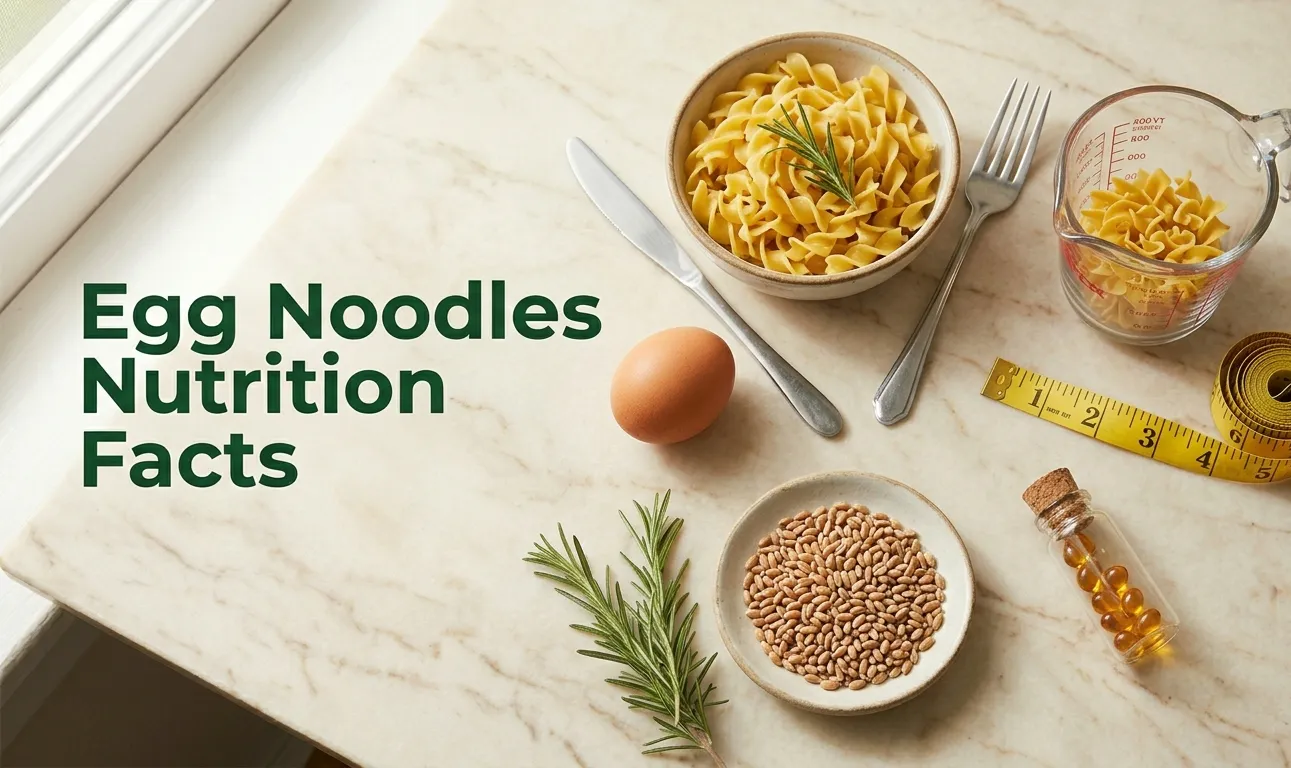
Egg Noodles Nutrition Facts: Calories, Carbs, and Health Benefits (2026)
Egg noodles provide approximately 221 calories, 40 grams of carbohydrates, 7 grams of protein, and 3 grams of fat per cooked cup (160 grams) when enriched and prepared without added salt. The most striking nutrient in enriched egg noodles is selenium, which delivers 70 percent of the daily value in a single serving.
The USDA FoodData Central database confirms that enriched egg noodles are also excellent sources of B vitamins. One cup provides 55 percent of the daily value for folate, 39 percent for thiamine, and 21 percent for niacin. These numbers change dramatically if you buy unenriched noodles, which lack these added vitamins and minerals.
This article breaks down every aspect of egg noodle nutrition. You will learn the exact calorie and carb counts, the difference between enriched and unenriched varieties, how egg noodles compare to regular pasta, and whether they fit into weight loss or diabetes management plans.
egg noodles nutrition facts
Enriched egg noodles contain 221 calories, 40.3g carbohydrates, 7.3g protein, 3.3g fat, and 1.9g fiber per one-cup (160g) cooked serving.
| Nutrient | Amount per 1 cup (160g cooked, enriched) | % Daily Value (based on 2,000 calorie diet) |
|---|---|---|
| Calories | 221 | 11% |
| Protein | 7.3g | 15% |
| Total Fat | 3.3g | 4% |
| Saturated Fat | 0.7g | 4% |
| Carbohydrates | 40.3g | 13% |
| Dietary Fiber | 1.9g | 7% |
| Sugars | 0.6g | 1% |
| Cholesterol | 46mg | 15% |
| Sodium | 14-264mg* | 1-11% |
*Sodium varies dramatically based on whether salt is added during cooking and processing. Plain cooked noodles without added salt contain about 5-14mg sodium. Noodles cooked with salt or from brands that include salt can contain 264mg or more per cup.
The egg noodles nutrition facts differ significantly between enriched and unenriched varieties. Enriched noodles have added B vitamins (thiamine, riboflavin, niacin, folic acid) and iron that are not naturally present in significant amounts. Unenriched noodles are made from plain flour without these added nutrients.
Key Takeaway: One cup of cooked enriched egg noodles delivers 221 calories and 40g carbs, plus an impressive 70% DV of selenium.
egg noodle nutrition facts
The complete egg noodle nutrition profile per 100 grams (about 2/3 cup cooked) shows 138 calories, 25.2g carbohydrates, 4.5g protein, and 2.1g fat.
Here is the full breakdown per 100g serving of cooked, enriched egg noodles without added salt:
| Nutrient | Amount per 100g | % Daily Value |
|---|---|---|
| Calories | 138 | 7% |
| Protein | 4.5g | 9% |
| Fat | 2.1g | 3% |
| Carbohydrates | 25.2g | 8% |
| Fiber | 1.2g | 5% |
| Cholesterol | 29mg | 10% |
| Sodium | 5mg | 0% |
| Selenium | 24µg | 44% |
| Manganese | 0.32mg | 14% |
| Phosphorus | 76mg | 11% |
| Copper | 0.1mg | 11% |
| Iron | 0.6mg | 8% |
| Zinc | 0.65mg | 6% |
| Magnesium | 21mg | 5% |
| Vitamin B12 | 0.09µg | 4% |
| Vitamin B6 | 0.05mg | 4% |
The glycemic index of egg noodles is 57, which falls in the medium range. The glycemic load for a typical 1-cup serving is approximately 22, which is considered high despite the medium GI value because of the high carbohydrate density.
Quick Tip: Multiply per-100g values by 1.6 to get the nutrient amounts for a standard 1-cup (160g) serving.
egg noodles calories
Egg noodles contain 138 calories per 100 grams cooked, or approximately 221 calories per cup (160g).
| Serving Size | Calories |
|---|---|
| 1 ounce (28g) dry | Approximately 110 |
| 100g cooked | 138 |
| 1/2 cup cooked (80g) | 110 |
| 1 cup cooked (160g) | 221 |
| 1 cup dry (38g before cooking) | 146 |
The calorie count changes significantly based on preparation method. Adding oil or butter to cooked noodles adds approximately 40-120 calories per tablespoon. Serving egg noodles with creamy sauces, cheese, or meat increases total meal calories substantially, often to 500-800 calories per plate.
How to estimate calories without a scale:
- One cup of cooked egg noodles is roughly the size of a tennis ball
- A standard restaurant serving of egg noodles (often 2 cups) contains approximately 442 calories
- A quarter of a standard 12oz dry pasta box makes about 2 cups cooked
- When in doubt, measure cooked noodles with a standard measuring cup
For weight management, egg noodles are moderately calorie-dense. They contain more calories per cup than regular pasta (168 calories per cup of penne) but fewer than egg noodle dishes prepared with heavy sauces.
Key Takeaway: A standard 1-cup serving of cooked egg noodles contains 221 calories, making it a moderate carbohydrate base for meals when portion-controlled.
egg noodles carbs
Egg noodles contain 40.3 grams of total carbohydrates per cooked cup (160g), with 1.9 grams of fiber and 0.6 grams of sugar.
The net carbohydrate count (total carbs minus fiber) is approximately 38.4 grams per cup. This is the number that matters most for blood sugar management because fiber does not raise blood glucose levels.
| Carb Type | Amount per cup | What It Means |
|---|---|---|
| Total Carbohydrates | 40.3g | Main energy source |
| Dietary Fiber | 1.9g | Slows digestion, supports gut health |
| Net Carbs | 38.4g | Impacts blood sugar directly |
| Sugars | 0.6g | Natural, no added sugars |
The carbohydrate composition consists primarily of starch from wheat flour. Unlike whole grains, refined wheat flour used in standard egg noodles has had the bran and germ removed. This results in faster digestion and absorption compared to whole grain pasta.
One cup of egg noodles contains approximately 2.5 times more carbohydrates than a cup of steamed broccoli (16g) and about the same amount as a cup of cooked white rice (44g). For context, the Dietary Guidelines for Americans 2020-2025 recommend that carbohydrates make up 45-65 percent of total daily calories. On a 2,000 calorie diet, this equals 225-325 grams of carbs daily.
Key Takeaway: Egg noodles are carb-dense at 40g per cup with 38g net carbs. The moderate fiber content (2g per cup) is lower than whole grain alternatives.
egg noodles protein
Egg noodles provide 7.3 grams of protein per cooked cup (160g), or approximately 4.5 grams per 100g.
The protein content comes from two sources: the wheat flour (gluten proteins) and the eggs. Eggs provide higher biological value protein than wheat, meaning the amino acid profile is more complete for human needs. However, egg noodles are not considered a complete protein source because they are limiting in the essential amino acid lysine.
| Amino Acid | Amount per 100g | Completeness |
|---|---|---|
| Tryptophan | 129mg | 46% of daily needs |
| Threonine | 414mg | 39% of daily needs |
| Isoleucine | 570mg | 41% of daily needs |
| Leucine | 1095mg | 40% of daily needs |
| Lysine | 411mg | 20% of daily needs (limiting) |
| Methionine | 258mg | 25% of daily needs |
| Phenylalanine | 720mg | 41% of daily needs |
| Valine | 660mg | 36% of daily needs |
Lysine is the limiting amino acid in egg noodles. To make a complete protein meal, pair egg noodles with lysine-rich foods such as chicken, fish, eggs, cheese, or legumes.
Compare protein content to other carbohydrate sources per cup:
- Egg noodles: 7.3g protein
- Regular pasta (white): 6.9g protein
- Brown rice: 5g protein
- White rice: 4g protein
- Quinoa: 8g protein (complete protein)
Key Takeaway: Egg noodles provide moderate protein (7g per cup) but lack sufficient lysine to be a complete protein source on their own.
egg noodles fat cholesterol
Egg noodles contain 3.3 grams of total fat and 46 milligrams of cholesterol per cooked cup (160g).
| Fat Type | Amount per cup | % of Total Fat |
|---|---|---|
| Total Fat | 3.3g | 100% |
| Saturated Fat | 0.67g | 20% |
| Monounsaturated Fat | 0.93g | 28% |
| Polyunsaturated Fat | 0.88g | 27% |
| Trans Fat | 0.03g | 1% |
The fat content comes primarily from egg yolks. Each serving contains approximately 46mg of cholesterol, which is 15 percent of the daily recommended limit of 300mg. The American Heart Association suggests limiting saturated fat to 5-6 percent of total daily calories (about 13g on a 2,000 calorie diet). A serving of egg noodles provides about 0.7g of saturated fat.
The cholesterol content varies significantly between brands. Products made with whole eggs contain more cholesterol than those using only egg whites. Some commercial egg noodles use egg powder, which has variable cholesterol content depending on whether whole eggs or yolks only are used.
To reduce fat and cholesterol in egg noodle dishes:
- Pair with lean proteins like chicken breast or tofu
- Use vegetable-based sauces rather than cream-based ones
- Add vegetables to increase volume without adding fat
- Measure portion sizes to avoid double servings
- Choose broth-based soups over creamy noodle casseroles
Quick Tip: If you are monitoring cholesterol intake, check the label. Egg noodle products vary from 30-100mg cholesterol per serving depending on the egg content.
Key Takeaway: One cup of egg noodles contains 3.3g total fat and 46mg cholesterol, which is moderate but worth tracking for those with lipid concerns.
egg noodles selenium
Egg noodles are exceptionally rich in selenium, providing 70 percent of the daily value per cooked cup (160g).
Selenium is a trace mineral essential for thyroid function, immune system health, and protection against oxidative stress. According to the NIH Office of Dietary Supplements, adult men and women need 55 micrograms of selenium daily. One cup of enriched egg noodles provides approximately 38-40 micrograms of selenium.
| Food | Selenium Content | % Daily Value |
|---|---|---|
| Egg noodles (1 cup cooked) | 38-40µg | 70% |
| Brazil nuts (1 nut) | 68-91µg | 124-165% |
| Tuna (3oz) | 92µg | 167% |
| Whole wheat pasta (1 cup) | 15µg | 27% |
| White rice (1 cup) | 12µg | 22% |
Selenium from egg noodles is highly bioavailable. The mineral is naturally present in wheat, and enrichment adds additional amounts. One serving provides more than two-thirds of most adults’ daily needs.
Health benefits associated with adequate selenium intake include:
- Thyroid hormone production and regulation
- Reduced oxidative stress through glutathione peroxidase enzymes
- Immune system support for fighting infections
- Potential reduction in certain cancer risks (observational studies)
People with thyroid conditions, particularly Hashimoto’s disease or Graves’ disease, should maintain consistent selenium intake. However, egg noodles alone should not be relied upon as the sole source of this mineral, as excessive selenium (above 400mcg daily) can cause toxicity.
Key Takeaway: Enriched egg noodles deliver 70% of your daily selenium in just one cup, making them one of the best grain-based sources of this essential mineral.
egg noodles b vitamins
Enriched egg noodles are fortified with several B vitamins, providing 55% DV for folate, 39% DV for thiamine, and 21% DV for niacin per cooked cup.
| B Vitamin | Amount per cup | % Daily Value | Primary Function |
|---|---|---|---|
| Folate (B9) | 220mcg | 55% | DNA synthesis, red blood cell formation |
| Thiamine (B1) | 0.47mg | 39% | Energy metabolism, nerve function |
| Niacin (B3) | 3.4mg | 21% | Energy production, DNA repair |
| Riboflavin (B2) | 0.22mg | 17% | Energy metabolism, antioxidant function |
| Vitamin B12 | 0.15mcg | 6% | Nerve health, red blood cell formation |
| Vitamin B6 | 0.08mg | 5% | Amino acid metabolism, neurotransmitter production |
Enrichment is the key distinction here. Unenriched egg noodles contain only the small amounts of B vitamins naturally present in wheat flour, which are significantly lower. The FDA mandates enrichment of refined grain products to replace B vitamins and iron lost during the milling process.
Folate deserves special attention. Adequate folate intake before and during early pregnancy reduces the risk of neural tube defects in developing fetuses. The 55 percent DV from one cup of enriched egg noodles makes this food a good option for women of childbearing age, though they should not rely solely on any single food source.
Thiamine deficiency (beriberi) is rare in developed countries due to widespread enrichment, but people with alcohol use disorder or malabsorption conditions remain at risk. Regular consumption of enriched grains like egg noodles helps prevent deficiency in the general population.
Key Takeaway: Enriched egg noodles provide substantial amounts of folate, thiamine, and niacin due to mandatory fortification of refined wheat flour.
egg noodles iron content
Enriched egg noodles contain 2.2 milligrams of iron per cooked cup (160g), providing approximately 13 percent of the daily value for most adults.
Iron exists in two forms: heme (from animal sources) and non-heme (from plants and fortified grains). Egg noodles provide non-heme iron in the form of ferrous sulfate added during enrichment. Non-heme iron has lower bioavailability than heme iron, with absorption rates of approximately 5-12 percent compared to 15-35 percent for heme iron.
| Population | Daily Iron Need | Egg Noodles Contribution (1 cup) |
|---|---|---|
| Adult men (19-50) | 8mg | 28% |
| Adult women (19-50) | 18mg | 12% |
| Pregnant women | 27mg | 8% |
| Postmenopausal women | 8mg | 28% |
To maximize iron absorption from egg noodles:
- Pair with vitamin C-rich foods (tomatoes, bell peppers, citrus)
- Avoid drinking tea or coffee with the meal (tannins inhibit absorption)
- Calcium supplements can interfere if taken at the same time
- Cooking in cast iron cookware increases iron content
- Adding meat (especially red meat) improves non-heme iron absorption through the “meat factor”
People at risk for iron deficiency include menstruating women, pregnant women, frequent blood donors, and individuals with gastrointestinal conditions causing malabsorption. For these groups, enriched egg noodles can contribute to meeting iron needs but should not be the sole strategy.
Quick Tip: Pair egg noodles with tomato sauce (high in vitamin C) and a sprinkle of Parmesan to boost non-heme iron absorption significantly.
Key Takeaway: Enriched egg noodles provide 13% DV for iron, but non-heme iron absorption is lower than from animal sources.
egg noodles glycemic index
Egg noodles have a glycemic index (GI) of 57, which falls in the medium range. However, the glycemic load (GL) for a standard 1-cup serving is 22, which is considered high.
The glycemic index measures how quickly a food raises blood sugar compared to pure glucose (GI=100). Foods with GI below 55 are low, 56-69 medium, and 70 or above high.
| Serving Size | Glycemic Index | Glycemic Load | Blood Sugar Impact |
|---|---|---|---|
| 1/2 cup (80g) | 57 | 11 | Moderate |
| 1 cup (160g) | 57 | 22 | High |
| 1.5 cups (240g) | 57 | 33 | Very High |
Why does a medium GI food produce a high GL? GL considers both GI and total carbohydrate amount. The formula is (GI x carbohydrates in grams) divided by 100. For 1 cup of egg noodles: (57 x 40.3g) / 100 = 22.9 GL.
The American Diabetes Association recommends choosing foods with lower glycemic load when possible. People with diabetes should be aware that a full cup of egg noodles will raise blood sugar significantly, even though the GI is not extreme.
Factors that lower the glycemic impact of egg noodles:
- Cooking al dente (firmer) rather than soft (increases resistant starch)
- Adding protein (chicken, beef, tofu) to the meal
- Including fat (olive oil, butter) which slows gastric emptying
- Adding fiber-rich vegetables (broccoli, spinach)
- Cooling and reheating noodles (increases resistant starch formation)
Think of glycemic index like speed and glycemic load like distance traveled. A medium speed (GI 57) over a long distance (40g carbs) still gets you far down the blood sugar road. Portion control matters more than GI alone for egg noodles.
Key Takeaway: Egg noodles have a medium GI of 57 but a high GL of 22 per cup. Portion control is critical for blood sugar management.
are egg noodles healthy
Egg noodles can be part of a healthy diet when consumed in appropriate portions, but they are not a nutrient-dense food compared to whole grain alternatives.
The healthy aspects of enriched egg noodles include:
- Excellent source of selenium (70% DV per cup)
- Good source of B vitamins (folate, thiamine, niacin)
- Provides energy from carbohydrates for active individuals
- Contains some protein (7g per cup) and fiber (2g per cup)
- Lower in saturated fat than many pasta sauces (0.7g per cup)
The less healthy aspects include:
- Refined flour with lower fiber than whole grain options
- High carbohydrate content (40g per cup)
- Contains gluten, unsuitable for celiac disease
- Moderate calorie density (221 per cup)
- Enrichment adds synthetic vitamins, not naturally occurring
| Health Goal | Verdict on Egg Noodles | Reasoning |
|---|---|---|
| General healthy eating | Moderate | Acceptable in portions; whole grains better |
| Weight loss | Caution | Calorie-dense; easy to overeat |
| Diabetes/insulin resistance | Caution | High GL of 22 per cup |
| High selenium need | Good choice | 70% DV per serving |
| Pregnancy (folate need) | Good choice | 55% DV folate per serving |
| Celiac/gluten sensitivity | Avoid | Contains wheat gluten |
| Egg allergy | Avoid | Contains egg |
The healthiest way to eat egg noodles is as a smaller portion (1/2 to 2/3 cup) paired with lean protein and vegetables. A balanced egg noodle bowl might contain 1/2 cup noodles (110 calories), 4oz chicken breast (180 calories), 1 cup steamed broccoli (55 calories), and 1 tablespoon olive oil (120 calories) for a total of 465 calories with balanced macros.
Key Takeaway: Egg noodles are moderately healthy as a refined carbohydrate source, offering selenium and B vitamins, but whole grains provide more fiber and nutrients.
egg noodles for weight loss
Egg noodles are not an ideal food for weight loss due to their calorie density and high carbohydrate content, but they can fit into a calorie-controlled diet with careful portioning.
The challenge with egg noodles for weight loss is portion distortion. A standard restaurant serving often equals 2-3 cups (442-663 calories) before adding sauce, protein, or cheese. Many people eat this amount without realizing it exceeds their meal’s entire calorie budget.
| Portion Size | Calories | Strategy for Weight Loss |
|---|---|---|
| 1/2 cup (80g) | 110 | Appropriate as side dish |
| 1 cup (160g) | 221 | Acceptable as main carb with protein and veg |
| 1.5 cups (240g) | 332 | Too high; skip |
| 2 cups (320g) | 442 | Avoid for weight loss |
Strategies for including egg noodles while losing weight:
- Measure portions with a measuring cup before eating
- Use noodles as 25-30% of the plate, not the main event
- Bulk up the meal with low-calorie vegetables (broccoli, zucchini, mushrooms)
- Choose broth-based preparations over cream-based sauces
- Skip cheese toppings or use small amounts of strong cheese (Parmesan)
- Avoid second servings by pre-portioning
Compare satiety per calorie: One cup of egg noodles (221 calories) provides less volume and fiber than one cup of whole wheat pasta (174 calories, 6g fiber) or two cups of zucchini noodles (40 calories). For weight loss, vegetable-based noodles or whole grain options generally provide better fullness for fewer calories.
Quick Tip: Try a 50/50 mix of egg noodles and zucchini noodles. You cut calories almost in half while keeping the pasta texture you enjoy.
Key Takeaway: Egg noodles can fit into weight loss diets only with strict portion control. One cup (221 calories) is the maximum per meal when combined with vegetables and lean protein.
enriched egg noodles vs unenriched
The difference between enriched and unenriched egg noodles is substantial. Enriched noodles contain added B vitamins and iron that are largely absent from unenriched varieties.
Enrichment is a manufacturing process required by the FDA for refined grain products labeled as “enriched.” The process adds back thiamine, riboflavin, niacin, folic acid, and iron in amounts roughly equivalent to what was lost when the wheat bran and germ were removed during milling.
| Nutrient | Enriched (1 cup) | Unenriched (1 cup) | Difference |
|---|---|---|---|
| Folate (B9) | 220mcg (55% DV) | 10-15mcg (3% DV) | 15-20x higher |
| Thiamine (B1) | 0.47mg (39% DV) | 0.05mg (4% DV) | 9x higher |
| Niacin (B3) | 3.4mg (21% DV) | 0.4mg (3% DV) | 8x higher |
| Riboflavin (B2) | 0.22mg (17% DV) | 0.02mg (1% DV) | 11x higher |
| Iron | 2.2mg (13% DV) | 0.6mg (3% DV) | 4x higher |
| Selenium | 38-40mcg (70% DV) | 20-25mcg (45% DV) | Slightly higher |
To identify enriched egg noodles on a package label:
- Look for “enriched” in the product name
- Scan ingredients for “thiamine mononitrate,” “riboflavin,” “niacin,” “ferrous sulfate,” or “folic acid”
- Check the Nutrition Facts panel for B vitamin percentages
- If the label says “unbleached” or “unbromated” but not “enriched,” it likely lacks added nutrients
The practical takeaway: If you eat egg noodles primarily for their selenium, either enriched or unenriched works (both provide good amounts). If you rely on them for B vitamins and iron, you must buy enriched varieties. Most standard grocery store egg noodles are enriched unless labeled otherwise.
Key Takeaway: Enriched egg noodles contain 4-20 times more B vitamins and iron than unenriched varieties. Check the label to know what you are getting.
egg noodles serving size
The standard serving size for egg noodles is 1 cup (160 grams) cooked or approximately 2 ounces (56 grams) dry.
| Measurement | Weight | Volume (cooked) | Calories |
|---|---|---|---|
| Dry, 1 serving | 56g (2 oz) | Makes 1 cup cooked | 200-220 |
| Dry, 100g | 100g | Makes about 1.75 cups cooked | 384 |
| Cooked, 1/2 cup | 80g | 1/2 cup | 110 |
| Cooked, 1 cup | 160g | 1 cup | 221 |
| Cooked, 2 cups (typical restaurant) | 320g | 2 cups | 442 |
Visual guides for estimating egg noodle portions without a scale:
- 1 cup cooked noodles = size of a tennis ball or a tightly clenched fist
- 1/2 cup cooked noodles = size of a computer mouse or a cupped hand
- 2 oz dry noodles (standard serving) = diameter of a U.S. quarter when dry
How to measure egg noodles correctly:
- Measure dry noodles for meal planning (they weigh less and store easily)
- One serving of dry egg noodles is approximately 1-inch diameter bundle
- Cooked noodles expand to roughly 2.5x their dry volume
- For accurate tracking, weigh cooked noodles on a food scale
- Restaurant portions are typically 2-3 servings (2-3 cups)
The Nutrition Facts panel on packaged egg noodles will list a serving size. This is legally required to be based on the FDA’s Reference Amounts Customarily Consumed (RACCs), which is 2 ounces dry for pasta. Use this as your baseline for portion control.
Quick Tip: Cook only what you plan to eat. It is easy to overeat pasta when you cook the whole box. One standard 12oz box contains 6 servings total.
Key Takeaway: One standard serving is 1 cup cooked (160g) or 2 ounces dry. Most restaurant portions contain 2-3 servings.
Frequently Asked Questions About Egg Noodles
Are egg noodles healthier than regular pasta?
Egg noodles and regular pasta are nutritionally similar, but egg noodles contain slightly more fat and cholesterol due to the eggs. Regular pasta has fewer calories (168 vs 221 per cup) and less fat (1.5g vs 3.3g), while egg noodles provide more selenium and B vitamins when enriched.
How many calories are in one cup of cooked egg noodles?
One cup of cooked enriched egg noodles contains 221 calories. A half-cup serving contains 110 calories. Restaurant servings are often 2-3 cups, providing 442-663 calories before adding sauce or toppings.
Are egg noodles good for diabetics?
Egg noodles are not ideal for diabetes management due to their high glycemic load of 22 per cup. People with diabetes can eat egg noodles in small portions (1/2 cup) paired with protein, fat, and fiber to slow blood sugar response. Whole grain pasta or legume-based pasta are better options.
Do egg noodles have more protein than rice?
Yes, egg noodles contain more protein than white or brown rice. One cup of egg noodles has 7.3g protein, compared to 4g in white rice and 5g in brown rice. However, egg noodles also have more calories and carbohydrates than rice.
Are egg noodles gluten free?
No, standard egg noodles are made from wheat flour and contain gluten. People with celiac disease or gluten sensitivity cannot eat regular egg noodles. Gluten-free egg noodle alternatives made from rice flour, corn flour, or chickpea flour are available.
What is the serving size for egg noodles?
The standard serving size is 1 cup cooked (160g) or 2 ounces dry (56g). One cup cooked is approximately the size of a tennis ball. A standard 12oz box of dry egg noodles contains 6 servings.
Closing
Egg noodles are a familiar comfort food with a solid nutritional profile, particularly when you choose enriched varieties. They deliver excellent amounts of selenium and B vitamins that many other refined grains lack. One cup provides 70 percent of your daily selenium, 55 percent of your folate, and a reasonable 221 calories.
But they are still refined carbohydrates. The glycemic load of 22 per cup means portion control matters, especially if you manage diabetes or weight. Pair egg noodles with lean protein, healthy fat, and plenty of vegetables to create a balanced meal. And always check the label. Enriched egg noodles offer real nutritional benefits that unenriched versions simply do not.
The bottom line? Egg noodles can be part of a healthy diet. Just keep your serving to one cup, load up on veggies, and enjoy them as one element of a varied eating pattern.