Feta Cheese Nutrition Facts: Complete 2026 Guide
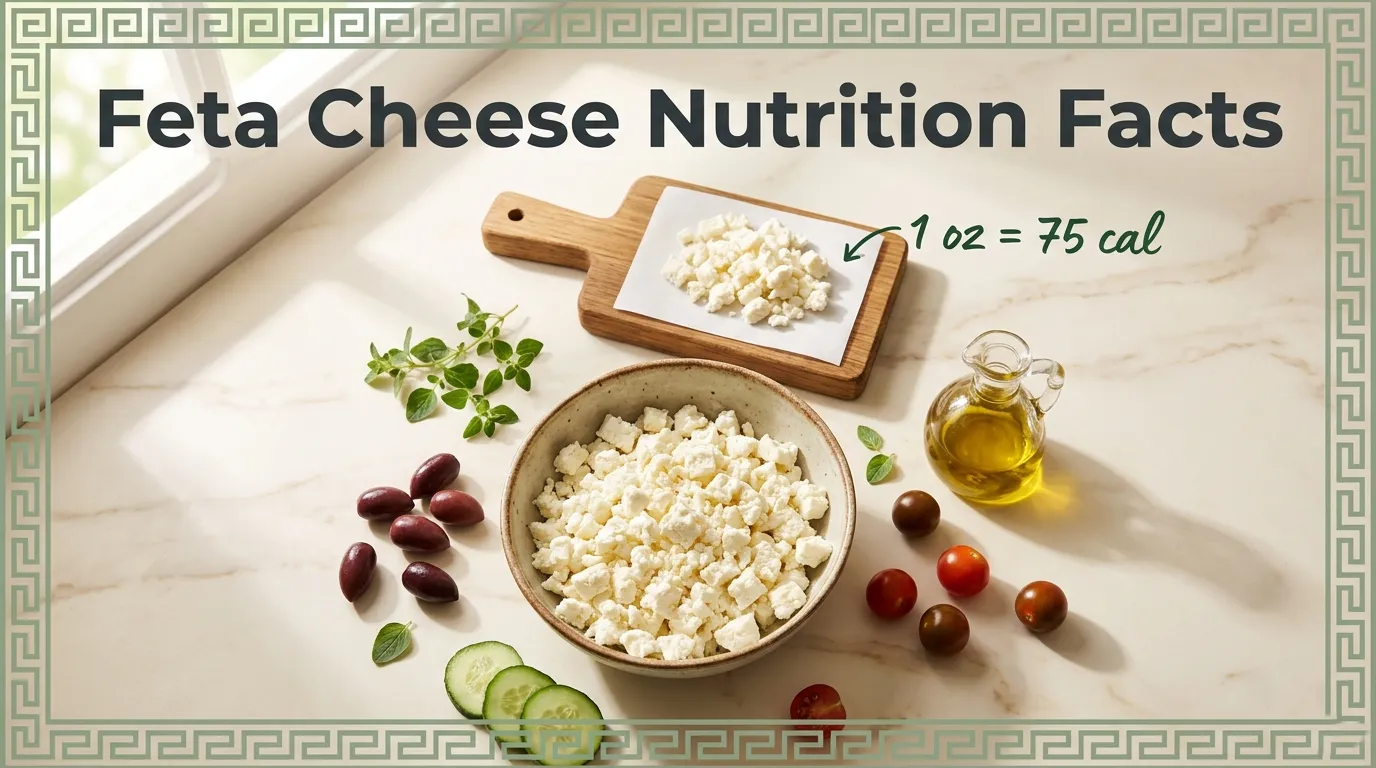
A 1 ounce serving of feta cheese contains 75 calories, 4 grams of protein, 6 grams of fat, and 140 milligrams of calcium. This tangy, crumbly cheese delivers impressive nutrition density for its serving size, especially considering its rich mineral profile.
Feta cheese has been a staple of Mediterranean diets for thousands of years. The USDA FoodData Central database records that traditional feta made from sheep or goat milk provides 493 milligrams of calcium per 100 grams, which is nearly half the daily recommended intake for most adults . Understanding the complete nutrition picture helps you decide how this flavorful cheese fits into your personal health goals.
This guide breaks down every aspect of feta cheese nutrition, from exact calorie counts to sodium content, calcium absorption, and comparisons between different milk types. You will learn which serving sizes work for different diets, how to reduce sodium, and whether feta belongs on your plate for weight loss, keto, or bone health.
Feta Cheese Nutrition Facts
Feta cheese is a nutrient-dense dairy product that provides high quality protein, fat soluble vitamins, and essential minerals. The complete nutrition profile below is based on USDA data for traditional sheep milk feta.
Complete nutrition facts per 100 grams:
| Nutrient | Amount | % Daily Value (2,000 calorie diet) |
|---|---|---|
| Calories | 264 | 13% |
| Protein | 14.21g | 28% |
| Total Fat | 21.28g | 27% |
| Saturated Fat | 14.95g | 75% |
| Carbohydrates | 4.09g | 1% |
| Fiber | 0g | 0% |
| Sugar | 4.09g | — |
| Calcium | 493mg | 49% |
| Sodium | 917mg | 40% |
| Phosphorus | 337mg | 27% |
| Vitamin B12 | 1.69mcg | 70% |
| Riboflavin (B2) | 0.844mg | 65% |
| Vitamin B6 | 0.424mg | 25% |
| Zinc | 2.88mg | 26% |
| Vitamin A | 422 IU | 14% |
The data above comes from the USDA National Nutrient Database . Feta cheese contains no dietary fiber and no vitamin C. Its carbohydrate content comes primarily from milk sugars (lactose), though much is lost during the brining process.
Key Takeaway: Feta cheese delivers excellent protein (14g per 100g) and calcium (493mg per 100g), but also contains high saturated fat (15g) and sodium (917mg). Portion control matters significantly for this cheese.
Feta Nutrition Facts
Feta nutrition facts vary slightly based on the milk source and production method, but the core profile remains consistent across traditional varieties. The cheese is defined by its high fat content, moderate protein, and low carbohydrate count.
Feta cheese calorie breakdown by macronutrient:
- Fat provides approximately 72% of total calories
- Protein provides approximately 21% of total calories
- Carbohydrates provide approximately 7% of total calories
This distribution comes from FatSecret nutritional analysis . Feta is a high fat food, with the majority of fats being saturated. Each gram of fat provides 9 calories, while protein and carbohydrates provide 4 calories per gram.
The moisture content of feta is relatively high compared to aged cheeses like Parmesan or cheddar. Traditional feta contains approximately 55% water by weight . This higher moisture content means feta is less calorie dense than harder cheeses, despite its high fat percentage.
Comparison to other common cheeses (per 100g):
| Cheese | Calories | Fat (g) | Protein (g) | Sodium (mg) |
|---|---|---|---|---|
| Feta | 264 | 21.3 | 14.2 | 917 |
| Cheddar | 404 | 33.3 | 24.9 | 620 |
| Mozzarella | 280 | 17.1 | 27.5 | 486 |
| Parmesan | 431 | 28.6 | 38.5 | 1,600 |
| Goat Cheese | 364 | 29.8 | 21.6 | 415 |
Feta sits in the middle of the cheese spectrum for calories and fat, while providing moderate protein. Its sodium content is higher than mozzarella but lower than Parmesan.
Key Takeaway: Feta is not the lowest calorie cheese, but its strong flavor means you can use smaller portions to achieve the same taste impact as milder cheeses.
Calories in Feta Cheese
The number of calories in feta cheese depends entirely on how much you eat. A standard 1 ounce serving contains 75 calories, while a 100 gram portion contains 264 calories. Understanding these numbers helps you portion correctly.
Calorie counts by common serving size:
| Serving Size | Weight | Calories |
|---|---|---|
| 1 tablespoon, crumbled | 10g | 26 |
| 1 cubic inch | 17g | 45 |
| 1 ounce (oz) | 28g | 75 |
| 1 wedge (1.33 oz) | 38g | 100 |
| 1/4 cup crumbled | 38g | 100 |
| 1/2 cup crumbled | 75g | 198 |
| 100 grams | 100g | 264 |
| 1 cup crumbled | 150g | 396 |
Data compiled from USDA database values . A typical Greek salad contains approximately 1 to 2 ounces of feta cheese, adding 75 to 150 calories to your meal.
The Dietary Guidelines for Americans 2020-2025 recommend that total fat intake be limited to 20-35% of daily calories. For a 2,000 calorie diet, this equals 44-78 grams of fat per day. A 1 ounce serving of feta provides 6 grams of fat, or approximately 8-14% of this daily range.
To put these numbers in perspective, one ounce of feta has roughly the same calorie count as:
- One large egg (72 calories)
- One slice of whole wheat bread (70-80 calories)
- Half a medium banana (50-60 calories)
- Two cups of raw spinach (14 calories) plus a tablespoon of olive oil (120 calories)
Key Takeaway: At 75 calories per ounce, feta is a reasonable addition to meals when portion controlled. The problem is not the cheese itself but how much of it you use.
Feta Cheese Nutrition 1 oz
A 1 ounce serving of feta cheese (28 grams) is the most practical serving size for everyday use. This is roughly the size of two dice or a small matchbox. Most recipes and meal planning use this portion as the reference point.
Complete nutrition facts for 1 ounce (28g) of feta cheese:
| Nutrient | Amount | % Daily Value |
|---|---|---|
| Calories | 75 | 4% |
| Protein | 4.03g | 8% |
| Total Fat | 6.03g | 8% |
| Saturated Fat | 4.24g | 21% |
| Carbohydrates | 1.16g | 0.4% |
| Fiber | 0g | 0% |
| Sugar | 1.16g | — |
| Cholesterol | 25mg | 8% |
| Sodium | 260mg | 11% |
| Calcium | 140mg | 11% |
| Phosphorus | 96mg | 8% |
| Vitamin B12 | 0.48mcg | 20% |
| Riboflavin (B2) | 0.239mg | 18% |
| Vitamin B6 | 0.120mg | 7% |
| Zinc | 0.82mg | 7% |
| Vitamin A | 120 IU | 2% |
This data is sourced from the USDA National Nutrient Database . The % Daily Values are based on a 2,000 calorie diet.
The 1 ounce serving of feta provides a significant amount of vitamin B12. According to the NIH Office of Dietary Supplements, vitamin B12 is essential for neurological function, red blood cell production, and DNA synthesis. The 0.48 micrograms in one ounce of feta represents 20% of the adult daily requirement of 2.4 micrograms.
Quick Tip: A standard salad portion of feta crumbles is approximately 1 ounce. A generous handful is closer to 2 ounces (150 calories). Measuring your feta for the first few servings helps train your eye for proper portions.
Feta Cheese Nutrition 100g
The 100 gram serving size provides a complete nutritional snapshot of feta cheese and is the standard reference for comparing foods. While few people eat 100 grams of feta in one sitting (about 3.5 ounces or nearly half a cup crumbled), this serving size is useful for understanding nutrient density.
Complete nutrition facts for 100 grams of feta cheese:
| Nutrient | Amount | % Daily Value |
|---|---|---|
| Calories | 264 | 13% |
| Protein | 14.21g | 28% |
| Total Fat | 21.28g | 27% |
| Saturated Fat | 14.95g | 75% |
| Carbohydrates | 4.09g | 1% |
| Fiber | 0g | 0% |
| Sugar | 4.09g | — |
| Cholesterol | 89mg | 30% |
| Sodium | 917mg | 40% |
| Calcium | 493mg | 49% |
| Phosphorus | 337mg | 27% |
| Potassium | 62mg | 1% |
| Magnesium | 19mg | 5% |
| Iron | 0.65mg | 4% |
| Zinc | 2.88mg | 26% |
| Vitamin B12 | 1.69mcg | 70% |
| Riboflavin (B2) | 0.844mg | 65% |
| Vitamin B6 | 0.424mg | 25% |
| Folate | 32mcg | 8% |
| Vitamin A (RAE) | 125mcg | 14% |
All values from USDA National Nutrient Database .
The high saturated fat content in a 100 gram serving (14.95 grams) exceeds the American Heart Association’s recommended daily limit of 13 grams of saturated fat for a 2,000 calorie diet. This is why portion control is particularly important for feta cheese.
The calcium content is where feta truly shines. At 493 milligrams per 100 grams, a 100 gram serving provides nearly half the daily calcium requirement for adults (1,000-1,200mg per NIH recommendations). Even a smaller 1 ounce serving provides 11% of daily calcium needs.
Key Takeaway: Feta cheese is an excellent source of calcium and vitamin B12, but the saturated fat and sodium in a full 100 gram portion exceed recommended daily limits for many people. Stick to 1-2 ounce portions.
Feta Cheese Macros
The macronutrient profile of feta cheese is dominated by fat, followed by protein, with very few carbohydrates. Understanding these macros helps you fit feta into specific diet plans.
Feta cheese macronutrient breakdown per serving size:
| Serving | Calories | Protein (g) | Fat (g) | Carbs (g) |
|---|---|---|---|---|
| 1 oz (28g) | 75 | 4.0 | 6.0 | 1.2 |
| 1/4 cup (38g) | 100 | 5.4 | 8.1 | 1.6 |
| 1/2 cup (75g) | 198 | 10.7 | 16.0 | 3.1 |
| 100g | 264 | 14.2 | 21.3 | 4.1 |
| 1 cup (150g) | 396 | 21.3 | 31.9 | 6.1 |
Values calculated from USDA data .
The protein in feta cheese is complete protein, meaning it contains all nine essential amino acids your body cannot produce on its own. The primary protein in feta is casein, which makes up approximately 80% of milk protein. Casein digests slowly, providing a steady release of amino acids into the bloodstream.
Fat composition of feta cheese (per 100g):
- Saturated fat: 14.95g
- Monounsaturated fat: 4.62g
- Polyunsaturated fat: 0.59g
- Cholesterol: 89mg
The saturated fat in feta comes primarily from the milk used to make it. Feta made from sheep milk has a different fatty acid profile than feta made from cow milk, with sheep milk containing higher levels of short and medium chain triglycerides.
For someone following a standard 2,000 calorie diet with recommended macro splits of 45-65% carbs, 10-35% protein, and 20-35% fat, a 1 ounce serving of feta fits easily into the fat and protein allowances.
Key Takeaway: Feta cheese macros work well for low carb and high protein diets. The 1.2 grams of carbohydrates per ounce make it suitable for ketogenic and low carb eating patterns.
Feta Cheese Calcium Content
Feta cheese is an excellent source of calcium, providing 493 milligrams per 100 grams. This represents nearly half of the daily recommended intake for most adults.
Calcium content by serving size:
- 1 oz (28g): 140mg (11% DV)
- 1/4 cup crumbled (38g): 187mg (16% DV)
- 1/2 cup crumbled (75g): 370mg (31% DV)
- 100g: 493mg (41% DV)
- 1 cup crumbled (150g): 740mg (62% DV)
These values are sourced from the USDA National Nutrient Database .
The National Institutes of Health (NIH) Office of Dietary Supplements recommends the following daily calcium intake:
- Adults 19-50 years: 1,000mg
- Women 51+ years: 1,200mg
- Men 71+ years: 1,200mg
Feta cheese provides highly bioavailable calcium. The calcium in dairy products is bound to casein proteins, which enhances absorption. Research suggests that calcium absorption from cheese may be even higher than from calcium supplements.
The bioavailability of calcium from feta is supported by the cheese’s fat content. Calcium absorption requires an acidic environment in the small intestine, and dietary fat helps stimulate the release of digestive acids.
For individuals who do not consume other dairy products, a 1 ounce serving of feta provides 11-14% of daily calcium needs. A typical Greek salad with 2 ounces of feta provides 22-28% of daily calcium requirements.
Key Takeaway: Feta cheese delivers highly absorbable calcium. A 2 ounce serving provides over one quarter of the daily calcium requirement for most adults, making it a practical choice for bone health support.
Feta Cheese Sodium Content
Feta cheese contains high levels of sodium due to the brine in which it is aged and stored. A 1 ounce serving contains approximately 260-350 milligrams of sodium, depending on the brand and brine concentration.
Sodium content by serving size:
- 1 oz (28g): 260-350mg (11-15% DV)
- 1/4 cup crumbled (38g): 348mg (15% DV)
- 100g: 917mg (40% DV)
- 1 cup crumbled (150g): 1,376mg (60% DV)
USDA data records 917mg of sodium per 100g of feta cheese . Individual brands may vary significantly.
The American Heart Association recommends limiting sodium intake to no more than 2,300mg per day, with an ideal limit of 1,500mg per day for most adults, especially those with high blood pressure.
How to reduce sodium in feta cheese:
To reduce the sodium content of feta cheese, follow this soaking method:
Step 1: Cut or crumble the amount of feta you plan to use.
Step 2: Place the feta in a small bowl and cover with cold water.
Step 3: Let it soak for 5 to 10 minutes. For very salty feta, change the water and soak again.
Step 4: Drain the water and pat the feta dry with a paper towel.
Step 5: Use immediately or store in fresh water (refrigerated) for up to 3 days.
According to PCC Natural Markets, soaking feta in water for a few minutes can decrease its sodium content substantially . This technique is particularly useful for individuals watching their blood pressure.
For people with hypertension, heart disease, or kidney disease, standard feta should be used sparingly or soaked before eating. Reduced sodium feta varieties are available but may have different texture and flavor profiles.
Key Takeaway: Feta cheese is naturally high in sodium due to brining. A single 1 ounce serving contains 11-15% of the daily sodium limit. Soaking in water for 5-10 minutes can reduce sodium content significantly.
Feta Cheese Vitamin B12
Feta cheese is an excellent source of vitamin B12 (cobalamin), providing 1.69 micrograms per 100 grams. A 1 ounce serving delivers 0.48 micrograms, which is 20% of the daily recommended intake.
Vitamin B12 content by serving size:
- 1 oz (28g): 0.48mcg (20% DV)
- 1/4 cup crumbled (38g): 0.64mcg (27% DV)
- 100g: 1.69mcg (70% DV)
- 1 cup crumbled (150g): 2.54mcg (106% DV)
These values come from the USDA National Nutrient Database .
The NIH Office of Dietary Supplements states that vitamin B12 is essential for neurological function, red blood cell production, metabolism, and DNA synthesis . The recommended daily allowance for adults is 2.4 micrograms.
Who benefits most from feta’s vitamin B12:
- Vegetarians who eat dairy (feta provides B12 without meat)
- Older adults with decreased B12 absorption
- People with pernicious anemia or malabsorption conditions
- Individuals recovering from gastrointestinal surgery
Vitamin B12 deficiency can cause fatigue, weakness, constipation, loss of appetite, weight loss, and numbness or tingling in the hands and feet. Severe deficiency can lead to neurological changes and megaloblastic anemia.
The B12 in feta cheese is naturally bound to protein and is released during digestion. Absorption requires adequate stomach acid and intrinsic factor, a protein produced in the stomach. Individuals taking proton pump inhibitors (acid reducing medications) or metformin may have reduced B12 absorption.
For context, a 1 ounce serving of feta provides more B12 than a cup of milk (0.45mcg in feta vs. 0.46mcg in milk per ounce equivalent, roughly comparable). However, beef liver remains the richest source at 70mcg per 3 ounces.
Key Takeaway: Feta cheese provides 20% of daily vitamin B12 needs per ounce, making it a valuable source for vegetarians and older adults who may have higher B12 requirements or lower absorption rates.
Is Feta Cheese Healthy
Feta cheese is generally healthy when consumed in moderation as part of a balanced diet. Its nutritional strengths include high quality protein, calcium, vitamin B12, and riboflavin. Its weaknesses include high saturated fat and sodium.
Health benefits of feta cheese (well-established):
- Supports bone health through calcium and phosphorus
- Provides complete protein for muscle maintenance
- Delivers B12 for neurological function
- Contains conjugated linoleic acid (CLA) which research suggests may have anti-inflammatory properties
- Lower lactose content than fresh cheeses due to brining process
Potential health concerns with feta cheese:
- High saturated fat (4.2g per ounce, 21% DV) may raise LDL cholesterol
- High sodium (260-350mg per ounce, 11-15% DV) may increase blood pressure
- Contains tyramine, which can trigger migraines in susceptible individuals
- Not suitable for people with dairy allergies
According to Health.com, feta is considered one of the healthiest cheeses because it is lower in calories and fat than many other cheeses while providing significant calcium and B12 .
For individuals without hypertension, heart disease, or dairy sensitivities, 1-2 ounces of feta cheese several times per week fits within a healthy dietary pattern. The Mediterranean diet, which has strong evidence for cardiovascular and cognitive health benefits, includes moderate amounts of feta and other cheeses.
A nutritionist or registered dietitian can help determine whether feta fits into your specific health profile, particularly if you have high cholesterol, high blood pressure, or a history of kidney stones (calcium oxalate stones may require calcium moderation, though dietary calcium actually reduces stone risk in most people).
Key Takeaway: Feta cheese is healthy for most people when eaten in 1-2 ounce portions. Its high sodium and saturated fat content means individuals with hypertension or heart disease should limit intake or choose reduced sodium varieties.
Feta Cheese for Weight Loss
Feta cheese can be part of a weight loss diet when portions are controlled and calories are accounted for. A 1 ounce serving adds only 75 calories while providing 4 grams of protein that promotes satiety.
Why feta works for weight loss:
- Strong flavor means a little goes a long way
- Protein content increases meal satisfaction
- Low carbohydrate count (1g per ounce) fits low carb approaches
- Can replace higher calorie cheeses in recipes
How to use feta for weight loss:
To incorporate feta into a weight management plan:
- Measure 1 ounce (75 calories) per serving rather than eyeballing portions
- Crumble feta over salads instead of using creamy dressings (which often have 100-200 calories per 2 tablespoons)
- Use feta as a flavor accent rather than a main ingredient
- Replace higher fat cheeses like cheddar (115 calories per ounce) with feta (75 calories per ounce) in recipes
A 2023 study published in the American Journal of Clinical Nutrition found that higher protein intakes (25-30% of calories) were associated with improved weight loss maintenance. The 4 grams of protein in one ounce of feta contribute to this protein target.
The strong flavor profile of feta means you can use less cheese to achieve the same taste satisfaction. One ounce of feta crumbled over a large salad provides more flavor impact than two ounces of mild mozzarella.
For individuals tracking calories, a Greek salad with 2 ounces of feta (150 calories), mixed greens (10 calories), cucumber (15 calories), tomato (20 calories), onion (10 calories), and 1 tablespoon of olive oil (120 calories) totals approximately 325 calories for a complete meal.
Key Takeaway: Feta cheese supports weight loss through portion control, high protein content, and strong flavor that allows smaller portions. Measure your feta to avoid accidental calorie overages.
Feta Cheese on Keto
Feta cheese is an excellent choice for the ketogenic diet because it contains only 1.2 grams of carbohydrates per ounce and provides fats and protein that fit keto macros. The standard keto diet aims for fewer than 20-50 grams of net carbs daily.
Why feta works for keto:
- Net carbs: 1.2g per ounce (1.2g total carbs – 0g fiber)
- High fat content supports ketosis
- Provides electrolytes (sodium, calcium, magnesium) needed on keto
- Versatile for salads, omelets, and fat bombs
Keto friendly serving ideas:
- Crumble over avocado (healthy fats + potassium)
- Mix into scrambled eggs with spinach
- Stuff into chicken breast with olive oil
- Combine with olives and cucumber for a quick snack
A 1 ounce serving of feta provides 6 grams of fat and 4 grams of protein. For someone following a 70% fat, 25% protein, 5% carb keto macro split on 1,800 calories, that represents approximately 3% of daily fat needs and 4% of protein needs.
The sodium content of feta is actually beneficial on a ketogenic diet. Keto causes increased sodium excretion through urine, and many people on keto require additional sodium to prevent “keto flu” symptoms including headache, fatigue, and muscle cramps.
For comparison to other keto friendly cheeses (per 1 oz):
- Feta: 75 calories, 6g fat, 4g protein, 1.2g carbs
- Cheddar: 115 calories, 9.5g fat, 7g protein, 0.4g carbs
- Goat cheese: 76 calories, 6g fat, 5g protein, 0g carbs
All three work on keto, but feta offers the tangiest flavor and lowest calorie density, making it easier to stay within calorie limits while maintaining ketosis.
Key Takeaway: Feta cheese is keto friendly with 1.2g net carbs per ounce. Its high sodium content is actually helpful for preventing electrolyte imbalances common on ketogenic diets.
Sheep Milk Feta vs Cow Milk Feta
Traditional Greek feta is made from sheep milk or a mixture of sheep and goat milk. Many commercial fetas, particularly those produced outside Greece, are made from cow milk. The nutritional profiles differ noticeably.
Comparison of sheep milk vs cow milk feta (per 100g):
| Nutrient | Sheep Milk Feta | Cow Milk Feta |
|---|---|---|
| Calories | 264 | 250-270 (varies) |
| Protein | 14.2g | 12-14g |
| Fat | 21.3g | 18-22g |
| Sodium | 917mg | 700-1,100mg |
| Calcium | 493mg | 350-450mg |
| CLA content | Higher | Lower |
Sheep milk contains more protein, fat, and minerals than cow milk. Sheep milk feta is generally creamier and richer in flavor. The conjugated linoleic acid (CLA) content is also higher in sheep milk products.
Key differences to consider:
People with cow milk protein sensitivity may tolerate sheep milk feta better. Sheep milk contains a different type of casein protein (A2 beta-casein) compared to the A1 beta-casein found in most cow milk. Some research suggests A2 protein causes less digestive discomfort.
How to identify authentic feta:
- Check the label for “PDO” (Protected Designation of Origin) certification
- Look for “sheep milk” or “goat milk” in ingredients
- Greek feta PDO must contain at least 70% sheep milk
- Danish feta is typically cow milk based
The price difference is noticeable. Authentic sheep milk feta costs approximately 2-3 times more than cow milk feta. For many recipes, cow milk feta works well, but for raw applications like Greek salad, the superior flavor and texture of sheep milk feta is noticeable.
From a nutrition standpoint, both types provide similar protein and fat profiles, though sheep milk feta generally offers more calcium and CLA. Individuals with specific health concerns should choose based on their needs.
Key Takeaway: Authentic Greek feta uses sheep or goat milk. Cow milk feta is more affordable but has slightly lower calcium and different protein structure. Both provide similar macronutrient profiles.
Reduced Fat Feta Nutrition
Reduced fat feta cheese contains approximately 30-50% less fat than traditional feta, with corresponding reductions in calories and saturated fat. A 1 ounce serving of reduced fat feta typically contains 50-70 calories compared to 75 calories in regular feta.
Comparison of regular vs reduced fat feta (per 1 oz):
| Nutrient | Regular Feta | Reduced Fat Feta |
|---|---|---|
| Calories | 75 | 60 |
| Protein | 4.0g | 5.5g |
| Total Fat | 6.0g | 3.0g |
| Saturated Fat | 4.2g | 2.0g |
| Carbohydrates | 1.2g | 1.5g |
| Sodium | 260mg | 300-400mg |
Reduced fat feta nutrition facts are based on market data . The modified version has lower calories and less saturated fat but may have higher sodium and slightly different texture.
Pros of reduced fat feta:
- 40-50% less saturated fat
- 20% fewer calories
- Slightly higher protein percentage by weight
Cons of reduced fat feta:
- Often higher in sodium to compensate for flavor loss
- Dryer, crumblier texture
- Less creamy mouthfeel
- May contain fillers or thickeners
For individuals strictly limiting saturated fat intake due to heart disease or high cholesterol, reduced fat feta may be appropriate. For everyone else, the small calorie difference (15 calories per ounce) may not justify the texture and flavor compromises.
A 1 ounce serving of reduced fat feta saves only 15 calories. You would need to eat 7 ounces (approximately 7 servings) to save 100 calories. For most people, enjoying a smaller portion of regular feta provides better satisfaction and similar net calorie impact.
Quick Tip: If you choose reduced fat feta, check the sodium content on the label. Some brands increase sodium to maintain flavor, potentially negating cardiovascular benefits.
Frequently Asked Questions About Feta Cheese
Is feta cheese healthier than other cheeses?
Feta is generally healthier than many other cheeses because it has fewer calories per ounce (75 vs. 115 for cheddar) and provides significant calcium and vitamin B12. However, it is higher in sodium than mozzarella and cheddar. The healthiest cheese depends on your individual health goals, including whether you prioritize lower calories, lower sodium, or higher protein.
How much sodium is in a serving of feta cheese?
A 1 ounce serving of feta cheese contains 260 to 350 milligrams of sodium, which is 11 to 15 percent of the daily recommended limit of 2,300 milligrams. The exact amount varies by brand and how long the cheese has been stored in brine. Soaking feta in water for 5 to 10 minutes can reduce sodium content by up to 50 percent.
Can I eat feta cheese if I am lactose intolerant?
Many people with lactose intolerance can eat feta cheese without symptoms. The brining process removes most of the whey, which contains lactose, and the aging process allows bacteria to break down remaining lactose. Feta typically contains less than 1 gram of lactose per ounce, compared to 12 grams in a cup of milk. However, individual tolerance varies, and those with severe intolerance should start with a small portion.
Is feta cheese good for bone health?
Yes, feta cheese is excellent for bone health because it provides 140 milligrams of calcium per ounce (11 percent of the daily value) along with phosphorus and protein. Calcium and phosphorus work together to form hydroxyapatite, the mineral complex that gives bones their strength. The vitamin B12 in feta also supports the nervous system that controls muscle function, indirectly supporting bone health through fall prevention.
How do I reduce sodium in feta cheese?
To reduce sodium in feta cheese, crumble or slice the amount you plan to use, place it in a bowl of cold water, and soak for 5 to 10 minutes. For very salty feta, change the water and soak again. Drain and pat dry before using. This technique can reduce sodium content by approximately 30 to 50 percent while preserving most of the flavor and texture.
What is the difference between Greek feta and other feta?
Greek feta with PDO (Protected Designation of Origin) certification must be made from at least 70 percent sheep milk, with goat milk making up the remainder. It has a creamy texture and tangy flavor. Non-Greek feta, often called “feta style” cheese, is typically made from cow milk and has a drier, crumblier texture and milder flavor. The nutritional profiles differ, with sheep milk feta containing more calcium and conjugated linoleic acid.
Feta cheese nutrition facts reveal a food that delivers impressive benefits with reasonable trade offs. The 75 calories, 4 grams of protein, and 140 milligrams of calcium in a single ounce make it a nutrient dense choice for salads, omelets, and Mediterranean dishes. The high sodium and saturated fat content mean portion control matters, but the strong flavor profile makes small portions satisfying.
Here is what you actually need to know. One to two ounces of feta several times per week fits into a healthy diet for most people. If you have high blood pressure, soak your feta in water before eating to reduce sodium. If you are watching saturated fat, use feta as an accent rather than a main ingredient. And if you want the authentic nutrition profile, look for sheep milk feta. Your bones, muscles, and taste buds will thank you.