Sushi Nutrition Facts
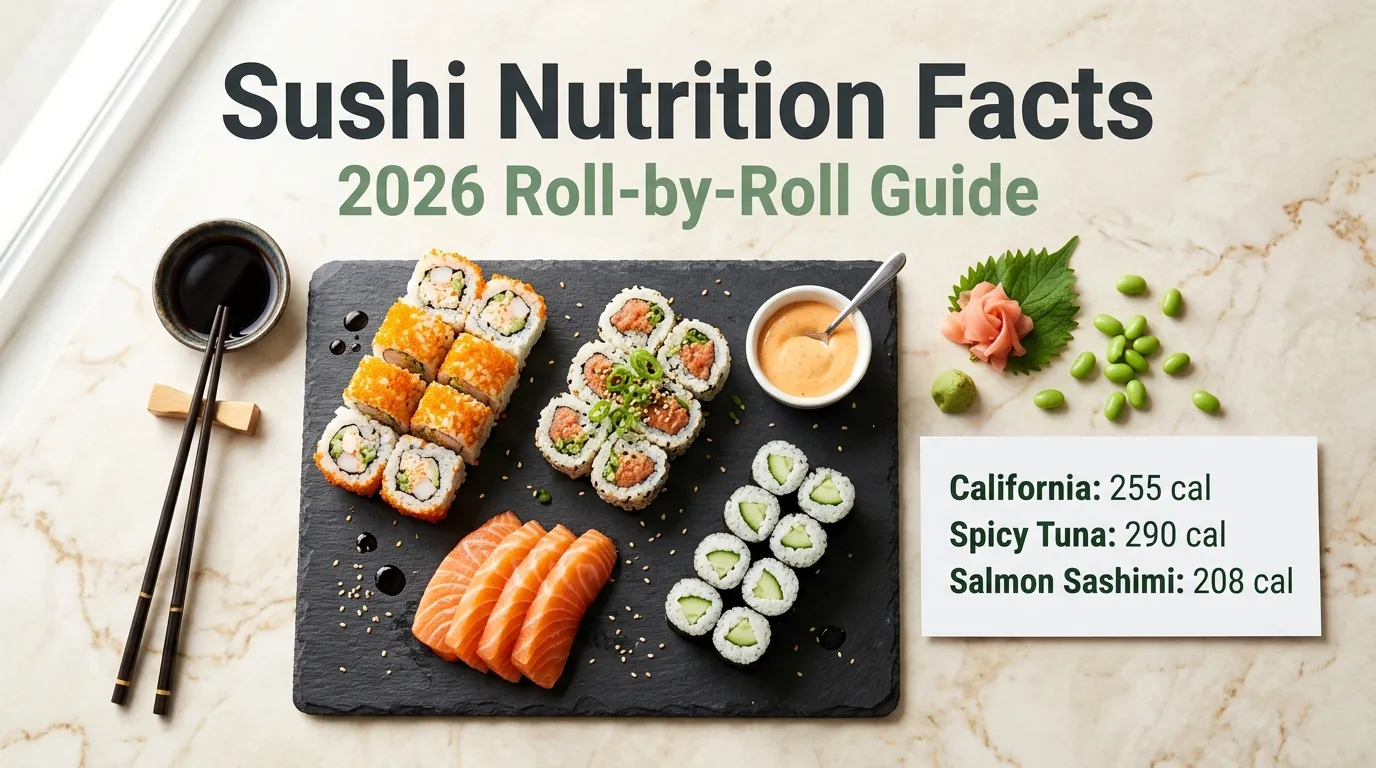
Sushi nutrition facts vary widely based on ingredients, with a typical 8-piece California roll containing 226-255 calories, 7-9 grams of protein, 31-44 grams of carbohydrates, and 2-10 grams of fat . The wide range reflects differences in preparation methods, portion sizes, and added ingredients like mayonnaise or tempura batter.
According to WebMD, which medically reviewed sushi nutrition, a standard 8-piece California roll provides 226 calories, 44 grams of carbs, 7 grams of protein, 2 grams of fat, and 1,024 milligrams of sodium . The fish used in sushi is rich in omega-3 fatty acids and provides nutrients including vitamin D, vitamin B2 (riboflavin), iron, zinc, iodine, magnesium, potassium, and calcium.
The seaweed sheets (nori) used to make maki also contain high levels of calcium, magnesium, phosphorus, iron, iodine, sodium, and vitamins A, B1, C, and E . Understanding these numbers helps you make informed choices at sushi restaurants.
This guide breaks down nutrition for every popular sushi roll type, compares macros, and gives practical ordering advice for 2026.
Nutrition Facts for Sushi
Basic sushi without vegetables or seafood provides a baseline for understanding the rice and vinegar component. According to FatSecret, 100 grams of plain sushi (rice and vinegar only) contains 177 calories, 39 grams of carbohydrates, 3.1 grams of protein, and only 0.3 grams of fat .
This base nutrition profile shows that sushi rice is the primary calorie and carbohydrate contributor. The rice is seasoned with rice vinegar, sugar, and salt, which adds small amounts of sodium and sugar beyond plain white rice.
A single piece of plain sushi (approximately 30 grams) contains 46 calories . For a typical 6-8 piece roll, the rice alone contributes 276-368 calories before adding fish, vegetables, or sauces. This is why understanding sushi nutrition starts with recognizing the rice portion.
Key Takeaway: The seasoned rice in sushi provides most of the calories and carbohydrates. A standard roll contains 276-368 calories from rice before any fillings are added.
Nutrition Facts Sushi
When you add seafood, the nutrition profile changes significantly. Shrimp sushi, for example, contains 163 calories per 100 grams with 6.4 grams of protein, 32.4 grams of carbohydrates, and 0.56 grams of fat .
The table below compares nutrition facts for common sushi types per 100 grams:
| Sushi Type | Calories | Protein (g) | Carbs (g) | Fat (g) | Sodium (mg) |
|---|---|---|---|---|---|
| Plain Sushi (rice only) | 177 | 3.1 | 39.0 | 0.3 | 95 |
| Shrimp Sushi | 163 | 6.4 | 32.4 | 0.6 | 641 |
| California Roll (per 2 rolls/308g) | 480 | 11.0 | 88.0 | 5.0 | 2,870 |
| Vegetarian Roll (10 pieces) | 240 | 6.0 | 47.0 | 4.0 | (5% DV) |
Data sources: FatSecret, CSB Culinary Services, Kroger .
The sodium content in the California roll example (2,870mg for 2 rolls) exceeds the daily recommended limit of 2,300mg . This high sodium comes from soy sauce in the ingredients, salted rice vinegar, and potentially surimi (imitation crab) which contains added salt.
Key Takeaway: Sodium is the hidden concern in sushi. A single California roll can contain more than a full day’s worth of sodium, primarily from soy sauce and processed ingredients like imitation crab.
Nutrition Facts of Sushi
Looking at nutrition facts of sushi on a per-piece basis helps with portion control. One standard piece of sushi (approximately 30 grams) contains 28 calories, 0.9 grams of protein, 5.5 grams of carbohydrates, and 0.2 grams of fat .
The per-piece breakdown for 1 piece (30g) of generic sushi:
| Nutrient | Amount | % Daily Value |
|---|---|---|
| Calories | 28 | 1% |
| Protein | 0.9g | 2% |
| Total Fat | 0.2g | 0% |
| Carbohydrates | 5.5g | 2% |
| Fiber | 0.3g | 1% |
| Sodium | 129mg | 6% |
| Vitamin B12 | 0.03mcg | 1% |
| Selenium | 2.4mcg | 4% |
Data from Prospre using USDA values .
For a typical 8-piece roll, multiply these numbers by 8: approximately 224 calories, 7.2g protein, 44g carbs, 1.6g fat, and 1,032mg sodium. This aligns closely with WebMD’s reported California roll nutrition of 226 calories, 7g protein, 44g carbs, and 1,024mg sodium .
Quick Tip: If you are tracking calories, count approximately 28 calories per piece of basic sushi. Add 10-30 additional calories per piece for fatty fish (salmon), avocado, or creamy sauces.
Key Takeaway: Use the 28-calorie-per-piece rule of thumb for basic sushi. Add extra calories for premium ingredients like salmon, avocado, spicy mayo, or tempura.
Sushi Roll Nutrition Facts
Different sushi rolls have dramatically different nutrition profiles. The table below compares popular rolls based on standard restaurant serving sizes (typically 6-8 pieces per roll).
| Roll Type | Calories | Protein (g) | Carbs (g) | Fat (g) | Sodium (mg) | Key Ingredients |
|---|---|---|---|---|---|---|
| California Roll (8 pcs) | 226-255 | 7-9 | 31-44 | 2-10 | 1,024 | Imitation crab, avocado, cucumber |
| Spicy Tuna Roll (8 pcs) | 290-350 | 18-22 | 35-40 | 10-15 | 800-1,200 | Raw tuna, spicy mayo, cucumber |
| Salmon Avocado Roll (6 pcs) | 250-300 | 12-15 | 28-35 | 12-15 | 500-800 | Raw salmon, avocado |
| Shrimp Tempura Roll (8 pcs) | 450-550 | 15-18 | 50-60 | 20-25 | 1,000-1,500 | Fried shrimp, eel sauce, avocado |
| Vegetarian Roll (10 pcs) | 240 | 6 | 47 | 4 | Low | Cucumber, avocado, carrot |
| Rainbow Roll (8 pcs) | 400-500 | 20-25 | 45-55 | 15-20 | 900-1,300 | California roll + assorted fish on top |
Data compiled from multiple sources including WebMD, Noom, CSB, and Kroger .
The shrimp tempura roll is the highest calorie option on this list due to fried shrimp, tempura batter, and eel sauce (which is sweetened). The vegetarian roll is the lowest calorie option but also lowest in protein.
The spicy tuna roll offers excellent protein density with approximately 18-22 grams of protein per serving, making it a good choice for those prioritizing protein intake.
Key Takeaway: Shrimp tempura rolls pack 450-550 calories each, nearly double a California roll. Spicy tuna offers the best protein-to-calorie ratio among popular rolls.
Calories in Sushi
Calories in sushi range from as low as 28 calories per piece of plain sushi to over 550 calories for a full tempura roll. Understanding where calories come from helps you make informed choices.
Calorie sources in sushi:
- Rice: 28-35 calories per piece (from the rice alone)
- Raw fish (salmon/tuna): 30-50 calories per piece
- Avocado: 20-30 calories per piece
- Spicy mayo: 30-50 calories per roll
- Tempura/fried ingredients: 50-100+ extra calories per roll
- Eel sauce (sweetened soy glaze): 20-40 calories per roll
Noom’s analysis of a California roll (184g) reports 255 calories with a macronutrient breakdown of 31.5g carbs, 9g protein, 10.3g fat, and 313mg of omega-3 fatty acids . The omega-3s come from the seafood content.
For context, here are calorie estimates for common sushi orders:
| Order | Estimated Calories |
|---|---|
| 1 California roll (8 pcs) | 226-255 |
| 1 Spicy Tuna roll (8 pcs) | 290-350 |
| 1 Salmon Avocado roll (6-8 pcs) | 250-300 |
| 1 Shrimp Tempura roll (8 pcs) | 450-550 |
| 2 pieces of nigiri (salmon or tuna) | 90-120 |
| 1 Miso soup | 35-50 |
| 1 Edamame (steamed) | 120-150 |
Key Takeaway: A full sushi meal of 2 rolls plus soup and edamame can range from 500 to 1,200 calories. Choose lighter rolls and skip tempura to stay in the 500-700 calorie range.
Sushi Protein Content
Sushi protein content varies by roll type, with spicy tuna and sashimi offering the highest protein density. A typical spicy tuna roll contains 18-22 grams of protein per serving .
Protein per serving by roll type:
| Roll Type (standard serving) | Protein (g) |
|---|---|
| Spicy Tuna Roll (8 pcs) | 18-22 |
| Rainbow Roll (8 pcs) | 20-25 |
| Salmon Avocado Roll (6-8 pcs) | 12-15 |
| California Roll (8 pcs) | 7-9 |
| Vegetarian Roll (10 pcs) | 6 |
| Shrimp Tempura Roll (8 pcs) | 15-18 |
Data from Noom and CSB Culinary Services .
The protein in sushi comes primarily from fish, imitation crab (surimi), and sometimes shrimp. Surimi is made from fish protein (pollock, cod, or whiting) and contains added egg whites and other binders .
A piece of salmon or tuna nigiri (fish over rice) contains approximately 4-6 grams of protein per piece. Two pieces of nigiri provide 8-12 grams of protein for only 90-120 calories.
For comparison, a standard 3-ounce chicken breast (about the size of a deck of cards) contains 26 grams of protein. To get the same protein from a California roll, you would need to eat three rolls (approximately 27 pieces, 678-765 calories).
Key Takeaway: Spicy tuna roll is the protein champion among maki rolls at 18-22g per serving. For maximum protein with minimum calories, choose sashimi (fish without rice).
Sushi Carbs
Sushi is carbohydrate-forward due to the seasoned rice. A California roll contains 31-44 grams of carbohydrates per serving, with most coming from white sushi rice .
Carb content by roll type (standard serving):
| Roll Type | Carbs (g) | Net Carbs (g) |
|---|---|---|
| California Roll | 31-44 | 29-42 |
| Spicy Tuna Roll | 35-40 | 33-38 |
| Salmon Avocado Roll | 28-35 | 26-33 |
| Shrimp Tempura Roll | 50-60 | 48-58 |
| Vegetarian Roll | 47 | 43 |
A vegetarian sushi roll from Kroger contains 47 grams of carbohydrates, 4 grams of fiber, and 9 grams of sugar per 10-piece serving . The sugar comes from the seasoned rice vinegar mixture.
For people monitoring carbohydrate intake (diabetics, keto dieters), sushi presents a challenge. A single roll contains as many carbs as 2-3 slices of bread. According to Noom, the key takeaway is that portion size matters, and it is easy to eat multiple rolls in one sitting, which can quickly double or triple carbohydrate intake .
Lower-carb sushi options:
- Sashimi (fish only, no rice): 0g carbs
- Naruto rolls (cucumber wrapped, no rice): 5-10g carbs
- Hand rolls with less rice: 15-20g carbs
- Brown rice sushi (slightly more fiber, similar carbs)
Key Takeaway: A single sushi roll contains 30-60 grams of carbohydrates, equivalent to 2-4 slices of bread. For lower carb intake, order sashimi or request rolls with less rice.
Sushi Sodium
Sushi sodium content is a hidden health concern. A California roll can contain over 1,000mg of sodium, and two rolls from some restaurants exceed 2,800mg .
Sodium sources in sushi:
- Soy sauce (1 tablespoon): 900-1,000mg sodium
- Sushi rice seasoning (salt and sugar)
- Imitation crab (surimi): contains added salt
- Smoked fish or pickled vegetables
- Eel sauce and other condiments
CSB Culinary Services reports a California roll serving (2 rolls, 308g) contains 2,870mg of sodium, which is 125% of the daily value based on a 2,000-calorie diet . This exceeds the FDA’s daily recommended limit of 2,300mg in a single meal.
The Dietary Guidelines for Americans recommend limiting sodium to 2,300mg per day. The American Heart Association recommends an ideal limit of 1,500mg per day for most adults.
How to reduce sodium when eating sushi:
To order lower-sodium sushi:
Step 1: Ask for rolls made with less or no added salt in the rice.
Step 2: Request low-sodium soy sauce (tamari or reduced-sodium version) and use sparingly.
Step 3: Avoid rolls with smoked fish, pickled vegetables, or eel sauce.
Step 4: Choose rolls with fresh raw fish (salmon, tuna, yellowtail) over surimi-based rolls.
Step 5: Skip the extra soy sauce dipping and use wasabi or ginger for flavor instead.
Key Takeaway: A single sushi roll can contain over 1,000mg of sodium. Two rolls from some restaurants exceed the entire daily sodium limit. Use low-sodium soy sauce sparingly and ask about rice seasoning.
Sushi Healthy
Sushi is generally healthy when consumed in moderation as part of a balanced diet, but not all sushi is created equal. WebMD notes that there are many known health benefits available from staple sushi ingredients such as seaweed, rice, and fish .
Health benefits of sushi:
- Omega-3 fatty acids: Fish used in sushi (salmon, tuna, mackerel) are rich in EPA and DHA, which support heart and brain health
- Iodine and selenium: Seaweed (nori) provides iodine for thyroid function; a California roll provides 57% of the daily value for selenium
- Complete protein: Fish provides all essential amino acids
- Low in saturated fat: Most sushi rolls contain minimal saturated fat, though tempura and creamy sauces add unhealthy fats
- Vitamin-rich: Nori contains vitamins A, B1, C, and E ; fish provides B12 and D
Potential health concerns:
- Sodium: Very high in restaurant sushi, especially with soy sauce
- Mercury: Some fish (tuna, especially bigeye) contain higher mercury levels
- Calorie density: Tempura rolls can exceed 500 calories per serving
- Sugar in rice: Sushi rice contains added sugar (approximately 2-4g per roll)
- Food safety: Raw fish carries small risks for pregnant women and immunocompromised individuals
The fish used in many types of sushi is filled with omega-3 fatty acids and is a rich source of nutrients and minerals including vitamin D, riboflavin, iron, zinc, iodine, magnesium, potassium, and calcium .
Key Takeaway: Sushi offers genuine health benefits from omega-3s, iodine, and selenium. But tempura rolls, creamy sauces, and excessive soy sauce turn healthy sushi into a high-calorie, high-sodium meal.
Sushi for Weight Loss
Sushi can be part of a weight loss diet when you choose the right rolls and control portions. Noom’s analysis emphasizes that portion size matters, and it is easy to eat multiple rolls in one sitting, which can quickly double or triple calorie intake .
Weight loss friendly sushi choices:
- Sashimi (fish only): 100-150 calories per serving, 20-25g protein
- Miso soup (before meal): 35-50 calories, increases satiety
- Edamame (steamed): 120-150 calories per cup, high fiber and protein
- Cucumber or avocado rolls (no mayo): 150-200 calories per roll
- Naruto rolls (cucumber wrapped, no rice): under 150 calories per roll
Sushi to limit on a weight loss diet:
- Tempura rolls (fried): 450-550 calories
- Rolls with spicy mayo: adds 50-100 calories per roll
- Rolls with cream cheese: adds 100+ calories per roll
- Rainbow rolls (extra fish + California base): 400-500 calories
To create a more weight-loss-friendly balance, Noom suggests pairing your roll with protein-rich options like sashimi, edamame, or miso soup to help increase fullness while keeping carbs in check .
Sample weight loss sushi meal (under 500 calories):
- 1/2 California roll (4 pieces): 113-128 calories
- 2 pieces salmon sashimi: 70-90 calories
- 1 cup edamame: 120-150 calories
- Miso soup: 35-50 calories
- Total: approximately 338-418 calories
Key Takeaway: Sushi supports weight loss when you choose sashimi, edamame, and miso soup instead of tempura rolls and spicy mayo. A single tempura roll can contain more calories than an entire weight-loss-friendly sushi meal.
Sushi Mercury
Mercury in sushi is a legitimate health concern, particularly for pregnant women, nursing mothers, and young children. Some fish used in sushi contain higher levels of methylmercury, which can accumulate in the body over time.
Mercury levels in common sushi fish (lowest to highest):
- Lowest mercury: Salmon, shrimp, scallop, squid, eel (unagi)
- Low to moderate: Crab, imitation crab (surimi), yellowtail (hamachi)
- Moderate: Tuna (skipjack/light canned)
- High: Tuna (albacore, yellowfin), sea bass
- Highest: Tuna (bigeye, bluefin), mackerel (some species)
The FDA and EPA provide specific guidance for pregnant women: consume 2-3 servings (8-12 ounces) per week of low-mercury fish, and avoid high-mercury fish like bigeye tuna, shark, swordfish, and king mackerel.
For the general population, the health benefits of eating fish (including omega-3 fatty acids) generally outweigh the risks of mercury exposure. However, limiting consumption of high-mercury fish to once per week or less is prudent.
Quick Tip: If you eat sushi weekly, vary your fish choices. Alternate between salmon (low mercury), shrimp (low mercury), and tuna (moderate mercury). Avoid eating tuna multiple times per week.
Key Takeaway: Salmon, shrimp, and eel are lowest in mercury and safest for regular consumption. Limit tuna, especially bigeye or bluefin tuna, to occasional consumption (once per week or less).
Sashimi Nutrition
Sashimi (fish served without rice) is the most nutrient-dense and lowest-calorie way to eat raw fish. A typical serving of salmon sashimi (approximately 5 pieces, 100g) contains 200-250 calories, 20-25g protein, and 12-15g fat (mostly healthy omega-3s).
Sashimi nutrition per 100g (approximate):
| Fish Type | Calories | Protein (g) | Fat (g) | Omega-3 (mg) |
|---|---|---|---|---|
| Salmon | 208 | 22 | 13 | 2,000+ |
| Tuna (bluefin) | 144 | 24 | 5 | 1,000+ |
| Yellowtail (hamachi) | 190 | 22 | 11 | 1,500+ |
| Shrimp (cooked) | 106 | 20 | 2 | 200+ |
| Mackerel (saba) | 205 | 19 | 14 | 2,500+ |
Sashimi contains zero carbohydrates, zero fiber, and minimal sodium (before soy sauce). This makes it ideal for low-carb, keto, and diabetic diets.
The macronutrient profile of sashimi is predominantly protein and healthy fat. For comparison, salmon sashimi provides 22g protein and 13g fat per 100g, with virtually all fat being unsaturated.
Why sashimi is excellent for health goals:
- Zero carbs: Suitable for diabetics and low-carb dieters
- High protein density: 22-24g protein per serving
- Rich in omega-3s: Supports heart and brain health
- No rice means no blood sugar spike
- Eat more volume for fewer calories than rolls
Key Takeaway: Sashimi is the healthiest way to eat sushi. Zero carbs, high protein, and rich in omega-3 fatty acids. A 5-piece salmon sashimi order provides 22g protein for only 200-250 calories.
Vegetarian Sushi Nutrition
Vegetarian sushi excludes fish and seafood but still offers solid nutrition. A vegetarian roll (cucumber, avocado, carrot wrapped in nori and rice) contains 240 calories, 47 grams of carbohydrates, 6 grams of protein, and 4 grams of fat per 10-piece serving .
Vegetarian sushi nutrition (per 10 pieces):
| Nutrient | Amount | % Daily Value |
|---|---|---|
| Calories | 240 | 12% |
| Total Fat | 4g | 6% |
| Saturated Fat | 0.5g | 3% |
| Carbohydrates | 47g | 16% |
| Dietary Fiber | 4g | 16% |
| Sugar | 9g | — |
| Protein | 6g | 12% |
| Vitamin A | 1.7g | 170% |
| Vitamin C | 0.006g | 10% |
| Calcium | 0.0036g | 6% |
| Iron | 0.0027g | 15% |
Data from Kroger vegetarian sushi roll .
The vegetarian roll is an excellent source of vitamin A (170% DV) from carrots, and provides 4g of fiber (16% DV) which supports digestive health. The protein content (6g) is lower than fish-based rolls, but pairing with edamame (another 12-15g protein) creates a complete protein meal.
Vegetarian sushi options to try:
- Cucumber roll (kappa maki): Very low calorie, hydrating
- Avocado roll: Healthy monounsaturated fats
- Vegetable roll (assorted): Most varied nutrients
- Inari (tofu pouch filled with rice): Adds plant protein
- Shiitake mushroom roll: Umami flavor, B vitamins
Vegetarian sushi is suitable for vegans if the rice is seasoned without honey and no fish-based ingredients are used. Most sushi rice is seasoned with rice vinegar, sugar, and salt (vegan). Confirm with the restaurant if concerned.
Key Takeaway: Vegetarian sushi provides 240 calories, 6g protein, and 4g fiber per serving. It is an excellent source of vitamin A (170% DV). Pair with edamame for a complete protein meal.
Frequently Asked Questions About Sushi Nutrition
Is sushi actually healthy for you?
Sushi is generally healthy when made with fresh fish, seaweed, and vegetables without heavy sauces or tempura batter. WebMD confirms that fish provides omega-3 fatty acids and nori provides iodine, calcium, and vitamins A, B1, C, and E . However, sodium can be very high (over 1,000mg per roll), and some fish contain mercury. Choose salmon or shrimp over tuna for lower mercury, use less soy sauce, and avoid tempura rolls.
How many calories are in a California roll?
A California roll contains 226-255 calories per 8-piece serving, depending on the restaurant . The macronutrient breakdown is approximately 31-44g carbohydrates, 7-9g protein, and 2-10g fat. The sodium content is high at 1,000-1,200mg per roll, primarily from imitation crab and seasoned rice.
Which sushi roll has the most protein?
Spicy tuna roll has the most protein among common maki rolls, with 18-22 grams of protein per 8-piece serving . Sashimi (fish without rice) provides even more protein density at 20-25g per serving with zero carbohydrates. Rainbow rolls also provide 20-25g protein due to the multiple fish toppings.
Is sushi high in mercury?
Some sushi fish are high in mercury, particularly tuna (especially bigeye and bluefin). Salmon, shrimp, scallop, and eel are low in mercury and safe for regular consumption. Pregnant women should follow FDA and EPA guidance: consume 2-3 servings per week of low-mercury fish and avoid high-mercury species.
Can I eat sushi on a weight loss diet?
Yes, you can eat sushi on a weight loss diet by choosing wisely. Sashimi, miso soup, edamame, cucumber rolls, and naruto rolls (cucumber wrapped, no rice) are excellent low-calorie options. Noom recommends pairing rolls with protein-rich sides like sashimi or edamame to increase fullness while keeping carbs in check . Avoid tempura rolls, spicy mayo, and cream cheese.
What is the healthiest sushi roll to order?
The healthiest sushi roll is a cucumber roll (kappa maki) or avocado roll without mayonnaise, followed by salmon or tuna rolls without tempura or creamy sauces. Sashimi (fish without rice) is the healthiest option overall: zero carbs, high protein (20-25g per serving), and rich in omega-3 fatty acids . Vegetarian rolls also provide good nutrition with 4g fiber and 170% DV vitamin A per serving .
Sushi nutrition facts reveal a food that can be either a nutrient-dense health food or a calorie-heavy indulgence, depending entirely on your choices. The base ingredients are excellent: omega-3 rich fish, mineral-packed seaweed, and vitamin-rich vegetables. But tempura batter, spicy mayo, cream cheese, and excessive soy sauce turn healthy sushi into a high-sodium, high-calorie meal.
Here is what you actually need to know the next time you order. Choose salmon over tuna for lower mercury and higher omega-3s. Order sashimi or naruto rolls (cucumber wrapped) to skip the carb-heavy rice. Ask for low-sodium soy sauce and use it sparingly. Add miso soup and edamame for protein and satiety. Skip the tempura and the spicy mayo. Do these things, and sushi becomes one of the healthiest meal choices you can make.