Quest Protein Chips Nutrition Facts: 2026 Macro Review
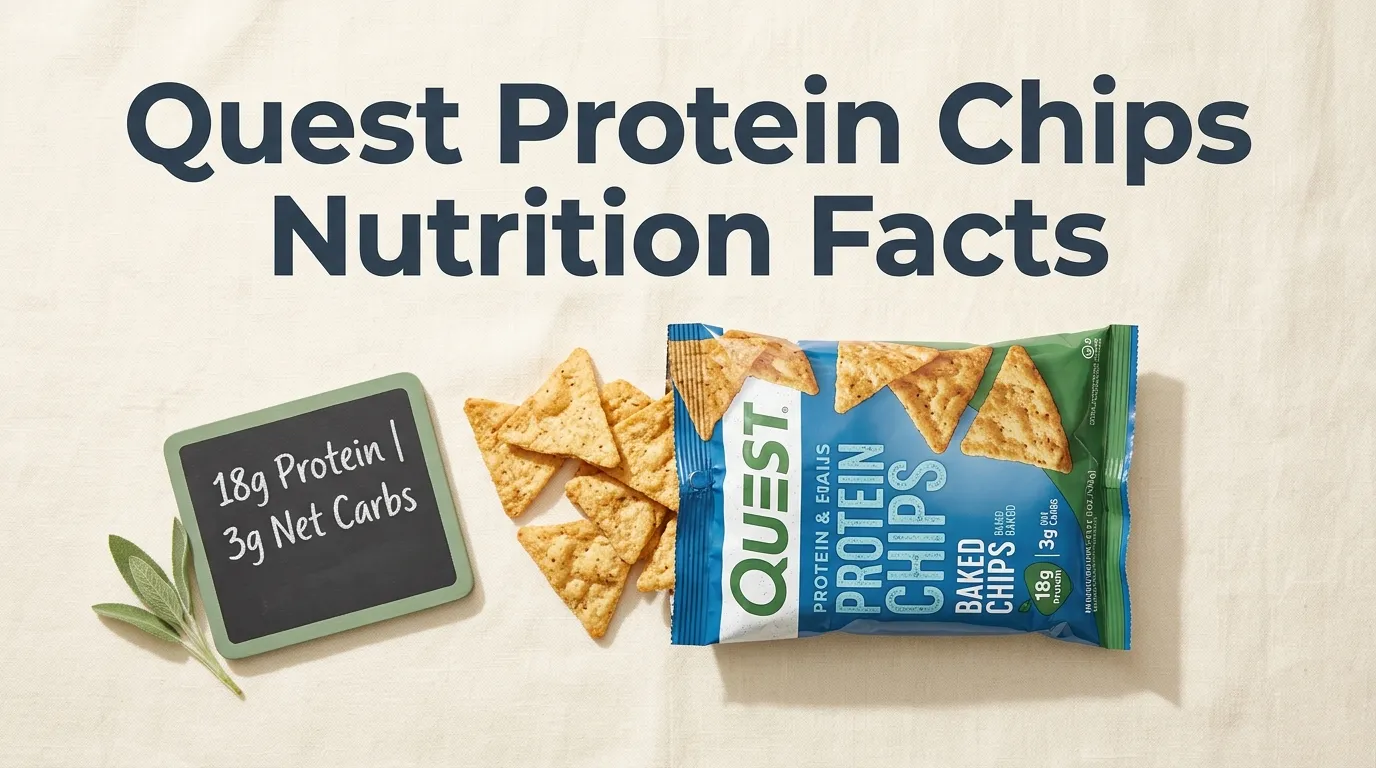
Quest Protein Chips nutrition facts make a bold promise: a crunchy, savory snack with 18 grams of protein and only 3 grams of net carbohydrates per 32-gram bag. That is a macro split you will not find in any potato or tortilla chip on a standard grocery shelf.
The Academy of Nutrition and Dietetics recognizes that high-protein, low-carb snack swaps can support both weight management and muscle maintenance goals. This product removes the refined starch and replaces it with isolated dairy proteins and soluble corn fiber.
We will break down every number on the label, from the calories to the sodium. You will learn what milk protein isolate actually is, how the fiber works, why digestion issues happen, and whether this product genuinely belongs in your diet or is simply a cleverly marketed processed food.
Quest Protein Chips Nutrition Facts
Quest Protein Chips nutrition facts deliver a complete macro reversal from a standard chip. Instead of carbohydrate-heavy corn or potato, the base is a proprietary protein and fiber matrix.
A single 32-gram bag of the Loaded Taco flavor provides 140 calories. Those calories are composed of 18 grams of protein, 4.5 grams of fat, and just 5 grams of total carbohydrates.
Subtracting the 2 grams of dietary fiber leaves you with roughly 3 grams of net digestible carbohydrates. This profile aligns with both ketogenic and very-low-carb diet parameters.
The vitamin and mineral content is modest but not negligible. You get about 150 milligrams of calcium from the dairy protein base, roughly 10 percent of the daily value, making it a reasonable contributor to bone nutrient intake.
| Macro | Per Bag (32g) | % of Daily Calories |
|---|---|---|
| Calories | 140 | N/A |
| Total Protein | 18g | 51% |
| Total Fat | 4.5g | 29% |
| Total Carbs | 5g | 14% |
| Dietary Fiber | 2g | N/A |
Key Takeaway: One bag of Quest Chips is a protein supplement disguised as a snack. Over half its calories come from protein, making it a completely different nutritional product than a chip.
Quest Chips Calories
Quest Chips calories are fixed at 140 per single-serve bag, a count that stands up well against the 260 to 300 calories found in a similar-weight serving of regular potato chips. This calorie efficiency is driven by the macronutrient composition.
Protein and carbohydrates both provide 4 calories per gram, but the high protein content here replaces calorie-dense refined starch. The fat content is also controlled at 4.5 grams per bag.
This makes the product calorie-sparse compared to its volume and crunch profile. You get the sensory experience of eating a full bag of chips for roughly the caloric cost of a large apple or a small handful of almonds.
The single-serve packaging is a key behavioral calorie control feature. It eliminates the risk of mindlessly eating multiple servings from a family-sized bag, which is a common pitfall with standard chips.
Quest Chips Protein
Quest Chips protein comes from a blend of milk protein isolate and whey protein isolate. This is the same dairy protein foundation used in premium protein bars and powders.
Milk protein isolate is composed of approximately 80 percent casein and 20 percent whey. This matches the natural protein ratio found in cow’s milk.
Casein digests slowly, providing a sustained release of amino acids into the bloodstream over several hours. Whey protein is rapidly absorbed, spiking amino acid levels quickly after ingestion.
This combination provides a full spectrum of essential amino acids with a Protein Digestibility Corrected Amino Acid Score (PDCAAS) of 1.0. That score signifies a complete, high-quality protein source equivalent to meat or eggs in its amino acid profile.
- 18 grams of protein is comparable to three large eggs or a small chicken breast.
- Leucine content: The whey fraction is rich in leucine, the branched-chain amino acid that triggers muscle protein synthesis.
- Texture delivery: These isolates are heat-stable enough to be baked into a rigid, crunchy chip matrix.
Key Takeaway: The protein in Quest Chips is not a gimmick. It is a highly bioavailable, complete dairy protein blend that functions both nutritionally and structurally in the chip.
Quest Chips Carbs
Quest Chips carbs are officially listed as 5 grams of total carbohydrates per bag. The net carbohydrate count, which subtracts fiber, is approximately 3 grams.
The carbohydrate source is primarily from the residual lactose in the milk protein and the soluble corn fiber used as the bulking agent. There is no added sugar, corn starch, or potato starch.
This 3-gram net carb count is extremely low. For context, an average bag of tortilla chips contains 35 to 45 grams of net carbs.
This level is low enough to have a negligible impact on blood glucose in most healthy individuals. It fits comfortably within the 20 to 50 gram daily carbohydrate limit of a standard ketogenic diet.
- Total Carbs: 5g
- Dietary Fiber: 2g (soluble corn fiber)
- Sugars: <1g (residual from milk)
- Net Carbs: ~3g
- Glycemic Impact: Low, due to the protein and fiber matrix blunting any glucose response.
Quest Chips Ingredients
Quest Chips ingredients are built on a protein and fiber backbone instead of a starch backbone. The primary ingredient is a Protein Blend consisting of milk protein isolate and whey protein isolate.
The second major component is Soluble Corn Fiber. This ingredient functions as the structural carbohydrate, providing bulk and crunch without the digestible starch of cornmeal.
High oleic sunflower oil provides the fat needed for the crispy, baked texture. The seasoning blend for each flavor delivers the distinct taste profile.
The ingredient list is significantly shorter than many other engineered protein snacks. However, “soluble corn fiber” and “natural flavors” are processed ingredients that some clean-label advocates scrutinize.
- Protein Blend (Milk Protein Isolate, Whey Protein Isolate): This is the foundation, not just an additive.
- Soluble Corn Fiber: A prebiotic fiber that resists digestion in the small intestine. It provides texture and bulk.
- High Oleic Sunflower Oil: A monounsaturated-fat-rich oil used for baking crispness.
- Seasonings: Include natural flavors, spices, salt, and sometimes buttermilk powder or yeast extract depending on the flavor.
Key Takeaway: The chip is not just “protein-fortified.” It is fundamentally reconstructed on a protein-fiber matrix, which is why the macros are so different from a standard chip.
Milk Protein Isolate Chips
Milk protein isolate chips are a category Quest Nutrition pioneered in the snack aisle. Using milk proteins to form a crunchy substrate fundamentally shifts the nutritional function of a chip from a carb-delivery vehicle to a protein-delivery vehicle.
The isolate is produced by filtering skim milk to remove most of the lactose and fat. This concentrates the casein and whey proteins into a powder that is over 90 percent protein by weight.
The baking process uses this powder combined with water and fiber to create a dough. When baked, the protein denatures and sets into a rigid, shelf-stable structure that snaps like a chip.
This process is similar to how wheat gluten forms the structure of bread, but here the gluten is replaced by dairy protein. This makes the chip naturally gluten-free while delivering an unmatched protein density.
Quest Chips Fiber
Quest Chips fiber comes entirely from soluble corn fiber. A single bag provides roughly 2 grams of this functional dietary fiber.
Soluble corn fiber is a resistant dextrin created by breaking down corn starch with enzymes. It resists digestion in the small intestine and passes to the colon.
Once in the colon, it acts as a prebiotic. It is fermented by gut bacteria, which can produce short-chain fatty acids beneficial for colon health.
The fiber serves two roles simultaneously: it lowers the net carbohydrate count for label purposes and provides the digestive bulk to keep the chip satisfying. However, this fermentation is also the source of the digestive complaints some users report.
- Functional role: Replaces starch to create a low-carb matrix.
- Nutritional role: Counts as dietary fiber on the nutrition facts panel.
- Digestive role: Soluble fibers draw water into the gut. For some, this causes a laxative effect or gas during bacterial fermentation.
- Tolerance build-up: Gut bacteria adapt to increased soluble fiber intake over a period of one to two weeks.
Quest Chips Sodium
Quest Chips sodium levels range from 290 to 350 milligrams per bag, depending on the flavor. The Loaded Taco flavor contains 320 milligrams.
This represents approximately 14 percent of the American Heart Association’s recommended daily limit of 2,300 milligrams. In the context of a single snack item, this number is moderate.
Standard flavored potato chips often pack 170 to 250 milligrams of sodium per ounce, but a bag is typically heavier. The sodium in Quest Chips is functionally equivalent to what you would get from a slice of bread or a serving of deli meat.
The sodium is concentrated in the seasoning blend on the surface of the chip. This maximizes the salty flavor impact from the first bite, which enhances the savory snack experience without requiring excessive salt throughout the entire chip base.
Key Takeaway: The sodium is reasonable for a savory snack. You can fit it into a low-sodium diet as an occasional treat, but it is not a low-sodium food.
Quest Protein Chips Healthy
Are Quest Protein Chips healthy is a question that requires a strict definition of the word. In terms of macronutrient engineering and filling a specific dietary niche, they are an effective tool.
They deliver 18 grams of protein and 3 grams of net carbs. This makes them a healthier choice for body composition goals than a traditional potato or tortilla chip.
A chip that actively contributes toward your daily protein target is objectively more nutritious than one that provides only empty starch calories. For a keto dieter, an athlete tracking macros, or someone with insulin resistance, the product is a functional, healthy swap.
However, they are still a processed snack food. They are not a substitute for whole-food protein sources like chicken breast or Greek yogurt. They contain isolated fibers and natural flavors, placing them in the category of a high-quality processed food, not a whole food.
Insider Tip:
- Best use case: A savory, crunchy snack that fixes a craving while keeping you in ketosis or on track with macros.
- Worst use case: A daily staple eaten multiple bags at a time, replacing whole-food meals.
- Verdict: Healthier than the standard snack aisle, not healthier than a grilled chicken salad.
Key Takeaway: For a processed snack, Quest Chips are a nutritional home run. For a whole food, they are not in the game. Use them as a strategic treat.
Quest Chips Keto
Quest Chips keto compatibility is a primary reason for the product’s popularity. With only 3 grams of net carbs per full bag, they fit easily into a standard ketogenic macro limit.
The 20 to 50 grams of daily carbohydrate allowance on a keto diet is easily maintained. One bag of Quest Chips uses a very small fraction of that budget.
The high fat content of a traditional keto diet is not fully matched by Quest Chips, which derive most of their calories from protein. This can be balanced by pairing the chips with a higher-fat dip like guacamole or full-fat sour cream.
The product also addresses a common keto dieter’s complaint: the lack of crunchy, salty snack options that are not pork rinds or nuts. Quest Chips fill a sensory gap in the ketogenic diet snack arsenal.
- Net Carbs: 3g per bag (Loaded Taco).
- Keto Rule: Fits under the daily carb ceiling for all variations of the ketogenic diet.
- Pairing Tip: Dip in full-fat guacamole to increase the fat-to-protein ratio and bring the meal closer to a 70-80% fat macro split.
Are Quest Chips Good for Weight Loss
Are Quest Chips good for weight loss is a question best answered with a conditional yes. They are a supportive tool for weight loss when used to control calorie intake and manage cravings.
A high-protein snack with 140 calories can increase satiety more effectively than a 140-calorie carbohydrate snack. The combination of protein and fiber slows gastric emptying.
The crunchy texture provides an oral sensory satisfaction that a protein shake cannot. This psychological satiety factor is often undervalued in rigid meal plans.
However, “good for weight loss” depends on context. If eating one bag prevents you from eating a 400-calorie bag of Doritos, the net effect is weight loss. If you simply add an extra 140 calories of chips daily without adjusting other intake, you will not lose weight.
- Satiety comparison: A 140-calorie Quest bag leaves most people fuller than 140 calories of potato chips due to the protein and fiber.
- Behavioral swap: Use it to replace a daily high-carb snack, not in addition to one.
- Calorie counting: The fixed 140-calorie bag makes precise tracking easy.
Key Takeaway: Quest Chips aid weight loss by being a satiating, controlled-calorie swap for high-carb, high-calorie snacks. They work only as a replacement, not an addition.
Quest Chips Digestion Issues
Quest Chips digestion issues are a commonly reported side effect, primarily stemming from the soluble corn fiber used to reduce the net carb count. Consuming a large amount of resistant dextrin in one sitting can overwhelm the digestive system.
Soluble corn fiber is fermented by bacteria in the large intestine. This process produces gas, which can cause bloating, abdominal distension, and flatulence.
The reaction is dose-dependent and highly individual. Someone who regularly consumes a high-fiber diet may tolerate one bag easily, while someone on a low-fiber, high-meat keto diet might find a single bag quite uncomfortable.
The body can adapt to higher fiber intakes over time. If you are new to the product, starting with half a bag to assess your personal tolerance is a cautious strategy that can save you from significant digestive discomfort.
- Culprit: Soluble corn fiber (resistant dextrin).
- Symptoms: Gas, bloating, loose stools in sensitive individuals.
- Mitigation: Drink plenty of water with the chips. Fiber draws water into the bowel. Start with small portions.
- When to stop: If symptoms persist or are painful, this product is likely not a fit for your unique gut microbiome.
Quest Loaded Taco Chips Nutrition
Quest Loaded Taco Chips nutrition is the base model against which other flavors are measured. It provides the standard 140 calories per 32-gram bag with 18 grams of protein.
The seasoning is a savory blend with cumin, chili pepper, and onion powder. It does not add measurable sugar or carbohydrates to the base chip matrix.
The fat content is 4.5 grams, and the total carbohydrate count is the standard 5 grams. The sodium level for this flavor is 320 milligrams per bag.
This flavor delivers the “taco” experience through dry seasoning alone. It pairs well with salsa or Greek yogurt as a dip, which can complement the chip’s crunchy texture with extra moisture and flavor.
Quest Chili Lime Chips Nutrition
Quest Chili Lime Chips nutrition mirrors the Loaded Taco base but with a distinct, tangy heat profile. The calorie count is 140, with 18 grams of protein and 4 grams of fat.
The “Chili Lime” flavor comes from citric acid, lime juice powder, and chili pepper extract. This creates a bright, zesty snack that feels lighter than the cheese-laden flavors.
The sodium content is approximately 330 milligrams per bag. This is slightly higher than the Loaded Taco to carry the salt-lime-chili flavor balance characteristic of Mexican street food.
This is often cited as the most refreshing flavor. The acid from the lime cuts through the richness of the dairy protein in a way the other savory flavors do not.
Quest Nacho Cheese Chips Nutrition
Quest Nacho Cheese Chips nutrition provides 140 calories and 18 grams of protein per bag, identical to its siblings. The differentiator is the dairy-forward flavor system designed to mimic a nacho cheese coating.
The fat content is slightly higher at 5 grams per bag due to the addition of cheddar cheese powder and butter in the seasoning. This creates a richer mouthfeel.
The sodium is also slightly elevated at 350 milligrams per bag, the highest in the core lineup. This is expected for a cheese-flavored snack, where salt enhances the savory dairy notes.
For someone craving a Doritos alternative, this is the most direct macro-friendly replacement. The cheese powder provides a strong flavor hit that satisfies that specific junk food craving without the 18 grams of carbohydrate per serving.
| Flavor | Calories | Protein | Fat | Sodium |
|---|---|---|---|---|
| Loaded Taco | 140 | 18g | 4.5g | 320mg |
| Chili Lime | 140 | 18g | 4g | 330mg |
| Nacho Cheese | 140 | 18g | 5g | 350mg |
Key Takeaway: All three flavors have nearly identical macros. The choice is entirely about your flavor preference and a 30-milligram sodium difference.
Protein Chips vs Regular Chips
Protein chips vs regular chips is a nutritional mismatch of staggering proportions when you compare the labels side by side. A bag of Quest Protein Chips and a similar-sized serving of standard potato or tortilla chips sit on opposite ends of the macro spectrum.
A 1-ounce serving of generic tortilla chips provides roughly 140 calories, 2 grams of protein, 18 grams of carbohydrate, and 7 grams of fat. That is a protein-to-calorie ratio of nearly zero.
Quest Chips, for the exact same calorie count, deliver nine times the protein and a fraction of the digestible carbohydrate. The fat content is also lower, as the chips are baked with a light oil spray rather than deep-fried.
The ingredient difference is philosophical. One is built from milk protein and fiber, the other from ground corn deep-fried in vegetable oil. They share a shape and a crunch but not a single nutritional goal.
- Calorie Match: Both come in at roughly 140 calories per serving.
- Protein Differential: Quest (18g) vs. Tortilla Chip (2g).
- Carb Differential: Quest (3g net) vs. Tortilla Chip (18g).
- Satiety Impact: Quest wins definitively due to the protein.
Frequently Asked Questions About Quest Protein Chips
How much protein is in a bag of Quest Protein Chips?
One 32-gram bag of Quest Protein Chips contains 18 grams of protein.
This protein comes from a blend of milk protein isolate and whey protein isolate.
This amount is comparable to eating three large eggs or drinking a protein shake.
Are Quest Protein Chips keto friendly?
Yes, Quest Protein Chips are ketogenic diet friendly with only about 3 grams of net carbohydrates per full bag.
The net carb count is Total Carbs (5g) minus Dietary Fiber (2g).
They fit easily within the standard 20 to 50 grams of daily carbs allowed on keto.
What are Quest Chips made of?
Quest Chips are made from a protein blend of milk protein isolate and whey protein isolate.
They use soluble corn fiber instead of corn or potato starch for the crunchy texture.
High oleic sunflower oil and natural flavorings complete the ingredient list.
Why do Quest Chips have so much fiber?
Quest Chips contain soluble corn fiber to replace digestible carbohydrates.
This fiber provides bulk and structure for the chip while keeping net carbs low.
It also acts as a prebiotic, feeding beneficial bacteria in the large intestine.
Can Quest Chips cause gas and bloating?
Yes, the soluble corn fiber in Quest Chips can cause gas and bloating in some individuals.
The fiber is rapidly fermented by gut bacteria, which produces gas as a byproduct.
Starting with a smaller portion and drinking plenty of water can help manage the digestive load.
Are Quest Chips healthier than regular potato chips?
Yes, Quest Chips are nutritionally healthier than regular potato chips for most health goals.
They provide 18 grams of satiating protein instead of 18 grams of empty starch.
This makes them a superior choice for weight management, keto dieters, and anyone seeking to increase protein intake.
Quest Protein Chips solve a very specific problem with a very specific ingredient technology. They are not a vegetable. They are a protein supplement engineered into the shape and texture of a chip. That is neither a moral failing nor a health halo. It is just accurate. The 18 grams of protein and 3 grams of net carbs are real numbers that make this product a functional tool for people with specific macro goals.
Before you buy a box, compare what you need against what the label actually offers. The protein is there. The crunch is there. But so is the sodium, and so is the fiber that might challenge your digestion. Your first purchase should be a single bag, not a case. Try it, see how your stomach handles it, and see if it genuinely quashes your chip craving or leaves you wanting the real thing five minutes later.