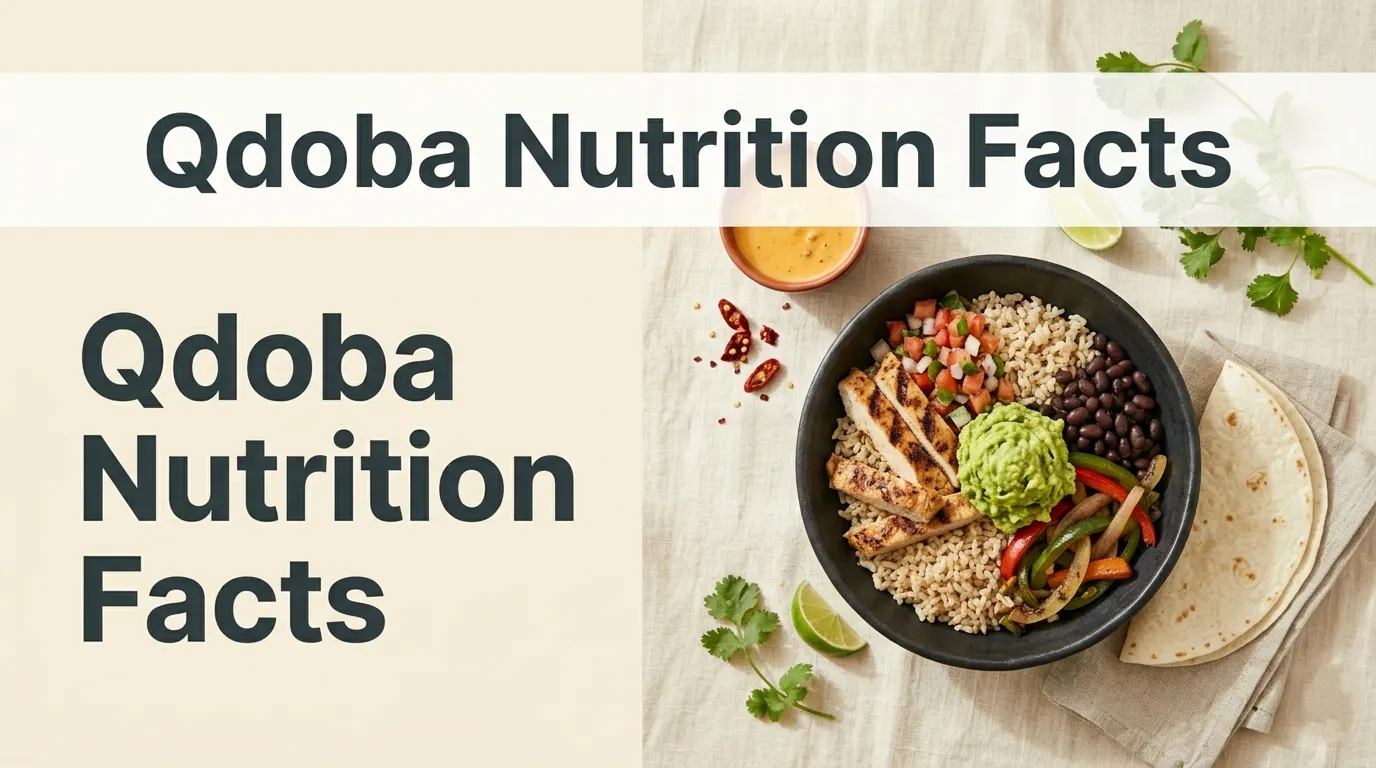
Qdoba Nutrition Facts: Your Complete Menu Breakdown for 2026
Qdoba nutrition facts reveal a restaurant menu that can land anywhere from a 400-calorie high-protein bowl to a 1,200-calorie loaded burrito, depending entirely on the choices you make at the counter. The ingredients themselves are generally whole-food based and free of the artificial additives some fast-casual chains rely on. The calorie and sodium totals, though, are driven by portion sizes, the tortilla, and add-ons like queso, sour cream, and guacamole.
The average Qdoba chicken burrito with standard toppings contains roughly 1,000 to 1,200 calories and more than 2,000 milligrams of sodium, according to the company’s published nutrition data. That’s roughly half the daily calorie budget for an average adult and nearly the entire sodium limit of 2,300 milligrams recommended by the Dietary Guidelines for Americans 2020-2025. If you eat two meals out in a day, you can see how quickly the numbers add up without anyone actively trying to overeat.
This article walks you through the full Qdoba menu nutrition landscape. You’ll find a breakdown of every protein option, the tortilla and bowl decision, the rice and bean choices, and every topping and sauce worth tracking. The goal isn’t to tell you what to order. It’s to give you the actual numbers so you can build a meal that matches what you’re trying to do, whether that’s high protein, lower calorie, lower sodium, or just an honest understanding of what’s in your burrito.
Qdoba Nutrition Facts Overview
Qdoba Mexican Eats is a fast-casual restaurant chain with over 700 locations in the United States and Canada, known for customizable burritos, bowls, tacos, nachos, and salads. The nutrition profile of a Qdoba meal varies more than almost any other national chain because the build-your-own format puts the calorie and macronutrient outcome almost entirely in the customer’s hands.
The Qdoba online nutrition calculator publishes complete data for every ingredient and standard menu item. The numbers on the official nutrition page represent the standard build. In practice, the employee serving your bowl may add more rice, an extra spoonful of beans, or a heavier pour of queso than the tested portion. The numbers in this article are based on the chain’s published nutrition data for standard portions, with an acknowledgment that real-world portions at the counter may run 10 to 20% higher.
A typical Qdoba chicken burrito with flour tortilla, white rice, black beans, fajita vegetables, pico de gallo, cheese, and sour cream contains approximately 1,100 calories, 45 grams of fat, 115 grams of carbohydrate, and 50 grams of protein. The same ingredients in a bowl, without the tortilla, drop to roughly 780 calories. That 320-calorie difference is the tortilla alone. Understanding which individual components drive the nutrition totals is the key to making informed choices at Qdoba, and that’s exactly what the following sections break down.
Key Takeaway: The Qdoba nutrition range is the widest in fast-casual dining. A stripped-down bowl can land under 500 calories. A loaded burrito can pass 1,200. The difference comes down to the tortilla, protein choice, and high-calorie toppings like queso and sour cream.
Qdoba Calorie Guide by Menu Item
Calorie totals at Qdoba range from roughly 300 calories for a simple taco to over 1,200 for a fully loaded burrito. The single most impactful choice you make is whether your meal starts as a burrito or a bowl. The flour tortilla adds 320 calories before any filling goes inside.
The average calorie totals for standard-build menu items, based on Qdoba’s published nutrition data for a chicken entree with standard toppings, look like this.
| Menu Format | Approximate Calories (Chicken, Standard Build) | Primary Calorie Driver |
|---|---|---|
| Burrito (flour tortilla) | 1,000 to 1,200 | Tortilla (320 cal), rice, cheese, queso |
| Bowl (no tortilla) | 600 to 850 | Rice, protein, cheese, queso |
| Salad (no tortilla, lettuce base) | 500 to 750 | Dressing, protein, cheese |
| Tacos (3, soft flour) | 600 to 900 | Tortillas (3 at 100 cal each), protein, cheese |
| Nachos (tortilla chips) | 900 to 1,300 | Chips (400+ cal), queso, protein, sour cream |
| Kids Meal | 300 to 600 | Smaller portions of standard ingredients |
The burrito is the highest-calorie format for the same fillings. The tortilla contributes not just 320 calories but also 9 grams of fat and 56 grams of carbohydrate, nearly all of it refined flour with minimal fiber. Switching to a bowl removes that entire calorie block. If you genuinely want the tortilla experience, know that it’s a significant part of the meal’s nutrition load, not just a wrapper.
Nachos start with a tortilla chip base that typically runs 400 to 500 calories before any toppings are added. Add queso, protein, sour cream, and guacamole, and the total can easily exceed 1,300 calories. Nachos at Qdoba, or any fast-casual Mexican restaurant, function nutritionally as a shared appetizer or a once-in-a-while indulgence, not a standard individual meal.
Qdoba Bowl vs. Burrito Nutrition Comparison
The single most effective nutrition decision you can make at Qdoba is choosing a bowl instead of a burrito. A chicken burrito with standard toppings contains roughly 1,100 calories. The exact same ingredients in a bowl contain approximately 780 calories. The flour tortilla accounts for the entire 320-calorie difference.
That 320-calorie tortilla also brings 56 grams of carbohydrate, 9 grams of fat, and 710 milligrams of sodium. For someone managing blood sugar, reducing overall carbohydrate intake, or simply trying to eat a more moderate-calorie meal, the bowl format is a straightforward swap that doesn’t require giving up rice, beans, or any of the toppings you actually want.
| Item | Calories | Carbs | Fat | Sodium |
|---|---|---|---|---|
| Flour Tortilla (13-inch) | 320 | 56 g | 9 g | 710 mg |
| Soft Taco Tortilla (3) | 300 | 51 g | 7.5 g | 630 mg |
| Bowl (no tortilla) | 0 | 0 g | 0 g | 0 mg |
The taco format, using three soft flour tortillas, isn’t much better than the burrito on total tortilla calories. You’re still getting roughly 300 calories from the tortillas alone. The hard shell corn taco option reduces the tortilla calorie load, but the shells are fried and add a different fat profile.
If you’re craving the handheld experience but want to trim calories, consider ordering a bowl and asking for one soft taco tortilla on the side. You can spoon some of the bowl filling into the tortilla, eat the rest with a fork, and get the texture and taste of the tortilla without committing to the full 320 calories.
Qdoba Protein Options Nutrition Breakdown
Protein is the centerpiece of any Qdoba entree, and the nutrition differences across protein choices are meaningful. Grilled chicken and grilled steak deliver the most protein for the fewest calories. Braised meats like pulled pork and brisket bring more fat and more calories per ounce.
The published nutrition data for a standard 4-ounce protein portion at Qdoba breaks down like this.
| Protein | Calories | Protein | Fat | Carbs | Sodium |
|---|---|---|---|---|---|
| Grilled Chicken | 150 | 28 g | 4 g | 3 g | 580 mg |
| Grilled Steak | 160 | 25 g | 5 g | 2 g | 530 mg |
| Pulled Pork | 200 | 22 g | 10 g | 5 g | 620 mg |
| Brisket | 250 | 20 g | 16 g | 4 g | 700 mg |
| Impossible (plant-based) | 220 | 17 g | 13 g | 10 g | 750 mg |
| Vegetarian (no protein) | 0 | 0 g | 0 g | 0 g | 0 mg |
Grilled chicken is the leanest protein on the Qdoba menu. At 150 calories for 28 grams of protein, it’s one of the most efficient protein sources in fast-casual dining. The calorie-to-protein ratio sits at roughly 5.4 calories per gram of protein, which is excellent.
Brisket represents the other end of the spectrum. At 250 calories for 20 grams of protein, it delivers 12.5 calories per gram of protein, more than double the calorie cost of chicken for the same protein amount. The fat content explains the difference. Brisket is a fattier cut of beef, and the braising process adds cooking fat.
The Impossible plant-based protein option at Qdoba sits between pulled pork and brisket on calorie density, with 220 calories and 17 grams of protein. It’s a reasonable choice for people avoiding animal products, but it comes with 750 milligrams of sodium per portion, the highest of any protein option, and 10 grams of carbohydrate, which matters for people tracking carb intake.
Key Takeaway: Grilled chicken at Qdoba delivers 28 grams of protein for 150 calories. Brisket delivers 20 grams of protein for 250 calories. The protein choice alone can swing your meal by 100 calories before any toppings go on.
Qdoba Rice and Beans Nutrition Facts
Rice and beans form the carbohydrate and fiber foundation of most Qdoba meals. The choices you make here affect total calories, fiber intake, and the glycemic impact of the meal. The differences between white rice, brown rice, black beans, and pinto beans are nutritionally meaningful.
A standard 4-ounce scoop of each option provides the following, based on Qdoba’s published nutrition data.
| Base | Calories | Carbs | Fiber | Protein | Sodium |
|---|---|---|---|---|---|
| Cilantro Lime White Rice | 190 | 40 g | 0 g | 4 g | 560 mg |
| Cilantro Lime Brown Rice | 200 | 38 g | 4 g | 5 g | 500 mg |
| Black Beans | 140 | 24 g | 9 g | 9 g | 380 mg |
| Pinto Beans | 150 | 25 g | 8 g | 9 g | 430 mg |
The brown rice and white rice are close in calories and carbohydrate content. The difference that matters is fiber. Brown rice provides 4 grams of fiber per serving. White rice provides zero. That fiber slows carbohydrate digestion, reduces the post-meal blood glucose spike, and contributes to satiety. If you’re choosing between the two and glycemic response matters to you, brown rice is the better option by a clear margin.
Black beans and pinto beans are nutritionally similar. Both provide roughly 8 to 9 grams of fiber and 9 grams of protein per serving. The combination of rice and beans creates a complete protein through complementary amino acid profiles, which matters for people eating vegetarian or vegan at Qdoba. The fiber in beans also partially offsets the lower fiber content of the rice, especially if you choose white rice.
Doubling up on beans and skipping rice is a strategy some people use to increase fiber and protein while reducing total carbohydrate. A double portion of black beans provides roughly 280 calories, 18 grams of fiber, and 18 grams of protein. Compare that to a standard rice-and-beans base, which provides about 340 calories and 9 grams of fiber. The trade-off is a different texture and flavor profile, but the nutrition numbers favor the all-bean base.
Qdoba Toppings, Salsa, and Sauce Nutrition
Toppings and sauces at Qdoba are where the calorie and sodium totals can quietly climb. A single 2-ounce ladle of queso adds 110 calories. A 2-ounce scoop of guacamole adds 100 calories. Sour cream adds 80 calories for a standard dollop. Three toppings you didn’t think twice about can add nearly 300 calories to your meal.
The nutrition breakdown for the most popular Qdoba toppings, based on standard portions, looks like this.
| Topping | Calories | Fat | Sodium | Key Note |
|---|---|---|---|---|
| Queso (2 oz) | 110 | 8 g | 480 mg | High sodium, saturated fat |
| Guacamole (2 oz) | 100 | 9 g | 220 mg | Healthy fats, lower sodium |
| Sour Cream (2 oz) | 80 | 8 g | 30 mg | Saturated fat, low sodium |
| Shredded Cheese (1 oz) | 110 | 9 g | 180 mg | Saturated fat |
| Fajita Vegetables | 20 | 0 g | 150 mg | Low calorie, negligible fat |
| Pico de Gallo | 10 | 0 g | 170 mg | Lowest calorie topping |
| Lettuce | 5 | 0 g | 5 mg | Negligible impact |
| Corn Salsa | 40 | 0 g | 180 mg | Low fat, moderate sodium |
| Salsa Verde | 15 | 0 g | 290 mg | Low calorie, watch sodium |
| Salsa Roja | 15 | 0 g | 280 mg | Low calorie, watch sodium |
| Habanero Salsa | 10 | 0 g | 250 mg | Low calorie, hot |
| Chipotle Crema (2 oz) | 160 | 16 g | 370 mg | High fat, moderate sodium |
Guacamole is a nutritionally smart addition despite its 100 calories. The fat is primarily monounsaturated from avocados, and the sodium at 220 milligrams is moderate. You’re adding fiber, potassium, and a fat source that slows carbohydrate digestion and improves satiety. If you’re choosing between queso and guacamole, the nutrition comparison is clear. Queso delivers processed cheese calories, saturated fat, and 480 milligrams of sodium. Guacamole delivers whole-food fat, potassium, and nearly half the sodium.
Pico de gallo and the salsas are the lowest-calorie flavor additions on the menu. They add acidity, freshness, and spice without meaningful calorie loads. The sodium in the salsas is worth tracking if you’re watching total daily sodium, but 250 to 290 milligrams per serving is manageable within a meal that’s already likely pushing 1,500 milligrams.
Qdoba Sodium Content and What You Should Know
Sodium is the single biggest nutritional challenge at Qdoba, and it’s not close. A standard chicken burrito with rice, beans, cheese, queso, and salsa can contain 2,500 to 3,500 milligrams of sodium, which exceeds the Dietary Guidelines for Americans 2020-2025 recommended limit of 2,300 milligrams per day for a single meal.
The sodium comes from everywhere. The tortilla alone delivers 710 milligrams. A 4-ounce protein portion adds 530 to 750 milligrams. Rice, beans, queso, cheese, and salsa each contribute 150 to 560 milligrams. The total adds up quickly because every component carries some sodium load. Here is how the sodium typically breaks down in a standard chicken burrito.
| Component | Estimated Sodium |
|---|---|
| Flour Tortilla | 710 mg |
| Grilled Chicken (4 oz) | 580 mg |
| White Rice (4 oz) | 560 mg |
| Black Beans (4 oz) | 380 mg |
| Queso (2 oz) | 480 mg |
| Pico de Gallo | 170 mg |
| Cheese (1 oz) | 180 mg |
| Total | ~3,060 mg |
Reducing sodium at Qdoba requires a multi-step approach. Choose the bowl format to eliminate the tortilla’s 710 milligrams. Skip the queso, which adds 480 milligrams for a small ladle. Choose brown rice over white, saving 60 milligrams per serving. Choose fajita vegetables and pico de gallo for flavor instead of sodium-heavy sauces. A chicken bowl with brown rice, black beans, fajita vegetables, pico de gallo, and guacamole can land around 1,300 to 1,600 milligrams of sodium, which is still more than half the daily limit but far lower than the loaded burrito alternative.
For people with hypertension, heart failure, or kidney disease who are on sodium-restricted diets prescribed by their physician, even the lower-sodium bowl may exceed individual limits. A registered dietitian can provide specific sodium targets based on your medical history and help strategize restaurant meals that fit within those limits.
Key Takeaway: A loaded Qdoba burrito can deliver over 3,000 milligrams of sodium, well above the 2,300-milligram daily limit. Switching to a bowl, skipping queso, and choosing lower-sodium toppings can bring that number closer to 1,500 milligrams.
Qdoba Nutrition for Special Diets
Qdoba’s customizable format makes it one of the more adaptable fast-casual restaurants for people following specific dietary patterns. The ingredient transparency on the published nutrition page and allergen chart helps, but there are nuances worth understanding for each dietary approach.
For a low-carbohydrate or ketogenic diet, order a salad or bowl with no rice, no beans, and no tortilla. Choose grilled chicken or steak as the protein. Add fajita vegetables, guacamole, sour cream, cheese, and lettuce. A Qdoba chicken salad bowl built this way contains roughly 500 to 600 calories, 35 to 40 grams of fat, 12 to 15 grams of net carbohydrate, and 35 to 40 grams of protein. The carbohydrates come primarily from the fajita vegetables and any salsa added. Avoid the chipotle crema, which contains added sugar, and stick with guacamole and sour cream for fat.
For a vegetarian or vegan diet, skip the meat and choose black or pinto beans as the protein base. The combination of beans and rice provides complementary amino acids forming a complete protein. Vegans should skip the cheese, sour cream, and chipotle crema. Guacamole, salsas, fajita vegetables, lettuce, and corn salsa are all vegan-friendly. The Impossible protein is plant-based but check with the specific location about whether it’s prepared on shared cooking surfaces if cross-contact with animal products is a concern.
For a gluten-free diet, Qdoba identifies several gluten-free ingredients on its allergen chart. The corn tortillas, corn taco shells, all proteins, rice, beans, salsas, guacamole, cheese, sour cream, and vegetables are listed as gluten-free. The flour tortilla is the primary gluten source. However, Qdoba kitchens are not gluten-free environments. Flour tortillas are steamed and handled throughout the prep line. Cross-contact is likely. The Celiac Disease Foundation recommends that people with celiac disease inform the staff, request glove changes, and consider asking for ingredients from fresh containers when possible.
For a low-FODMAP diet, Qdoba is challenging. The flour tortilla, beans, queso, and many salsas contain FODMAPs. A low-FODMAP order might include a bowl with plain grilled chicken or steak, white rice, lettuce, and a small amount of cheddar cheese. This is a limited and repetitive meal but can work in a pinch for someone in the elimination phase of a low-FODMAP protocol supervised by a registered dietitian.
Healthiest Qdoba Orders: What Nutritionists Recommend
A “healthy” Qdoba order depends entirely on your nutritional priorities. A bodybuilder trying to hit 50 grams of protein in one meal will order differently from someone managing type 2 diabetes who needs to limit carbohydrate. The following builds are designed for specific goals, using Qdoba’s published nutrition data as the reference.
For a high-protein, moderate-calorie meal, build a grilled chicken bowl with brown rice, black beans, fajita vegetables, pico de gallo, and guacamole. This bowl provides approximately 650 to 700 calories, 45 grams of protein, 12 grams of fiber, and healthy fat from the guacamole. The sodium lands around 1,500 to 1,700 milligrams.
For a lower-carbohydrate meal, build a grilled steak salad with no rice, no beans, fajita vegetables, pico de gallo, guacamole, and cheese. This salad provides roughly 500 to 550 calories, 35 to 40 grams of protein, and 15 to 18 grams of net carbohydrate. The fat content is higher from the steak, guacamole, and cheese, which increases satiety.
For a plant-based meal, build a vegetarian bowl with brown rice, both black and pinto beans, fajita vegetables, corn salsa, pico de gallo, and guacamole. This bowl provides roughly 600 to 650 calories, 20 grams of protein, and 20 grams of fiber. The protein is lower than an animal-protein build, but the fiber content is high, and the complementary proteins in the rice and beans provide a complete amino acid profile.
For a lower-sodium meal, build a chicken bowl with brown rice, black beans, fajita vegetables, pico de gallo, and guacamole. Skip the cheese, queso, sour cream, and any cream-based sauces. This build lands around 1,300 to 1,500 milligrams of sodium, which is roughly half the loaded burrito total.
Key Takeaway: The Qdoba ingredients that support almost any nutrition goal are grilled chicken, brown rice, black beans, fajita vegetables, pico de gallo, and guacamole. The ingredients that work against most nutrition goals when used heavily are the flour tortilla, queso, sour cream, and chipotle crema.
Qdoba Kids Meal Nutrition
The Qdoba kids meal is a smaller-portion build that includes a choice of protein, two sides, and a drink. The calorie range for a standard kids meal falls between 300 and 600 calories, depending on protein choice and sides. This makes it a reasonable option for children and also for adults looking for a smaller, lower-calorie meal.
The kids meal includes a choice of chicken, steak, or vegetarian protein. The sides include rice, beans, and a small portion of toppings. The tortilla is not automatically included unless requested as a side. A kids chicken bowl with rice, black beans, and a small amount of cheese sits around 400 to 450 calories.
The sodium in the kids meal remains a concern. Even the smaller portions carry sodium loads from the protein, rice, and beans. A kids chicken bowl with rice and beans still pushes 800 to 1,000 milligrams of sodium. The American Heart Association recommends that children ages 4 to 8 consume no more than 1,200 milligrams of sodium per day. A single Qdoba kids meal can use 70 to 80% of that limit.
The kids meal drink default is often a sugary soda or juice. Choosing water or unsweetened iced tea removes the added sugar variable entirely. The Dietary Guidelines for Americans 2020-2025 recommend that children under 2 consume no added sugar and that older children limit added sugar to less than 10% of total daily calories.
Qdoba Nutrition for Weight Loss
Qdoba can work within a weight loss eating pattern, but it requires specific choices. The default burrito build with flour tortilla, rice, beans, protein, queso, cheese, and sour cream is a calorie-dense meal that makes a calorie deficit harder to maintain. The good news is that small adjustments bring the numbers into a range that fits most weight loss targets.
A Qdoba meal for weight loss starts with the bowl format. Removing the tortilla alone saves 320 calories. Choose grilled chicken at 150 calories for 28 grams of protein. Choose brown rice for the fiber or, if your carbohydrate target is lower, skip the rice and double the beans. Add fajita vegetables and pico de gallo for volume and flavor with minimal calories. Guacamole at 100 calories adds fat that improves satiety and makes the meal feel more substantial. Skip the queso, sour cream, cheese, and chipotle crema.
This build lands around 500 to 600 calories with roughly 40 grams of protein and 10 to 12 grams of fiber. For most people, that’s a filling meal that leaves room for breakfast and dinner within a 1,500 to 1,800 calorie daily target. The protein and fiber content means this meal will keep you full for hours, which is the practical advantage of building meals around whole-food ingredients rather than processed alternatives.
The weight loss challenge at Qdoba isn’t the food. It’s the portion sizes and the add-ons. A double portion of rice, an extra ladle of queso, and a side of chips can turn a 600-calorie bowl into a 1,000-calorie meal without you registering the difference. Be specific when ordering. Ask for light rice if you want some but not the full scoop. Skip the high-calorie sauces. The difference between “a little queso” and a full ladle might be 100 calories and 8 grams of fat.
Frequently Asked Questions About Qdoba Nutrition Facts
What is the healthiest thing to eat at Qdoba?
A grilled chicken bowl with brown rice, black beans, fajita vegetables, pico de gallo, and guacamole is one of the most nutritionally balanced orders on the menu.
This build provides roughly 650 calories, 45 grams of protein, 12 grams of fiber, and healthy fats without the sodium and refined carbohydrate load of the tortilla or queso.
Choosing the bowl format and skipping queso, sour cream, and cheese keeps the sodium and saturated fat in a moderate range.
How many calories are in a Qdoba burrito?
A standard Qdoba chicken burrito with flour tortilla, rice, beans, cheese, sour cream, and pico de gallo contains approximately 1,000 to 1,200 calories.
The flour tortilla alone contributes 320 of those calories.
Switching to a bowl with the same ingredients drops the total to roughly 780 calories.
Is Qdoba high in sodium?
Yes, Qdoba meals are high in sodium, with a standard chicken burrito often exceeding 3,000 milligrams.
The Dietary Guidelines for Americans 2020-2025 recommend a daily limit of 2,300 milligrams for adults.
A single loaded Qdoba burrito can surpass the daily sodium limit, primarily driven by the tortilla, protein seasoning, rice, beans, and queso.
Does Qdoba have low carb options?
Qdoba offers a low-carb build using the bowl or salad format with no rice, no beans, and no tortilla.
Grilled chicken or steak with fajita vegetables, guacamole, sour cream, cheese, and lettuce provides roughly 12 to 15 grams of net carbohydrate.
The chipotle crema and corn salsa contain added sugar and should be avoided on a strict low-carb plan.
Is Qdoba gluten free?
Qdoba lists many gluten-free ingredients including corn tortillas, all proteins, rice, beans, salsas, guacamole, cheese, and vegetables.
The flour tortilla is the primary gluten source.
However, Qdoba kitchens are not gluten-free environments, and cross-contact with flour tortillas is likely throughout the prep line.
How much protein is in a Qdoba chicken bowl?
A Qdoba chicken bowl with standard rice, beans, and chicken provides approximately 40 to 50 grams of protein.
The chicken contributes 28 grams, the rice contributes 4 to 5 grams, and the beans contribute 9 grams.
Adding cheese and sour cream increases the total protein slightly from dairy sources.
What to Remember Next Time You Walk Into Qdoba
Qdoba is one of the few fast-casual restaurants where you genuinely control the nutritional outcome of your meal. The ingredients are, for the most part, recognizable whole foods: grilled chicken, steak, beans, rice, avocados, tomatoes, peppers, and onions. There are no secret additives or proprietary processed items that make the nutrition facts deceptive. The numbers are what they are, and they change based on how you build your meal.
If you take nothing else from this article, remember these three things. Choose the bowl over the burrito unless that tortilla is non-negotiable, and if it is, know you’re adding 320 calories for the experience. Choose grilled chicken if you want the most protein for the fewest calories. And watch the sodium, because even the healthiest Qdoba build still lands above 1,000 milligrams.
You don’t need to order a plain salad with no dressing to eat well at Qdoba. A chicken bowl with brown rice, black beans, fajita vegetables, pico, and guac is a genuinely good meal by any nutrition standard. Eat it. Enjoy it. You’ve just put together 45 grams of protein, 12 grams of fiber, and a solid micronutrient mix in under 700 calories. That’s a win at any restaurant.