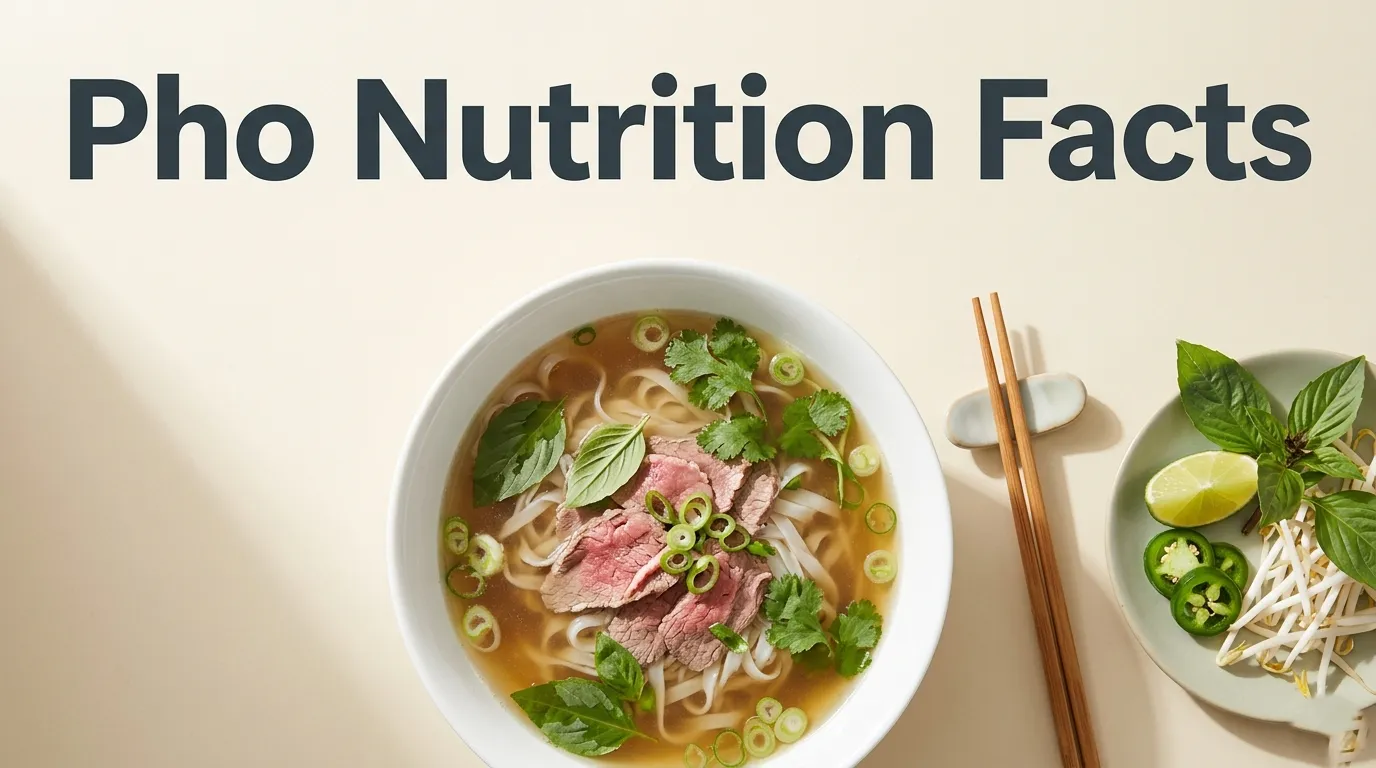
Pho Nutrition Facts 2026: Is Your Bowl Healthy?
INTRO:
Pho nutrition facts vary by protein and portion, but a standard large bowl of beef pho delivers roughly 475 to 550 calories, 25 to 35 grams of protein, 55 to 65 grams of carbohydrates, and between 900 and 1,800 milligrams of sodium. That range is the most important thing to understand before you order.
The sodium number in particular can swing from reasonable to concerning depending entirely on the broth recipe and how heavy your hand is with the hoisin and sriracha bottles on the table. The American Heart Association recommends capping sodium at 2,300 milligrams per day. A single large bowl of pho can consume 40 to 80 percent of that limit before you take your first sip of water. This article breaks down the full nutritional profile of beef, chicken, and vegetarian pho. You will learn exactly what is in the broth, how the rice noodles affect your blood sugar, which condiments add the most hidden sodium and sugar, and how to modify your bowl for weight loss, keto, diabetes, or gluten-free eating.
Pho Nutrition Facts
A standard large bowl of beef pho contains approximately 500 calories, 30 grams of protein, 60 grams of carbohydrates, and 15 grams of fat. The dish also provides meaningful amounts of iron, zinc, vitamin B12, and niacin, with the exact amounts depending on the cut of beef used and the length of time the broth has simmered.
Pho is a nutritionally complex food because it is not one ingredient. It is a system of components that each contribute different nutrients. The bone broth delivers collagen, gelatin, and minerals extracted during the long simmer. The rice noodles provide rapidly digestible carbohydrates. The beef supplies complete protein and highly bioavailable heme iron. The herb plate, bean sprouts, basil, cilantro, lime, and jalapeño, contributes small but real amounts of vitamin C, vitamin K, and various phytonutrients. The USDA FoodData Central database does not have a single entry for “pho” as a composite dish, but analyzing the individual components provides an accurate nutritional picture. The numbers presented in this article are constructed from the USDA entries for beef bone broth, rice noodles, beef brisket, and the typical herb accompaniments.
The nutritional profile also shifts dramatically based on the specific pho you order. Pho tai (rare steak) is leaner than pho chin (brisket). Pho bo vien (meatball) adds processed meat with additional fat and sodium. Pho ga (chicken) strips away much of the saturated fat. The noodle-to-broth ratio varies by restaurant. The toppings you add at the table can quietly add 200 to 300 calories and 600 to 1,000 milligrams of sodium. Understanding pho nutrition means understanding each of these variables.
Pho Calories
A large bowl of beef pho typically contains 475 to 550 calories, with approximately 350 to 400 calories coming from the broth and noodles and 120 to 150 calories from the beef. Chicken pho comes in slightly lower at 400 to 475 calories per large bowl.
The calorie count in pho is driven primarily by the rice noodles, not the protein. An 8-ounce portion of cooked rice noodles, a standard amount in a large restaurant bowl, provides roughly 240 to 280 calories. The broth adds 40 to 80 calories depending on how much fat has been skimmed. The beef portion contributes the remaining calories. A 4-ounce serving of brisket adds about 220 calories with 16 grams of fat. The same amount of rare steak adds about 160 calories with 6 grams of fat. The condiments can quietly inflate the calorie count. Two tablespoons of hoisin sauce add 50 calories and 8 grams of sugar. Two tablespoons of sriracha add 30 calories and 1 gram of sugar. A squirt of each, a standard move for many pho eaters, adds 80 calories and 9 grams of sugar before the noodles even reach your mouth.
The calorie range is reasonable for a main meal. Five hundred calories represents roughly 25 percent of a standard 2,000-calorie diet. The problem is not the calorie count itself. It is what nutrition researchers call the low satiety-to-calorie ratio of liquid-based meals. The broth provides volume but digests quickly. The rice noodles are refined carbohydrates that cause a rapid insulin response and may leave you hungry within two to three hours.
| Pho Type | Calories (Large Bowl) | Protein | Fat | Carbohydrates |
|---|---|---|---|---|
| Beef Pho (Brisket) | 500 to 550 | 28 to 30 g | 15 to 18 g | 55 to 65 g |
| Beef Pho (Rare Steak) | 450 to 500 | 30 to 35 g | 8 to 10 g | 55 to 65 g |
| Chicken Pho (Breast) | 400 to 450 | 25 to 30 g | 8 to 10 g | 55 to 60 g |
| Vegetarian Pho (Tofu) | 350 to 420 | 15 to 20 g | 8 to 12 g | 55 to 65 g |
Ranges reflect typical restaurant serving sizes. Actual values vary by establishment, broth recipe, and protein portion.
Key Takeaway: Most of the calories in your pho bowl come from the rice noodles, not the meat. If you want to cut calories, reduce the noodles, not the protein.
Is Pho Healthy
A bowl of pho can be a healthy, nutrient-dense meal when ordered with lean protein, loaded with fresh herbs and bean sprouts, and consumed with mindful attention to the sodium and condiment load. The base ingredients are genuinely nutritious. The broth, the herbs, and the protein are all whole foods with documented health properties.
The bone broth in traditionally prepared pho is simmered for 6 to 12 hours, which extracts collagen and gelatin from beef bones and connective tissue. These proteins break down into amino acids including glycine and proline. Glycine plays a role in the synthesis of glutathione, one of the body’s primary endogenous antioxidants. Proline is a precursor for collagen synthesis in skin, joints, and connective tissue. These are real nutritional contributions, not marketing claims. The herbs add more than garnish. Thai basil contains eugenol, a compound with anti-inflammatory properties studied in the context of arthritis. Cilantro contains linalool, which has demonstrated antimicrobial activity in laboratory research. Ginger contains gingerol, which the National Institutes of Health recognizes as having anti-nausea and anti-inflammatory effects supported by multiple human clinical trials. The bean sprouts provide a small amount of vitamin C and enzymes that may modestly aid digestion. The lime juice adds actual ascorbic acid, which enhances the absorption of non-heme iron from the herbs and vegetables in the bowl.
The nutritional problems with pho are not with the base ingredients. The problems are the sodium concentration in the broth, the refined carbohydrate load from the rice noodles, and the sugar and sodium bombs that are the hoisin and sriracha bottles. These are addressable. A healthier pho is within reach if you know what to modify.
Beef Pho Nutrition
Beef pho provides high-quality complete protein, bioavailable heme iron, and substantial amounts of zinc and vitamin B12. A large bowl with brisket delivers roughly 28 to 30 grams of protein, 4 to 5 milligrams of iron, 5 to 7 milligrams of zinc, and 2 to 2.5 micrograms of vitamin B12.
The micronutrient profile of beef pho is its strongest nutritional argument. The iron in beef is heme iron, which has an absorption rate of approximately 15 to 35 percent compared to the 2 to 20 percent absorption rate of non-heme iron from plant sources. For someone with iron deficiency anemia or a menstruating woman with higher iron needs, the iron in beef pho is a meaningful dietary contribution. A single bowl can provide 25 to 35 percent of the Daily Value for iron. Vitamin B12 (cobalamin) is present almost exclusively in animal foods and is essential for neurological function and red blood cell formation. A bowl of beef pho can deliver 80 to 100 percent of the Daily Value for B12 in one sitting. Zinc supports immune function, wound healing, and protein synthesis. The 5 to 7 milligrams in a bowl of beef pho provides 45 to 60 percent of the Daily Value.
The tradeoff is the saturated fat. Brisket is a fatty cut. Four ounces of brisket contains approximately 14 to 16 grams of fat, of which 5 to 6 grams are saturated. The Dietary Guidelines for Americans 2020-2025 recommend limiting saturated fat to less than 10 percent of total daily calories, roughly 20 grams in a 2,000-calorie diet. A single bowl of brisket pho uses a quarter to a third of that budget. Choosing rare steak instead of brisket drops the saturated fat to roughly 3 grams for the same protein portion.
| Nutrient | Beef Pho (Brisket) | % Daily Value | Function |
|---|---|---|---|
| Protein | 28 to 30 g | 56 to 60% | Muscle maintenance, enzyme production |
| Iron | 4 to 5 mg | 22 to 28% | Oxygen transport in hemoglobin |
| Zinc | 5 to 7 mg | 45 to 60% | Immune function, wound healing |
| Vitamin B12 | 2 to 2.5 mcg | 80 to 100% | Nerve function, red blood cell formation |
| Niacin (B3) | 5 to 6 mg | 30 to 35% | Energy metabolism |
| Saturated Fat | 5 to 6 g | 25 to 30% | N/A (limit to <20g daily) |
Daily Values are based on a 2,000-calorie diet. Actual individual needs vary by age, sex, and health status.
Chicken Pho Nutrition
Chicken pho is the leaner, lower-fat option that still delivers complete protein and a similar micronutrient profile to beef pho, minus the heme iron advantage. A large bowl of chicken pho made with breast meat provides approximately 25 to 30 grams of protein, 8 to 10 grams of total fat, and 2 to 3 grams of saturated fat.
The fat difference between chicken and beef pho is the most nutritionally relevant distinction. The saturated fat content drops by 50 to 60 percent when you switch from brisket to chicken breast. For someone managing cholesterol levels or following a physician’s guidance to reduce saturated fat intake, this substitution is the single most effective change you can make to your pho order. The zinc and iron content do drop when you move from beef to chicken. Chicken breast contains approximately 1 milligram of iron per 4-ounce serving compared to 4 to 5 milligrams in brisket. The zinc content drops from 5 to 7 milligrams to approximately 1 to 2 milligrams. If you rely on pho as a regular source of iron and zinc, beef is the superior choice. If you eat pho for the protein and the warming comfort while minimizing saturated fat, chicken is the better pick.
The chicken used in pho varies by restaurant. Pho ga is traditionally made with whole chicken, meaning the broth itself may contain more collagen and gelatin than a broth made only from bones. Dark meat pieces including thigh and drumstick appear in many traditional preparations, adding flavor and slightly more fat than breast meat alone. If your goal is maximizing leanness, ask specifically if the kitchen can serve breast meat only.
Key Takeaway: Chicken pho cuts the saturated fat by more than half compared to brisket pho, but you lose the meaningful iron and zinc contributions. The protein stays nearly identical.
Vegetarian Pho Nutrition
Vegetarian pho provides a lighter option at 350 to 420 calories per large bowl with 15 to 20 grams of protein from tofu, but it lacks the heme iron, zinc, and vitamin B12 that make beef pho nutritionally distinctive. The broth base also changes, which affects the mineral content.
Most vegetarian pho broths are made from a combination of charred onion, ginger, star anise, cinnamon, clove, and vegetable stock rather than beef bones. This produces a flavorful broth, but it lacks the collagen, gelatin, glycine, and proline that long-simmered bone broth contributes. The mineral profile also shifts. Bone broth slowly leaches calcium, magnesium, and phosphorus from the beef bones during the simmer. Vegetable broth does not provide these minerals in equivalent amounts unless the restaurant specifically fortifies the broth or uses mineral-rich vegetable ingredients. Tofu is the protein anchor for vegetarian pho. A 4-ounce serving of firm tofu provides roughly 10 to 12 grams of complete protein, 6 to 8 grams of fat, and small amounts of calcium and iron. The protein total is lower than beef or chicken pho, but it is still a reasonable contribution to a single meal. The iron in tofu is non-heme and therefore less bioavailable, but the vitamin C from the lime and bean sprouts served alongside the pho enhances its absorption.
Vegans should verify that the broth does not contain fish sauce, a near-universal ingredient in traditional Vietnamese pho. Some restaurants use a vegan fish sauce substitute. Many do not. The broth may taste vegetarian but still contain fish-derived ingredients. If you follow a strict vegan diet, ask directly about the fish sauce before ordering.
Pho Sodium Content
A large bowl of pho contains between 900 and 1,800 milligrams of sodium, with some restaurant versions exceeding 2,000 milligrams. The American Heart Association recommends a daily sodium limit of 2,300 milligrams with an ideal target of 1,500 milligrams for most adults.
The sodium comes from two primary sources. The broth itself is seasoned with salt and fish sauce during the long simmer. A single tablespoon of fish sauce contains 1,200 to 1,400 milligrams of sodium. When several tablespoons go into a pot of broth, and your bowl is three cups of that liquid, the math becomes clear. The second source is the condiments added at the table. Two tablespoons of hoisin sauce add roughly 400 to 500 milligrams of sodium. Two tablespoons of sriracha add roughly 200 to 300 milligrams. If you add both, you have just layered an additional 700 to 800 milligrams onto a broth that already contained 1,200 to 1,400 milligrams.
The physiological response to a 1,800-milligram sodium meal is not subtle for everyone. Sodium increases plasma osmolality. Your body retains water to dilute the excess sodium, expanding blood volume. For someone with healthy kidneys and compliant blood vessels, the system adapts without symptoms. For someone with sodium-sensitive hypertension, this single meal can cause a measurable blood pressure elevation that persists for several hours. The Cleveland Clinic notes that the post-meal blood pressure effect from a high-sodium restaurant meal is well documented in hypertensive patients. Reducing condiment use and requesting less fish sauce in the broth preparation, if the restaurant can accommodate, are the two most effective sodium-lowering strategies.
Quick Tip:
- Ask for the broth to be prepared with less fish sauce if the restaurant takes modification requests.
- Limit hoisin sauce to 1 teaspoon (not tablespoon) and skip the sriracha entirely.
- Do not drink all the broth. The broth is where nearly all the sodium lives. Eating the solids and leaving the liquid behind can cut sodium intake by 40 to 50 percent.
Pho Broth Nutrition
Pho broth is the nutritional core of the dish. A three-cup serving of traditionally simmered beef bone broth contains 40 to 80 calories, 6 to 10 grams of protein primarily from collagen and gelatin, and small but meaningful amounts of calcium, magnesium, and phosphorus extracted from the bones during cooking.
The protein in pho broth is not the same as the protein in the beef slices. It comes from collagen and gelatin that dissolve out of bones, cartilage, and connective tissue during the 6 to 12-hour simmer. These proteins are rich in the amino acids glycine, proline, and hydroxyproline. Glycine has attracted research interest for its role in sleep quality and glutathione synthesis. A 2015 study published in the journal Nature found that glycine ingestion before bed modestly improved subjective sleep quality in people with mild insomnia. Proline is a substrate for collagen synthesis in skin and connective tissue. The body can synthesize these amino acids endogenously. They are conditionally essential, meaning dietary intake may become important during periods of illness, injury, or high metabolic demand. The minerals in bone broth are present in modest amounts. A three-cup serving might provide 30 to 50 milligrams of calcium, 20 to 30 milligrams of magnesium, and 100 to 150 milligrams of phosphorus. These are not replacement-level doses. You cannot meet your daily mineral requirements from pho broth alone. What the broth provides is a supplemental contribution in a highly absorbable liquid form.
The clarity and flavor of pho broth also matter nutritionally. Clear broth has had the fat skimmed. Cloudy, rich broth retains the emulsified fat and water-soluble vitamins that leach from the bones and marrow. A rich broth is slightly higher in calories and fat-soluble vitamins but also higher in saturated fat.
Key Takeaway: Pho broth delivers collagen, glycine, and small amounts of minerals, but it is not a significant source of any single nutrient. The broth’s main nutritional value is its amino acid profile, not its mineral density.
How Many Calories in a Large Bowl of Pho
A large restaurant bowl of pho, defined as roughly 3 cups of broth with 8 ounces of cooked rice noodles and 4 to 6 ounces of protein, contains between 450 and 550 calories for beef pho and 400 to 475 calories for chicken pho. The “extra large” or “super bowl” versions at some restaurants can reach 700 to 800 calories.
The portion size is the single largest driver of the calorie count. A “small” bowl at a typical pho restaurant is often a large bowl by home standards. A “large” bowl can contain 50 to 60 percent more broth and noodles than the standard size. If you are counting calories, ask the server how the sizes compare. Some restaurants offer a clear “small” and “large” distinction. Others serve only one massive size. The calorie difference between a small and large bowl is driven almost entirely by the rice noodles. An extra 3 to 4 ounces of cooked rice noodles adds roughly 100 to 140 calories. The broth volume increases as well, but broth is so low in calories per cup that the additional liquid contributes only 10 to 20 calories. The protein portion typically stays similar across sizes, with the kitchen adding the same 4 to 6 ounces of meat to a small or large bowl.
The large bowl calorie estimate assumes you eat the entire bowl including all the broth. Many people do not finish the broth. If you leave a cup of broth uneaten, you are leaving behind roughly 15 to 25 calories and 300 to 500 milligrams of sodium. The calorie savings is negligible. The sodium savings is substantial.
Pho Without Noodles Nutrition
Ordering pho without noodles removes roughly 240 to 280 calories and 55 to 65 grams of refined carbohydrates from the bowl. What remains is the protein, the broth, and the herbs, a meal that delivers 200 to 280 calories with 25 to 35 grams of protein and minimal carbohydrates.
This modification converts pho from a high-carbohydrate meal into a high-protein, moderate-fat meal that resembles a Vietnamese version of Italian wedding soup without the pasta. The broth still carries the star anise, ginger, and cinnamon notes. The beef or chicken still provides the protein centerpiece. The herbs and lime still add freshness. What changes is the blood sugar response. A bowl of standard pho with rice noodles has a glycemic load that is high. The refined rice noodles digest rapidly, triggering a quick insulin release. For someone with insulin resistance or type 2 diabetes, this can cause a post-meal glucose spike that the body struggles to manage. Removing the noodles eliminates that spike while preserving the protein, which has a stabilizing effect on blood glucose.
Restaurants will serve pho without noodles. The request is unusual but not difficult for the kitchen to accommodate. Ask for “pho, no noodles, extra bean sprouts and vegetables.” The bean sprouts add bulk and crunch, partially replacing the texture the noodles provided. For an additional protein upgrade, request double meat. The extra charge is usually modest, and the nutritional improvement is significant. A double-meat, no-noodle pho becomes a protein-focused meal with 50 to 60 grams of protein and minimal carbohydrates.
| Pho Modification | Calories | Protein | Carbs | Sodium |
|---|---|---|---|---|
| Standard Beef Pho (Large) | 500 | 30 g | 60 g | 1,400 mg |
| No Noodles, Extra Meat | 280 | 50 g | 5 g | 1,400 mg |
| No Noodles, Extra Vegetables | 220 | 30 g | 8 g | 1,400 mg |
| Half Noodles | 380 | 30 g | 32 g | 1,400 mg |
Sodium remains constant because it is primarily in the broth, which is not modified in these adjustments.
Pho vs Ramen Nutrition
Pho is generally lower in calories, fat, and sodium than a comparable bowl of tonkotsu ramen. A large bowl of beef pho contains roughly 500 calories and 15 grams of fat. A large bowl of tonkotsu ramen can contain 700 to 900 calories and 30 to 40 grams of fat, almost entirely from the pork bone broth emulsion.
The fundamental nutritional difference between pho and ramen is the broth. Pho broth is a clear, simmered bone broth that has had the fat skimmed off the surface. Tonkotsu ramen broth is intentionally emulsified, the fat is boiled into the liquid at high temperature, creating an opaque, creamy consistency. This emulsion process suspends pork fat throughout the broth. Every sip of tonkotsu broth delivers a meaningful dose of saturated fat. Pho broth sips deliver water, amino acids, and minerals with minimal fat. The noodle comparison is closer than many people think. Pho rice noodles and ramen wheat noodles are both refined carbohydrates with similar calorie densities. A standard 8-ounce portion of each provides roughly 240 to 280 calories. Ramen noodles contain wheat gluten, making them chewier and more protein-dense than rice noodles, but the glycemic impact is similar. Both are high-glycemic refined starches.
Sodium is the one area where ramen can be worse than pho. Tonkotsu ramen broth is seasoned with tare, a concentrated soy sauce and salt mixture. A single bowl can contain 2,000 to 4,000 milligrams of sodium. Pho broth is seasoned with fish sauce, which is also high in sodium, but the total per bowl is generally lower than ramen. Neither dish is low-sodium. Pho is simply the less sodium-intense option on average.
| Nutrient | Pho (Beef, Large) | Tonkotsu Ramen (Large) |
|---|---|---|
| Calories | 475 to 550 | 700 to 900 |
| Total Fat | 12 to 18 g | 30 to 40 g |
| Saturated Fat | 4 to 6 g | 12 to 18 g |
| Protein | 25 to 35 g | 30 to 40 g |
| Carbohydrates | 55 to 65 g | 55 to 70 g |
| Sodium | 1,200 to 1,800 mg | 2,000 to 4,000 mg |
Key Takeaway: Pho is the leaner, clearer, lower-sodium noodle soup choice when compared against tonkotsu ramen. The protein amounts are similar, but the fat and sodium loads are not.
Pho Weight Loss
Pho can be an effective meal for weight loss when the noodle portion is reduced, the protein is prioritized, and the condiments are controlled. A bowl of pho with half the noodles, extra lean protein, and no added hoisin provides roughly 350 to 400 calories with 30 to 35 grams of protein.
The protein content is the weight loss advantage of pho. Protein has the highest thermic effect of food, meaning your body burns more calories digesting it compared to carbohydrates or fat. Protein also stimulates the release of satiety hormones including peptide YY and GLP-1, which signal fullness to your brain. A 30-gram protein meal will keep you satisfied longer than a 15-gram protein meal of equal calories. The broth volume is the second weight loss advantage. Three cups of warm liquid before and during a meal physically distends the stomach, activating stretch receptors that contribute to the sensation of fullness. The combination of high protein and high liquid volume makes pho a high-satiety meal per calorie when the noodle load is controlled.
The carbohydrate trap is what undermines pho for weight loss. An 8-ounce portion of rice noodles is a large serving of refined carbohydrates. It spikes insulin, which temporarily inhibits fat oxidation and may trigger carbohydrate cravings later in the day. For some people, this is a non-issue. For others, particularly those with insulin resistance, the post-pho hunger rebound is real and sabotages the calorie deficit they are trying to maintain. The practical solution is to eat half the noodles, ask for extra vegetables, and finish the protein and broth first. The food volume stays high. The protein and satiety signals stay intact. The carbohydrate load drops by half.
Pho Keto
Standard pho with rice noodles is not compatible with a ketogenic diet. A single bowl contains 55 to 65 grams of carbohydrates, which exceeds the typical 20 to 50 gram daily carbohydrate limit that defines nutritional ketosis. The noodle-free modification makes pho keto-friendly.
Ordering pho without noodles and with extra meat and vegetables converts the dish into a high-fat, moderate-protein, low-carbohydrate meal. The broth provides the fat base, especially if you request a richer, less-skimmed broth. The beef provides the protein. The bean sprouts, basil, cilantro, and lime provide micronutrients and freshness with minimal carbohydrates. The total carbohydrate count of a noodle-free pho with extra vegetables is approximately 5 to 10 grams of net carbs, comfortably within a ketogenic macro target. The condiments require attention on keto. Hoisin sauce contains approximately 8 grams of sugar per tablespoon. This is incompatible with a ketogenic diet. Sriracha contains approximately 1 gram of sugar per teaspoon. Small amounts may be acceptable if it fits your daily carb budget. Fish sauce is zero-carb. The lime wedge is approximately 1 gram of net carb.
A ketogenic pho is a satisfying, warming meal that does not feel like a compromise. The broth is rich. The meat is substantial. The herb plate adds texture and flavor. A registered dietitian familiar with ketogenic diets would recognize this modification as a nutritionally sound adaptation. Ask for “pho, no noodles, extra meat, extra vegetables.” Add the lime, basil, and bean sprouts generously. Skip the hoisin. Use sriracha sparingly if at all.
Pho Diabetes
Pho with full rice noodles presents a blood glucose challenge for people with type 2 diabetes or insulin resistance. The refined rice noodles have a high glycemic index and can raise blood sugar rapidly. The broth and protein partially blunt this response, but the carbohydrate load is still significant.
Rice noodles are made from white rice flour and water. They contain no fiber and minimal protein. They digest into glucose quickly, entering the bloodstream within 30 to 60 minutes of consumption. A 60-gram carbohydrate load from a bowl of pho is equivalent to eating four slices of white bread in terms of the glucose response. The protein and fat in the beef slow gastric emptying slightly. The broth adds liquid volume, which may mildly delay carbohydrate absorption. These factors help, but they do not prevent the eventual glucose rise. A person with well-managed diabetes might handle a full-noodle pho with a post-meal walk and appropriate medication timing. A person with poorly controlled blood glucose should strongly consider the half-noodle or no-noodle modification.
The American Diabetes Association emphasizes that carbohydrate monitoring is the primary dietary strategy for blood glucose management. Pho’s carbohydrate content is not hidden. It is the rice noodles. Removing or reducing the noodles directly reduces the glycemic challenge. Adding extra bean sprouts and herbs provides volume without carbohydrates. The protein and broth remain, preserving the satisfaction of the meal while making it blood-sugar compatible.
Key Takeaway: The rice noodles in pho are a blood sugar challenge for anyone managing diabetes or insulin resistance. Halving or removing the noodles converts pho from a high-glycemic meal into a blood-sugar-stable protein and broth dish.
Pho Gluten Free
Traditional pho is naturally gluten-free because the noodles are made from rice flour and the broth is seasoned with fish sauce rather than soy sauce. However, cross-contamination and specific condiment choices can introduce gluten without the diner realizing it.
Rice noodles are inherently gluten-free. They contain rice flour and water with no wheat, barley, or rye. The broth base, made from beef bones, onion, ginger, and spices, contains no gluten. Fish sauce is made from fermented anchovies and salt. Traditional fish sauce does not contain wheat. The herb plate is gluten-free. This makes pho one of the safest restaurant meals for someone with celiac disease or gluten sensitivity when a few specific precautions are taken. The gluten risk comes from two sources. Hoisin sauce frequently contains wheat as a thickener. Many commercial brands list wheat flour among the first few ingredients. A bowl of pho is gluten-free until the moment you add hoisin. If you have celiac disease, you must either confirm the restaurant’s hoisin is gluten-free or skip it entirely. The second risk is cross-contamination in the kitchen. Some pho restaurants also serve wheat-based noodle dishes, egg noodles, or fried items that share preparation surfaces and cooking water. A dedicated pho restaurant with a simple menu is lower risk than a broad Vietnamese restaurant with an extensive wheat-noodle section.
If you have celiac disease, tell the server. Ask specifically about the hoisin sauce. Confirm the rice noodles are cooked in fresh water, not water shared with wheat noodles. If the restaurant cannot answer these questions confidently, a registered dietitian specializing in celiac disease management would advise caution and possibly choosing a different establishment.
FAQ Section
Frequently Asked Questions About Pho Nutrition
How many calories are in a bowl of pho?
A large bowl of beef pho contains 475 to 550 calories.
A large bowl of chicken pho is slightly lower at 400 to 475 calories.
The calorie count is driven primarily by the rice noodles, which contribute about 250 of those calories, with the protein and broth making up the rest.
Is pho good for you when you’re sick?
Pho is widely recommended during illness because the warm broth soothes a sore throat, the steam helps clear nasal passages, and the liquid volume supports hydration.
The ginger in the broth contains gingerol, which the National Institutes of Health recognizes as having anti-nausea properties supported by multiple clinical trials.
The protein and electrolytes from the broth also provide nourishment when appetite is low and fluid needs are elevated from fever or congestion.
Does pho have a lot of sodium?
Yes, a typical large bowl of pho contains 1,200 to 1,800 milligrams of sodium, with some restaurant versions exceeding 2,000 milligrams.
The American Heart Association’s ideal daily limit is 2,300 milligrams, meaning a single bowl of pho can consume 50 to 80 percent of that.
Most of the sodium comes from the fish sauce in the broth, with additional contributions from hoisin and sriracha added at the table.
Is rice noodle pho gluten-free?
Traditional pho made with rice noodles, fish sauce, and bone broth is naturally gluten-free.
The gluten risk comes from hoisin sauce, which often contains wheat as a thickener, and from potential cross-contamination in kitchens that also prepare wheat noodle dishes.
People with celiac disease should confirm the hoisin is gluten-free and ask whether the rice noodles are cooked in dedicated water.
Which is healthier, chicken pho or beef pho?
Chicken pho is leaner, with less saturated fat and fewer calories, while beef pho is higher in iron, zinc, and vitamin B12.
The choice depends on your nutritional priority: lower saturated fat and calories or higher mineral density.
For someone managing cholesterol, chicken pho is the better choice. For someone with low iron stores, beef pho is the superior option.
Can I eat pho on a low-carb diet?
Standard pho with rice noodles is not low-carb, containing 55 to 65 grams of carbohydrates per bowl.
Ordering pho without noodles and with extra meat and vegetables drops the carbohydrate count to roughly 5 to 10 grams.
This modification keeps the protein, broth, and herbs intact while making the meal compatible with a ketogenic or other low-carbohydrate diet.
CLOSING:
You now know exactly what is in your bowl of pho. The broth delivers collagen and amino acids. The protein gives you iron, zinc, and B12 or a leaner chicken alternative. The herbs add real phytonutrients, not just garnish. The rice noodles are the caloric and carbohydrate center, and the sodium is the variable you need to watch most closely.
The smartest thing you can do with this information is decide your go-to pho order before the menu is in your hands. If sodium is your concern, limit the condiments and leave some broth behind. If blood sugar matters, cut the noodles in half. If weight loss is the goal, prioritize the protein and the broth. If gluten is the issue, skip the hoisin.
Pho is one of the most adaptable meals in any restaurant category. Once you understand the structure, broth, noodles, protein, herbs, and condiments, you can dial each component up or down to match exactly what your body needs today.