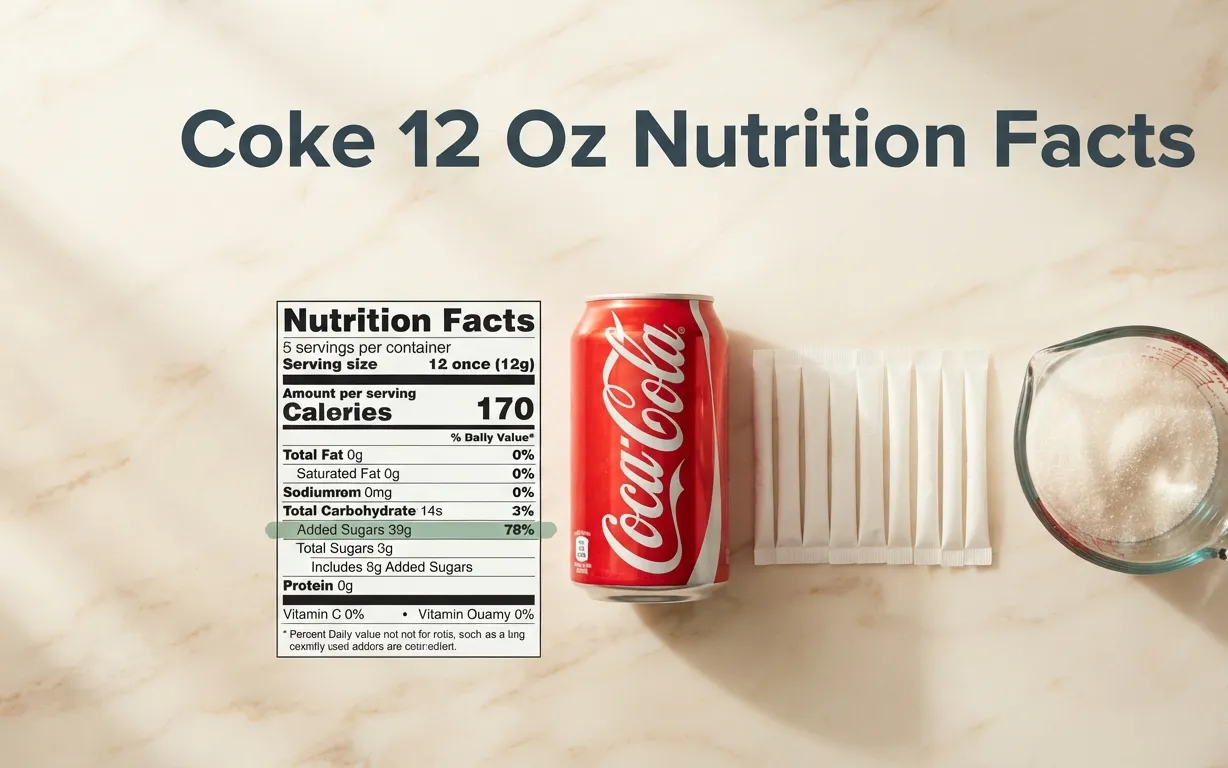
Coke 12 Oz Nutrition Facts: Full Label Breakdown 2026
A 12 oz can of Coca-Cola Classic contains 140 calories, 39 grams of total sugar (all added sugar), 45 milligrams of sodium, 34 milligrams of caffeine, and zero fat or protein. This single can delivers 78 percent of the American Heart Association’s recommended daily added sugar limit for women and more than the entire daily limit for children.
According to the Dietary Guidelines for Americans 2020-2025, added sugars should account for no more than 10 percent of total daily calories. For a standard 2,000-calorie diet, that is 50 grams of added sugar per day at most. A single 12 oz Coke uses up 39 of those 50 grams. The math is uncomfortable and it explains why public health organizations have spent two decades flagging sugar-sweetened beverages as a primary target for reducing added sugar intake.
This article gives you the complete nutrition breakdown for a 12 oz Coke, plus the numbers for every common bottle size you will actually encounter at a convenience store or vending machine. You will learn exactly what each ingredient does, how to read the label, how the sugar content compares to daily health limits, and where Coke Zero and other alternatives land on the same nutrition scale. No soda shaming. No scare tactics. Just the actual nutrition data with context you can use.
Coke 12 Oz Nutrition Facts
A 12 oz (355 mL) can of Coca-Cola Classic provides 140 calories entirely from carbohydrates, specifically 39 grams of added sugar with no dietary fiber, no fat, and no protein. According to the USDA FoodData Central database (FDC ID 1750036), this serving also contains 45 mg of sodium and 34 mg of caffeine, with no meaningful contribution of vitamins or minerals.
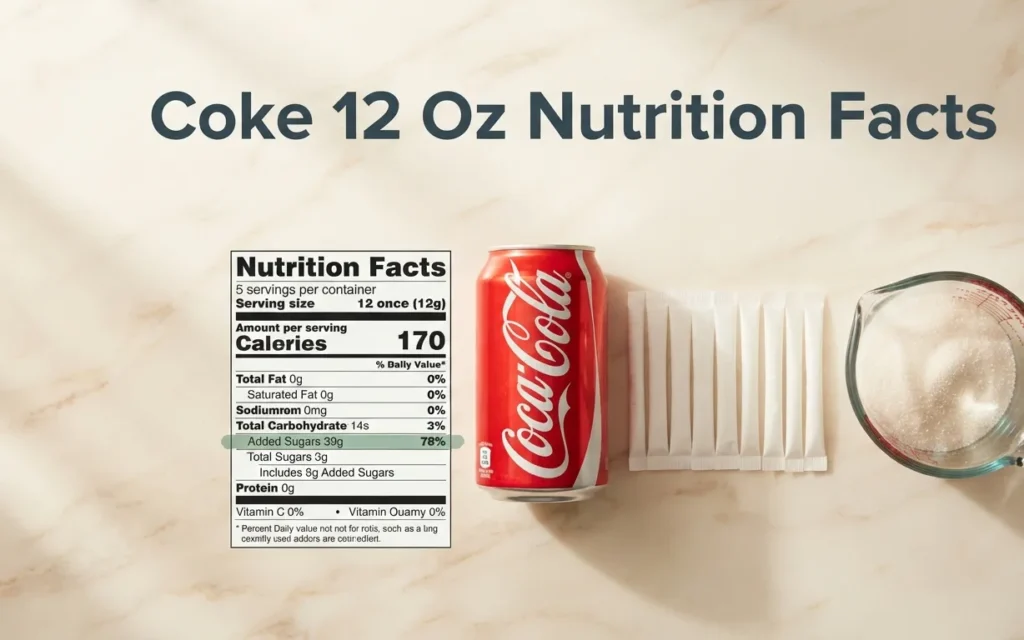
The complete nutritional profile is striking in its simplicity. Unlike milk, orange juice, or even some sweetened teas, Coke delivers energy exclusively as rapidly absorbed simple sugars dissolved in carbonated water. There is no starch, no fiber matrix slowing absorption, and no protein or fat to blunt the blood sugar response. From a metabolic standpoint, drinking a 12 oz Coke means consuming 39 grams of sugar that will begin entering your bloodstream within minutes. This is not a judgment statement. It is a description of how liquid sugar behaves in the human digestive system compared to sugar embedded in whole foods.
The 45 mg of sodium in a 12 oz can is modest and primarily comes from the water source and minor pH adjustment compounds used in the manufacturing process. It contributes roughly 2 percent of the FDA’s Daily Value for sodium of 2,300 mg. Sodium is not a meaningful nutritional consideration for this product in either a positive or negative direction at this serving size.
Here is the complete nutrition panel for a standard 12 oz can of Coca-Cola Classic, sourced from the product’s official Nutrition Facts label as regulated by the FDA:
| Nutrient | Amount per 12 fl oz (355 mL) | % Daily Value* |
|---|---|---|
| Calories | 140 | — |
| Total Fat | 0 g | 0% |
| Sodium | 45 mg | 2% |
| Total Carbohydrate | 39 g | 14% |
| Dietary Fiber | 0 g | 0% |
| Total Sugars | 39 g | — |
| Includes Added Sugars | 39 g | 78% |
| Protein | 0 g | — |
| Vitamin D | 0 mcg | 0% |
| Calcium | 0 mg | 0% |
| Iron | 0 mg | 0% |
| Potassium | 0 mg | 0% |
| Caffeine | 34 mg | — |
*Percent Daily Values are based on a 2,000-calorie diet. Your daily values may be higher or lower depending on your calorie needs. Dash indicates no established Daily Value.
Key Takeaway: A 12 oz Coke is a 140-calorie beverage delivering 39 grams of pure added sugar with no other nutrients. It is, by definition, a source of empty calories in the dietary lexicon used by the Academy of Nutrition and Dietetics.
Regular Coke Nutrition Facts
Regular Coca-Cola Classic nutrition facts are identical across all standard packaging formats when adjusted for fluid ounce equivalency. The nutrition profile per fluid ounce is approximately 11.7 calories and 3.25 grams of sugar. This means the 12 oz can (140 calories, 39g sugar), 16 oz bottle (187 calories, 52g sugar), and 20 oz bottle (240 calories, 65g sugar) are simply mathematical multiples of the same per-ounce formulation.
The term “regular” in regular Coke nutrition facts refers to the original full-sugar formulation as opposed to diet (Coke Zero Sugar, Diet Coke) or mid-calorie variants (Coca-Cola Life, now largely discontinued in the U.S. market). Regular Coke has not undergone any major formulation change to its core sweetening system in the United States since the 1980s. It continues to be sweetened with high fructose corn syrup in the U.S. market and with sucrose (table sugar) in many international markets, including Mexico and much of Europe.
This formulation consistency means that the nutrition facts you see on a 12 oz can today are essentially the same numbers that have applied for decades. The label itself changed in 2020 when the FDA’s updated Nutrition Facts label requirements took full effect for large manufacturers. The most notable change for regular Coke was the new mandatory declaration of added sugars, which now appears as a separate line item directly beneath total sugars on the label. For Coke, the total sugars and added sugars values are identical because every gram of sugar in the product is added sugar. There are no naturally occurring sugars from fruit, dairy, or other whole food sources.
This distinction matters for label literacy. A product like chocolate milk shows total sugars at, say, 24 grams but added sugars at only 12 grams because the remaining 12 grams come from naturally occurring lactose in the milk. Regular Coke shows 39 grams total sugars and 39 grams added sugars. They are the same number. This is the label honestly representing that every gram of sweetness in the product was added during manufacturing. The sugar did not come along with any other nutrients.
Key Takeaway: Regular Coke is a consistent formulation delivering 11.7 calories and 3.25 grams of sugar per fluid ounce regardless of package size. The “added sugars” line on the updated label equals the total sugars line because Coke contains zero naturally occurring sugar.
Coca Cola Nutrition Facts Label
The Coca-Cola nutrition facts label is a legally mandated disclosure regulated by the FDA under 21 CFR 101.9. For a 12 oz can, the label must display serving size (1 can or 12 fl oz), servings per container (1), calories (140), total fat, sodium, total carbohydrate, total sugars, added sugars, protein, and a standard set of micronutrients in the specified order using the FDA’s updated format.
The label underwent a meaningful redesign that became mandatory for large food and beverage manufacturers in 2020. The most visible changes for soda labels included larger and bolder calorie type, a dedicated line for added sugars with both gram amount and percent Daily Value, removal of “Calories from Fat” (irrelevant for a fat-free product), and updated serving sizes that more closely reflect what people actually consume. For soda, the FDA updated the Reference Amount Customarily Consumed (RACC) to 12 fl oz (previously 8 fl oz), meaning the standard can now accurately represents one serving. This was a significant regulatory shift. Before this update, some soda labels listed a smaller serving size that understated the calories and sugar a person would realistically consume from a single can.
The ingredient list appears beneath the nutrition panel or alongside it on the package, depending on label layout. For Coca-Cola Classic, the ingredient list reads: Carbonated Water, High Fructose Corn Syrup, Caramel Color, Phosphoric Acid, Natural Flavors, Caffeine. Ingredients are listed in descending order by weight. Carbonated water comes first because it is the heaviest ingredient by far. High fructose corn syrup comes second because it is the next most abundant component after water.
Reading a Coke label carefully reveals something the numbers alone do not communicate. The product is essentially water, sugar, acid, flavoring, and caffeine. Everything else is present in trace amounts. The label’s micronutrient section is entirely zeros because Coke is not designed or marketed as a source of nutrition. It is a refreshment beverage. The label reflects that design transparently.
| Label Section | What It Shows | What It Means |
|---|---|---|
| Serving Size | 1 can (12 fl oz) | One can equals one serving under FDA RACC rules |
| Calories | 140 per serving | Entirely from carbohydrates (sugar) |
| Added Sugars | 39g (78% DV) | Every sugar gram was added in manufacturing; 78% of the 50g daily added sugar limit |
| Micronutrients | All 0% DV | Coke provides no vitamins or minerals in meaningful amounts |
| Ingredient List | 6 ingredients | Carbonated water, HFCS, caramel color, phosphoric acid, natural flavors, caffeine |
Key Takeaway: The modern Coke nutrition label is transparent about what the product is and is not. It is a 140-calorie refreshment beverage with 39 grams of added sugar and no micronutrient content, with a serving size that matches what people actually drink from a single can.
Soda Can Nutrition Facts
A standard soda can in the United States holds 12 fluid ounces (355 milliliters) of carbonated beverage. For Coca-Cola Classic, this can format delivers 140 calories, 39 grams of sugar, 34 milligrams of caffeine, and 45 milligrams of sodium. The aluminum can is the most common single-serve soda packaging format in North America and the serving size upon which most published nutrition data is based.
The 12 oz aluminum can has a history that connects directly to nutrition awareness. Before the 1960s, soda was primarily sold in glass bottles of 6.5 to 10 oz. The shift to 12 oz cans, and later to 16 oz and 20 oz plastic bottles, expanded the default serving size that consumers came to view as “one soda.” This matters for nutrition literacy because many people still think of “a soda” as a single unit regardless of the container size, but the unit size varies enormously. A 12 oz can and a 20 oz bottle are both mentally processed as “one soda,” yet the 20 oz bottle delivers 240 calories and 65 grams of sugar compared to the can’s 140 calories and 39 grams.
From a label-reading perspective, the aluminum can format makes nutrition information easier to access than plastic bottles in one specific way. The Nutrition Facts label on a 12 oz can is printed directly on the metal surface and does not wrap around a curved bottle, so it is typically easier to read without rotating the container. The can label always lists one serving per container, so the numbers you see are the numbers you get for the whole package. This is not true for 16 oz and 20 oz bottles, which often list one serving per bottle but sometimes use the 12 oz RACC, creating label math that many consumers miss.
The aluminum can also has indirect nutritional implications through what it does not contain. Cans do not use Bisphenol A (BPA) in their primary structure (aluminum), though can linings historically contained BPA-based epoxies. The Coca-Cola Company states that its can linings have transitioned to non-BPA materials, though specific liner compositions are proprietary. For consumers concerned about potential endocrine-disrupting chemical exposure from packaging, cans are generally considered lower-risk than some plastic bottles, though the nutrition facts of the beverage inside are identical regardless of packaging material.
Key Takeaway: A 12 oz soda can is the standard reference serving for nutrition facts, but be aware that larger containers also feel like “one soda” to most consumers while delivering substantially more calories and sugar.
Coke Bottle Nutrition Facts
Coke bottle nutrition facts vary by bottle size, and the nutrition information for plastic bottle formats requires more careful label reading than cans because bottles often contain more than one 12 oz serving. The most common plastic bottle sizes for Coca-Cola Classic are 16 oz (often sold in multi-packs), 20 oz (the standard convenience store and vending machine single-serve bottle), 1-liter (33.8 oz), and 2-liter (67.6 oz).
The 16 oz plastic bottle is frequently sold in refrigerator packs at grocery stores and is increasingly common in grab-and-go coolers. Many consumers open a 16 oz bottle and drink the entire contents without realizing it contains 187 calories and 52 grams of sugar, which is roughly 33 percent more than a standard 12 oz can. The label typically lists the serving size as 12 oz with approximately 1.3 servings per bottle, or it may list the full bottle as one serving. This inconsistency across brands and package sizes creates confusion. The FDA’s updated labeling rules encouraged manufacturers to list the entire container as one serving when a product can reasonably be consumed in a single sitting, but the regulation provides flexibility, and not all bottle sizes are labeled this way.
The 20 oz PET bottle is the most commonly consumed single-serve soda format in U.S. convenience stores and vending machines. It contains 240 calories and 65 grams of sugar. This single bottle exceeds the American Heart Association’s recommended daily added sugar limit for both men (36g) and women (25g) by a wide margin. The AHA guideline is a full-day recommendation. One 20 oz Coke bottle represents roughly 1.8 times the daily limit for men and 2.6 times the daily limit for women when measured against the AHA’s stricter standard. Against the Dietary Guidelines for Americans’ 50-gram daily limit for a 2,000-calorie diet, a 20 oz bottle represents 130 percent of the full-day added sugar allowance.
The 2-liter bottle format (67.6 fluid ounces) contains approximately 5.6 standard 12 oz servings, totaling 790 calories and 221 grams of sugar for the entire container. While few people consume a 2-liter bottle alone in one sitting, the format is commonly shared at meals, parties, and gatherings. Pouring from a 2-liter into a glass makes portion awareness entirely dependent on the size of the glass being used and the pour being poured.
Key Takeaway: Bottle size dramatically affects the nutrition numbers for what most people perceive as “one soda.” A 20 oz bottle delivers 240 calories and 65 grams of sugar, which exceeds the full-day added sugar recommendation from every major health organization.
16 Oz Coke Nutrition Facts
A 16 oz bottle of Coca-Cola Classic contains 187 calories and 52 grams of sugar, representing approximately 1.33 standard 12 oz servings. This bottle size delivers 104 percent of the American Heart Association’s daily added sugar limit for women and 144 percent of the AHA limit for men, all within a single container that most people finish in one sitting.
The 16 oz format occupies an interesting middle ground in the soda marketplace. It is larger than the standard 12 oz can but smaller than the dominant 20 oz convenience store bottle. Multi-pack 16 oz bottles are often sold in six-packs at grocery stores and are positioned as a “take home” format rather than an “on the go” format. Because of this positioning, consumers may perceive the 16 oz bottle as roughly equivalent to a can when it is actually a third larger by volume and nutritional content.
Here is the complete nutritional breakdown for a 16 oz bottle, compared side by side with the 12 oz can reference:
| Nutrient | 12 oz Can | 16 oz Bottle | Difference |
|---|---|---|---|
| Calories | 140 | 187 | +47 calories |
| Total Carbohydrate | 39 g | 52 g | +13 g |
| Total Sugars | 39 g | 52 g | +13 g |
| Added Sugars | 39 g | 52 g | +13 g |
| Added Sugar %DV | 78% | 104% | +26% DV |
| Sodium | 45 mg | 60 mg | +15 mg |
| Caffeine | 34 mg | 45 mg | +11 mg |
The added sugar percentage in a 16 oz bottle crosses an important psychological threshold. At 104 percent of the FDA’s daily value for added sugars (based on a 2,000-calorie diet), a single 16 oz bottle technically provides more than the recommended maximum added sugar intake for an entire day. This does not mean that drinking a 16 oz Coke is acutely dangerous for a healthy person. It does mean that from a dietary pattern perspective, that bottle leaves zero room for any other source of added sugar throughout the rest of the day, including the sugar in a tablespoon of ketchup (roughly 4g), a flavored yogurt (12-20g), a granola bar (8-12g), or a serving of breakfast cereal (6-12g).
Key Takeaway: A 16 oz Coke bottle contains 52 grams of sugar, exceeding the full-day added sugar limit for most adults. If you choose to drink one, the rest of your day’s food choices should contain essentially zero added sugar to stay within dietary guidelines.
Coke 20 Oz Nutrition Facts
A 20 oz bottle of Coca-Cola Classic contains 240 calories and 65 grams of sugar. This equals approximately 1.67 standard 12 oz servings and delivers 130 percent of the FDA’s Daily Value for added sugars. It is the most commonly purchased single-serve soda format at U.S. convenience stores and represents the largest single-serve plastic bottle widely available for regular Coca-Cola.
The 65 grams of sugar in a 20 oz bottle translates to just over 16 teaspoons of sugar. Imagine opening 16 sugar packets, the kind you see on a restaurant table, and pouring them into a glass of carbonated water. That is the visual equivalent of what is dissolved in a 20 oz Coke. This mental image is more instructive than the gram count alone because most people do not have an intuitive sense of what 65 grams looks like. They do have an intuitive sense of what 16 sugar packets looks like, and the image is striking.
The calorie count of 240 is also useful to contextualize against common food equivalents. A 20 oz Coke provides roughly the same calorie content as two medium bananas, two slices of whole wheat bread with a thin spread of peanut butter, or a small serving of Greek yogurt with half a cup of berries and a tablespoon of granola. The difference is that those food items also provide fiber, protein, potassium, calcium, and a range of micronutrients along with their calories. The 20 oz Coke provides only sugar, water, flavoring, and caffeine. The calorie comparison is fair. The nutrition comparison is not.
From a caffeine perspective, the 20 oz bottle contains approximately 57 mg of caffeine. This is still well below the caffeine content of a standard 8 oz cup of brewed coffee (approximately 95 mg per the USDA), but it is approaching the amount where caffeine-sensitive individuals may notice an effect, particularly if consumed on an empty stomach or in combination with other caffeinated products consumed throughout the day.
Quick Tip: If you typically buy a 20 oz Coke from a vending machine or convenience store cooler, you are drinking more sugar than is in two standard 12 oz cans. The price difference between the 20 oz and 12 oz formats often makes the larger bottle seem like a better deal. The nutrition math says otherwise.
Key Takeaway: A 20 oz Coke contains 65 grams of sugar, the equivalent of 16 sugar packets, and 240 calories. This single bottle provides 30 percent more added sugar than the daily recommended maximum.
How Much Sugar in 12 Oz Coke
A 12 oz can of Coca-Cola Classic contains 39 grams of sugar, which equals approximately 9.75 teaspoons of sugar. This measurement is derived from the standard conversion of 4 grams of sugar per teaspoon, and it means that nearly 10 standard sugar packets are dissolved into every 12 oz can of regular Coke.
Visualizing this amount of sugar helps most people understand the number more concretely than the gram count alone. Ten standard sugar packets lined up on a table next to a 12 oz can of Coke accurately represents the sugar content of that can. For someone who adds two sugar packets to their morning coffee, drinking a 12 oz Coke is the sugar equivalent of five cups of sweetened coffee consumed back to back in roughly the time it takes to finish the can.
The 39 grams of sugar in a 12 oz Coke must also be understood in the context of the updated FDA Nutrition Facts label’s added sugars declaration. Under the label rules finalized in 2016 and fully implemented by 2020, manufacturers must list added sugars in grams and as a percentage of the daily value. The Daily Value for added sugars is set at 50 grams, based on the Dietary Guidelines for Americans 2020-2025 recommendation that added sugars account for less than 10 percent of total daily calories in a 2,000-calorie diet. A 12 oz Coke with 39 grams of added sugar therefore uses up 78 percent of that daily value.
The American Heart Association recommends even stricter limits. The AHA advises women to consume no more than 25 grams of added sugar per day and men no more than 36 grams. A single 12 oz can of Coke exceeds the AHA’s daily limit for women by 14 grams (56 percent over) and exceeds the men’s limit by 3 grams. The AHA’s guidelines are based on cardiovascular health outcomes, not weight management alone, and reflect the organization’s assessment that added sugar intake above these thresholds is associated with increased risk of heart disease, type 2 diabetes, and metabolic dysfunction.
For children, the numbers are more stark. The AHA recommends children aged 2 to 18 consume no more than 25 grams of added sugar per day, the same as the adult women’s recommendation. A single 12 oz Coke contains 56 percent more sugar than a child should consume from all added sugar sources across an entire day. A child who drinks one 12 oz Coke has already consumed 1.5 times their full-day added sugar allowance before accounting for any other food or drink consumed that day.
Key Takeaway: A 12 oz Coke contains 39 grams of sugar, approximately 10 teaspoons, which is 78 percent of the FDA’s daily added sugar limit and exceeds the American Heart Association’s full-day recommendation for both women and children.
Calories in 12 Oz Coke
A 12 oz can of Coca-Cola Classic contains 140 calories, all of which come from the 39 grams of sugar in the beverage. Carbohydrates provide 4 calories per gram. The math is direct: 39 grams of carbohydrate multiplied by 4 calories per gram equals 156 calories. The slight discrepancy between the calculated 156 and the label’s 140 calories is due to rounding conventions permitted by FDA labeling regulations and minor formulation variations.
These 140 calories are accurately described by the nutrition science term “empty calories,” a phrase used by the Academy of Nutrition and Dietetics and the Dietary Guidelines for Americans to describe foods and beverages that contribute energy without contributing meaningful amounts of vitamins, minerals, fiber, or other beneficial nutrients. The term is not pejorative. It is a functional description. A 12 oz Coke provides metabolic fuel in the form of rapidly absorbed simple sugars. It does not provide the micronutrients, phytonutrients, fiber, protein, or fat that the body needs to function optimally beyond that immediate energy.
How these 140 calories register with the body’s satiety systems is an important piece of the nutrition picture. Liquid calories, particularly those from sugar-sweetened beverages, do not trigger the same hormonal satiety response that solid food with equivalent calorie content triggers. Research published in the American Journal of Clinical Nutrition has consistently shown that people do not compensate for liquid calories by eating fewer calories later in the day. If someone drinks a 140-calorie Coke with lunch, they do not subsequently eat 140 fewer calories at dinner. The Coke calories are additive to the total daily calorie intake, not substitutive.
This satiety mismatch is one reason public health researchers focus on sugar-sweetened beverages as a target for reducing total calorie intake in populations with high rates of overweight and obesity. The Centers for Disease Control and Prevention (CDC) identifies sugar-sweetened beverages as the single largest source of added sugar in the American diet and a significant contributor to excess calorie intake that is not offset by reduced consumption of other foods.
Quick Tip: The 140 calories in a 12 oz Coke are equivalent to the calories in two large eggs, a medium apple with a tablespoon of peanut butter, or one and a half ounces of almonds. The difference is that the eggs, apple, and almonds will produce satiety that lasts for hours. The Coke will not.
Key Takeaway: The 140 calories in a 12 oz Coke are empty calories in the nutrition science sense. They provide energy without nutrients or satiety, and research indicates they are typically added to total daily intake rather than displacing other calorie sources.
Coke Ingredients List
The ingredient list for Coca-Cola Classic, as printed on a 12 oz can in 2026, contains six items in descending order by weight: carbonated water, high fructose corn syrup, caramel color, phosphoric acid, natural flavors, and caffeine. Each ingredient serves a specific functional role in the product, and understanding what each one does makes the nutrition facts more meaningful.
Carbonated water is the primary ingredient by weight. Water is infused with carbon dioxide gas under pressure, which creates carbonic acid in solution and produces the characteristic effervescence. Carbonation provides the mouthfeel, slight acidity, and sensory experience that distinguishes soda from flat beverages. It has no calorie or nutritional content.
High fructose corn syrup (HFCS) is the sole sweetener in U.S.-formulated Coca-Cola Classic. HFCS is a liquid sweetener produced from corn starch through enzymatic processing that converts some of the glucose in corn syrup to fructose. The specific formulation used in Coke is HFCS-55, which contains approximately 55 percent fructose and 42 percent glucose, with the remaining 3 percent being other saccharides. This ratio is functionally similar to sucrose (table sugar), which is 50 percent fructose and 50 percent glucose chemically bonded as a disaccharide. The total sugar content of 39 grams per 12 oz comes entirely from this ingredient.
Caramel color provides the characteristic dark brown color of Coca-Cola. It is produced by heating sugars in the presence of ammonium compounds, creating a complex mixture of compounds that impart color. The specific type used in cola beverages is typically E150d (sulfite ammonia caramel), which is considered safe by the FDA and the European Food Safety Authority, though some consumer advocacy groups have raised questions about 4-methylimidazole (4-MEI), a trace byproduct of certain caramel color production methods, and its potential carcinogenicity at very high exposure levels. The Coca-Cola Company states that it has modified its manufacturing process to reduce 4-MEI levels, and regulatory agencies have not established actionable safety concerns at levels found in beverage products.
Phosphoric acid serves as an acidulant that provides tartness, reduces sweetness perception so the beverage does not taste cloyingly sweet despite the high sugar content, and acts as a preservative by lowering the pH to a level at which most microorganisms cannot survive. Its presence is also responsible for some of the dental health concerns associated with frequent soda consumption.
Natural flavors is a proprietary blend that creates the distinctive Coca-Cola taste. The FDA defines natural flavors as substances derived from plant or animal sources through physical processes such as distillation, extraction, or fermentation. The exact composition of Coke’s natural flavor formula is a trade secret and is not required to be disclosed on the label beyond the term “natural flavors.”
Caffeine is added for its stimulant effect and slight bitterness, which contributes to the flavor profile. At 34 mg per 12 oz, the caffeine content is modest compared to coffee but pharmacologically active.
Key Takeaway: Coke’s six-ingredient formula is carbonated water sweetened with HFCS, colored with caramel color, acidified with phosphoric acid, flavored with a proprietary natural flavor blend, and caffeinated at 34 mg per can.
High Fructose Corn Syrup in Coke
High fructose corn syrup in U.S.-market Coca-Cola Classic is the sole caloric sweetener used in the product, replacing sucrose (table sugar) as the primary sweetener in 1980. The switch was an economic decision driven by U.S. sugar tariffs and corn subsidies that made HFCS significantly cheaper than sucrose for domestic manufacturing. It was not a health-driven reformulation.
The HFCS used in Coke is predominantly HFCS-55, a formulation containing approximately 55 percent fructose and 42 percent glucose in free monosaccharide form. This is metabolically similar but not identical to sucrose, which is a disaccharide containing one glucose molecule bonded to one fructose molecule. In sucrose, the bond must be cleaved by the enzyme sucrase in the small intestine before the individual sugars are absorbed. In HFCS, the glucose and fructose are already separated and absorbed directly. This difference in absorption mechanics is the basis for claims that HFCS may be metabolically different from sucrose, though the overwhelming scientific consensus is that at the doses typically consumed, the metabolic effects are equivalent.
The American Medical Association, the Academy of Nutrition and Dietetics, and the American Heart Association have all issued statements indicating that HFCS and sucrose are essentially interchangeable from a metabolic and health perspective. A 2012 position statement by the Academy of Nutrition and Dietetics stated that “the source of added sugars is not as important as the total amount of added sugars consumed.” The problem with HFCS-sweetened beverages is the total sugar load, not the specific form of the sugar molecules delivering that load.
There is a persistent consumer perception, partly driven by marketing of “Mexican Coke” sweetened with sucrose, that sucrose-sweetened Coke is somehow healthier or more natural than HFCS-sweetened Coke. This perception does not hold up to nutritional analysis. A 12 oz Mexican Coca-Cola (sucrose-sweetened) contains 39 grams of sugar and 140 calories, identical to the U.S. HFCS version. The sugar molecules, once absorbed, are indistinguishable to the body. Fructose from HFCS and fructose from cleaved sucrose both travel to the liver via the portal vein and undergo the same metabolic processing. Glucose from HFCS and glucose from cleaved sucrose both enter the bloodstream and trigger the same insulin response.
The practical takeaway is that whether your Coke is sweetened with HFCS (U.S. standard) or sucrose (international and “Mexican Coke” standard), the nutrition facts are functionally identical. You are consuming 39 grams of added sugar and 140 calories per 12 oz either way. Any claim that one sweetener source makes the product healthier is a marketing narrative, not a nutrition fact.
Key Takeaway: HFCS-55 and sucrose are metabolically equivalent at the doses present in soda. Choosing “Mexican Coke” with sucrose instead of U.S. Coke with HFCS does not change the sugar or calorie content and does not confer a nutritional advantage.
Caffeine in Coca Cola 12 Oz
A 12 oz can of Coca-Cola Classic contains 34 milligrams of caffeine, according to the product’s official nutrition information and the USDA FoodData Central database. This amount is roughly one-third the caffeine content of an 8 oz cup of brewed coffee and is considered a low to moderate dose of caffeine for an adult.
The caffeine content per fluid ounce of Coca-Cola is approximately 2.8 mg. This makes it less caffeinated than most brewed coffees (approximately 12 mg per ounce), slightly less caffeinated than most brewed black teas (approximately 5-6 mg per ounce), and roughly comparable to many green teas (approximately 3 mg per ounce). Coke is more caffeinated than some other colas. Pepsi contains approximately 38 mg per 12 oz, and Dr Pepper contains approximately 41 mg, while some store-brand colas contain less.
For perspective on what 34 mg of caffeine means in a daily intake context, the FDA considers up to 400 mg of caffeine per day safe for most healthy adults. A 12 oz Coke contributes 8.5 percent of that daily maximum. The American College of Obstetricians and Gynecologists (ACOG) recommends that pregnant individuals limit caffeine intake to 200 mg per day. A 12 oz Coke represents 17 percent of that pregnancy-specific limit. For children and adolescents, the American Academy of Pediatrics recommends no caffeine, though it acknowledges that low-level consumption is common. There is no established safe caffeine intake level for children, and the AAP’s position is that caffeine has no place in a child’s diet.
Caffeine content in Coke is also relevant for people who are sensitive to caffeine, take certain medications that interact with caffeine metabolism, or have conditions such as anxiety disorders, cardiac arrhythmias, or gastroesophageal reflux disease for which caffeine may exacerbate symptoms. For these individuals, even 34 mg of caffeine may be enough to produce noticeable effects. Caffeine is pharmacologically active at doses as low as 20 to 30 mg in sensitive individuals, producing measurable increases in alertness, heart rate, and blood pressure.
Unlike some energy drinks that list caffeine content prominently as a selling point, Coke’s caffeine is listed in the ingredient list but not required to be quantified on the standard Nutrition Facts panel unless the manufacturer chooses to do so voluntarily. The Coca-Cola Company does disclose the exact caffeine content on its packaging and website, but consumers who do not look beyond the Nutrition Facts table may not realize the product contains caffeine at all. The ingredient list confirms its presence. The amount is a separate piece of information.
| Beverage (12 oz unless noted) | Caffeine Content |
|---|---|
| Brewed coffee (8 oz cup) | ~95 mg |
| Black tea (8 oz cup) | ~47 mg |
| Green tea (8 oz cup) | ~28 mg |
| Coke Classic | 34 mg |
| Pepsi | 38 mg |
| Dr Pepper | 41 mg |
| Mountain Dew | 54 mg |
| Coke Zero Sugar | 34 mg |
| Diet Coke | 46 mg |
| Espresso (1 oz shot) | ~63 mg |
Key Takeaway: A 12 oz Coke contains 34 mg of caffeine, approximately one-third the caffeine in a cup of coffee. This amount is pharmacologically relevant but well within the FDA’s 400 mg daily safety guideline for healthy adults.
Phosphoric Acid in Coke
Phosphoric acid in Coca-Cola serves three functional purposes: it provides tartness that balances the sweetness, it lowers the pH to approximately 2.5 to 2.7 which acts as a preservative by inhibiting microbial growth, and it contributes to the distinctive flavor profile that consumers expect from a cola beverage. It is listed as the fourth ingredient by weight, after carbonated water, high fructose corn syrup, and caramel color.
Phosphoric acid is a clear, odorless inorganic acid with the chemical formula H₃PO₄. In beverages, it is used at low concentrations (typically less than 0.5 percent by weight) to achieve the desired acidity. Its presence in Coke has raised health questions in two specific areas: dental erosion and bone health. The dental concern is straightforward. Frequent exposure of tooth enamel to acidic solutions with a pH below 5.5 can cause gradual demineralization of the enamel surface. Coke’s pH of approximately 2.5 to 2.7 makes it acidic enough to contribute to enamel erosion with frequent, prolonged exposure, particularly when the beverage is sipped slowly over extended periods rather than consumed relatively quickly.
The bone health question is more complex and less definitively resolved. The concern stems from the fact that phosphoric acid provides a source of dietary phosphorus, and very high intakes of phosphorus relative to calcium intake may affect calcium balance and parathyroid hormone regulation. Some observational studies have found an association between high cola consumption and lower bone mineral density, particularly in older women. A frequently cited study is the Framingham Osteoporosis Study, published in the American Journal of Clinical Nutrition, which found that cola intake (but not other carbonated beverages) was associated with lower bone mineral density in women. The proposed mechanism involves the high phosphorus load from phosphoric acid potentially disrupting the calcium-to-phosphorus ratio and triggering compensatory calcium release from bone.
However, the evidence is observational and confounded by the fact that high cola consumption often displaces milk consumption, meaning lower calcium intake may be the real driver rather than the phosphoric acid itself. The phosphorus content of a 12 oz Coke is approximately 50 to 60 mg, which is modest compared to the Recommended Dietary Allowance for phosphorus of 700 mg per day for adults. A single serving of chicken breast contains more phosphorus than several cans of Coke. The concern is not about phosphorus toxicity from a single can. It is about dietary patterns in which cola regularly replaces calcium-rich beverages, particularly in populations already at risk for inadequate calcium intake, such as adolescent girls and postmenopausal women.
Key Takeaway: Phosphoric acid gives Coke its tartness and low pH for preservation. The phosphorus it provides is modest at 50 to 60 mg per can, but frequent cola consumption in place of calcium-rich beverages may affect bone health over time, particularly in women.
Soda Nutrition Facts Label Explained
Reading a soda nutrition facts label correctly requires attention to three specific elements that many consumers overlook: the serving size declaration at the top, the added sugars line in the carbohydrate section, and the servings per container number that determines whether you need to multiply everything on the panel. For Coca-Cola products in 2026, these elements follow FDA labeling regulations updated in 2016 and fully implemented by 2020.
Serving size appears as the first line on the Nutrition Facts panel. For a 12 oz can, the serving size reads “1 can” or “12 fl oz” with the servings per container listed as “1.” This is the simplest labeling scenario. Everything on the panel applies to the entire contents. For larger bottles, the serving size declaration becomes crucial. A 20 oz bottle may list the serving size as “1 bottle” (meaning the nutrition facts apply to all 20 oz) or as “12 fl oz” with approximately 1.67 servings per container. If the latter, every number on the panel must be multiplied by 1.67 to get the nutrition facts for the whole bottle. A calorie listing of 140 on a label with 1.67 servings per container means the full bottle contains approximately 234 calories, not 140.
Added Sugars is the line that appeared on labels in 2020 and is particularly relevant for soda. It appears indented beneath “Total Sugars” in the carbohydrate section and shows both grams and a percent Daily Value. For a 12 oz Coke, the added sugars line reads “39g” and “78%.” This means the 39 grams of sugar in the can represent 78 percent of the FDA’s recommended maximum daily intake of 50 grams of added sugar for a 2,000-calorie diet. If a soda label shows a different number for total sugars versus added sugars, it means some of the sugar comes from naturally occurring sources (like fruit juice or milk). For regular Coke, the two numbers are identical because every gram is added.
The ingredient list on a soda label is read in descending order by weight. The first ingredient is always the most abundant. For Coke, that is carbonated water. High fructose corn syrup is the second ingredient, confirming it is the next most prevalent component. Caffeine appears last because it is present in the smallest quantity by weight (34 mg per 355 mL). The ingredient list also alerts consumers to the presence of additives that may matter to them individually, such as caramel color (sensitive individuals may react to sulfites used in its production) or phosphoric acid (relevant for those monitoring phosphorus intake).
A practical step-by-step for reading a soda label:
- Check the servings per container first. This determines whether you need to do math.
- Look at the calories and multiply by servings per container if greater than one.
- Find the Added Sugars line and note both the gram amount and percent Daily Value.
- Check the ingredient list for items relevant to your personal dietary needs or restrictions.
- Note any voluntary disclosures, such as caffeine content in milligrams, which may appear outside the official Nutrition Facts panel.
Key Takeaway: The most important number on a soda nutrition label is servings per container. If it is not one, every other number on the panel understates what you will actually consume by drinking the entire bottle.
Coke Zero vs Regular Coke Nutrition
Coke Zero Sugar and regular Coca-Cola Classic have fundamentally different nutrition profiles despite nearly identical taste. Coke Zero Sugar contains 0 calories, 0 grams of sugar, 0 grams of carbohydrate, and 0 grams of protein and fat per 12 oz serving. The only nutritional commonality is the sodium content (40 mg in Coke Zero Sugar vs. 45 mg in regular Coke) and the caffeine content, which is identical at 34 mg per 12 oz.
The difference in nutritional content is achieved through sweetener substitution. Regular Coke is sweetened with high fructose corn syrup, providing 39 grams of sugar and 140 calories per 12 oz. Coke Zero Sugar is sweetened with a blend of aspartame and acesulfame potassium (Ace-K), two high-intensity artificial sweeteners that are hundreds of times sweeter than sugar by weight, allowing the product to achieve sweetness without contributing calories. Aspartame contains 4 calories per gram by weight, but because it is used in such minute quantities, the calorie contribution rounds to zero per serving under FDA labeling rules.
The sweetener blend in Coke Zero Sugar is specifically aspartame and acesulfame potassium, not aspartame alone. The combination is common in zero-calorie beverages because the two sweeteners have a synergistic effect. Aspartame provides a clean, sugar-like sweetness that develops slightly slowly. Acesulfame potassium provides an immediate sweet taste that fades quickly. Together, they produce a sweetness profile that more closely mimics sugar’s onset and duration than either sweetener alone, and they mask each other’s aftertaste limitations.
From a health perspective, the primary difference is the elimination of 39 grams of added sugar and 140 calories per 12 oz serving. For someone trying to reduce their added sugar intake or total calorie intake while maintaining a soda habit, this is a meaningful substitution. The Dietary Guidelines for Americans 2020-2025 and the American Heart Association both identify sugar-sweetened beverages as the largest source of added sugar in the American diet. Switching from regular Coke to Coke Zero Sugar eliminates this source of added sugar entirely.
The artificial sweeteners in Coke Zero Sugar are regulated and considered safe by the FDA, the European Food Safety Authority (EFSA), and the Joint FAO/WHO Expert Committee on Food Additives (JECFA) at acceptable daily intake levels far above typical consumption. The FDA has established an Acceptable Daily Intake (ADI) for aspartame of 50 mg per kilogram of body weight per day. For a 150-pound (68 kg) adult, that equals 3,400 mg of aspartame daily. A 12 oz can of diet cola typically contains approximately 180 to 200 mg of aspartame, meaning the ADI-equivalent for this adult would be roughly 17 to 19 cans per day. Actual consumption is a tiny fraction of this.
| Nutrient | Regular Coke (12 oz) | Coke Zero Sugar (12 oz) |
|---|---|---|
| Calories | 140 | 0 |
| Total Carbohydrate | 39 g | 0 g |
| Total Sugars | 39 g | 0 g |
| Added Sugars | 39 g | 0 g |
| Protein | 0 g | 0 g |
| Fat | 0 g | 0 g |
| Sodium | 45 mg | 40 mg |
| Caffeine | 34 mg | 34 mg |
| Sweeteners | HFCS | Aspartame, Acesulfame K |
Key Takeaway: Coke Zero Sugar eliminates 39 grams of added sugar and 140 calories per 12 oz serving compared to regular Coke while providing identical caffeine content. The primary tradeoff is the substitution of high fructose corn syrup with FDA-approved artificial sweeteners.
Added Sugar Daily Limit and Coke
The FDA’s Daily Value for added sugars is 50 grams, based on the Dietary Guidelines for Americans 2020-2025 recommendation that added sugars account for less than 10 percent of total daily calories in a 2,000-calorie diet. A single 12 oz can of Coca-Cola Classic contains 39 grams of added sugar, which equals 78 percent of this daily limit. A 20 oz bottle contains 65 grams, exceeding the 50-gram daily value by 30 percent.
The American Heart Association sets stricter limits based specifically on cardiovascular and metabolic health outcomes. The AHA recommends women limit added sugar to 25 grams per day and men to 36 grams per day. A 12 oz Coke exceeds the women’s limit by 14 grams (56 percent over) and exceeds the men’s limit by 3 grams (8 percent over). The AHA’s numbers are not based on calorie budgeting alone. They reflect the organization’s assessment of the sugar intake level above which risk for heart disease, type 2 diabetes, and metabolic syndrome begins to increase in population studies.
The World Health Organization’s 2015 guideline on free sugars intake recommends that free sugars (which include added sugars plus sugars naturally present in honey, syrups, and fruit juices) account for less than 10 percent of total energy intake, with a conditional recommendation to reduce intake to below 5 percent for additional dental health benefits. For a 2,000-calorie diet, 5 percent represents approximately 25 grams of free sugars. A 12 oz Coke exceeds the WHO’s conditional recommendation by 14 grams. The WHO’s guideline is specifically motivated by evidence linking free sugar intake to dental caries and to higher body weight in populations where free sugar consumption is high.
The practical challenge these numbers reveal is that a single 12 oz can of regular Coke, widely considered a modest single serving, uses up nearly the entire daily added sugar budget under even the most lenient guideline. The FDA’s 50-gram limit is the most permissive. The AHA’s limits are more restrictive. The WHO’s conditional recommendation is the strictest. A 12 oz Coke consumes 78 percent, 108 percent (for women), or 156 percent of these limits, respectively. A 20 oz bottle consumes 130 percent, 181 percent (for women), or 260 percent of these limits.
The Centers for Disease Control and Prevention reports that the average American adult consumes approximately 17 teaspoons (71 grams) of added sugar per day, with sugar-sweetened beverages accounting for roughly 24 percent of that total. A single 12 oz Coke at 9.75 teaspoons provides more than half of the average American’s total daily added sugar intake in one beverage. The CDC identifies reducing sugar-sweetened beverage consumption as one of the most effective single dietary changes for reducing total added sugar intake at the population level.
Quick Tip: If you currently drink multiple regular Cokes per day, switching even one of those to water, unsweetened tea, or a zero-calorie alternative eliminates 39 grams of added sugar from your daily intake. That single change would bring many people from above the daily added sugar limit to below it.
Key Takeaway: A 12 oz Coke uses 78 percent of the FDA’s 50-gram daily added sugar limit. By AHA standards, one can exceeds the full-day recommendation for women. The single most impactful dietary change for reducing added sugar intake is replacing sugar-sweetened beverages with water or unsweetened alternatives.
Frequently Asked Questions About Coke Nutrition Facts
How many teaspoons of sugar are in a 12 oz can of Coke?
A 12 oz can of Coca-Cola Classic contains approximately 9.75 teaspoons of sugar. This is calculated by dividing the 39 grams of sugar by 4 grams per teaspoon.
For comparison, 10 standard sugar packets lined up next to a 12 oz can provides an accurate visual of the sugar dissolved into every can. That amount of sugar stirred into a glass of carbonated water is what you taste when you drink a regular Coke.
Is Coke worse for you than other sodas nutrition-wise?
Regular Coca-Cola Classic is nutritionally comparable to most other full-sugar sodas, with 140 calories and 39 grams of sugar per 12 oz. Pepsi has slightly more at 150 calories and 41 grams of sugar. Mountain Dew has 170 calories and 46 grams. Dr Pepper has 150 calories and 40 grams.
Differences in caffeine content and specific acidulants (phosphoric acid in colas, citric acid in citrus sodas) create minor variation in the non-nutritive profile. From a sugar and calorie standpoint, no full-sugar soda is meaningfully better or worse than another. They are all sugar-sweetened beverages with comparable nutrition profiles.
What happens to your body after drinking a 12 oz Coke?
Within approximately 10 minutes, the 39 grams of sugar begin entering your bloodstream and blood glucose rises. Your pancreas responds by releasing insulin to move that glucose into cells. The caffeine absorption begins approximately 15 to 20 minutes after consumption, producing a mild stimulant effect. The phosphoric acid temporarily lowers the pH in your mouth, and frequent exposure over time can contribute to dental enamel erosion.
For a metabolically healthy person, a single 12 oz Coke produces a transient blood sugar and insulin response that the body handles without difficulty. The concern is not about any single can. It is about the cumulative effect of daily sugar-sweetened beverage consumption on insulin sensitivity, dental health, and total calorie intake over months and years.
How does the sugar in Coke compare to the daily recommended limit?
A 12 oz Coke delivers 39 grams of added sugar, which is 78 percent of the FDA’s 50-gram daily value. By American Heart Association guidelines, the same can exceeds the recommended daily limit for women (25g) and essentially maxes out the limit for men (36g). A single 12 oz can leaves almost no room for any other added sugar source that day.
Why does Coke use high fructose corn syrup instead of regular sugar?
Coca-Cola uses high fructose corn syrup in the U.S. market primarily because of cost. U.S. agricultural policies, including sugar import tariffs and corn subsidies, have made HFCS significantly cheaper than sucrose (table sugar) for domestic beverage manufacturing since the 1980s. The switch was economic, not nutritional. The sugar and calorie content of the finished product did not change meaningfully.
How much caffeine is in Coke compared to coffee?
A 12 oz Coke contains 34 mg of caffeine. An 8 oz cup of brewed coffee contains approximately 95 mg. Coke has roughly one-third the caffeine per ounce of brewed coffee. To match the caffeine in one small cup of coffee, you would need to drink nearly three full 12 oz cans of Coke, which would also deliver 420 calories and 117 grams of sugar.
The numbers on a Coke label are honest and straightforward. A 12 oz can provides 140 calories from 39 grams of added sugar, with no other nutrients present, plus 34 mg of caffeine. The larger bottles sold at convenience stores multiply those numbers. A 20 oz bottle gives you 65 grams of sugar and 240 calories, which is 130 percent of the FDA’s full-day added sugar recommendation. These are not opinions. They are the numbers printed on the package under federal labeling law.
If you enjoy Coke, you can make an informed choice about how it fits into your overall eating pattern. A 12 oz can a few times a week as part of a diet that otherwise stays within added sugar limits is a very different nutritional proposition than drinking multiple 20 oz bottles daily. The most practical step most people can take is simply to be honest with themselves about which container size they actually reach for and to do the multiplication if the label requires it. A can is not a bottle, and a bottle’s nutrition facts often require math that the label itself does not do for you.
You now know exactly what is in that can or bottle, how to read the label correctly, and where the numbers land against the daily limits set by the FDA, the American Heart Association, and the World Health Organization. What you do with that information is your call. That is what nutrition facts are for.