Does Vitamin Water Hydrate You? Truth About Hydration 2026
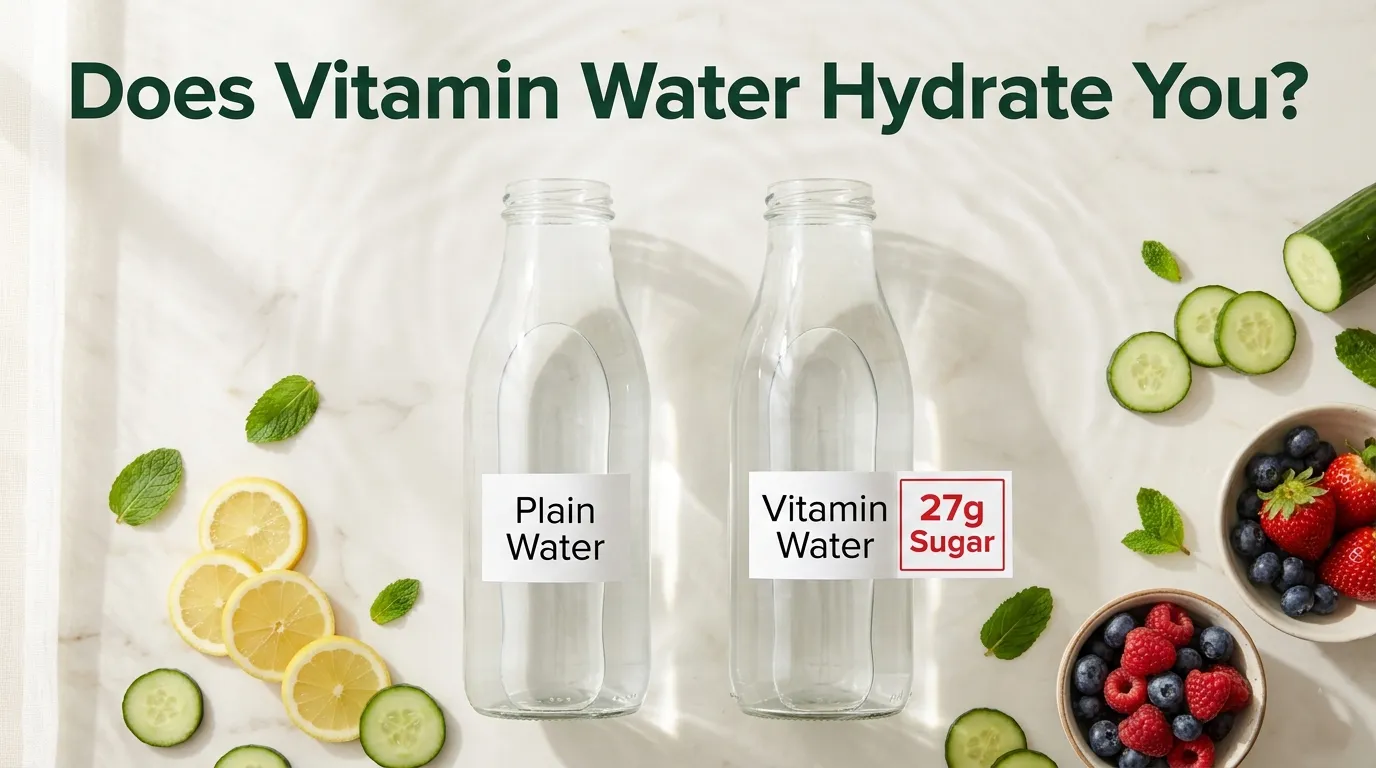
Vitamin water does hydrate you, but not as effectively as plain water, and the sugar in regular versions creates trade-offs that cancel out most hydration benefits. A 20 ounce bottle of regular Vitaminwater contains 27 grams of added sugar, which requires extra water for your kidneys to process and filter out.
The average adult needs about 2.7 to 3.7 liters of total water per day, according to the National Academy of Medicine. Many people turn to vitamin enhanced beverages thinking they are making a healthier choice than plain water. But the science on hydration tells a different story about these colorful bottles lining grocery store shelves.
This guide breaks down exactly how vitamin water affects your hydration status, compares regular and zero sugar versions, and tells you when each type might actually help or hurt your health goals. You will learn the specific electrolyte amounts, sugar counts, and physiological effects of drinking vitamin water daily.
Does Vitamin Water Hydrate You
Yes, vitamin water provides hydration because its base ingredient is water, but the added sugar and other ingredients affect how well your body absorbs and uses that water. The hydration effectiveness depends largely on which version you drink.
Plain water has an osmolality of approximately 0 mOsm/kg, which is the reference standard for optimal absorption. Regular Vitaminwater has a higher osmolality due to 27g of sugar per bottle . This higher concentration means the fluid empties from your stomach more slowly than plain water.
The body absorbs plain water within 5 to 15 minutes of drinking. A 2022 review in the American Journal of Clinical Nutrition found that beverages with added sugar above 6g per 100mL delay gastric emptying, which slows the delivery of water to your bloodstream. Regular Vitaminwater contains approximately 4.5g per 100mL, putting it in this slower absorption category.
Key Takeaway: Your body absorbs plain water faster and more completely than regular vitamin water. Zero sugar vitamin water hydrates at the same rate as plain water but provides no hydration advantage despite the added cost.
Can Vitamin Water Replace Water
No, vitamin water cannot replace plain water as your primary daily hydration source. The Tufts Health & Nutrition Letter explicitly states that plain water is always the best choice for hydration, and vitamin waters often come with unhealthy doses of added sugar .
| Hydration Source | Osmolality | Absorption Rate | Daily Suitability |
|---|---|---|---|
| Plain Water | 0 mOsm/kg | Fastest (5-15 min) | Excellent for all day |
| Vitamin Water (regular) | ~350 mOsm/kg | Slower (20-40 min) | Occasional only |
| Vitamin Water Zero | ~150 mOsm/kg | Fast | Moderate |
For everyday hydration needs, plain water delivers exactly what your body requires: H2O. No sugar. No calories. No additives. The Dietary Guidelines for Americans 2020-2025 emphasize that plain water should be the primary beverage choice because it hydrates without contributing to added sugar intake.
A person drinking only vitamin water instead of plain water would consume approximately 100-120 calories and 27g of added sugar per 20 ounce bottle . Drinking four bottles daily to meet water needs adds 400-480 calories and 108g of sugar, which exceeds the American Heart Association’s recommended daily added sugar limit of 36g for men and 25g for women.
Does Vitamin Water Dehydrate You
No, vitamin water does not dehydrate you, but regular versions create a net hydration effect that is weaker than plain water due to the sugar content. The sugar in regular vitamin water requires your kidneys to use extra water for processing and excretion.
Here is how the sugar dehydration mechanism works:
To process 27g of sugar, your kidneys need approximately 3 to 5 ounces of water to dilute and excrete the excess glucose through urine. This water comes from the same bottle you just drank. So a 20 ounce bottle of regular vitamin water delivers hydration value closer to 15 to 17 ounces of plain water.
Signs that vitamin water may be working against your hydration:
- You feel thirsty soon after drinking regular vitamin water (sugar triggers thirst response)
- You urinate more frequently than after drinking plain water (osmotic diuresis from sugar load)
- Your mouth feels dry or sticky (sugar residue and mild dehydration signal)
The zero sugar version does not cause this sugar-related water loss. It hydrates similarly to plain water without the diuretic effect of high sugar content.
Key Takeaway: Regular vitamin water does not dehydrate you, but 27g of sugar per bottle forces your kidneys to use some of that water for sugar processing. You net less hydration than the bottle size suggests.
What Does Vitamin Water Do
Vitamin water delivers a combination of water, added sugars or artificial sweeteners, synthetic vitamins, and trace electrolytes to your body. Each component triggers a specific physiological response.
To understand what vitamin water actually does when you drink it:
Step 1: The liquid enters your stomach. Sugar content determines how fast it empties. Regular version (27g sugar) slows gastric emptying. Zero sugar version moves through faster.
Step 2: Water and dissolved nutrients pass into your small intestine. Water soluble vitamins (B complex, vitamin C) are absorbed rapidly through intestinal walls.
Step 3: Your liver processes the crystalline fructose and cane sugar. Fructose must be converted to glucose or fat in the liver, which takes energy and produces metabolic byproducts.
Step 4: Excess water soluble vitamins that your body does not need are filtered by your kidneys and excreted in urine. This gives urine a bright yellow color from B vitamins.
Step 5: Any unneeded sugar is stored as fat if you consume more calories than you burn. The 27g of sugar in regular vitamin water equals approximately 108 calories from sugar alone.
The synthetic vitamins in vitamin water are chemically identical to some natural vitamins but lack the cofactors and phytochemicals found in whole food sources. According to the NIH Office of Dietary Supplements, water soluble vitamins (C and B complex) have low toxicity risk because excess is excreted, but fat soluble vitamins (A and E) can accumulate.
What Is Vitamin Water Good For
Vitamin water is good for two specific situations: transitioning away from sugary sodas and occasional electrolyte top ups after light exercise. Outside these narrow uses, plain water or whole foods serve you better.
When vitamin water actually helps:
For someone switching from drinking three sodas per day (420 calories, 99g sugar), replacing one soda with a vitamin water reduces sugar intake by approximately 27g. This represents progress, not perfection. A registered dietitian would call this a harm reduction step.
After 30 to 45 minutes of moderate exercise in heat, the electrolytes in vitamin water provide small amounts of sodium and potassium. However, the American College of Sports Medicine notes that most people exercising under 60 minutes do not need electrolyte replacement. Plain water works fine.
When vitamin water is not good:
As a daily hydration source. The Tufts Health & Nutrition Letter emphasizes that extra doses of vitamins do not provide extra benefits, and added sugars in many vitamin waters make them nutritionally similar to soft drinks .
For vitamin delivery. A nutritionist interviewed for Falstaff magazine stated that for individuals with a balanced diet, additional synthetic vitamins typically offer little added value . Whole foods provide superior nutrition with fiber and other beneficial compounds.
Key Takeaway: Vitamin water serves a narrow purpose as a stepping stone away from soda or a mild electrolyte boost after light exercise. It is not a health food or an everyday hydration solution.
Does Vitamin Water Have Vitamins
Yes, vitamin water contains added synthetic vitamins, typically including vitamin C (ascorbic acid), multiple B vitamins, vitamin A (as beta-carotene), and vitamin E (alpha-tocopheryl acetate) .
Complete vitamin profile per bottle (regular Orange variety):
| Vitamin | Chemical Form | Amount Per Bottle | % Daily Value |
|---|---|---|---|
| Vitamin A | Beta-Carotene | Not specified | Varies |
| Vitamin C | Ascorbic Acid | 100-200mg | 100-200% |
| Vitamin E | Alpha-Tocopheryl Acetate | Not specified | Varies |
| Vitamin B3 | Niacinamide | Not specified | Varies |
| Vitamin B5 | Calcium Pantothenate | Not specified | Varies |
| Vitamin B6 | Pyridoxine Hydrochloride | Not specified | Varies |
| Vitamin B12 | Cyanocobalamin | Not specified | Varies |
The Power-C Dragonfruit variety adds Zinc (Zinc Gluconate) at 20% DV and Chromium (Chromium Polynicotinate) . Some versions also contain Taurine, an amino acid often added to energy drinks.
The NIH Office of Dietary Supplements notes that water soluble vitamins (B complex, C) are readily absorbed but excess is excreted in urine. Fat soluble vitamins (A, E) can accumulate in body fat and liver tissue, though the amounts in vitamin water are generally not high enough to cause toxicity.
Quick Tip: Getting vitamins from whole foods provides superior nutrition. An orange contains vitamin C plus fiber, potassium, folate, and over 60 flavonoids. Vitamin water contains isolated synthetic vitamins without these beneficial cofactors.
What Does Vitamin Water Do to Your Body
Vitamin water triggers several distinct responses throughout your body, from your digestive system to your kidneys to your fat cells. Understanding these effects helps you decide when drinking it makes sense.
Digestive System: The crystalline fructose in regular vitamin water is processed almost entirely by your liver. Unlike glucose, which every cell can use for energy, fructose must be converted in the liver. Excess fructose consumption is associated with increased liver fat production, according to research published in the Journal of Hepatology.
Kidneys and Urinary System: Water soluble vitamins that your body does not need are filtered out through your kidneys. This is why drinking vitamin water often produces bright yellow urine. The B vitamins (riboflavin specifically) cause this color change. Yellow urine does not indicate dehydration or vitamin overdose. It simply means you consumed more B vitamins than your body needed.
Metabolic Response (Regular Version): The 27g of sugar triggers an insulin release. Insulin tells your cells to take up glucose from blood. Chronically high insulin levels from repeated sugar intake can lead to insulin resistance over time. For someone with prediabetes or diabetes, regular vitamin water can cause problematic blood sugar spikes.
Metabolic Response (Zero Sugar Version): Erythritol and stevia do not raise blood sugar or insulin. However, erythritol is a sugar alcohol that fermenting gut bacteria can use. Some people experience gas, bloating, or diarrhea after consuming erythritol, especially in quantities found in a full bottle.
Key Takeaway: Regular vitamin water stresses your liver with fructose processing and spikes your insulin. Zero sugar version avoids those issues but may cause digestive discomfort for sensitive individuals from erythritol.
How Much Potassium in Vitamin Water
Vitamin water contains potassium, but not enough to meaningfully replace electrolytes lost during intense exercise or illness. The exact amount varies by flavor and is often not fully disclosed on labels.
The ingredient list for Vitaminwater Essential Orange shows “Potassium Phosphate” as an electrolyte source without specifying the milligram amount . Industry estimates suggest approximately 50 to 100mg of potassium per 20 ounce bottle.
To put this in perspective:
- Vitamin water potassium: ~50-100mg per bottle
- Banana (medium): 422mg potassium
- Coconut water (8 oz): 600mg potassium
- Oral rehydration solution (ORS): 1,500mg potassium per liter
The daily adequate intake for potassium for adults is 2,600mg for women and 3,400mg for men, according to the NIH Office of Dietary Supplements. A bottle of vitamin water provides only 2-4% of daily potassium needs.
The sodium content is similarly low. Regular Vitaminwater typically contains 0mg sodium , which means it cannot function as a true rehydration drink. Effective oral rehydration solutions require sodium to facilitate water absorption in the small intestine via the sodium-glucose cotransport system.
Key Takeaway: Do not rely on vitamin water for electrolyte replacement after intense exercise, heavy sweating, or illness with vomiting or diarrhea. True sports drinks or oral rehydration solutions contain much higher and more effective electrolyte levels.
Is Vitamin Water Good for You Zero Sugar
Vitamin Water Zero is better for you than regular vitamin water because it contains no added sugar and zero calories, but it is still not as good for you as plain water. The zero sugar version solves the sugar problem but introduces other considerations.
Vitamin Water Zero nutritional profile:
- Calories: 0
- Sugar: 0g
- Sweeteners: Erythritol (sugar alcohol), Stevia (plant extract), Rebiana
- Vitamins: Same synthetic vitamin profile as regular version
- Electrolytes: Present in small amounts
The Academy of Nutrition and Dietetics recognizes that non-nutritive sweeteners like stevia and erythritol are generally safe for most people. However, individual responses vary.
Who does well with Vitamin Water Zero:
- People with diabetes or prediabetes (no blood sugar impact)
- Individuals trying to reduce sugar intake
- Those using it as a temporary transition from sugary drinks
Who should be cautious:
- People with irritable bowel syndrome (IBS) or FODMAP sensitivity
- Anyone with a history of digestive issues from sugar alcohols
- Children under 12 (they do not need artificially sweetened beverages)
A dietitian interviewed for the Falstaff article noted that even sugar free flavored options are often highly acidic, increasing the risk of dental erosion when consumed frequently . The citric acid in vitamin water can soften tooth enamel over time.
Quick Tip: If you choose Vitamin Water Zero, drink it through a straw to bypass teeth and rinse your mouth with plain water afterward to neutralize acid.
Is 0 Sugar Vitamin Water Good for You
Zero sugar vitamin water is acceptable as an occasional alternative to soda or other sugary drinks, but it is not genuinely “good for you” in the way that plain water or whole foods are. The term “zero sugar” solves one problem while leaving others unresolved.
What zero sugar vitamin water does right:
- Eliminates 27g of added sugar per bottle
- Removes 100-120 empty calories
- Avoids insulin spikes and blood sugar elevation
- Provides hydration without caloric cost
What zero sugar vitamin water does not fix:
- Synthetic vitamins are still inferior to whole food sources
- Erythritol causes digestive distress in approximately 10-15% of people
- Citric acid continues to erode tooth enamel
- Cost is significantly higher than plain water (often $2-3 per bottle)
The Chinese Dietary Guidelines (2026) warn that regularly consuming vitamin beverages instead of water provides unnecessary energy and may lead to weight gain over time . The same principle applies to zero sugar versions. The habit of drinking flavored beverages instead of water may prevent you from developing a taste for plain water.
For someone who absolutely will not drink plain water, zero sugar vitamin water is a better choice than regular soda or juice. But the goal should be transitioning to plain water, not permanently replacing it with artificially sweetened beverages.
Key Takeaway: Zero sugar vitamin water is not harmful for most people, but “not harmful” is not the same as “good for you.” Plain water remains free, sugar free, additive free, and perfectly hydrating.
Is Vitamin Water Zero Sugar Bad for You
Vitamin Water Zero is not bad for you in the way that regular vitamin water is bad (high sugar, empty calories), but it has specific drawbacks that make it less than ideal for daily consumption. The word “bad” requires context of dose and individual health status.
Potential downsides of Vitamin Water Zero:
Digestive Issues: Erythritol is a sugar alcohol that your small intestine absorbs poorly. The unabsorbed portion travels to your large intestine where bacteria ferment it. This fermentation produces gas. For sensitive individuals, a full bottle can cause bloating, flatulence, and diarrhea. The FDA generally recognizes erythritol as safe, but tolerance varies widely.
Dental Health: The citric acid in vitamin water lowers the pH of your mouth. A pH below 5.5 begins dissolving tooth enamel. Vitamin water has a pH of approximately 3.0 to 3.5, similar to many sodas. Frequent sipping throughout the day bathes teeth in acid, increasing cavity risk.
Psychological Effects: Relying on sweetened beverages may prevent you from acquiring a taste for plain water. Sweetness expectation can drive cravings for other sweet foods. Some research suggests that non-nutritive sweeteners may maintain preference for sweet tastes, making dietary changes harder.
For most healthy adults drinking one bottle occasionally, Vitamin Water Zero is not bad. For someone drinking multiple bottles daily, the cumulative effects of erythritol, citric acid, and artificial ingredients become more concerning.
Key Takeaway: Vitamin Water Zero is not toxic or dangerous for most people, but regular consumption adds no health value while potentially causing digestive discomfort or dental erosion.
What Are the Benefits of Vitamin Water
The benefits of vitamin water are limited and apply primarily to specific situations rather than daily consumption. Most claimed benefits are better achieved through plain water and whole foods.
Documented benefits (with context):
Improved compliance with fluid intake. Some people who refuse to drink plain water will drink flavored vitamin water. For these individuals, any fluid is better than dehydration. This is a benefit only relative to not drinking enough liquid.
Vitamin supplementation for restricted diets. A person with very limited dietary variety might benefit from the added vitamins. However, a standard multivitamin tablet provides the same nutrients without 27g of sugar or artificial sweeteners, at a fraction of the cost.
Electrolyte replacement after mild exercise. The small amounts of calcium, magnesium, and potassium in vitamin water can help replace trace electrolytes lost through sweat during exercise under 60 minutes. For longer or more intense exercise, purpose built sports drinks or oral rehydration solutions work better.
Transition away from soda. Replacing one daily soda with regular vitamin water reduces sugar intake by approximately 12-15g. Replacing it with zero sugar vitamin water eliminates soda sugar entirely while maintaining a sweet flavored beverage habit.
What are not real benefits:
The marketing claim of “immune support” from vitamin C requires context. The NIH Office of Dietary Supplements states that while vitamin C supports immune function, extra vitamin C beyond what you get from food does not provide additional immune benefits for healthy people.
The “energy” from B vitamins is another marketing claim. B vitamins help convert food into energy, but they do not provide energy directly. If you are not deficient in B vitamins, extra B vitamins will not make you feel more energetic.
Key Takeaway: Vitamin water’s benefits apply only to very specific situations: inability to drink plain water, extremely limited diets, or as a temporary soda replacement. For most people, these benefits do not justify the cost or trade offs.
Does Vitamin Water Make You Gain Weight
Regular vitamin water can make you gain weight if you drink it regularly without reducing calories elsewhere, because each bottle adds 100-120 calories from sugar to your daily intake. Zero sugar vitamin water does not directly cause weight gain because it contains zero calories.
The weight gain math is straightforward. A 20 ounce bottle of regular Vitaminwater contains 27g of added sugar, which equals 108 calories . Drinking one bottle per day adds 108 calories to your daily intake. Over one year, 108 extra calories per day translates to approximately 11 pounds of weight gain, assuming no other changes to diet or activity.
Liquid calories are particularly problematic for weight management. Research published in the American Journal of Clinical Nutrition shows that calories from beverages do not trigger the same fullness signals as calories from solid food. You can drink 120 calories of vitamin water and still eat the same amount of food at your next meal.
The Chinese CDC equivalent warns that vitamin beverages contain significant energy and regular consumption without increased physical activity will lead to weight gain . Their analysis notes that replacing daily water with a 200mL vitamin drink adds approximately 76 calories, and scaling that to full daily water needs adds 450 extra calories per day.
For zero sugar vitamin water, the weight gain risk is indirect. While it contains no calories, the sweet taste may drive cravings for other sweet foods. Some individuals compensate for the “zero calorie” drink by eating more later. But the beverage itself does not cause weight gain.
Key Takeaway: One regular vitamin water per day adds 108 calories. Over a year, that is approximately 11 pounds of potential weight gain. Zero sugar versions do not directly add calories.
Is Vitamin Water Good for Weight Loss
Regular vitamin water is not good for weight loss because the 27g of added sugar per bottle adds unnecessary calories without providing fullness. Zero sugar vitamin water is neutral for weight loss but offers no active benefit compared to plain water.
Why regular vitamin water hurts weight loss efforts:
- 120 liquid calories that do not trigger satiety signals
- 27g sugar causes insulin spike, which promotes fat storage
- Sweet taste may increase cravings for other sweet foods
- Drinking calories leaves your calorie budget for solid food unchanged
A weight loss diet typically creates a daily deficit of 300-500 calories. Drinking one regular vitamin water uses 20-40% of that deficit on a beverage that provides no protein, no fiber, and no nutritional value beyond synthetic vitamins.
Why zero sugar vitamin water does not help weight loss:
- Provides zero calories but also zero nutritional value from food sources
- Does not suppress appetite or provide fullness
- May maintain preference for sweet tastes, making dietary changes harder
- Costs money that could be spent on whole foods
The TrimRX analysis states that for weight loss, plain water remains the superior choice. Vitamin water offers nothing that supports fat loss while potentially introducing caloric or metabolic drawbacks .
A 2019 study in the journal Obesity found that people who replaced sugary beverages with water lost more weight than those who replaced them with diet beverages. The mechanism may be that water, unlike any sweetened beverage, does not maintain the expectation of sweetness.
Quick Tip: If you are trying to lose weight, drink plain water. If you need flavor, add a squeeze of lemon, lime, or a few crushed mint leaves. These add negligible calories while providing real flavor and some beneficial compounds.
Is Vitamin Water Good When Sick
Vitamin water is not the best choice when you are sick, especially if you have vomiting, diarrhea, or fever. The regular version has too much sugar and too little sodium. The zero sugar version lacks the sugar needed for optimal fluid absorption.
For illness related dehydration, the World Health Organization recommends oral rehydration solutions (ORS) with specific ratios: approximately 2,500mg sodium, 1,500mg potassium, and 13.5g glucose per liter of water. This specific combination of sodium and glucose enhances water absorption through the sodium-glucose cotransport system in your small intestine.
Comparison of sick day hydration options:
| Drink | Sodium (mg/L) | Sugar (g/L) | Effectiveness for illness |
|---|---|---|---|
| WHO Oral Rehydration Solution | 2,500 | 13.5 | Best |
| Pedialyte | 1,030 | 25 | Good |
| Regular Vitamin Water | 0 | 45 | Poor |
| Zero Sugar Vitamin Water | 0 | 0 | Very Poor |
Regular vitamin water has zero sodium and 45g of sugar per liter (too much). The high sugar concentration can worsen diarrhea in some cases because unabsorbed sugar draws water into the intestines.
For fever without vomiting or diarrhea, plain water is sufficient. For respiratory illnesses like colds or flu, warm fluids like herbal tea or broth provide hydration plus comfort. Vitamin water offers no specific benefits for cold symptoms.
Key Takeaway: Do not use vitamin water for illness related dehydration. It lacks sodium and has problematic sugar levels. Use oral rehydration solutions, Pedialyte, or broth instead. For mild illness with normal fluid intake, plain water works fine.
Can I Drink Vitamin Water Everyday
You can drink vitamin water every day, but you should not replace plain water with it, and regular vitamin water will add 108 calories and 27g of sugar to your daily intake. Zero sugar vitamin water has fewer metabolic concerns but still exposes you to citric acid and erythritol daily.
If you choose to drink vitamin water daily, follow these guidelines:
To minimize harm from regular vitamin water:
- Limit to one bottle per day maximum
- Count the 108 calories toward your daily budget
- Subtract the 27g sugar from your added sugar allowance (AHA recommends 25-36g max)
- Drink it with a meal to slow sugar absorption
To minimize issues from zero sugar vitamin water:
- Drink through a straw to reduce tooth contact
- Rinse mouth with water afterward
- Start with half a bottle to test erythritol tolerance
- Do not sip throughout the day (acid exposure time matters more than acid amount)
The Chinese Dietary Guidelines recommend drinking plain water as the primary beverage and treating vitamin beverages as occasional choices rather than daily habits . This aligns with the Academy of Nutrition and Dietetics position that whole foods and plain water should form the foundation of hydration and nutrition.
A nutritionist quoted in the Falstaff article notes that functional drinks may complement a healthy lifestyle but are no shortcut to it . Daily vitamin water consumption neither harms nor helps most healthy people, but it replaces an opportunity to drink plain water.
Key Takeaway: Daily vitamin water is not dangerous for most people, but it is unnecessary and expensive. If you enjoy the taste, limit to one bottle. If you drink it for health benefits, switch to plain water and eat a piece of fruit instead.
Frequently Asked Questions About Vitamin Water
Does vitamin water count as water intake?
Yes, vitamin water counts toward your total daily fluid intake because it is primarily water. The National Academy of Medicine includes all beverages and moisture containing foods in daily water requirements. However, the sugar in regular vitamin water requires extra water for kidney processing, which reduces the net hydration value.
Is vitamin water better than Gatorade for hydration?
No, Gatorade is better for rehydration after intense exercise because it contains significantly more sodium (approximately 450mg per bottle vs. 0mg in regular Vitaminwater). Sodium is essential for fluid retention and absorption. For everyday hydration, plain water beats both.
How much sugar is in a bottle of vitamin water?
A standard 20 ounce bottle of regular Vitaminwater contains 27g to 32g of added sugar, depending on the flavor. This equals approximately 6.5 to 7.5 teaspoons of sugar. The American Heart Association recommends women limit added sugar to 25g per day and men to 36g per day. One bottle uses a full day’s sugar allowance for women.
Can vitamin water zero cause bloating or gas?
Yes, Vitamin Water Zero can cause bloating and gas in some people. It contains erythritol, a sugar alcohol that your small intestine does not fully absorb. The unabsorbed erythritol reaches your large intestine where bacteria ferment it, producing gas. Approximately 10-15% of people experience digestive symptoms from erythritol.
Is vitamin water good for dehydration from a stomach bug?
No, do not use vitamin water for dehydration from vomiting or diarrhea. It lacks the sodium needed for effective rehydration, and the high sugar concentration can worsen diarrhea. Use an oral rehydration solution like Pedialyte or follow the WHO oral rehydration formula. Plain water is better than vitamin water but still not optimal for this situation.
What happens if you drink vitamin water every day for a month?
Drinking regular vitamin water daily for a month adds approximately 3,240 calories (108 calories × 30 days) and 810g of sugar from the beverage alone. This could lead to weight gain of nearly one pound if not offset by reduced calorie intake elsewhere. Zero sugar vitamin water adds no calories but may cause digestive discomfort from daily erythritol exposure.
Vitamin water hydrates you, but the question misses the point. Of course it hydrates you. It is mostly water. The real question is whether it hydrates you as well as plain water, and whether the trade offs are worth it. For regular vitamin water, the 27g of sugar per bottle creates a hydration penalty and adds unnecessary calories. For zero sugar vitamin water, the erythritol and citric acid introduce minor but real downsides.
Here is what you actually need to know. Plain water is free, perfectly hydrating, and has zero downsides. If you dislike plain water, infuse it with fruit or herbs. If you are using vitamin water as a stepping stone away from soda, that is progress. But do not convince yourself that a bottle with 27g of sugar is a health food. Your body does not need synthetic vitamins from a plastic bottle. It needs water. Give it water.