Does Vitamin Water Zero Have Electrolytes? 2026 Full Label Review
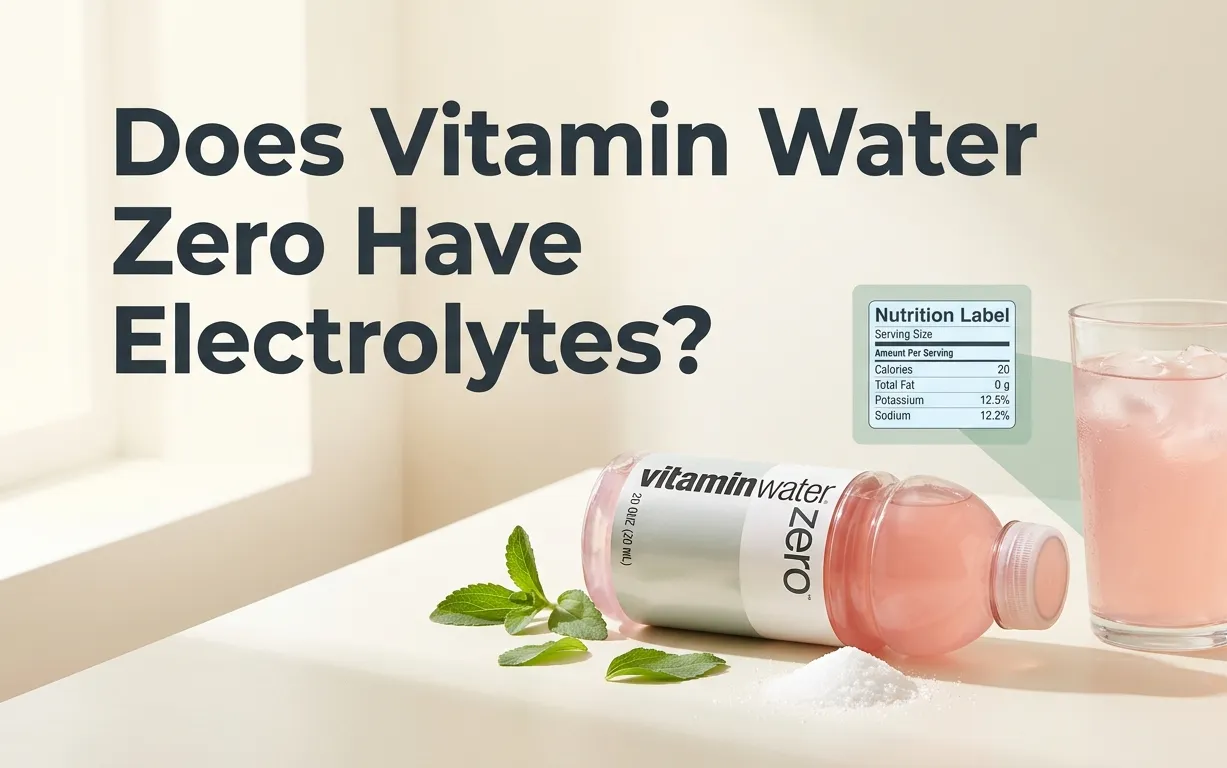
Vitamin Water Zero does contain electrolytes, specifically potassium, magnesium, and calcium, but the amounts per 20-ounce bottle are minimal. A full bottle delivers roughly 50 to 150 milligrams of potassium, 10 to 30 milligrams of magnesium, and less than 10 milligrams of sodium. These figures represent 1% to 3% of the daily Adequate Intake for potassium and a functionally negligible sodium contribution for hydration purposes.
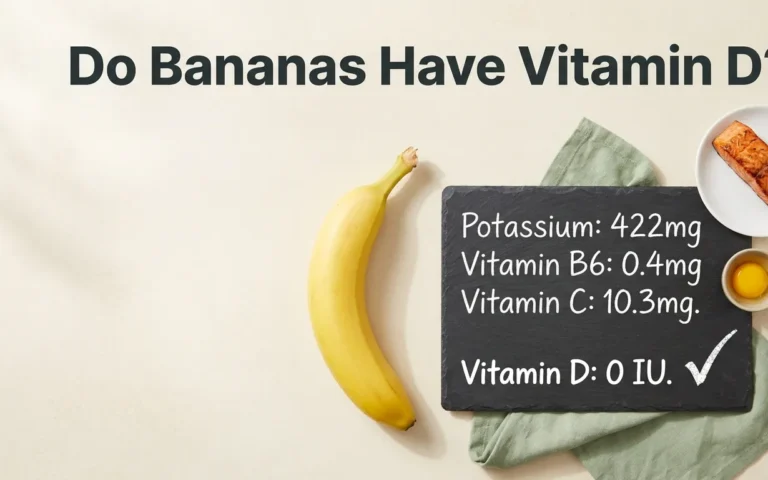
The National Academies of Sciences, Engineering, and Medicine set the Adequate Intake for potassium at 3,400 milligrams per day for men and 2,600 milligrams for women. The 50 to 150 milligrams in a full bottle of Vitamin Water Zero supplies at most 4% to 6% of that target. For comparison, a medium banana delivers approximately 422 milligrams of potassium. You would need to drink roughly three to eight bottles of Vitamin Water Zero to match the potassium content of a single banana.
This article pulls the exact nutrition panel numbers, names the specific electrolyte salts on the ingredient list, and compares Vitamin Water Zero’s hydration capability to plain water and to functional electrolyte drinks like Gatorade Zero and Pedialyte. You will finish knowing whether this drink hydrates you any better than tap water and whether the electrolyte label is a meaningful nutritional feature or a marketing detail.
Does vitamin water zero have electrolytes
Yes, Vitamin Water Zero contains added electrolytes in the form of potassium phosphate, magnesium lactate, and calcium lactate. These are the specific chemical salts listed on the ingredient panel. The drink is not electrolyte-free, but the electrolyte concentration is substantially lower than what is found in sports drinks, oral rehydration solutions, or even coconut water.
The word “electrolytes” on the label is not false. The bottle does contain dissolved mineral salts that dissociate into ions in solution. Potassium ions (K+) from the potassium phosphate, magnesium ions (Mg2+) from the magnesium lactate, and calcium ions (Ca2+) from the calcium lactate are all present in the liquid. These are the same ion species that your nerves, muscles, and heart rely on for electrical signaling. The question is not whether they are present. It is whether they are present at physiologically relevant doses.
The issue is quantity. Electrolyte function in the body depends on concentration gradients and absolute amounts. A 20-ounce bottle of Vitamin Water Zero contains approximately 50 to 150 milligrams of potassium. Human sweat contains approximately 200 milligrams of potassium per liter, and a one-hour workout in moderate heat produces roughly 0.5 to 1 liter of sweat. That workout depletes 100 to 200 milligrams of potassium. A single bottle of Vitamin Water Zero might replace the potassium lost, but it provides essentially zero sodium, and sodium is the primary electrolyte lost in sweat at roughly 900 milligrams per liter. The electrolyte profile is mismatched to the primary electrolyte demand of exercise hydration.
- Potassium: Present. Source: potassium phosphate. Approx 50-150 mg per 20 oz bottle.
- Magnesium: Present. Source: magnesium lactate. Approx 10-30 mg per 20 oz bottle.
- Calcium: Present. Source: calcium lactate. Approx 10-30 mg per 20 oz bottle.
- Sodium: Essentially absent. Less than 10 mg per 20 oz bottle.
- Chloride: Not added as a separate ingredient. Trace amounts may be present.
What is vitamin water zero sweetened with
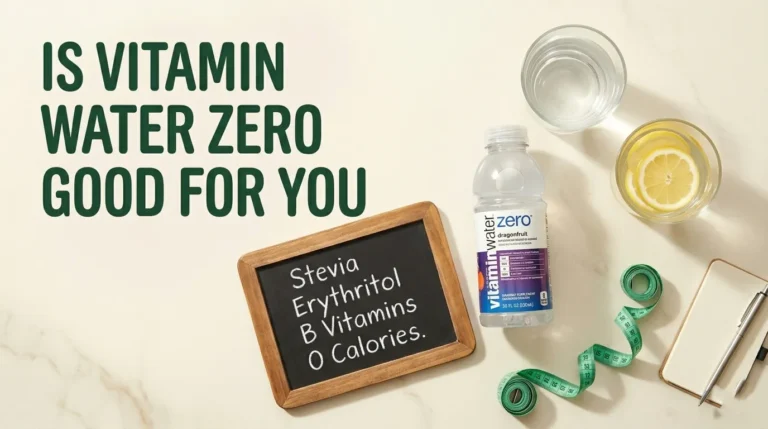
Vitamin Water Zero is sweetened with a combination of erythritol, stevia leaf extract (steviol glycosides), and in some flavor variants, monk fruit extract (mogrosides). These three sweeteners function as a zero-calorie sugar replacement system. No aspartame, sucralose, acesulfame potassium, or saccharin is used in any Vitamin Water Zero formulation currently sold in the United States as of 2026.
Erythritol is the bulk sweetener and provides the volume, mouthfeel, and body that sugar would otherwise contribute. It is a sugar alcohol produced through fermentation of glucose by yeast, and it delivers roughly 0.24 calories per gram, which is 6% of sugar’s caloric density. The FDA classifies erythritol as Generally Recognized as Safe (GRAS). A 20-ounce bottle of Vitamin Water Zero contains approximately 4 to 6 grams of erythritol, which contributes the 4 to 6 grams of total carbohydrate listed on the nutrition facts panel.
Stevia leaf extract contributes the high-intensity sweetness that erythritol lacks on its own. Steviol glycosides are 200 to 400 times sweeter than sucrose and are extracted from the leaves of the Stevia rebaudiana plant. Monk fruit extract, used in some Vitamin Water Zero flavors, is derived from Siraitia grosvenorii and is 150 to 250 times sweeter than sugar. Both are plant-derived, zero-calorie, and classified as GRAS by the FDA. This sweetener blend is what allows the label to state “sweetened with stevia” and “no artificial sweeteners” while still delivering a sugar-like sweetness with zero grams of sugar.
- Erythritol: Sugar alcohol. Bulk sweetener. 4-6 g per bottle. 0.24 cal/g. GRAS.
- Stevia leaf extract: Steviol glycosides. High-intensity sweetener. 200-400x sweeter than sugar. GRAS.
- Monk fruit extract: Mogrosides. High-intensity sweetener. 150-250x sweeter than sugar. Used in select flavors. GRAS.
- Not present: Aspartame, sucralose, acesulfame potassium, saccharin, sugar, high fructose corn syrup.
Key Takeaway: Vitamin Water Zero uses erythritol and stevia, two sweeteners that qualify as “natural” under current FDA labeling guidance. It is not artificially sweetened in the regulatory sense, though the sweetener processing is industrial.
Does vitamin water zero have artificial sweeteners
Vitamin Water Zero does not contain artificial sweeteners as defined by the FDA’s food additive categories. The sweeteners used are erythritol (fermentation-derived sugar alcohol), stevia leaf extract (plant-derived steviol glycosides), and monk fruit extract (plant-derived mogrosides). None of these appear on the FDA’s list of artificial sweeteners, which includes aspartame, sucralose, acesulfame potassium, neotame, and saccharin.
The distinction between “artificial” and “natural” in this context is regulatory, not necessarily nutritional. Erythritol occurs naturally in small amounts in fruits like pears and watermelon, but the erythritol in Vitamin Water Zero is produced industrially by fermenting glucose with Moniliella pollinis yeast. Steviol glycosides are extracted from stevia leaves using water or alcohol, then purified. Monk fruit extract undergoes similar extraction and concentration. These processes are identical in principle to the extraction of sugar from sugar beets or vanilla extract from vanilla beans.
Whether the consumer considers these sweeteners “artificial” is a matter of personal definition rather than FDA classification. The ingredient panel does not list aspartame, sucralose, or any other synthetic sweetener. If your definition of artificial sweetener includes only chemically synthesized compounds that do not exist in nature, Vitamin Water Zero is free of them. If your definition includes any sweetener that undergoes significant industrial processing regardless of origin, the erythritol and purified stevia extract may fall into a gray area.
- FDA artificial sweeteners (absent): Aspartame, sucralose, acesulfame K, neotame, saccharin.
- Sweeteners present: Erythritol (fermentation), steviol glycosides (stevia extraction), mogrosides (monk fruit extraction).
- Regulatory status: All present sweeteners are GRAS. None are on the FDA artificial sweetener list.
- Consumer interpretation: “Natural” by FDA labeling guidance. Industrially processed in practice.
Does vitamin water zero have aspartame
No, Vitamin Water Zero does not contain aspartame. The sweetener system relies on erythritol, stevia leaf extract, and monk fruit extract. Aspartame is not listed on the ingredient panel of any current Vitamin Water Zero flavor sold in the United States.
This is a deliberate formulation choice by Glaceau, the Coca-Cola-owned company that produces Vitamin Water. The brand has positioned Vitamin Water Zero as a “naturally sweetened” product, which aspartame, an artificial dipeptide sweetener (L-aspartyl-L-phenylalanine methyl ester), would contradict. Aspartame is approximately 200 times sweeter than sucrose and appears in many other zero-calorie beverages, including Diet Coke and Coke Zero Sugar, but it is excluded from the Vitamin Water Zero formulation.
The absence of aspartame matters for two specific populations. Individuals with phenylketonuria (PKU), a rare genetic disorder that impairs the metabolism of the amino acid phenylalanine, must avoid aspartame because it releases phenylalanine upon digestion. Vitamin Water Zero is safe for individuals with PKU because it contains no aspartame and no other phenylalanine source. People who experience headaches or other subjective symptoms attributed to aspartame consumption can also consume Vitamin Water Zero without aspartame exposure, though the clinical evidence linking aspartame to headaches in the general population is mixed and not consistently replicated in blinded trials.
- Aspartame: Not present in any Vitamin Water Zero flavor.
- PKU safety: Vitamin Water Zero is PKU-safe. No phenylalanine source.
- Alternative sweeteners used: Erythritol, stevia, monk fruit extract.
- Other artificial sweeteners absent: Sucralose, acesulfame K, saccharin.
Vitamin water zero electrolytes potassium sodium magnesium amounts
A 20-ounce bottle of Vitamin Water Zero contains approximately 50 to 150 milligrams of potassium, 0 to 10 milligrams of sodium, and 10 to 30 milligrams of magnesium, with 10 to 30 milligrams of calcium rounding out the electrolyte panel. These amounts vary slightly by flavor because different flavor concentrates may contribute trace mineral content, but the variation is within the ranges listed.
To put these numbers in context, the NIH Office of Dietary Supplements sets the potassium Adequate Intake at 3,400 milligrams per day for adult men and 2,600 milligrams for adult women. The 50 to 150 milligrams in a full bottle supplies 1.5% to 5.8% of a man’s daily potassium target. The magnesium content of 10 to 30 milligrams supplies 2.5% to 7.5% of the adult magnesium RDA (400 mg for men, 310 mg for women). The sodium content, at less than 10 milligrams per bottle, is functionally zero compared to the 1,500 milligram Adequate Intake.
Human sweat contains approximately 900 milligrams of sodium per liter and 200 milligrams of potassium per liter. A one-hour workout in moderate heat produces roughly 0.5 to 1.0 liters of sweat, which depletes 450 to 900 milligrams of sodium and 100 to 200 milligrams of potassium. Vitamin Water Zero replaces roughly 0% of the sodium loss and 25% to 150% of the potassium loss. The sodium deficit is the more urgent concern for post-exercise rehydration, and Vitamin Water Zero addresses it not at all.
Table: Vitamin Water Zero Electrolytes vs. Daily Needs and Sweat Loss
| Electrolyte | Amount per 20 oz Bottle | Daily Adequate Intake | % Daily AI per Bottle | Loss in 1L Sweat | % Sweat Loss Replaced |
|---|---|---|---|---|---|
| Potassium | 50-150 mg | 2,600-3,400 mg | 1.5-5.8% | ~200 mg | 25-75% |
| Sodium | 0-10 mg | 1,500 mg | <1% | ~900 mg | 0-1% |
| Magnesium | 10-30 mg | 310-420 mg | 2.5-7.5% | ~5-10 mg | 100-600% |
| Calcium | 10-30 mg | 1,000-1,200 mg | 1-3% | ~10-20 mg | 50-300% |
Key Takeaway: The electrolyte panel in Vitamin Water Zero is real but functionally trivial. The sodium content is nearly zero, and sodium is the electrolyte your body loses most during exercise and heat exposure.
Does vitamin water zero hydrate you vs water
Vitamin Water Zero hydrates you approximately as effectively as plain water for everyday, non-exercise hydration. The small amounts of dissolved minerals and erythritol give it a slightly higher osmolality than pure water, but the difference is not large enough to meaningfully change gastric emptying rate or fluid absorption compared to tap water. For someone sitting at a desk or running errands, Vitamin Water Zero and water are hydration equivalents.
The beverage cannot match the hydration efficiency of an oral rehydration solution (ORS), which uses a precise sodium-to-glucose ratio of approximately 3.2 grams of sodium and 13.5 grams of glucose per liter. This ratio activates the sodium-glucose cotransporter in the small intestine, which pulls water across the intestinal lining alongside the sodium and glucose molecules. Vitamin Water Zero contains neither sodium nor glucose in quantities sufficient to trigger this active transport mechanism.
For exercise hydration, the absence of sodium is the limiting factor. The sodium in sweat creates an osmotic gradient that draws water out of the vascular space. Replacing water without replacing sodium dilutes the remaining plasma sodium and can blunt the thirst drive before full rehydration is achieved. A 2020 study in the Journal of the International Society of Sports Nutrition found that beverages with less than 250 milligrams of sodium per liter did not improve fluid retention compared to plain water after exercise-induced dehydration. Vitamin Water Zero contains approximately 0 to 17 milligrams of sodium per liter, placing it far below the threshold for measurable rehydration advantage.
- Everyday hydration: Equivalent to plain water. No advantage, no disadvantage.
- Oral rehydration solution comparison: Vitamin Water Zero lacks the sodium-glucose cotransport mechanism. Inferior for clinical rehydration.
- Exercise hydration: Sodium content is below the 250 mg/L threshold for improved fluid retention. Water alone is equally effective.
- Hydration index: Estimated near 1.0 (same as water). ORS and milk score >1.0 due to sodium and macronutrient content.
Vitamin water zero nutrition facts label
The nutrition facts panel on a 20-ounce bottle of Vitamin Water Zero lists approximately 0 to 5 calories, 0 grams of fat, 0 grams of protein, and 4 to 6 grams of total carbohydrate, all of which come from erythritol. The sugar line reads 0 grams, and the added sugar line also reads 0 grams. The vitamin and mineral section lists several micronutrients at doses between 20% and 400% of the Daily Value.
The total carbohydrate value of 4 to 6 grams reflects the erythritol content. The FDA requires erythritol to be counted as a carbohydrate on the nutrition facts panel because it is chemically a sugar alcohol. However, erythritol is not metabolized for energy in the same way as sugar. It is absorbed into the bloodstream in the small intestine and excreted unchanged in the urine at a rate of approximately 90%. The net caloric contribution is 0 to 0.24 calories per gram, which is why the total calorie count on the bottle rounds to zero.
The micronutrient portion of the label is where Vitamin Water Zero diverges from plain water most visibly. The vitamin fortification typically includes vitamin C, several B-complex vitamins, and vitamin E at doses that range from 20% to over 400% of the Daily Value. These numbers are discussed in detail in the following section. The panel is rounded out by the mineral electrolyte listing for potassium, magnesium, and calcium, which appear at 0% to 2% of the Daily Value each.
- Calories: 0-5 per 20 oz bottle.
- Total Carbs: 4-6 g (all from erythritol).
- Sugars: 0 g. Added Sugars: 0 g.
- Protein: 0 g. Fat: 0 g.
- Vitamins: Vitamin C, B3, B5, B6, B12, E at supraphysiological doses.
- Electrolytes: Potassium, magnesium, calcium at <2% DV each. Sodium absent.
Vitamin water zero vitamins and minerals breakdown
A 20-ounce bottle of Vitamin Water Zero provides the following vitamin fortification, with approximate values based on the published Nutrition Facts panel: vitamin C (ascorbic acid) at 100 to 120 milligrams, representing 111% to 133% of the Daily Value. The RDA for vitamin C is 90 milligrams for men and 75 milligrams for women, so one bottle meets or slightly exceeds the full daily requirement for most adults.
The B-complex contribution includes niacin (vitamin B3 as niacinamide) at 20 to 25 milligrams, pantothenic acid (vitamin B5 as calcium pantothenate) at 5 to 10 milligrams, pyridoxine (vitamin B6 as pyridoxine hydrochloride) at 2 to 3 milligrams, and cyanocobalamin (vitamin B12) at 6 to 10 micrograms. The B12 dose is particularly high, representing 250% to 417% of the Daily Value. The vitamin E (alpha-tocopheryl acetate) content sits at 3 to 5 milligrams, approximately 20% to 33% of the Daily Value.
All B vitamin doses are well below the Tolerable Upper Intake Levels (UL) set by the NIH Office of Dietary Supplements. Vitamin B6 has a UL of 100 milligrams per day, and a bottle providing 2 to 3 milligrams contributes only 2% to 3% of that ceiling. Vitamin C has a UL of 2,000 milligrams per day. Niacin’s UL of 35 milligrams applies to the nicotinic acid form specifically, and the niacinamide form used in Vitamin Water Zero does not cause the flushing reaction that triggers the UL. The vitamin doses are supraphysiological, meaning they far exceed what the body needs to prevent deficiency, but they are not approaching toxic ranges for water-soluble vitamins.
Table: Vitamin Fortification per 20 oz Bottle
| Vitamin | Chemical Form | Amount | % Daily Value | Tolerable Upper Intake Level | Safety Note |
|---|---|---|---|---|---|
| Vitamin C | Ascorbic acid | 100-120 mg | 111-133% | 2,000 mg | Well below UL |
| Niacin (B3) | Niacinamide | 20-25 mg | 125-156% | 35 mg (nicotinic acid only) | Niacinamide form avoids flushing |
| Pantothenic Acid (B5) | Calcium pantothenate | 5-10 mg | 100-200% | None established | No known toxicity |
| Vitamin B6 | Pyridoxine HCl | 2-3 mg | 118-176% | 100 mg | Well below UL |
| Vitamin B12 | Cyanocobalamin | 6-10 mcg | 250-417% | None established | No known toxicity |
| Vitamin E | Alpha-tocopheryl acetate | 3-5 mg | 20-33% | 1,000 mg | Well below UL |
Erythritol in vitamin water zero safety
Erythritol is the primary sweetener in Vitamin Water Zero, present at approximately 4 to 6 grams per 20-ounce bottle. The FDA classifies erythritol as Generally Recognized as Safe (GRAS) and does not assign a Tolerable Upper Intake Level to it. The safety profile is well-established and differs from other sugar alcohols like sorbitol and maltitol in a key respect: erythritol is absorbed into the bloodstream in the small intestine rather than passing to the colon for fermentation.
Because approximately 90% of ingested erythritol is absorbed and excreted unchanged in the urine, it produces far less gastrointestinal distress than other sugar alcohols. Sorbitol and maltitol, by contrast, are poorly absorbed and travel to the colon, where gut bacteria ferment them, producing gas, bloating, and osmotic diarrhea. Erythritol largely bypasses this fermentation pathway.
The gastrointestinal tolerance threshold for erythritol is approximately 0.5 grams per kilogram of body weight in a single dose. For a 150-pound (68-kilogram) person, that threshold sits around 34 grams. A 20-ounce bottle delivering 4 to 6 grams falls well below this threshold for most people. However, individuals with irritable bowel syndrome (IBS) or a sensitivity to sugar alcohols may experience bloating or loose stools even at lower doses. A 2023 review in Nutrients confirmed erythritol’s superior GI tolerance profile compared to other polyols but noted that individual sensitivity varies and that high-dose consumption in combination with other FODMAPs can trigger symptoms in susceptible individuals.
- Erythritol content: 4-6 g per 20 oz bottle.
- Absorption: ~90% absorbed in small intestine. Excreted unchanged in urine.
- GI tolerance threshold: ~0.5 g/kg body weight. 34 g for a 150 lb person.
- IBS/ sensitivity note: Individuals with IBS or FODMAP sensitivity may experience symptoms at lower doses.
- Compared to other sugar alcohols: Better GI tolerance than sorbitol, maltitol, or xylitol.
Key Takeaway: The erythritol in a single bottle of Vitamin Water Zero is well below the GI distress threshold for most people. If you drink multiple bottles per day or have a sensitive gut, the cumulative sugar alcohol load becomes a consideration.
Vitamin water zero vs gatorade zero electrolyte comparison
Vitamin Water Zero and Gatorade Zero are both zero-sugar electrolyte-containing beverages, but their electrolyte profiles are fundamentally different. Gatorade Zero contains 160 milligrams of sodium and 45 milligrams of potassium per 12-ounce serving, or approximately 267 milligrams of sodium and 75 milligrams of potassium per 20 ounces. Vitamin Water Zero contains essentially zero sodium and roughly 50 to 150 milligrams of potassium per 20 ounces.
The sodium difference is the defining functional distinction. Gatorade Zero was formulated to replace the sodium lost in sweat during exercise. The 160 milligrams of sodium per 12-ounce serving, combined with the small amount of sugar alcohol and flavoring, provides the sodium stimulus for thirst and fluid retention that Vitamin Water Zero lacks. For post-exercise rehydration, Gatorade Zero’s sodium content makes it a measurably more effective rehydration beverage than Vitamin Water Zero.
For everyday, non-exercise hydration, the sodium advantage narrows. A person who is not sweating does not need sodium supplementation in their water. In this context, the two beverages are functionally equivalent as flavored, zero-calorie water alternatives. The choice between them for desk hydration comes down to taste preference, sweetener type (Gatorade Zero uses sucralose and acesulfame potassium, Vitamin Water Zero uses erythritol and stevia), and vitamin fortification preference.
Table: Vitamin Water Zero vs. Gatorade Zero Electrolytes (per 20 oz)
| Electrolyte | Vitamin Water Zero | Gatorade Zero | Notes |
|---|---|---|---|
| Sodium | 0-10 mg | 260-270 mg | Critical for sweat replacement |
| Potassium | 50-150 mg | 70-80 mg | Comparable, modest amounts |
| Magnesium | 10-30 mg | 0 mg | Vitamin Water Zero has added magnesium |
| Calcium | 10-30 mg | 0 mg | Vitamin Water Zero has added calcium |
| Sweetener | Erythritol, Stevia, Monk Fruit | Sucralose, Acesulfame K | Different sweetener systems |
| Vitamins | B-complex, C, E | B3, B6 | Vitamin Water Zero has broader vitamin panel |
Is vitamin water zero good for post workout hydration
Vitamin Water Zero is not an effective post-workout hydration beverage because it contains essentially zero sodium. The sodium lost through sweat during exercise must be replaced alongside water to restore plasma volume and maintain the thirst drive that guides complete rehydration. A 20-ounce bottle of Vitamin Water Zero contains less than 10 milligrams of sodium, while a one-hour moderate-intensity workout can deplete 450 to 900 milligrams of sodium through sweat.
Post-workout rehydration requires three things: water to replace the lost fluid volume, sodium to replace the primary electrolyte lost in sweat and to hold that water in the vascular space, and carbohydrates to replenish muscle glycogen if the workout was prolonged or intense. Vitamin Water Zero provides only the water. It provides neither the sodium nor the carbohydrates needed for a functional recovery drink.
If you finish a workout and reach for a Vitamin Water Zero, you will rehydrate the water component of your sweat loss, but your plasma sodium concentration will drift downward because you are replacing water without its accompanying salt. This dilution can suppress the thirst drive before full volume restoration is achieved. A better post-workout choice is plain water paired with a salty snack, a sports drink with at least 250 milligrams of sodium per liter, or an electrolyte tablet added to water. A registered dietitian specializing in sports nutrition can recommend a specific post-exercise electrolyte strategy based on your sweat rate and sweat sodium concentration.
- Sodium replacement: Vitamin Water Zero provides none. Post-workout requires 450-900 mg sodium per liter of sweat lost.
- Fluid retention: Without sodium, water is excreted more rapidly. Rehydration is incomplete.
- Better post-workout options: Water with a salty snack, Gatorade Zero, electrolyte tablets, or an oral rehydration solution for heavy sweat losses.
- Acceptable for: Light, short-duration exercise with minimal sweat loss. Not for prolonged or high-intensity training.
Can you drink vitamin water zero when sick
Vitamin Water Zero can be consumed during mild illness for comfort hydration, but it is not a suitable replacement for an oral rehydration solution (ORS) like Pedialyte when you are losing fluids through vomiting, diarrhea, or fever. The reason is the same sodium deficit that limits its post-workout utility. Illness-related dehydration involves electrolyte loss, particularly sodium and chloride, and Vitamin Water Zero provides none of the former and none of the latter.
The World Health Organization’s oral rehydration solution formula contains approximately 2,600 milligrams of sodium and 1,500 milligrams of potassium per liter, along with glucose at a specific ratio that drives water absorption. A 20-ounce bottle of Vitamin Water Zero contains roughly 0 milligrams of sodium and 50 to 150 milligrams of potassium. The sodium difference is not a matter of degree. It is a difference in kind between a product designed for clinical rehydration and a flavored water with trace minerals.
For a mild cold or a day when you are slightly under the weather but not experiencing significant fluid loss, Vitamin Water Zero is a reasonable way to increase fluid intake if the taste encourages you to drink more than you would plain water. The vitamin C content (100 to 120 milligrams) meets the daily requirement but does not provide a therapeutic benefit above that, as vitamin C supplementation has not been shown to reduce cold duration at the doses present in the drink. For clinical dehydration from gastrointestinal illness or high fever, use an oral rehydration solution and consult a physician if symptoms persist.
- Mild illness (no vomiting/diarrhea): Acceptable for comfort hydration. The flavor may encourage increased fluid intake.
- Vomiting or diarrhea: Not appropriate. Sodium content is inadequate. Use Pedialyte or WHO ORS.
- Fever with significant sweating: Sodium loss is elevated. Vitamin Water Zero is insufficient. Pair with a sodium source.
- Vitamin C note: Meets daily requirement. Does not provide therapeutic cold-fighting benefit at this dose.
Key Takeaway: Vitamin Water Zero is a flavored water for easy days. When you are actively losing fluids and electrolytes through illness, it is the wrong tool. Reach for a product with sodium.
Does vitamin water zero have sugar
Vitamin Water Zero contains 0 grams of sugar and 0 grams of added sugar per 20-ounce bottle. The sweetness comes entirely from erythritol, stevia leaf extract, and monk fruit extract, none of which are classified as sugar by the FDA. The total carbohydrate content of 4 to 6 grams is entirely attributable to erythritol, a sugar alcohol that is metabolized differently from sugar and contributes no net sugar to the diet.
This zero-sugar formulation is consistent across all Vitamin Water Zero flavors. The regular Vitamin Water (non-Zero) contains sugar, typically 27 to 32 grams per 20-ounce bottle. The Zero line was created as the sugar-free counterpart. If you are standing at a convenience store cooler and want the sugar-free option, the bottle with “Zero” on the label and the white or light-colored cap is the one you want. The regular version has a darker label and does not say “Zero.”
The American Heart Association recommends a daily added sugar limit of 36 grams for men and 25 grams for women. A single 20-ounce regular Vitamin Water contains roughly 27 to 32 grams of sugar, which consumes 75% to 128% of those limits. Vitamin Water Zero contains none of that sugar. For someone who enjoys the Vitamin Water flavor profile and wants to eliminate added sugar from their beverage intake, the Zero version accomplishes that goal completely.
- Sugar: 0 g per 20 oz bottle.
- Added sugar: 0 g per 20 oz bottle.
- Regular Vitamin Water (non-Zero): 27-32 g sugar per 20 oz bottle.
- AHA daily limit comparison: Zero version uses 0% of limit. Regular version uses 75-128%.
Who should avoid vitamin water zero
Most healthy adults can consume Vitamin Water Zero without issue, but several specific groups should limit or avoid it. Individuals with irritable bowel syndrome (IBS) or documented sensitivity to sugar alcohols may experience bloating, gas, or diarrhea from the 4 to 6 grams of erythritol per bottle. While erythritol is better tolerated than other sugar alcohols, it is not universally symptom-free. Someone following a low-FODMAP diet under the guidance of a registered dietitian should note that erythritol is generally considered low-FODMAP but may still trigger symptoms in highly sensitive individuals.
People with chronic kidney disease who are on a potassium-restricted diet should count the 50 to 150 milligrams of potassium per bottle against their daily potassium budget. A nephrologist or renal dietitian prescribes a specific potassium limit based on kidney function and serum potassium levels. For most kidney patients, 150 milligrams is a modest contribution, but it must be tracked alongside other dietary potassium sources.
Individuals who experience migraine headaches triggered by sugar alcohols or stevia should avoid Vitamin Water Zero until they have determined their personal tolerance. While erythritol and stevia are not established migraine triggers in the general population, anecdotal reports exist, and individual sensitivity varies. A headache specialist or neurologist can help identify specific dietary triggers through a structured elimination and reintroduction protocol.
- IBS or sugar alcohol sensitivity: Erythritol may cause GI symptoms at the 4-6 g dose.
- Chronic kidney disease: Potassium content (50-150 mg) must be counted against prescribed limit.
- Migraine with food triggers: Erythritol and stevia are anecdotal triggers for a subset of individuals.
- Pregnancy/Breastfeeding: Generally recognized as safe. Erythritol and stevia cross the placenta minimally.
- Children: Not formulated for children. Electrolyte profile inappropriate for pediatric needs.
How to read a vitamin water zero nutrition label
To accurately read a Vitamin Water Zero nutrition label, start by confirming the serving size and the servings per container. A 20-ounce bottle is typically listed as one serving, but this is not universal across all bottle sizes. If a bottle lists 2.5 servings per container and you drink the entire bottle, multiply every number on the panel by 2.5.
Next, verify the sugar and calorie lines. The label should read 0 grams of sugar, 0 grams of added sugar, and 0 to 5 calories. If it does not, you are holding a regular Vitamin Water, not the Zero version. The total carbohydrate line will show 4 to 6 grams, all from erythritol. This carbohydrate contribution is metabolically distinct from sugar and should not be counted as net carbs on a ketogenic or low-carbohydrate diet.
Scan the ingredient list for the sweeteners: erythritol, stevia leaf extract, and possibly monk fruit extract. Confirm that aspartame, sucralose, and acesulfame potassium do not appear if you are specifically avoiding those. Check the vitamin and mineral section for the B-complex, vitamin C, and vitamin E percentages. These numbers are high but safe for water-soluble vitamins. If you take additional supplements, verify that your total daily intake of B6 remains below the 100-milligram UL.
- Step 1: Confirm serving size. 20 oz = 1 serving.
- Step 2: Check sugar line. Must read 0 g.
- Step 3: Note total carbs (4-6 g from erythritol). Not metabolized as sugar.
- Step 4: Scan ingredients for sweetener type. Erythritol, stevia, monk fruit. No aspartame.
- Step 5: Check vitamin percentages. Note B6, B12, and C totals if taking additional supplements.
Vitamin water zero keto and diet compatibility
Vitamin Water Zero is compatible with a ketogenic diet. The 4 to 6 grams of total carbohydrates per 20-ounce bottle come entirely from erythritol, which has a glycemic index of zero and does not raise blood glucose or insulin levels. On a ketogenic diet, erythritol is typically subtracted from the total carbohydrate count to calculate net carbs, making the net carbohydrate content of a bottle effectively zero grams.
The sweeteners used (erythritol, stevia, monk fruit) are all keto-approved because they do not impact ketosis through insulin signaling or glucose elevation. This distinguishes Vitamin Water Zero from beverages sweetened with maltitol or sorbitol, which have higher glycemic indices and can disrupt ketosis in some individuals. For intermittent fasting, Vitamin Water Zero is technically non-caloric and should not break a fast in the metabolic sense. However, the sweet taste may trigger a cephalic phase insulin response in some individuals, a small anticipatory insulin release mediated by the vagus nerve upon tasting sweetness. Whether this insulin pulse is metabolically relevant during a fast is debated and likely varies by individual.
For low-calorie diets, Vitamin Water Zero is essentially a free beverage. At 0 to 5 calories per bottle, it contributes negligible energy. The primary dietary consideration is not the calorie content but the artificial sweetener exposure, which is a separate long-term health question that the Academy of Nutrition and Dietetics considers neutral when non-nutritive sweeteners replace added sugar in the diet.
- Keto: Compatible. Net carbs effectively zero. Erythritol subtracted from total carbs.
- Intermittent Fasting: Technically non-caloric. Cephalic insulin response is a theoretical concern.
- Low-Calorie: Essentially zero-calorie. Free beverage choice.
- Paleo: Not Paleo-compatible due to industrial sweetener processing, though individual interpretation varies.
Frequently Asked Questions About Vitamin Water Zero Electrolytes
Does Vitamin Water Zero actually have electrolytes in it?
Yes, it contains potassium phosphate, magnesium lactate, and calcium lactate.
However, the amounts are very low. A 20-ounce bottle provides only 50 to 150 milligrams of potassium and less than 10 milligrams of sodium.
It contains electrolytes in the labeling sense but not in the functional, hydration-relevant sense for exercise or illness recovery.
Is Vitamin Water Zero sweetened with aspartame?
No, Vitamin Water Zero does not contain aspartame.
It is sweetened with erythritol, stevia leaf extract, and monk fruit extract.
Individuals with phenylketonuria (PKU) can safely consume Vitamin Water Zero because it contains no phenylalanine source.
Does Vitamin Water Zero hydrate you as well as water?
For everyday, non-exercise hydration, Vitamin Water Zero hydrates approximately as effectively as plain water.
It lacks the sodium content necessary to provide a hydration advantage over water during or after exercise.
For clinical dehydration from illness, an oral rehydration solution is vastly superior.
How much potassium is in Vitamin Water Zero?
A 20-ounce bottle contains approximately 50 to 150 milligrams of potassium.
This represents 1.5% to 5.8% of the daily Adequate Intake for adults.
A medium banana provides roughly 422 milligrams, which is three to eight times more potassium than a bottle of Vitamin Water Zero.
Can I drink Vitamin Water Zero after a workout?
You can, but it will not replace the sodium lost in sweat.
A one-hour workout can deplete 450 to 900 milligrams of sodium, and Vitamin Water Zero contains essentially none.
Pair it with a salty snack or choose a sports drink with at least 250 milligrams of sodium per liter instead.
Is Vitamin Water Zero good for you when you are sick?
For a mild cold with no vomiting or diarrhea, it can help you stay hydrated if the taste encourages you to drink.
For illness involving vomiting, diarrhea, or significant fever, it is not appropriate because it lacks the sodium and glucose needed for clinical rehydration.
Use an oral rehydration solution like Pedialyte and consult a physician if dehydration symptoms persist.
The electrolyte question on Vitamin Water Zero resolves to this: yes, the bottle contains potassium, magnesium, and calcium salts in detectable amounts, and no, those amounts do not make it a functional electrolyte drink for anything beyond casual everyday hydration. The zero-sodium formulation means that post-workout, post-illness, or hot-day hydration demands a different product, one that actually puts sodium back into your bloodstream alongside the water.
You now know exactly what is in the bottle. Erythritol and stevia for sweetness, a B-complex and vitamin C panel that far exceeds your daily requirements, and an electrolyte profile that is chemically present but physiologically trivial for any situation where electrolytes actually matter. If you drink Vitamin Water Zero because you enjoy the taste and want a zero-sugar flavored water, the nutrition facts support that choice. If you drink it because you believe it is hydrating you better than water or replacing what you lost at the gym, the numbers on the label tell a different story. Drink it for the right reasons, and when you need real electrolytes, reach for something with sodium in it.