Does Zucchini Have Vitamin K? 2026 Complete Vegetable Guide
Zucchini does contain vitamin K, specifically as phylloquinone (vitamin K1), with one cup of raw sliced zucchini providing 5.3 micrograms, which is about 4% of the daily Adequate Intake for adult women and 6% for adult men. That amount places zucchini firmly in the low vitamin K vegetable category, making it a safe and manageable choice for most people, including those who take the blood thinner warfarin.
What surprises many people is that vitamin K content varies wildly across the produce section. A cup of raw spinach delivers roughly 145 micrograms of vitamin K while a cup of raw zucchini delivers 5.3 micrograms. That’s a 27-fold difference between two green vegetables that look like they should be nutritionally similar. The NIH Office of Dietary Supplements maintains the definitive reference values for vitamin K content in foods, and the USDA FoodData Central database records these numbers with precision down to the microgram level.
This guide answers the vitamin K question for zucchini and more than 15 other vegetables, with a clear ranking chart that shows you exactly which vegetables are low, moderate, and high in vitamin K. You’ll learn the chemical form name (phylloquinone), understand why the warfarin interaction matters and how to manage it, and walk away with practical knowledge for consistent vitamin K intake whether you’re managing a medication or simply tracking your nutrient intake.
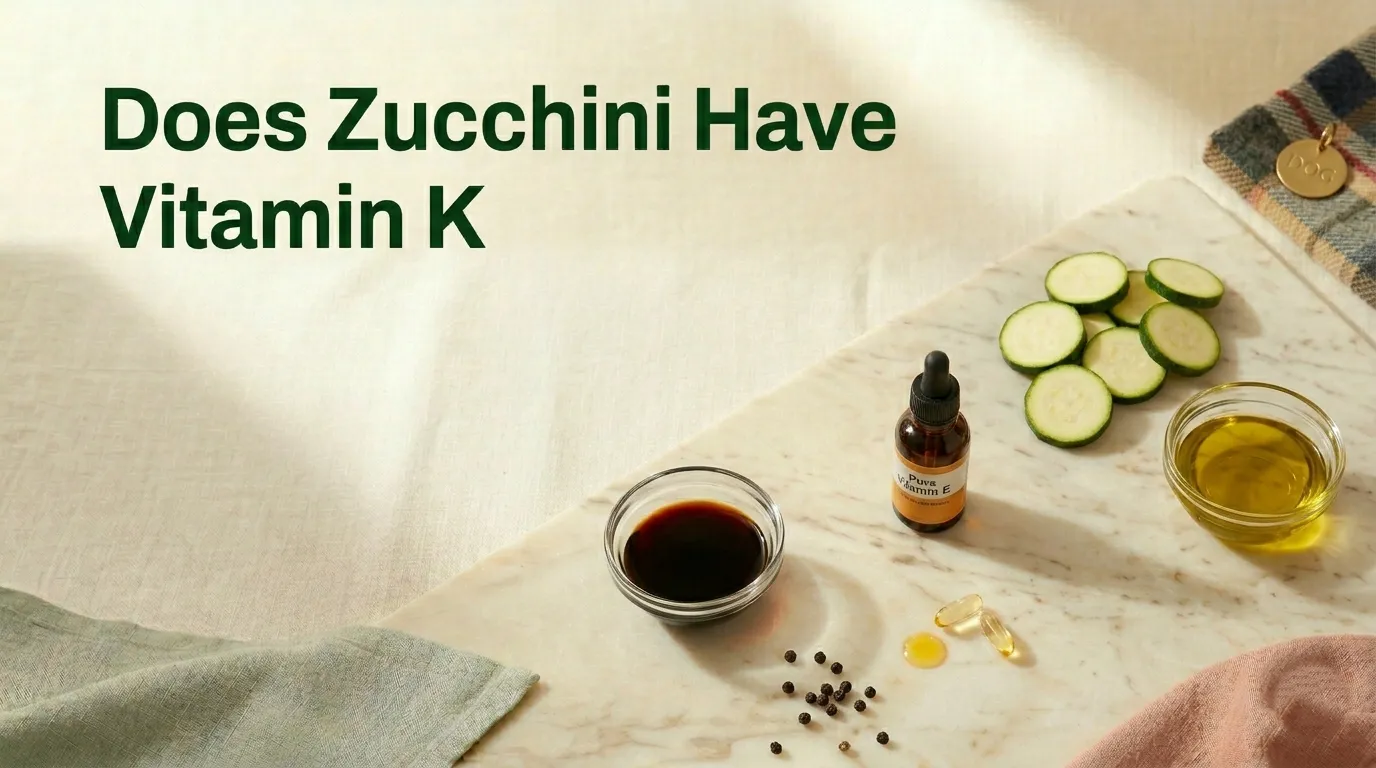
Does Zucchini Have Vitamin K
Zucchini contains vitamin K in the form of phylloquinone, which is the plant-based form of vitamin K also known as vitamin K1. The vitamin K is concentrated primarily in the green skin of the zucchini, with the lighter flesh containing lesser amounts. This distribution pattern is consistent across green vegetables. The chlorophyll in the green parts of plants correlates with phylloquinone content because both compounds share early steps in their biosynthetic pathways.
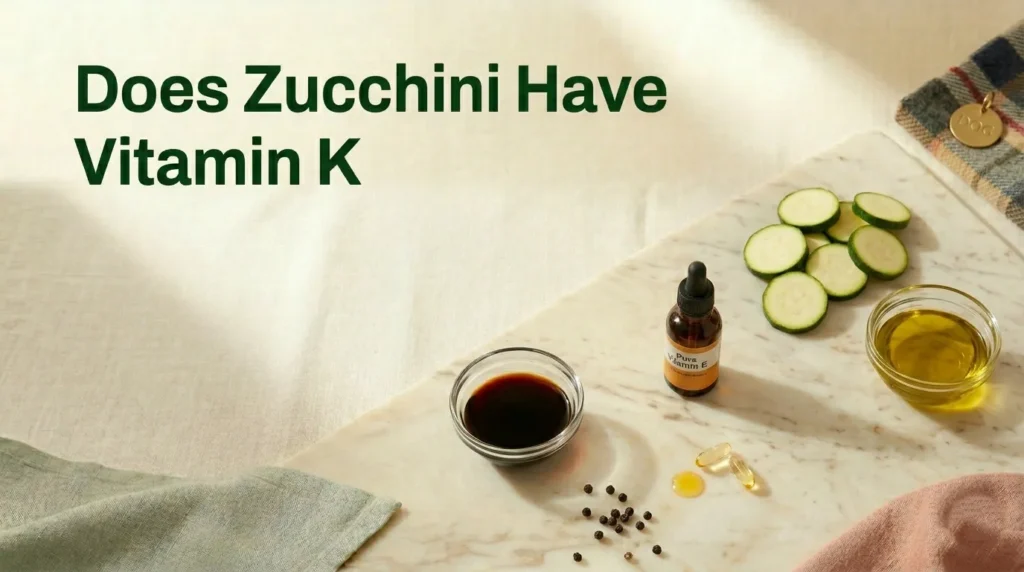
Phylloquinone in zucchini is a fat-soluble vitamin, which means it requires dietary fat for optimal absorption. Zucchini itself contains negligible fat at 0.4 grams per cup. When you eat raw zucchini alone, the vitamin K absorption efficiency is lower than when you consume it with a fat source. Adding olive oil, cooking in butter, or including zucchini as part of a meal that contains fat from other foods improves the fraction of that 5.3 micrograms that actually enters your bloodstream.
The vitamin K content of zucchini is not affected by the variety. Green zucchini and yellow summer squash contain similar amounts of phylloquinone because the biosynthetic pathway for vitamin K operates independently of the pigment pathways that determine skin color. The USDA FoodData Central database records values that are comparable between zucchini varieties, with yellow squash showing approximately 4 to 5 micrograms per cup, nearly identical to green zucchini.
The seeds of zucchini contain negligible vitamin K. The edible skin and the flesh directly beneath it contain essentially all of the phylloquinone present in the vegetable. Since zucchini is almost always consumed with the skin intact, peeling does not factor into the vitamin K calculation for typical consumption patterns.
How Much Vitamin K in Zucchini
One cup of raw sliced zucchini (124 grams) provides 5.3 micrograms of vitamin K, which equals 4% of the 120-microgram daily Adequate Intake for adult men and 6% of the 90-microgram Adequate Intake for adult women according to USDA FoodData Central data. One cup of cooked sliced zucchini (180 grams) provides slightly more at approximately 7 to 8 micrograms due to water loss during cooking concentrating the fat-soluble vitamin.
The per-serving amount can be broken down further for practical portioning. A half-cup serving of raw zucchini provides roughly 2.7 micrograms of vitamin K. A whole medium zucchini, which typically weighs about 200 grams and yields approximately 1.5 cups sliced, provides about 8 micrograms of vitamin K. These amounts are small enough that zucchini can be eaten freely in normal food quantities without meaningfully impacting total daily vitamin K intake for most people.
For comparison purposes, the Adequate Intake for vitamin K is 90 micrograms per day for adult women and 120 micrograms per day for adult men according to the NIH Office of Dietary Supplements. A single cup of raw zucchini covers about 4 to 6% of that requirement. You would need to eat roughly 17 cups of raw zucchini to meet the daily Adequate Intake for vitamin K solely from this vegetable, which illustrates how low in vitamin K zucchini truly is.
Cooking method affects the vitamin K amount per cup but not per starting quantity. Boiling zucchini may leach a small amount of phylloquinone into the cooking water, though as a fat-soluble vitamin, the losses are minimal compared to water-soluble vitamins. Sautéing or roasting with oil both concentrates the vitamin K through water evaporation and improves absorption through the added fat. The net effect is that a cup of cooked zucchini provides slightly more bioavailable vitamin K than a cup of raw zucchini.
| Serving | Amount | Vitamin K (mcg) | % AI Women (90mcg) | % AI Men (120mcg) |
|---|---|---|---|---|
| Raw, 1/2 cup sliced | 62g | 2.7mcg | 3% | 2% |
| Raw, 1 cup sliced | 124g | 5.3mcg | 6% | 4% |
| Cooked, 1 cup sliced | 180g | 7-8mcg | 8-9% | 6-7% |
| 1 whole medium, raw | 200g | 8.5mcg | 9% | 7% |
Is Zucchini High in Vitamin K
Zucchini is not high in vitamin K. It is classified as a low vitamin K vegetable, containing 5.3 micrograms per cup of raw slices compared to high vitamin K vegetables like kale which contains over 500 micrograms per cup. The distinction between low, moderate, and high vitamin K vegetables is clinically meaningful for people managing warfarin therapy.
The categorization system used by clinical dietitians and the Academy of Nutrition and Dietetics groups vegetables into three vitamin K tiers. Low vitamin K vegetables contain less than 30 micrograms per serving. Moderate vitamin K vegetables contain 30 to 80 micrograms per serving. High vitamin K vegetables contain more than 80 micrograms per serving. At 5.3 micrograms per cup, zucchini falls deep into the low category with substantial room to spare before reaching even the moderate threshold.
This classification matters because people taking warfarin are often incorrectly told to avoid all green vegetables. The accurate guidance from the Academy of Nutrition and Dietetics is that consistency of vitamin K intake matters more than absolute avoidance. Low vitamin K vegetables like zucchini can be eaten freely without disrupting anticoagulation, provided intake is relatively consistent from day to day. A person who eats a cup of zucchini four days a week should continue doing so rather than eating it some weeks and not others.
The low vitamin K status of zucchini makes it one of the safest vegetables for someone who needs to monitor vitamin K intake. It provides negligible vitamin K alongside valuable nutrients including vitamin C, potassium, and fiber without the pharmaceutical interaction risk that accompanies high vitamin K vegetables like spinach, kale, or collard greens.
Key Takeaway: Zucchini is a low vitamin K vegetable at 5.3mcg per cup. It is safe for people on warfarin when intake is consistent, and it does not meaningfully affect total daily vitamin K levels the way leafy greens do.
What Is Vitamin K
Vitamin K is a fat-soluble vitamin that exists in two natural forms: phylloquinone (vitamin K1) from plant sources and menaquinone (vitamin K2) from animal products and bacterial fermentation. The vitamin’s primary physiological role is enabling blood coagulation through the activation of clotting factors, and its name comes from the German word “Koagulation.”
The coagulation function operates through gamma-carboxylation, a chemical reaction that vitamin K enables. Specific glutamic acid residues on clotting factors II (prothrombin), VII, IX, and X must be carboxylated to bind calcium and become functional. Without vitamin K, these clotting factors are produced but remain inactive. Warfarin works by inhibiting vitamin K epoxide reductase, the enzyme that recycles vitamin K after it participates in carboxylation. This inhibition depletes active vitamin K and reduces functional clotting factor production, producing the anticoagulant effect.
Vitamin K also activates proteins outside the coagulation system. Osteocalcin, a protein secreted by osteoblasts in bone, requires vitamin K-dependent carboxylation to bind calcium and incorporate it into the bone mineral matrix. Matrix Gla protein, found in arterial walls, also requires vitamin K activation to inhibit vascular calcification. These non-coagulation functions explain why vitamin K research extends beyond blood clotting into bone density and cardiovascular health.
The Adequate Intake for vitamin K is 90 micrograms per day for adult women and 120 micrograms per day for adult men according to the NIH Office of Dietary Supplements. Unlike many other vitamins, there is no Tolerable Upper Intake Level established for vitamin K because adverse effects from high intake, whether from food or supplements, have not been documented in humans.
Phylloquinone Vitamin K1
Phylloquinone is the chemical name for vitamin K1, the plant-derived form of vitamin K found in zucchini and all other green vegetables. It contains a phytyl side chain attached to a naphthoquinone ring structure, and it is the primary dietary form of vitamin K in most human diets.
Phylloquinone is synthesized in the chloroplasts of green plants, where it functions as an electron carrier in photosystem I. This photosynthetic function explains why phylloquinone concentration correlates with chlorophyll content. Green leaves and green vegetables contain the most phylloquinone because they contain the most chloroplasts. Zucchini, with its pale green flesh and darker green skin, has a moderate chloroplast density and correspondingly moderate phylloquinone content.
Phylloquinone absorption from food follows the pathway of dietary fat absorption. Bile salts emulsify phylloquinone in the small intestine along with other fat-soluble nutrients. It is incorporated into mixed micelles, absorbed by enterocytes, packaged into chylomicrons, and transported through the lymphatic system into the bloodstream. The absorption efficiency of phylloquinone from vegetables ranges from 5% to 40% depending on the food matrix, the amount of co-consumed fat, and individual digestive function.
Phylloquinone differs from menaquinone (vitamin K2) structurally and functionally. Phylloquinone has a single saturated bond in its side chain while menaquinones have multiple unsaturated bonds. Phylloquinone is preferentially used by the liver for coagulation factor synthesis. Menaquinones, particularly menaquinone-7, circulate longer in the bloodstream and may be more available for extrahepatic tissues including bone and arterial walls.
Vitamin K Vegetables Chart
The vitamin K content of vegetables spans a 500-fold range from near-zero in mushrooms and cucumbers to over 800 micrograms per cup in cooked kale. The following chart organizes common vegetables by their vitamin K content per standard serving, using USDA FoodData Central reference values.
The chart uses a traffic light color coding system that registered dietitians frequently employ when teaching vitamin K management. Red indicates high vitamin K vegetables that require the most attention for consistent intake. Yellow indicates moderate vitamin K vegetables. Green indicates low vitamin K vegetables that are generally safe for unrestricted consumption even on warfarin, provided intake is reasonably consistent.
Cooking method affects vitamin K content per cup primarily through water loss rather than vitamin degradation. Cooked vegetables appear higher in vitamin K per cup because the serving weighs more after water evaporates. The actual amount of vitamin K in the starting raw vegetable does not increase with cooking. The table uses the most commonly consumed form of each vegetable, either raw or cooked.
| Vegetable (1 cup, raw unless noted) | Vitamin K (mcg) | Category |
|---|---|---|
| Cooked kale | 1,062mcg | High |
| Cooked spinach | 889mcg | High |
| Raw spinach | 145mcg | High |
| Cooked collard greens | 773mcg | High |
| Cooked turnip greens | 529mcg | High |
| Cooked broccoli | 220mcg | High |
| Cooked Brussels sprouts | 219mcg | High |
| Raw lettuce (romaine) | 48mcg | Moderate |
| Cooked asparagus | 80mcg | Moderate |
| Raw cabbage | 76mcg | Moderate |
| Raw peas | 25mcg | Low |
| Raw green beans | 15mcg | Low |
| Raw cauliflower | 16mcg | Low |
| Raw carrots | 13mcg | Low |
| Raw cucumber | 8mcg | Low |
| Raw zucchini | 5.3mcg | Low |
| Raw mushrooms | 0mcg | None detected |
Low Vitamin K Vegetables
Low vitamin K vegetables are those providing less than 30 micrograms of vitamin K per standard serving, and they include zucchini (5.3mcg per cup), cucumber (8mcg per cup), carrots (13mcg per cup), cauliflower (16mcg per cup), green beans (15mcg per cup), and mushrooms (0mcg per cup). These vegetables are generally safe for unrestricted consumption on warfarin when intake is consistent.
The low vitamin K vegetable category includes many of the most commonly consumed vegetables in the American diet. Potatoes, tomatoes, bell peppers, onions, corn, and eggplant all fall into the low vitamin K category with less than 20 micrograms per serving. A person eating a varied diet centered on these low vitamin K vegetables will have a stable daily vitamin K intake that does not fluctuate enough to affect INR significantly.
The clinical significance of the low vitamin K category is that these vegetables do not require the strict day-to-day consistency that high vitamin K vegetables demand. A warfarin patient who eats a cup of zucchini one day and no zucchini the next day will not experience a clinically meaningful INR shift from that variation alone. The vitamin K contribution from low vitamin K vegetables is too small to destabilize anticoagulation when intake varies by a serving or two from day to day.
For people who do not take warfarin, the distinction between low and high vitamin K vegetables is not clinically relevant because the body regulates vitamin K-dependent processes effectively across a wide range of intakes. Eating more vitamin K from vegetables is not harmful and does not cause excessive clotting. The Adequate Intake is a target for nutritional adequacy, not a threshold above which adverse effects occur.
High Vitamin K Vegetables
High vitamin K vegetables contain more than 80 micrograms of vitamin K per serving and include cooked kale (1,062mcg per cup), cooked spinach (889mcg per cup), cooked collard greens (773mcg per cup), cooked turnip greens (529mcg per cup), cooked broccoli (220mcg per cup), and cooked Brussels sprouts (219mcg per cup). These vegetables are nutritionally valuable but require consistent intake for people taking warfarin.
The extraordinarily high vitamin K content of dark leafy greens reflects their chloroplast density. Kale, spinach, collards, and other leafy greens are essentially concentrated chloroplast packages, and chloroplasts are where phylloquinone is synthesized and stored in the plant cell. A single cup of cooked kale provides over 10 times the daily Adequate Intake for vitamin K. This is not harmful for people not on anticoagulants. The body does not store excess phylloquinone efficiently, and there is no known toxicity from high dietary vitamin K intake.
The clinical guidance for people on warfarin is not to avoid high vitamin K vegetables entirely but to consume them consistently. A person who eats a cup of cooked broccoli three times per week has a stable baseline vitamin K intake that their warfarin dose is calibrated around. A person who eats no broccoli for two weeks and then eats a large portion of broccoli at a restaurant will experience a temporary increase in vitamin K that can partially reverse the warfarin effect and lower INR below the therapeutic range.
This consistency principle was developed by the Academy of Nutrition and Dietetics and is reflected in patient education materials from the Cleveland Clinic and Mayo Clinic anticoagulation services. The goal is not vitamin K avoidance. The goal is vitamin K stability. Telling patients to avoid all green vegetables is outdated, nutritionally harmful, and not supported by current clinical practice guidelines.
Key Takeaway: High vitamin K vegetables like kale and spinach are not forbidden on warfarin. They require consistent intake so the warfarin dose can be calibrated to a stable vitamin K baseline. Zucchini and other low vitamin K vegetables do not require this level of consistency because their contribution is too small to matter.
Does Cauliflower Have Vitamin K
Cauliflower contains vitamin K at 16 micrograms per cup of raw chopped cauliflower, placing it in the low vitamin K vegetable category according to USDA FoodData Central data. This amount is approximately three times the vitamin K content of zucchini per cup but still well within the low category below 30 micrograms per serving.
The vitamin K in cauliflower is phylloquinone, the same plant-based form found in all vegetables. The white color of cauliflower indicates low chlorophyll content, which correlates with lower phylloquinone levels compared to green vegetables. The small amount of vitamin K present is concentrated in the florets rather than the stem.
For someone comparing cauliflower to zucchini, both are low vitamin K vegetables that can be eaten freely within a consistent dietary pattern. Cauliflower provides about three times as much vitamin K per cup, but the absolute amount remains small enough that normal portion variation does not meaningfully affect total daily vitamin K intake. A cup of cauliflower at 16 micrograms covers about 13 to 18% of the daily Adequate Intake, compared to 4 to 6% for a cup of zucchini.
Cauliflower has gained popularity as a low-carbohydrate substitute for rice, pizza crust, and mashed potatoes. These cauliflower-based products concentrate the vegetable and may deliver more vitamin K per serving than a simple cup of florets. A cup of cauliflower rice made from processed raw cauliflower provides the same 16 micrograms as a cup of chopped florets, but a cauliflower pizza crust made from a full head of cauliflower could contain 50 to 80 micrograms depending on portion size.
Does Asparagus Have Vitamin K
Asparagus contains vitamin K at approximately 80 micrograms per cup of cooked asparagus spears, placing it in the moderate to high vitamin K vegetable category depending on the specific serving size and preparation method. A half-cup serving provides about 40 micrograms, which falls in the moderate range.
The vitamin K in asparagus is phylloquinone concentrated in the green tips of the spears, where chloroplast density is highest. The white or pale green base of the spear contains less vitamin K per gram. Cooking concentrates the vitamin K per cup because the spears shrink and lose water, allowing more asparagus to fit in a one-cup measure.
For comparison to zucchini, asparagus contains roughly 15 times more vitamin K per cooked cup (80mcg versus 5.3mcg). This difference is large enough to matter for someone on warfarin. A person who replaces a daily cup of zucchini with a daily cup of asparagus increases their vitamin K intake by about 75 micrograms, which is close to the entire daily Adequate Intake for women and over half for men.
Someone on warfarin who wants to eat asparagus should include it consistently in their dietary pattern rather than eating it sporadically. The asparagus contribution to total vitamin K intake is large enough that irregular consumption could affect INR. A registered dietitian can help determine how asparagus fits into an individual’s consistent vitamin K baseline.
How Much Vitamin K in Broccoli
Cooked broccoli contains 220 micrograms of vitamin K per cup, placing it solidly in the high vitamin K vegetable category. Raw broccoli contains 102 micrograms per cup. The difference between raw and cooked values reflects the concentration effect of water loss during cooking rather than an increase in actual vitamin K.
Broccoli’s vitamin K content makes it one of the most significant vegetable sources of phylloquinone in the typical American diet, ranking behind only leafy greens like kale, spinach, and collards. A single cup of cooked broccoli provides over twice the daily Adequate Intake for women and nearly twice for men. This high concentration is not a health concern for people not taking anticoagulants but is clinically meaningful for warfarin management.
The vitamin K in broccoli is distributed throughout the florets and the stem. The darker green florets contain more phylloquinone than the lighter stem, but the stem still contributes to the total. Broccoli rabe, a related but distinct vegetable, contains even more vitamin K at approximately 375 micrograms per cooked cup.
For someone comparing broccoli to zucchini, the difference is a factor of over 40. One cup of cooked broccoli at 220 micrograms versus one cup of raw zucchini at 5.3 micrograms represents a 41-fold difference in vitamin K content. This is why broccoli is classified as a high vitamin K vegetable that requires consistency for warfarin patients, while zucchini is a low vitamin K vegetable that can be eaten with less strict attention to day-to-day consistency.
How Much Vitamin K in Peas
Green peas contain 25 micrograms of vitamin K per cup of cooked peas, placing them near the top of the low vitamin K vegetable category according to USDA FoodData Central data. Raw peas contain slightly less at approximately 20 micrograms per cup.
Peas are legumes botanically, though they are consumed as a vegetable in culinary contexts. Their vitamin K content is moderate compared to green leafy vegetables but higher than many other non-leafy vegetables including zucchini, carrots, and cauliflower. The 25 micrograms per cup represents about 21 to 28% of the daily Adequate Intake, making peas a meaningful but not dominant contributor to total vitamin K intake.
The vitamin K in peas is phylloquinone distributed throughout the pea seed. The green color of peas indicates moderate chlorophyll content and correspondingly moderate phylloquinone levels. Frozen peas retain their vitamin K content well because freezing preserves the chloroplast structure and the phylloquinone within it.
For someone comparing peas to zucchini, peas contain roughly five times more vitamin K per cup. This difference is large enough that a warfarin patient who eats peas regularly should include them in their consistent intake pattern. Peas are not high enough in vitamin K to require the same level of attention as broccoli or spinach, but they are not low enough to be ignored the way zucchini can be.
Does Squash Have Vitamin K
Squash contains vitamin K, with the amount varying by variety. Summer squash including yellow squash and zucchini contains 4 to 5 micrograms per cup raw. Winter squash including butternut, acorn, and spaghetti squash contains 9 to 14 micrograms per cup cooked. All varieties fall within the low vitamin K vegetable category.
The difference in vitamin K content between summer and winter squash reflects their different botanical maturity. Summer squash are harvested immature with tender skin and higher water content. Winter squash are harvested mature with harder skin and denser flesh that concentrates nutrients including phylloquinone. The 9 to 14 micrograms per cup in cooked winter squash is still low enough that it does not raise clinical concern for warfarin management.
Spaghetti squash deserves specific mention because it is often consumed in larger portions as a pasta substitute. A typical serving of spaghetti squash might be 1.5 to 2 cups, delivering 15 to 28 micrograms of vitamin K. This is still within the low category below 30 micrograms but approaches the moderate threshold at the upper end of typical consumption.
Butternut squash at 14 micrograms per cup and acorn squash at 9 micrograms per cup are comparable to carrots and cauliflower in their vitamin K contribution. All squash varieties are safe low vitamin K vegetables that can be eaten freely by people monitoring vitamin K intake, with the same consistency principle applying as for all vegetables.
Key Takeaway: All squash varieties, including zucchini, yellow squash, butternut, acorn, and spaghetti squash, are low vitamin K vegetables. None approach the moderate or high categories, and all are safe for warfarin patients when intake is consistent.
Does Carrots Have Vitamin K
Carrots contain vitamin K at 13 micrograms per cup of raw chopped carrots, placing them in the low vitamin K vegetable category. The vitamin K is phylloquinone distributed throughout the carrot root, with slightly higher concentrations in the outer layers near the skin.
The orange color of carrots comes from beta-carotene, not chlorophyll. The low chlorophyll content of carrot roots correlates with low phylloquinone levels. Carrot greens, which are the leafy tops of the carrot plant, are a different story. Carrot tops are leafy greens with chlorophyll and phylloquinone concentrations comparable to parsley or spinach. They are edible but rarely consumed in significant quantities in the standard American diet.
Cooked carrots provide a similar amount of vitamin K per starting weight, with slightly more per cup due to water loss and shrinkage during cooking. A cup of cooked sliced carrots provides approximately 21 micrograms of vitamin K, still within the low category below 30 micrograms. The cooking process does not destroy vitamin K, and carrots retain their low vitamin K status regardless of preparation method.
For someone comparing carrots to zucchini, carrots contain roughly 2.5 times more vitamin K per cup. Both are low vitamin K vegetables. Both are safe for warfarin patients. The difference between 5.3 and 13 micrograms per cup is nutritionally trivial and clinically irrelevant for anticoagulation management.
Do Brussels Sprouts Have Vitamin K
Brussels sprouts contain vitamin K at 219 micrograms per cup cooked, making them one of the highest vitamin K vegetables available in the standard American diet. Raw Brussels sprouts contain approximately 156 micrograms per cup. They are firmly in the high vitamin K category.
The extraordinarily high vitamin K content of Brussels sprouts reflects their nature as miniature cabbage-like buds with dense, tightly packed leaves. Each sprout is essentially a concentrated cluster of chloroplast-rich leaf tissue. The vitamin K content per gram is comparable to broccoli and exceeds many other cruciferous vegetables.
For warfarin management, Brussels sprouts require the same consistency approach as kale, spinach, and broccoli. A person who eats Brussels sprouts regularly should continue doing so on a consistent schedule. A person who does not normally eat them should not add them sporadically. The vitamin K contribution from a single cup of Brussels sprouts exceeds the entire daily Adequate Intake for both men and women.
The comparison to zucchini is dramatic. One cup of cooked Brussels sprouts at 219 micrograms contains 41 times more vitamin K than one cup of raw zucchini at 5.3 micrograms. This illustrates why the distinction between low and high vitamin K vegetables matters clinically and why zucchini is such a safe choice for vitamin K monitoring.
Vitamin K Warfarin Interaction
Vitamin K directly opposes the anticoagulant effect of warfarin (Coumadin). Warfarin works by inhibiting vitamin K epoxide reductase, the enzyme that recycles vitamin K after it participates in gamma-carboxylation of clotting factors. When dietary vitamin K intake increases, more vitamin K is available to overcome this inhibition, and warfarin’s anticoagulant effect is partially reversed.
The interaction is predictable and dose-dependent. Warfarin dosing is calibrated to an individual’s baseline vitamin K intake. If that intake increases substantially, the INR drops below the therapeutic range and clotting risk increases. If intake decreases substantially, the INR rises above the therapeutic range and bleeding risk increases. The magnitude of INR change depends on the size of the dietary shift and the individual’s warfarin sensitivity.
The key clinical principle is not avoidance of vitamin K but consistency of intake. The Academy of Nutrition and Dietetics position on warfarin and diet states that patients should maintain consistent vitamin K intake rather than attempting to eliminate vitamin K from their diet. A stable intake allows the warfarin dose to be adjusted to the patient’s usual dietary pattern. Erratic intake makes stable anticoagulation impossible to achieve.
A person taking warfarin should have their INR monitored regularly by their prescribing physician, who may be a cardiologist, hematologist, or primary care provider managing anticoagulation. The frequency of INR monitoring depends on INR stability and can range from weekly to monthly. Any planned dietary change, including a significant shift in vegetable intake patterns, should be communicated to the prescribing physician before implementation so that additional INR monitoring can be scheduled.
Consistent Vitamin K Intake Warfarin
Consistent vitamin K intake while taking warfarin means consuming a similar amount of vitamin K from day to day and week to week, allowing the prescribed warfarin dose to maintain a stable INR within the therapeutic range. Consistency does not mean eating the exact same foods every day. It means maintaining a stable overall pattern.
The consistency principle applies most strictly to high vitamin K vegetables. A person who eats broccoli three times per week should continue doing so. A person who never eats spinach should not suddenly eat a large spinach salad. Low vitamin K vegetables like zucchini can vary more freely because their contribution to total vitamin K intake is too small to meaningfully affect INR.
A practical approach to consistency involves identifying which vegetables in your regular diet contribute meaningfully to vitamin K intake and keeping those consistent. For most people, the high-impact vegetables are the leafy greens: kale, spinach, collards, turnip greens, and to a lesser extent broccoli and Brussels sprouts. Zucchini, carrots, cauliflower, green beans, and cucumbers are low-impact vegetables that do not require strict day-to-day tracking.
The Cleveland Clinic anticoagulation clinic advises patients to keep a simple food log for one to two weeks to establish their baseline vitamin K intake pattern, then maintain that general pattern. A registered dietitian can review the food log and identify which vegetables are contributing meaningfully to vitamin K intake and which are essentially irrelevant to INR management.
Who Should Monitor Vitamin K Intake
Three groups of people should monitor their vitamin K intake: individuals taking warfarin (Coumadin) or other vitamin K antagonist anticoagulants, people with fat malabsorption disorders that may cause vitamin K deficiency, and parents of newborns who receive vitamin K injections at birth and do not need ongoing monitoring after the newborn period.
People taking warfarin are the primary group for whom dietary vitamin K monitoring matters. This includes individuals with atrial fibrillation, mechanical heart valves, history of deep vein thrombosis or pulmonary embolism, and certain clotting disorders. The monitoring goal is consistency rather than restriction. A physician who prescribes warfarin should provide specific INR targets and monitoring schedules.
People with conditions that impair fat absorption, including celiac disease, cystic fibrosis, chronic pancreatitis, and short bowel syndrome, may have difficulty absorbing fat-soluble vitamins including vitamin K. Monitoring for vitamin K deficiency in these populations involves prothrombin time measurement rather than dietary tracking. Supplementation may be medically necessary and should be managed by a gastroenterologist or primary care provider.
People not taking anticoagulants and without malabsorption disorders do not need to monitor vitamin K intake. The body regulates vitamin K-dependent processes effectively across a wide range of dietary intakes. High vitamin K intake from vegetables is safe. Low intake sufficient to meet the Adequate Intake supports normal coagulation. There is no clinical indication for vitamin K tracking in the general healthy population.
Key Takeaway: The only people who need to actively monitor dietary vitamin K intake are those on warfarin or related anticoagulants. For everyone else, eating a variety of vegetables regardless of vitamin K content is healthy and safe.
Frequently Asked Questions About Vitamin K in Vegetables
How much vitamin K is in a cup of zucchini?
A cup of raw sliced zucchini contains 5.3 micrograms of vitamin K, which is 4% of the daily Adequate Intake for men and 6% for women.
Cooked zucchini provides 7 to 8 micrograms per cup due to water loss during cooking concentrating the fat-soluble vitamin.
Zucchini is a low vitamin K vegetable that does not meaningfully affect total daily vitamin K intake.
Is zucchini safe to eat while taking warfarin?
Zucchini is safe to eat while taking warfarin because it contains only 5.3 micrograms of vitamin K per cup, a negligible amount for anticoagulation management.
The low vitamin K content means that normal day-to-day variation in zucchini consumption does not affect INR.
The Academy of Nutrition and Dietetics recommends consistency rather than avoidance, and zucchini’s low contribution makes consistency easy to maintain.
Which vegetables are highest in vitamin K?
The highest vitamin K vegetables are dark leafy greens, with cooked kale at 1,062 micrograms per cup, cooked spinach at 889 micrograms per cup, and cooked collard greens at 773 micrograms per cup.
Cooked broccoli at 220 micrograms and cooked Brussels sprouts at 219 micrograms are also in the high category.
These vegetables provide 10 to 20 times the daily Adequate Intake in a single serving and are the ones that require consistency for warfarin patients.
Does cooking zucchini change its vitamin K content?
Cooking zucchini does not destroy vitamin K, which is relatively heat-stable as a fat-soluble vitamin.
A cup of cooked zucchini contains more vitamin K (7-8mcg) than a cup of raw zucchini (5.3mcg) because water loss during cooking concentrates the vegetable, allowing more to fit in a one-cup measure.
The total vitamin K in the starting raw zucchini remains the same after cooking, and the difference per cup is small enough to be clinically irrelevant.
What vegetables have no vitamin K?
Mushrooms contain no detectable vitamin K, making them the only common vegetable with zero vitamin K content per USDA FoodData Central.
Most other vegetables contain at least trace amounts, with zucchini, cucumber, and bell peppers among the lowest at under 10 micrograms per cup.
No vegetable needs to be completely avoided on warfarin. The goal is consistent intake, not elimination.
How much vitamin K do I need daily?
The Adequate Intake for vitamin K is 90 micrograms per day for adult women and 120 micrograms per day for adult men per the NIH Office of Dietary Supplements.
A single cup of raw zucchini at 5.3 micrograms provides only 4-6% of this requirement.
Most Americans meet the Adequate Intake easily through a varied diet that includes green vegetables.
Making Sense of Vitamin K in Your Vegetables
Zucchini contains vitamin K at 5.3 micrograms per cup raw. That number makes it a low vitamin K vegetable, safe for warfarin patients, and a negligible contributor to your daily vitamin K total. The vitamin is phylloquinone, the plant form that supports blood clotting, and it absorbs better when you eat it with some fat from olive oil, butter, or the other foods on your plate.
The vegetable you need to pay attention to for vitamin K is not zucchini. It’s the dark leafy greens including kale, spinach, and collards that deliver hundreds of micrograms per serving. Those are the vegetables that matter for warfarin consistency and for meeting your Adequate Intake if you are not on medication.
Now you know where zucchini stands. You know the specific numbers for over 15 other vegetables. You understand why consistency matters more than restriction for medication management. And you can look at a produce section and know which vegetables to keep consistent and which ones to eat freely without a second thought.