Does Vitamin Water Have Sugar? 2026 Complete Nutrition Guide
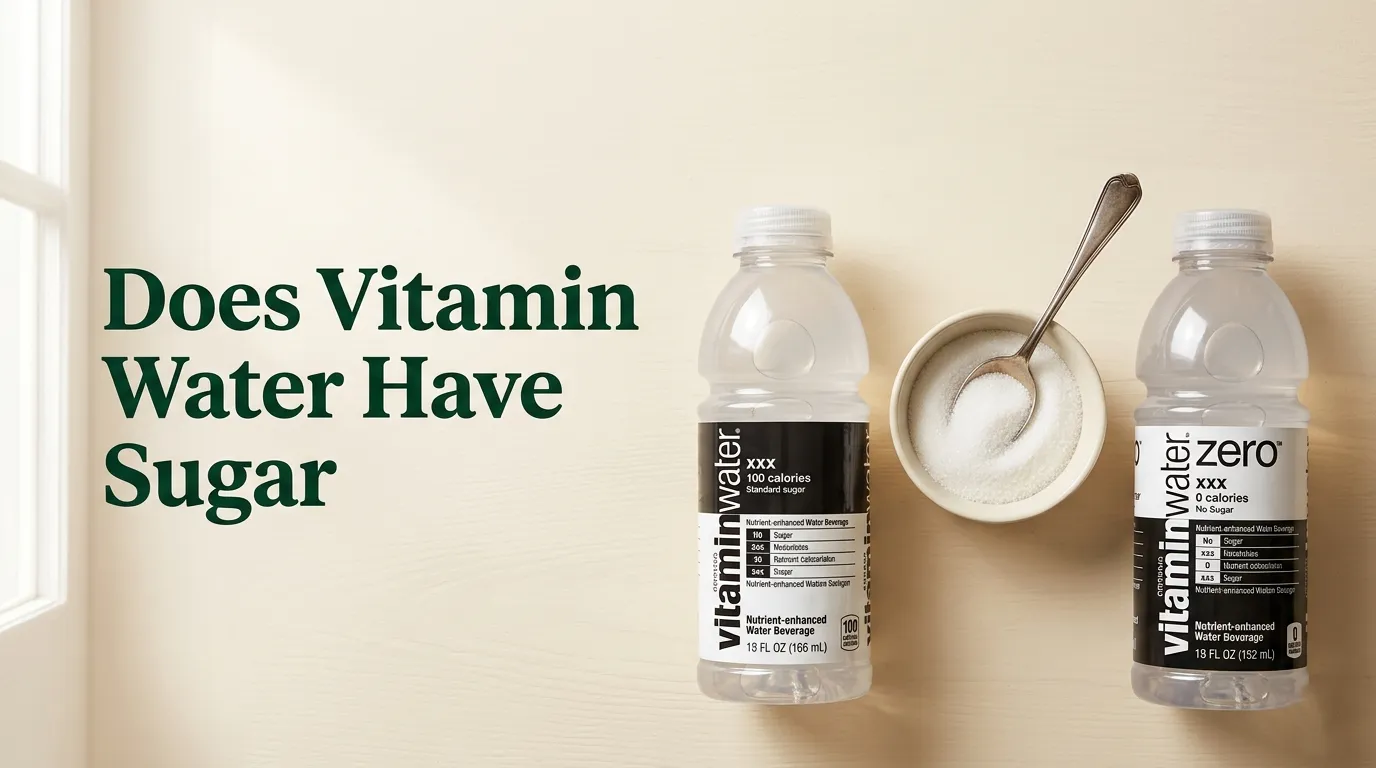
Yes, standard Vitaminwater contains sugar. A regular 20-ounce bottle has 26 to 32 grams of added sugar and 100 to 120 calories. However, Vitaminwater Zero Sugar varieties contain zero grams of sugar and zero calories .
The sugar content is the single most important factor distinguishing the two product lines. Regular Vitaminwater is sweetened with crystalline fructose and cane sugar, giving it a sugar profile similar to soda. The Zero Sugar line uses stevia leaf extract and erythritol instead. A person drinking a regular Vitaminwater bottle consumes roughly 6 to 8 teaspoons of added sugar in one serving.
This article provides complete 2026 nutrition facts for all Vitaminwater varieties including sugar, calories, vitamins, electrolytes, and sodium content. You will learn exactly what is in each bottle, how different flavors compare, and whether Vitaminwater fits your health goals for hydration, weight management, or blood sugar control.
Key Takeaway: Regular Vitaminwater is sugar water with added vitamins. The Zero Sugar version is the better choice for anyone watching sugar or calorie intake.
How Much Sugar Does Vitamin Water Have?
A standard 20-ounce bottle of regular Vitaminwater contains 26 to 32 grams of sugar, depending on the specific flavor. The XXX Acai Blueberry Pomegranate flavor has 26 grams of sugar per bottle . The Energy Tropical Citrus flavor contains 27 grams of sugar per bottle . The Mega C and Focus varieties have 31 to 33 grams of sugar per 591ml bottle .
To put these numbers in perspective, 4 grams of sugar equals 1 teaspoon. A 26-gram bottle of Vitaminwater contains approximately 6.5 teaspoons of added sugar. The American Heart Association recommends limiting added sugar to 25 grams per day for women and 36 grams per day for men. One bottle of regular Vitaminwater uses up 72 to 100 percent of that daily allowance .
The table below shows sugar content for popular Vitaminwater varieties.
| Vitaminwater Variety | Bottle Size | Total Sugar (g) | Added Sugar (g) | Calories |
|---|---|---|---|---|
| XXX (Acai Blueberry Pomegranate) | 20 oz (591ml) | 26 | 26 | 100 |
| Energy (Tropical Citrus) | 20 oz | 27 | 27 | 100 |
| Mega C (Dragonfruit) | 20 oz | 27 | 27 | 100 |
| Essential (Orange Orange) | 20 oz | 27 | 27 | 100 |
| Focus (Original formula) | 20 oz | 31-33 | 31-33 | 120-130 |
| Power-C (Dragonfruit) | 20 oz | 27 | 27 | 100 |
| Elevate (Blue Raspberry Limeade) | 16.9 oz | 22 | 22 | 90 |
The sugar in regular Vitaminwater comes primarily from crystalline fructose and cane sugar. Crystalline fructose is over 98 percent pure fructose, which research suggests may be more harmful than other forms of added sugar when consumed in excess .
Key Takeaway: A single bottle of regular Vitaminwater contains a full day’s worth of added sugar. If you drink it, that is your added sugar for the entire day.
Does Vitamin Water Have Sugar Free Options?
Yes, Vitaminwater Zero Sugar contains zero grams of sugar and zero calories. The Zero Sugar line includes flavors like Shine Zero, Squeezed, Rise, XXX Zero Sugar, and Strawberry Lemonade Zero .
Vitaminwater Zero Sugar uses a different sweetening system. The beverages are sweetened with a combination of stevia leaf extract and erythritol. Stevia leaf extract provides sweetness without calories or carbohydrate impact. Erythritol is a sugar alcohol that adds bulk and sweetness with minimal calories .
The nutrition profile for Zero Sugar varieties is dramatically different:
| Zero Sugar Variety | Calories | Sugar (g) | Sweeteners | Key Vitamins |
|---|---|---|---|---|
| XXX Zero Sugar | 0 | 0 | Stevia, erythritol | Vitamins A, C, B3, B5, B6, B12; electrolytes |
| Strawberry Lemonade Zero | 0 | 0 | Stevia, erythritol | Biotin, pantothenic acid |
| Shine Zero | 0 | 0 | Stevia, erythritol | B vitamins |
| Rise Orange | 0 | 0 | Stevia, erythritol | B vitamins, electrolytes |
The Zero Sugar products contain no artificial sweeteners, no artificial flavors, and no synthetic colors according to the manufacturer . The sweeteners used are plant-based, though erythritol is considered a sugar alcohol that some people may experience digestive sensitivity to in large amounts.
For people with diabetes, following low-carb diets, or simply trying to reduce sugar intake, Zero Sugar Vitaminwater is the appropriate choice. The regular version is not suitable for these populations.
Quick Tip: Check the bottle cap or label for “Zero Sugar” or “Zero” branding. Regular and Zero Sugar bottles look similar. The calorie count on the front panel is the fastest way to tell them apart (100+ calories vs. 0 calories).
Key Takeaway: Vitaminwater Zero Sugar is a completely different product from regular Vitaminwater. One is sugar-free. The other is sugar-heavy. Do not confuse them.
How Many Calories in Vitamin Water?
Regular Vitaminwater contains 90 to 130 calories per bottle, depending on the flavor and bottle size. The standard 20-ounce bottles contain 100 calories. The 16.9-ounce Elevate bottle contains 90 calories. The Focus variety contains 120 to 130 calories .
Vitaminwater Zero Sugar contains zero calories per bottle .
The calorie source in regular Vitaminwater is entirely from sugar. There is no fat, no protein, and no fiber. One 20-ounce bottle with 26 grams of sugar provides 104 calories from sugar alone. The remaining calories come from trace carbohydrates .
The table below compares calorie counts across the product line.
| Product Line | Bottle Size | Calories | Sugar (g) | Calories from Sugar |
|---|---|---|---|---|
| Regular XXX | 20 oz | 100 | 26 | 104 |
| Regular Energy | 20 oz | 100 | 27 | 108 |
| Regular Mega C | 20 oz | 100 | 27 | 108 |
| Regular Focus | 20 oz | 120-130 | 31-33 | 124-132 |
| Regular Elevate | 16.9 oz | 90 | 22 | 88 |
| Zero Sugar (all flavors) | Various | 0 | 0 | 0 |
For context, a 20-ounce bottle of regular Vitaminwater has roughly half the calories of a 20-ounce Coca-Cola (which has approximately 240 calories). However, it still contains about the same amount of sugar as 7 to 8 Oreo cookies. The calories are not “empty” in the sense of providing no nutrients, but they are “liquid calories” that do not trigger fullness signals the way solid food does.
Quick Tip: If you are counting calories, one regular Vitaminwater bottle represents 5 to 6 percent of a 2,000 calorie diet. That is not trivial. Two bottles per day is 10 to 12 percent of calories from a single beverage.
Key Takeaway: Zero Sugar has zero calories. Regular has 100 calories per bottle. The choice between them has a 100-calorie difference per serving.
What Vitamins Are in Vitamin Water?
Vitaminwater contains a range of water-soluble vitamins, primarily B vitamins and vitamin C, with some varieties including vitamin A and vitamin E. The specific vitamin profile varies by flavor and product line.
Below is the vitamin content for popular varieties based on 2026 nutrition data .
| Vitamin | XXX (Acai) | Energy | Mega C | Essential | Zero Sugar |
|---|---|---|---|---|---|
| Vitamin C | 120-200% DV | 100% DV | 200% DV | 250% DV | 200-250% DV |
| Vitamin B3 (Niacin) | 60-100% DV | 100% DV | – | 100% DV | 100% DV |
| Vitamin B6 | 60-100% DV | 100% DV | – | 100% DV | 100% DV |
| Vitamin B12 | 10-100% DV | 100% DV | – | 100% DV | 100% DV |
| Vitamin B5 (Pantothenic Acid) | 20-100% DV | 100% DV | – | 100% DV | 100% DV |
| Vitamin A | 25-40% DV | – | – | 25% DV | 25-40% DV |
| Vitamin E | – | – | – | 25% DV | – |
| Biotin | – | – | – | – | 100% DV |
The vitamin levels are high, sometimes exceeding 200 percent of the daily value. A single bottle of Vitaminwater XXX provides 200 percent of the daily value for vitamin C, 100 percent for several B vitamins, and 50 percent for selenium .
However, these high doses raise a question: do you actually need them? For most people eating a balanced diet with fruits, vegetables, and whole grains, vitamin deficiencies are rare in developed countries. The vitamins in Vitaminwater are water-soluble, meaning excess amounts are excreted in urine. You are essentially paying for expensive urine .
The NIH Office of Dietary Supplements notes that while water-soluble vitamin toxicity is rare, consistently consuming extremely high doses of certain B vitamins may have side effects. The levels in one bottle of Vitaminwater are not dangerous for most people, but they are unnecessary.
Quick Tip: If you need vitamin C or B vitamins, a piece of fruit or a serving of vegetables provides them naturally with fiber and other beneficial compounds. Vitaminwater provides the vitamins without the fiber or whole-food benefits.
Key Takeaway: The vitamins in Vitaminwater are real and present in high amounts. But you probably do not need them, and they do not make the sugar healthier.
Does Vitamin Water Have Electrolytes in It?
Yes, Vitaminwater contains electrolytes including calcium, magnesium, and potassium. The electrolyte content varies by flavor, with some varieties including these minerals and others omitting them entirely.
Vitaminwater XXX (regular) contains calcium and magnesium lactates and potassium phosphate as electrolyte sources . The Zero Sugar versions generally contain similar electrolyte profiles, with calcium and magnesium lactates and potassium phosphate listed in ingredients .
The electrolyte amounts are modest compared to dedicated sports drinks. A full breakdown of specific milligram amounts is not provided on standard nutrition labels, but the ingredients confirm their presence.
Electrolytes found in Vitaminwater:
- Calcium (as calcium lactate)
- Magnesium (as magnesium lactate)
- Potassium (as potassium phosphate)
Regular Vitaminwater contains 0 milligrams of sodium across most flavors. This is unusual for an electrolyte beverage. Sodium is the primary electrolyte lost in sweat during exercise. A hydration drink with zero sodium is less effective for rehydration after intense physical activity .
Vitaminwater Zero Sugar XXX contains electrolytes but still has 0 milligrams of sodium . Some Zero Sugar varieties may contain sodium up to 210 milligrams depending on the flavor, but most standard grocery store flavors show 0mg .
For comparison, Gatorade contains approximately 270 milligrams of sodium per 20-ounce bottle. Pedialyte contains about 370 milligrams per 12-ounce serving. Vitaminwater’s electrolyte content, while present, is not at a level that would make it superior to water for exercise recovery.
Quick Tip: For everyday hydration in a person eating a normal diet, additional electrolytes are unnecessary. Your body regulates electrolyte balance efficiently. For intense exercise lasting more than 60 minutes or heavy sweating, choose a drink with sodium, not just potassium and magnesium.
Key Takeaway: Vitaminwater contains electrolytes, but the lack of sodium makes it less effective for rehydration after significant sweat loss. For daily hydration, the electrolytes provide no proven benefit over plain water.
Does Vitamin Water Have Potassium?
Yes, Vitaminwater contains potassium in the form of potassium phosphate. The exact milligram amount is not listed on standard nutrition labels, but ingredients confirm potassium phosphate as an electrolyte source in both regular and Zero Sugar varieties .
Potassium is an essential mineral that helps regulate fluid balance, nerve signals, and muscle contractions. The recommended daily intake for adults is 2,600 to 3,400 milligrams depending on age and sex.
The amount in Vitaminwater is likely modest. A potassium phosphate addition at “less than 0.5 percent” of the formula provides some potassium but not a meaningful percentage of the daily requirement. For comparison, a medium banana contains approximately 420 milligrams of potassium.
Vitaminwater is not a significant source of potassium for meeting daily requirements. A person would need to drink many bottles to get meaningful potassium intake, which would also deliver excessive sugar or sugar alcohols.
Quick Tip: If you need more potassium in your diet, eat whole foods like bananas, sweet potatoes, spinach, beans, and avocados. These provide potassium along with fiber and other nutrients.
Key Takeaway: The potassium in Vitaminwater exists but in amounts too small to meaningfully contribute to your daily needs. Do not drink Vitaminwater for potassium.
Does Vitamin Water Have Sodium?
Most Vitaminwater flavors contain 0 milligrams of sodium, regardless of whether they are regular or Zero Sugar varieties. Nutrition labels for XXX, Energy, Mega C, and Essential all show 0mg sodium .
Some specialty or regional flavors may contain sodium up to 210 milligrams per bottle, but these are not the standard offerings at most retailers .
The absence of sodium is notable because Vitaminwater markets itself as a hydration beverage. Sodium is the primary electrolyte lost in sweat. During exercise lasting more than 60 minutes or in hot conditions, replacing sodium becomes important for maintaining proper hydration.
Zero sodium beverages can still hydrate you. For daily hydration in a person eating a standard diet, the sodium from food replaces what is lost. For athletes or people working in heat, a beverage with sodium is more effective at restoring fluid balance.
For people with high blood pressure limiting sodium intake, the zero-sodium content of most Vitaminwater flavors is actually a benefit. A person with hypertension following a 1,500-milligram sodium diet can drink regular Vitaminwater without exceeding their sodium limit, which is not true for most sports drinks.
Key Takeaway: Most Vitaminwater has zero sodium. This is good for people with high blood pressure but less effective for rehydration after intense exercise.
Is Vitamin Water Healthy? A Balanced Assessment
Vitaminwater is not meaningfully healthy, but whether it is “unhealthy” depends on which version you drink and your individual health context. The regular version is sugar water with added vitamins. The Zero Sugar version is flavored water with added vitamins.
The regular version contains 26 to 32 grams of added sugar per bottle. Consuming this much added sugar regularly is associated with increased risk of type 2 diabetes, heart disease, weight gain, metabolic syndrome, and dental problems. The added vitamins do not offset the harm of excess sugar .
The Zero Sugar version contains no sugar and zero calories. From a sugar and calorie perspective, it is neutral. It does not provide hydration benefits beyond plain water, but it does not carry the risks of sugar-sweetened beverages.
Who might benefit from Vitaminwater:
- People who struggle to drink plain water and find Zero Sugar Vitaminwater more palatable
- Individuals with confirmed vitamin deficiencies who have difficulty absorbing oral supplements (rare)
- Athletes needing quick electrolyte replacement during exercise (though sports drinks are more effective)
Who should avoid regular Vitaminwater:
- People with diabetes or prediabetes
- Anyone trying to lose weight
- Individuals with high blood pressure (sodium is fine but sugar contributes to weight gain, which raises BP)
- Parents giving beverages to children
- Anyone limiting added sugar intake
The marketing suggests Vitaminwater is a healthy alternative to soda. At 100 calories per bottle versus 240 for a soda, it is less bad but not good. The American Heart Association considers regular Vitaminwater a sugar-sweetened beverage and recommends limiting consumption accordingly .
Quick Tip: If you want flavored hydration without sugar, infuse water with fruit, herbs, or cucumber. If you want vitamins, take a standard multivitamin for pennies per day. If you want both, Zero Sugar Vitaminwater is acceptable but not superior to plain water.
Key Takeaway: Regular Vitaminwater is not healthy. Zero Sugar Vitaminwater is neutral. Neither provides benefits that justify the cost over plain water for most people.
What’s in Vitamin Water? Complete Ingredient Breakdown
Understanding what is in Vitaminwater requires reading the ingredient list, which differs between regular and Zero Sugar varieties. The ingredients reveal the true nature of the product.
Regular Vitaminwater XXX ingredients (20 oz bottle):
Reverse osmosis water, crystalline fructose, cane sugar, less than 0.5% of: vitamins C, A, B3, B5, B6, B12 (ascorbic acid, beta carotene, niacinamide, calcium pantothenate, pyridoxine hydrochloride, cyanocobalamin), electrolytes (calcium and magnesium lactates, potassium phosphate), manganese citrate, fruit and vegetable juices (color), citric acid, gum acacia, natural flavors .
The first ingredient is water. The second and third ingredients are two forms of sugar. The vitamins and minerals come after the sugar. This order indicates that sugar is the primary additive by weight after water.
Vitaminwater Zero Sugar XXX ingredients:
Reverse osmosis water, erythritol, less than 0.5% of: vitamins C, A, B3, B5, B6, B12 (ascorbic acid, beta carotene, niacinamide, calcium pantothenate, pyridoxine hydrochloride, cyanocobalamin), electrolytes (calcium and magnesium lactates, potassium phosphate), manganese citrate, fruit and vegetable juices (color), citric acid, gum acacia, natural flavors, stevia leaf extract .
For Zero Sugar, erythritol (a sugar alcohol) and stevia leaf extract replace crystalline fructose and cane sugar. The vitamin and electrolyte profile remains similar.
Ingredients summary:
- Base: Purified water
- Sweeteners (regular): Crystalline fructose, cane sugar
- Sweeteners (Zero): Erythritol, stevia leaf extract
- Vitamins: C, B3, B5, B6, B12, A, E (varies by flavor)
- Electrolytes: Calcium, magnesium, potassium
- Other: Natural flavors, citric acid, color from fruit and vegetable juices
Quick Tip: The ingredients list length alone should give pause. A beverage with 15 to 20 ingredients is heavily processed. Plain water has one ingredient.
Key Takeaway: Regular Vitaminwater is water, sugar, synthetic vitamins, and natural flavors. Zero Sugar swaps sugar for sugar alcohols and stevia. Neither is “natural” in the way whole foods are.
Vitamin Water vs. Plain Water: Which Hydrates Better?
Plain water hydrates better than regular Vitaminwater for most people, and equally as well as Zero Sugar Vitaminwater. The sugar in regular Vitaminwater can actually slow gastric emptying slightly, though the effect is minimal.
For daily hydration in a person eating a normal diet, no beverage hydrates better than plain water. The body absorbs water efficiently regardless of added vitamins or electrolytes when electrolyte levels are normal .
For exercise lasting less than 60 minutes, water is superior to Vitaminwater. The sugar in regular Vitaminwater provides unnecessary calories, and the lack of sodium makes it less effective for rehydration than water alone. The Zero Sugar version provides no advantage over water.
For exercise lasting more than 60 minutes or heavy sweating in heat, neither version is ideal. Regular Vitaminwater has sugar but no sodium. Zero Sugar has no sugar and no sodium. A proper sports drink with both carbohydrates and sodium (like Gatorade or a homemade electrolyte solution) is more effective.
The table below compares hydration effectiveness across scenarios.
| Scenario | Water | Regular Vitaminwater | Zero Sugar Vitaminwater |
|---|---|---|---|
| Daily hydration | Best | Adequate (but adds sugar) | Equal to water |
| Exercise < 60 min | Best | Adequate (unnecessary sugar) | Equal to water |
| Exercise > 60 min | Good | Poor (no sodium) | Poor (no sodium, no sugar) |
| Hot weather / heavy sweat | Good | Poor (no sodium) | Poor (no sodium) |
| Illness (diarrhea/vomiting) | Poor | Poor (no sodium) | Poor (no sodium) |
For illness-related dehydration, Pedialyte or other oral rehydration solutions with specific electrolyte ratios are recommended. Neither Vitaminwater product provides adequate sodium for clinical rehydration.
Quick Tip: For everyday thirst, drink water. It is free, calorie-free, sugar-free, and perfectly formulated for human hydration after millions of years of evolution.
Key Takeaway: Vitaminwater does not hydrate better than water. In many scenarios, it hydrates worse due to lack of sodium. Water wins.
Frequently Asked Questions About Vitamin Water Sugar
Does Vitamin Water have sugar?
Yes, regular Vitaminwater has 26 to 32 grams of sugar per bottle. Vitaminwater Zero Sugar has zero grams of sugar. Always check the label because the two product lines look similar .
How much sugar is in Vitaminwater Zero Sugar?
Zero grams. Vitaminwater Zero Sugar contains no sugar. It is sweetened with stevia leaf extract and erythritol, which provide sweetness without calories or carbohydrates .
Is Vitaminwater Zero Sugar healthy for diabetics?
Vitaminwater Zero Sugar is acceptable for people with diabetes because it contains no sugar and zero calories. However, it does not provide any unique benefits over plain water. The erythritol content may cause digestive discomfort in some people if consumed in large quantities .
How many calories are in a bottle of Vitaminwater?
Regular Vitaminwater contains 90 to 130 calories per bottle, depending on the flavor and size. Vitaminwater Zero Sugar contains zero calories .
Is Vitaminwater Zero Sugar keto friendly?
Yes. Vitaminwater Zero Sugar contains zero grams of net carbohydrates, making it suitable for ketogenic diets. The sweeteners (stevia and erythritol) do not impact blood ketone levels for most people .
What is the sweetener in Vitaminwater Zero Sugar?
Vitaminwater Zero Sugar uses a combination of stevia leaf extract and erythritol. Stevia is a plant-derived zero-calorie sweetener. Erythritol is a sugar alcohol that provides bulk sweetness with minimal calories and no impact on blood sugar .
The Bottom Line on Vitamin Water Sugar Content
Regular Vitaminwater contains 26 to 32 grams of sugar per bottle. That is roughly 6 to 8 teaspoons of added sugar, which is an entire day’s worth of added sugar for many people. The added vitamins do not make the sugar healthier. If you are drinking regular Vitaminwater, you are drinking sugar water with a vitamin label.
Vitaminwater Zero Sugar contains zero grams of sugar and zero calories. It is a different product entirely. For people who need flavored hydration without sugar, it is an acceptable choice. But it does not hydrate better than plain water, and the added vitamins are unnecessary for most people.
The marketing around Vitaminwater implies health benefits that the product does not deliver. Regular Vitaminwater contributes to the same health problems as soda, just to a lesser degree. Zero Sugar Vitaminwater is neutral but not beneficial.
Drink water for hydration. Eat whole foods for vitamins. If you enjoy the taste of Vitaminwater Zero Sugar and it helps you drink more fluids, it is fine in moderation. But recognize it for what it is: flavored water with added vitamins, not a health product.