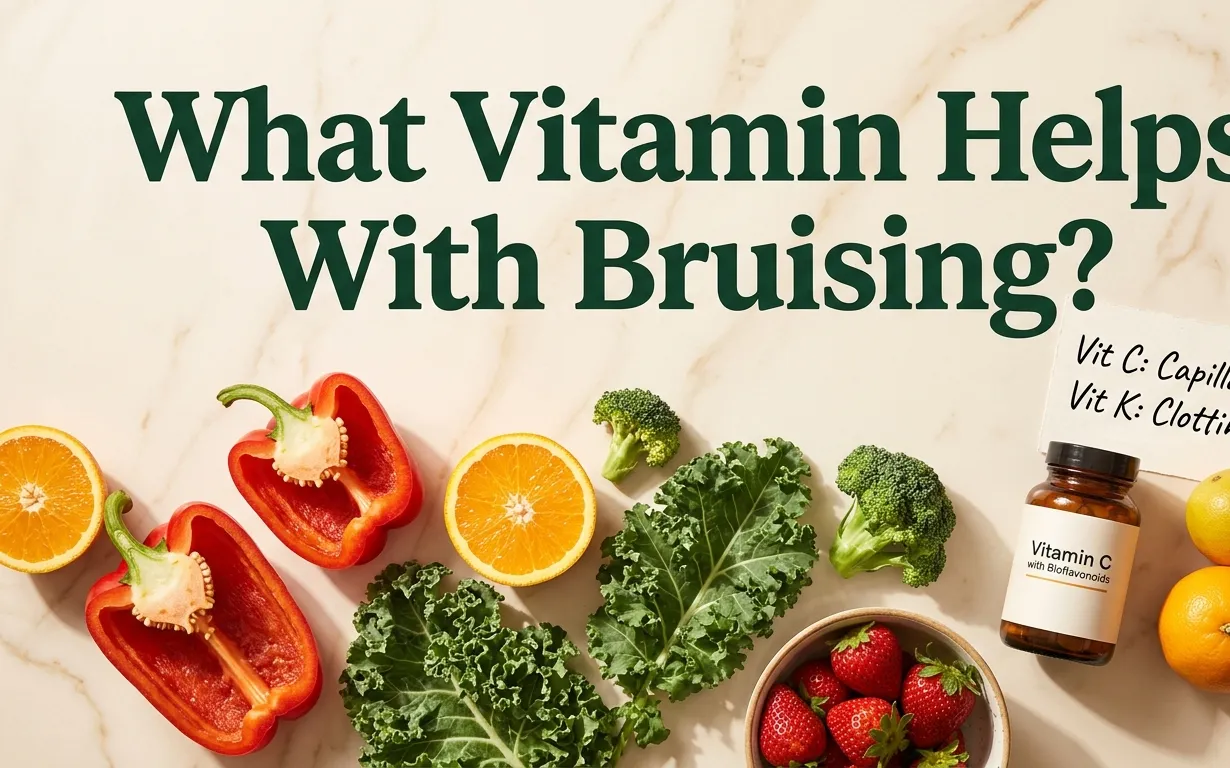
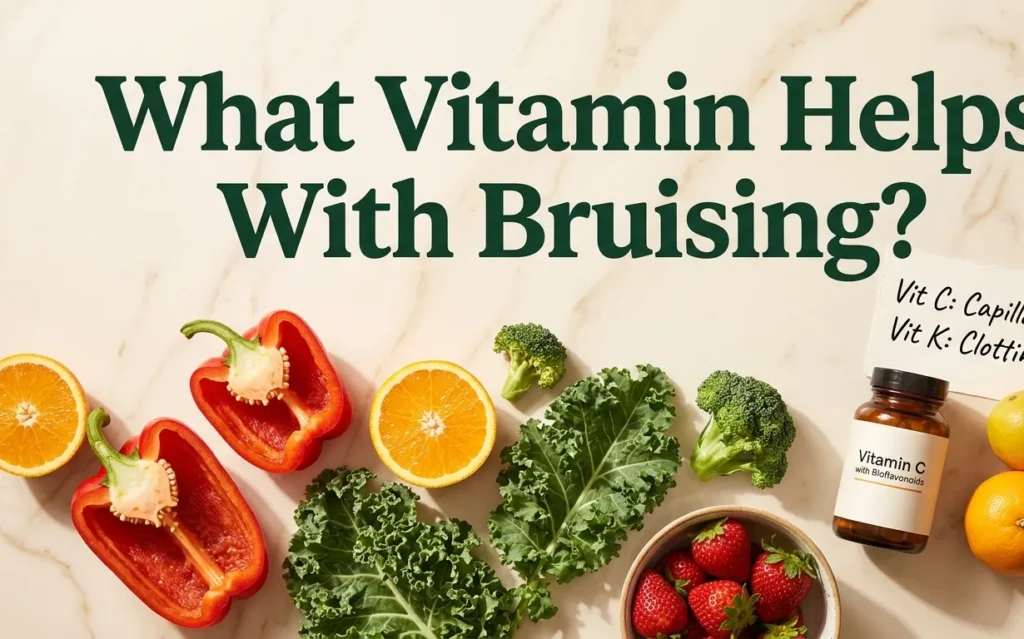
What Vitamin Helps With Bruising in 2026? The Science of C and K
Two vitamins play distinct and essential roles in bruising: vitamin C strengthens blood vessel walls through collagen synthesis, and vitamin K enables proper blood clotting through the coagulation cascade. A deficiency in either can cause or worsen bruising, but they work through completely different mechanisms.
The NIH Office of Dietary Supplements reports that vitamin C deficiency affects approximately 7 percent of adults in the United States, with higher rates among smokers and people with limited fruit and vegetable intake. Vitamin K deficiency is rarer in healthy adults but becomes a serious concern for anyone taking anticoagulant medications like warfarin, where the balance of vitamin K intake directly determines medication effectiveness and bleeding risk.
You will learn the precise biochemical roles of vitamin C and vitamin K in bruise formation, the specific food sources with milligram and microgram amounts per serving, the evidence on related compounds like bioflavonoids that may support blood vessel health, and clear guidance on when easy bruising requires a medical evaluation rather than dietary adjustment. This is not general wellness advice. This is the nutritional biochemistry of bruising explained with named sources and actionable numbers.
What Vitamin Helps With Bruising
Vitamin C and vitamin K are the two primary vitamins that help with bruising, with vitamin C maintaining the structural integrity of blood vessel walls and vitamin K enabling the production of clotting factors that stop bleeding when vessels break.
A bruise forms when small blood vessels called capillaries rupture under the skin, leaking blood into surrounding tissue. The body responds with a coordinated repair process involving platelet aggregation at the injury site, activation of clotting factors to seal the leak, and eventual breakdown and reabsorption of the trapped blood by immune cells. The color progression from red to purple to blue to green to yellow that you see over days to weeks reflects hemoglobin breakdown products being metabolized and cleared.
Any disruption in the two systems that prevent or limit bruising can make bruises appear more frequently, grow larger, or last longer. A vitamin C deficiency weakens the collagen framework that gives capillaries their tensile strength. A vitamin K deficiency impairs the liver’s ability to produce functional clotting factors. The two vitamins address entirely different points in the bruising process. Neither substitutes for the other. Both must be present in adequate amounts for normal bruise response.
Vitamin Roles in Bruising Summary Table
| Vitamin | Primary Role in Bruising | Mechanism | Deficiency Result |
|---|---|---|---|
| Vitamin C | Capillary wall integrity | Collagen synthesis cofactor for prolyl and lysyl hydroxylase enzymes | Fragile capillaries that rupture easily |
| Vitamin K | Blood clotting | Gamma-carboxylation of glutamate residues on clotting factors II, VII, IX, X | Impaired clotting, prolonged bleeding |
| Bioflavonoids | Capillary strength support | Cross-link collagen fibers; reduce capillary permeability | Increased capillary fragility |
| Iron | Oxygen delivery to healing tissue | Hemoglobin synthesis for red blood cells | Reduced tissue repair capacity |
What Vitamin Deficiency Causes Easy Bruising
Vitamin C deficiency and vitamin K deficiency are the two primary nutritional causes of easy bruising, with vitamin C deficiency being more common in the general population and vitamin K deficiency being more medication-related or occurring in people with fat malabsorption disorders.
Vitamin C deficiency sufficient to cause bruising develops over weeks to months of inadequate intake. The body’s vitamin C pool depletes gradually. Early signs include fatigue and gum inflammation before bruising appears. The NIH Office of Dietary Supplements states that serum ascorbic acid levels below 11.4 micromoles per liter indicate deficiency. At this level, collagen synthesis is measurably impaired. Capillaries become fragile because their structural collagen framework is not being properly maintained. Bruises appear from minor bumps that would not normally cause visible bleeding.
Vitamin K deficiency that causes bruising is less common in healthy adults because gut bacteria produce some vitamin K and the body recycles it efficiently. The at-risk groups for vitamin K deficiency include newborns who have not yet developed gut bacterial colonization, people with fat malabsorption disorders such as celiac disease or cystic fibrosis, individuals who have undergone bariatric surgery, and anyone taking vitamin K antagonist medications. A person taking warfarin who eats inconsistently from day to day may experience fluctuating anticoagulation and easy bruising.
At-Risk Groups for Vitamin Deficiency-Related Bruising
| Deficiency | At-Risk Groups | Reason |
|---|---|---|
| Vitamin C | Smokers | Increased oxidative stress depletes vitamin C |
| Vitamin C | People with limited fruit and vegetable intake | Inadequate dietary supply |
| Vitamin C | Older adults on limited diets | Reduced intake and absorption |
| Vitamin C | People with alcohol use disorder | Poor diet and increased excretion |
| Vitamin K | Warfarin users | Medication directly antagonizes vitamin K |
| Vitamin K | People with fat malabsorption | Vitamin K is fat-soluble |
| Vitamin K | Newborns | Immature gut bacteria and low transfer across placenta |
| Vitamin K | Long-term antibiotic users | Antibiotics kill vitamin K-producing gut bacteria |
Key Takeaway: If you bruise easily and you smoke, eat few fruits and vegetables, or take a blood thinner, the most likely nutritional explanation is vitamin C deficiency for the first two and vitamin K inconsistency for the third. These are testable and correctable.
Vitamin C and Bruising Mechanism
Vitamin C prevents bruising by serving as an essential cofactor for the enzymes prolyl hydroxylase and lysyl hydroxylase, which are required to synthesize and cross-link collagen, the structural protein that gives capillary walls their strength and flexibility.
Collagen is not simply one protein. It is a triple-helix structure that requires hydroxylation of specific proline and lysine amino acid residues to form stable cross-links. Without vitamin C, the hydroxylation reaction cannot proceed. The collagen produced is under-hydroxylated, unstable, and structurally weak. Capillary walls built from this defective collagen rupture under normal mechanical stress. This is the mechanism behind the bruising seen in scurvy, the clinical vitamin C deficiency disease that was historically common among sailors without access to fresh produce.
The timeline of vitamin C depletion explains why bruising does not appear immediately when intake drops. The body stores approximately 1,500 milligrams of vitamin C, primarily in the liver and adrenal glands. When dietary intake ceases, it takes roughly 30 to 45 days for tissue levels to drop to the point where collagen synthesis is measurably affected. Bruising appears gradually as existing collagen degrades through normal turnover and replacement collagen is insufficiently strong. The NIH Office of Dietary Supplements notes that clinical scurvy with visible bruising and bleeding can develop within one to three months of vitamin C depletion.
Vitamin K and Bruising Mechanism
Vitamin K prevents excessive bruising by activating clotting factors II, VII, IX, and X through a process called gamma-carboxylation, which adds carboxyl groups to glutamate residues and enables these proteins to bind calcium and participate in the coagulation cascade.
The coagulation cascade is a series of enzymatic reactions that culminates in the conversion of fibrinogen to fibrin, forming a stable blood clot at the site of vessel injury. Vitamin K-dependent clotting factors are essential components of this cascade. Factor VII initiates the extrinsic pathway when tissue factor is exposed by vessel damage. Factors IX and X participate in the common pathway. Factor II, also called prothrombin, is converted to thrombin, which directly converts fibrinogen to fibrin. Without adequate vitamin K, the liver produces under-carboxylated versions of these proteins that cannot function.
The clinical measurement of vitamin K-dependent clotting function is the prothrombin time test, often reported as the International Normalized Ratio (INR). When vitamin K is deficient or blocked by warfarin, the prothrombin time lengthens because functional clotting factors are reduced. An elevated INR indicates that blood takes longer to clot, which translates clinically to easier bruising and prolonged bleeding from minor injuries. The target INR for someone on warfarin is typically 2.0 to 3.0 depending on the condition being treated, representing a deliberate balance between preventing clots and avoiding excessive bleeding.
What Vitamins Strengthen Blood Vessels
Vitamin C strengthens blood vessel walls directly through collagen synthesis, while bioflavonoids including rutin and hesperidin support capillary integrity by cross-linking collagen fibers and reducing capillary permeability through antioxidant effects on endothelial cells.
Blood vessel strength depends on more than a single nutrient. The capillary wall consists of endothelial cells sitting on a basement membrane that is rich in collagen type IV. Vitamin C is required to produce that collagen. The endothelial cells themselves are vulnerable to oxidative damage, which can increase capillary permeability even when collagen structure is normal. This is where bioflavonoids enter the picture. These plant compounds, found alongside vitamin C in fruits and vegetables, concentrate in the microvasculature and appear to reduce the fragility that leads to easy bruising.
The evidence for bioflavonoid effects on capillary strength comes from older clinical research that has not been extensively replicated with modern methods. Studies from the mid-20th century documented reduced capillary fragility in people taking citrus bioflavonoid supplements. The effect is generally considered supportive rather than primary. Vitamin C deficiency will not be corrected by bioflavonoids alone. But in someone with adequate vitamin C status who still bruises easily, bioflavonoids may provide an additional benefit by stabilizing the endothelial components of the capillary wall.
Quick Tip: The best dietary strategy for blood vessel strength combines vitamin C and bioflavonoids from the same food sources. Eating the whole fruit rather than taking isolated vitamin C provides the bioflavonoids that naturally accompany the vitamin in plant tissue.
Vitamin C Foods for Bruising With Amounts
The best food sources of vitamin C for bruising support include red bell pepper at 95 milligrams per half-cup raw, a medium orange at 70 milligrams, one cup of strawberries at 85 milligrams, and a half-cup of cooked broccoli at 51 milligrams.
The USDA FoodData Central database provides precise numbers that allow you to build a diet that meets or exceeds the RDA for vitamin C. Adult men require 90 milligrams per day. Adult women require 75 milligrams per day. Smokers need an additional 35 milligrams per day because smoking increases oxidative stress and depletes vitamin C. A single half-cup of raw red bell pepper exceeds the daily requirement for women and nearly meets it for men. A medium orange provides roughly 80 percent of the daily value.
Cooking method affects vitamin C retention. Vitamin C is water-soluble and heat-sensitive. Boiling vegetables leaches vitamin C into cooking water and can destroy 50 percent or more of the original content. Steaming preserves more, with typical losses of 20 to 30 percent. Microwaving with minimal water retains the most vitamin C of any cooking method because heating is rapid and water contact is limited. Eating vitamin C-rich foods raw when possible maximizes intake, but lightly cooked vegetables still contribute meaningfully.
Vitamin C Food Sources With Amounts (per USDA FoodData Central)
| Food | Serving Size | Vitamin C (mg) | Percentage of Men’s RDA (90mg) |
|---|---|---|---|
| Red bell pepper, raw | 1/2 cup chopped | 95 | 106% |
| Guava | 1 fruit | 125 | 139% |
| Orange | 1 medium | 70 | 78% |
| Kiwi | 1 medium | 64 | 71% |
| Strawberries | 1 cup halves | 85 | 94% |
| Broccoli, cooked | 1/2 cup | 51 | 57% |
| Brussels sprouts, cooked | 1/2 cup | 48 | 53% |
| Grapefruit | 1/2 medium | 39 | 43% |
| Tomato | 1 medium | 17 | 19% |
| Potato, baked | 1 medium | 17 | 19% |
Vitamin K Foods for Bruising With Amounts
The best food sources of vitamin K for bruising support include one cup of cooked kale at 1,062 micrograms, one cup of cooked spinach at 889 micrograms, and a half-cup of cooked broccoli at 110 micrograms, all vastly exceeding the daily Adequate Intake of 120 micrograms for men and 90 micrograms for women.
Vitamin K food sources are concentrated in leafy green vegetables. A single cup of cooked kale delivers nearly nine times the daily Adequate Intake for men. A cup of raw spinach in a salad provides 145 micrograms. The NIH Office of Dietary Supplements notes that vitamin K from plant sources is phylloquinone (vitamin K1), which is the primary dietary form and the form most directly involved in coagulation. Vitamin K2 as menaquinone is found in fermented foods and animal products and contributes to bone health but also supports coagulation when K1 stores are low.
Because vitamin K is fat-soluble, absorption from leafy greens increases when the meal contains some dietary fat. A spinach salad with olive oil vinaigrette provides better vitamin K absorption than plain spinach alone. Cooking does not substantially degrade vitamin K the way it does vitamin C. Boiled kale loses some vitamin K to cooking water but retains most of its content. Sautéing greens in oil combines heat stability with the added absorption benefit of dietary fat.
Vitamin K Food Sources With Amounts (per USDA FoodData Central)
| Food | Serving Size | Vitamin K (mcg) | Percentage of AI (120mcg men) |
|---|---|---|---|
| Kale, cooked | 1 cup | 1,062 | 885% |
| Spinach, cooked | 1 cup | 889 | 741% |
| Collard greens, cooked | 1 cup | 773 | 644% |
| Beet greens, cooked | 1 cup | 697 | 581% |
| Swiss chard, raw | 1 cup | 299 | 249% |
| Brussels sprouts, cooked | 1/2 cup | 110 | 92% |
| Broccoli, cooked | 1/2 cup | 110 | 92% |
| Spinach, raw | 1 cup | 145 | 121% |
| Asparagus, cooked | 1/2 cup | 72 | 60% |
Key Takeaway: You can meet your daily vitamin K requirement with a small side of any leafy green vegetable. A single cup of raw spinach in a salad or a half-cup of cooked broccoli exceeds the daily recommendation. Vitamin C requires more attention to food variety because the RDA is higher and the vitamin is more easily destroyed by cooking.
Bioflavonoids and Bruising Connection
Bioflavonoids are plant compounds found alongside vitamin C in fruits and vegetables that may reduce capillary fragility and permeability through antioxidant protection of endothelial cells and direct cross-linking effects on collagen fibers.
Bioflavonoids are not vitamins. They are polyphenolic compounds classified as flavonoids, a large family of plant secondary metabolites. The subset most studied for vascular health includes citrus bioflavonoids, anthocyanidins from berries, and proanthocyanidins from grape seeds and pine bark. These compounds concentrate in the microvasculature after ingestion and appear to reduce the tendency of capillaries to leak under pressure.
The clinical evidence for bioflavonoid effects on bruising comes from several older but methodologically reasonable studies. Research from the mid-20th century demonstrated that citrus bioflavonoid supplementation reduced capillary fragility scores in people with tendencies toward easy bruising. A 2015 review published in the Journal of Nutrition summarized the vascular effects of flavonoids and noted that the strongest evidence supports anthocyanidin-rich berry extracts for reducing capillary permeability. The effect is supplemental to adequate vitamin C status, not a replacement for it.
Bioflavonoids in food are present wherever vitamin C is present in whole plant foods. The white pith of citrus peel, the skins of berries, and the colorful pigments in peppers all contain bioflavonoids. A vitamin C supplement that is just ascorbic acid lacks these companion compounds. A supplement labeled “vitamin C with bioflavonoids” or “vitamin C with rose hips” includes them. The whole-food version of any vitamin C source naturally provides the bioflavonoid package.
Rutin and Hesperidin for Bruising
Rutin and hesperidin are specific citrus bioflavonoids with documented effects on capillary fragility, with rutin derived from buckwheat and citrus and hesperidin concentrated in the peel and membranes of oranges and lemons showing the most research attention for vascular integrity.
Rutin has been studied as a supplement for reducing bruising and capillary fragility since the 1950s. The mechanism appears to involve strengthening the junctions between endothelial cells and reducing the oxidative stress that increases capillary permeability. A 2016 study published in the journal Nutrients examined rutin’s effects on vascular function and found that the compound improved endothelial function markers in participants with compromised microcirculation.
Hesperidin is the predominant flavonoid in sweet oranges and is concentrated in the white spongy layer between the peel and the fruit. This is why eating the whole orange including some of the white pith provides more hesperidin than drinking strained orange juice. Research published in the American Journal of Clinical Nutrition has documented that hesperidin supplementation reduces capillary permeability and improves venous tone. The effective doses in studies range from 150 to 500 milligrams of hesperidin per day, which is achievable through diet alone only if citrus is consumed regularly with the pith included.
Bioflavonoid Sources and Effects for Vascular Health
| Bioflavonoid | Primary Food Sources | Studied Effect on Blood Vessels | Typical Dietary Intake |
|---|---|---|---|
| Rutin | Buckwheat, asparagus, citrus peel | Reduces capillary fragility; antioxidant | 5 to 50mg daily from diet |
| Hesperidin | Orange and lemon peel and pith | Reduces capillary permeability | 10 to 100mg daily from citrus |
| Quercetin | Onions, apples, tea | Anti-inflammatory; mast cell stabilization | 5 to 40mg daily |
| Anthocyanidins | Blueberries, cherries, blackberries | Reduces oxidative damage to endothelium | 12 to 200mg daily depending on berry intake |
Iron Deficiency Anemia and Bruising
Iron deficiency anemia can contribute to easy bruising not because iron directly affects clotting or capillary strength, but because the reduced hemoglobin and tissue oxygen delivery impair the body’s overall repair capacity, making bruises more visible and slower to resolve.
Iron deficiency is the most common nutritional deficiency worldwide, affecting an estimated 2 billion people according to the World Health Organization. When iron stores drop low enough to cause anemia, the body’s ability to deliver oxygen to all tissues diminishes. Bruise repair is an oxygen-dependent process. Immune cells that clear extravasated blood require energy from aerobic metabolism. The healing tissue at the bruise site needs oxygen to synthesize new collagen and restore normal architecture.
The bruising pattern in iron deficiency is different from vitamin C or K deficiency. Iron deficiency bruising tends to present as generalized easy bruising with pale skin that makes bruises more visible. A complete blood count can identify iron deficiency anemia by measuring hemoglobin, hematocrit, and mean corpuscular volume. A serum ferritin test confirms depleted iron stores. Iron supplementation should only be undertaken after blood work confirms deficiency because excess iron can cause organ damage, particularly in individuals with undiagnosed hemochromatosis.
Key Takeaway: If you bruise easily and also feel fatigued, look pale, and have cold hands and feet, iron deficiency anemia is a possible contributor. A physician can order a complete blood count and ferritin test to confirm or rule this out. Do not self-supplement iron without lab confirmation.
What Vitamin Helps Bruises Heal Faster
Vitamin C supports faster bruise healing by providing the necessary cofactor for new collagen synthesis during tissue repair and by functioning as an antioxidant that reduces secondary oxidative damage at the injury site.
Once a bruise has formed, the healing process involves several stages. Macrophages move into the area and begin clearing extravasated red blood cells. The hemoglobin is broken down through biliverdin to bilirubin, creating the characteristic color changes. New capillary buds form. Fibroblasts deposit fresh collagen to reinforce the damaged area. This entire process requires adequate vitamin C. Without it, collagen deposition is impaired and the bruise site remains structurally weak longer.
The question of whether supplementing vitamin C above the RDA accelerates bruise healing in people without deficiency is less clear. Limited evidence suggests that the benefit is real only in those whose baseline vitamin C status is low. The NIH Office of Dietary Supplements reports that tissue saturation of vitamin C occurs at approximately 200 milligrams per day. Intakes above this level are excreted in urine. A person eating a diet with adequate fruits and vegetables who is not deficient will not heal a bruise faster by taking additional vitamin C. A person with marginal intake may see improvement.
Vitamin C Supplement Dosage for Bruising
The appropriate vitamin C supplement dosage for bruising support in someone with confirmed or suspected low intake is 100 to 500 milligrams per day, which is above the RDA of 75 to 90 milligrams but well below the Tolerable Upper Intake Level of 2,000 milligrams per day for adults.
The RDA for vitamin C is set to prevent deficiency disease, not to optimize tissue saturation. Research on vitamin C pharmacokinetics has shown that plasma concentrations plateau at oral doses of approximately 200 milligrams. Doses between 200 and 500 milligrams achieve near-complete tissue saturation in most people. Doses above 500 milligrams result in sharply increasing urinary excretion with diminishing returns for tissue levels. Doses above 2,000 milligrams per day are associated with gastrointestinal distress including diarrhea, abdominal cramps, and nausea.
The form of vitamin C matters for tolerability. Ascorbic acid in its standard form is acidic and can cause stomach irritation at higher doses, particularly in people with gastritis or acid reflux. Calcium ascorbate is a buffered form that is less acidic and better tolerated by sensitive stomachs. Sodium ascorbate is another buffered option but adds sodium, which people with hypertension should factor into their daily totals. Esterified forms like ascorbyl palmitate are fat-soluble and have different absorption kinetics but are less studied for bruising outcomes.
Vitamin C Supplement Form Comparison
| Form | Chemical Name | Acidic/Buffered | Best For | Typical Dose Range |
|---|---|---|---|---|
| Ascorbic acid | L-ascorbic acid | Acidic | General use; cost-effective | 100 to 1000mg |
| Calcium ascorbate | Calcium L-ascorbate | Buffered | Sensitive stomach | 100 to 1000mg |
| Sodium ascorbate | Sodium L-ascorbate | Buffered | Sensitive stomach; avoid with hypertension | 100 to 1000mg |
| Ascorbyl palmitate | L-ascorbyl-6-palmitate | Fat-soluble | Topical applications | Varies |
| Whole food vitamin C | Acerola cherry, camu camu extract | Natural matrix | Those wanting bioflavonoids included | 100 to 500mg |
Vitamin K Supplement Safety and Bruising
Vitamin K supplementation for bruising should only be undertaken with clear evidence of deficiency and under medical supervision, because vitamin K directly affects coagulation and can dangerously destabilize anticoagulant medication therapy or mask an underlying bleeding disorder.
Vitamin K supplements are available over the counter but are not benign. Unlike water-soluble vitamins where excess is simply excreted, vitamin K’s direct role in clotting means that supplementation can change coagulation status. The NIH Office of Dietary Supplements does not establish a Tolerable Upper Intake Level for vitamin K because adverse effects from high intakes are poorly characterized, but that does not mean high doses are safe. Anyone taking warfarin or any anticoagulant medication must never supplement vitamin K without explicit instruction from their prescribing physician.
The form of vitamin K in supplements affects its biological activity. Phylloquinone (K1) is the plant form found in leafy greens and is the form used to treat clinical vitamin K deficiency and to reverse warfarin anticoagulation when medically necessary. Menaquinone-7 (MK-7) is a vitamin K2 form with a longer half-life in the body, meaning it accumulates with daily dosing. MK-7 supplementation has been studied primarily for bone health and arterial calcification, not for bruising. For most people with diet-related easy bruising, increasing leafy green intake is safer and more appropriate than reaching for a vitamin K supplement.
When Easy Bruising Requires a Medical Evaluation
Easy bruising requires a medical evaluation from a physician when bruising appears without known trauma, occurs on the trunk or face rather than extremities, is accompanied by prolonged bleeding from minor cuts, or appears alongside fatigue, weight loss, or other systemic symptoms.
Bruising is a symptom, not a diagnosis. Nutritional deficiencies are one cause among many possible explanations. A physician evaluating easy bruising will consider a differential diagnosis that includes platelet disorders such as immune thrombocytopenia, coagulation factor deficiencies such as von Willebrand disease, liver disease that impairs clotting factor production, medications including aspirin and nonsteroidal anti-inflammatory drugs that affect platelet function, and in rare cases bone marrow disorders including leukemia.
The laboratory evaluation for easy bruising typically begins with a complete blood count to assess platelet numbers, a prothrombin time (PT/INR) to evaluate the vitamin K-dependent clotting pathway, and a partial thromboplastin time (PTT) to evaluate other clotting factors. Depending on results, a hematologist may perform additional specialized testing. A dietary history can identify potential vitamin C or K deficiency, but nutritional causes should be diagnosed by exclusion of more serious conditions, not assumed simply because someone eats few vegetables.
When to Seek Medical Evaluation for Bruising
| Symptom or Pattern | Action |
|---|---|
| Bruises on trunk, back, or face without known injury | Schedule medical evaluation within one week |
| Bruising with prolonged bleeding from minor cuts | Schedule medical evaluation within one week |
| Sudden increase in bruising frequency or severity | Schedule medical evaluation within two weeks |
| Bruising accompanied by fatigue, weight loss, or night sweats | Schedule prompt medical evaluation |
| Bruising only on arms and legs from known bumps | Dietary adjustment may be sufficient first step |
| Bruising while taking blood thinners | Contact prescribing physician for INR check |
Key Takeaway: Nutritional deficiencies cause easy bruising in a subset of cases, but bruising can also signal platelet disorders, clotting factor deficiencies, liver disease, or medication effects. A physician can distinguish these with blood tests. Do not assume bruising is just a vitamin issue and delay evaluation if the pattern suggests something more serious.
How to Prevent Bruising With Diet
Preventing bruising with diet means consistently meeting the RDA for vitamin C and Adequate Intake for vitamin K through daily consumption of fruits and vegetables, with specific attention to including one vitamin C-rich raw food and one serving of leafy greens each day.
The dietary pattern that supports normal bruise resistance is not complicated. A daily intake pattern that includes a half-cup of a vitamin C-rich raw fruit or vegetable such as bell pepper, citrus, kiwi, or strawberries covers vitamin C needs. A daily serving of leafy greens such as a cup of raw spinach, a half-cup of cooked broccoli, or a kale salad covers vitamin K needs. These two simple additions, consistently applied, address the two primary nutritional contributors to easy bruising.
The bioflavonoids that support capillary strength come along with the vitamin C foods when you eat the whole fruit rather than drinking strained juice. Eating the white pith of oranges, the skins of apples, and the colorful pigments in berries provides rutin, hesperidin, quercetin, and anthocyanidins. Onions and tea contribute quercetin. Buckwheat, found in soba noodles and buckwheat pancakes, provides rutin. A varied plant-rich diet naturally supplies the full complement of bruising-related nutrients without requiring supplementation.
Numbered steps for a daily bruising-prevention dietary pattern:
- Include one raw vitamin C food at breakfast or lunch: half a bell pepper, an orange, a kiwi, or a cup of strawberries
- Include one serving of leafy greens at lunch or dinner: a spinach salad, a side of steamed broccoli, or sautéed kale
- Add dietary fat to the greens meal to enhance vitamin K absorption: olive oil dressing, avocado, or nuts
- Consume bioflavonoid sources throughout the week: citrus with pith, berries, onions, tea, and apples
- Maintain adequate iron intake through red meat, beans, lentils, or fortified cereals if iron deficiency has been identified
- Avoid high-dose vitamin C supplementation unless specifically indicated
Best Supplement Combination for Bruising Support
The best evidence-based supplement combination for bruising support in someone with a documented or likely dietary insufficiency is 200 to 500 milligrams of vitamin C with bioflavonoids, taken daily, plus dietary emphasis on leafy greens for vitamin K rather than vitamin K supplementation.
Combination products exist that pair vitamin C with bioflavonoids, rutin, and hesperidin in single formulations. These products target the capillary fragility pathway specifically. A typical formulation contains 500 milligrams of vitamin C, 100 milligrams of citrus bioflavonoids, 50 milligrams of rutin, and 25 milligrams of hesperidin. This approach addresses both the collagen synthesis requirement through vitamin C and the capillary wall stabilization through bioflavonoids.
Vitamin K is deliberately omitted from most bruising-focused supplement combinations because of the coagulation safety concerns discussed earlier. A person with adequate leafy green intake does not need vitamin K supplementation. A person with suspected vitamin K deficiency requires medical evaluation, not over-the-counter self-treatment. Iron should only be supplemented if laboratory testing confirms iron deficiency anemia. Arnica and bromelain are non-vitamin supplements sometimes used for bruising but are outside the scope of a vitamin-focused article and carry their own safety considerations.
A registered dietitian nutritionist can review your current dietary pattern, identify specific gaps related to bruising, and recommend targeted food changes or supplementation appropriate to your individual health status, medication list, and laboratory results. This type of personalized nutrition assessment is the safest path when bruising is frequent or concerning.
Frequently Asked Questions About Vitamins and Bruising
What vitamin am I lacking if I bruise easily?
You may be lacking vitamin C, vitamin K, or both, depending on your diet pattern.
Vitamin C deficiency causes fragile capillaries while vitamin K deficiency impairs blood clotting.
A physician can distinguish between these with a dietary history and, when appropriate, laboratory testing.
Can vitamin C help bruises heal faster?
Vitamin C supports faster bruise healing in people whose vitamin C intake is below the RDA of 75 to 90 milligrams per day.
For people already meeting the RDA through diet, additional vitamin C does not accelerate bruise healing because tissue saturation is reached at approximately 200 milligrams per day.
Healing time for a bruise is primarily determined by its size and location, not by vitamin supplementation above adequate intake.
Is vitamin K or vitamin C better for bruising?
Neither vitamin is better for bruising because they address completely different mechanisms.
Vitamin C strengthens blood vessel walls to prevent bruises from forming as easily.
Vitamin K enables proper clotting to limit bleeding once a vessel has ruptured.
Both are necessary for normal bruise response and neither substitutes for the other.
Can too much vitamin C cause bruising?
Excessively high vitamin C intake does not cause bruising but can cause gastrointestinal side effects including diarrhea and abdominal cramping at doses above the Tolerable Upper Intake Level of 2,000 milligrams per day.
Vitamin C is water-soluble and excess is excreted in urine.
There is no documented mechanism by which high vitamin C intake worsens bruising.
What foods should I eat to stop bruising easily?
Eat one vitamin C-rich raw food daily such as red bell pepper, orange, kiwi, or strawberries.
Eat one serving of leafy greens daily such as spinach, kale, or broccoli for vitamin K.
Include bioflavonoid sources like citrus with pith, berries, and onions regularly.
Does vitamin K cream work for bruises?
Topical vitamin K cream may reduce bruising when applied immediately after an injury, with some evidence from studies on cosmetic procedure bruising.
The effect is localized and does not correct systemic vitamin K deficiency.
Oral dietary vitamin K from leafy greens or medically supervised supplementation addresses the underlying nutritional cause.
Bruising is a visible signal that something in your body’s structural or clotting systems could use attention. The nutritional piece of that signal is well-defined: vitamin C for collagen and capillary strength, vitamin K for clotting factor activation, and bioflavonoids for the supportive antioxidant network that keeps blood vessels resilient under everyday stress.
The dietary fix is straightforward and safe. A bell pepper and a handful of spinach cover your bases. The supplement path requires more caution, particularly with vitamin K, because the same mechanism that helps a bruise clot can destabilize necessary anticoagulation therapy. When in doubt about the cause of easy bruising, a physician can run the tests that distinguish nutritional deficiency from a bleeding disorder.
You now know the specific vitamins, the exact food amounts, the supplement safety boundaries, and the signs that mean it is time for a medical evaluation rather than a dietary adjustment. Use the food table to check your own intake pattern. If your diet is low in the foods listed and your bruising pattern is consistent with a nutritional cause, you have a clear, evidence-based path to address it. If your bruising pattern does not fit the nutritional picture, you have the information to recognize that and seek the right kind of help.