Does Cabbage Have Vitamin K? A Guide to Veggies and Safety
Yes, cabbage contains vitamin K, and a single cup of chopped raw green cabbage provides 67.6 micrograms of phylloquinone, which is 56 percent of the Adequate Intake for adult men. The question “does cabbage have vitamin k” is usually not just about curiosity. It is often being asked by someone holding a prescription for warfarin and a list of foods they are afraid to eat. Cabbage is not a low-vitamin-K food. It is a moderate-to-high source that matters clinically.
Understanding this single nutrient in this single vegetable matters because vitamin K is the direct antidote to warfarin, the most commonly prescribed oral anticoagulant in the world. The NIH Office of Dietary Supplements states that vitamin K functions as a cofactor for the enzyme that activates clotting factors in the liver. Eating a large, inconsistent amount of cabbage can destabilize your INR in the same way that skipping your medication can. The goal is not zero cabbage. The goal is consistent cabbage.
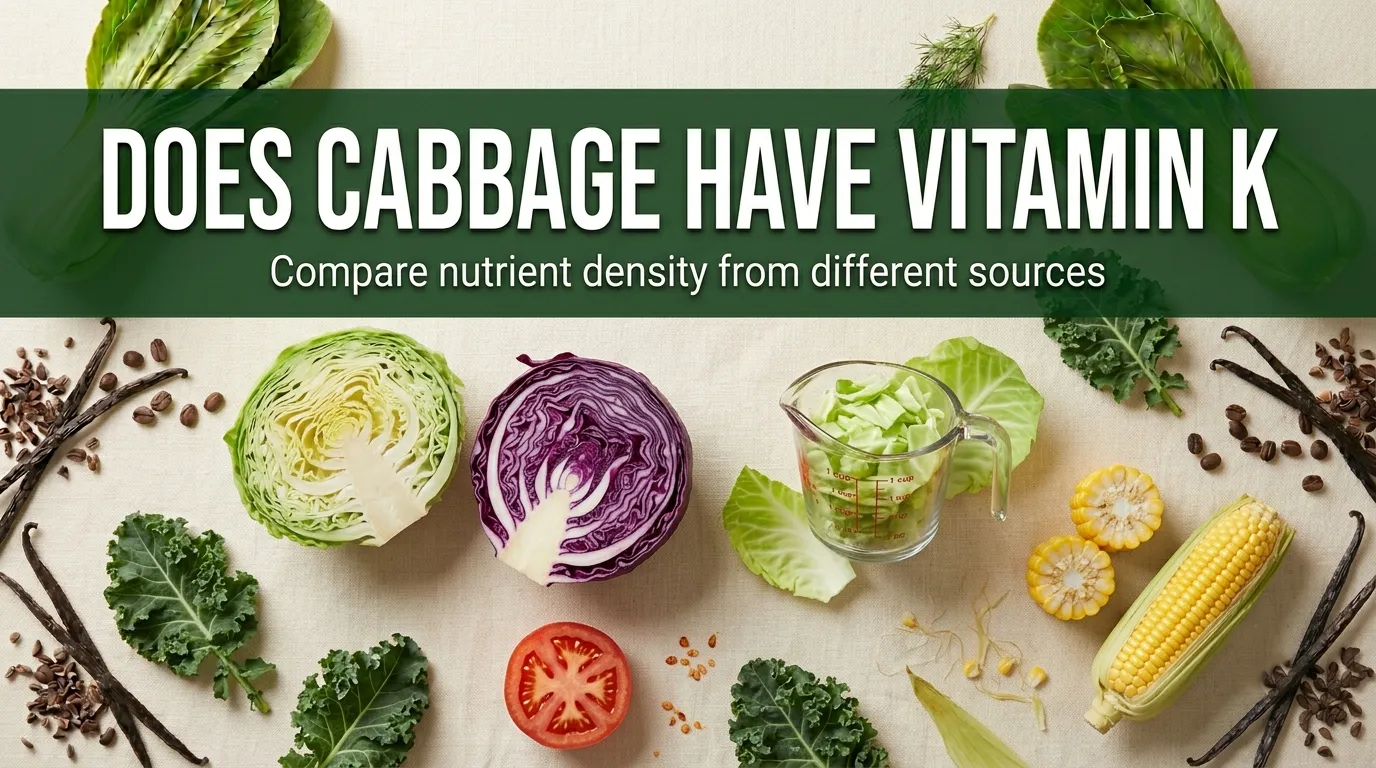
This article gives you the exact microgram amounts for green, red, napa, and savoy cabbage, plus sauerkraut, in both raw and cooked forms. You’ll see a complete ranking of common vegetables by vitamin K content, from kale at the top to corn at the bottom. Most importantly, you’ll learn the practical strategy for eating cabbage safely while on warfarin, the same strategy a registered dietitian or an anticoagulation pharmacist would teach you.
Does Cabbage Have Vitamin K?
Cabbage contains vitamin K, and a one-cup serving of chopped raw green cabbage provides 67.6 micrograms, which is a clinically relevant amount for anyone tracking this nutrient. The answer to “does cabbage have vitamin k” is an unqualified yes. It is not a trace amount. It is not an amount you can ignore. It is enough that your body uses it to synthesize active clotting factors within hours of digestion.
The vitamin K in cabbage is almost exclusively phylloquinone, also called vitamin K1. This is the plant form of the vitamin, located in the chloroplasts of the green leaves. The white core and the pale inner leaves of a cabbage head contain less vitamin K than the dark outer leaves. The chlorophyll concentration and the phylloquinone concentration track together. Darker green equals more vitamin K. This is a helpful visual rule when you are at the grocery store comparing cabbages.
The clinical relevance of the number 67.6 micrograms is that it represents over half the daily Adequate Intake. If you eat a generous portion of coleslaw, say two cups, you have consumed 135 micrograms of vitamin K, more than the entire daily AI for an adult man. If you then eat a spinach salad the next day, your vitamin K intake is highly variable. For a person not on anticoagulants, this variability is harmless. For a person on warfarin, it can mean the difference between a therapeutic INR and a dangerous one.
How Much Vitamin K in Cabbage Per Serving
One cup of chopped raw green cabbage contains 67.6 micrograms of vitamin K. One cup of chopped cooked green cabbage contains approximately 82 micrograms, a slight increase due to the concentration effect of water loss during cooking. The “how much vitamin k in cabbage per serving” question is best answered with the USDA FoodData Central database, the definitive source for food nutrient composition.
A standard serving of cabbage is one cup, chopped, weighing approximately 89 grams raw. The vitamin K content per serving is consistent across reliable databases. The table below shows the values for the most common cabbage preparations. Note that the cooking method matters. Boiling leaches some water-soluble vitamins but concentrates the fat-soluble phylloquinone because the leaf volume shrinks.
| Cabbage Preparation | Serving Size | Vitamin K (mcg) | % AI (Men) |
|---|---|---|---|
| Green cabbage, raw, chopped | 1 cup (89g) | 67.6 | 56% |
| Green cabbage, cooked, boiled, drained | 1 cup (150g) | 82.0 | 68% |
| Red cabbage, raw, chopped | 1 cup (89g) | 34.0 | 28% |
| Napa cabbage, raw, chopped | 1 cup (109g) | 42.0 | 35% |
| Savoy cabbage, raw, chopped | 1 cup (70g) | 48.0 | 40% |
These numbers are not estimates. They are laboratory-analyzed values from the USDA. A patient on warfarin can take this table to their anticoagulation pharmacist and discuss a consistent weekly intake goal based on the specific type of cabbage they prefer.
Key Takeaway: One cup of raw green cabbage is 67.6 mcg, over half your daily vitamin K. Red cabbage is half that. Cooking concentrates the vitamin slightly.
What Vegetables Have Vitamin K? A Complete List
Phylloquinone is present in virtually all green vegetables, with the highest concentrations found in dark leafy greens like kale, spinach, and collard greens, while root vegetables, bulbs, and non-green vegetables contain minimal amounts. The question “what vegetables have vitamin k” is best answered with a ranked list that distinguishes the very high from the negligible.
The vitamin K content of a vegetable is directly related to its chlorophyll content. The chloroplast is the organelle where photosynthesis occurs, and phylloquinone is an electron carrier in photosystem I. Any plant tissue that is actively photosynthesizing contains vitamin K. Green leaves are the richest source. Stems contain less. Roots, tubers, bulbs, and fruits that develop underground or without direct sunlight contain very little.
- Extremely High (over 400 mcg per cup, cooked): Kale, spinach, collard greens, turnip greens, Swiss chard
- High (100-400 mcg per cup): Broccoli, Brussels sprouts, mustard greens, beet greens
- Moderate (30-100 mcg per cup): Green cabbage, asparagus, romaine lettuce, green leaf lettuce, okra
- Low (10-30 mcg per cup): Red cabbage, iceberg lettuce, green beans, cucumber with peel, peas
- Very Low (under 10 mcg per cup): Tomatoes, corn, carrots, potatoes, onions, mushrooms, bell peppers
The Academy of Nutrition and Dietetics emphasizes that the goal is not to eliminate vitamin K from the diet. The goal is consistency. A patient who eats a spinach salad every day has a stable INR on a higher warfarin dose. A patient who eats no greens all week and then a giant kale salad on Saturday has a dangerously variable INR. The list is a tool for consistency, not a hit list of forbidden foods.
Which Vegetables Are High in Vitamin K?
Kale, spinach, collard greens, turnip greens, and Swiss chard are the vegetables highest in vitamin K, each providing over 400 micrograms per cooked cup, which is more than four times the daily Adequate Intake. The question “which vegetables are high in vitamin k” identifies the foods that require the most careful management for patients on anticoagulants.
A single cup of cooked kale contains 817 micrograms of vitamin K, according to the USDA. That is 681 percent of the Adequate Intake. A single cup of cooked spinach contains 494 micrograms. These are not foods to avoid. They are foods to eat consistently if you choose to eat them at all. The danger is not the kale. The danger is the kale eaten randomly and unpredictably.
| Vegetable (1 cup cooked) | Vitamin K (mcg) | % AI (Men) |
|---|---|---|
| Kale | 817 | 681% |
| Spinach | 494 | 412% |
| Collard greens | 773 | 644% |
| Turnip greens | 529 | 441% |
| Swiss chard | 572 | 477% |
| Broccoli | 220 | 183% |
| Brussels sprouts | 219 | 183% |
| Green cabbage | 82 | 68% |
The practical advice from a clinical pharmacist would be to pick a lane. If you love kale, eat a consistent amount of kale every day or every week. Do not binge on it. Do not avoid it for weeks and then eat a large portion. The warfarin dose is adjusted to match your habitual vitamin K intake. A stable intake at any level can be accommodated with the appropriate dose. An unstable intake cannot.
Key Takeaway: Kale and spinach are the vitamin K heavyweights. Cabbage is moderate. The clinical risk is variability, not the absolute amount.
Does Lettuce Have Vitamin K?
Yes, lettuce contains vitamin K, but the amount varies dramatically by type, with romaine and green leaf lettuce providing 48 to 60 micrograms per cup, while iceberg lettuce provides only 14 micrograms per cup. The question “does lettuce have vitamin k” matters because lettuce is a daily food for many people, and switching salad greens can inadvertently change vitamin K intake by a factor of four.
The general rule holds: the darker the green, the more the vitamin K. Iceberg lettuce is mostly water and pale, tightly wrapped leaves that receive little sunlight during growth. Its phylloquinone content is negligible for clinical purposes. Romaine, with its long, dark green outer leaves, contains significant vitamin K. Butterhead lettuce falls in the middle.
For a person on warfarin who eats a daily lunch salad, the choice of lettuce is not trivial. Switching from iceberg to a “healthier” spring mix with spinach and arugula can triple their vitamin K intake overnight. This is not a reason to avoid dark greens. It is a reason to pick one salad base and stick with it, or to work with an anticoagulation pharmacist to adjust the warfarin dose to match the new habitual intake.
Are Tomatoes High in Vitamin K?
Tomatoes are not high in vitamin K, with a medium raw tomato containing approximately 9 micrograms, and a cup of cherry tomatoes providing about 12 micrograms, making them a low-vitamin-K food suitable for unrestricted consumption. The question “are tomatoes high in vitamin k” is easy to answer. They are not. A person on warfarin does not need to track tomato intake.
The vitamin K in tomatoes is concentrated slightly in the skin and the seeds, but the overall level is so low that even a large serving, a cup of tomato sauce for example, contributes only about 20 micrograms. Tomato products, including paste, sauce, and sun-dried tomatoes, remain in the low category. The cooking and concentration process does not meaningfully increase the vitamin K content per calorie the way it does with leafy greens.
A Caprese salad of tomatoes, fresh mozzarella, and basil introduces a meaningful variable not from the tomatoes but from the basil. Fresh basil leaves contain approximately 10 micrograms of vitamin K per tablespoon of chopped leaves. A generous garnish can add 30 to 40 micrograms. The tomato is innocent. The herbs are the hidden source.
Is Corn High in Vitamin K?
Corn is not high in vitamin K, with one cup of cooked yellow corn containing less than 1 microgram, making it a negligible source that requires no dietary tracking for medication management. The question “is corn high in vitamin k” can be answered definitively: corn is one of the lowest-vitamin-K vegetables available. A person on warfarin can eat corn freely.
The nutritional profile of corn is dominated by starch, with small amounts of lutein and zeaxanthin in yellow varieties. These carotenoids are chemically distinct from phylloquinone. The yellow color is not an indicator of vitamin K content. Corn is a grain that is eaten as a vegetable, and grains in general are very low in phylloquinone.
Corn oil deserves a separate mention. While the whole kernel contains negligible vitamin K, corn oil contains approximately 2 micrograms per tablespoon, which is still low. Soybean oil, by contrast, contains 25 micrograms per tablespoon. The cooking oil used in a stir-fry can contribute more vitamin K than the vegetables themselves. This is an often-overlooked detail in dietary counseling.
Key Takeaway: Tomatoes and corn are very low in vitamin K. Eat them without worry. The basil on your Caprese salad and the oil in your stir-fry are the hidden variables.
What Vitamin K Does in Your Body
Vitamin K is a fat-soluble cofactor required for the gamma-carboxylation of specific glutamic acid residues on proteins involved in blood coagulation and bone metabolism, including prothrombin and osteocalcin. Understanding what vitamin K does in your body transforms the number on a nutrition label into a physiological reality. You are not just eating a microgram amount. You are consuming the substrate for a life-preserving biochemical reaction.
The coagulation cascade is a series of enzymatic reactions where inactive zymogens are converted to active proteases, ultimately forming a fibrin clot. Four of these clotting factors, Factor II (prothrombin), Factor VII, Factor IX, and Factor X, require vitamin K-dependent carboxylation to bind calcium and become functional. This reaction occurs in the liver. Vitamin K is the cofactor. Without it, the liver produces under-carboxylated, inactive clotting factors that circulate uselessly in the blood.
Bone metabolism is the second critical function. Osteocalcin is a protein secreted by osteoblasts, the bone-building cells. It binds calcium and incorporates it into the hydroxyapatite crystal of bone. Osteocalcin requires vitamin K-dependent carboxylation to bind calcium. The NIH Office of Dietary Supplements notes that observational studies have linked low dietary vitamin K intake to lower bone mineral density and increased fracture risk in older adults. This is the same vitamin that warfarin blocks, which is why long-term warfarin use is associated with increased arterial calcification and potentially osteoporosis, a topic of ongoing research.
Raw vs Cooked Cabbage Vitamin K Comparison
Cooked cabbage has a slightly higher concentration of vitamin K per cup than raw cabbage because the leaf volume reduces as water evaporates, but the absolute amount of vitamin K in the portion you serve yourself does not change with cooking. The raw vs cooked cabbage comparison confuses many people. If you take one cup of raw chopped cabbage and cook it, it shrinks to about a third of a cup. The vitamin K does not evaporate. It concentrates into a smaller volume.
The USDA data illustrates this clearly. One cup of raw green cabbage weighs 89 grams and contains 67.6 micrograms. One cup of cooked cabbage weighs 150 grams and contains 82 micrograms. The cooked cup is heavier because the leaves have collapsed and more cabbage fits in the measuring cup. If you cook a measured cup of raw cabbage and then eat all of it, you consume exactly 67.6 micrograms. The cooking did not create or destroy vitamin K. It simply rearranged it into a denser package.
The practical implication is for portion estimation. A patient who says “I eat one cup of cooked cabbage with dinner” is eating more cabbage, and more vitamin K, than a patient who says “I eat one cup of raw coleslaw.” The cooked cabbage eater has consumed 82 micrograms. The coleslaw eater has consumed 68. Both are fine. Both just need to be consistent from day to day.
Red Cabbage vs Green Cabbage Vitamin K
Red cabbage contains approximately 34 micrograms of vitamin K per raw cup, roughly half the amount found in green cabbage, making it a meaningfully lower-vitamin-K choice for someone trying to reduce their intake. The red cabbage vs green cabbage comparison is driven by the different phytochemical profiles. The anthocyanins that make red cabbage purple are not related to vitamin K. The lower phylloquinone content is likely due to the different chlorophyll concentration in the darker green outer leaves of green cabbage.
Green cabbage is the standard for coleslaw, soups, and boiled cabbage dishes. It is the variety most commonly referenced in nutrition databases. Red cabbage is often used raw in salads and as a garnish. The visual difference is a useful cue. The greener the cabbage, the higher the vitamin K. A pale green or white cabbage head, like the Dutch white cabbage used in sauerkraut, has less vitamin K than a deeply green savoy or spring cabbage.
| Cabbage Type (1 cup raw) | Vitamin K (mcg) | Color Cue |
|---|---|---|
| Green cabbage | 67.6 | Dark green outer, pale inner |
| Red cabbage | 34.0 | Deep purple throughout |
| Napa cabbage | 42.0 | Pale green to white |
| Savoy cabbage | 48.0 | Dark green, crinkled leaves |
The choice between red and green cabbage for a person on warfarin is a legitimate clinical decision. If you are struggling to keep your INR in range and your diet recall shows variable green cabbage intake, switching to red cabbage can cut your vitamin K intake from that source in half.
Key Takeaway: Red cabbage has half the vitamin K of green cabbage. If your INR is unstable and you eat a lot of coleslaw, switching to red is a practical modification to discuss with your pharmacist.
Napa Cabbage and Savoy Cabbage Vitamin K
Napa cabbage contains approximately 42 micrograms of vitamin K per raw cup, and savoy cabbage contains approximately 48 micrograms, placing both in the moderate range between red and standard green cabbage. The napa cabbage and savoy cabbage question arises from the popularity of these varieties in Asian and European cuisines. A person making kimchi or stuffed cabbage rolls needs to know the numbers.
Napa cabbage, also called Chinese cabbage or by its scientific name Brassica rapa subsp. pekinensis, is the pale, oblong head used in kimchi and hot pot. Its leaves are more tender and less deeply green than standard cabbage. The vitamin K content is accordingly lower, about 42 micrograms per raw cup. Kimchi made from napa cabbage retains the vitamin K, as the fermentation process does not degrade phylloquinone.
Savoy cabbage is the crinkled, deeply green European variety used in braised dishes and cabbage rolls. Its dark leaf color indicates a higher chlorophyll and therefore higher phylloquinone content than napa, about 48 micrograms per raw cup. A stuffed cabbage roll made with two large savoy leaves likely provides 60 to 80 micrograms of vitamin K, a clinically significant amount. A person on warfarin who makes a batch of 12 cabbage rolls and eats two per day for a week has established a consistent intake pattern, which is the goal.
Does Sauerkraut Have Vitamin K?
Yes, sauerkraut retains the vitamin K that was present in the raw cabbage before fermentation, with a one-cup serving of drained sauerkraut containing approximately 18 to 25 micrograms, a reduction from raw cabbage due to the leaching of the fat-soluble vitamin into the brine. The question “does sauerkraut have vitamin k” reveals a specific dietary concern. A person eating a Reuben sandwich or a sausage with kraut wants to know if the fermented cabbage counts.
Sauerkraut is made from finely sliced white or green cabbage fermented by lactic acid bacteria, primarily Lactobacillus plantarum. The vitamin K present in the raw cabbage is largely retained in the solid cabbage shreds. Some of the phylloquinone, being fat-soluble and not water-soluble, remains associated with the plant tissue. The brine does not extract it efficiently. The reduction from 68 micrograms in raw green cabbage to 20 micrograms in sauerkraut is primarily due to the fact that sauerkraut is often made from paler, lower-vitamin-K cabbage varieties and is measured as drained shreds.
The practical serving size of sauerkraut is also smaller than that of coleslaw. A typical Reuben sandwich has about a quarter-cup of sauerkraut, providing roughly 5 micrograms of vitamin K. This is a negligible amount. A large side of sauerkraut with sausage, half a cup, provides about 10 micrograms. Sauerkraut, in typical culinary portions, is a low-vitamin-K food.
Fermented Cabbage and Vitamin K Absorption
Fermented cabbage products like sauerkraut and kimchi contain a mix of phylloquinone from the original cabbage and small amounts of menaquinone produced by the fermenting bacteria, and the fermentation process may enhance the bioavailability of the vitamin K present. The question of fermented cabbage and vitamin K absorption is a frontier topic in nutrition science. The microbiome is increasingly recognized as a contributor to vitamin K status.
Lactic acid bacteria, including the species used in sauerkraut and kimchi fermentation, are capable of synthesizing menaquinones, the vitamin K2 forms. The contribution of this bacterial synthesis to the total vitamin K content of fermented vegetables is not well quantified, but a 2018 analysis published in the Journal of Food Composition and Analysis found that fermented plant foods contained measurable menaquinone-7, the long-chain vitamin K2 form with a longer half-life in the human body than phylloquinone.
For the person on warfarin, the practical advice remains the same regardless of the phylloquinone-to-menaquinone ratio. Eat a consistent amount of fermented cabbage products. If you eat kimchi daily, continue to eat kimchi daily. If you eat sauerkraut once a month, continue that pattern. The fermentation variable does not change the consistency principle.
Key Takeaway: Fermented cabbage retains plant vitamin K and gains small amounts of bacterial vitamin K2. Count sauerkraut and kimchi in your consistent intake. The amounts are lower than raw cabbage.
Cabbage and Warfarin: How to Manage Your Diet
Cabbage and warfarin can coexist safely when you eat a consistent amount of cabbage each week, track your INR regularly, and communicate any planned dietary changes to your anticoagulation pharmacist or physician before making them. The cabbage and warfarin relationship is not a prohibition. It is a management strategy.
Warfarin works by inhibiting vitamin K epoxide reductase, the enzyme that recycles oxidized vitamin K back to its active reduced form. This creates a functional vitamin K deficiency that reduces clotting factor synthesis. When you eat a large amount of cabbage, you flood the liver with phylloquinone, which partially overcomes the warfarin blockade. The INR drops. The blood becomes more likely to clot. This is the mechanism of the interaction.
The management strategy taught in anticoagulation clinics follows three principles. First, consistency: eat the same amount of vitamin K-rich foods each week. Second, communication: tell your pharmacist if your diet changes, such as starting a new diet plan or a seasonal shift from winter to summer vegetables. Third, monitoring: check your INR on schedule. The American College of Cardiology recommends that patients on warfarin not avoid vitamin K-rich foods but rather keep their intake stable so the warfarin dose can be titrated to match.
How to Eat Cabbage Safely on Blood Thinners
To eat cabbage safely while on warfarin, determine your current average weekly intake, commit to a consistent weekly amount, and inform your prescriber or anticoagulation nurse of that planned intake so your dose can be adjusted accordingly. This is the practical, step-by-step guidance that turns the clinical principle into a daily habit.
Schedule a conversation specifically about your diet with the healthcare professional managing your warfarin. Bring a food record of what you actually ate over the past week. Ask directly: “I eat about three cups of coleslaw a week. Is that a level we can work with?” The answer is almost always yes. Warfarin is not a fragile medication that fails at the sight of a green vegetable. It is a dose-adjustable medication that works within the parameters of your actual life.
To find your consistent intake, follow these steps:
- For one week, keep a simple food diary focusing only on the vitamin K vegetables and oils you consume.
- At the end of the week, calculate your average daily intake in approximate micrograms using the values in this article.
- Share this number with your anticoagulation pharmacist or physician. Ask if your current dose is appropriate for this intake level.
- Commit to staying within a reasonable range of this weekly intake. A fluctuation of 20 to 30 percent is generally tolerable.
- If you want to change your diet significantly, call your clinic first. They may adjust your dose preemptively or have you come in for an INR check a few days after the change.
Do not stop eating vegetables out of fear. The health benefits of cabbage, the fiber, the glucosinolates, the vitamin C, are real and valuable. A diet devoid of green vegetables is not a healthy diet, even for a warfarin patient. The goal is green vegetables every day, not no green vegetables ever.
Key Takeaway: Tell your pharmacist how much cabbage you eat. Get your dose adjusted to match your life, not the other way around. Consistency is the treatment.
Building a Vitamin K Consistent Diet Plan
A vitamin K consistent diet plan identifies the specific high-, moderate-, and low-vitamin-K foods you eat habitually, sets a weekly target intake range, and maintains that range while allowing for variety within each category. Building a vitamin k consistent diet plan is the long-term solution. You are not a prisoner of a cabbage ban. You are the architect of a stable, green vegetable-rich diet that your warfarin dose can accommodate.
The plan works in tiers. You track the high-vitamin-K foods closely: kale, spinach, greens. These are the foods where a single serving can shift the INR. You eat the moderate-vitamin-K foods, cabbage, broccoli, asparagus, lettuce, in a predictable pattern. You eat the low-vitamin-K foods, tomatoes, corn, potatoes, carrots, peppers, without any tracking at all. The tiered approach focuses your attention where it matters and frees you from micromanaging harmless foods.
| Tier | Foods | Tracking Strategy |
|---|---|---|
| High (over 200 mcg/serving) | Kale, spinach, collards, chard | Track closely, eat same amount weekly |
| Moderate (30-200 mcg/serving) | Cabbage, broccoli, romaine, asparagus | Keep pattern consistent, note changes |
| Low (under 30 mcg/serving) | Tomatoes, corn, carrots, potatoes, onions | Eat freely, no tracking needed |
The registered dietitian’s message is clear. You do not need to count micrograms for the rest of your life. You need to find your pattern, communicate it, and live it. The human body on warfarin can handle green vegetables. It cannot handle green vegetable chaos. The order is yours to create.
Frequently Asked Questions About Cabbage and Vitamin K
Does cabbage have a lot of vitamin K?
One cup of raw green cabbage has 67.6 micrograms, which is about 56 percent of the daily Adequate Intake for men.
This is a moderate amount compared to kale at over 800 micrograms per cup, but it is clinically meaningful for warfarin patients.
Red cabbage has about half this amount at 34 micrograms per cup.
Can I eat cabbage if I take warfarin?
Yes, you can eat cabbage while on warfarin if you eat a consistent amount each week.
Tell your anticoagulation pharmacist how much cabbage you typically eat so your dose can be adjusted for that intake.
Do not abruptly add or remove large amounts of cabbage without checking your INR soon after.
Is cooked cabbage higher in vitamin K than raw?
Cooked cabbage has a higher vitamin K concentration per cup because the leaves shrink, but the absolute amount of vitamin K does not change.
A cup of raw cabbage that you cook contains the same vitamin K after cooking as it did before.
The measuring cup is denser, not the nutrient.
Does sauerkraut have vitamin K?
Yes, sauerkraut retains vitamin K from the original cabbage, typically 18 to 25 micrograms per cup.
This is less than raw green cabbage because sauerkraut is often made from paler cabbage varieties and is measured drained.
A typical Reuben sandwich portion is low enough to be clinically negligible.
What vegetable has the most vitamin K?
Kale has the most vitamin K of any common vegetable, with one cup of cooked kale providing 817 micrograms.
This is over 600 percent of the daily Adequate Intake.
Spinach, collard greens, and turnip greens are also extremely high sources.
Does lettuce have vitamin K?
Yes, romaine and green leaf lettuce have 48 to 60 micrograms per cup, a moderate amount.
Iceberg lettuce has very little, only about 14 micrograms per cup.
Switching from iceberg to a dark leaf salad mix can significantly increase your vitamin K intake.
Cabbage contains vitamin K. That fact does not make it your enemy. It makes it a food you treat with the same respect and consistency you treat your medication schedule. The 68 micrograms in your Monday coleslaw are not a problem if the 68 micrograms in your Thursday coleslaw are also there, week after week.
Write down what you actually eat. Take that list to your next anticoagulation appointment. Ask your pharmacist to build a plan around your real life, not a hypothetical vitamin-K-free diet that no one can sustain. You deserve both the health benefits of vegetables and the protection of your medication. With consistency, you get both.