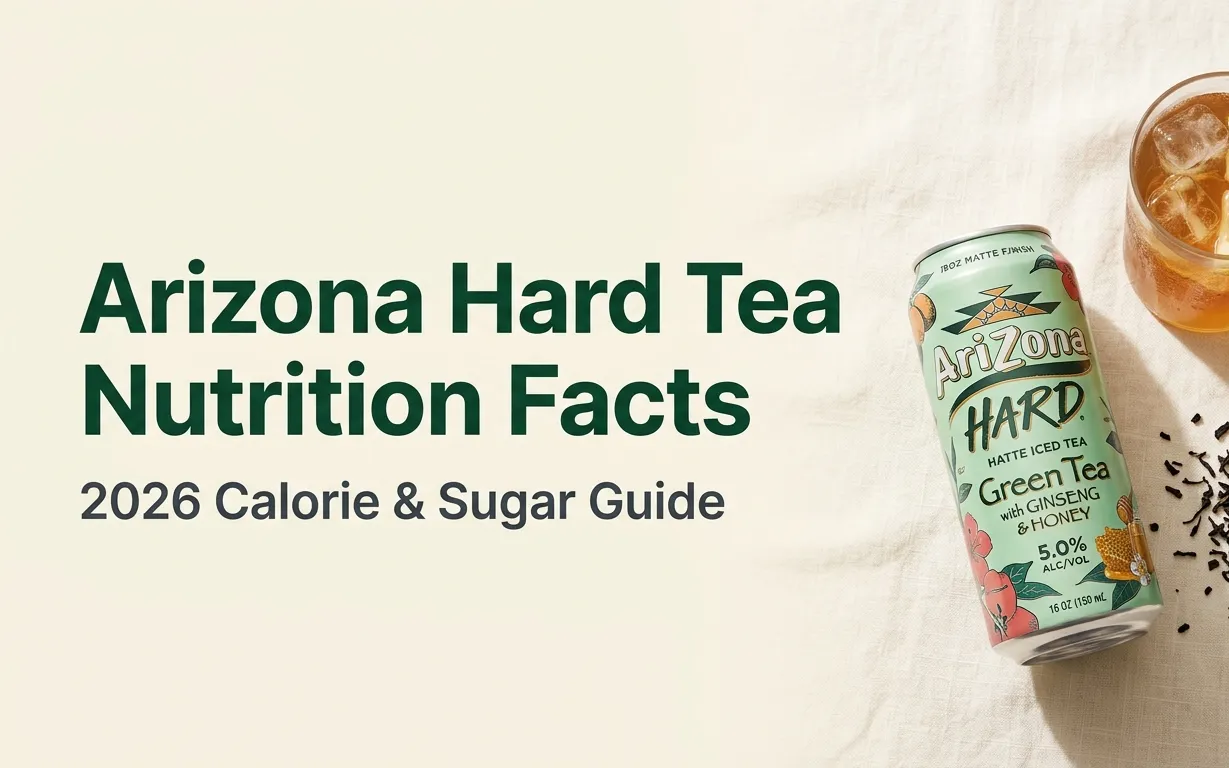
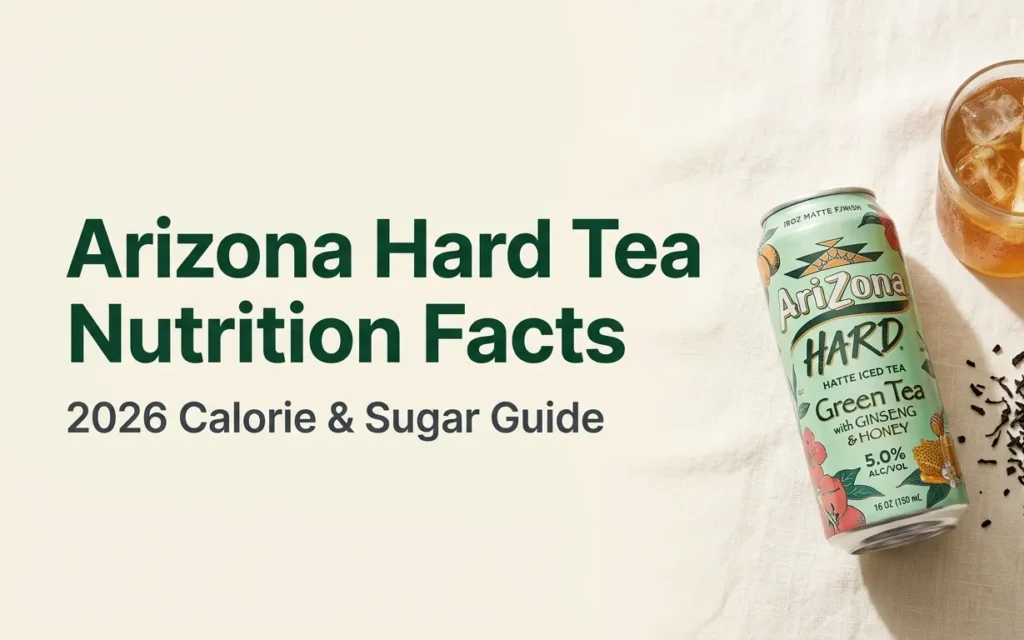
Arizona Hard Tea Nutrition Facts: 2026 Calorie & Sugar Guide
Arizona Hard Tea delivers around 220 to 260 calories per 16-ounce can, coming almost entirely from alcohol and added sugar. The drink contains zero protein, zero fat, and no meaningful vitamins or minerals, making it a source of empty calories in dietary terms.
Knowing what is actually in your can matters because a single serving can deliver more than 40 grams of sugar. That is roughly 80 percent of the 50-gram daily added sugar limit the Dietary Guidelines for Americans 2020-2025 recommends for a standard 2,000-calorie diet. You get that alongside alcohol, which the body prioritizes metabolizing before anything else.
This article walks you through the complete nutritional profile of Arizona Hard Tea for 2026. You will learn the exact calorie and sugar counts, how the alcohol content affects your body’s processing of those nutrients, what every ingredient on the label actually is, and how this drink stacks up against hard seltzer, beer, and regular iced tea so you can make an informed choice.
Arizona Hard Tea Nutrition Facts
Arizona Hard Tea is a malt-based alcoholic beverage that combines brewed black tea with alcohol, sweeteners, and flavoring agents, and its nutritional profile reflects a high-sugar, high-calorie drink with negligible micronutrient content. A standard 16-ounce can provides approximately 220 to 260 calories, 38 to 44 grams of total carbohydrate, all of which comes from added sugars, and zero grams of protein, fat, and fiber.
The complete nutritional profile per 16-fluid-ounce (473 ml) can breaks down consistently across most flavor variants. The numbers do shift slightly depending on the specific flavor due to small differences in sweetener and flavoring formulations.
| Nutrient | Amount per 16 oz Can | % Daily Value (Based on 2,000-Calorie Diet) |
|---|---|---|
| Calories | 220–260 | 11–13% |
| Total Fat | 0 g | 0% |
| Sodium | 15–35 mg | 1–2% |
| Total Carbohydrate | 38–44 g | 14–16% |
| Dietary Fiber | 0 g | 0% |
| Total Sugars | 38–42 g | — |
| Added Sugars | 38–42 g | 76–84% |
| Protein | 0 g | 0% |
| Alcohol (ethanol) | ~18–21 g | — |
The alcohol content itself contributes a substantial share of the total calories. Ethanol provides 7 calories per gram, which means roughly 126 to 147 calories in each can come from alcohol alone. The remaining calories arrive almost entirely from the added sugars, which clock in at 4 calories per gram.
According to the National Institutes of Health National Institute on Alcohol Abuse and Alcoholism, alcohol calories are considered empty calories because ethanol provides energy without any accompanying vitamins, minerals, or essential macronutrients. Your body also processes alcohol differently than it does carbohydrates or fats, which has implications for how the sugar load in this drink gets metabolized.
Key Takeaway: A single 16-ounce can of Arizona Hard Tea provides between 220 and 260 calories, essentially all from alcohol and added sugar with zero nutritional benefit from protein, fiber, or micronutrients.
Arizona Hard Iced Tea Nutrition Facts
The iced tea base in Arizona Hard Iced Tea distinguishes it nutritionally from other malt beverages only in flavor profile, not in meaningful nutrient content. Despite the product containing brewed black tea, the fermentation and processing required to create the alcoholic beverage largely eliminates any functional polyphenol or antioxidant contribution that regular brewed tea provides.
Regular unsweetened black tea contains catechins, theaflavins, and other polyphenolic compounds linked to cardiovascular and metabolic benefits in observational research. A typical 8-ounce cup of brewed black tea delivers roughly 200 mg of polyphenols, according to USDA FoodData Central entries for brewed black tea. However, the brewing, fermentation, and extended shelf-life processing involved in creating a malt-based hard tea alters these compounds significantly.
The product label lists brewed tea as an ingredient, which satisfies the flavor identity and legal labeling requirements. What the label does not tell you is whether any of those tea compounds survive in measurable amounts. Most flavonoid compounds in tea are sensitive to pH changes, oxidation, and prolonged storage. Hard tea products undergo multiple processing steps, including fermentation, carbonation, and the addition of preservatives such as potassium sorbate and sodium benzoate. These conditions do not preserve delicate polyphenols well.
You should view Arizona Hard Iced Tea nutritionally as a flavored alcoholic beverage, not as tea with alcohol added. The brewed tea component provides flavor authenticity but not the health-associated compounds found in fresh-brewed unsweetened tea.
The label claims of brewed tea do not equate to functional tea benefits. If you want the antioxidant compounds associated with black tea consumption, drink freshly brewed unsweetened tea. If you want an alcoholic beverage, understand that the hard iced tea version carries the full caloric and sugar load of a sweetened malt beverage without the polyphenol payoff.
Key Takeaway: The brewed tea in Arizona Hard Iced Tea gives it authentic flavor but contributes no meaningful antioxidant or polyphenol benefit due to processing and fermentation losses.
Calories in Arizona Hard Tea
A single 16-ounce can of Arizona Hard Tea contains approximately 220 to 260 calories depending on the flavor variant, which places it in the middle-to-high range among ready-to-drink alcoholic beverages. The Lemon, Peach, and Original flavors cluster around 220 to 240 calories per can, while some specialty or seasonal variants may reach 260 calories.
Those calorie numbers break down into two distinct sources. Alcohol at 5 percent alcohol by volume (ABV) contributes roughly 126 to 147 calories. The sugar content delivers the remaining 88 to 112 calories. You get zero calories from protein or fat.
Here is how Arizona Hard Tea calories compare to common reference points in a standard 12-ounce equivalent for fair comparison:
| Beverage (12 oz serving for comparison) | Approximate Calories |
|---|---|
| Arizona Hard Tea (12 oz equivalent) | 165–195 |
| Regular beer (5% ABV) | 140–155 |
| Light beer (4.2% ABV) | 95–105 |
| Hard seltzer (5% ABV, 2g sugar) | 100 |
| Regular Arizona Iced Tea (non-alcoholic) | 135–150 |
| Unsweetened iced tea | 0–5 |
| White wine (5 oz) | 120–125 |
| Regular cola soda | 140–150 |
Arizona Hard Tea carries more calories per ounce than regular beer and significantly more than hard seltzer. The difference comes entirely from the sugar content, which beer and hard seltzer largely lack.
The NIH notes that the average American adult who drinks alcohol consumes roughly 300 calories per day from alcoholic beverages alone. One can of Arizona Hard Tea represents a large portion of that average. If you drink two cans, you have consumed 440 to 520 calories, which approaches a full meal’s calorie allotment for many people, without any satiety, protein, or fiber.
Key Takeaway: Arizona Hard Tea packs roughly 165 to 195 calories per 12-ounce equivalent, making it more calorie-dense than light beer, hard seltzer, and most regular beers, largely because of its high sugar content.
Arizona Hard Tea Alcohol Content
Arizona Hard Tea contains 5 percent alcohol by volume across its core flavor lineup, which translates to approximately 0.8 fluid ounces or 18 to 21 grams of pure ethanol per 16-ounce can. The NIH National Institute on Alcohol Abuse and Alcoholism defines a standard drink as containing 0.6 fluid ounces or 14 grams of pure alcohol.
A single 16-ounce can of Arizona Hard Tea at 5 percent ABV equals roughly 1.3 standard drinks. You are consuming more than one standard alcoholic beverage when you finish one can. The math works like this: a 12-ounce beer at 5 percent ABV delivers 0.6 ounces of pure alcohol and qualifies as one standard drink. A 16-ounce can at the same ABV contains 33 percent more alcohol by volume, pushing it past the single-drink mark.
The Dietary Guidelines for Americans 2020-2025 defines moderate drinking as up to one standard drink per day for women and up to two standard drinks per day for men. One can of Arizona Hard Tea already exceeds the single-drink guideline. If you drink a 24-ounce can, sold in some markets, that delivers roughly 2 standard drinks in a single container.
Alcohol content also has direct nutritional implications beyond the calorie math. Your liver prioritizes metabolizing ethanol above all other energy sources. When alcohol enters your bloodstream, your body essentially hits pause on fat oxidation and carbohydrate metabolism to clear the alcohol first. That means the 38 to 42 grams of sugar in this drink get processed differently than they would in a non-alcoholic beverage. Some of that sugar energy is more likely to be stored as glycogen or converted to fat while your liver works through the alcohol load.
The CDC notes that exceeding moderate drinking guidelines is associated with increased risks for certain cancers, hypertension, liver disease, and unintended injuries. The risk is dose-dependent, meaning every drink above the moderate threshold elevates risk incrementally.
Key Takeaway: One 16-ounce can of Arizona Hard Tea at 5 percent ABV equals 1.3 standard drinks, exceeding the single-drink guideline, and your body will prioritize clearing the alcohol before it processes the significant sugar load.
Arizona Hard Tea Nutrition Facts Sugar
Arizona Hard Tea contains 38 to 42 grams of total sugar per 16-ounce can, all of which qualifies as added sugar under the FDA’s updated nutrition labeling definition. That single can delivers between 76 and 84 percent of the 50-gram daily added sugar limit recommended by the Dietary Guidelines for Americans 2020-2025 for a standard 2,000-calorie diet.
To put that number in perspective, 38 to 42 grams of sugar equals roughly 9 to 10 teaspoons of granulated sugar. Think about spooning 10 teaspoons of sugar into a glass of iced tea. That is what you are drinking in one can, plus the alcohol.
The American Heart Association recommends an even stricter added sugar limit of no more than 25 grams per day for women and 36 grams per day for men. By the AHA standard, one can of Arizona Hard Tea exceeds the full daily allowance for women by 13 to 17 grams and either meets or exceeds the allowance for men.
| Organization | Daily Added Sugar Limit | One Arizona Hard Tea (38–42g) Represents |
|---|---|---|
| Dietary Guidelines for Americans (2,000-calorie diet) | 50 g | 76–84% of daily limit |
| American Heart Association (women) | 25 g | 152–168% of daily limit |
| American Heart Association (men) | 36 g | 106–117% of daily limit |
| World Health Organization (10% of calories) | ~50 g | 76–84% of daily limit |
The sugar source in Arizona Hard Tea varies by flavor but typically includes high fructose corn syrup or cane sugar. High fructose corn syrup contains roughly 55 percent fructose and 45 percent glucose. Table sugar, or sucrose, is a disaccharide that breaks down into 50 percent fructose and 50 percent glucose during digestion. Nutritionally, the two sweeteners are nearly identical in caloric value and metabolic impact when consumed in these amounts.
The concern with this sugar delivery system is the combination with alcohol. Fructose metabolism occurs primarily in the liver, the same organ processing the ethanol. A 2018 review in the journal Nutrients noted that the combination of high fructose intake and alcohol consumption can amplify hepatic lipid accumulation more than either factor alone, though the research focused on chronic consumption patterns, not occasional intake.
People with prediabetes, type 2 diabetes, or insulin resistance should approach this product with particular caution. The rapid sugar absorption combined with alcohol’s effects on gluconeogenesis can create unpredictable blood glucose responses.
Key Takeaway: A single can of Arizona Hard Tea delivers 38 to 42 grams of added sugar (9 to 10 teaspoons), meeting or exceeding the full daily added sugar limit from every major health organization.
Arizona Hard Tea Carbs
Arizona Hard Tea provides 38 to 44 grams of total carbohydrate per 16-ounce can, derived entirely from added sugars. The product contains zero grams of dietary fiber and zero grams of complex carbohydrates. In nutritional terms, these are simple carbohydrates that digest rapidly and deliver a quick glucose load to your bloodstream.
The carbohydrate content on the nutrition facts panel does not account for the alcohol calories, which are listed separately or factored into the total calorie count without being classified as carbohydrates. This distinction confuses some consumers. Alcohol is not a carbohydrate. Ethanol has its own metabolic pathway and calorie contribution of 7 calories per gram. The 38 to 44 grams of carbohydrates on the label refer exclusively to the sugar content.
For someone following a structured eating plan, here is what the carbohydrate load means in context:
A standard 2,000-calorie diet with a macronutrient split of 50 percent carbohydrate provides roughly 250 grams of carbs per day. One can of Arizona Hard Tea would represent about 15 to 18 percent of that daily carbohydrate budget.
For low-carbohydrate diets, the impact is far more dramatic. A ketogenic diet typically targets 20 to 50 grams of total carbohydrate per day. One can of Arizona Hard Tea would either meet or nearly meet that entire daily carbohydrate allowance. Someone on a moderate low-carb plan of 100 grams per day would spend 38 to 44 percent of their daily carb budget on a single beverage.
The Academy of Nutrition and Dietetics notes that liquid carbohydrates do not trigger the same satiety signals that solid foods do. You are unlikely to compensate for the 220 to 260 calories from this beverage by eating less at your next meal. Research consistently shows that caloric beverages contribute to total daily energy intake without a corresponding reduction in food intake, which is why liquid calories are a recognized factor in weight management.
The absence of fiber matters here. Fiber slows glucose absorption and moderates the insulin response. Without it, the sugar in Arizona Hard Tea enters your bloodstream rapidly. Combined with alcohol, which can initially lower blood glucose before causing a rebound, the overall metabolic picture is complex and highly individual.
Key Takeaway: All 38 to 44 grams of carbohydrates in Arizona Hard Tea come from simple sugars with zero fiber, making this a concentrated source of liquid carbohydrates with no satiety benefit.
Arizona Hard Tea Ingredients
Arizona Hard Tea ingredients include carbonated water, brewed black tea, high fructose corn syrup or cane sugar, malted barley, natural flavors, citric acid, and preservatives including potassium sorbate and sodium benzoate. The ingredient label reveals a product that combines a malt alcohol base with brewed tea, sweetener, and acidity regulators.
The ingredient list typically appears in this order, which reflects descending predominance by weight:
Carbonated water forms the base of the beverage. The carbonation is added during processing and does not affect the nutritional profile.
Brewed black tea appears high on the ingredient list, indicating real tea leaves are steeped during production. This gives the product its tea flavor identity. However, as discussed in the iced tea section earlier, the functional polyphenol content after fermentation and shelf-stable processing is negligible.
High fructose corn syrup or cane sugar provides the sweetening. The specific sweetener varies by production batch and flavor variant. Some labels list one, some the other, and nutritionally the difference is not meaningful at this intake level.
Malted barley is the alcohol source. Arizona Hard Tea is a malt beverage, meaning the alcohol is produced by fermenting malted barley, the same grain base used in beer production. This distinguishes it from hard seltzers, which typically use fermented cane sugar or a neutral spirit base. The malted barley also makes this product a gluten-containing beverage.
Natural flavors provide the specific fruit or tea flavor notes. The term natural flavors is an FDA-regulated category that can encompass dozens of individual flavoring compounds derived from plant or animal sources, processed to extract specific flavor molecules. The exact composition is proprietary and not disclosed on the label.
Citric acid adjusts the acidity and provides tartness while also acting as a preservative and flavor enhancer. Sodium benzoate and potassium sorbate are antimicrobial preservatives that prevent yeast and mold growth in the finished product.
Phosphoric acid may appear in some flavor variants as an additional acidulant. This is the same compound found in cola beverages and contributes to the tangy flavor profile while also enhancing shelf stability.
People with specific dietary restrictions should note the malted barley, which contains gluten. No Arizona Hard Tea product is labeled gluten-free, and individuals with celiac disease or non-celiac gluten sensitivity should avoid it.
Key Takeaway: Arizona Hard Tea is a malt beverage made from fermented barley with brewed tea, sweetener, and preservatives, and it contains gluten from the malted barley ingredient.
Alcohol Arizona Hard Iced Tea Nutrition Facts
The alcohol component in Arizona Hard Iced Tea fundamentally changes how your body handles the entire nutritional package, and understanding this interaction explains why an alcoholic sweetened tea affects you differently than drinking iced tea and taking a shot of vodka separately. The ethanol and sugar arrive together in a single solution your body must process simultaneously.
Alcohol metabolism takes priority in your liver. The enzyme alcohol dehydrogenase breaks ethanol down into acetaldehyde, a toxic intermediate, which aldehyde dehydrogenase then converts to acetate. During this process, your liver temporarily reduces its output of glucose and slows fat oxidation. A 2019 review in the American Journal of Clinical Nutrition confirmed that even moderate alcohol intake acutely suppresses fat oxidation by up to 73 percent for several hours post-consumption.
That means the 38 to 42 grams of sugar you consume alongside the alcohol are metabolized in a metabolic environment where fat burning is paused and glucose regulation is altered. Your body tends to store more of that sugar energy as glycogen, and once glycogen stores are full, converts the excess to fat through de novo lipogenesis in the liver.
The alcohol-sugar combination also affects hydration status differently than either component alone. Alcohol inhibits vasopressin, the antidiuretic hormone, which increases urine output. The sugar load pulls water into the gastrointestinal tract to dilute the concentrated solution before absorption. Together, these effects can produce a net dehydrating effect despite the fluid volume consumed.
The Academy of Nutrition and Dietetics advises that alcoholic beverages with high sugar content present a double burden for blood glucose management. The sugar raises blood glucose rapidly while the alcohol can cause a delayed hypoglycemic effect several hours later, particularly if consumed on an empty stomach. This seesaw effect is most relevant for people with diabetes or insulin resistance.
For the general population consuming Arizona Hard Iced Tea occasionally and with food, the metabolic effects described are transient and your body handles them without issue. The concerns compound with frequency, volume, and whether consumption occurs with or without food. Drinking this product on an empty stomach amplifies every metabolic effect described.
Key Takeaway: Alcohol forces your liver to prioritize ethanol clearance over glucose regulation and fat metabolism, which means the sugar in Arizona Hard Iced Tea is processed in a metabolic state that favors storage rather than immediate energy use.
Does Arizona Hard Tea Have Caffeine
Arizona Hard Tea contains a small amount of caffeine from the brewed black tea ingredient, typically ranging from 10 to 25 milligrams per 16-ounce can, which is significantly less than a cup of coffee or standard black tea. The caffeine content is not listed on the nutrition facts panel, but the presence of brewed black tea in the ingredient list confirms caffeine is present.
Black tea naturally contains caffeine at approximately 14 to 61 milligrams per 8-ounce cup, according to USDA FoodData Central. The variation depends on brewing time, water temperature, and tea leaf grade. In Arizona Hard Tea production, the tea is brewed at industrial scale, then fermented, carbonated, and diluted with other ingredients, which reduces the final caffeine concentration per ounce.
For comparison, here is how the estimated caffeine content stacks up against common beverages:
| Beverage (Serving Size) | Approximate Caffeine Content |
|---|---|
| Arizona Hard Tea (16 oz) | 10–25 mg |
| Brewed black tea (8 oz) | 30–60 mg |
| Brewed coffee (8 oz) | 80–120 mg |
| Cola soda (12 oz) | 30–40 mg |
| Energy drink (16 oz) | 140–200 mg |
| Decaf coffee (8 oz) | 2–5 mg |
The caffeine in Arizona Hard Tea is low enough that most people will not notice a stimulant effect, particularly given that alcohol is a central nervous system depressant and caffeine is a stimulant. The two have opposing effects on alertness, though caffeine does not reduce alcohol’s impairment on judgment, coordination, or reaction time. The CDC explicitly warns that mixing caffeine and alcohol does not make you less intoxicated. You simply feel more awake while remaining impaired.
For people who are sensitive to caffeine or avoid it for medical reasons, even 10 to 25 milligrams may be worth noting. This amount is enough to cause mild stimulation in someone with low caffeine tolerance, a slow caffeine metabolizer, or someone who consumes this beverage in the evening close to bedtime. The combination of alcohol and caffeine late in the day can disrupt sleep architecture even if you feel tired.
People with certain cardiac arrhythmias, anxiety disorders, or gastroesophageal reflux disease who avoid caffeine should treat Arizona Hard Tea as a caffeine-containing product. Pregnant individuals, who are advised to avoid alcohol entirely and to limit caffeine to under 200 milligrams per day, should be aware this product contains both substances.
Key Takeaway: Arizona Hard Tea likely contains 10 to 25 milligrams of caffeine from brewed tea, a low amount that most people will not notice but that caffeine-sensitive individuals and those avoiding caffeine for medical reasons should account for.
Arizona Hard Tea Serving Size
The standard Arizona Hard Tea serving size listed on the nutrition facts panel is one 16-fluid-ounce can, and all nutritional values on the label correspond to consuming that full can. However, that single can contains 1.3 standard alcoholic drinks as defined by the NIH, which creates a discrepancy between the nutritional serving and the alcohol serving.
The FDA requires that nutrition facts labels list the serving size as the amount people typically consume in one sitting. For a 16-ounce can, the manufacturer has determined that one full can is the typical consumption unit. The label therefore does not subdivide the can into smaller alcohol-based servings.
This matters for several practical reasons. First, the Dietary Guidelines for Americans evaluate alcohol consumption in standard drink units, not in cans. If you track your alcohol intake for health reasons, you need to count this product as 1.3 drinks, not as one drink. Second, if you choose to drink a 24-ounce can, that equals approximately 2 standard drinks. Third, the calorie and sugar information on the label applies to the full 16-ounce can. If you pour a portion into a glass with ice and do not finish the can, your actual intake is lower than what the label states.
The serving size question also intersects with how people actually consume flavored malt beverages. Unlike beer, which is typically poured into a glass, hard teas are often consumed directly from the can. The tall 16-ounce format encourages single-session consumption of the full container. There is no visual cue to stop partway through.
For individuals tracking macronutrients, counting calories, or monitoring alcohol intake, the practical guidance is straightforward. Treat one 16-ounce can as 1.3 standard drinks. Log the full 220 to 260 calories and 38 to 44 grams of carbohydrate if you finish the can. If you want to stay within the single standard drink guideline, pour roughly three-quarters of the can (12 ounces) and save the rest.
Key Takeaway: One 16-ounce can is the full labeled serving, but it provides 1.3 standard alcoholic drinks, and consumers tracking alcohol or calories should account for this discrepancy.
Is Arizona Hard Tea Healthy
Arizona Hard Tea is not a health-promoting beverage, and positioning it as healthy would be inaccurate given its alcohol content, high added sugar load, and absence of protein, fiber, or micronutrients. The question is less about whether it is healthy and more about where it fits within an overall eating pattern if you choose to consume alcohol.
The Dietary Guidelines for Americans 2020-2025 state that people who do not currently drink alcohol should not start drinking for any reason related to health. The guidelines also state that alcohol is not a component of a healthy dietary pattern, and any alcohol consumption should be limited to moderate levels if consumed at all. One can of Arizona Hard Tea, which exceeds the single-drink definition, sits in tension with these recommendations.
Nutritionally, the product delivers roughly 220 to 260 calories with no protein, no fiber, and no micronutrients at levels that contribute meaningfully to daily requirements. The Academy of Nutrition and Dietetics classifies such items as sources of empty calories, meaning they provide energy without nutritional adequacy.
The sugar content alone is problematic from a dietary perspective. At 38 to 42 grams of added sugar per can, the product uses up nearly the entire daily added sugar budget recommended by the Dietary Guidelines and exceeds the stricter American Heart Association limits. When you consume this amount of sugar in liquid form, it does not trigger satiety, meaning you are unlikely to compensate by eating less at subsequent meals.
For people who choose to drink alcohol and want the most nutritionally economical option, hard seltzers, light beer, dry wine, or spirits with zero-calorie mixers all deliver alcohol with fewer calories and less sugar. Arizona Hard Tea sits near the less favorable end of the spectrum among ready-to-drink options.
The occasional consumption of Arizona Hard Tea as part of a social event or weekend gathering is not going to derail health for most people. The concern is with frequency and volume. A daily habit of drinking one or two of these represents a significant added sugar and alcohol load. Substituting this product for nutrient-dense foods in the diet would compound the nutritional deficit over time.
Key Takeaway: Arizona Hard Tea is not a healthy beverage. It delivers empty calories from alcohol and sugar with no nutritional return. For those who choose to drink, it represents a less favorable option than lower-sugar alternatives like hard seltzer or light beer.
Arizona Hard Tea vs White Claw
Arizona Hard Tea and White Claw Hard Seltzer differ dramatically in their nutritional profiles, with White Claw delivering 100 calories and 2 grams of sugar per 12-ounce serving compared to Arizona Hard Tea’s 220 to 260 calories and 38 to 42 grams of sugar per 16-ounce can. The nutritional gap between these two products is larger than between most ready-to-drink alcoholic beverages.
White Claw is a hard seltzer made from seltzer water, a gluten-free alcohol base derived from fermented cane sugar, and natural flavors. It contains no high fructose corn syrup and no brewed tea component. The nutritional simplicity of hard seltzer makes it the clear winner in a direct calorie and sugar comparison.
Here is a side-by-side comparison normalized to 12 ounces for fairness:
| Nutritional Feature (per 12 oz) | Arizona Hard Tea | White Claw |
|---|---|---|
| Calories | 165–195 | 100 |
| Total Carbohydrate | 29–33 g | 2 g |
| Total Sugars | 29–32 g | <1 g |
| Added Sugars | 29–32 g | 0 g |
| Protein | 0 g | 0 g |
| Alcohol (ABV) | 5% | 5% |
| Alcohol Base | Malted barley | Fermented cane sugar |
| Gluten | Contains gluten | Gluten-free |
| Caffeine | 8–19 mg | 0 mg |
For someone choosing between these two products, White Claw provides the same alcohol content per ounce with a fraction of the calories and almost none of the sugar. The trade-off is flavor. Arizona Hard Tea has a sweet, full-bodied tea taste. White Claw is a lighter, carbonated seltzer with subtle fruit flavoring. If you prefer the tea flavor and mouthfeel, you accept the nutritional cost for that experience.
Neither product provides nutritional value beyond the alcohol itself. Both are sources of empty calories. The difference is the magnitude of the caloric and sugar cost you pay for the flavor and drinking experience you prefer.
For individuals with gluten sensitivity or celiac disease, the distinction is categorical rather than preferential. Arizona Hard Tea contains gluten from malted barley. White Claw is certified gluten-free. There is no flexibility on this point for anyone who must strictly avoid gluten.
Key Takeaway: White Claw delivers the same 5 percent ABV as Arizona Hard Tea with less than half the calories and virtually no sugar, making it the nutritionally preferable option for people who primarily care about the calorie and sugar content of their alcoholic beverage.
Arizona Hard Seltzer Nutrition Facts
Arizona Hard Seltzer is a separate product line from Arizona Hard Tea that follows the hard seltzer nutritional template of approximately 100 calories, 2 grams of carbohydrate, and less than 1 gram of sugar per 12-ounce serving, positioning it as the brand’s lower-calorie alternative. The nutritional contrast between the two Arizona products could not be more stark.
Arizona Hard Seltzer uses a fermented cane sugar alcohol base rather than the malted barley used in the hard tea. The seltzer contains carbonated water, alcohol, natural flavors, and a small amount of cane sugar for taste balance. The ingredient list is shorter and does not include the high fructose corn syrup or brewed tea found in the hard tea product.
The typical nutritional profile for Arizona Hard Seltzer per 12-ounce serving looks like this:
| Nutrient | Arizona Hard Seltzer (12 oz) |
|---|---|
| Calories | 100 |
| Total Carbohydrate | 2 g |
| Total Sugars | <1 g |
| Added Sugars | <1 g |
| Protein | 0 g |
| Alcohol (ABV) | 5% |
Compared to the hard tea, the seltzer delivers roughly 65 to 95 fewer calories and 27 to 30 fewer grams of carbohydrate per equivalent serving. Over the course of consuming two or three drinks in a social setting, those differences compound into a 200 to 300 calorie differential.
The gluten status is also an important distinction. Arizona Hard Seltzer is made without barley malt and is widely considered gluten-free, though consumers with celiac disease should check the label for a formal gluten-free certification or manufacturer statement. The hard tea line contains malted barley and is not gluten-free.
The trade-off, as with the White Claw comparison, is taste and mouthfeel. The hard seltzer is light, crisp, and only subtly sweet. The hard tea is sweet, full-flavored, and closer to the classic Arizona iced tea taste that consumers recognize. Your choice between the two depends on whether you prioritize flavor experience or nutritional content.
For someone who enjoys the Arizona brand but wants the lighter nutritional profile, the hard seltzer line offers that option within the same brand family. You sacrifice the tea identity but gain a beverage that aligns more closely with current hard seltzer market expectations.
Key Takeaway: Arizona Hard Seltzer provides a dramatically lighter nutritional profile than the hard tea with 100 calories and less than 1 gram of sugar per 12 ounces, making it the brand’s lower-calorie, gluten-free alternative.
Hard Arizona Tea Nutrition Facts
Hard Arizona Tea, the same product as Arizona Hard Tea marketed with inverted wording, is a malt-based alcoholic iced tea that consistently delivers 220 to 260 calories per 16-ounce can across its flavor portfolio including Lemon, Peach, and Original variants. The nutritional profile remains uniform regardless of how the product name is phrased on packaging or in search queries.
The flavor variants available in the Hard Arizona Tea lineup include the following with their approximate calorie counts:
| Flavor (16 oz can) | Approximate Calories | Sugar (g) |
|---|---|---|
| Hard Arizona Original Iced Tea | 220–240 | 38–40 |
| Hard Arizona Lemon Iced Tea | 220–240 | 38–40 |
| Hard Arizona Peach Iced Tea | 230–250 | 39–42 |
| Hard Arizona Half & Half (Tea + Lemonade) | 240–260 | 40–44 |
The Half and Half variant tends to run slightly higher in calories and sugar due to the lemonade component adding additional sweetener beyond the tea base. The differences are small, in the range of 10 to 20 calories and 2 to 4 grams of sugar, but consistent across production batches.
The nutritional consistency across flavors reflects the standardized production process. The base malt beverage, tea brew, and sweetener levels remain fixed. Only the natural flavor compounds change between variants. This means your nutritional calculation does not need to change significantly regardless of which flavor you choose.
The product carries all the same nutritional considerations discussed throughout this article. It is a high-sugar, high-calorie alcoholic beverage with no protein, fiber, or micronutrient contribution. It contains gluten from malted barley. It includes caffeine from brewed tea at low levels. It is not a health food and should be understood as an indulgent choice rather than a routine beverage.
Key Takeaway: Hard Arizona Tea delivers 220 to 260 calories and 38 to 44 grams of sugar across all flavor variants, with the Half and Half flavor running slightly higher due to added lemonade sweetener.
Gluten in Arizona Hard Tea
Arizona Hard Tea contains gluten because it is brewed with malted barley, the same grain that gives traditional beer its fermentable sugars and flavor character. The product is not labeled gluten-free, and individuals with celiac disease, non-celiac gluten sensitivity, or wheat allergy should avoid it.
Malted barley is a gluten-containing grain. The malting process involves soaking barley grains in water to allow germination, then drying them with hot air. This develops the enzymes that will convert the grain’s starches into fermentable sugars during the brewing process. The resulting malted barley retains gluten proteins throughout fermentation.
The gluten proteins in barley include hordein, which is structurally similar to the gluten proteins in wheat that trigger immune reactions in people with celiac disease. Research published in the American Journal of Clinical Nutrition has confirmed that the hordein in barley is immunogenic in individuals with celiac disease.
During fermentation, gluten proteins are partially broken down by enzymatic activity, but the fragments that remain can still trigger reactions in sensitive individuals. The final product retains gluten protein fragments. The Celiac Disease Foundation advises that unless a product is specifically labeled gluten-free and has been tested to contain fewer than 20 parts per million of gluten, individuals with celiac disease should assume it is unsafe.
Arizona Hard Seltzer, as noted in the earlier section, is produced from a fermented cane sugar base rather than malted barley and is considered gluten-free. This provides an alternative within the broader Arizona alcoholic beverage portfolio for those who must avoid gluten.
For consumers with milder gluten sensitivity rather than diagnosed celiac disease, tolerance varies individually. Some may consume malt beverages without noticeable symptoms, while others react. The only way to confirm personal tolerance is through an elimination diet guided by a registered dietitian or physician familiar with your specific sensitivity profile.
Key Takeaway: Arizona Hard Tea contains gluten from malted barley and is not safe for individuals with celiac disease or gluten sensitivity. The brand’s hard seltzer offers a gluten-free alternative.
Hard Arizona Nutrition Facts
Hard Arizona products, including both the hard tea and hard seltzer lines, represent two fundamentally different nutritional propositions under one brand umbrella, with the tea carrying 220 to 260 calories and 38 to 44 grams of sugar per can while the seltzer delivers 100 calories and less than 1 gram of sugar per 12 ounces. Understanding the difference lets you navigate the brand’s product lineup according to your dietary priorities.
The Hard Arizona product range has expanded to include multiple formats and flavors, each with its own nutritional identity:
Hard Arizona Iced Tea (16 oz): 220–260 calories, 38–44 g sugar, contains gluten, contains caffeine
Hard Arizona Seltzer (12 oz slim can): 100 calories, 2 g carbs, <1 g sugar, gluten-free, no caffeine
Hard Arizona Half and Half: 240–260 calories, 40–44 g sugar, contains gluten, contains caffeine
The nutritional spread between the heaviest and lightest options within the brand is roughly 160 calories and 44 grams of sugar per serving, which represents a significant range for a single brand family. Your choice within this lineup matters substantially for your daily calorie and sugar intake.
The brand does not currently offer a reduced-sugar or zero-sugar hard tea option. The hard seltzer fills the lower-calorie position in the portfolio. Some competitors in the hard tea space have introduced zero-sugar hard tea products sweetened with stevia or monk fruit, but Arizona has not followed that path as of 2026.
For brand-loyal consumers who enjoy Arizona products, the practical strategy is clear. The hard seltzer is the nutritionally lighter choice. The hard tea is the indulgent choice. There is no middle option. If you love the tea flavor but want to reduce sugar and calories, your best option is to alternate between the hard tea and hard seltzer during a social occasion, or to dilute the hard tea with plain seltzer or unsweetened iced tea.
Key Takeaway: The Hard Arizona brand spans from 100-calorie, sugar-free hard seltzers to 260-calorie, high-sugar hard teas, and your nutritional experience with the brand depends entirely on which format you select.
Frequently Asked Questions About Arizona Hard Tea Nutrition
How many calories are in a whole can of Arizona Hard Tea?
A full 16-ounce can of Arizona Hard Tea contains 220 to 260 calories, depending on the flavor variant. The Lemon and Original flavors sit around 220 to 240 calories, while Peach and Half and Half may reach 250 to 260 calories. Alcohol contributes roughly 126 to 147 of those calories, and the sugar provides the remaining 88 to 112 calories.
How much sugar does Arizona Hard Iced Tea contain?
Arizona Hard Iced Tea contains 38 to 42 grams of sugar per 16-ounce can, which equals roughly 9 to 10 teaspoons of granulated sugar. This represents 76 to 84 percent of the 50-gram daily added sugar limit recommended by the Dietary Guidelines for Americans and exceeds the American Heart Association’s full daily limit for both women and men.
Is Arizona Hard Tea gluten-free?
No, Arizona Hard Tea is not gluten-free. The product is brewed with malted barley, a gluten-containing grain, which provides the fermentable sugars for alcohol production. Individuals with celiac disease, non-celiac gluten sensitivity, or wheat allergy should avoid this product and consider the brand’s hard seltzer line, which is gluten-free.
Does Arizona Hard Tea contain caffeine?
Yes, Arizona Hard Tea contains a small amount of caffeine, estimated at 10 to 25 milligrams per 16-ounce can, from the brewed black tea used in production. This is significantly less than a cup of coffee or brewed black tea. Most people will not notice a stimulant effect, but caffeine-sensitive individuals and those avoiding caffeine for medical reasons should account for it.
Is Arizona Hard Tea healthier than beer?
Arizona Hard Tea is not healthier than light beer and is comparable to regular beer with added sugar. Light beer typically contains 95 to 105 calories and 3 to 5 grams of carbohydrate per 12 ounces. Arizona Hard Tea per 12-ounce equivalent contains 165 to 195 calories and 29 to 33 grams of carbohydrate. Light beer is the nutritionally lighter option.
Can I drink Arizona Hard Tea on a low-carb diet?
Arizona Hard Tea is a poor fit for low-carbohydrate diets. One 16-ounce can contains 38 to 44 grams of carbohydrates, which meets or exceeds the entire daily carbohydrate allowance for a ketogenic diet and consumes a large portion of the budget for more moderate low-carb plans. The brand’s hard seltzer with 2 grams of carbs is the appropriate alternative for low-carb drinkers.
Arizona Hard Tea gives you a sweet, familiar iced tea taste with alcohol, and that comes at a substantial nutritional cost. One 16-ounce can delivers 220 to 260 calories, 38 to 44 grams of sugar, 1.3 standard alcoholic drinks, and zero protein, fiber, or micronutrients in return.
If you enjoy this product, understanding what is in it lets you make it an intentional choice rather than an unexamined habit. The hard seltzer line from the same brand provides a lighter alternative when calories and sugar matter more to you than the tea flavor. You can also drink half a can, mix it with plain seltzer, or save it for occasions where you are comfortable spending a significant portion of your daily sugar budget on a single beverage.
You now know exactly what is in that can, how it compares to your other options, and where it fits in your overall eating pattern. Whatever you choose, you are making that choice with the real numbers.