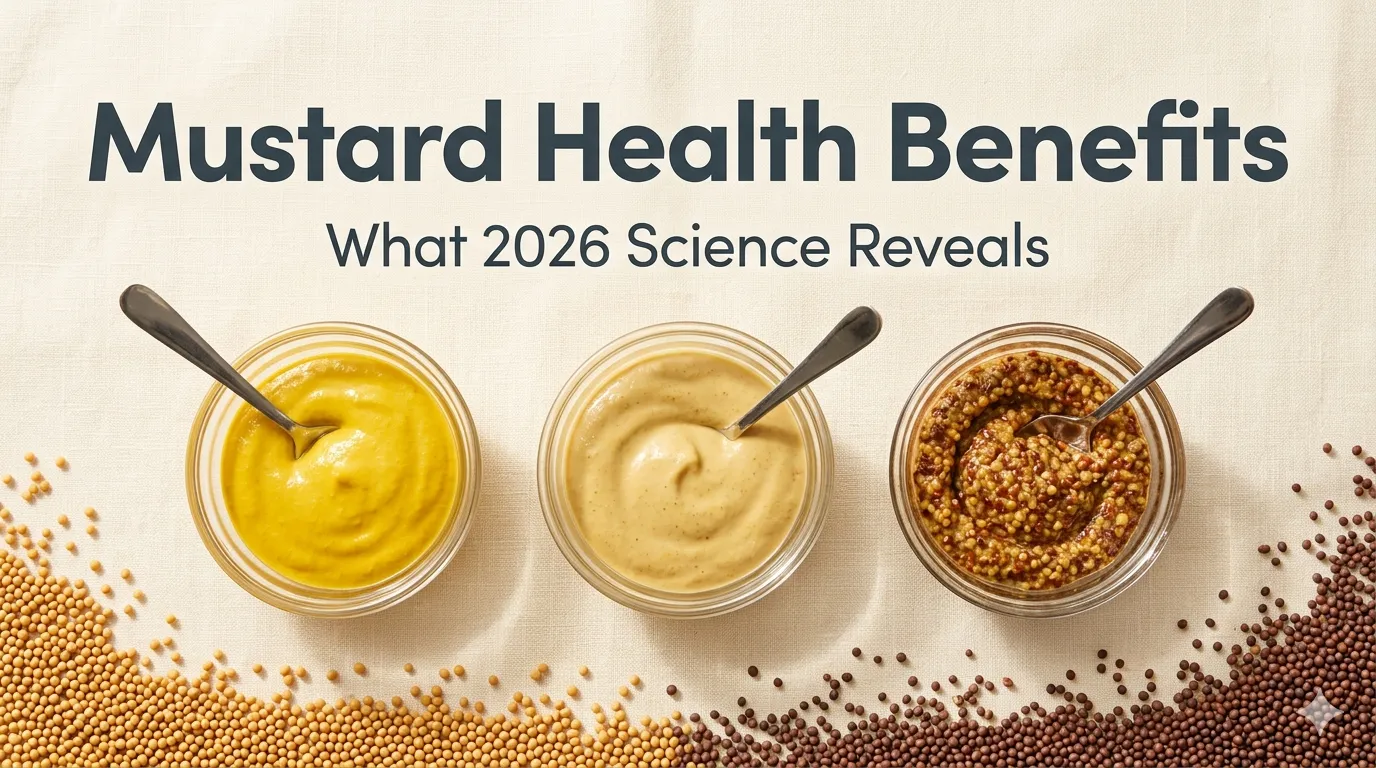
Mustard Health Benefits: What 2026 Science Reveals
Mustard health benefits are genuine but they are also specific, dose-dependent, and determined entirely by the type of mustard you choose. This is not a case of the plain yellow bottle matching the nutritional profile of a stone-ground, cold-pressed Dijon.
The USDA FoodData Central database confirms that mustard is a negligible source of macronutrients, delivering flavor without calories or fat. However, its bioactive compounds, primarily glucosinolates and their active breakdown products called isothiocyanates, are what drive the research interest in this condiment for metabolic and cellular health.
You will learn exactly how these compounds function, why yellow mustard is a different product from Dijon, and how to separate the real evidence from the overblown claims. This article also covers practical applications for muscle cramps, antioxidant intake, and blood sugar management, along with the serious safety note about mustard allergy that many health articles ignore.
Mustard Health Benefits
Mustard health benefits originate from compounds called glucosinolates found in the seeds of the mustard plant. When the seed is crushed and mixed with cold water, an enzyme converts these glucosinolates into biologically active isothiocyanates.
These isothiocyanates, particularly allyl isothiocyanate (AITC), are the chemicals responsible for the pungent heat of mustard. They also serve as a defense mechanism for the plant against pests.
In the human body, research suggests these compounds can act as potent antioxidants and may influence cellular pathways involved in inflammation and glucose metabolism. The strength of these benefits depends entirely on the concentration of these active compounds.
The processing method is the critical variable. Heat destroys the myrosinase enzyme needed to create AITC. A standard shelf-stable yellow mustard is often heat-processed, yielding a tangy but enzymatically inactive condiment compared to a raw, cold-pressed variety.
| Benefit | Mechanism | Best Mustard Source | Evidence Level |
|---|---|---|---|
| Antioxidant Activity | Isothiocyanates neutralize free radicals | Dijon, Spicy Brown | Moderate (In vitro/Animal) |
| Blood Sugar Control | May improve insulin sensitivity via AMPK | Dijon, Spicy Brown | Preliminary (Human, small trials) |
| Muscle Cramp Relief | Acetic acid triggers neural reflex (topical) | Yellow Mustard (oral) | Anecdotal / Preliminary |
| Anti-Inflammatory | Suppression of NF-kB pathway | All, especially with Turmeric | Emerging |
Key Takeaway: The “mustard” in a research study is often a potent extract, not a squirt from a bottle. The heat applied during manufacturing is the single biggest factor determining health benefit potency.
Health Benefits of Eating Mustard
The health benefits of eating mustard are tied to its acetic acid content and its micronutrient-sparing effect. Because it delivers intense flavor for almost zero calories, it directly displaces less healthy condiments.
A tablespoon of mayonnaise adds 94 calories and 10 grams of fat to a sandwich. Replacing it with a teaspoon of mustard saves you roughly 90 calories without sacrificing the moist, tangy mouthfeel a sandwich needs.
This simple swap is one of the most effective behavioral nutrition tools for weight management. You reduce calorie density without reducing meal satisfaction.
Beyond this, eating the right kind of mustard introduces bioactive glucosinolates into your digestive system. If the mustard is cold-processed, the active AITC can interact with your gut microbiota and intestinal lining.
- Calorie-free flavor: Enhances satiety without caloric load.
- Condiment substitution: Replaces high-fat, high-sugar sauces like BBQ, mayo, and ranch.
- Digestive stimulus: The bitter compounds can stimulate digestive enzyme production in the stomach.
- Shelf stability: The acidic nature of prepared mustard resists bacterial growth, making it a safe, long-lasting fridge staple.
Mustard Seed Benefits for Health
Mustard seed benefits for health are far more concentrated than what you find in the bottled condiment. The whole seeds contain the intact enzyme-and-precursor package that produces the active isothiocyanates.
The seeds come in three main varieties: white or yellow (Sinapis alba), brown (Brassica juncea), and black (Brassica nigra). The white seeds provide the milder heat, while the brown and black seeds deliver the sharp, fiery pungency.
Whole seeds are a good source of selenium, magnesium, and omega-3 fatty acid in the form of alpha-linolenic acid (ALA). A tablespoon of whole mustard seeds provides a notable dose of these nutrients, unlike the condiment.
In traditional medicine systems like Ayurveda, mustard seeds have been used for their thermogenic properties. They are believed to increase metabolic heat, which may contribute to a slight, temporary uptick in calorie burning.
Key Takeaway: Mustard seeds are a nutrient-dense food, but prepared mustard is largely stripped of these macros and vitamins, leaving only the trace minerals and, if cold-processed, the isothiocyanates.
Mustard Nutrition
Mustard nutrition, viewed strictly as a macronutrient profile, is essentially a zero-calorie food. A standard 1-teaspoon (5-gram) serving of yellow mustard contains just 3 calories.
The carbohydrate, fat, and protein content are all measured in tenths of a gram. This makes it an ideal dietary staple for anyone meticulously tracking macros on a ketogenic, low-carb, or calorie-restricted diet.
The micronutrient profile is modest but not zero. Yellow mustard gets its bright color from turmeric, which introduces a small amount of curcumin. The mustard seed itself provides trace amounts of selenium and magnesium.
The primary nutritional liability is sodium. A single teaspoon of yellow mustard contains about 55 milligrams of sodium. This is low compared to ketchup or soy sauce, but it adds up if you consume mustard in large quantities.
| Nutrient | Yellow (1 tsp) | Dijon (1 tsp) | Whole Grain (1 tsp) |
|---|---|---|---|
| Calories | 3 | 5 | 5 |
| Sodium | 55mg | 120mg | 65mg |
| Total Carbs | 0.3g | 0g | 0.5g |
| Fat | 0.2g | 0.3g | 0.3g |
| Key Bioactive | Turmeric (Curcumin) | Isothiocyanates | Isothiocyanates |
Yellow Mustard Health Benefits
Yellow mustard health benefits are often misunderstood. The classic American ballpark mustard is prized more for its vivid color and tangy zip than for its enzymatic potency.
The key benefit of yellow mustard is its role as a calorie-free flavor vehicle. Its vinegar base provides acetic acid, which can add a sweet-sour depth without sugar.
The yellow color comes from turmeric, not the mustard seed itself. While turmeric contains curcumin, a known anti-inflammatory compound, the amount in a teaspoon of mustard is unlikely to deliver a clinical therapeutic dose.
Yellow mustard is often heat-processed for shelf stability. This process deactivates the myrosinase enzyme, meaning the glucosinolates from the white mustard seeds largely pass through your body without being converted to active AITC.
Insider Tip:
- For flavor: Yellow mustard is excellent.
- For bioactive benefits: The enzyme has likely been pasteurized out.
- The Exception: Check for “cold-pressed” or “raw” labels on yellow mustard if you seek health benefits, or switch to a different style.
Key Takeaway: Yellow mustard is a phenomenal weight-loss condiment because it has zero calories. It is not a significant source of active glucosinolates.
Health Benefits of Yellow Mustard
The health benefits of yellow mustard are nutritionally distinct from its pungent cousins. Its power lies in displacement and its specific ingredients, vinegar and turmeric.
Vinegar, the primary liquid in yellow mustard, has been studied for its effect on post-meal blood glucose. The acetic acid can slow the enzymatic breakdown of starch into sugar.
A small serving consumed before a high-carb meal may blunt the subsequent glucose spike. This is a mild effect, but a tangible one for a metabolic health strategy.
The anti-inflammatory potential is linked to the curcumin in the turmeric additive. However, this benefit is heavily limited by the tiny quantity of turmeric actually present.
- Vinegar base: May moderate blood sugar response to a meal.
- Turmeric content: Provides trace curcumin, but far below a therapeutic dose.
- Mustard seed type: Uses Sinapis alba, which is milder and has a different glucosinolate profile than the brown or black seeds used in spicy mustards.
- Best for: A heart-healthy sandwich swap and a small metabolic assist, not a primary source of antioxidants.
Dijon Mustard Health Benefits
Dijon mustard health benefits are a step above yellow mustard because the traditional manufacturing process often preserves more of the bioactive punch. Authentic Dijon is made with brown or black mustard seeds and white wine or verjuice.
The use of brown seeds (Brassica juncea) is key. These seeds contain a higher concentration of the glucosinolate sinigrin, the precursor to the potent allyl isothiocyanate.
Because the flavor profile relies on the natural heat of these seeds, many Dijon brands are processed at lower temperatures or without heat entirely to preserve their volatile bite. This means the myrosinase enzyme is more likely to be intact.
The white wine or verjuice base adds acidity without the high sodium load of a vinegar-heavy brine. This creates a more complex flavor that pairs exceptionally well with proteins and roasted vegetables.
Insider Tip:
- Look for: Brands that specify “cold-pressed” or list “brown mustard seeds” as the first ingredient.
- Flavor pairing: The sharp heat cuts through the fat of a steak or cheese perfectly, making it a chef’s go-to.
- Benefit: Offers a significant upgrade in glucosinolate potential over yellow mustard.
Spicy Brown Mustard Health Benefits
Spicy brown mustard health benefits exist because this variety sits at the top of the isothiocyanate hierarchy. Like Dijon, it uses the more pungent brown mustard seed, but it is often coarser, retaining more of the seed hull.
The coarse grind matters. It means the seed was crushed but not completely pulverized into a homogenized paste, which can sometimes generate excess heat that damages the sensitive myrosinase.
The “spicy” or “deli” style mustard often uses a higher concentration of brown seeds than Dijon. This creates a more robust heat and a higher potential dose of sinigrin.
The horseradish sometimes added to spicy brown mustard is a synergistic ingredient. Horseradish contains its own set of glucosinolates and isothiocyanates, enhancing the overall anti-microbial and bioactive profile of the condiment.
| Mustard Type | Primary Seed | Heat Level | Enzyme Activity (Likelihood) |
|---|---|---|---|
| Yellow Mustard | Sinapis alba (White) | Low (Tangy) | Low (Usually pasteurized) |
| Dijon Mustard | Brassica juncea (Brown) | High (Sharp) | Medium-High (Cold-pressed) |
| Spicy Brown | Brassica juncea (Brown) | Very High (Pungent) | High (Coarse, Cold-pressed) |
| Whole Grain | Mix of White & Brown | Medium | High (Visible intact seeds) |
Key Takeaway: For the highest potential dose of the active compounds linked to health benefits, skip the bright yellow bottle and reach for a spicy brown or stone-ground Dijon.
Mustard Antioxidants
Mustard antioxidants are a unique class of defense chemicals called isothiocyanates. Unlike the anthocyanins in berries or the lycopene in tomatoes, these are sulfur-containing compounds with a sharp, wasabi-like kick.
These compounds work by activating the body’s own internal antioxidant defense system, specifically the Nrf2 pathway. Instead of directly scavenging a single free radical, they trigger your cells to produce a whole army of protective enzymes.
This makes them an indirect but incredibly efficient antioxidant. A single molecule of an isothiocyanate can lead to the production of numerous glutathione molecules inside a cell.
The antioxidant capacity of your mustard is directly measurable by its pungency. That nostril-burning sensation is the volatile isothiocyanates interacting with your mucus membranes, a sign that the myrosinase enzyme successfully did its job.
- AITC (Allyl Isothiocyanate): The dominant pungent compound in brown mustard, also found in horseradish and wasabi.
- Nrf2 Pathway: The cellular “master switch” that isothiocyanates flip to combat oxidative stress.
- Glutathione: The body’s primary endogenous antioxidant, whose production is stimulated by isothiocyanates.
- Stability: Isothiocyanates are heat-sensitive and volatile, so they degrade over time after the jar is opened.
Glucosinolates in Mustard
Glucosinolates in mustard are the stable, inactive precursors stored inside the plant cells. They function as the chemical warhead awaiting activation.
The activation is a precise chemical event. When the seed is crushed by grinding or chewing, the cell walls rupture, and the glucosinolate sinigrin is exposed to the enzyme myrosinase.
Myrosinase cleaves off a sugar molecule from sinigrin, releasing the volatile, biologically active allyl isothiocyanate. This is the exact same chemical reaction that makes freshly ground wasabi so searingly hot.
This is why cooking a whole mustard seed in a stew makes it mild and nutty. The heat from the cooking liquid deactivates the myrosinase enzyme before it can catalyze the reaction, leaving the glucosinolate intact but inert in the gut.
This enzymatic process is the key to the entire health argument for mustard. A bottle of mustard with dead enzymes is just a tangy paste. A bottle with live enzymes is a functional food.
Quick Tip:
- To preserve enzymes: Never cook a Dijon or spicy brown mustard you bought for its health benefits. Add it to food after it’s off the heat.
- To make active mustard at home: Mix ground brown mustard powder with cold water. Let it sit for 10 minutes. The heat will build as the chemical reaction occurs.
Is Yellow Mustard Anti-Inflammatory
Is yellow mustard anti-inflammatory is a question that demands a nuanced answer. It is not directly anti-inflammatory in the way ibuprofen or high-dose curcumin supplements are.
The acetic acid in the vinegar base may have a minor indirect anti-inflammatory effect by stabilizing postprandial blood sugar. Blood sugar spikes are themselves a potent driver of systemic inflammation.
The curcumin from the turmeric is a true anti-inflammatory compound. However, the dose is so small that calling yellow mustard “anti-inflammatory” without context is misleading.
A large study on curcumin uses doses between 500 and 1,000 milligrams. A teaspoon of yellow mustard contains a tiny fraction of this amount, likely less than 5 milligrams of curcumin.
Key Takeaway: You cannot rely on yellow mustard as a therapeutic anti-inflammatory. Its role is supportive, preventing the inflammatory harm caused by other, worse dietary choices.
Does Mustard Lower Blood Sugar
Does mustard lower blood sugar is one of the most researched and promising areas of mustard science. The vinegar base, not just the mustard seed, plays a major role here.
Acetic acid has been shown to temporarily inhibit the enzyme amylase, which is responsible for breaking down complex carbohydrates into simple sugars in your mouth and gut.
By slowing this process, the glucose from a slice of bread or a potato enters your bloodstream more gradually. This blunts the insulin spike, placing less stress on your pancreatic beta cells.
The isothiocyanates from the brown mustard seed may also directly improve insulin sensitivity in muscle cells by activating the AMPK pathway. This makes the cells more responsive to insulin’s signal to take up glucose.
- Mechanism 1 (Vinegar): Inhibits starch-digesting enzymes, slowing glucose absorption.
- Mechanism 2 (Isothiocyanates): Mimics the effect of exercise by activating AMPK, which pulls glucose into cells.
- Best type: A Dijon or spicy brown mustard that contains both acetic acid and active isothiocyanates.
- Practical use: One tablespoon of mustard with a lean protein and vegetable meal can lower the meal’s glycemic impact.
Mustard for Muscle Cramps
Mustard for muscle cramps is a famous folk remedy that has found some scientific grounding, though the exact mechanism was long debated. The speed of the relief rules out a metabolic mechanism.
A muscle cramp cannot be stopped within 90 seconds of swallowing mustard by the glucosinolates reaching the leg muscle through the bloodstream. The relief is neurological.
The leading theory involves the acetic acid triggering an oropharyngeal reflex. The intense, sharp taste of the acetic acid and isothiocyanates overwhelms the sensory neurons in the mouth and throat.
This neural overload is believed to send a signal through the vagus nerve to the spinal cord. This signal can temporarily calm the hyper-excited alpha motor neurons that are causing the muscle fiber to stay locked in a cramp.
- Application: A single teaspoon swallowed straight during a nocturnal leg cramp.
- Speed: Relief is often reported within one to two minutes, too fast for digestion.
- Active agent: Acetic acid is the likely primary trigger, enhanced by the pungent isothiocyanates.
- Who it’s for: This is a rescue remedy, not a preventative supplement.
Key Takeaway: Mustard stops cramps through a neural trick in the throat, not through a nutritional deficiency correction in the muscle. Use it as an emergency off-switch, not a daily mineral supplement.
Mustard Seed Benefits
Mustard seed benefits extend beyond the condiment shelf into the realm of whole-food nutrition. Unlike the prepared paste, the whole seeds retain their complete fatty acid profile.
Cold-pressed mustard seed oil is a rich source of monounsaturated and polyunsaturated fats. It also contains a significant amount of alpha-linolenic acid (ALA), the plant-based omega-3.
In some culinary traditions, the oil is heated to its smoke point to remove the pungent isothiocyanates, turning it into a smooth cooking fat. This process destroys the bioactives for health but creates a useful high-heat cooking oil.
Whole mustard seeds are also used in pickling brine and Indian tadka. Frying the seeds in hot oil denatures the myrosinase, stopping the chemical reaction and leaving behind a rich, nutty flavor devoid of pungent heat.
- Whole Yellow Seeds: Mild flavor, used in pickling and aioli.
- Whole Brown Seeds: Intensely pungent, used in Indian curries and mustard oil.
- Mustard Seed Oil: High in omega-3 ALA and monounsaturated fats; a skin irritant in its raw form.
- Topical use: Mustard plasters historically used to create a counterirritant heat on the skin for chest congestion.
Mustard Allergy
Mustard allergy is a severe and increasingly common food allergy that is systematically overlooked in the United States. It is not classified as a “major allergen” by the FDA, unlike peanuts or milk.
This means food manufacturers are not required to highlight mustard on their packaging with a bold “Contains: Mustard” label. You must scan the actual ingredient list carefully for the word “mustard,” “mustard seed,” or “mustard flour.”
The allergy is an IgE-mediated reaction to the proteins in the mustard seed. It is heat-stable, meaning cooked mustard is just as allergenic as raw mustard.
In Europe and Canada, mustard is legally recognized as a priority allergen. An American allergic to mustard faces a hidden danger in processed foods, deli meats, salad dressings, and even some barbecue sauces where it acts as an undeclared emulsifier.
- Symptoms: Ranges from oral tingling and hives to severe anaphylaxis.
- Cross-reactivity: Can react with rapeseed (canola), cabbage, and broccoli in sensitive individuals.
- Hidden sources: “Spices,” “natural flavorings,” and “seasonings” on a U.S. label can legally hide mustard.
- Action: If you suspect a mustard allergy, consult an allergist for a skin-prick test and always check with the manufacturer directly when a label is vague.
Frequently Asked Questions About Mustard Health Benefits
What are the proven health benefits of eating mustard?
The most proven health benefits are metabolic, tied to acetic acid and isothiocyanates.
Eating mustard can help moderate blood sugar spikes after a meal.
It is also an effective, calorie-free condiment swap that reduces a meal’s total fat and calorie density.
Is yellow mustard healthier than Dijon mustard?
Dijon mustard is generally healthier in terms of bioactive compounds than yellow mustard.
It is made from brown mustard seeds with a higher glucosinolate content and is often cold-pressed.
Yellow mustard is healthier than high-fat condiments like mayonnaise, but it is not a significant source of beneficial enzymes.
Can eating mustard help with muscle cramps?
Eating a teaspoon of yellow mustard can help stop a muscle cramp in progress within minutes.
The acetic acid likely triggers a reflex in the throat that calms the overactive motor neurons causing the cramp.
This is a rescue remedy for an active cramp, not a way to prevent future cramps.
Does mustard have anti-inflammatory properties?
The curcumin in the turmeric used to color yellow mustard has well-documented anti-inflammatory properties.
However, the amount in a standard serving is far below a clinical therapeutic dose.
Dijon and spicy brown mustard may offer greater anti-inflammatory potential through the Nrf2-activating isothiocyanates.
Will eating mustard help me lose weight?
Eating mustard directly contributes to weight loss as a substitute for calorie-dense condiments.
Replacing a tablespoon of mayonnaise (94 calories) with a teaspoon of mustard (3 calories) creates a significant calorie deficit over time.
The mustard itself does not “burn fat,” but its use is an effective and sustainable weight management tool.
What are the side effects of eating too much mustard?
Eating large amounts of mustard can cause significant digestive upset from its high vinegar and sodium content.
More critically, a mustard allergy can trigger a severe, life-threatening anaphylactic reaction.
Always check labels carefully, as mustard is not a labeled “top allergen” in the U.S. but is a potent one.
Mustard’s health value is not a myth, but it has been distorted into a one-size-fits-all “superfood” narrative that ignores the chemistry. The 3-calorie tang of yellow mustard is a masterstroke for flavor without calorie consequence. The fiery bite of a cold-pressed Dijon or spicy brown brings the genuine, research-backed isothiocyanates that activate cellular defense pathways. Both are valuable, but for entirely different reasons.
Next time you open your fridge, check what the bottle actually says. Look for brown seeds, cold processing, or a visible coarse grind. Confirm that the label on your condiment matches the health benefit you are trying to unlock. The difference between a pasteurized paste and a live functional food is a few millimeters of glass and a world of science.
You can use mustard as a smart, free-flavor condiment or as a strategic source of metabolic bioactives. Now you know exactly how to do both, and you know the side of the bottle that tells you the truth.