Soursop Bitters Health Benefits: 2026 Evidence-Based Guide
Soursop bitters health benefits are primarily supported by laboratory and animal studies showing potential anti-cancer, anti-inflammatory, and antimicrobial properties, but human clinical trials remain extremely limited. The bitters are derived from the leaves, fruit, seeds, and bark of the soursop tree (Annona muricata), which contains bioactive compounds called annonaceous acetogenins that have demonstrated activity against various disease models in controlled laboratory settings .
This 2026 evidence-based guide examines the actual scientific research behind soursop bitters. You will learn which benefits have the strongest evidence, how the active compounds work in the body, what the research says about dosing, and why safety concerns particularly around nerve toxicity mean this is not a supplement to take casually. We also cover critical interactions with medications and who should absolutely avoid soursop products entirely.
What Are Soursop Bitters and How Are They Made
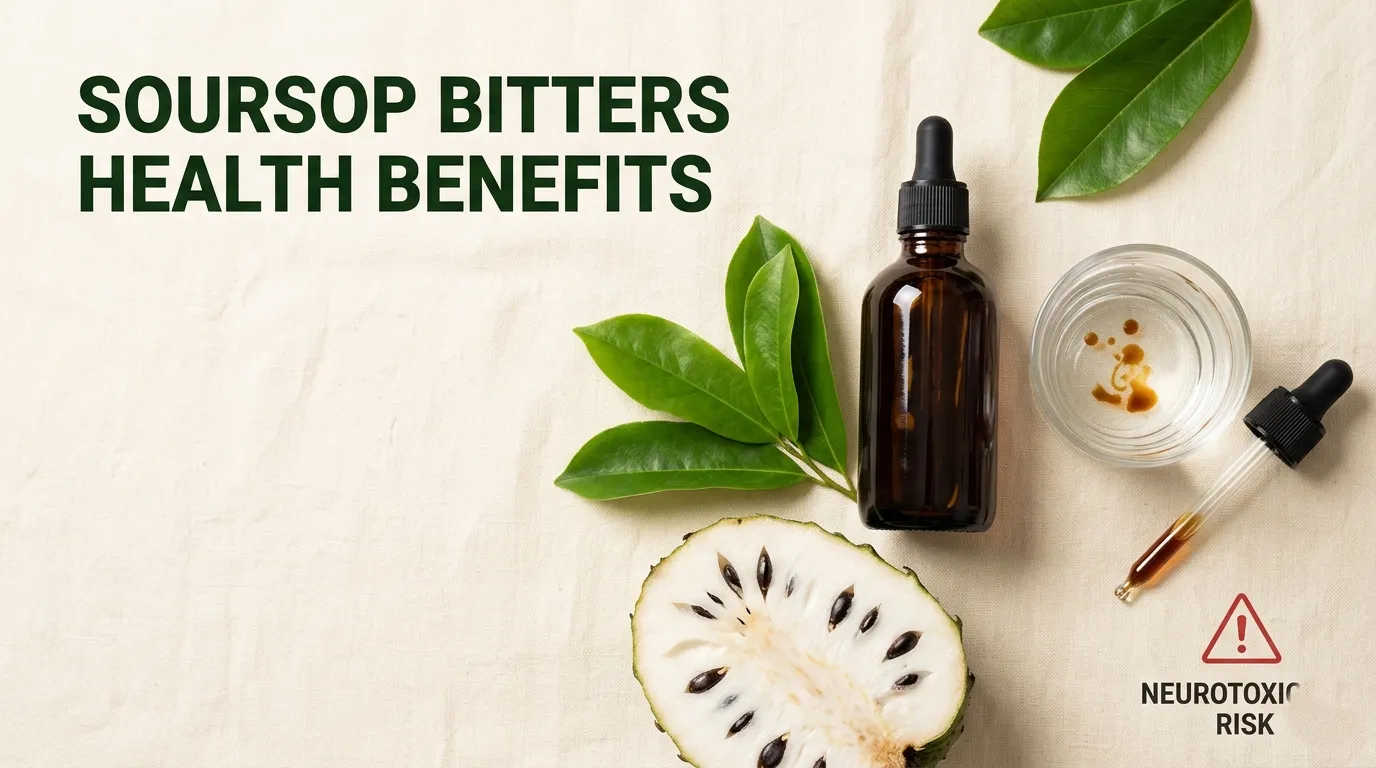
Soursop bitters are a liquid herbal extract made by steeping the leaves, bark, fruit pulp, seeds, and roots of the soursop tree (Annona muricata) in alcohol, glycerin, or vinegar, often combined with other bitter herbs. The resulting tincture is designed to be taken in small doses, typically 1-2 milliliters (about 20-40 drops) before meals .
The bitter taste activates bitter taste receptors on the tongue, which may stimulate digestive secretions. Traditional medicine systems in the Caribbean, South America, Africa, and Southeast Asia have used soursop leaves and bark for centuries to treat infections, inflammation, parasites, and digestive complaints .
Commercially available soursop bitters vary widely in their preparation methods, extraction solvents, concentrations of active compounds, and additional ingredients. Unlike pharmaceutical drugs, these supplements are not standardized, meaning the amount of bioactive annonaceous acetogenins can vary dramatically between brands and even between batches of the same product.
The Active Compounds in Soursop and How They Work
The primary bioactive compounds in soursop responsible for its reported health benefits are annonaceous acetogenins, a class of natural compounds found only in the Annonaceae plant family. Over 50 different acetogenins have been isolated from Annona muricata, including annonacin, bulatacin, and squamocin .
These acetogenins work by inhibiting complex I of the mitochondrial electron transport chain in cells. In laboratory studies, this mechanism has been shown to selectively deplete ATP (cellular energy) in cancer cells more than normal cells, leading to cell death. However, this same mechanism is why soursop compounds are neurotoxic to healthy nerve cells at higher concentrations or with prolonged exposure .
The leaves contain the highest concentration of acetogenins, followed by the seeds, fruit pulp, and then the bark. A 100 mL serving of soursop leaf tea has been estimated to contain approximately 15-20 mg of total acetogenins. The concentration in bitters can be much higher because alcohol extraction pulls more of these compounds from the plant material than water .
Key Takeaway: The same compounds that make soursop potentially anti-cancer are also neurotoxic at higher doses. This is the central risk-benefit calculation for anyone considering soursop bitters.
Potential Anti-Cancer Properties of Soursop Bitters
Multiple laboratory studies have demonstrated that soursop extracts inhibit the growth of various cancer cell lines, including breast, prostate, colon, lung, pancreatic, and liver cancer cells. In one frequently cited 2018 laboratory study, soursop leaf extract showed cytotoxic effects against MCF-7 breast cancer cells and PC-3 prostate cancer cells .
The mechanism involves the acetogenins selectively inhibiting NADH-ubiquinone oxidoreductase (complex I) in the mitochondrial electron transport chain. Cancer cells often have altered metabolism and may be more sensitive to ATP depletion than normal cells, which could explain the selectivity observed in petri dishes.
It is extremely important to understand that these are laboratory studies on isolated cells, not human trials. A compound that kills cancer cells in a petri dish may not work the same way in the complex environment of the human body. No high-quality human clinical trials have been published demonstrating that soursop bitters can treat cancer in living human patients. The American Cancer Society and National Cancer Institute do not recommend soursop as a cancer treatment .
Anti-Inflammatory and Immune Support Benefits
Soursop extracts have demonstrated anti-inflammatory effects in animal studies, primarily by reducing levels of pro-inflammatory cytokines such as TNF-alpha, IL-6, and IL-1 beta. In a 2019 rat study, soursop leaf extract reduced carrageenan-induced paw edema by approximately 50 percent compared to control animals .
The mechanism appears to involve inhibition of the NF-kB pathway, a protein complex that controls transcription of DNA and production of inflammatory cytokines. By suppressing NF-kB activation, soursop compounds may reduce the inflammatory cascade. Additionally, the antioxidant flavonoids in soursop, including quercetin and rutinoside, neutralize free radicals that contribute to oxidative stress and inflammation .
These findings come from animal models of acute inflammation. Whether these effects translate to humans with chronic inflammatory conditions like arthritis, inflammatory bowel disease, or asthma is unknown. No human clinical trials have evaluated soursop for these conditions.
| Health Claim | Evidence Quality | Key Study Type | Human Evidence |
|---|---|---|---|
| Anti-cancer effects | Low | Laboratory cell studies | None |
| Anti-inflammatory | Low to moderate | Animal studies | Minimal |
| Antimicrobial | Low | Laboratory studies | None |
| Blood sugar control | Very low | Limited animal studies | None |
| Digestive aid | Traditional use only | No controlled studies | None |
Key Takeaway: The evidence for soursop bitters is overwhelmingly from laboratory and animal research. Claims of human health benefits are extrapolations, not proven outcomes.
Antimicrobial and Antiparasitic Effects
Laboratory studies have shown that soursop extracts inhibit the growth of various bacteria, including E. coli, Staphylococcus aureus, and Pseudomonas aeruginosa. The acetogenins and alkaloids in soursop appear to damage bacterial cell membranes and interfere with bacterial energy production .
Soursop has also demonstrated activity against the parasites that cause leishmaniasis and malaria in laboratory settings. A 2015 study found that soursop leaf extract inhibited the growth of Plasmodium falciparum, the malaria parasite, in culture. However, these concentrations were much higher than what would be achieved through normal human consumption of soursop products .
These antimicrobial effects have not been tested in human clinical trials. Soursop bitters should not be used as a substitute for prescribed antibiotics, antimalarials, or antiparasitic medications. If you have a bacterial or parasitic infection, see a physician for proper diagnosis and treatment.
Digestive Health and Bitter Properties
The bitter taste of soursop bitters activates bitter taste receptors (T2Rs) on the tongue and in the digestive tract, which may stimulate the cephalic phase of digestion. This physiological response increases saliva production, gastric acid secretion, and pancreatic enzyme release, potentially improving digestion of food .
Traditional herbal medicine has long used bitter herbs to stimulate appetite and relieve indigestion. Small amounts of bitters before meals are considered generally safe for most adults. However, the bitter compounds in soursop are not unique, and the same digestive stimulation could be achieved with other bitter herbs that do not carry the neurotoxicity risks associated with soursop.
For people with normal digestive function, additional bitters are usually unnecessary. For those with hypochlorhydria (low stomach acid), bitters might be helpful, but diagnosis and treatment should come from a gastroenterologist, not self-prescribed herbal supplements.
Blood Sugar and Blood Pressure Effects in Animal Studies
A few small animal studies have suggested that soursop leaf extract might lower blood glucose and blood pressure. In a 2018 diabetic rat study, oral administration of soursop extract for 28 days reduced fasting blood glucose by approximately 40 percent compared to untreated diabetic controls .
The proposed mechanism for blood sugar effects involves inhibition of alpha-glucosidase, an enzyme that breaks down carbohydrates into glucose. By slowing carbohydrate digestion, soursop might reduce post-meal blood sugar spikes. This is the same mechanism used by the diabetes medication acarbose.
No human studies have evaluated soursop for diabetes or hypertension. People with diabetes or high blood pressure should not use soursop bitters as a substitute for prescribed medications. If you choose to try soursop bitters while on medication, monitor your blood sugar and blood pressure closely, as additive effects could cause hypoglycemia or hypotension.
Safety Concerns and Neurotoxicity Warning
The most serious safety concern with soursop is its potential neurotoxicity. The annonaceous acetogenins have been linked to atypical parkinsonism, a neurodegenerative condition similar to Parkinson’s disease. High consumption of soursop products has been identified as a risk factor for atypical parkinsonism in the French Caribbean island of Guadeloupe .
Epidemiological studies found that people who regularly consumed soursop products had a higher risk of developing atypical parkinsonism. The risk appeared dose-dependent, meaning higher consumption was associated with greater risk. The acetogenins are thought to accumulate in the brain over time and damage dopaminergic neurons through mitochondrial inhibition .
The clinical implications for soursop bitters are not fully known. Bitters are typically consumed in small amounts (1-2 mL per dose), which is much less than the amounts consumed as food in Guadeloupe. However, the extraction process concentrates acetogenins, so the potency per milliliter could be high. Long-term safety data for soursop bitters do not exist.
Key Takeaway: The neurotoxicity risk means soursop bitters are not safe for long-term daily use. Occasional use in small amounts may carry lower risk, but safety has not been established.
Medication Interactions and Contraindications
Soursop bitters can interact with several classes of medications, potentially causing dangerous side effects. The blood pressure lowering effects could add to the effects of antihypertensive medications, causing hypotension (dangerously low blood pressure) .
The blood sugar lowering effects could interact with diabetes medications, including insulin and oral hypoglycemics, increasing the risk of hypoglycemia (dangerously low blood sugar). Signs of hypoglycemia include shakiness, confusion, sweating, and loss of consciousness.
Soursop extracts have demonstrated inhibition of the CYP3A4 enzyme system in laboratory studies. This enzyme metabolizes approximately 50 percent of all prescription drugs, including statins, calcium channel blockers, immunosuppressants, and many others. By inhibiting this enzyme, soursop could increase drug levels to toxic ranges .
Who should NOT take soursop bitters:
- People with Parkinson’s disease or other neurodegenerative conditions
- Anyone with a family history of Parkinson’s disease
- People taking blood pressure medications
- People taking diabetes medications
- People taking medications metabolized by CYP3A4 (ask your pharmacist)
- Pregnant or breastfeeding women (no safety data)
- Children and adolescents
- People with liver disease
Recommended Dosage and How to Take Soursop Bitters Safely
There is no established safe or effective dose for soursop bitters because human studies have not been conducted. Traditional use suggests 1-2 milliliters (approximately 20-40 drops) taken in water 15-30 minutes before meals, up to three times daily .
If you choose to try soursop bitters despite the safety concerns, follow these precautions:
- Start with the lowest possible dose, such as 10 drops (0.5 mL), to assess tolerance
- Do not exceed the manufacturer’s recommended dose
- Do not use daily for more than 2-4 weeks consecutively
- Take breaks of at least 2 weeks between courses of use
- Monitor for any neurological symptoms including tremor, stiffness, or balance problems
- Stop immediately if you experience any unusual symptoms
For most people, the safety concerns likely outweigh any unproven benefits. Less risky alternatives exist for most of the claimed uses of soursop bitters. For digestive bitters, gentian root or dandelion root are safer options. For anti-inflammatory support, turmeric and ginger have stronger human evidence and better safety profiles .
Frequently Asked Questions About Soursop Bitters Health Benefits
Does soursop bitters cure cancer?
No, soursop bitters do not cure cancer. While laboratory studies show that soursop extracts can kill cancer cells in petri dishes, no human clinical trials have demonstrated cancer treatment effects in living people. Do not use soursop bitters as a substitute for conventional cancer treatment. Always consult your oncologist before taking any herbal supplements during cancer treatment .
Are soursop bitters safe to take daily?
Daily long-term use of soursop bitters is not recommended because of concerns about neurotoxicity. The annonaceous acetogenins have been linked to atypical parkinsonism in people who regularly consumed soursop products. If you choose to use soursop bitters, limit use to short courses of 2-4 weeks with breaks in between .
Can soursop bitters help with weight loss?
There is no scientific evidence that soursop bitters promote weight loss. The bitter taste may reduce appetite in some people through activation of bitter taste receptors, but this effect is temporary and not specific to soursop. Other weight loss strategies with better evidence include calorie reduction, increased physical activity, and consultation with a registered dietitian .
How long does it take for soursop bitters to work?
Because no human clinical trials have been conducted, there is no reliable information on how long it takes for soursop bitters to produce any health effect. Traditional use suggests that effects on digestion may be noticed within 30 minutes of taking bitters before a meal. Other claimed benefits are not supported by timing data from human studies .
Can I take soursop bitters with my prescription medications?
You should not take soursop bitters with prescription medications without first consulting your physician and pharmacist. Soursop may lower blood pressure and blood sugar, potentially causing dangerous interactions with antihypertensive and diabetes medications. It may also inhibit liver enzymes that metabolize many prescription drugs, leading to toxic drug levels .
Is soursop the same as graviola?
Yes, soursop is also known as graviola, guanabana, and Annona muricata. These names all refer to the same fruit tree. The leaves, bark, seeds, and fruit pulp are all used to make soursop bitters. The acetogenin compounds responsible for both potential benefits and neurotoxicity risks are present in all parts of the plant, with the highest concentrations in the seeds and leaves .
The scientific evidence for soursop bitters health benefits is weak, consisting almost entirely of laboratory and animal studies. The same compounds that show promise in petri dishes carry real neurotoxicity risks in humans. If you are considering soursop bitters for any health condition, have a conversation with your physician first. For most people, the risks likely outweigh the unproven benefits. Safer alternatives exist for digestive health, inflammation, and antimicrobial support. Make informed choices based on the totality of evidence, not isolated laboratory studies that have not been replicated in humans.