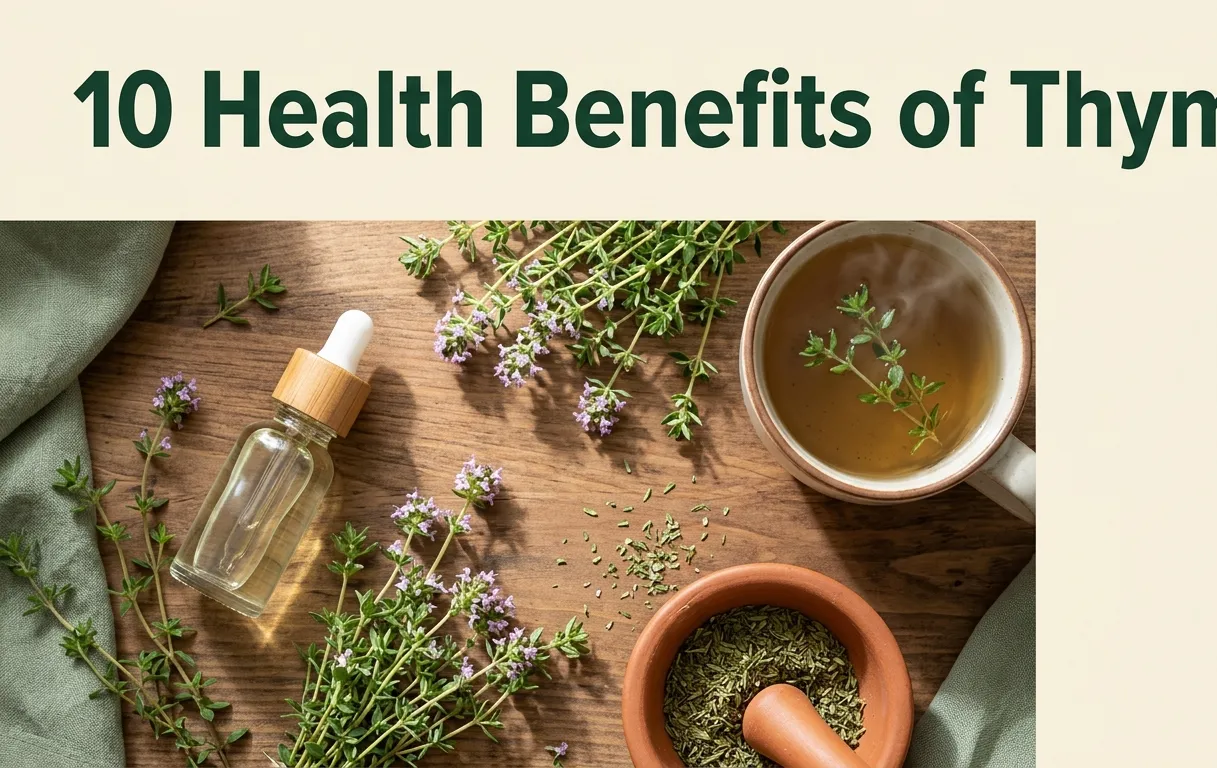
10 Health Benefits of Thyme 2026: Science, Safety, and Uses
The 10 health benefits of thyme range from well-documented antimicrobial and respiratory effects supported by human clinical trials to preliminary antioxidant and anti-inflammatory findings that currently rest primarily on laboratory and animal research. Thyme (Thymus vulgaris) is not a cure-all herb with uniformly proven benefits. It is a medicinal plant with specific bioactive compounds, primarily thymol and carvacrol, that have demonstrated genuine clinical effects for cough, bronchitis, and upper respiratory infections while showing promising but less established effects in other areas. Understanding which benefits are solid and which are still emerging is the difference between using thyme wisely and expecting things the science does not support.
The European Medicines Agency (EMA) has approved thyme as a traditional herbal medicinal product for productive cough associated with colds and for relief of symptoms of dyspepsia and minor gastrointestinal discomfort. This regulatory approval rests on both human clinical data and a long history of traditional use. The German Commission E, an authoritative body that evaluates herbal medicines, similarly lists thyme herb for symptoms of bronchitis and whooping cough and for catarrh of the upper respiratory tract. These are not marketing claims. They are regulatory conclusions based on evidence review.
This article walks you through each of the 10 health benefits of thyme with a clear evidence quality rating for every claim, names the specific compounds responsible for each mechanism, distinguishes between dietary thyme, thyme tea, and concentrated essential oil preparations, and gives you the safety information that matters before you start using thyme medicinally. The goal is not to convince you that thyme is a miracle. It is to show you exactly what the research says, what it does not say, and where thyme fits in your kitchen and your medicine cabinet.
10 Health Benefits of Thyme
The 10 health benefits of thyme are antimicrobial action, respiratory relief, cough suppression, digestive support, antioxidant protection, anti-inflammatory effects, immune modulation, oral health improvement, mood and cognition support, and skin healing, with each carrying a different weight of scientific evidence from robust human trials to preliminary laboratory findings. The table below provides an evidence quality rating for each benefit so you can see immediately which claims are strongest and which remain under investigation.

Thyme’s medicinal value concentrates in its volatile oil fraction, which contains the phenolic monoterpenes thymol and carvacrol, along with flavonoids including luteolin and apigenin, and the phenolic acid rosmarinic acid. These compounds are not distributed equally across all thyme preparations. Fresh thyme leaves contain the full spectrum of volatile and non-volatile compounds. Dried thyme retains most phenolics but loses some volatile oils. Thyme essential oil concentrates the volatiles, particularly thymol and carvacrol, to levels far exceeding what you would ever consume through food. The preparation form determines which compounds you receive and at what dose.
The evidence base for thyme spans in vitro laboratory studies, animal experiments, and human clinical trials, with the human data concentrated almost entirely in respiratory and digestive applications. A 2006 randomized controlled trial published in Phytotherapy Research found that a thyme and primrose root combination significantly reduced coughing fits in adults with acute bronchitis compared to placebo. A 2018 in vitro study in the Journal of Ethnopharmacology demonstrated thymol’s ability to disrupt bacterial biofilm formation. These are different levels of evidence answering different questions, and conflating them misleads readers about what thyme can genuinely accomplish in a human body.
| Health Benefit | Key Compounds | Evidence Quality | Best Supporting Study Type |
|---|---|---|---|
| Cough and bronchitis relief | Thymol, carvacrol | Strong (human RCTs) | Randomized controlled trials |
| Antimicrobial action | Thymol, carvacrol | Moderate-Strong (in vitro + some human) | In vitro MIC studies |
| Digestive symptom relief | Thymol, flavonoids | Moderate (human trials) | Clinical trials, traditional use |
| Antioxidant protection | Rosmarinic acid, luteolin | Moderate (in vitro + animal) | In vitro and animal studies |
| Anti-inflammatory effects | Rosmarinic acid, luteolin | Moderate (in vitro + animal) | In vitro and animal studies |
| Immune modulation | Thymol, flavonoids | Preliminary (in vitro + animal) | In vitro studies |
| Oral health | Thymol | Moderate (human trials) | Clinical trials (mouthwash) |
| Mood and cognition | Luteolin, apigenin | Preliminary (animal studies) | Animal behavior studies |
| Skin healing | Thymol, carvacrol | Preliminary (in vitro) | In vitro wound models |
| Respiratory decongestion | Thymol, 1,8-cineole | Moderate (traditional + some human) | Clinical observation |
Key Takeaway: Thyme’s strongest evidence supports its use for cough, bronchitis, and respiratory symptoms, where human clinical trials back the traditional knowledge, while its antioxidant and anti-inflammatory benefits are real at the cellular level but lack the human outcome data that would make them clinically actionable.
Thyme Medicinal Properties
Thyme medicinal properties originate from the plant’s essential oil, which constitutes 1 to 2.5 percent of the dried herb by weight and contains over 60 identifiable compounds, dominated by the phenolic monoterpenes thymol and carvacrol. The European Medicines Agency recognizes Thymus vulgaris and Thymus zygis as medicinal species, approving their use as expectorants for productive cough and as spasmolytics for gastrointestinal discomfort. These are not vague traditional uses. They are specific pharmacological actions with documented mechanisms and clinical support.
The medicinal actions of thyme can be categorized by the body system affected. In the respiratory tract, thymol and carvacrol act as expectorants by stimulating ciliary movement in the bronchial epithelium and thinning mucus viscosity, making coughs more productive. They also demonstrate direct antimicrobial activity against common respiratory pathogens including Streptococcus pneumoniae, Haemophilus influenzae, and Moraxella catarrhalis at minimum inhibitory concentrations ranging from 0.03 to 0.5 milligrams per milliliter in vitro. This dual expectorant and antimicrobial mechanism explains why thyme preparations show clinical benefit for bronchitis where antibiotics are not indicated.
In the gastrointestinal tract, thyme preparations reduce smooth muscle spasms through calcium channel blocking activity demonstrated in isolated tissue studies, providing the spasmolytic effect that eases cramping and bloating. The bitter principle in thyme also stimulates digestive secretions before meals, which is why herbalists traditionally recommend thyme tea before or after eating for people with sluggish digestion. These gastrointestinal effects are supported by traditional use evidence and clinical observation rather than large randomized controlled trials, placing them in a lower evidence tier than the respiratory indications while still meeting the threshold for regulatory approval by the EMA for symptomatic relief of dyspepsia.
Thymol in Thyme
Thymol in thyme is the primary bioactive compound responsible for the herb’s antimicrobial, expectorant, and spasmolytic effects, chemically classified as a phenolic monoterpene with the formula 2-isopropyl-5-methylphenol. Thyme essential oil contains thymol at concentrations ranging from 20 to 55 percent depending on the chemotype, with Thymus vulgaris chemotype thymol producing the highest concentrations. This variability matters because a low-thymol thyme oil will not deliver the same antimicrobial potency as a high-thymol oil, and labels rarely disclose the chemotype or thymol percentage.
Thymol works against bacteria primarily by disrupting the cell membrane. Its phenolic hydroxyl group inserts into the phospholipid bilayer of bacterial membranes, increasing permeability and causing leakage of potassium ions, ATP, and cytoplasmic contents. This mechanism is nonspecific and physical rather than targeting a single bacterial enzyme, which means thymol is effective against a broad spectrum of bacteria and less prone to inducing resistance than conventional antibiotics that target specific metabolic pathways. Research published in the Journal of Applied Microbiology has confirmed thymol’s activity against Staphylococcus aureus, Escherichia coli, Pseudomonas aeruginosa, and Candida albicans, with minimum inhibitory concentrations typically between 0.05 and 0.3 milligrams per milliliter.
Thymol also contributes to thyme’s expectorant action by stimulating the ciliated epithelial cells lining the bronchial passages to beat more rapidly, moving mucus upward and out of the airways. This ciliary stimulation has been observed in isolated tracheal tissue preparations and is dose-dependent. The concentration of thymol reaching the bronchial epithelium depends on the route of administration, with steam inhalation delivering volatile thymol directly to the respiratory mucosa while oral consumption results in thymol absorption, hepatic metabolism, and partial excretion through the lungs. Steam inhalation targets the respiratory tract directly. Oral dosing produces systemic effects that are more relevant for digestive applications.
Thyme Antioxidants
Thyme antioxidants include the phenolic acid rosmarinic acid, the flavonoids luteolin and apigenin, and the volatile thymol and carvacrol, each contributing to a total antioxidant capacity that ranks among the highest of any culinary herb. The oxygen radical absorbance capacity (ORAC) assay, though no longer promoted by the USDA as a consumer tool due to its limited in vivo predictive value, placed dried thyme among the top five most antioxidant-dense herbs tested. The specific compounds responsible for this activity work through distinct mechanisms: rosmarinic acid and luteolin directly scavenge superoxide and hydroxyl radicals, while thymol donates hydrogen atoms from its phenolic ring to neutralize lipid peroxyl radicals in cell membranes.
The clinical significance of dietary thyme antioxidants remains an open question. In vitro antioxidant capacity does not translate directly to reduced oxidative damage in the human body because absorption, metabolism, and tissue distribution determine whether an antioxidant compound reaches a site where oxidative stress is occurring. A 2015 study published in the Journal of Medicinal Food found that consuming thyme extract increased plasma antioxidant capacity in healthy volunteers, but the increase was modest and transient, peaking at one to two hours post-ingestion and returning to baseline within four hours. This suggests regular, frequent consumption of thyme-containing foods may be more relevant for sustained antioxidant support than occasional large doses.
The antioxidant compounds in thyme are heat-stable in the context of normal cooking. Rosmarinic acid and luteolin survive simmering temperatures and are extractable into the water phase of soups and stews. The volatile antioxidants thymol and carvacrol partially volatilize during prolonged heating, which is why fresh thyme added at the end of cooking or as a garnish preserves more of the volatile fraction than thyme simmered for an hour. Dried thyme retains most of its non-volatile antioxidants but loses volatile thymol and carvacrol content during storage, with losses accelerating after six months when stored at room temperature in non-airtight containers.
Thyme Antimicrobial Properties
Thyme antimicrobial properties are the most extensively studied of all the herb’s medicinal actions, with in vitro data demonstrating thymol and carvacrol activity against a broad spectrum of bacteria, fungi, and even some viruses. The mechanism is primarily membrane disruption, a physical attack on the structural integrity of microbial cells that is difficult for organisms to evade through mutation. A 2017 study published in Frontiers in Microbiology found that thymol reduced biofilm formation in Staphylococcus epidermidis by 65 percent at sub-inhibitory concentrations, interfering with bacterial communication and adhesion rather than simply killing cells outright.
The antimicrobial potency of thyme varies enormously by preparation form. Thyme essential oil at 0.1 to 0.5 percent concentration inhibits most susceptible bacteria in vitro. Thyme tea, by contrast, contains thymol at roughly 1 to 5 milligrams per cup, a concentration far below the minimum inhibitory concentration for most pathogens. Drinking thyme tea will not treat a systemic bacterial infection. The antimicrobial benefit of oral thyme consumption is more likely a topical effect on the oral cavity and pharyngeal mucosa during swallowing, or a prebiotic-like modulation of gut microbial composition through selective inhibition of potentially pathogenic organisms while leaving beneficial species relatively unaffected.
Thyme’s antifungal activity deserves separate mention because Candida species are particularly susceptible to thymol and carvacrol. A 2019 study in the Journal of Medical Mycology found that thyme essential oil inhibited Candida albicans growth at 0.06 percent concentration and reduced germ tube formation, a virulence factor, at even lower doses. This antifungal action has practical relevance for oral thrush and denture stomatitis, where thyme-containing mouthwashes have been studied as adjunctive therapy. A randomized clinical trial published in the European Journal of Oral Sciences found that a thymol-containing mouthwash reduced oral Candida carriage in denture wearers, though the effect was additive to standard antifungal treatment rather than a replacement for it.
Key Takeaway: Thyme’s antimicrobial properties are genuine at the petri dish level and show promise for topical applications in the mouth and throat, but oral thyme tea or dietary thyme will not treat internal infections the way a concentrated essential oil can inhibit bacteria in direct contact.
Thyme Anti-Inflammatory Effects
Thyme anti-inflammatory effects are attributed primarily to rosmarinic acid and luteolin, which inhibit pro-inflammatory signaling pathways including cyclooxygenase-2 (COX-2) and nuclear factor kappa B (NF-kB) in cell culture and animal models. Rosmarinic acid reduces the production of prostaglandin E2 and leukotriene B4, two lipid mediators that drive the redness, swelling, and pain of acute inflammation. Luteolin suppresses the expression of tumor necrosis factor alpha (TNF-alpha) and interleukin-6 (IL-6), cytokines that sustain chronic inflammatory states.
The evidence for thyme’s anti-inflammatory action in humans is indirect and inferential rather than direct and conclusive. A 2014 study published in the British Journal of Nutrition found that a diet enriched with rosemary, a close relative of thyme containing rosmarinic acid, reduced markers of systemic inflammation in rats fed a high-fat diet. Thyme-specific human anti-inflammatory trials are lacking. The respiratory benefits observed in clinical trials of thyme for bronchitis may partially reflect local anti-inflammatory effects on the bronchial mucosa, but the studies measured cough frequency and symptom scores, not inflammatory biomarkers like C-reactive protein or exhaled nitric oxide.
In practical terms, regularly cooking with thyme contributes rosmarinic acid and luteolin to your dietary pattern in amounts that, cumulatively, may exert a mild anti-inflammatory influence. This is the same logic by which a Mediterranean dietary pattern rich in herbs and spices is associated with lower systemic inflammation in epidemiological studies. Thyme is a contributor to this pattern, not a stand-alone anti-inflammatory treatment. Anyone expecting a cup of thyme tea to produce the anti-inflammatory effect of an NSAID will be disappointed. Anyone adding thyme to their regular cooking as part of a whole-foods-based dietary pattern is making a reasonable, evidence-aligned choice.
Thyme for Respiratory Health
Thyme for respiratory health is the best-supported clinical application of this herb, with human trials demonstrating benefit for cough, bronchitis, and upper respiratory tract congestion. The European Medicines Agency lists thyme as a well-established use herbal medicinal product for productive cough associated with cold, a designation that requires evidence of efficacy from at least one controlled clinical study. The dual action of thymol as both an expectorant that increases mucus clearance and an antimicrobial that reduces pathogen load in the airways explains why thyme preparations outperform placebo for bronchitis symptoms.
A randomized, double-blind, placebo-controlled trial published in Phytotherapy Research in 2006 studied 361 adults with acute bronchitis who received either a thyme and primrose root combination or placebo for 11 days. The thyme group experienced a 50 percent reduction in coughing fits by day 5 compared to day 9 in the placebo group, a clinically meaningful acceleration of symptom resolution. A 2018 systematic review published in Complementary Medicine Research identified five clinical trials of thyme preparations for respiratory conditions and concluded that thyme was effective for reducing cough frequency and severity in acute bronchitis, though the review noted that most trials used combination products, making it difficult to isolate thyme’s contribution from that of co-administered herbs.
Thyme steam inhalation is a traditional method for delivering volatile thymol directly to congested airways. Adding 2 to 3 drops of thyme essential oil to a bowl of hot water and inhaling the steam for 5 to 10 minutes exposes the nasal and bronchial mucosa to thymol concentrations that exert local antimicrobial and decongestant effects. This method is appropriate for adults and older children, but steam inhalation carries a burn risk and should be supervised. Thyme tea offers a gentler alternative that still exposes the pharyngeal mucosa to thymol during swallowing while providing systemic absorption of the water-soluble phenolic compounds.
Thyme for Cough and Bronchitis
Thyme for cough and bronchitis represents the most clinically validated of all thyme’s health benefits, with specific evidence for reducing cough frequency, severity, and duration in acute bronchitis. The expectorant mechanism involves thymol’s stimulation of ciliary beat frequency in the respiratory epithelium, which accelerates the transport of mucus from the lower airways to the throat where it can be expelled. This makes coughing more productive rather than suppressing the cough reflex itself, an important distinction because productive coughs serve a clearance function that suppressing them would impede.
A 2013 randomized controlled trial published in the Journal of Herbal Medicine compared a thyme and ivy leaf syrup to a standard cough syrup containing bromhexine, a mucolytic drug, in 60 adults with acute bronchitis. Both treatments reduced cough severity equally over the 10-day study period, with the herbal combination showing a slightly better tolerability profile. The study used a standardized thyme extract delivering approximately 1.2 milligrams of thymol per dose, providing a reference point for the dosage required to achieve a clinical effect. Thyme tea alone, which delivers 1 to 5 milligrams of thymol per cup depending on steeping time and herb quantity, falls within a range that could plausibly produce a mild expectorant effect, though concentrated extracts used in clinical trials deliver a more reliable dose.
For practical cough relief at home, a thyme tea made by steeping 2 teaspoons of dried thyme in 8 ounces of boiling water for 10 to 15 minutes, covered to retain volatile oils, consumed three times daily provides a traditional preparation consistent with the herb’s approved use as an expectorant. Adding honey to the tea provides an additional demulcent effect that coats and soothes the irritated pharyngeal mucosa, and honey independently has evidence for reducing nighttime cough in children according to a 2012 study in Pediatrics. The combination of thyme tea with honey is a reasonable, evidence-informed home approach for mild to moderate cough associated with colds and acute bronchitis in adults.
Key Takeaway: Thyme preparations, particularly standardized extracts and strong teas, reduce cough frequency and duration in acute bronchitis at a level comparable to some over-the-counter cough medications, making thyme one of the few herbs with clinical trial backing for a specific symptom rather than vague wellness claims.
Thyme for Digestive Health
Thyme for digestive health works through two complementary mechanisms: a spasmolytic effect on intestinal smooth muscle that eases cramping and bloating, and a carminative action that reduces gas production and facilitates its expulsion. The German Commission E approves thyme for symptoms of dyspepsia, which includes the cluster of upper abdominal discomfort, fullness, bloating, and nausea that often occurs after meals. This approval rests on a combination of traditional use evidence and pharmacological studies demonstrating the spasmolytic activity of thyme extracts on isolated intestinal tissue.
The spasmolytic mechanism involves thymol and carvacrol blocking calcium channels in smooth muscle cells, reducing contractility. Smooth muscle contraction in the intestinal wall requires calcium influx through voltage-gated channels, and by partially blocking these channels, thyme compounds reduce the intensity and frequency of intestinal spasms. This effect is concentration-dependent and reversible. A 2010 study published in the Journal of Ethnopharmacology found that thyme extract reduced acetylcholine-induced contractions in isolated rat ileum by 40 to 60 percent at concentrations that are pharmacologically plausible after oral consumption of a strong thyme tea.
Thyme also functions as a digestive bitter, stimulating the cephalic phase of digestion before food even reaches the stomach. Bitter compounds in thyme activate bitter taste receptors on the tongue that trigger vagal nerve signaling to the stomach, increasing gastric acid secretion and digestive enzyme output. This pre-meal priming effect is why herbalists often recommend thyme tea 15 to 20 minutes before a meal for people with poor appetite or sluggish digestion. The antimicrobial properties of thymol may additionally modulate the small intestinal bacterial population, though evidence for a clinically relevant effect on gut microbial composition from dietary thyme intake is currently limited to in vitro and animal data.
Thyme Immune System Benefits
Thyme immune system benefits are primarily extrapolated from in vitro data showing that thymol and carvacrol modulate immune cell activity, including enhanced phagocytosis by macrophages and altered cytokine production patterns. A 2019 study published in the International Journal of Molecular Sciences found that thymol increased the phagocytic activity of RAW 264.7 macrophages against Escherichia coli by approximately 30 percent at a concentration of 10 micrograms per milliliter. Luteolin and apigenin, the flavonoids in thyme, have been shown to influence dendritic cell maturation and T-cell differentiation in cell culture models.
The gap between these in vitro immune effects and a clinically meaningful immune benefit in humans is large and currently unbridged by human trials. Immune function is a complex, multi-component system, and enhancing one aspect in cell culture does not necessarily translate to improved resistance to infection in a living person. The concentration of thymol required to produce immune cell effects in vitro, roughly 5 to 20 micrograms per milliliter, is achievable in the intestinal lumen after consuming thyme essential oil but unlikely to be reached systemically after drinking thyme tea due to first-pass hepatic metabolism of absorbed thymol.
The practical immune support from thyme is more likely indirect. By reducing the duration and severity of respiratory infections, as demonstrated in the bronchitis trials, thyme minimizes the immune burden and allows faster recovery. The antimicrobial action in the pharynx during swallowing of thyme tea may reduce the colonization of the upper respiratory tract by pathogenic bacteria, lowering the probability of secondary bacterial infection following a viral cold. These are plausible mechanisms that align with the clinical data on respiratory outcomes without requiring thyme to be a direct immune stimulant.
Thyme Tea Benefits
Thyme tea benefits concentrate the water-soluble phenolic compounds, including rosmarinic acid, luteolin, and apigenin, along with a smaller fraction of the volatile thymol and carvacrol that partially partition into hot water during steeping. A cup of thyme tea made by steeping 2 teaspoons of dried thyme in 8 ounces of boiling water for 10 to 15 minutes delivers approximately 1 to 5 milligrams of thymol, 15 to 30 milligrams of rosmarinic acid, and a range of flavonoids at milligram-level doses. This preparation is the most accessible and safest way to use thyme medicinally at home.
The respiratory benefits of thyme tea are its strongest evidence-backed use. Drinking the tea exposes the pharyngeal mucosa to thymol during swallowing, providing a direct topical antimicrobial and expectorant effect on the tissues most affected by sore throat and cough. The warm liquid itself increases mucociliary clearance and thins mucus independent of the thyme content, meaning thyme tea for a cold offers a dual benefit: the general mucolytic effect of warm hydration plus the specific pharmacological action of thymol and carvacrol. The EMA’s approval of thyme for productive cough includes tea preparations as an accepted delivery form.
Digestive use of thyme tea follows a different timing logic. Drinking a cup 15 to 20 minutes before a meal stimulates digestive secretions through the bitter taste receptor pathway. Drinking the same tea after a meal provides the spasmolytic effect that reduces postprandial bloating and cramping. The dose is the same for both purposes, but the timing relative to food changes which mechanism dominates. Thyme tea is generally well tolerated daily, though the German Commission E notes that prolonged use beyond several weeks has not been systematically studied and recommends cycling off periodically rather than consuming medicinal doses of thyme tea continuously for months.
To prepare an effective thyme tea:
- Place 2 teaspoons of dried thyme leaves (or 3 teaspoons fresh) into a mug or teapot.
- Pour 8 ounces of water just off the boil (approximately 200 degrees Fahrenheit) over the herb.
- Cover immediately with a lid or small plate to trap volatile thymol and carvacrol that would otherwise escape with the steam.
- Steep for 10 to 15 minutes, then strain and drink while warm.
- For cough, drink 3 cups daily. For digestion, drink 1 cup 15 minutes before meals.
Key Takeaway: Thyme tea is the safest and most practical medicinal form of thyme for home use, with clinical evidence supporting its use for cough and bronchitis at a dose of 2 teaspoons of dried herb per cup, steeped covered for 10 to 15 minutes, consumed three times daily during acute illness.
Fresh Thyme vs Dried Thyme
Fresh thyme vs dried thyme presents a trade-off between volatile oil content and nutrient density per weight. Fresh thyme contains the full complement of volatile thymol and carvacrol in the intact oil glands on the leaf surface. Dried thyme loses a portion of these volatiles during the dehydration process but concentrates the non-volatile phenolics and flavonoids because removing water reduces the herb’s weight by approximately 75 percent. A teaspoon of dried thyme delivers roughly the same amount of plant material as a tablespoon of fresh thyme, making dried thyme more concentrated in rosmarinic acid, luteolin, and minerals per spoonful.
The volatile oil loss during drying is real but not total. A 2011 study published in the Journal of Agricultural and Food Chemistry found that air-drying thyme at ambient temperature reduced thymol content by approximately 25 to 35 percent compared to fresh thyme, while freeze-drying preserved over 90 percent of the original volatile oil. Commercial dried thyme sold in jars has typically undergone air-drying and has lost a meaningful fraction of its thymol and carvacrol. It still works for tea and culinary use, but the expectorant and antimicrobial potency will be lower than fresh thyme per weight-equivalent dose. Using slightly more dried thyme, roughly 1.5 to 2 times the fresh amount by volume, partially compensates for the volatile loss.
Storage conditions after purchase matter more for dried thyme than for fresh. Dried thyme in a sealed glass jar stored in a cool, dark pantry retains reasonable volatile oil levels for roughly six months. After that, thymol content declines steadily. Thyme that has lost its aroma has lost its medicinal volatile fraction. Fresh thyme wrapped in a damp paper towel inside a plastic bag in the refrigerator stays viable for one to two weeks. The practical guidance is straightforward: use fresh thyme when you want the full volatile oil for respiratory purposes, especially in tea where the volatiles matter, and use dried thyme for cooking where the non-volatile antioxidants and flavor compounds are the primary goal.
| Characteristic | Fresh Thyme | Dried Thyme |
|---|---|---|
| Thymol content | Full volatile oil retained | 25-35% volatile loss during drying |
| Rosmarinic acid | Present, water-diluted by fresh weight | Concentrated 3-4x by dry weight |
| Shelf life | 1-2 weeks refrigerated | 6 months in airtight, cool, dark storage |
| Best use | Teas, finishing herb, steam inhalation | Soups, stews, long-cooked dishes |
| Equivalent dose | 1 tablespoon = ~1 teaspoon dried | 1 teaspoon = ~1 tablespoon fresh |
Thyme Essential Oil Benefits
Thyme essential oil benefits are the most pharmacologically potent and the highest risk of all thyme preparations because the oil concentrates thymol and carvacrol to levels 50 to 100 times higher than what is present in the whole herb. Thyme essential oil is typically steam-distilled from the flowering tops of Thymus vulgaris and contains thymol at 20 to 55 percent, carvacrol at 1 to 10 percent, and smaller amounts of p-cymene, gamma-terpinene, and linalool. This concentration enables antimicrobial effects against pathogens that dilute thyme tea cannot touch, but it also creates safety concerns that do not apply to dietary thyme use.
The topical antimicrobial application of diluted thyme essential oil is its best-supported use outside of the respiratory clinical trials. A 2018 study in the Journal of Wound Care found that a 0.5 percent thyme essential oil gel reduced bacterial colonization of chronic wounds in a pilot clinical trial. Thyme oil at 2 to 3 percent concentration in a carrier oil has been studied as a topical antifungal for dermatophyte infections including tinea pedis, with results comparable to clotrimazole cream in small comparative trials. The oil must always be diluted before skin application because undiluted thyme oil causes dermal irritation and can produce chemical burns at high thymol concentrations.
Internal use of thyme essential oil is where the safety concerns intensify. Oral ingestion of undiluted thyme oil causes nausea, vomiting, dizziness, and, in reported cases of large ingestions, liver enzyme elevations. Thymol is metabolized by the liver through glucuronidation and sulfation, and high doses can overwhelm these pathways. Products labeled for internal use provide a diluted, standardized dose that has been safety-tested, but even these should only be used short-term and at the labeled dose. The general safety principle is that thyme essential oil is a concentrated medicine, not a food, and it requires the same respect for dosage and contraindications that any pharmacological preparation deserves.
Thyme Side Effects and Safety
Thyme side effects and safety considerations differ completely between dietary consumption and medicinal or essential oil use. Thyme used as a culinary herb in amounts typical of cooking, roughly 1 teaspoon to 1 tablespoon per recipe serving multiple people, carries no established safety concerns for the general population. The European Medicines Agency and the German Commission E both recognize thyme herb as safe for food use and as an over-the-counter herbal medicine when used as directed. Allergic reactions to thyme are rare but have been reported in individuals with known allergy to plants in the Lamiaceae family, which includes mint, basil, oregano, and lavender.
Medicinal doses of thyme, defined as 1 to 2 grams of dried herb in tea form three times daily or standardized extracts delivering 10 to 20 milligrams of thymol per day, have been used safely in clinical trials for durations up to 14 days. The most common side effect at medicinal doses is mild gastrointestinal upset, reported in fewer than 5 percent of participants in most trials. Allergic contact dermatitis has been reported with topical use of undiluted thyme preparations. Thyme essential oil taken internally at doses exceeding the labeled amount can cause nausea, vomiting, dizziness, and hepatotoxicity in severe cases.
Pregnancy is a specific caution. Thyme in culinary amounts is considered safe during pregnancy. Medicinal doses of thyme, particularly thyme essential oil, are not recommended during pregnancy because thymol has demonstrated uterine stimulant activity in animal studies. The German Commission E does not list pregnancy as an absolute contraindication for thyme herb tea, but out of an abundance of caution, most regulatory bodies and herbal medicine organizations advise pregnant people to avoid medicinal doses of thyme. A pregnant person considering thyme tea for a cough should consult their obstetrician or a qualified midwife for individualized guidance.
Thyme Drug Interactions
Thyme drug interactions are theoretically plausible based on the pharmacology of thymol and the vitamin K content of thyme, but clinically documented interactions are rare. The primary concern involves anticoagulant and antiplatelet medications. Dried thyme contains approximately 6.2 micrograms of vitamin K per teaspoon, a small amount that becomes potentially relevant at high medicinal doses or with prolonged daily use in someone taking warfarin. The vitamin K content is insufficient to interfere with anticoagulation at culinary doses, but someone consuming medicinal doses of thyme tea daily for weeks while on warfarin should inform their prescribing physician and have their INR monitored to detect any shift.
Thymol and carvacrol are metabolized by cytochrome P450 enzymes in the liver, primarily CYP2E1 and CYP1A2, and in vitro data suggest that high concentrations of thymol can inhibit these enzymes. The clinical relevance of this inhibition is unclear because the thymol concentration required to significantly inhibit CYP enzymes in vitro exceeds what is typically achieved in the liver after oral thyme consumption. A 2017 study in Food and Chemical Toxicology found that thyme extract at doses equivalent to heavy culinary consumption did not alter the pharmacokinetics of drugs metabolized by CYP3A4 in healthy volunteers, but the study was small and did not test all relevant CYP isoforms.
The practical guidance for drug interactions is tiered. Culinary thyme use with any medication requires no specific precaution. Medicinal doses of thyme tea should be disclosed to a physician if the patient is taking warfarin, clopidogrel, or aspirin at antiplatelet doses. Thyme essential oil should not be taken internally without explicit approval from a qualified healthcare provider if the person is on any prescription medication metabolized by the liver. Anyone scheduled for surgery should discontinue medicinal thyme doses two weeks prior due to the theoretical antiplatelet and anticoagulant effects, though this recommendation is precautionary rather than based on documented surgical bleeding events attributed to thyme.
Key Takeaway: Culinary thyme interacts with no medications at doses used in cooking, but medicinal doses of thyme tea or essential oil warrant caution with blood thinners and should be disclosed to your physician, especially if you are taking warfarin or preparing for surgery.
How to Use Thyme Medicinally
How to use thyme medicinally depends on the condition being addressed, with thyme tea as the appropriate form for cough, bronchitis, and digestive discomfort, steam inhalation for nasal and sinus congestion, and diluted essential oil for topical antimicrobial applications. The table below summarizes the appropriate preparation, dose, and duration for each major medicinal use. None of these recommendations replace medical evaluation for persistent or severe symptoms. A cough lasting more than two weeks, a high fever, shortness of breath, or severe abdominal pain all warrant a physician visit rather than continued home treatment with thyme.
For respiratory conditions, thyme tea is the first-line preparation. The dose of 2 teaspoons of dried thyme steeped in 8 ounces of covered hot water for 10 to 15 minutes, consumed three times daily, matches the preparations used in traditional herbal medicine and approximates the thymol delivery achieved in the lower-dose arms of clinical trials. Steam inhalation using 2 to 3 drops of thyme essential oil in a bowl of steaming water provides a more direct respiratory thymol exposure and is appropriate for adults and supervised older children. The two methods can be combined, with tea providing systemic and pharyngeal effects and steam inhalation targeting the nasal passages and upper airways.
For digestive symptoms, thyme tea timing matters as much as the dose. A cup 15 to 20 minutes before meals stimulates digestive secretions through bitter receptor activation. The same tea after a meal, particularly a large or rich meal, reduces postprandial bloating and cramping through smooth muscle relaxation. For topical antimicrobial use, thyme essential oil must be diluted to 1 to 2 percent in a carrier oil such as jojoba, almond, or coconut oil. This means 1 to 2 drops of thyme essential oil per teaspoon of carrier oil. Undiluted application risks chemical burns and sensitization. Do not apply diluted thyme oil to broken skin without first consulting a healthcare provider.
| Medicinal Use | Preparation | Dose | Duration |
|---|---|---|---|
| Cough and bronchitis | Thyme tea (steeped covered) | 2 tsp dried herb per cup, 3x daily | Up to 10-14 days |
| Nasal congestion | Steam inhalation | 2-3 drops essential oil in hot water | 5-10 minutes, 2-3x daily |
| Digestive bloating | Thyme tea before or after meals | 2 tsp dried herb per cup, 1x before meals | As needed, not continuous |
| Sore throat gargle | Cooled thyme tea | Gargle 30 seconds, 3x daily | During acute symptoms |
| Topical antifungal | Diluted essential oil (1-2%) | Apply thin layer to affected area | Up to 2 weeks |
Frequently Asked Questions About Thyme Health Benefits
What does thyme do for your body?
Thyme provides antimicrobial compounds called thymol and carvacrol that can help fight respiratory infections and reduce cough severity.
It also supplies antioxidants including rosmarinic acid and luteolin that combat oxidative stress at the cellular level.
The strongest evidence supports thyme’s use for productive cough and bronchitis, where human trials show genuine symptom reduction.
Can thyme tea help a cough?
Yes, thyme tea reduces cough frequency and severity in acute bronchitis according to randomized controlled trials.
The thymol in thyme acts as an expectorant by increasing ciliary movement in the airways and thinning mucus.
Steep 2 teaspoons of dried thyme covered in hot water for 10 to 15 minutes and drink it three times daily during a cough illness.
Is it safe to drink thyme tea every day?
Thyme tea is safe for daily consumption during acute illness for up to two weeks based on clinical trial data.
Long-term daily use beyond several weeks has not been systematically studied, and the German Commission E recommends cycling off medicinal doses periodically.
Culinary amounts of thyme in food are safe for indefinite daily consumption with no established concerns.
What is the difference between fresh thyme and dried thyme in terms of health benefits?
Fresh thyme contains the full volatile thymol and carvacrol content, while dried thyme loses approximately 25 to 35 percent of its volatile oils during dehydration.
Dried thyme concentrates the non-volatile antioxidants rosmarinic acid and luteolin by roughly three to four times per teaspoon compared to fresh.
Use fresh thyme for teas where the volatile expectorant compounds matter most and dried thyme for cooking where the antioxidants are the primary benefit.
Can you take thyme essential oil internally?
Thyme essential oil should only be taken internally when using products specifically labeled and dosed for internal use by the manufacturer.
Undiluted thyme essential oil ingestion causes nausea, vomiting, and potential liver stress due to concentrated thymol overwhelming hepatic metabolism.
Topical use after dilution in a carrier oil is the safer and better-studied application for thyme essential oil.
Who should not use thyme?
Pregnant people should avoid medicinal doses of thyme because thymol has shown uterine stimulant activity in animal studies.
People taking warfarin or other anticoagulant medications should consult their physician before using medicinal doses of thyme due to its vitamin K content.
Individuals with known allergy to plants in the mint family, including oregano, basil, and lavender, may also react to thyme.
Thyme is a medicinal herb with a genuine evidence base, not a folk remedy with unprovable claims. The respiratory benefits are real and clinically meaningful. Thyme preparations reduce cough frequency and help clear bronchitis symptoms at a level comparable to some over-the-counter medications, and the mechanism makes biological sense: thymol stimulates mucus clearance while disrupting bacterial membranes in the airways.
The other benefits are real at the cellular level but lack the human outcome data to be considered clinically proven. Thyme’s antioxidant and anti-inflammatory compounds work in test tubes and animal models. Whether they produce measurable health improvements in a person eating thyme regularly is a question the research has not yet answered definitively. Use thyme for your cough with confidence. Use it in your cooking for the cumulative contribution to a plant-rich dietary pattern. Do not expect a cup of thyme tea to replace an anti-inflammatory drug or an antibiotic for a serious infection.
Keep thyme essential oil in perspective. It is a concentrated medicine, not a culinary ingredient. Dilute it for topical use. Respect the labeled dose for any internal product. Disclose medicinal thyme use to your physician if you are on blood thinners or preparing for surgery. Thyme is powerful, safe when used appropriately, and genuinely useful. It is also not a substitute for medical care when symptoms are severe, persistent, or worsening.