Chestnut Health Benefits: 2026 Nutrition Science
Chestnut health benefits are fundamentally different from every other tree nut. They are a low-fat, high-complex carbohydrate food that functions as a starchy staple, not an oily, calorie-dense snack.
The USDA FoodData Central database confirms that a 100-gram serving of roasted chestnuts provides only 2.2 grams of fat. The same serving of almonds delivers 50 grams of fat. This macro split redefines how you use chestnuts in a healthy diet.
You will learn that the specific type of carbohydrate in chestnuts acts as a prebiotic fiber, how roasting affects their unique vitamin C content, and the critical botanical distinction between the edible chestnut and the toxic horse chestnut that every forager must know.
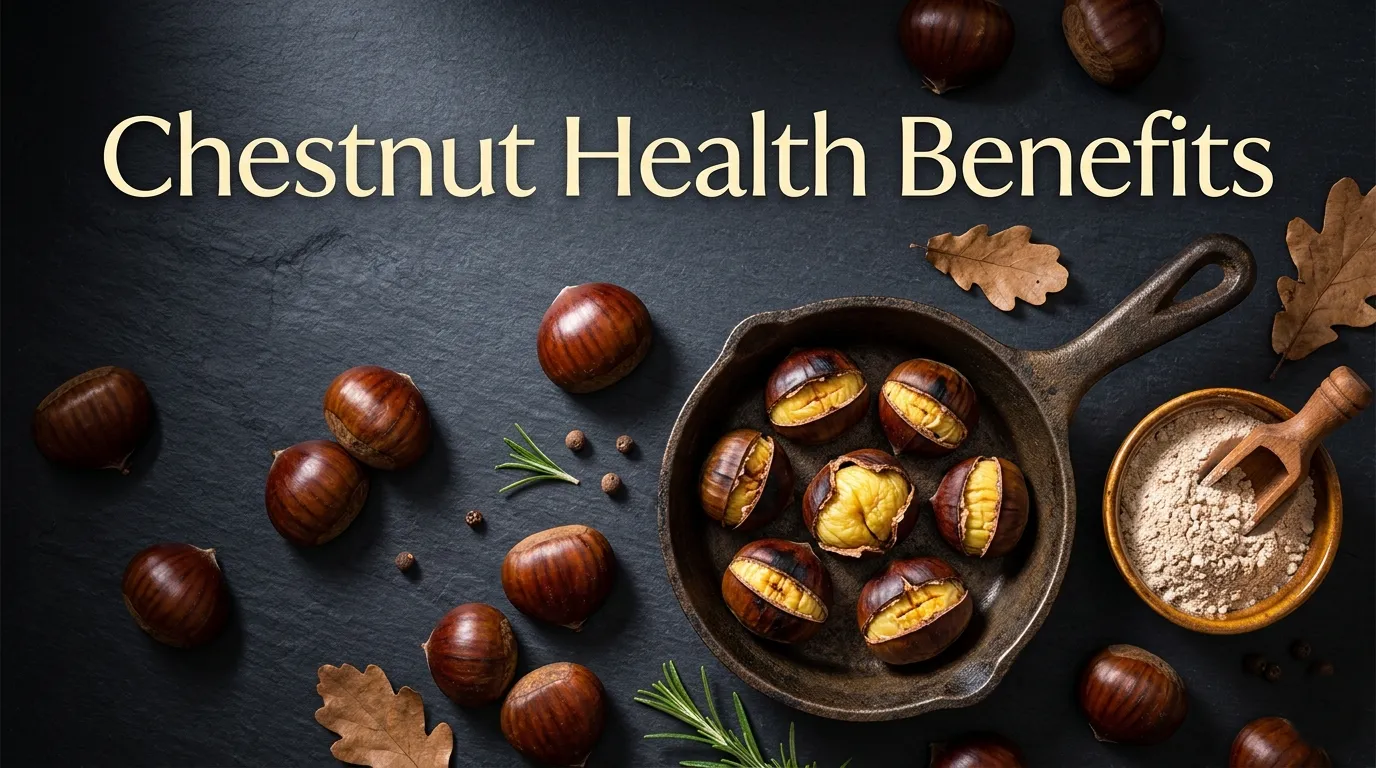
Chestnut Health Benefits
Chestnut health benefits are rooted in a nutritional profile that more closely resembles a whole grain than a nut. They provide slow-digesting starch, vitamin C, and a meaningful dose of dietary fiber.
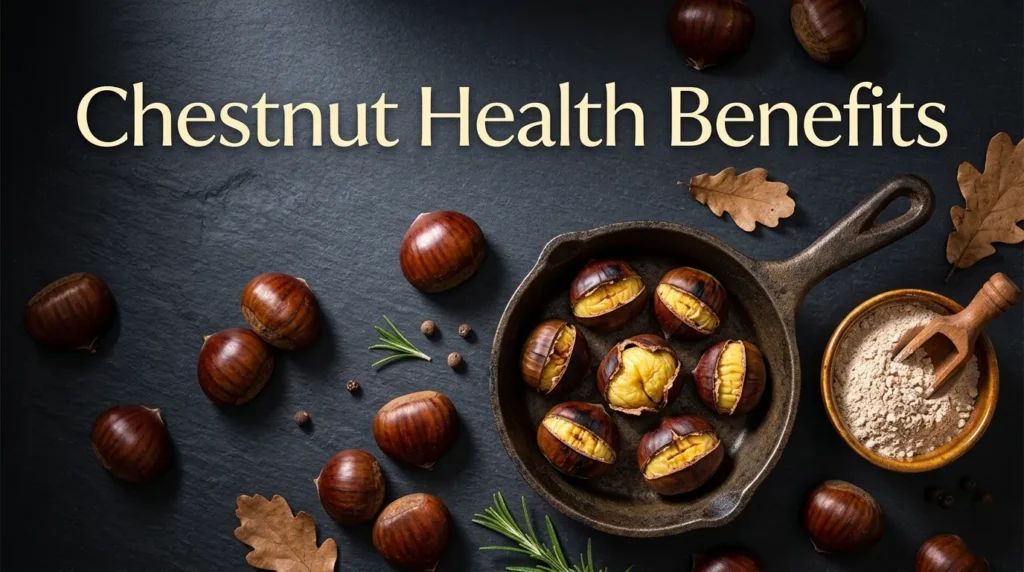
Unlike most nuts, chestnuts are not a significant source of fat. This makes them an excellent base for a high-carbohydrate, low-fat meal that promotes satiety without the caloric density of a handful of walnuts.
They are also a good source of essential minerals, particularly potassium and copper. A single 100-gram serving provides 13 percent of your daily potassium, supporting healthy blood pressure.
The high moisture content of fresh chestnuts makes them perishable. This also means they are lower in calories by weight than any other nut, making them a voluminous food that fills the stomach.
| Nutrient | Chestnuts (100g, roasted) | Almonds (100g) | White Potato (100g, baked) |
|---|---|---|---|
| Calories | 245 | 579 | 93 |
| Total Fat | 2.2g | 50g | 0.1g |
| Total Carbs | 53g | 21g | 21g |
| Dietary Fiber | 5.1g | 12.5g | 2.2g |
| Vitamin C | 26.7 mg (30% DV) | 0 mg | 9.6 mg (11% DV) |
| Potassium | 592 mg (13% DV) | 733 mg | 535 mg |
Key Takeaway: Chestnuts are the only “nut” that you can safely center a meal around. They are a starchy vegetable alternative, not a fatty snack.
Health Benefits of Chestnuts
The health benefits of chestnuts extend to the cardiovascular system because of their potassium and low-fat matrix. Potassium helps counter the hypertensive effects of sodium.
The Dietary Guidelines for Americans 2020-2025 emphasize potassium as a nutrient of public health concern. Chestnuts are a practical, whole-food way to increase your intake of this critical mineral.
The antioxidant capacity of chestnuts is another major benefit. They retain significant vitamin C even after roasting, and they contain high levels of phenolic acids like gallic acid.
These antioxidants are not just systemic. Tannins and phenolic acids in chestnuts may act directly in the gut, protecting the intestinal lining from oxidative stress.
- Folate Boost: A 100g serving provides 70 mcg of folate, supporting red blood cell formation.
- Mineral Density: They are an excellent source of copper and manganese, co-factors for energy production.
- Gluten-Free: Chestnuts are naturally gluten-free, making them a safe grain alternative.
- Natural Electrolyte: The high potassium and water content make them a perfect post-exercise recovery food.
Chestnut Nutrition
Chestnut nutrition distinguishes itself by its water and starch content. Fresh chestnuts are roughly 50 percent water and 45 percent complex carbohydrate.
This composition makes them highly perishable. They must be refrigerated and used quickly, or they will mold.
The fat that is present in chestnuts is predominantly heart-healthy monounsaturated and polyunsaturated fat. Because the total volume is so low, the fat serves primarily as a carrier for the fat-soluble antioxidants.
The specific micronutrient profile is also noteworthy. Chestnuts are one of the few nuts that contain a meaningful amount of choline, a nutrient linked to brain and liver function.
Chestnut Carbs
Chestnut carbs are the defining nutritional feature of this food. Roasted chestnuts consist of about 53 percent carbohydrates by weight.
This is a stark contrast to almonds (21 percent) or macadamias (14 percent). The carbohydrate content places chestnuts in the same macro category as sweet potatoes, rice, or oats.
The critical distinction is the type of carbohydrate. A significant portion of chestnut starch is “resistant starch,” which functions very differently from simple white flour.
Resistant starch resists digestion in the small intestine. It acts as a soluble, fermentable fiber, passing through to the large intestine to feed beneficial bacteria.
- Resistant Starch Type: Specifically RS2 (raw) and RS3 (retrograded upon cooling).
- Fermentation: Produces short-chain fatty acids (SCFAs) like butyrate.
- Glucose Absorption: Slows the release of glucose into the bloodstream.
- Cooking Note: Roasting gelatinizes the starch, which can slightly reduce the RS2 content but makes it digestible.
Chestnut Fiber
Chestnut fiber is a mixture of insoluble and soluble types, including the fermentable resistant starch. A 100-gram serving provides 5.1 grams of dietary fiber.
This represents roughly 15 to 20 percent of the recommended daily intake. The fiber matrix creates a slow, gradual release of energy.
The soluble fiber fraction is what drives the prebiotic benefit. It serves as the fuel for the colonic bacteria that maintain the integrity of your gut barrier.
A healthy fermentation of this fiber produces butyrate. Butyrate is the primary energy source for colonocytes and has potent anti-inflammatory and anti-cancer properties within the colon.
- Gut Motility: Insoluble fiber adds bulk and prevents constipation.
- Cholesterol Binding: Soluble fiber binds to bile acids in the gut, helping to lower circulating LDL cholesterol.
- Satiety Hormones: The combination of bulk and fermentation stimulates GLP-1 and PYY, hormones that signal fullness.
- Cooking Tip: The fiber remains intact even when roasted, though the vitamin C is reduced.
Key Takeaway: Chestnuts are a prebiotic powerhouse disguised as a holiday treat. They feed your gut bacteria with resistant starch that generates anti-inflammatory butyrate.
Chestnuts Vitamin C
Chestnuts vitamin C content is a genuine anomaly in the nut world. They are the only nut that contains a significant amount of ascorbic acid.
A 100-gram serving of roasted chestnuts provides 26.7 milligrams of vitamin C. This is 30 percent of the Daily Value.
Vitamin C is a potent water-soluble antioxidant. In the body, it neutralizes free radicals before they can damage cellular lipids and DNA.
It is also a required cofactor for the enzymes that produce collagen. Eating chestnuts regularly can support the body’s natural collagen synthesis for skin and joint health.
- Heat Degradation: Vitamin C is sensitive to heat. Raw chestnuts have a significantly higher level than roasted ones.
- Roasting Loss: Expect a reduction of 20 to 40 percent depending on roasting time and temperature.
- Synergy with Copper: The high copper content in chestnuts also aids in cross-linking collagen.
- Immune Function: The vitamin C bolsters the activity of phagocytes and T-cells.
Chestnut Potassium
Chestnut potassium levels are high enough to make a measurable difference in electrolyte balance. At 592 milligrams per 100 grams, they rival the banana (358 mg/100g).
Potassium is a vasodilator. It relaxes the tension in the walls of blood vessels, improving blood flow and reducing the workload on the heart.
A diet high in potassium is directly associated with a lower risk of hypertension and stroke. The high potassium-to-sodium ratio in chestnuts (about 215:1) makes them ideal for the DASH diet.
Potassium also plays a key role in muscle contraction and nerve transmission. A deficiency can lead to muscle cramps and an irregular heartbeat.
- Electrolyte Balance: Acts as the natural counterbalance to sodium.
- Bone Density: Potassium salts help neutralize metabolic acids that leach calcium from bones.
- DASH Diet: Chestnuts are a perfect snack for the Dietary Approaches to Stop Hypertension diet.
- Post-Workout: Roasted, salted chestnuts restore glycogen and replace potassium lost through sweat.
Chestnut Antioxidants
Chestnut antioxidants are not just vitamins. The shell and pellicle (skin) are rich in phenolic acids, specifically gallic acid and ellagic acid.
These compounds are powerful scavengers of free radicals. They are often extracted from chestnut wood and shells for use in supplements.
Gallic acid has demonstrated specific anti-cancer, anti-fungal, and anti-viral properties in vitro. It induces apoptosis in certain types of cancer cells without damaging healthy cells.
The tannins in chestnuts also contribute to the antioxidant effect. While tannins can bind minerals and reduce absorption in high amounts, the levels in chestnuts are moderate and beneficial.
- Gallic Acid: A trihydroxybenzoic acid that is a building block for hydrolysable tannins.
- Ellagic Acid: Converted by gut bacteria into urolithins, which are powerful mitochondrial boosters.
- Anti-Diabetic Effect: Gallic acid inhibits amylase, which slows the breakdown of complex sugars.
- Bioavailability: The lipid matrix of the chestnut, although small, aids in the absorption of these phenolics.
Key Takeaway: The antioxidants in chestnuts are not just vitamins. The gallic and ellagic acids in the flesh and skin are potent, disease-fighting phenols.
Chestnut for Diabetes
Chestnut for diabetes management is a viable strategy if portion sizes are monitored. The high fiber and resistant starch content offsets the total carbohydrate load.
The glycemic index (GI) of chestnuts is moderate, around 54 for the roasted variety. This places them in the low-to-moderate GI range.
The specific phenolic acids, particularly gallic acid, inhibit alpha-amylase. This enzyme is responsible for splitting starches into free glucose.
By naturally slowing this enzymatic process, a meal containing chestnuts produces a shallower, more gradual blood glucose curve.
- Resistant Starch: Improves insulin sensitivity in the muscle cells by upregulating GLUT4 transporters.
- Fiber Matrix: The physical structure of the chestnut cell wall slows the release of glucose.
- Diet Compatibility: Compatible with the Mediterranean diet and carb-counting plans.
- Monitoring: A diabetic individual should test their blood sugar response to a standard serving of 50g of carbs, as individual tolerance to chestnut starch varies.
Chestnut Glycemic Index
Chestnut glycemic index varies by preparation. Boiled chestnuts have a lower GI than roasted ones.
The GI scale ranks carbohydrates from 0 to 100 based on how they raise blood sugar. A GI below 55 is considered low.
The roasting process gelatinizes the starch, making it more accessible to digestive enzymes. This slightly raises the GI compared to boiling.
A standard serving of 10 roasted chestnut kernels contains about 36 grams of carbs. This is a manageable carbohydrate load for a snack.
- Roasted Chestnuts: GI ~54 (Moderate).
- Boiled Chestnuts: GI ~38 (Low).
- Dried Chestnut Flour: GI varies but is generally moderate.
- Portion Tip: Combining chestnuts with a protein source or a healthy fat further flattens the glucose curve.
Chestnuts Weight Loss
Chestnuts weight loss properties are linked to their caloric density and satiety. They are the lowest-calorie nut, providing volume and bulk for fewer calories.
A person can eat a much larger volume of chestnuts than almonds for the same caloric hit. This visual volume on the plate triggers psychological satiety.
The resistant starch in chestnuts also increases the production of gut peptides (PYY and GLP-1). These hormones tell the brain that you are full and satisfied.
For a weight-loss diet, chestnuts satisfy the craving for a starchy, comforting carbohydrate without the empty calories of white bread or the heavy fat load of a potato chip.
- Calorie Control: 245 calories per 100 grams versus 579 for almonds.
- Chewing Factor: The firm, dense texture requires significant mastication, slowing the pace of eating.
- Hormonal Satiety: The production of butyrate in the colon induces long-term satiety signals.
- Macro Strategy: Use chestnuts as a direct carbohydrate swap for grains on a Paleo or gluten-free weight loss plan.
Chestnut Flour Benefits
Chestnut flour benefits the gluten-free community by providing a flour that behaves more like a grain flour than a nut flour. It has a natural sweetness and a fine, soft texture.
Unlike almond flour, chestnut flour is low in fat and does not require a binder like xanthan gum to hold its shape. It creates a tender crumb in baked goods.
The flour retains the fiber and mineral content of the whole nut. It is a natural source of potassium, folate, and resistant starch.
It is a traditional ingredient in Tuscan cuisine (farina di necci) and Corsican cooking. It makes exceptional crepes, cakes, and pasta that brown beautifully.
- Low Fat: Does not go rancid as quickly as almond flour, but has a shorter shelf life than grain flour.
- Natural Sweetness: The sugars caramelize beautifully when baked, providing a rich flavor.
- Binding Ability: Contains enough starch to form a structure without eggs.
- Nutrition Integrity: Retains the prebiotic fiber and essential minerals of the raw nut.
Key Takeaway: Chestnut flour is the best alternative for creating genuine gluten-free breads and pastas that taste like “real” baked goods, not eggy omelets.
Roasted Chestnut Benefits
Roasted chestnut benefits are not just about flavor. The roasting process (pyrolysis) creates aromatic compounds and alters the carbohydrate structure.
The high heat of roasting (around 200 degrees Celsius) caramelizes the natural sugars, creating the signature sweet, nutty flavor. This also slightly reduces the water content, concentrating the nutrients.
The roasting process softens the starch, making it digestible. A raw chestnut is primarily composed of hard, indigestible starch, which is why roasting is necessary.
However, roasting degrades the heat-sensitive vitamin C. A raw chestnut is a superior source of the vitamin, but the roasted version is far more palatable and still retains a functional amount.
- Pyrolysis Flavor: The Maillard reaction creates the roasted, meaty notes.
- Starch Gelatinization: The heat breaks the crystalline starch structure, making it creamy.
- Cooking Tip: To steam-roast, soak and score the shells, then roast with a pan of water in the oven to prevent them from drying out.
- Nutrient Comparison: A raw chestnut has 40mg of Vitamin C, while a roasted one has 26mg.
Horse Chestnut vs Sweet Chestnut
Horse chestnut vs sweet chestnut is a matter of botanical life and death. The two are completely unrelated and the former is toxic to humans.
The edible chestnut belongs to the Castanea genus. The toxic horse chestnut belongs to the Aesculus genus.
Horse chestnuts contain aesculin, a coumarin glycoside that is a potent neurotoxin. Eating a horse chestnut causes nausea, vomiting, paralysis, and in severe cases, death.
The physical distinction is in the shell. Sweet chestnuts have a husk covered in a dense, prickly, sea-urchin-like burr. Horse chestnuts have a husk with short, sparse, rubbery spikes.
- Sweet Chestnut (Edible): Tassel-like point at the tip of the nut. Brown, slightly fuzzy shell.
- Horse Chestnut (Toxic): Rounded, smooth nut without a point. Thick, fleshy green husk.
- Location: Horse chestnuts are common in city parks and suburban landscapes (buckeye trees).
- Safety Rule: Never forage chestnuts without confirming the identification of both the leaf and the nut with a local expert.
Key Takeaway: The nut you pick up in a city park is almost certainly a toxic horse chestnut. Never eat a wild chestnut without verifying it is from a Castanea tree.
Chestnut Allergy Latex
Chestnut allergy latex is a classic example of cross-reactivity known as latex-fruit syndrome. An allergy to chestnuts is strongly associated with a natural rubber latex allergy.
The proteins in the chestnut (specifically Cas s 1 and Cas s 5) are structurally similar to the allergenic proteins in rubber latex. Your immune system mistakes the chestnut for a rubber glove.
The symptoms range from oral allergy syndrome (itching and tingling of the lips and mouth) to anaphylactic shock. This is a serious, IgE-mediated food allergy.
If you have a known latex allergy, you have a high risk of reacting to chestnuts, avocados, bananas, and kiwis. Consult an allergist for a specific skin-prick test before adding chestnuts to your diet.
- Primary Allergen: Cas s 1 (pathogenesis-related protein).
- Cross-Reactivity: Co-sensitization to avocado and banana is extremely common.
- Clinical Advice: An allergist can perform a component-resolved diagnosis to determine your specific risk.
- Emergency Preparedness: Anyone with this allergy should carry an epinephrine auto-injector.
Frequently Asked Questions About Chestnut Health Benefits
What are the main health benefits of eating chestnuts?
The main health benefits are a high intake of prebiotic fiber and resistant starch that feeds beneficial gut bacteria.
They are also a unique nut source of vitamin C and potassium, supporting heart health and immunity.
Chestnuts are naturally gluten-free and the lowest-calorie nut, making them a weight-friendly starch.
Are chestnuts good for people with diabetes?
Chestnuts can be included in a diabetic diet because of their moderate glycemic index and high fiber content.
The resistant starch and phenolic acids slow down the absorption of glucose into the bloodstream.
Portion control is essential, as they are still a significant source of carbohydrates.
Do chestnuts have more carbs than other nuts?
Yes, chestnuts have significantly more complex carbohydrates and less fat than other common tree nuts.
While almonds derive 70 percent of their calories from fat, chestnuts derive over 80 percent of their calories from carbohydrates.
Nutritionally, they act more like a whole grain or starchy root vegetable.
Are roasted chestnuts healthier than raw ones?
Raw chestnuts are higher in heat-sensitive vitamin C, but their starch is hard and indigestible by humans.
Roasting makes the starch digestible and the nutrients bioavailable, which is essential for gaining the health benefits.
The trade-off of losing some vitamin C is worth it for the increase in digestible energy and prebiotic fiber.
What is the difference between a sweet chestnut and a horse chestnut?
Sweet chestnuts (Castanea) are edible and have a pointed, tasseled tip and a prickly burr.
Horse chestnuts (Aesculus) are toxic to humans, containing the nerve toxin aesculin, and have a fleshy, sparsely spiked husk.
You can identify a toxic horse chestnut by its large, rounded nut lacking a pointed tip.
Can you eat chestnuts if you have a nut allergy?
You should not eat chestnuts if you have a tree nut allergy without consulting an allergist first.
There is a very strong cross-reactivity between chestnuts and natural rubber latex allergy, a condition known as latex-fruit syndrome.
Do not assume chestnuts are safe because they are “different” from other nuts.
Chestnuts occupy a unique space in your pantry that you might have been filling with processed carbs. They are not a nut in the fatty, keto-friendly sense, and they are not an empty starch in the white rice sense. They are a prebiotic carbohydrate, a whole-food fuel source wrapped in a shell that delivers a meaningful dose of vitamin C and potassium that a potato simply cannot match.
The next time you see them, whether in the produce aisle or as flour on a specialty shelf, the most important thing to check is the name. You are looking for the Castanea genus. The fuzzy, pointed nut inside a sea-urchin shell is a sweet chestnut. The smooth, round nut in a green, floppy shell is a horse chestnut that can make you dangerously ill. Do not forage unless you are with an expert.
Once you have the right food in your hands, you now know how to use it. Roast them for a warming, creamy snack that will not spike your blood sugar the way a cookie would. Use the flour to make gluten-free bread that actually tastes like bread. Integrate them into your diet with the same confidence you would a sweet potato, and you will gain the unique benefits of a nut that nature designed to be eaten by the handful.