Pickle Juice Health Benefits: What Science Says in 2026
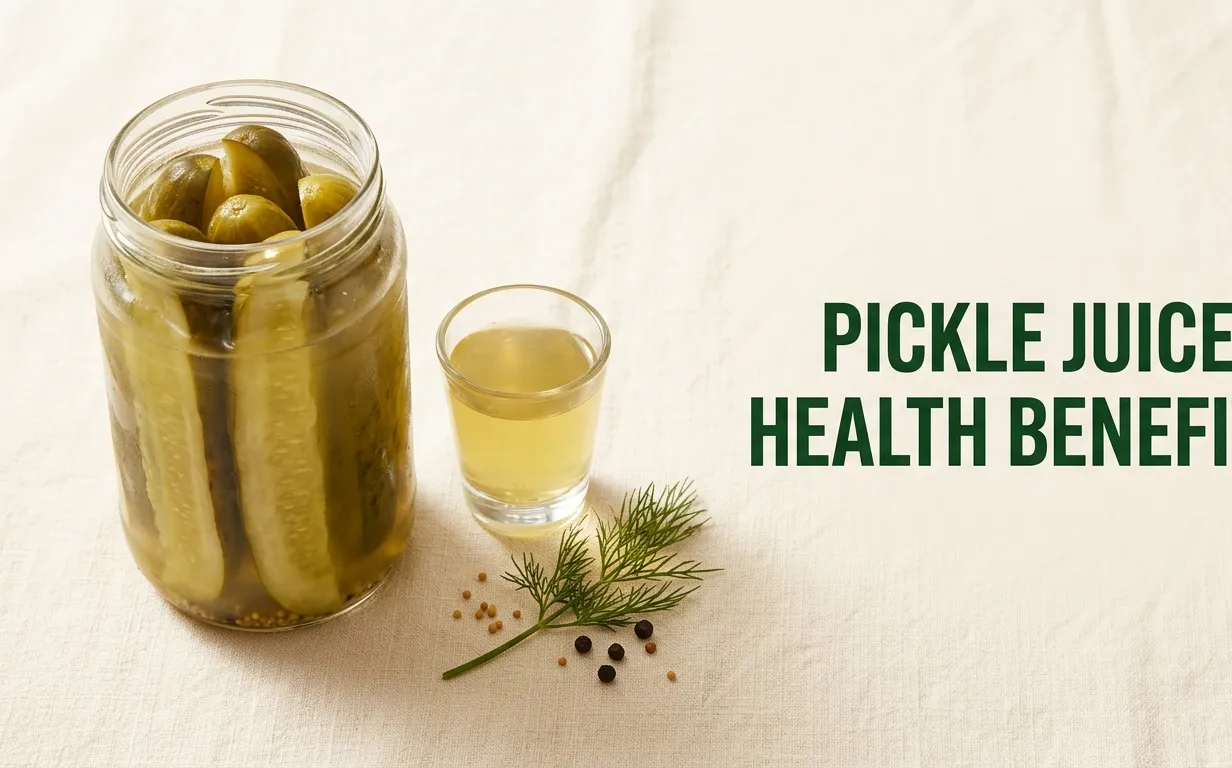
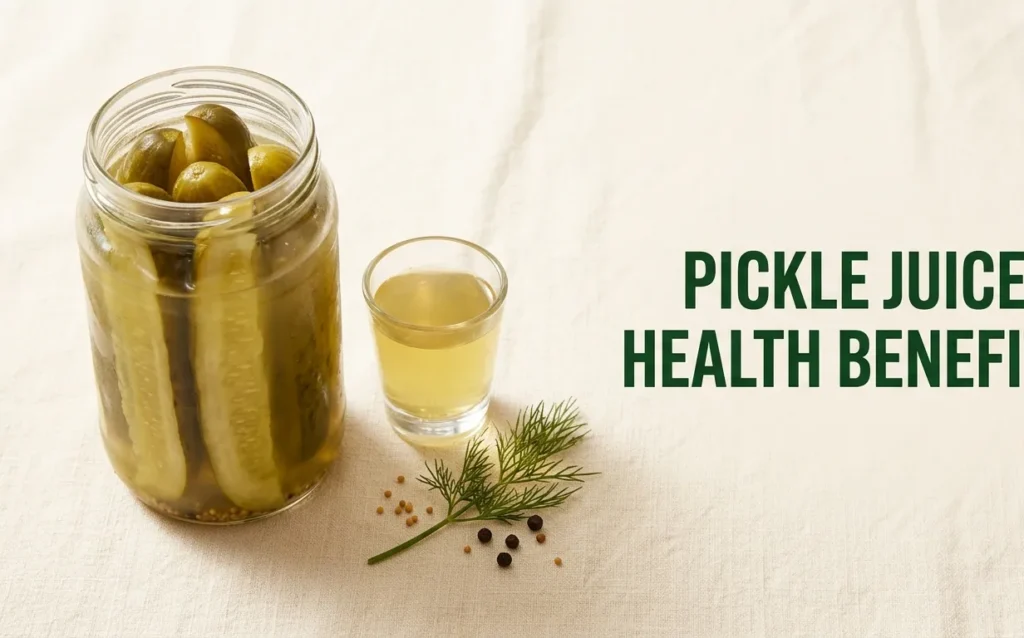
Pickle juice health benefits that are supported by published research include rapid relief of exercise-associated muscle cramps, modest post-exercise rehydration when sodium losses are high, and reduced post-meal blood glucose spikes when consumed alongside carbohydrate-containing meals. The most robust evidence exists for the muscle cramp mechanism, which operates through a neurological reflex triggered in the throat rather than through electrolyte replacement.
This distinction matters because it challenges the outdated assumption that muscle cramps are caused solely by dehydration or electrolyte depletion. A 2010 study published in Medicine and Science in Sports and Exercise demonstrated that pickle juice relieved electrically induced muscle cramps 45 percent faster than drinking water, and it did so within 85 seconds, far too quickly for the sodium to have been absorbed into the bloodstream and delivered to the affected muscle.
We’ll walk through the exact neural pathway that explains this rapid response, compare pickle juice’s electrolyte profile to standard sports drinks, and give you a practical framework for deciding whether to drink it, how much, and which type to buy. You’ll also get clear guidance on the sodium safety boundaries that determine who benefits from pickle juice and who should leave it on the shelf.
Pickle Juice Health Benefits: An Evidence-Based Overview
The health benefits of pickle juice fall into four categories with varying levels of research support. Muscle cramp relief is the best-documented benefit with a clear, replicated mechanism. Post-exercise rehydration after heavy sweating is supported by electrolyte logic and indirect evidence. Blood sugar moderation through acetic acid is supported by vinegar research but not by pickle juice trials specifically. Gut health benefits apply only to fermented, unpasteurized pickle juice and are considered preliminary.
Each of these benefits operates through a completely different biological mechanism. The cramp relief is neurological. The rehydration is osmotic. The blood sugar effect is enzymatic. The probiotic effect is microbial. They cannot be lumped together as a single “pickle juice effect.” Understanding each mechanism separately is what lets you use pickle juice strategically for your specific goal instead of drinking it as a general health tonic and hoping something good happens.
The evidence quality varies substantially across these categories. The muscle cramp mechanism has been directly tested in controlled laboratory settings with pickle juice as the specific intervention. The blood sugar effect is inferred from studies using vinegar solutions with equivalent acetic acid concentrations, but direct pickle juice trials on postprandial glucose are limited. This distinction between direct and indirect evidence is something most online summaries ignore, and it matters for making an informed decision.
| Health Benefit | Evidence Quality | Key Mechanism |
|---|---|---|
| Muscle Cramp Relief | Strong (controlled trials with pickle juice) | Oropharyngeal TRP channel reflex, not electrolyte absorption. |
| Post-Exercise Rehydration | Moderate (electrolyte physiology logic) | Sodium-driven water retention in extracellular compartment. |
| Blood Sugar Moderation | Moderate (inferred from vinegar research) | Acetic acid inhibition of alpha-amylase and alpha-glucosidase. |
| Probiotic Gut Support | Preliminary (strain-specific, product-dependent) | Live Lactobacillus species in unpasteurized fermented brine only. |
What Are the Health Benefits of Pickle Juice
Pickle juice provides four main health benefits, but only two of them apply universally regardless of the brand or type you choose. Every pickle juice provides muscle cramp relief through acetic acid’s neurological effect and modest sodium replacement for heavy sweaters. Only fermented, refrigerated pickle juice provides live probiotic bacteria. Only dill pickle juice (not sweet) provides the zero-sugar blood sugar benefit.
The probiotic distinction is the most misunderstood aspect of pickle juice health claims. Shelf-stable pickle juice sold in the condiment aisle has been heat-pasteurized to kill all microorganisms and seal the jar. It contains zero live probiotics. The Cleveland Clinic notes that only fermented pickles found in the refrigerated section of grocery stores, which are typically sold in brine that appears cloudy rather than crystal clear, contain active Lactobacillus cultures.
The blood sugar benefit applies specifically to vinegar-based pickle juice that contains acetic acid and zero added sugar. Sweet pickle juice made with sugar or high fructose corn syrup contains carbohydrate that directly counteracts the acetic acid’s glucose-lowering mechanism. You cannot get the blood sugar benefit from bread-and-butter pickle juice. The practical rule is simple: if the pickle juice tastes sweet, it contains sugar, and the blood sugar benefit is nullified.
Key Takeaway: All pickle juice stops muscle cramps via a neural reflex, but only refrigerated, fermented pickle juice provides probiotics, and only unsweetened dill pickle juice supports blood sugar control.
Pickle Juice Nutrition Facts and Electrolyte Profile
One fluid ounce (30 ml) of standard dill pickle juice contains 0 to 5 calories, 0 grams of protein and fat, less than 1 gram of carbohydrate, and between 200 and 400 milligrams of sodium. The sodium content varies by brand by a factor of two, making label reading a non-negotiable step before you drink it with any health goal in mind.
Potassium is present in much smaller amounts than most people assume. One ounce of pickle juice typically contains 15 to 40 milligrams of potassium, a fraction of the 3,400 milligrams men need daily. Pickle juice is not a meaningful potassium source. The idea that it replenishes potassium lost in sweat is largely unsupported by the actual numbers. A medium banana provides 422 milligrams of potassium, over ten times what an ounce of pickle juice delivers.
Calcium and magnesium are present at trace levels only, typically 1 to 15 milligrams per ounce. These amounts are nutritionally negligible for an adult. The USDA FoodData Central database confirms that pickle brine’s micronutrient contribution beyond sodium is minimal. The sole electrolyte that pickle juice delivers at a physiologically relevant dose is sodium.
Acetic acid is the non-electrolyte component responsible for the cramp-relief reflex and the blood sugar effect. It is present at a concentration of approximately 3 to 5 percent in vinegar-based pickle juice, matching the standard acidity of white vinegar or apple cider vinegar. This is the compound that activates the nerve receptors in the throat, and it is present in pasteurized and unpasteurized pickle juice equally, as it is not heat-sensitive.
| Nutrient (per 1 fl oz / 30 ml) | Amount (Dill Pickle Juice) | Notes |
|---|---|---|
| Calories | 0-5 | Negligible caloric load. |
| Sodium | 200-400 mg | The defining electrolyte; read labels for brand-specific amounts. |
| Potassium | 15-40 mg | Not a meaningful source; a banana has 10x more. |
| Carbohydrate | 0-1 g | Zero sugar in dill brine; sweet pickle brine is different entirely. |
| Acetic Acid | 3-5% concentration | The active compound for neurological cramp relief and blood sugar effect. |
Pickle Juice for Muscle Cramps and Exercise Recovery
Drinking 1 to 2 fluid ounces of pickle juice at the onset of an exercise-associated muscle cramp shortens the cramp duration by approximately 40 to 45 percent compared to drinking plain water, based on the landmark 2010 study published in Medicine and Science in Sports and Exercise. The effect occurs within 60 to 90 seconds, which is far too rapid for stomach emptying or small intestine absorption to have played a role.
This rapid time course is the central clue that the mechanism is neurological rather than metabolic. If pickle juice worked by replenishing a sodium deficit, you would need to wait 20 to 30 minutes for the sodium to traverse the gastrointestinal tract, enter the bloodstream, circulate to the affected muscle, and correct the local electrolyte environment. The fact that cramp relief begins in under two minutes eliminates electrolyte absorption as the explanation.
The neurological mechanism is now understood to involve the transient receptor potential (TRP) ion channels, specifically TRPA1 and TRPV1, located in the sensory nerve endings of the mouth and throat. These channels are activated by strong, pungent stimuli including the acetic acid in pickle juice. When activated, they send a burst of sensory signals to the spinal cord that inhibits the hyperactive alpha motor neurons causing the cramp. This is an oropharyngeal reflex, not a systemic metabolic correction.
For practical use during exercise, the most effective protocol is to keep a small bottle of pickle juice accessible during long-duration events lasting over 90 minutes. At the first sensation of a muscle cramp beginning, drink 1 to 2 ounces immediately. Do not wait for the cramp to fully develop. The reflex is most effective when triggered at the onset of the cramping sensation. Runners, triathletes, and tennis players in hot conditions are the populations most likely to benefit from this strategy.
Pickle Juice Mechanism for Cramp Relief Explained
Pickle juice stops muscle cramps through a neurological reflex arc that begins in the oropharynx and ends with the inhibition of hyperactive motor neurons in the spinal cord. The key activating compound is acetic acid, which stimulates the TRPA1 and TRPV1 ion channels embedded in the sensory nerve endings lining the back of the throat.
When acetic acid contacts these nerve endings, it triggers a rapid influx of calcium ions into the sensory neuron. This generates an action potential that travels along the glossopharyngeal and vagus nerves to the nucleus tractus solitarius in the brainstem. From there, inhibitory interneurons project down to the spinal cord where they reduce the firing rate of the alpha motor neurons that are driving the cramping muscle. The result is a reduction in involuntary muscle contraction within 60 to 90 seconds.
This mechanism is not unique to pickle juice. Any sufficiently strong, pungent, or sour stimulus delivered to the oropharynx can theoretically trigger a similar reflex. Mustard, vinegar shots, and even strong ginger extracts have been reported to produce similar, though less studied, cramp-relieving effects. Pickle juice happens to be the most researched vehicle for delivering the stimulus in a convenient, shelf-stable liquid form that athletes can carry.
Think of this reflex like a fire alarm system. The acetic acid is not the firefighter that puts out the blaze. It is the alarm bell that tells the fire department (the central nervous system) that there’s a problem. The actual resolution of the cramp is performed by the body’s own inhibitory neural circuitry, which is activated by the sensory input. The liquid doesn’t fix the muscle directly. It tells the brain to tell the muscle to stop contracting.
Key Takeaway: Pickle juice doesn’t travel to the muscle to fix the cramp; it triggers a nerve reflex in the throat that tells the spinal cord to stop the uncontrolled muscle firing, all within 90 seconds.
Does Pickle Juice Hydrate You Better Than Water
Pickle juice does not hydrate you better than water in the conventional sense of adding more water volume to your body. What it does better than water is help you retain the water you drink after heavy sweating by replacing the sodium lost in sweat, preventing the dilution of blood sodium that signals the kidneys to produce urine.
Plain water, when consumed in large volumes after heavy sodium loss, can actually worsen hydration status. As blood sodium concentration drops, the pituitary gland reduces its release of antidiuretic hormone (ADH). Without ADH signaling the kidneys to retain water, much of the water you drink is quickly excreted as urine. This is why endurance athletes who drink only water during long events can develop exercise-associated hyponatremia, a dangerous condition of low blood sodium.
Pickle juice, with its 200 to 400 mg of sodium per ounce, provides the osmotic anchor that keeps water in the extracellular compartment. When you drink pickle juice followed by water, the absorbed sodium holds the water in your bloodstream and interstitial fluid where it can support plasma volume and cardiovascular function. The American College of Sports Medicine recommends sodium intake during prolonged exercise for exactly this reason, though their primary recommendation is a properly formulated sports drink rather than pickle juice specifically.
For everyday hydration in a non-exercising context, pickle juice is not the appropriate choice. The sodium load is unnecessary and potentially harmful if you have not lost significant sodium through sweat. Plain water remains the optimal hydration beverage for sedentary conditions. Pickle juice’s hydration advantage is context-dependent and applies specifically to the rehydration phase after prolonged, heavy sweating.
Pickle Juice vs Sports Drinks Electrolyte Comparison
Pickle juice and commercial sports drinks have fundamentally different electrolyte profiles designed for different purposes. A sports drink like Gatorade is formulated as a hypotonic or isotonic solution for rapid fluid delivery. Pickle juice is a hypertonic sodium shot designed for rapid sodium replacement and cramp reflex activation. They are not interchangeable.
An 8-ounce serving of a standard sports drink contains approximately 110 mg of sodium and 30 mg of potassium. A single ounce of pickle juice contains 200 to 400 mg of sodium and 15 to 40 mg of potassium. Per ounce, pickle juice delivers roughly 8 to 15 times more sodium. This concentrated sodium load is precisely what makes pickle juice effective for cramp relief and post-exercise sodium replacement but unsuitable as an all-purpose hydration beverage.
The sugar content separates them further. An 8-ounce sports drink contains 14 to 21 grams of sugar, which serves the dual purpose of providing rapidly absorbable carbohydrate for working muscles and facilitating sodium and water absorption in the small intestine through the sodium-glucose cotransport mechanism. Pickle juice (dill) contains zero grams of sugar. This makes it a zero-calorie sodium delivery vehicle, which is an advantage for blood sugar management but means it lacks the glucose co-transport that maximizes water absorption.
| Feature (per typical serving) | Pickle Juice (1 fl oz) | Sports Drink (8 fl oz) |
|---|---|---|
| Sodium | 200-400 mg | 110 mg |
| Potassium | 15-40 mg | 30 mg |
| Sugar | 0 g | 14-21 g |
| Calories | 0-5 | 50-80 |
| Primary Purpose | Cramp reflex trigger, sodium shot | Fluid delivery, carbohydrate fuel, mild electrolyte replacement |
| Tonicity | Hypertonic | Isotonic or hypotonic |
Pickle Juice Sodium Content and Daily Value Context
One fluid ounce of dill pickle juice contains 200 to 400 mg of sodium, representing 9 to 17 percent of the American Heart Association ideal daily limit of 2,300 mg and 13 to 27 percent of the stricter 1,500 mg limit recommended for people with hypertension. A single 3-ounce serving, which some athletes consume for cramp relief, delivers up to 1,200 mg of sodium, over half the ideal daily limit.
Sodium is not inherently harmful. It is an essential electrolyte that regulates extracellular fluid volume, nerve impulse transmission, and muscle contraction. The health concern with sodium is chronic overconsumption, not acute intake in the context of heavy sweating. The Dietary Guidelines for Americans 2020-2025 state that the average American adult consumes approximately 3,400 mg of sodium per day, well above the 2,300 mg Chronic Disease Risk Reduction intake. Adding pickle juice to an already high-sodium diet pushes intake further beyond safe boundaries.
The key variable is sweat sodium loss. An hour of heavy exercise in the heat can result in the loss of 500 to 2,000 mg of sodium through sweat, depending on individual sweat rate and sodium concentration. For a heavy sweater, the sodium in pickle juice replaces what was lost and helps prevent hyponatremia. For a sedentary person with hypertension, the same sodium load is purely additive and increases cardiovascular risk.
Individual sodium sensitivity varies. Some people excrete excess dietary sodium efficiently and experience minimal blood pressure elevation. Others are sodium-sensitive and see their blood pressure rise directly with intake. There is no over-the-counter test for sodium sensitivity. A physician can assess your blood pressure response to dietary sodium changes during a structured monitoring period if you are considering regular pickle juice consumption.
Key Takeaway: The sodium in pickle juice is a targeted replacement tool for heavy sweaters, not a neutral condiment. Sedentary individuals and anyone with hypertension must account for it in their total daily sodium budget.
Pickle Juice Blood Sugar and Acetic Acid Mechanism
The acetic acid in pickle juice can reduce post-meal blood glucose spikes by inhibiting the digestive enzymes alpha-amylase and alpha-glucosidase in the small intestine. This slows the breakdown of complex carbohydrates into simple sugars, spreading glucose absorption over a longer time period and reducing the sharp insulin spike that typically follows a high-carbohydrate meal.
Alpha-amylase is the enzyme in saliva and pancreatic secretions that begins breaking starch molecules into smaller sugar chains. Alpha-glucosidase, located in the brush border of the small intestine, completes the job by cleaving these chains into individual glucose molecules that can be absorbed. Acetic acid partially inhibits both enzymes. The result is that some starch passes further down the intestine undigested, effectively lowering the glycemic impact of the meal without changing the carbohydrate content.
This mechanism is well-documented for vinegar in general. A 2004 study published in Diabetes Care found that consuming 20 grams of vinegar (approximately 2 tablespoons) with a high-glycemic meal reduced the postprandial glucose response by 34 percent in individuals with insulin resistance. The amount of acetic acid in 1 to 2 ounces of pickle juice is lower than this, but the mechanism is the same. The effect is dose-dependent and is most pronounced when the pickle juice is consumed with or immediately before a carbohydrate-containing meal.
The acetic acid also slows gastric emptying, the rate at which food leaves the stomach. A slower gastric emptying rate means glucose arrives in the small intestine more gradually, providing a secondary glucose-blunting mechanism that operates through a different physiological pathway than enzyme inhibition. This dual mechanism makes acetic acid one of the more effective dietary tools for postprandial glucose management, though pickle juice’s sodium content makes it a less ideal vehicle for this purpose than plain vinegar.
Fermented Pickle Juice Probiotics and Gut Health
Only unpasteurized, naturally fermented pickle juice contains live probiotic bacteria, primarily strains of Lactobacillus plantarum and Lactobacillus brevis that are produced during the fermentation process. These bacteria can transiently colonize the intestinal tract, where they may support the intestinal barrier function and compete with pathogenic bacteria for adhesion sites on the gut lining.
The fermentation process that produces these probiotics is a traditional lactic acid fermentation. Cucumbers are submerged in a salt brine. Naturally present lactic acid bacteria on the cucumber skin begin converting the vegetable’s sugars into lactic acid, creating the sour, tangy flavor of pickles. The salt concentration, temperature, and fermentation time determine the final bacterial strain profile. Lactobacillus plantarum is the dominant species in most naturally fermented cucumber pickles.
Pasteurization destroys every one of these live cultures. Heat pasteurization, typically at 160 degrees Fahrenheit for a specified duration, kills all vegetative bacterial cells. This is why shelf-stable pickle juice sold in sealed jars at room temperature has an indefinite shelf life. It is sterile. The clear, brilliantly transparent brine is a visual indicator that the juice has been heat-treated. Naturally fermented brine is characteristically cloudy due to suspended bacterial cells and yeast particles.
The probiotic benefit requires daily or near-daily consumption, as the bacteria do not permanently colonize the gut. They are transient organisms that pass through the gastrointestinal tract over 24 to 48 hours. To sustain any microbial benefit, you would need to consume small amounts of fermented pickle juice regularly. The sodium content of even small daily doses makes this a difficult recommendation to endorse over lower-sodium fermented foods like yogurt, kefir, or sauerkraut.
Pickle Juice for Weight Loss and Appetite Regulation
Pickle juice is not a direct weight loss aid, and no clinical trial has demonstrated that drinking pickle juice produces greater fat loss than a placebo when calories are equated. The weight loss connection is indirect and operates through the acetic acid’s effect on postprandial glucose and insulin levels, which can influence between-meal hunger and cravings.
The logic chain works as follows. A high-glycemic meal triggers a rapid rise in blood glucose. The pancreas responds with a proportionally large insulin release. Insulin clears glucose from the blood quickly, sometimes overshooting, which produces a reactive blood sugar dip 90 to 120 minutes after the meal. That dip triggers hunger signals and cravings for carbohydrate-rich foods. By blunting the initial glucose spike, acetic acid reduces the subsequent insulin surge and the reactive hypoglycemia that drives snacking.
This appetite regulation mechanism is supported by vinegar research but not by pickle juice trials specifically. A 2018 randomized crossover trial published in the Journal of Functional Foods found that vinegar consumption with a high-glycemic breakfast reduced subsequent ad libitum calorie intake at lunch by approximately 200 calories. Pickle juice at a comparable acetic acid dose would be expected to produce a similar effect, but the high sodium content makes pickle juice a less suitable vehicle for regular appetite management than a simple vinegar and water solution.
The zero-calorie status of dill pickle juice is its other weight management advantage. Substituting pickle juice for a caloric condiment or beverage removes calories without removing flavor. A tablespoon of mayonnaise adds 94 calories. A 2-ounce shot of pickle juice adds zero. This substitution effect is a legitimate dietary strategy, but it is not unique to pickle juice and does not justify the sodium load for individuals who are not also replacing sweat losses.
Pickle Juice Side Effects and Sodium Sensitivity Risks
The primary side effect of pickle juice is an elevated dietary sodium load that can raise blood pressure in sodium-sensitive individuals, contribute to fluid retention, and increase the risk of gastric irritation or heartburn when consumed in large volumes on an empty stomach. These effects are dose-dependent and are primarily relevant to individuals with preexisting hypertension or gastrointestinal sensitivity.
Blood pressure elevation from dietary sodium does not occur equally in everyone. Sodium sensitivity, defined as a blood pressure increase of 5 to 10 mmHg or more in response to a high-sodium diet, affects approximately 51 percent of people with hypertension and 26 percent of those with normal blood pressure, according to the American Heart Association. For sodium-sensitive individuals, the 400 mg of sodium in one ounce of pickle juice can produce a measurable blood pressure increase. For sodium-resistant individuals, the same dose may produce no change.
Gastrointestinal side effects occur because acetic acid is a direct irritant to the gastric mucosa. Consuming 2 to 3 ounces of pickle juice on an empty stomach can cause burning sensations, reflux, or nausea in susceptible individuals. This effect is more pronounced with pickle juice than with vinegar diluted in water because pickle juice is a hypertonic solution that draws water into the stomach, increasing gastric distension alongside the acid irritation.
The interaction with medications is an underdiscussed concern. The high sodium content can counteract the effect of diuretic medications prescribed for hypertension or heart failure. The acetic acid can alter the absorption of pH-dependent medications. If you take any medication, have the prescribing physician or a clinical pharmacist review your pickle juice consumption in the context of your medication list specifically, not as a general question about diet.
How Much Pickle Juice to Drink Daily for Benefits
For muscle cramp relief, 1 to 2 fluid ounces (30 to 60 ml) of dill pickle juice consumed at the onset of cramping is the evidence-supported acute dose. For post-exercise rehydration, 2 to 4 ounces (60 to 120 ml) combined with an equal or greater volume of plain water provides a targeted sodium replacement dose for heavy sweaters. There is no established safe daily intake for everyday non-exercise consumption.
The cramp relief dose is drawn directly from the 2010 study methodology and subsequent replication studies. Participants who received approximately 2.5 ounces (75 ml) experienced faster cramp resolution than those drinking water. Field experience among athletic trainers and sports dietitians suggests that 1 to 2 ounces is sufficient for most athletes, and a smaller volume reduces the risk of gastrointestinal discomfort during continued exercise.
The rehydration dose is based on the average sodium loss during one hour of heavy sweating, which ranges from 500 to 2,000 mg. Two to four ounces of pickle juice provides 400 to 1,600 mg of sodium, which, when combined with water to replace fluid volume, addresses the primary electrolyte deficit from exercise. This dose should be consumed after exercise has concluded, not during, when the hypertonic solution could draw fluid into the stomach and cause bloating.
For blood sugar management using pickle juice specifically, there is no established dose. The vinegar studies that demonstrated glucose-lowering effects used 1 to 2 tablespoons of vinegar containing 3 to 5 percent acetic acid. Pickle juice has a similar acetic acid concentration, suggesting a comparable volume, but the sodium content makes vinegar or diluted apple cider vinegar a safer vehicle for daily glucose management than pickle juice.
Key Takeaway: One to 2 ounces stops a cramp. Two to 4 ounces after heavy sweating replaces sodium. There is no safe daily maintenance dose for non-exercisers, and vinegar is a better vehicle than pickle juice for daily blood sugar management.
Best Pickle Juice to Buy in 2026 and Label Reading
The best pickle juice to buy in 2026 depends on your goal. For muscle cramp relief, choose any dill pickle juice with 200 to 400 mg of sodium per ounce and zero sugar. For probiotics, choose only fermented pickle juice sold in the refrigerated section with visible cloudiness and “live cultures” or “fermented” on the label. For blood sugar benefit, choose unsweetened dill pickle juice with zero grams of sugar on the nutrition facts panel.
Label reading for pickle juice is straightforward. Flip the jar and examine the nutrition facts panel. The three numbers that matter are sodium, sugar, and calories. A serving size of 1 ounce (30 ml) should show 0 grams of sugar and 0 calories for a dill pickle juice. If sugar or calories appear in amounts greater than 0, you are looking at sweet pickle juice. This is fine for taste but eliminates the blood sugar benefit and adds unnecessary calories.
The ingredient list tells you whether the juice is fermented or acidified. A fermented pickle juice will list ingredients similar to “cucumbers, water, salt, garlic, dill, spices.” An acidified pickle juice will list “vinegar” or “acetic acid” as an added ingredient. Both contain acetic acid and both will trigger the cramp reflex. Only the fermented version without added vinegar contains live probiotics. The presence of “vinegar” on the ingredient list does not necessarily mean pasteurized, but the absence of refrigeration guarantees it.
Brands that produce fermented pickle juice with live cultures include Bubbies (sold refrigerated, cloudy brine), Cleveland Kitchen, and local fermented pickle producers at farmers markets. Shelf-stable pickle juice from brands like Vlasic or Mt. Olive will reliably provide the acetic acid for cramp relief but zero probiotics. For athletes who only need cramp relief, the shelf-stable option is more portable and equally effective.
Who Should Avoid Pickle Juice Entirely
People with hypertension, chronic kidney disease, heart failure, liver cirrhosis with ascites, Meniere’s disease, or any condition managed with a sodium-restricted diet should avoid pickle juice entirely unless a registered dietitian nutritionist (RDN) has explicitly accounted for it in their daily sodium budget. The sodium load in even one ounce can exceed the entire discretionary sodium allotment for a strict renal or cardiac diet.
The consequences of sodium overload in these populations are not minor. In heart failure, excess sodium causes fluid retention that increases the volume of blood the weakened heart must pump. This can precipitate acute decompensation requiring hospitalization. In chronic kidney disease, the kidneys’ reduced sodium filtration capacity means the sodium load accumulates, driving hypertension and further kidney damage. In Meniere’s disease, increased sodium intake directly worsens endolymphatic fluid pressure in the inner ear, exacerbating vertigo and tinnitus.
Pregnant women with preeclampsia or gestational hypertension are on strict sodium restriction. Pickle juice cravings during pregnancy are common, but the sodium content must be accounted for in the context of the prescribed dietary plan. An obstetrician managing a high-risk pregnancy should be informed of any regular pickle juice consumption.
A registered dietitian who specializes in renal or cardiac nutrition is the appropriate healthcare provider to consult if you have one of these conditions and are considering any form of regular pickle juice consumption. Bring the specific product label to the appointment so the dietitian can calculate the exact sodium contribution and determine whether any accommodation can be made or whether the product must be excluded entirely.
Frequently Asked Questions About Pickle Juice
What are the main health benefits of drinking pickle juice?
The primary evidence-backed benefit of pickle juice is rapid relief of exercise-associated muscle cramps, which occurs within 85 seconds through a neurological reflex triggered in the throat.
It also provides concentrated sodium replacement for heavy sweaters after prolonged exercise, helping the body retain rehydration water.
Blood sugar moderation through acetic acid’s enzyme inhibition is supported by vinegar research but has not been directly tested using pickle juice in clinical trials.
How does pickle juice stop muscle cramps so fast?
Pickle juice stops muscle cramps by triggering the TRPA1 and TRPV1 nerve receptors in the back of the throat with acetic acid, sending a sensory signal through the spinal cord that inhibits the hyperactive motor neurons causing the cramp.
This is a neurological reflex that occurs in under 90 seconds, far too fast for the sodium to have been absorbed into the bloodstream and transported to the affected muscle.
The mechanism is a nervous system reset, not an electrolyte correction.
Is pickle juice good for hydration after exercise?
Pickle juice can support rehydration after heavy sweating because its high sodium content helps retain the water you drink by preventing the dilution of blood sodium that triggers urine production.
It should always be consumed with plain water, not as a standalone fluid replacement, since its hypertonic concentration does not provide the free water your body needs.
For everyday hydration without significant sweat loss, plain water is the better choice and pickle juice’s sodium load is unnecessary.
Can pickle juice lower blood sugar levels?
The acetic acid in pickle juice can reduce post-meal blood glucose spikes by inhibiting the starch-digesting enzymes alpha-amylase and alpha-glucosidase in the small intestine.
This effect has been demonstrated in studies using vinegar but has not been directly tested in trials using pickle juice as the specific acetic acid vehicle.
Only unsweetened dill pickle juice with zero grams of sugar provides this benefit; sweet pickle juice contains sugar that counteracts the mechanism.
Is it safe to drink pickle juice every day?
For most healthy adults who are not sodium-sensitive and who do not have hypertension, drinking 1 to 2 ounces of pickle juice daily is unlikely to cause harm if accounted for within the 2,300 mg daily sodium limit.
The daily sodium from even a small amount of pickle juice can push total intake over safe boundaries for people with hypertension, kidney disease, or heart failure.
The appropriate healthcare provider to consult for daily pickle juice consumption is a registered dietitian who can assess your total dietary sodium intake holistically.
What type of pickle juice is healthiest?
Fermented, refrigerated dill pickle juice with a cloudy brine provides the broadest range of benefits, including the acetic acid for cramp relief and blood sugar moderation plus live Lactobacillus probiotics.
Shelf-stable dill pickle juice still provides the acetic acid and sodium benefits but contains no live probiotics because pasteurization kills the bacteria.
Avoid sweet pickle juice for health purposes entirely, as its sugar content counteracts the blood sugar benefit and adds unnecessary calories.
Pickle juice earns its reputation on one specific, well-documented mechanism. It stops muscle cramps fast, not by hydrating the muscle or fixing an electrolyte imbalance, but by triggering a nerve reflex in the throat that tells your spinal cord to shut down the uncontrolled muscle firing. This happens in under 90 seconds, and it works regardless of whether the pickle juice is fermented or pasteurized, organic or conventional.
If you are an athlete who cramps during long hot sessions, keep a small bottle of dill pickle juice in your bag and use 1 to 2 ounces at the first twinge. If you have hypertension, kidney disease, or heart failure, or if your sweat output does not justify the sodium load, leave it on the shelf. Pickle juice is a targeted sodium delivery tool with one outstanding neurological trick, not a daily wellness tonic.
The science is clear on what pickle juice does and does not do. It does not replace a sports drink for hydration. It does provide a unique, fast-acting cramp solution that water and electrolyte drinks cannot match. Use it for that purpose specifically, verify the sodium content on the label of your chosen brand, and you will get exactly what the research supports and nothing less.