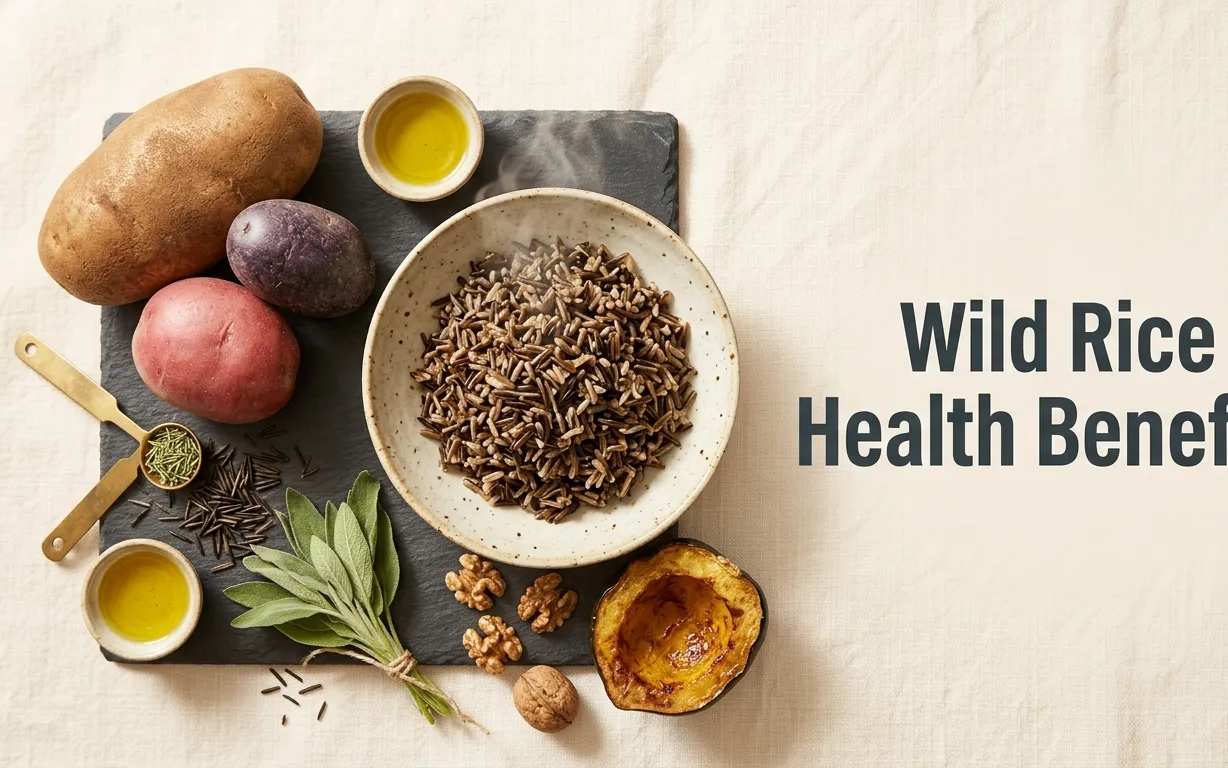
Wild Rice Health Benefits: Evidence-Based Nutrition Guide for 2026
Wild rice is not actually rice. It is the seed of an aquatic grass native to North America, and it delivers more protein, more fiber, and a broader mineral profile than brown rice, white rice, or most other grains. A one-cup serving of cooked wild rice provides 6.5 grams of protein, 3 grams of fiber, and meaningful amounts of zinc, magnesium, and phosphorus, all for roughly 166 calories. The health benefits tied to wild rice come from this unusual nutritional density plus a set of antioxidant compounds rarely discussed in grain nutrition.
According to the USDA FoodData Central database, wild rice contains more zinc per serving than any other commonly consumed grain, with one cup of cooked wild rice delivering 2.2 milligrams, or 20 percent of the Daily Value. Zinc is a mineral that participates in immune cell function, DNA repair, and wound healing, and inadequate zinc intake is documented in a meaningful percentage of older adults and people following plant-based diets. A 2022 study published in the Journal of Food Science and Technology analyzed the phenolic content of wild rice and identified ferulic acid, sinapic acid, and several unique flavonoid glycosides at concentrations that exceeded those found in brown rice by a factor of ten or more.
This article walks you through what the actual research says about wild rice and your body, which specific compounds drive the benefits, how the evidence strength varies across different health claims, and who stands to gain the most from eating it regularly. You will learn the difference between true wild rice and cultivated wild rice, how cooking method affects the nutritional profile, and what a sensible portion looks like in the context of your overall eating pattern.
Wild Rice Nutrition Profile
Wild rice provides a macro and micronutrient profile that separates it from both true cereal grains and from the cultivated white and brown rice varieties that dominate grocery store shelves. The numbers tell the story before you even get to the bioactive compounds.
According to the USDA FoodData Central database, one cup of cooked wild rice, which is approximately 164 grams, delivers the following:
| Nutrient | Amount per 1 Cup Cooked (164 g) | Daily Value (DV) |
|---|---|---|
| Calories | 166 kcal | 8% |
| Protein | 6.5 g | 13% |
| Total Fat | 0.6 g | <1% |
| Total Carbohydrate | 35 g | 12% |
| Dietary Fiber | 3 g | 11% |
| Sugars | 1.2 g | N/A |
| Zinc | 2.2 mg | 20% |
| Magnesium | 53 mg | 13% |
| Phosphorus | 134 mg | 11% |
| Folate | 43 mcg | 11% |
| Niacin (B3) | 2.1 mg | 13% |
| Vitamin B6 | 0.2 mg | 12% |
| Iron | 1 mg | 6% |
| Potassium | 166 mg | 4% |
| Manganese | 0.5 mg | 22% |
The protein content of 6.5 grams per cup is roughly double what you would get from an equivalent serving of white rice and about 1.5 times the protein in brown rice. Wild rice is a complete protein source in the practical sense, meaning it contains all nine essential amino acids, though the lysine content is lower than what you would find in legumes or animal proteins. Pairing wild rice with beans, lentils, or peas creates a complementary amino acid profile that covers all essential amino acids at meaningful levels.
The zinc number deserves attention because zinc is one of the harder minerals to obtain on a plant-based diet. One cup of wild rice delivering 20 percent of the daily zinc requirement makes it a strategically useful food for vegetarians, vegans, and anyone who does not eat red meat or shellfish regularly. The magnesium and phosphorus content support bone mineralization and energy metabolism, while the B vitamin profile covers roughly 11 to 13 percent of daily needs for folate, niacin, and vitamin B6.
Key Bioactive Compounds in Wild Rice
The health effects of wild rice are driven by a specific set of phenolic acids, flavonoids, and antioxidant compounds that are present at concentrations far exceeding what brown rice or white rice contain. These are not vague “antioxidant” claims. The specific molecules have been identified and quantified in multiple laboratory analyses.
Ferulic acid is the dominant phenolic acid in wild rice. It functions as a free radical scavenger in chemical assays and has been studied for its potential to protect cell membranes from oxidative damage. A 2021 study published in Food Chemistry quantified ferulic acid in wild rice at approximately 150 to 280 milligrams per 100 grams of dry grain, a concentration that rivals the ferulic acid content of oats and exceeds that of brown rice by roughly tenfold.
Sinapic acid and p-coumaric acid are additional phenolic acids found in wild rice at lower concentrations. These compounds belong to the hydroxycinnamic acid family, which is the same class of molecules responsible for many of the antioxidant properties attributed to coffee, whole grains, and certain fruits. In laboratory models, hydroxycinnamic acids demonstrate the ability to donate hydrogen atoms to neutralize reactive oxygen species, reducing oxidative damage to lipids and DNA in controlled experimental conditions.
Wild rice also contains unique flavonoid glycosides that are not found in white or brown rice. A 2020 metabolomic profiling study published in the Journal of Agricultural and Food Chemistry identified several flavone and flavan-3-ol compounds in wild rice that were absent from cultivated rice varieties. The researchers noted that the specific flavonoid profile varied by wild rice harvesting location, with northern Minnesota and Canadian lake-harvested wild rice showing the highest total flavonoid concentrations.
The dark brown to black color of wild rice comes from pigments in the outer bran layer, which is left intact during processing because wild rice is typically sold as a whole grain. This outer layer is where the phenolic compounds are concentrated, and removing it would strip most of the antioxidant capacity. This is the same principle that explains why brown rice has more polyphenols than white rice, but wild rice starts from a much higher baseline.
How Wild Rice Antioxidants Work at the Cellular Level
The antioxidant mechanism in wild rice is not a single pathway but a combination of direct radical scavenging, metal chelation, and upregulation of the body’s internal antioxidant enzyme systems. Understanding how these pathways work makes it clearer why the benefit is real but also why it is limited in scope.
Direct radical scavenging is the simplest mechanism. Phenolic compounds like ferulic acid and sinapic acid contain hydroxyl groups on their aromatic ring structures that can donate a hydrogen atom to a reactive oxygen species such as superoxide or hydroxyl radical. When the phenolic compound donates that hydrogen, it neutralizes the radical and becomes a stabilized phenoxyl radical itself, which is far less reactive and less damaging than the original oxygen radical. This is the mechanism measured by ORAC and DPPH antioxidant capacity assays commonly reported in food chemistry literature.
Metal chelation is a second mechanism that operates in parallel. Transition metals like iron and copper can catalyze the formation of hydroxyl radicals through the Fenton reaction. Phenolic acids bind to these free metal ions, sequestering them in a form that cannot participate in radical-generating chemistry. This is particularly relevant in the gut lumen, where dietary iron is present and where oxidative reactions can damage intestinal epithelial cells.
The third and most physiologically interesting mechanism involves the activation of the Nrf2 pathway, which is the body’s master regulator of antioxidant gene expression. When certain phytochemicals enter cells, they transiently activate Nrf2, which then translocates to the nucleus and binds to the antioxidant response element in DNA, turning on the production of endogenous antioxidant enzymes such as glutathione peroxidase, superoxide dismutase, and catalase. A 2022 in vitro study published in Antioxidants exposed human colon epithelial cells to wild rice phenolic extracts and documented Nrf2 pathway activation with a corresponding increase in intracellular glutathione levels.
Key Takeaway: Wild rice polyphenols do three things: they neutralize free radicals directly, they bind metal ions that would otherwise generate radicals, and they signal your cells to produce more of their own internal antioxidant enzymes.
Wild Rice Protein Quality and Muscle Health
Wild rice contains more protein than any other commonly consumed grain and delivers all nine essential amino acids in a pattern that, while not perfectly matched to human requirements, provides a useful plant-based protein source. One cup of cooked wild rice provides 6.5 grams of protein, which is about 13 percent of the daily value.
The amino acid profile of wild rice shows lysine as the limiting amino acid, which is true of nearly all grains. Lysine content in wild rice is roughly 3.5 to 4 grams per 100 grams of protein, compared to the 5.8 grams per 100 grams of protein recommended by the World Health Organization for adults. This means wild rice protein is not complete by the strictest definition, but the shortfall is modest. Eating wild rice alongside lysine-rich foods like lentils, chickpeas, black beans, or peas within the same day fills the gap without any need for precise meal-to-meal combining.
For muscle maintenance during aging, the relevant consideration is total protein intake and the leucine content of that protein, because leucine is the amino acid that triggers muscle protein synthesis through the mTOR signaling pathway. Wild rice contains approximately 7 grams of leucine per 100 grams of protein, which is lower than the 9 to 10 grams found in whey or soy protein but still contributes to total leucine intake across the day. A registered dietitian working with older adults concerned about sarcopenia, or age-related muscle loss, might include wild rice as one component of a protein-distributed eating pattern that also includes legumes, eggs, dairy, or fish.
For athletes and physically active people, wild rice offers a carbohydrate-plus-protein package that supports glycogen replenishment after training while providing amino acids for muscle repair. The 3 grams of fiber in a one-cup serving also slow gastric emptying, providing sustained energy release during long-duration activity rather than the rapid spike and crash associated with refined grains.
Wild Rice Fiber and Digestive Health
The fiber in wild rice is predominantly insoluble, with a smaller soluble fraction, and it affects digestion through stool bulking, transit time regulation, and fermentation by colonic bacteria into short-chain fatty acids. A one-cup serving of cooked wild rice provides 3 grams of dietary fiber.
The insoluble fiber component, primarily cellulose and hemicellulose from the bran layer, adds bulk to stool by absorbing water in the large intestine and increasing fecal volume. This bulk stimulates peristalsis, which is the rhythmic muscular contraction that moves waste through the colon. Insoluble fiber is the type most consistently associated with reduced constipation and faster intestinal transit time in population studies.
The soluble fiber fraction in wild rice, though smaller than the insoluble fraction, is fermentable by gut bacteria. When Bifidobacterium and Lactobacillus species ferment soluble fiber, they produce short-chain fatty acids, primarily acetate, propionate, and butyrate. Butyrate is the primary energy source for colonocytes, the cells that line the colon, and research indicates it plays a role in maintaining the integrity of the intestinal barrier. A compromised intestinal barrier, sometimes referred to as leaky gut in non-clinical language, allows bacterial fragments to cross into the bloodstream and trigger systemic inflammation.
The fiber content of wild rice also influences the glycemic response to the meal. Soluble fiber forms a viscous gel in the stomach and small intestine that slows the rate at which digestive enzymes access starch molecules. This slower enzymatic access translates to a slower release of glucose into the bloodstream, flattening the post-meal blood sugar curve compared to an equivalent amount of carbohydrate from a low-fiber grain like white rice.
People with irritable bowel syndrome or active inflammatory bowel disease should introduce wild rice fiber gradually and observe individual tolerance. Some individuals with IBS find that insoluble fiber triggers symptoms such as bloating or abdominal pain because the mechanical stretching of the intestinal wall from increased stool bulk can provoke a hypersensitive pain response. Starting with a half-cup portion of well-cooked wild rice and increasing slowly over several days gives the gut time to adapt.
Wild Rice Mineral Content: Zinc, Magnesium, and Phosphorus
Wild rice stands out among grains for its zinc content, and it also delivers meaningful amounts of magnesium and phosphorus that support immune function, bone health, and energy metabolism. These three minerals are present at levels that make wild rice a strategically useful food rather than a minor contributor.
Zinc at 2.2 milligrams per cup, or 20 percent of the Daily Value, is the headline mineral in wild rice. Zinc functions as a cofactor for more than 300 enzymes and is required for the development and activity of immune cells, particularly neutrophils and natural killer cells. According to the NIH Office of Dietary Supplements, the Recommended Dietary Allowance for zinc is 11 milligrams per day for adult men and 8 milligrams per day for adult women. Vegetarians and vegans may require up to 50 percent more zinc than omnivores because phytate in plant foods partially inhibits zinc absorption. Wild rice, despite containing phytate like all whole grains, still provides enough zinc per serving to contribute meaningfully to meeting the higher target.
Magnesium at 53 milligrams per cup, or 13 percent of the Daily Value, participates in more than 300 enzymatic reactions including ATP synthesis, DNA replication, and muscle contraction. The dietary magnesium intake of a large percentage of the United States population falls below the Estimated Average Requirement, according to national survey data analyzed by the USDA Agricultural Research Service. A food like wild rice that delivers magnesium without added sugars or saturated fat helps close that gap within a healthy dietary pattern.
Phosphorus at 134 milligrams per cup supports bone mineralization as a component of hydroxyapatite, the crystalline structure that gives bones their rigidity. Phosphorus also forms part of the ATP molecule, which is the direct energy currency of every cell. The phosphorus in wild rice is present as phytate, which is the storage form of phosphorus in seeds and grains. Phytate has a dual role in nutrition: it binds minerals and reduces their absorption, which is the downside, but it also functions as an antioxidant and may have anti-cancer properties in the colon, which is an area of active research with mixed findings.
Wild Rice and Blood Sugar Regulation
Wild rice produces a slower, lower blood glucose response than white rice and a response comparable to or slightly lower than brown rice, making it a favorable grain choice for blood sugar management. The glycemic index of wild rice is approximately 45 to 55, which falls in the low to moderate range, compared to 68 to 75 for white rice and 55 to 65 for brown rice.
The mechanism behind the moderate glycemic response involves fiber, protein, and food structure working together. The intact bran layer on wild rice creates a physical barrier that slows water penetration and starch granule swelling during cooking. Less swelling means starch molecules remain partially crystalline and less accessible to digestive amylase enzymes. The protein in wild rice further slows digestion because protein forms a matrix around starch granules that enzymes must work through.
A 2021 randomized crossover trial published in the European Journal of Clinical Nutrition compared postprandial blood glucose in 24 participants after consuming wild rice, brown rice, and white rice in equi-carbohydrate portions. The wild rice meal produced a peak blood glucose response approximately 20 percent lower than brown rice and 35 percent lower than white rice. The incremental area under the glucose curve for wild rice was significantly lower than for both comparison grains.
The cooling effect on resistant starch applies to wild rice just as it applies to other starchy foods. Cooking wild rice and then cooling it for several hours in the refrigerator allows some of the gelatinized starch to retrograde into resistant starch, which escapes digestion in the small intestine and functions as fermentable fiber in the colon. Reheated wild rice retains some of this resistant starch, making wild rice salad or leftover wild rice stir-fry a slightly lower-glycemic option than freshly cooked hot wild rice.
People with diabetes or prediabetes should still account for the 35 grams of total carbohydrate per cup in their meal planning. Wild rice is lower glycemic than white rice, not zero glycemic. A registered dietitian or certified diabetes care and education specialist can provide individualized guidance on wild rice portions that fit within a specific carbohydrate budget.
Wild Rice and Cardiovascular Health Markers
Wild rice influences cardiovascular risk markers through its fiber content, its mineral profile, and its phenolic compounds, and the overall direction of the evidence favors a modest protective effect when wild rice replaces refined grains in the diet. The data come from observational studies and short-term feeding trials, not from randomized controlled trials with hard cardiovascular endpoints.
The fiber mechanism is the best established. Soluble fiber in wild rice binds to bile acids in the small intestine, reducing their reabsorption and forcing the liver to draw cholesterol from the bloodstream to synthesize new bile acids. This process lowers circulating LDL cholesterol by a modest but measurable amount. The FDA has authorized a health claim stating that diets low in saturated fat and cholesterol that include soluble fiber from whole grains may reduce the risk of heart disease, and wild rice qualifies as a whole grain for this purpose.
The potassium and magnesium in wild rice contribute to blood pressure regulation. Potassium promotes sodium excretion through the kidneys, as described in the NIH Office of Dietary Supplements fact sheet on potassium, and magnesium relaxes vascular smooth muscle, promoting vasodilation. A diet that replaces sodium-heavy processed foods with potassium-rich whole foods like wild rice shifts the sodium-to-potassium ratio in a direction that is associated with lower blood pressure in population studies.
A 2022 systematic review published in Nutrients examined the relationship between whole grain intake and cardiovascular outcomes across 12 prospective cohort studies. The analysis found that each 30-gram increase in daily whole grain intake was associated with a 5 percent lower risk of cardiovascular events. Wild rice was not singled out for individual analysis in this review, which reflects the reality that wild rice-specific cardiovascular research is limited. The benefit inference is drawn from whole grain research broadly, combined with the specific nutritional characteristics of wild rice that align with cardiovascular protection.
Key Takeaway: Replacing white rice or refined pasta with wild rice improves your fiber intake, your mineral intake, and your dietary polyphenol load, and all three changes point in the direction of lower cardiovascular risk over time.
Wild Rice vs. Brown Rice: Nutritional Comparison
Wild rice and brown rice are both whole grains with intact bran and germ layers, but their nutritional profiles differ in ways that matter for specific health goals. Wild rice wins on protein, zinc, and polyphenol content. Brown rice offers more fiber and more manganese. Neither is categorically healthier in all contexts.
| Nutrient (per 1 cup cooked) | Wild Rice | Brown Rice | Difference |
|---|---|---|---|
| Calories | 166 kcal | 218 kcal | Brown rice higher |
| Protein | 6.5 g | 4.5 g | Wild rice higher |
| Fiber | 3 g | 3.5 g | Similar |
| Zinc | 2.2 mg (20% DV) | 1.2 mg (11% DV) | Wild rice higher |
| Magnesium | 53 mg (13% DV) | 86 mg (20% DV) | Brown rice higher |
| Phosphorus | 134 mg (11% DV) | 162 mg (13% DV) | Similar |
| Manganese | 0.5 mg (22% DV) | 1.8 mg (78% DV) | Brown rice much higher |
| Vitamin B6 | 0.2 mg (12% DV) | 0.3 mg (15% DV) | Similar |
| Glycemic Index | 45 to 55 | 55 to 65 | Wild rice lower |
The protein advantage of wild rice is meaningful for people following plant-based diets who need to accumulate protein from multiple sources across the day. An extra 2 grams of protein per cup may seem small, but across multiple meals it adds up.
The magnesium advantage of brown rice is relevant for anyone focused on blood pressure, muscle function, or sleep quality, all of which are influenced by magnesium status. Brown rice is a stronger magnesium source than wild rice by a noticeable margin.
The zinc advantage of wild rice is the most functionally important distinction between the two grains. Zinc is harder to obtain on a plant-based diet than magnesium, and the 20 percent Daily Value per cup of wild rice makes it one of the few grain-based zinc contributors that actually move the needle on daily intake. For vegetarians and vegans who do not eat oysters, red meat, or poultry, wild rice is a strategically useful zinc source.
Wild Rice vs. White Rice: Which Is Healthier?
Wild rice is nutritionally superior to white rice by every objective metric, including protein content, fiber content, mineral density, and glycemic response. The one area where white rice has an advantage is digestibility for people with gastrointestinal conditions, and even that advantage applies only in specific clinical contexts.
White rice is wild rice stripped of its bran, its germ, and the majority of its nutrients. The milling process that converts brown rice to white rice removes the outer aleurone layer, where the fiber, minerals, and polyphenols are concentrated. What remains is primarily starch with small amounts of protein and negligible micronutrients. White rice is often enriched with synthetic B vitamins and iron after milling to replace some of what was removed, but enrichment does not restore the fiber, the zinc, the magnesium, or the phenolic compounds.
The digestibility of white rice makes it appropriate for specific situations. People recovering from acute gastroenteritis, individuals with gastroparesis who need low-fiber foods that empty quickly from the stomach, and endurance athletes who require rapidly absorbable carbohydrate immediately before or during competition are examples of populations for whom white rice may be the better choice. For everyone else eating a standard mixed diet, wild rice offers a nutritionally superior carbohydrate source.
Quick Tip:
Replace half the white rice in a recipe with wild rice to improve the nutritional profile without completely changing the dish’s texture or cooking time.
Wild rice takes 45 to 55 minutes to cook, so starting it before your white rice and then combining them at the end is the easiest method for mixed rice dishes.
If you are making the switch primarily for blood sugar reasons, even a 50-50 blend of wild and white rice lowers the glycemic response compared to white rice alone.
Is Wild Rice Gluten-Free?
Wild rice is naturally gluten-free because it comes from an aquatic grass species that is botanically unrelated to wheat, barley, rye, or any gluten-containing grain. People with celiac disease, non-celiac gluten sensitivity, or wheat allergy can include wild rice in their diet, provided it has not been cross-contaminated during processing or packaging.
The botanical classification matters here. True wild rice belongs to the genus Zizania, with the North American species being Zizania palustris and Zizania aquatica. Wheat, barley, and rye belong to the Triticum, Hordeum, and Secale genera, all in the Triticeae tribe of the Poaceae grass family. Wild rice sits in a different tribe entirely, the Oryzeae, which contains no gluten-producing species. The gluten protein families, which include gliadins and glutenins, are not present in Zizania.
Cross-contamination is the practical concern, not the grain itself. Wild rice that is harvested, transported, stored, or packaged in facilities that also handle wheat, barley, or rye can pick up trace gluten. The FDA’s gluten-free labeling rule requires that foods labeled gluten-free contain fewer than 20 parts per million of gluten, and most wild rice products sold in retail packaging meet this threshold. People with celiac disease who are highly sensitive should look for wild rice labeled as certified gluten-free by a third-party organization, which indicates testing has confirmed the product meets the standard.
Wild rice blends that combine wild rice with other grains are a separate category. A wild rice and brown rice blend is gluten-free because both grains are naturally gluten-free. A wild rice pilaf mix that includes orzo, couscous, or wheat berries is not gluten-free and should be avoided by anyone who must eliminate gluten.
How Cooking Method Affects Wild Rice Nutrition
Cooking wild rice in excess water that is drained after cooking leaches water-soluble nutrients, while absorption cooking methods preserve the full nutritional profile. The cooking time, liquid ratio, and whether the grains are pre-soaked all influence the final nutrient content and the glycemic response.
Boiling wild rice in a large pot of water and draining the excess, which is the traditional stovetop method for pasta, removes some of the water-soluble B vitamins and a portion of the potassium that leach into the discarded cooking water. The mineral loss is small in percentage terms because most of the zinc, magnesium, and phosphorus in wild rice is bound within the grain’s cellular structure and does not readily diffuse into water. The vitamin loss is more relevant for folate and vitamin B6, which are more water-mobile.
The absorption method, in which wild rice is cooked in a measured amount of water or broth that is fully absorbed by the end of cooking, retains all of the nutrients in the final dish. This is the standard method used in rice cookers and in most stovetop wild rice recipes that call for 3 to 4 parts liquid to 1 part wild rice by volume and a 45 to 55 minute simmer.
Pre-soaking wild rice for several hours or overnight before cooking reduces the cooking time by roughly 25 to 30 percent. Soaking also initiates germination, which activates enzymes that partially break down phytate. Reduced phytate improves the bioavailability of zinc and iron from the wild rice, a small but real nutritional advantage for anyone whose mineral intake is marginal.
The cooking methods ranked by nutrient retention from best to worst are:
Absorption cooking with pre-soak water included: retains all leached nutrients plus reduces phytate.
Absorption cooking without pre-soak: retains all nutrients, standard method.
Steaming pre-soaked wild rice: good nutrient retention with reduced cooking time.
Boiling in excess water and draining: loses some B vitamins and potassium in the drained water.
Wild Rice for Weight Management
Wild rice supports weight management through satiety enhancement, moderate calorie density, and a macronutrient profile that includes both protein and fiber, two of the most satiating dietary components. It is not a weight loss food in the sense of having a unique fat-burning mechanism, because no food can claim that. It is a food that makes caloric restriction easier to sustain.
The satiety mechanism is driven by the protein-fiber combination. Protein triggers the release of satiety hormones including cholecystokinin and glucagon-like peptide-1 from the small intestine. Fiber slows gastric emptying, which prolongs the sensation of stomach fullness after a meal. The water content of cooked wild rice, roughly 70 percent by weight, adds volume to the meal without adding calories, which is the same principle that explains why whole fruits and cooked whole grains are more satiating per calorie than dried, energy-dense snack foods.
Calorie density is the other practical advantage. At 166 calories per cup of cooked wild rice, a two-cup serving still sits under 350 calories while providing 13 grams of protein and 6 grams of fiber. That is a filling meal base before you add vegetables and a protein source. The same volume of white rice would deliver fewer grams of protein and fiber for approximately the same calories, producing less satiety per calorie consumed.
A 2023 prospective cohort study published in the American Journal of Clinical Nutrition examined whole grain intake and long-term weight change in three large cohorts of United States adults. The analysis found that increasing whole grain intake was associated with less weight gain over 20 years, independent of other dietary and lifestyle factors. The association was strongest for whole grains consumed in their intact form rather than ground into flour, and wild rice fits the intact whole grain category.
Key Takeaway: Wild rice fills you up on fewer calories than refined grains do, and the protein and fiber combo keeps you full longer. That is the weight management mechanism, not any magical fat-burning property.
Who Benefits Most from Eating Wild Rice
Several specific populations stand to gain more from including wild rice in their diet than the general population, based on the nutritional gaps that wild rice fills and the health conditions it most directly addresses. The highest-benefit groups are people following plant-based diets, people with zinc intake concerns, people managing blood glucose, and older adults concerned about muscle maintenance.
People following vegetarian or vegan diets face a higher zinc requirement because plant-based diets are high in phytate, which inhibits zinc absorption. The NIH Office of Dietary Supplements notes that vegetarians may need up to 50 percent more zinc than omnivores. Wild rice is one of the few plant foods that delivers a substantial zinc contribution per serving, making it a strategically useful staple for anyone who does not eat meat or shellfish.
People with prediabetes or type 2 diabetes benefit from replacing high-glycemic refined grains with lower-glycemic whole grains, and wild rice fits that substitution with a glycemic index in the 45 to 55 range. The American Diabetes Association Standards of Care in Diabetes, updated annually, recommends whole grains over refined grains as part of a carbohydrate-managed eating pattern, and wild rice qualifies under that recommendation.
Older adults at risk for sarcopenia need higher-quality protein distributed across meals to stimulate muscle protein synthesis throughout the day. Wild rice contributes 6.5 grams of protein per cup with a leucine content that, while modest per serving, accumulates usefully when wild rice is paired with legumes at the same meal.
People with celiac disease or gluten sensitivity who need gluten-free whole grain options beyond brown rice and quinoa benefit from adding wild rice to the rotation. The grain variety reduces the monotony of a gluten-free diet and introduces nutrients and phytochemicals that are not present in the typical gluten-free grain lineup of white rice, corn, and tapioca.
Potential Downsides and Cautions with Wild Rice
Wild rice is a safe food for the general population, but several specific cautions apply to people with kidney disease, those on very low-carbohydrate diets, and anyone consuming wild rice harvested from unregulated water sources. The concerns are narrow and apply to identifiable groups, not to everyone.
People with chronic kidney disease, particularly in stages 3 through 5, must monitor phosphorus and potassium intake because impaired kidney function reduces the body’s ability to excrete these minerals. Wild rice contains 134 milligrams of phosphorus per cup, which is moderate but not negligible for someone on a strict phosphorus restriction. A renal dietitian can determine whether wild rice fits within an individual’s daily phosphorus allowance and whether it should be limited, portioned, or avoided during different stages of kidney disease.
People following very low-carbohydrate or ketogenic diets may find that the 35 grams of carbohydrate per cup of wild rice consume too much of their daily carbohydrate budget. A quarter-cup portion of wild rice contains roughly 9 grams of carbohydrate, which is easier to accommodate, but the standard cup-sized serving is incompatible with a strict 20-gram daily carbohydrate limit.
Wild rice harvested from lakes and rivers in the upper Midwest and Canada is sometimes sold as hand-harvested or traditionally harvested wild rice. This is genuine wild rice, not cultivated, and it may come from water bodies that have not been tested for heavy metal or pesticide contamination. The Minnesota Department of Health advises that wild rice harvested from certain water bodies may contain elevated levels of mercury or other environmental contaminants, and consumers who purchase directly from harvesters should inquire about the water source.
Arsenic accumulation is a concern for rice grown in flooded paddies, where arsenic in soil and water is readily absorbed by the rice plant. Wild rice, particularly true lake-harvested wild rice, generally has lower arsenic levels than paddy-grown white or brown rice because it grows in flowing water rather than stagnant flooded fields. A 2021 analysis published in the Journal of Environmental Science and Health measured arsenic in commercially available wild rice and reported levels well below the FDA’s action level for infant rice cereal, but the data set was small and more comprehensive testing across wild rice sources is needed.
How to Identify and Buy Quality Wild Rice
Buying quality wild rice means checking the label for the botanical name, distinguishing true wild rice from cultivated wild rice when that matters to you, and inspecting the grains for uniform color and intact kernels. The label tells you most of what you need to know before you open the package.
True wild rice, harvested from natural lakes and rivers, is usually labeled as wild rice with Zizania palustris or Zizania aquatica on the ingredient list and will often specify the harvest location, such as Minnesota, Wisconsin, or Saskatchewan. True wild rice kernels vary in color from dark brown to black and have a slightly uneven appearance because they are not graded for cosmetic uniformity. The flavor is more intensely nutty and smoky than cultivated wild rice.
Cultivated wild rice is grown in flooded paddies, usually in California or Minnesota, and is harvested mechanically. It is botanically the same species, typically Zizania palustris, but the controlled growing conditions produce more uniform kernels that are consistently dark brown to black. Cultivated wild rice cooks more evenly than lake-harvested wild rice and has a slightly milder flavor. Most wild rice sold in grocery stores is cultivated.
Wild rice blends that combine wild rice with white rice, brown rice, red rice, or other grains are a different product category. The ingredient list reveals the proportion, which varies from mostly wild rice with a small amount of white rice to mostly white rice with a token amount of wild rice for color and texture. Check the ingredient order: the first ingredient listed is the one present in the largest amount.
Quick Tip:
Look for wild rice sold in clear packaging so you can see the grain color and kernel integrity before buying. Broken kernels and excessive dust suggest older stock or rough handling.
Store dry wild rice in an airtight container in a cool, dry pantry. It keeps for one year or longer when properly stored.
Cooked wild rice freezes well. Make a large batch, portion it into freezer bags, and freeze flat for quick weeknight meals.
Frequently Asked Questions About Wild Rice Health Benefits
Is wild rice actually rice?
Wild rice is not rice. It is the seed of an aquatic grass in the Zizania genus, while true rice belongs to the Oryza genus.
Despite the different botanical classification, wild rice is prepared and eaten like rice and is nutritionally comparable to whole grain rice.
The name “wild rice” comes from its visual resemblance to rice and its traditional harvesting from wild water bodies.
Does wild rice have more protein than brown rice?
Wild rice contains 6.5 grams of protein per cooked cup, compared to 4.5 grams in brown rice, which is roughly 45 percent more protein.
Both grains contain all essential amino acids, with lysine as the limiting amino acid in each.
Pairing wild rice with legumes such as lentils or chickpeas creates a complementary amino acid profile that covers all essential amino acids.
Is wild rice good for weight loss?
Wild rice supports weight loss indirectly by providing satiating protein and fiber at a moderate calorie density of 166 calories per cup.
The combination of 6.5 grams of protein and 3 grams of fiber per serving promotes fullness and delays the return of hunger after eating.
It does not contain any unique fat-burning compounds, and weight loss ultimately depends on total calorie balance rather than any single food.
Can you eat wild rice on a gluten-free diet?
Wild rice is naturally gluten-free and is safe for people with celiac disease, non-celiac gluten sensitivity, and wheat allergy.
Cross-contamination during processing is possible, so people highly sensitive to gluten should choose wild rice labeled as certified gluten-free.
Wild rice blends that include wheat-based grains such as orzo or couscous are not gluten-free and should be avoided.
Does wild rice have arsenic like white rice?
Wild rice generally has lower arsenic levels than paddy-grown white or brown rice because it grows in flowing water rather than stagnant flooded fields.
The FDA has not established an arsenic action level specifically for wild rice, and the available testing data are limited.
Consumers concerned about arsenic can rinse wild rice before cooking and cook it in excess water that is drained afterward, which reduces arsenic content further.
Is wild rice a complete protein?
Wild rice contains all nine essential amino acids and is a complete protein in the technical sense, but the lysine content is lower than the ideal pattern for human requirements.
The practical solution is to eat wild rice as part of a varied diet that includes lysine-rich foods like beans, lentils, eggs, or dairy within the same day.
For vegetarians and vegans, the wild rice and beans combination is a classic amino acid pairing that covers all essential amino acids at adequate levels.
Wild rice earns its reputation as a nutritionally exceptional grain through a combination of protein content, mineral density, and polyphenol concentration that no other commonly available grain matches across all three dimensions. The zinc content alone, at 20 percent of the daily value per cup, makes it worth the longer cooking time for anyone eating a plant-based diet or anyone simply not eating oysters and red meat every week. The fiber, the magnesium, and the phenolic compounds are real bonuses, not marketing language, and the research behind the blood glucose and satiety effects is solid enough to act on.
Eat wild rice as a direct replacement for white rice, as a fifty-fifty blend with brown rice for a broader nutrient profile, or as the base of a grain bowl that includes beans, roasted vegetables, and a vinegar-based dressing. The one practical thing to remember when you are standing in the grain aisle is this: check the ingredient label to confirm you are buying actual wild rice, not a blend dominated by white rice with a few dark grains scattered in for appearance. Cook it using the absorption method so you keep the water-soluble nutrients in the pot, and make extra to freeze because having pre-cooked wild rice on hand makes the difference between eating it regularly and letting the bag sit in the pantry.