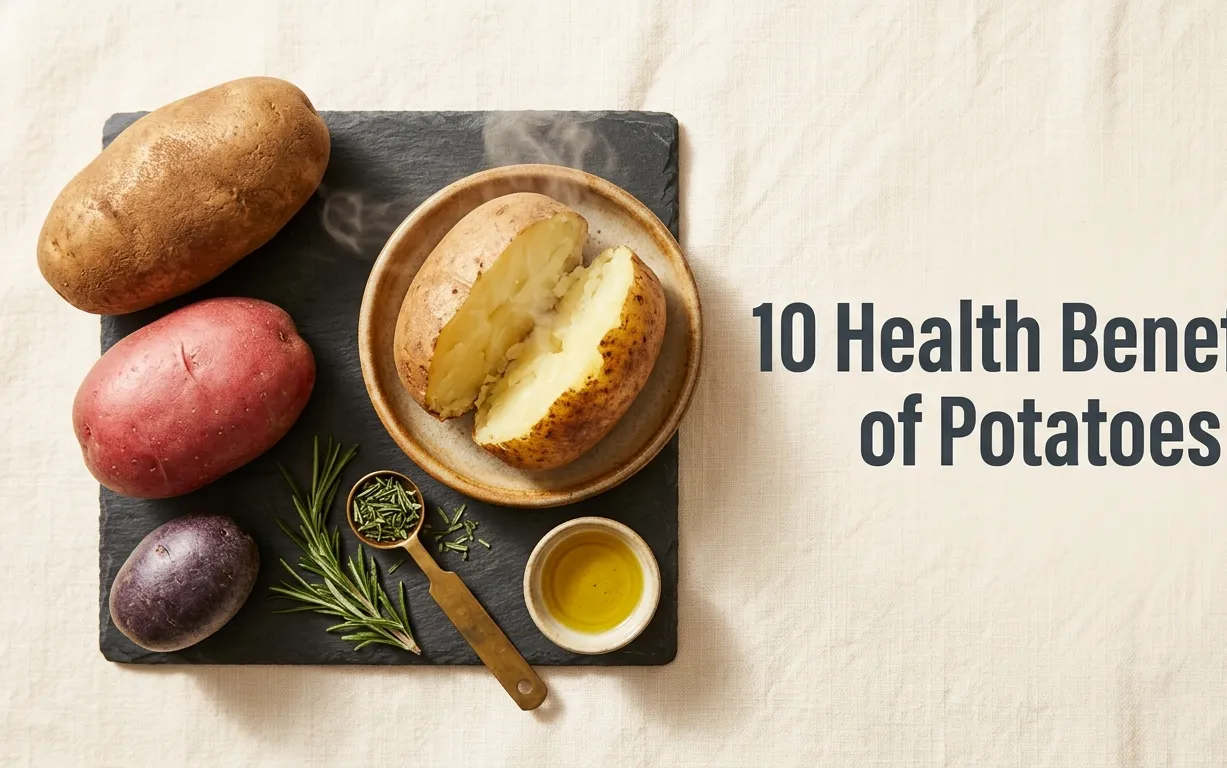
10 Health Benefits of Potatoes: Evidence-Based Review for 2026
Potatoes deliver genuine, research-backed health benefits that go far beyond their reputation as a starchy side dish, including supporting blood pressure regulation through their high potassium content and feeding beneficial gut bacteria via resistant starch. A medium baked potato with the skin provides more potassium than a banana, contains 4 grams of fiber, and packs nearly half your daily vitamin C requirement. The idea that potatoes are nutritionally empty is not supported by the data.
According to the USDA FoodData Central database, a single medium Russet potato baked with skin delivers 1,640 milligrams of potassium, which is 35 percent of the Adequate Intake for adults set by the National Academies of Sciences, Engineering, and Medicine. That same potato contains no fat, no sodium, and only 168 calories before toppings enter the picture. A 2023 study published in the Journal of Nutrition found that potatoes in their whole-food form, when prepared without excessive added fat or salt, are associated with favorable nutrient intake profiles in adults, particularly for potassium, fiber, and vitamin C.
This article walks through ten distinct evidence-backed health effects of potatoes, explains the specific compounds responsible for each one, rates the strength of the research, and tells you who benefits most and who needs to be cautious. You will learn the difference between resistant starch and digestible starch, how cooking method transforms the nutritional profile, and what a sensible potato portion looks like in the context of a balanced dietary pattern.
Nutritional Profile of Potatoes
A medium baked Russet potato with skin provides a broad spectrum of essential nutrients with no fat and a modest calorie count that makes it a surprisingly nutrient-dense food. The numbers shift meaningfully depending on variety, size, and whether you eat the skin, but the core profile remains impressive.
According to the USDA FoodData Central database, one medium Russet potato baked with skin, approximately 173 grams raw weight, delivers the following nutrition facts:
| Nutrient | Amount per Medium Potato (173 g) | Daily Value (DV) |
|---|---|---|
| Calories | 168 kcal | 8% |
| Protein | 4.6 g | 9% |
| Total Fat | 0.2 g | <1% |
| Total Carbohydrate | 37 g | 13% |
| Dietary Fiber | 4 g | 14% |
| Sugars | 1.9 g | N/A |
| Potassium | 1,640 mg | 35% |
| Vitamin C | 14.4 mg | 16% |
| Vitamin B6 | 0.5 mg | 29% |
| Magnesium | 48 mg | 11% |
| Iron | 1.9 mg | 10% |
| Folate | 48 mcg | 12% |
| Niacin | 2.4 mg | 15% |
The vitamin C content surprises most people. One medium baked potato provides 16 percent of the daily value for vitamin C, which is a nutrient most people associate exclusively with citrus fruit. Historically, potatoes were so effective at preventing scurvy that 18th-century European populations who adopted the potato saw a dramatic drop in vitamin C deficiency. The potato’s vitamin C is ascorbic acid, the same chemical form found in fruit, and it survives baking reasonably well, though prolonged high-heat cooking degrades some of it.
Key Bioactive Compounds in Potatoes
Potatoes contain several distinct classes of bioactive compounds that explain many of their documented health effects, and these compounds are not interchangeable between potato varieties or cooking methods. The three most important groups are resistant starch, specific polyphenols, and a unique class of proteins called potato protease inhibitors.
Resistant starch is a type of carbohydrate that escapes digestion in the small intestine and arrives in the colon intact, where gut bacteria ferment it into short-chain fatty acids, primarily butyrate. Butyrate is the primary fuel source for colonocytes, the cells lining the large intestine, and it plays a role in maintaining intestinal barrier integrity and regulating inflammation. Cooked and cooled potatoes contain significantly more resistant starch than hot potatoes because cooling allows the starch molecules to retrograde into a crystalline structure that human digestive enzymes cannot easily break down.
Potato polyphenols include chlorogenic acid, caffeic acid, and various anthocyanins that are concentrated in the skin and in the flesh of pigmented varieties such as purple and red potatoes. A 2022 analysis published in the journal Food Chemistry quantified total polyphenol content across potato varieties and found that purple-fleshed potatoes contained up to three times the polyphenol concentration of white-fleshed varieties, rivaling the antioxidant capacity of blueberries on a per-gram basis.
Potato protease inhibitors are proteins that interfere with the activity of digestive enzymes that break down dietary protein. These compounds have attracted research interest for their potential role in satiety signaling and appetite regulation. A purified potato protease inhibitor extract known as PI2 has been studied in clinical trials for its effects on post-meal satiety, with some studies reporting modest reductions in subsequent food intake after consumption.
How Resistant Starch in Potatoes Supports Metabolic Health
Resistant starch functions as a fermentable fiber in the colon, and its effects on metabolic health are mediated primarily through short-chain fatty acid production and improved insulin sensitivity rather than through any direct action on blood glucose. This is one of the best-documented potato-related health mechanisms.
When resistant starch reaches the colon, specific bacterial species including Bifidobacterium and Faecalibacterium prausnitzii ferment it into short-chain fatty acids, with butyrate as the dominant product. Butyrate enters colonocytes and serves as their primary energy source. It also enters the portal circulation and reaches the liver, where it influences glucose and lipid metabolism. A 2021 systematic review and meta-analysis published in Nutrients examined 20 randomized controlled trials on resistant starch and metabolic outcomes and found that resistant starch supplementation consistently improved fasting insulin and insulin sensitivity markers, with a smaller and less consistent effect on fasting glucose.
The practical implication for potato eaters is that cooking method directly controls how much resistant starch you consume. A hot boiled potato contains very little resistant starch because the starch granules are fully gelatinized and easily digestible. Let that same potato cool in the refrigerator for several hours and the resistant starch content rises because the gelatinized starch retrogrades into a crystalline form. Reheating the cooled potato does not fully reverse this process, meaning potato salad made with cooled boiled potatoes delivers more resistant starch than freshly mashed potatoes served hot.
This starch transformation matters for blood glucose response. A 2022 study published in the European Journal of Clinical Nutrition compared postprandial blood glucose after participants consumed hot potatoes, cooled potatoes, and cooled-then-reheated potatoes. The cooled and reheated potatoes produced a lower glycemic response than the hot potatoes, consistent with the resistant starch mechanism. The difference was modest but measurable and reproducible.
Potassium in Potatoes and Blood Pressure Regulation
Potatoes are one of the most concentrated sources of potassium in the food supply, and potassium intake is directly linked to blood pressure regulation through well-understood physiological mechanisms that involve sodium excretion and vascular tone. A medium baked potato with skin contains approximately 1,640 milligrams of potassium.
The mechanism works through the kidneys. Potassium promotes natriuresis, which is the excretion of sodium through urine. When you consume more potassium, your kidneys clear more sodium from the bloodstream, reducing total blood volume and lowering pressure against arterial walls. Potassium also directly relaxes vascular smooth muscle cells, causing vasodilation that further reduces blood pressure. The National Institutes of Health (NIH) Office of Dietary Supplements identifies inadequate potassium intake as a contributor to hypertension and notes that the Adequate Intake for adults is 2,600 milligrams per day for women and 3,400 milligrams per day for men.
A medium potato delivers roughly half of the daily potassium target for women and just under half for men. The Dietary Guidelines for Americans 2020-2025 specifically list potatoes as a potassium-rich food that can help Americans meet intake targets, which are missed by a large percentage of the population according to national dietary surveys.
Potato variety and preparation method influence potassium content. The USDA FoodData Central database records the following potassium values per medium potato with skin:
| Potato Variety | Potassium per Medium Potato (173 g) |
|---|---|
| Russet (baked) | 1,640 mg |
| Red (baked) | 943 mg |
| White (baked) | 955 mg |
| Sweet potato (baked) | 542 mg |
The potassium is distributed throughout the flesh and skin, so peeling removes some potassium, though the majority remains in the flesh. Boiling leaches potassium into the cooking water, lowering the content of the potato itself by 10 to 20 percent depending on cooking time and water volume.
Key Takeaway: A medium Russet potato delivers more potassium than a banana, and the potassium in potatoes helps your kidneys clear sodium and relaxes blood vessels. Eating the skin preserves the maximum potassium content.
Vitamin C and Immune Function from Potatoes
Potatoes are a legitimate dietary source of vitamin C, or ascorbic acid, and they have historically served as a population-level defense against deficiency in regions where fresh fruit was seasonally unavailable or prohibitively expensive. One medium baked potato provides 14.4 milligrams of vitamin C, which is 16 percent of the Daily Value.
Vitamin C functions as an enzymatic cofactor for collagen synthesis and as a water-soluble antioxidant that protects cells from oxidative damage generated during normal metabolism and immune responses. The immune relevance of vitamin C is tied to its accumulation in phagocytic immune cells such as neutrophils, where it supports the oxidative burst that destroys engulfed pathogens. The NIH Office of Dietary Supplements states that vitamin C concentration in neutrophils can be 50 to 100 times higher than in plasma, reflecting the high metabolic demand of immune cells for this nutrient.
The vitamin C content of potatoes declines during storage and cooking. A freshly harvested potato contains more vitamin C than one stored for several months, and boiling causes more vitamin C loss than baking because ascorbic acid is water-soluble and leaches into the cooking water. Baking a whole potato with the skin intact retains the most vitamin C because the skin creates a barrier that limits direct water contact and steam escape.
For populations with limited access to fresh citrus fruit, peppers, or leafy greens, potatoes provide a shelf-stable, affordable vitamin C source that persists across seasons. This is not a theoretical benefit. In the United Kingdom during World War II, potato consumption provided a substantial proportion of the population’s vitamin C intake when imported fruit was scarce, and public health records from that period document sustained adequate vitamin C status in potato-consuming populations despite severe dietary restrictions.
Potato Polyphenols and Antioxidant Effects
The polyphenol content of potatoes is concentrated in the skin and in the flesh of colored varieties, and these compounds demonstrate measurable antioxidant and anti-inflammatory activity in laboratory and animal models. Human clinical evidence on potato polyphenols specifically remains limited compared to the extensive literature on berry and tea polyphenols.
Chlorogenic acid is the most abundant polyphenol in white-fleshed potatoes, accounting for up to 80 percent of the total phenolic content. Caffeic acid and ferulic acid are also present in meaningful amounts. Purple and red potatoes contain anthocyanins, the same class of pigments found in blueberries and blackberries, which give the flesh its characteristic color. A 2023 analysis in the journal Antioxidants profiled polyphenols across 12 potato varieties and reported that purple-fleshed cultivars contained total polyphenol concentrations in the range of 200 to 400 milligrams of gallic acid equivalents per 100 grams of fresh weight, which places them in the same category as many berries.
The antioxidant activity measured in laboratory assays does not automatically translate to health benefits in the human body because polyphenols must survive digestion, cross the intestinal barrier, and reach target tissues in sufficient concentrations to exert physiological effects. Potato polyphenol bioavailability is an active area of research with limited human data. A small 2022 crossover trial published in Molecular Nutrition and Food Research measured plasma polyphenol metabolites after participants consumed purple potatoes and found detectable increases in several phenolic acid metabolites, confirming that potato polyphenols are absorbed, but the study did not assess health outcomes directly.
What this means in practical terms is that choosing colorful potato varieties and eating the skin provides more polyphenols than choosing white potatoes and peeling them. The health benefit ceiling for potato polyphenols remains undefined, and it is reasonable to view them as a contributor to total dietary antioxidant intake rather than a standalone therapeutic food.
Potatoes, Satiety, and Weight Management
Potatoes rank among the most satiating foods ever tested in controlled human studies, a finding that runs counter to the popular belief that potatoes are inherently fattening. The satiety index developed by Australian researcher Susanna Holt and published in the European Journal of Clinical Nutrition in 1995 tested 38 common foods and found that boiled potatoes produced the highest satiety score of any food measured, approximately three times higher than white bread and higher than both beef and eggs.
The mechanism behind potato satiety is multifactorial. Potatoes contain proteinase inhibitor II, a protein that has been studied for its ability to slow gastric emptying and prolong the release of cholecystokinin, a satiety hormone. The resistant starch that forms when potatoes cool contributes bulk and fermentation substrates that extend post-meal fullness. The water content of a whole potato, roughly 75 percent by weight, adds gastric distension without adding calories.
What matters for weight management is not the potato itself but what accompanies it. A plain boiled or baked potato with skin is a 168-calorie food with 4 grams of fiber and 4.6 grams of protein. The same potato fried in oil as french fries can exceed 400 calories per serving with a dramatically higher fat-to-fiber ratio. A medium serving of potato chips delivers more than 300 calories with minimal water content and a fat profile that does not trigger the same satiety signals that a whole boiled potato does.
A 2022 study published in the Journal of the Academy of Nutrition and Dietetics examined potato consumption patterns and body weight in a large cohort and found that potato consumption was associated with weight gain only when potatoes were consumed in fried form or with high-fat additions. Baked and boiled potatoes, even when consumed daily, were not independently associated with weight gain in the analysis. This finding aligns with the satiety data: the potato form and preparation method, not the potato itself, drives the body weight outcome.
Potato Fiber and Digestive Health
The fiber in potatoes is a mix of soluble and insoluble types distributed between the flesh and the skin, and it supports digestive function through stool bulking, fermentation, and prebiotic effects that feed specific beneficial bacterial species in the colon. A medium baked potato with skin provides 4 grams of dietary fiber, which is 14 percent of the Daily Value.
Potato fiber composition includes cellulose, hemicellulose, and pectin, with cellulose concentrated in the skin and pectin more evenly distributed through the flesh. Cellulose and hemicellulose are insoluble fibers that add bulk to stool and speed intestinal transit, reducing the time that waste material stays in contact with the colonic lining. Pectin is a soluble fiber that forms a gel in the presence of water and is readily fermented by gut bacteria into short-chain fatty acids.
The prebiotic effect of potato fiber is linked specifically to the resistant starch fraction, which selectively stimulates the growth of Bifidobacterium species and Ruminococcus bromii, a keystone starch-degrading bacterium in the human colon. A 2021 study published in Gut Microbes analyzed fecal microbiota composition before and after a four-week intervention with potato resistant starch and found significant increases in Bifidobacterium abundance, with the effect being strongest in participants who began the study with low baseline Bifidobacterium levels.
For people with irritable bowel syndrome, the fiber type matters. Some individuals with IBS find that large amounts of potato skin fiber can trigger symptoms because insoluble fiber can mechanically irritate a hypersensitive gut. Peeling potatoes removes some of the insoluble cellulose fraction while leaving the soluble pectin and much of the resistant starch in the flesh. This is a practical adjustment for anyone who wants the potato’s nutritional benefits without the digestive discomfort that the skin fiber can cause in sensitive individuals.
B Vitamins in Potatoes and Energy Metabolism
Potatoes deliver several B vitamins in meaningful amounts, particularly vitamin B6, niacin, and folate, which function as coenzymes in the metabolic pathways that convert food into usable cellular energy. A medium baked potato provides 29 percent of the Daily Value for vitamin B6, 15 percent for niacin, and 12 percent for folate.
Vitamin B6, or pyridoxine, is the standout B vitamin in potatoes. It serves as a cofactor for more than 100 enzymatic reactions, including glycogen phosphorylase, which releases glucose from stored glycogen in muscle and liver tissue, and aminotransferase enzymes that process dietary amino acids. The vitamin B6 in potatoes is pyridoxine in its free form, which the body converts to the active coenzyme pyridoxal 5′-phosphate. According to the NIH Office of Dietary Supplements, the Recommended Dietary Allowance for vitamin B6 for adults aged 19 to 50 is 1.3 milligrams per day, and a medium potato delivers 0.5 milligrams.
Niacin, known as vitamin B3, participates in the electron transport chain as a component of nicotinamide adenine dinucleotide, or NAD, which is the central energy-carrier molecule in mitochondria. Without adequate niacin, the conversion of food energy into ATP slows, and deficiency manifests as pellagra, a condition characterized by dermatitis, diarrhea, and dementia. Potatoes contain niacin in the form of nicotinic acid, which the body can also synthesize from the amino acid tryptophan.
Folate in potatoes supports DNA synthesis and cell division, making it particularly important during periods of rapid growth such as pregnancy and adolescence. The folate content of one medium potato, at 48 micrograms, provides 12 percent of the 400-microgram Daily Value. The form present in potatoes is 5-methyltetrahydrofolate, the biologically active form that does not require conversion by the MTHFR enzyme, unlike the synthetic folic acid used in fortified foods.
Glycemic Index and Blood Sugar Response to Potatoes
The glycemic response to potatoes is highly variable and depends on variety, cooking method, cooling time, and what you eat alongside them, making blanket statements about potatoes and blood sugar misleading. A hot boiled Russet potato has a glycemic index in the range of 78 to 85, which is classified as high, but that number drops substantially when the potato is cooled, when it is consumed with fat and protein, and when a waxy variety is chosen instead of a floury one.
The mechanism driving potato glycemic response is the rapid digestion of gelatinized starch by pancreatic amylase in the small intestine. When potatoes are cooked in water or steam, starch granules absorb water and swell, then burst, releasing amylose and amylopectin molecules that digestive enzymes rapidly break into glucose. This is why a hot, freshly boiled potato can produce a blood glucose spike comparable to pure glucose in some individuals. Cooling triggers starch retrogradation, in which amylose molecules re-associate into crystalline structures that resist enzymatic digestion, lowering the effective glycemic load.
Potato variety makes a measurable difference. Waxy varieties such as red potatoes, new potatoes, and fingerlings have a higher amylopectin-to-amylose ratio and a lower glycemic index than floury varieties such as Russet and Idaho potatoes. A 2022 study published in the American Journal of Clinical Nutrition compared glycemic responses to four potato varieties and reported that boiled Carisma potatoes, a low-glycemic cultivar, produced a glycemic response roughly 40 percent lower than boiled Russet potatoes in the same participants.
Practical strategies for moderating blood glucose response to potatoes include:
Eat potatoes cooled rather than hot, either cold as in potato salad or reheated after cooling.
Pair potatoes with a source of protein, fat, or additional fiber, which slows gastric emptying and flattens the postprandial glucose curve.
Choose waxy potato varieties instead of floury ones when blood glucose is a concern.
Keep the skin on, as the fiber in the skin slows starch digestion slightly.
Consume a whole potato rather than mashed or pureed potato, because intact food structure slows carbohydrate absorption.
People with type 2 diabetes or prediabetes should discuss potato portions with a registered dietitian or a certified diabetes care and education specialist who can help determine individual glycemic tolerance and appropriate serving sizes within their overall carbohydrate budget.
Key Takeaway: A hot floury potato on its own can spike blood sugar, but cooling it, pairing it with protein and fat, or choosing a waxy variety changes the response dramatically. Potato preparation is more important than potato avoidance for blood sugar control.
Potato Skin vs. Flesh: Where the Nutrients Are
The skin of a potato contains a disproportionate share of the tuber’s fiber, polyphenols, and certain minerals, but the flesh holds the majority of the potassium, vitamin C, and B vitamins. Eating the whole potato with the skin maximizes the nutrient return for the calories consumed.
Potato skin contributes roughly half of the total dietary fiber in a whole potato. The USDA FoodData Central database indicates that the skin alone from a medium potato provides approximately 2 grams of fiber, primarily in the form of insoluble cellulose and hemicellulose. The skin also concentrates iron, with roughly 55 percent of the total iron in a potato located in or immediately beneath the skin layer.
The polyphenols in potatoes are heavily concentrated in the skin, particularly chlorogenic acid and the anthocyanins that give purple and red potatoes their color. Peeling a potato removes the majority of these antioxidant compounds. A 2021 study published in Food Chemistry that measured phenolic distribution across potato tissue layers found that the periderm, or outer skin, contained polyphenol concentrations 2 to 5 times higher than the inner flesh, depending on the compound and the variety.
The flesh, however, is where the bulk of the macronutrients and major minerals reside. The potassium, magnesium, and vitamin C are distributed throughout the tuber, with the highest concentrations in the cortex, the layer just beneath the skin. Boiling peeled potatoes leaches some of these water-soluble nutrients into the cooking water, so cooking potatoes whole with the skin on and peeling after cooking preserves more nutrients than boiling pre-peeled pieces.
For maximum nutrition, the evidence supports eating whole potatoes with the skin intact. For people who need to limit insoluble fiber due to IBS, inflammatory bowel disease during a flare, or another gastrointestinal condition, peeling potatoes is a reasonable accommodation that still preserves the potassium, vitamin C, and B vitamin content of the flesh.
Potato Variety Comparison: Which Type Is Healthiest?
No single potato variety is universally the healthiest because each type offers a different balance of nutrients, polyphenols, and functional starch properties. The best choice depends on your health goal, how you plan to cook the potato, and what your individual glycemic tolerance looks like.
| Potato Variety | Best For | Key Nutritional Feature | Glycemic Index (boiled) |
|---|---|---|---|
| Russet (floury) | Baking, mashing, high potassium | 1,640 mg potassium per medium potato | 78 to 85 (high) |
| Red (waxy) | Salads, roasting, lower GI | Firm texture holds shape after cooking | 56 to 68 (moderate) |
| White (all-purpose) | General use, balanced profile | Moderate starch, good all-around nutrient profile | 58 to 70 (moderate) |
| Purple/Blue | Polyphenol content, antioxidant seeking | Anthocyanins, up to 3x polyphenols of white | 55 to 65 (moderate) |
| Yellow/Yukon Gold | Creamy texture, moderate GI | Slightly buttery flavor, good B6 content | 58 to 68 (moderate) |
| Sweet Potato | Vitamin A, different nutrient profile | Beta-carotene, 1,922 mcg RAE per medium | 44 to 54 (low to moderate) |
Purple potatoes offer the most polyphenols and the highest antioxidant capacity in laboratory tests. Their anthocyanin content places them in a different category from white potatoes nutritionally, and the color is a useful visual cue that you are consuming a different set of bioactive compounds.
Russet potatoes are the potassium champions by a wide margin, containing roughly 70 percent more potassium than red or white varieties of the same size. For anyone specifically trying to increase dietary potassium, Russets are the clear choice.
Waxy red potatoes and new potatoes have the lowest glycemic index among standard white-potato varieties and create a slower, flatter blood glucose response than floury types. They hold their shape after cooking, which preserves food structure and slows starch digestion.
Sweet potatoes are botanically distinct from white potatoes, belonging to a different plant family, and their nutritional profile is centered on beta-carotene rather than potassium and vitamin C. Sweet potatoes contain more vitamin A and slightly more fiber than white potatoes but significantly less potassium.
Cooking Methods and Their Impact on Potato Nutrition
How you cook a potato changes its nutrient content, glycemic impact, and overall health effects at least as much as which variety you choose. The same Russet potato baked, boiled, fried, or cooled delivers four different nutritional experiences.
Baking retains the most potassium and vitamin C because there is no cooking water for these water-soluble nutrients to leach into. The dry heat of baking also concentrates flavors through moisture loss and triggers Maillard browning reactions in the skin that create the characteristic baked potato flavor. The glycemic index of a hot baked Russet is high, in the 80 to 85 range, making this the most blood-sugar-impactful preparation for floury varieties.
Boiling leaches potassium and vitamin C into the cooking water, reducing the potato’s content of these nutrients by roughly 10 to 20 percent. Starting potatoes in cold water and bringing them to a boil together leaches more nutrients than dropping them into already-boiling water, because the longer water contact time increases diffusion. Boiling potatoes whole with the skin on and peeling after cooking preserves more nutrients than boiling peeled chunks.
Frying introduces fat, calories, and acrylamide, a compound that forms when starchy foods are heated above 120 degrees Celsius through a reaction between the amino acid asparagine and reducing sugars. The International Agency for Research on Cancer classifies acrylamide as a probable human carcinogen based on animal studies, though human data remain inconclusive. French fries and potato chips are the primary dietary sources of acrylamide for most populations.
Cooling after cooking creates resistant starch. The effect is largest when potatoes are cooled for at least 12 hours at refrigerator temperature, roughly 4 degrees Celsius. Reheating cooled potatoes recovers some but not all of the gelatinized starch, so the resistant starch content of reheated potatoes remains higher than that of freshly cooked hot potatoes.
Steaming offers a middle ground between baking and boiling. The potato does not sit in water, so leaching is minimized, but the cooking temperature is lower than baking, so heat-sensitive vitamin C degradation is slightly reduced relative to dry-heat methods.
Key Takeaway: Bake for maximum potassium and vitamin C, boil whole with skin for convenience with moderate nutrient loss, cool before eating for resistant starch, and avoid deep frying to keep acrylamide and fat low.
Potatoes in a Heart-Healthy Diet
Potatoes can fit within a heart-healthy dietary pattern, and the potassium-to-sodium ratio in an unsalted potato is one of the most favorable of any food, but the benefit depends on what you add and how you cook them. A plain baked potato is a sodium-free, fat-free food with a potassium content that actively supports the DASH diet’s blood pressure goals.
The Dietary Approaches to Stop Hypertension (DASH) eating plan, developed by the National Heart, Lung, and Blood Institute and validated in multiple randomized controlled trials, emphasizes potassium-rich foods as a core strategy for lowering blood pressure. The DASH diet targets 4,700 milligrams of potassium per day from food sources. A single medium Russet potato delivers 1,640 milligrams, or 35 percent of that target, making it one of the most potassium-dense foods available.
The sodium problem is the critical modifier. A plain potato contains less than 15 milligrams of sodium naturally. Processed potato products are a different story. A medium serving of fast-food french fries can contain 300 to 500 milligrams of sodium before any added salt. Potato chips deliver sodium at even higher concentrations per gram. The heart-health benefit of potatoes is realized when they are prepared without heavy salting, deep frying, or loading with butter, sour cream, and cheese.
The American Heart Association’s dietary guidance for cardiovascular health, updated in 2021, emphasizes whole-food carbohydrate sources and potassium-rich vegetables as part of a heart-healthy eating pattern. Potatoes qualify on both counts when prepared simply. A 2023 prospective cohort study published in the British Journal of Nutrition examined potato intake and cardiovascular disease risk in a Danish population and found that boiled potato consumption was not associated with increased cardiovascular risk, while fried potato intake showed a positive association with risk markers. The distinction between boiled and fried potatoes was the dominant factor in the analysis.
Who Should Be Cautious About Potato Consumption
Potatoes are not appropriate in unlimited amounts for everyone, and several specific groups need to tailor their potato intake to their individual health status. The primary concerns involve blood glucose response, kidney function, nightshade sensitivity, and rare potato allergies.
People with type 2 diabetes or prediabetes should account for potato carbohydrates as part of their total meal carbohydrate budget and should work with a registered dietitian or certified diabetes care and education specialist to determine individual glycemic tolerance. The American Diabetes Association’s 2023 Standards of Care in Diabetes does not prohibit potatoes but emphasizes portion control and carbohydrate counting within the context of total dietary pattern. A medium potato contains roughly 37 grams of carbohydrate, which may represent a large portion of a single meal’s carbohydrate allowance depending on individual targets.
People with chronic kidney disease, particularly those in later stages, must monitor potassium intake carefully because impaired kidney function reduces the body’s ability to excrete excess potassium. Hyperkalemia, or elevated blood potassium, can cause cardiac arrhythmias and is a serious medical concern in advanced kidney disease. A nephrologist or renal dietitian can provide individualized potassium limits, and potatoes may need to be limited, portioned carefully, or leached through double-boiling to reduce potassium content.
People with nightshade sensitivity, which is reported by some individuals with autoimmune conditions such as rheumatoid arthritis or inflammatory bowel disease, may choose to avoid potatoes because potatoes belong to the Solanaceae, or nightshade, plant family. The evidence linking nightshade consumption to autoimmune symptom flares is anecdotal rather than supported by clinical trials, and no major rheumatology organization endorses nightshade avoidance as a standard treatment. Individual elimination and rechallenge under the guidance of a registered dietitian is the standard approach for evaluating suspected food sensitivities.
People with a confirmed potato allergy, which is rare but documented, should avoid all potato-containing foods and products. Potato allergy is typically mediated by IgE antibodies directed against patatin or other potato storage proteins. Symptoms can range from oral allergy syndrome to anaphylaxis in severe cases.
How to Select, Store, and Prepare Potatoes for Maximum Benefit
Getting the most nutrition out of potatoes starts at the point of purchase and extends through storage conditions, preparation technique, and what you pair them with on the plate. Each step in the process influences the final nutrient content.
Selecting potatoes means choosing firm, smooth-skinned tubers without green patches, sprouts, or soft spots. Green coloration indicates chlorophyll development, which occurs when potatoes are exposed to light, and chlorophyll accumulation is often accompanied by increased levels of solanine, a glycoalkaloid that can cause nausea, headache, and neurological symptoms if consumed in large amounts. The FDA advises cutting away any green areas and discarding potatoes that are heavily greened or sprouting.
Storing potatoes correctly preserves nutrient content and prevents glycoalkaloid buildup. Potatoes should be kept in a cool, dark, dry, well-ventilated location at temperatures between 7 and 10 degrees Celsius, or 45 to 50 degrees Fahrenheit. Refrigeration is not ideal for fresh potatoes because the cold temperature converts some starch to sugar, which can cause excessive browning and acrylamide formation during high-heat cooking. The exception is that cooking and cooling potatoes for resistant starch requires refrigeration after cooking, not before.
Preparing potatoes for maximum benefit involves five practical steps:
Cook potatoes whole with the skin on whenever possible to minimize water-soluble nutrient loss.
Bake, steam, or boil rather than fry to avoid introducing oxidized fats and acrylamide.
Cool cooked potatoes for at least several hours before eating if you want the resistant starch benefit.
Add healthy fats such as olive oil, avocado, or a small amount of butter after cooking rather than deep frying before serving.
Pair potatoes with a protein source, additional vegetables, or a vinegar-based dressing to moderate the glycemic response.
Quick Tip:
Store potatoes in a paper bag in a cool pantry, not in the refrigerator and not in plastic, which traps moisture and promotes spoilage.
Scrub the skin thoroughly under running water rather than peeling to preserve the fiber and polyphenol content.
If you boil potatoes, save the cooking water for soups or stews to recapture the leached potassium and water-soluble vitamins.
Frequently Asked Questions About Potato Health Benefits
Are potatoes good for weight loss?
Potatoes can support weight loss when eaten in their whole, unprocessed form because they are highly satiating and contain only 168 calories per medium baked potato.
The satiety index developed by Holt et al. in 1995 ranks plain boiled potatoes as the most filling food tested, ahead of eggs and beef.
What derails weight loss is not the potato but the frying oil, butter, sour cream, and cheese that often accompany it.
Do potatoes raise blood sugar more than rice?
Hot boiled floury potatoes such as Russets can produce a higher blood glucose spike than white rice in some people, but cooled or waxy potatoes often produce a lower response.
The glycemic index of a hot boiled Russet is approximately 78 to 85, compared to 65 to 70 for white rice.
Cooling potatoes for several hours creates resistant starch that lowers the effective glycemic impact, and waxy varieties like red potatoes have a naturally lower glycemic index.
Is it healthier to eat potatoes with or without the skin?
Eating potatoes with the skin provides more fiber, more polyphenols, and more iron than eating peeled potatoes.
The skin contains roughly half of the total dietary fiber and the majority of the chlorogenic acid and anthocyanins.
People with IBS or other gastrointestinal sensitivities may tolerate peeled potatoes better because the insoluble fiber in the skin can trigger symptoms in sensitive individuals.
Are sweet potatoes healthier than white potatoes?
Sweet potatoes and white potatoes have different nutritional strengths, and neither is uniformly healthier than the other.
Sweet potatoes provide more vitamin A as beta-carotene and slightly more fiber, while white potatoes deliver significantly more potassium and a comparable amount of vitamin C.
The healthiest choice depends on which nutrients you need more of in your overall dietary pattern.
Can eating potatoes every day be part of a healthy diet?
Eating potatoes every day can be part of a healthy diet when they are prepared without frying, served in reasonable portions, and eaten as part of a varied dietary pattern that includes other vegetables, proteins, and healthy fats.
The Dietary Guidelines for Americans 2020-2025 include potatoes as a starchy vegetable that can contribute to meeting potassium and fiber intake targets.
Daily potato consumption becomes problematic primarily when potatoes displace non-starchy vegetables or when they are consistently eaten as french fries or potato chips.
Do potatoes cause inflammation?
Whole potatoes prepared without frying do not appear to promote inflammation in the general population, and some potato compounds such as anthocyanins and chlorogenic acid have demonstrated anti-inflammatory activity in laboratory studies.
Fried potato products, by contrast, contain oxidized fats and advanced glycation end products that may contribute to inflammatory processes.
People with nightshade sensitivity, a subset of individuals with autoimmune conditions, report symptom flares after eating potatoes, though clinical evidence for this reaction is primarily anecdotal.
Potatoes are not the problem. The way they get fried, salted, and smothered is. A plain baked potato with the skin gives you more potassium than a banana, fiber that feeds your gut bacteria, vitamin C that your immune cells need, and a satiety response that keeps you fuller longer than almost any other food tested in a lab. That is a solid nutritional return on 168 calories.
The practical move is to treat potatoes as a whole food rather than a processed one. Bake them, boil them, steam them, cool them, and pair them with olive oil instead of deep-frying oil, with herbs instead of salt, and with a piece of fish or chicken and a pile of green vegetables. If your blood sugar runs high, pick a waxy red potato, eat it cooled, and keep the portion to about the size of your fist. If your kidneys are compromised, talk to a nephrologist or renal dietitian about your potassium limit before you load up on Russets. For almost everyone else, a potato eaten in its real food form is a smart ingredient that has been unfairly blamed for what we do to it.