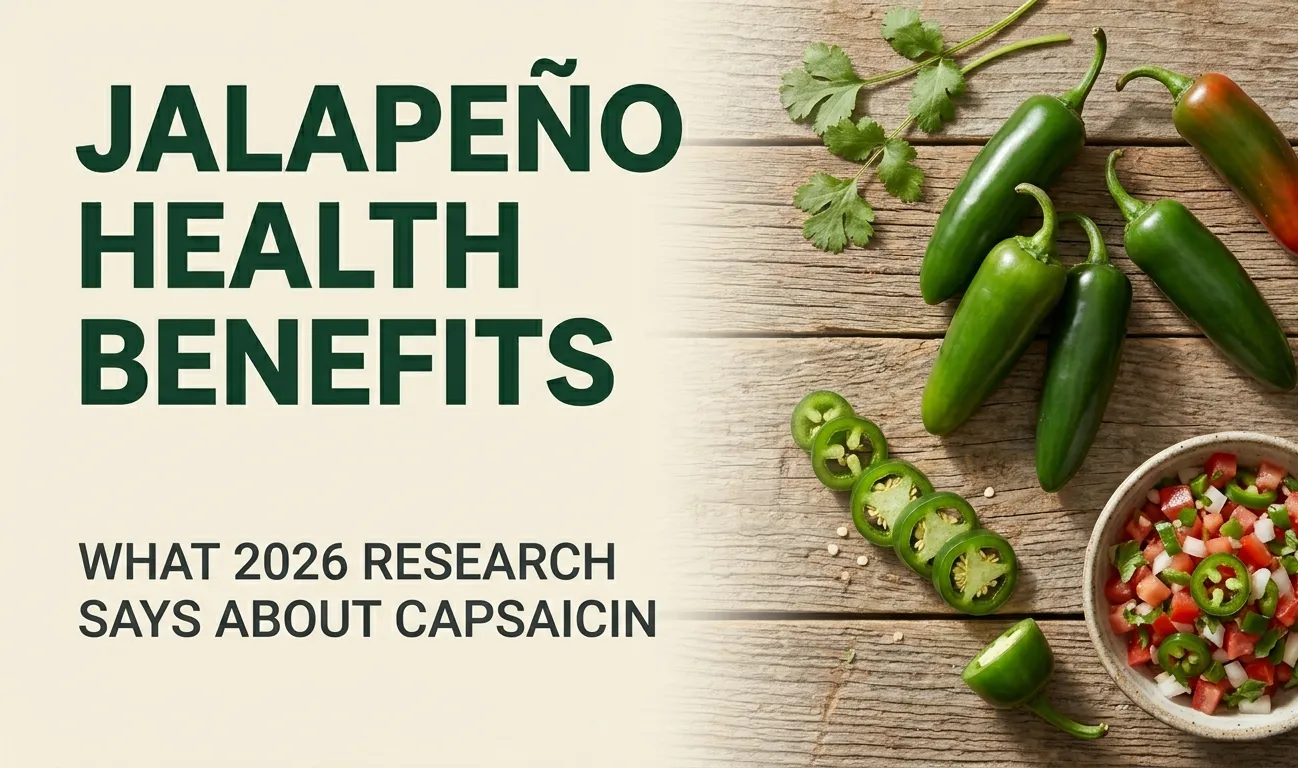
Jalapeño Health Benefits: What 2026 Research Says About Capsaicin
Jalapeño health benefits are real but unevenly supported by research. The best evidence backs capsaicin for topical pain relief and modest metabolic rate increases. The weakest evidence supports claims about skin health and antimicrobial effects in food, where laboratory findings have not yet translated clearly to measurable human outcomes. The benefit you get depends on how much jalapeño you eat, how often, and whether you consume it fresh, cooked, or pickled.
A single medium jalapeño contains only 4 calories, yet it delivers 19 percent of your daily vitamin C requirement and a dose of capsaicinoids that trigger measurable physiological responses. The USDA FoodData Central database confirms that jalapeños belong to the Capsicum annuum species and share a bioactive compound family with all chili peppers. Capsaicin, the dominant capsaicinoid, binds to TRPV1 receptors throughout the body and sets off a cascade that affects pain perception, heat production, and inflammation pathways.
This guide walks you through every major jalapeño health claim, tells you which ones hold up under scrutiny, and rates the evidence so you know what is solid versus what is still emerging. You will also see how jalapeños stack up against serranos, what pickling does to the nutritional profile, and who should think twice before adding them to every meal.
Jalapeño Health Benefits
Jalapeños offer four health benefits with moderate to strong human evidence: topical pain relief through capsaicin’s effect on substance P, a small but measurable increase in diet-induced thermogenesis, high vitamin C density per calorie, and antimicrobial activity demonstrated in food preservation contexts. The remaining benefits, including heart health, immune function, and skin effects, rest on a mix of promising mechanistic data and limited direct human trials.
The active compound behind nearly every jalapeño health benefit is capsaicin, chemically known as 8-methyl-N-vanillyl-6-nonenamide. Capsaicin does not actually burn you. It binds to the TRPV1 receptor, the same receptor that detects actual heat, and tricks your nervous system into responding as if you touched something hot. That receptor activation is the entry point for every downstream effect, from the endorphin release that dulls pain to the sympathetic nervous system activation that nudges your metabolic rate upward.
Here is a summary of the major claimed jalapeño health benefits with their evidence quality rating:
| Health Benefit | Primary Compound | Evidence Strength | Best Study Type Available |
|---|---|---|---|
| Topical pain relief | Capsaicin (trans-capsaicin 8%) | Strong | Multiple RCTs, meta-analyses |
| Diet-induced thermogenesis | Capsaicin, dihydrocapsaicin | Moderate | Multiple small human RCTs |
| Vitamin C support | Ascorbic acid | Strong (established) | Longstanding nutritional science |
| Weight management aid | Capsaicin | Modest | Small trials, mixed results |
| Anti-inflammatory | Capsaicin, flavonoids | Emerging | Mechanistic + limited human |
| Antimicrobial (food) | Capsaicinoids | Moderate | In vitro + food model studies |
| Heart health | Capsaicin, flavonoids | Emerging | Observational + mechanistic |
| Immune function | Vitamin C, capsaicin | Indirect | Nutrient-based, limited direct |
| Skin health | Capsaicin (topical) | Weak | Mostly mechanistic, no oral benefit |
The most honest answer to “are jalapeños healthy” is that they contribute meaningfully to vitamin C intake and offer capsaicin-mediated effects that are real but modest for most people eating typical amounts. They are not a medicine. They are a nutrient-dense, low-calorie food with bioactive compounds that have documented physiological activity.
Key Takeaway: Capsaicin-driven pain relief has the strongest evidence of any jalapeño health claim. The metabolism and weight loss effects are real but small. Everything else is promising but not yet settled by high-quality human trials.
Jalapeño Nutrition Facts
A single medium raw jalapeño pepper (approximately 14 grams) contains 4 calories, 0.1 grams of protein, 0.1 grams of fat, 0.9 grams of carbohydrates, and 0.4 grams of fiber, according to the USDA FoodData Central database. The nutritional value of jalapeños comes almost entirely from their micronutrient and bioactive compound content, not from macronutrients.
Here is the complete nutritional breakdown for one medium raw jalapeño and a quarter-cup sliced serving:
| Nutrient | 1 Medium Pepper (14g) | 1/4 Cup Sliced (23g) | % DV (per pepper) |
|---|---|---|---|
| Calories | 4 | 6.5 | <1% |
| Protein | 0.1 g | 0.2 g | <1% |
| Total Fat | 0.1 g | 0.1 g | <1% |
| Carbohydrates | 0.9 g | 1.5 g | <1% |
| Fiber | 0.4 g | 0.7 g | 1% |
| Vitamin C | 16.7 mg | 27.3 mg | 19% |
| Vitamin A | 76 IU | 124 IU | 2% |
| Vitamin K | 2.6 mcg | 4.3 mcg | 2% |
| Vitamin B6 | 0.1 mg | 0.1 mg | 4% |
| Folate | 7 mcg | 11 mcg | 2% |
| Potassium | 35 mg | 57 mg | 1% |
| Magnesium | 2 mg | 3.5 mg | <1% |
| Capsaicinoids | 0.2 to 1.0 mg | 0.3 to 1.6 mg | No DV established |
The standout nutrient here is vitamin C. A single jalapeño provides roughly one-fifth of the daily requirement for an adult. Five jalapeños over the course of a day, easily achievable in salsas, toppings, and cooked dishes, can meet the full vitamin C requirement without supplementation. The capsaicinoid content varies by growing conditions, with hotter, drier environments producing peppers with higher capsaicin concentrations.
Capsaicin Health Benefits
Capsaicin’s health benefits center on three well-documented mechanisms: activation of TRPV1 receptors that trigger thermogenesis and alter pain signaling, depletion of substance P in sensory nerve terminals which reduces chronic pain transmission, and modulation of inflammatory pathways through effects on NF-kB and cytokine production. These mechanisms have different levels of human evidence supporting their translation to practical health outcomes.
The TRPV1 receptor (transient receptor potential vanilloid 1) is the molecular doorway through which capsaicin enters human physiology. This receptor sits on pain-sensing nerve fibers, in the gastrointestinal tract, on blood vessel walls, and in brown adipose tissue. When capsaicin binds to TRPV1, calcium ions flow into the cell, and the neuron fires a signal your brain interprets as heat and pain. Repeated exposure to capsaicin desensitizes these receptors, which is the basis for both spicy food tolerance and topical capsaicin pain therapy.
Capsaicin is not the only bioactive capsaicinoid in jalapeños. Dihydrocapsaicin and nordihydrocapsaicin contribute to the total pungency and appear to share similar receptor activity. The Scoville Heat Unit rating of a typical jalapeño runs from 2,500 to 8,000 SHU. For reference, a bell pepper registers zero SHU, a serrano pepper hits 10,000 to 23,000 SHU, and a habanero climbs to 100,000 to 350,000 SHU. The hotter the pepper, the more capsaicinoids it contains per gram, and the stronger the physiological response per bite.
Capsaicin is fat-soluble. This matters for two reasons. First, drinking water does not wash capsaicin off your tongue because capsaicin does not dissolve in water. Dairy products, which contain casein proteins that bind capsaicin and fat that dissolves it, provide the most effective heat relief. Second, consuming jalapeños with a small amount of dietary fat increases capsaicin absorption from the gut and may prolong its systemic effects.
Jalapeño Vitamin C Content
Jalapeños are an excellent source of vitamin C, delivering 16.7 milligrams per medium raw pepper. This single pepper provides 19 percent of the daily value for adult women and 15 percent for adult men, according to the NIH Office of Dietary Supplements established Recommended Dietary Allowance of 75 milligrams for women and 90 milligrams for men. By weight, raw jalapeños contain approximately 119 milligrams of vitamin C per 100 grams, which rivals oranges at 53 milligrams per 100 grams.
Vitamin C, chemically known as ascorbic acid, functions in the body as a cofactor for collagen synthesis enzymes, an antioxidant that regenerates vitamin E, and an immune cell function enhancer. The collagen connection is why vitamin C deficiency manifests as poor wound healing, bleeding gums, and fragile skin. The immune connection is why vitamin C is studied for respiratory infection prevention, though the evidence for supplementation in already-nourished individuals remains mixed.
The vitamin C in jalapeños degrades with heat exposure. A 2020 study published in the Journal of Agricultural and Food Chemistry found that boiling jalapeños reduced their vitamin C content by 30 to 50 percent depending on cooking time. Roasting at high heat caused similar losses. Pickling in vinegar, by contrast, preserved more vitamin C than heat-based cooking methods because the acidic environment stabilizes ascorbic acid. Here is how preparation method affects the vitamin C you actually get:
| Preparation | Vitamin C Retention | Notes |
|---|---|---|
| Raw | 100% (16.7 mg per pepper) | Maximum vitamin C delivery |
| Pickled (vinegar brine) | 70 to 85% retained | Acidic pH protects ascorbic acid |
| Roasted | 50 to 70% retained | Heat degrades, shorter time helps |
| Boiled | 50 to 60% retained | Water leaches water-soluble C |
| Sautéed | 60 to 75% retained | Fast, high-heat cooking loses less |
| Dried (chipotle) | 10 to 20% retained | Extensive processing destroys C |
If vitamin C is your primary goal with jalapeños, eat them raw. A fresh pico de gallo or sliced raw jalapeño on tacos delivers the full vitamin C dose. The tradeoff is that raw jalapeños are hotter and harder to eat in volume compared to cooked ones.
Key Takeaway: A single raw jalapeño delivers 19% of your daily vitamin C. Cooking cuts that by a third to half. Pickling preserves more C than cooking does.
Capsaicin Metabolism Boost
Capsaicin increases energy expenditure by activating the sympathetic nervous system and stimulating brown adipose tissue thermogenesis. The effect is real but modest. A 2018 meta-analysis published in Appetite reviewed 14 human trials and found that capsaicin ingestion increases energy expenditure by approximately 50 calories per day on average. Some individual studies reported increases of up to 70 to 100 calories in the hours immediately following a capsaicin dose.
The mechanism works through TRPV1 receptor activation on sensory nerves, which signals the brain to release catecholamines, including norepinephrine. These stress hormones increase heart rate and stimulate brown adipose tissue, a specialized fat tissue that burns calories to produce heat. Think of brown fat as a furnace your body turns on when it detects capsaicin. The furnace burns fuel and raises your core temperature slightly. That temperature rise is the thermogenic effect you are measuring when studies report increased energy expenditure.
The dose used in most thermogenesis studies ranges from 2 to 10 milligrams of capsaicinoids per meal. A single jalapeño delivers 0.2 to 1 milligram, so you would need to eat several peppers in one sitting to match the study conditions. Capsaicin supplements, which concentrate the compound and deliver it in a gut-tolerant capsule, are the form used in most of the higher-dose research. The whole-food version works the same way mechanistically but at a lower dose per pepper.
Individual variation matters here. People who regularly eat spicy food develop partial tolerance to capsaicin’s thermogenic effects. The same 5-milligram dose that raises energy expenditure in a spice-naive person may produce a smaller effect in someone who eats jalapeños daily. Habituation does not eliminate the effect, but it reduces it. This is one reason why weight loss studies using capsaicin show inconsistent results across populations with different dietary backgrounds.
Capsaicin Weight Loss
Capsaicin’s effect on weight loss is modest and inconsistent across human trials. The most optimistic meta-analyses suggest that regular capsaicin consumption may contribute to a loss of roughly 0.5 to 1 kilogram over 12 weeks when combined with a calorie deficit, mainly through appetite reduction and a small energy expenditure increase. The effect is real but small, and capsaicin alone will not produce meaningful weight loss without dietary changes.
The weight management mechanism is twofold. First, capsaicin increases post-meal energy expenditure through the thermogenic pathway described above. Second, and potentially more important for actual weight outcomes, capsaicin appears to reduce appetite and increase satiety. A 2014 study published in Appetite found that participants who consumed 2.5 milligrams of capsaicin with a meal reported lower hunger levels and reduced ad libitum food intake at the next meal compared to a placebo group. The effect was small, roughly 75 fewer calories consumed at the subsequent meal.
The gap between the optimistic headlines and the clinical reality is the dose and the adherence. Most studies showing meaningful weight effects use 6 to 10 milligrams of capsaicinoids per day, equivalent to eating 10 to 30 jalapeños daily. Capsaicin supplements achieve this dose in a capsule, but gastrointestinal side effects including stomach burning, nausea, and cramping limit adherence even in research settings. Whole-food jalapeño consumption at typical culinary levels (one to three peppers per day) delivers a capsaicin dose well below the threshold seen in positive weight loss trials.
For weight management, jalapeños are better understood as a flavor tool that makes lower-calorie foods more satisfying than as a standalone weight loss intervention. Spicy black bean soup with jalapeños is more satiating than plain black bean soup. That appetite effect, combined with jalapeños’ negligible calorie contribution, makes them a useful addition to a weight-conscious diet, just not the metabolic miracle some headlines suggest.
Capsaicin Pain Relief Mechanism
Capsaicin relieves pain by depleting substance P from sensory nerve terminals. When applied repeatedly to the skin or consumed in high enough doses over time, capsaicin desensitizes the TRPV1 receptors on pain-sensing C-fibers. The nerves become less responsive to pain signals because they have exhausted their supply of substance P, the primary neurotransmitter that relays pain messages to the central nervous system.
This mechanism is the basis for FDA-approved topical capsaicin creams. Products containing trans-capsaicin 8% (brand name Qutenza) are prescription-strength patches used for neuropathic pain conditions including postherpetic neuralgia, the painful nerve condition that can follow shingles. Over-the-counter creams containing 0.025 to 0.1 percent capsaicin are available for arthritis, muscle pain, and general neuropathic pain. The NIH National Center for Complementary and Integrative Health recognizes topical capsaicin as having reasonable evidence for neuropathic pain relief.
Eating jalapeños does not produce the same concentrated analgesic effect as applying a capsaicin patch to a painful area. The systemic capsaicin levels achieved through diet are far lower than the local concentration delivered by a patch. However, there is an indirect pain effect from dietary capsaicin. The endorphin release triggered by the burning sensation acts as a natural painkiller. This is the same mechanism behind the “runner’s high” and explains why some people report feeling good after eating spicy food despite the initial discomfort.
The practical takeaway is that jalapeños are not a treatment for chronic pain. Topical capsaicin is. The two share a mechanism but operate at completely different doses and routes of administration. Someone with osteoarthritis knee pain will get far more relief from a capsaicin cream applied to the knee than from adding jalapeños to their diet.
Key Takeaway: Topical capsaicin has strong evidence for neuropathic pain. Eating jalapeños triggers endorphin release that can create a subjective sense of well-being, but it is not a replacement for targeted pain treatment.
Jalapeño Anti-Inflammatory
Jalapeños contain compounds with anti-inflammatory activity demonstrated in laboratory and animal models, but direct human evidence for systemic anti-inflammatory effects from dietary jalapeño consumption remains limited. The anti-inflammatory potential comes from two separate sources: capsaicin’s effect on inflammatory signaling pathways and the flavonoid antioxidants quercetin and luteolin found in pepper tissue.
Capsaicin’s anti-inflammatory mechanism operates through inhibition of NF-kB, a transcription factor that acts like a master switch for the body’s inflammatory response. When NF-kB is activated, it turns on genes that produce pro-inflammatory cytokines including TNF-alpha, IL-6, and IL-1beta. By blocking NF-kB activation, capsaicin reduces the production of these inflammatory signals. This mechanism is well-documented in cell studies and animal models of inflammatory disease, including a 2019 study published in the British Journal of Pharmacology that showed capsaicin reduced colonic inflammation in a mouse model of colitis.
Quercetin and luteolin are flavonoid compounds that contribute to jalapeños’ antioxidant capacity independently of capsaicin. These flavonoids scavenge free radicals and inhibit the oxidation of lipids and proteins that can trigger inflammatory cascades. The concentrations in jalapeños are modest compared to capers, onions, or celery for quercetin, and compared to celery or parsley for luteolin, but they add to the total anti-inflammatory potential of the pepper.
The translation gap from cell and animal data to human outcomes is substantial. A person eating jalapeños consumes a complex mixture of compounds at low doses, not a concentrated capsaicin or flavonoid extract. Whether that dietary exposure meaningfully changes systemic inflammation markers like C-reactive protein in humans has not been established in well-controlled trials. Jalapeños are a reasonable part of an anti-inflammatory dietary pattern, which the Academy of Nutrition and Dietetics identifies as rich in vegetables, fruits, and spices, but they are not a standalone anti-inflammatory intervention.
Jalapeño Benefits for Heart
Jalapeños may benefit cardiovascular health through capsaicin’s effects on blood vessel function and the pepper’s overall contribution to a vegetable-rich dietary pattern. The direct evidence linking jalapeño consumption to reduced heart disease events is observational, not experimental. The mechanism evidence is stronger than the outcome evidence.
Capsaicin affects blood vessels through TRPV1 receptors located on the endothelial cells that line arteries. Activation of these receptors triggers the release of nitric oxide, a gas that relaxes blood vessel walls and lowers blood pressure. A 2017 study in the American Journal of Clinical Nutrition found that acute capsaicin ingestion improved flow-mediated dilation, a measure of blood vessel flexibility, in healthy adults. This is a favorable vascular response, but it was measured hours after a single dose, not tracked across years of dietary jalapeño consumption.
Observational data provides some encouragement. A large 2019 study of over 22,000 Italian adults published in the Journal of the American College of Cardiology found that regular consumption of chili peppers four or more times per week was associated with a 23 percent lower risk of all-cause mortality and a 34 percent lower risk of cardiovascular death compared to infrequent or no chili consumption. This is an association, not proof of causation. People who eat spicy food regularly may differ from those who do not in other health behaviors, including overall diet quality, alcohol use, and physical activity patterns.
Jalapeños also contribute to heart health indirectly by adding flavor without sodium or saturated fat. Replacing salt, butter, or creamy sauces with jalapeño-based heat reduces the sodium and saturated fat content of meals. This substitution effect may be as meaningful for cardiovascular risk reduction as any direct capsaicin mechanism. The American Heart Association prioritizes dietary patterns that emphasize vegetables and minimize sodium and saturated fat, and jalapeños support both goals.
Jalapeño Antimicrobial Properties
Jalapeños and their capsaicinoid compounds demonstrate antimicrobial activity against common foodborne pathogens in laboratory and food model studies. Capsaicin and dihydrocapsaicin inhibit the growth of bacteria including Staphylococcus aureus, Escherichia coli, Listeria monocytogenes, and Salmonella species in controlled experimental conditions. This antimicrobial capacity is one reason chili peppers have been used in food preservation for centuries in warm climates.
The mechanism involves capsaicin disrupting bacterial cell membranes and interfering with the proton motive force that bacteria use to generate energy. A 2015 study in the Journal of Agricultural and Food Chemistry demonstrated that capsaicinoids create pores in bacterial membranes at sufficient concentrations, causing leakage of cellular contents and bacterial death. The effect is concentration-dependent, and the levels achieved in a whole jalapeño or salsa are lower than the levels used in purified laboratory experiments.
What this means practically is that jalapeños help make food safer, but they are not a substitute for proper food handling, refrigeration, and cooking to safe internal temperatures. The antimicrobial effect is one part of the multiple barriers that make salsa, hot sauce, and pickled peppers stable at room temperature in traditional cuisines. The capsaicin works alongside the acidity from vinegar or lime juice, the salt in brine, and the antimicrobial compounds in garlic and onion, all of which are typical salsa ingredients.
There is no evidence that eating jalapeños kills bacteria inside the human body the way an antibiotic would. The antimicrobial effect is relevant for food preservation and may have implications for oral bacteria, but systemic antimicrobial effects from dietary jalapeño consumption are not documented. If you have a bacterial infection, a physician prescribes antibiotics. Jalapeños are for flavor, not for treatment.
Key Takeaway: Capsaicin kills foodborne bacteria in lab conditions and contributes to traditional food preservation. This does not translate to an antibiotic effect inside the human body after eating jalapeños.
Are Jalapeños Good for Your Immune System
Jalapeños support immune function primarily through their vitamin C content, which is well-established as an immune-relevant nutrient, rather than through any unique immune-boosting property of capsaicin. The claim that spicy peppers “boost immunity” overstates the evidence. Vitamin C contributes to immune cell function, and jalapeños provide it efficiently, but the pepper does not confer special immune protection beyond what adequate vitamin C intake provides.
Vitamin C, chemically ascorbic acid, accumulates in immune cells including neutrophils and macrophages. These phagocytic cells use vitamin C as an antioxidant to protect themselves from the oxidative burst they generate to kill pathogens. The NIH Office of Dietary Supplements recognizes vitamin C as important for immune defense, but also notes that supplementation beyond the RDA has not been shown to prevent colds in the general population, only to modestly reduce cold duration in people under extreme physical stress.
Capsaicin has its own immunological interactions that are complex and not uniformly immune-enhancing. Capsaicin’s activation of TRPV1 receptors on immune cells can have both pro-inflammatory and anti-inflammatory effects depending on the context, dose, and cell type involved. This is an active area of research that has not produced clear dietary guidance. Capsaicin is not classified as an immune-supporting nutrient by any major health organization.
The practical immune takeaway is that jalapeños contribute to meeting your daily vitamin C requirement, which does support normal immune function. Five jalapeños provide 100 percent of the vitamin C RDA. They are a useful food within an immune-supporting dietary pattern, but they are not an immune system booster in the way that term is commonly used. A diet adequate in all essential nutrients, including vitamin C, is the goal. Jalapeños can be part of achieving that adequacy.
Jalapeño Peppers Benefits for Skin
Jalapeños have a documented skin benefit through topical capsaicin application, not through eating them. Topical capsaicin creams are FDA-approved for certain neuropathic pain conditions affecting the skin, including postherpetic neuralgia and diabetic peripheral neuropathy. There is no credible evidence that eating jalapeños improves skin appearance, reduces acne, or slows skin aging.
The topical capsaicin mechanism for skin is the same substance P depletion described in the pain relief section. When capsaicin cream is applied to the skin over an affected area, sensory nerve endings release and then exhaust their substance P stores. Without substance P, pain signals cannot be transmitted effectively from that area to the brain. The cream must be applied regularly, typically three to four times daily for over-the-counter strengths, and the effect takes days to weeks to develop.
Claims about dietary jalapeños improving skin through antioxidants are mechanistically plausible but unproven. The vitamin C in jalapeños is used by the body for collagen synthesis, which does affect skin structure. The flavonoids have antioxidant properties that could theoretically protect skin from UV damage. However, there are no human trials showing that adding jalapeños to the diet measurably changes skin health outcomes compared to a control diet with equivalent vitamin C from other sources.
For skin health, jalapeños are neither harmful nor uniquely beneficial. They contribute vitamin C to the collagen production pathway, which matters for skin integrity, but so do oranges, strawberries, bell peppers, and broccoli. If you enjoy jalapeños, they count toward your vegetable and vitamin C intake. They are not a skin treatment.
Jalapeño vs Serrano Health Benefits
Jalapeños and serrano peppers share the same bioactive compounds with the same mechanisms, but serranos deliver a higher capsaicinoid dose per pepper because they are 3 to 5 times hotter. Jalapeños range from 2,500 to 8,000 Scoville Heat Units, while serranos range from 10,000 to 23,000 SHU. A single serrano pepper contains roughly 2 to 5 times more capsaicin than a single jalapeño of similar size.
The nutritional profiles are otherwise similar. Both belong to the Capsicum annuum species. Both deliver vitamin C at comparable concentrations per gram. Both contain quercetin, luteolin, and other flavonoids. The choice between them for health purposes depends on how much capsaicin you want per bite and how much heat you tolerate.
Here is a direct comparison of jalapeño and serrano peppers by key nutritional and bioactive measures:
| Characteristic | Jalapeño | Serrano |
|---|---|---|
| Scoville Heat Units | 2,500 to 8,000 | 10,000 to 23,000 |
| Capsaicinoids per pepper | 0.2 to 1.0 mg | 0.5 to 3.0 mg |
| Vitamin C per pepper | 16.7 mg | ~12 mg (smaller average size) |
| Calories per pepper | 4 | ~3 |
| Typical use | Sliced, stuffed, pickled | Salsas, pico de gallo, sauces |
| Heat tolerance needed | Moderate | Moderate to high |
For someone seeking capsaicin’s metabolic or appetite effects at the doses used in research (2 to 10 mg per meal), serranos are a more practical whole-food option because fewer peppers are needed. Two serranos deliver roughly the capsaicin load of six jalapeños. However, the heat tolerance required is correspondingly higher. The best pepper for health purposes is the one you will eat consistently without gastrointestinal distress.
Pickled Jalapeños vs Fresh Nutrition
Pickled jalapeños differ from fresh jalapeños in three nutritionally meaningful ways: they contain significantly more sodium, they retain 70 to 85 percent of their vitamin C, and their capsaicin content remains largely intact because capsaicin is stable in acidic conditions. A quarter-cup serving of pickled jalapeño slices contains approximately 300 to 500 milligrams of sodium, compared to essentially zero milligrams of sodium in a fresh jalapeño.
The pickling process immerses jalapeños in a brine of vinegar, water, and salt. The vinegar creates an acidic environment with a pH below 4.6, which preserves the peppers and gives them their tangy flavor. This acidic environment also stabilizes vitamin C, which is why pickled jalapeños retain more of their ascorbic acid than cooked jalapeños. The tradeoff is sodium, which enters the pepper tissue as it sits in the brine.
Here is how fresh and pickled jalapeños compare nutritionally per quarter-cup serving:
| Nutrient | Fresh Sliced (23g) | Pickled (23g, drained) |
|---|---|---|
| Calories | 6.5 | 5 to 10 |
| Vitamin C | 27.3 mg | 19 to 23 mg |
| Sodium | 0 to 2 mg | 300 to 500 mg |
| Capsaicinoids | 0.3 to 1.6 mg | 0.3 to 1.6 mg |
| Fiber | 0.7 g | 0.7 g |
| Added sugar | 0 g | 0 to 2 g (varies by brand) |
Pickled jalapeños are not unhealthy. They deliver capsaicin and vitamin C with the convenience of a shelf-stable product. The sodium content is the main consideration. For someone monitoring sodium intake for hypertension or kidney health, fresh jalapeños are the better choice. A registered dietitian can help you incorporate pickled jalapeños into a sodium-conscious eating plan if you enjoy them and want to account for their sodium contribution.
Key Takeaway: Pickled jalapeños keep their heat and most of their vitamin C, but they come with 300 to 500 mg of sodium per serving. Fresh jalapeños give you the same bioactive benefits without the sodium load.
Raw Jalapeño Benefits
Raw jalapeños deliver the maximum vitamin C content and the full capsaicinoid dose without any nutrient losses from heat or sodium additions from pickling. The tradeoff is that raw jalapeños are harder to eat in volume due to their heat intensity and the physical burn they produce. You get the most nutrition per pepper from the raw form, but that benefit only matters if you actually consume them.
The capsaicin in raw jalapeños remains fully potent because it has not been degraded by heat or leached into cooking water. Capsaicin is a stable molecule that melts at 62 degrees Celsius (144 degrees Fahrenheit), so brief cooking at moderate temperatures causes minimal loss. Prolonged boiling or roasting can reduce capsaicin content modestly, primarily through physical loss into cooking liquid rather than chemical degradation. Raw consumption ensures you get every milligram.
Raw jalapeños also preserve the pepper’s natural enzymes and water-soluble vitamins that heat degrades. Vitamin C, several B vitamins including folate, and the flavonoids quercetin and luteolin all decline to varying degrees with cooking. The raw pepper represents the complete phytochemical package the plant produces. For the nutrition purist, raw is the optimal form.
The practical limitation is palatability and digestive tolerance. A raw jalapeño delivers intense, sharp heat concentrated in the white pith and seeds. For someone unaccustomed to spicy food, this can cause mouth pain, stomach discomfort, and in some cases, cramping or diarrhea. Start with small amounts of raw jalapeño in salsas or as a garnish. Deseed and remove the pith to reduce the heat intensity while still getting the nutritional benefits from the flesh.
Jalapeño Side Effects
Jalapeño side effects range from temporary mouth and throat burning to gastrointestinal symptoms including stomach pain, heartburn, and diarrhea in sensitive individuals. The burning sensation is caused by capsaicin binding to TRPV1 receptors in the mouth, throat, and stomach lining. This sensation is not tissue damage. It is a chemical trick that your nervous system interprets as heat and pain.
The gastrointestinal effects are more consequential. Capsaicin can relax the lower esophageal sphincter, the muscular valve that keeps stomach acid from rising into the esophagus. For people with gastroesophageal reflux disease (GERD), this can trigger or worsen heartburn. Capsaicin also accelerates gastric emptying and stimulates intestinal motility, which can cause cramping and diarrhea in people with sensitive digestive systems or conditions like irritable bowel syndrome (IBS).
Skin and eye contact with jalapeño oils causes burning and irritation. Capsaicin is not water-soluble, so washing with water spreads the oil rather than removing it. Dish soap, which cuts through oils, is more effective for removing capsaicin from skin. Dairy products like milk or yogurt soothe mouth burn because casein protein binds capsaicin and carries it away from the receptor. Avoid touching your eyes, nose, or genitals after handling jalapeños until you have thoroughly washed your hands with soap.
Groups who should limit or avoid jalapeños include:
- People with diagnosed GERD or frequent heartburn: Capsaicin relaxes the lower esophageal sphincter and can worsen reflux symptoms. A gastroenterologist can advise whether spicy foods are appropriate for your specific case.
- People with irritable bowel syndrome (IBS): Chili peppers are a common IBS trigger food because capsaicin stimulates gut motility. Many IBS patients report symptom flares after eating spicy foods.
- People with active gastritis or peptic ulcers: While capsaicin does not cause ulcers, it can worsen pain and discomfort when the stomach lining is already inflamed.
- Infants and very young children: The developing digestive system handles capsaicin poorly, and the pain experience is distressing without the cultural or culinary context older eaters develop.
- People with known capsaicin or nightshade sensitivity: Rare but documented hypersensitivity reactions can occur.
Key Takeaway: The heat you feel is not tissue damage, but the gastrointestinal effects are real. If you have GERD, IBS, or active stomach inflammation, jalapeños may worsen your symptoms. Start small and pay attention to how your body responds.
Frequently Asked Questions About Jalapeño Health Benefits
How much vitamin C is in one jalapeño?
One medium raw jalapeño (about 14 grams) contains 16.7 milligrams of vitamin C.
This is 19 percent of the daily value for adult women and 15 percent for adult men.
Five jalapeños can meet your entire daily vitamin C requirement.
Do jalapeños actually speed up your metabolism?
Yes, capsaicin in jalapeños increases energy expenditure by approximately 50 calories per day on average, according to a 2018 meta-analysis published in Appetite.
The effect is real but modest, and it comes from TRPV1 receptor activation that stimulates sympathetic nervous system activity and brown fat thermogenesis.
Eating one or two jalapeños delivers less capsaicin than the doses used in most research studies showing metabolic effects.
Can eating jalapeños help you lose weight?
Capsaicin may contribute a small amount to weight loss, roughly 0.5 to 1 kilogram over 12 weeks, primarily through appetite reduction rather than the metabolic boost.
The effect size is small, and it only appears when capsaicin is combined with a calorie deficit.
Jalapeños alone will not produce meaningful weight loss without broader dietary changes.
Are jalapeños good for your heart?
Observational research suggests an association between regular chili pepper consumption and lower cardiovascular mortality, but this is not proof that jalapeños directly protect the heart.
The mechanism may involve capsaicin improving blood vessel flexibility through nitric oxide release.
Jalapeños also support heart health indirectly by adding flavor without sodium or saturated fat.
Why do jalapeños burn your mouth?
Capsaicin in jalapeños binds to TRPV1 receptors on pain-sensing nerves in your mouth, which are the same receptors that detect actual heat.
Your brain receives the same signal it would get from touching something physically hot, even though no tissue damage is occurring.
Dairy products like milk relieve the burn because casein protein binds to capsaicin and washes it away from the receptors.
Who should avoid eating jalapeños?
People with GERD, IBS, active gastritis, or peptic ulcers should be cautious with jalapeños because capsaicin can worsen gastrointestinal symptoms.
Infants and young children should avoid jalapeños because their digestive systems handle capsaicin poorly.
Anyone who experiences consistent stomach pain, heartburn, or diarrhea after eating spicy foods should reduce or eliminate jalapeños and discuss the pattern with a gastroenterologist.
Jalapeños earn their place in a healthy diet through two well-supported contributions: they are an efficient vitamin C delivery system, and their capsaicin content triggers real physiological responses that include a modest metabolic lift and, through endorphin release, a subjective sense of well-being after the burn subsides. The rest of the health claims, from heart protection to immune enhancement, rest on a mix of promising mechanisms and observational signals that have not yet been confirmed in the kind of randomized human trials that would move them from interesting to established.
The most practical way to use what you now know is straightforward. Eat jalapeños raw when you want the most vitamin C. Use them as a flavor tool to make vegetables, lean proteins, and whole grains more satisfying without salt or butter. Pickled jalapeños are fine, but watch the sodium. Fresh salsas and pico de gallo give you the best of the pepper with none of the tradeoffs. Start with small amounts if you are new to spice, and pay attention to how your stomach responds.
If jalapeños treat your digestive system well, they are a genuine asset to your regular vegetable rotation. If they do not, the health benefits are not so unique or powerful that you need to force yourself to tolerate them. Bell peppers and sweet peppers deliver vitamin C without the burn. Serranos and habaneros offer more capsaicin per pepper for those who want it. The pepper you eat consistently is the one that benefits you most.