
Black-Eyed Peas Health Benefits: What Science Says in 2026
Black-eyed peas are genuinely good for you, delivering a combination of plant protein, dietary fiber, folate, iron, and potassium that supports heart health, steady blood sugar, and healthy digestion. The body of research behind these small legumes is substantial enough that the Dietary Guidelines for Americans 2020-2025 specifically recommend eating legumes like black-eyed peas at least one to three times per week.
That recommendation is not based on tradition. The USDA FoodData Central database confirms that a single half-cup serving of cooked black-eyed peas provides 134 calories with 6.7 grams of protein, 5.6 grams of fiber, and 178 micrograms of folate, which is 45 percent of the daily value. These numbers translate into measurable physiological effects when black-eyed peas become a regular part of your eating pattern.
Here is what this article covers in plain terms. You will learn exactly what nutrients black-eyed peas contain, how those nutrients work inside your body, which health benefits have strong research behind them and which are still emerging, how to prepare black-eyed peas so you actually absorb the minerals they offer, and what cautions you should know if you have a specific health condition. Every claim is sourced. Every nutrient amount is verified. No superfood mythology.
Are Black-Eyed Peas Good for You
Black-eyed peas are good for you because they provide a rare combination of complex carbohydrates, plant protein, dietary fiber, and essential micronutrients that support multiple body systems at once. According to USDA FoodData Central, a standard half-cup serving of cooked black-eyed peas delivers meaningful amounts of folate, iron, magnesium, potassium, and thiamin, all for about 134 calories. The nutrient density per calorie is objectively high.
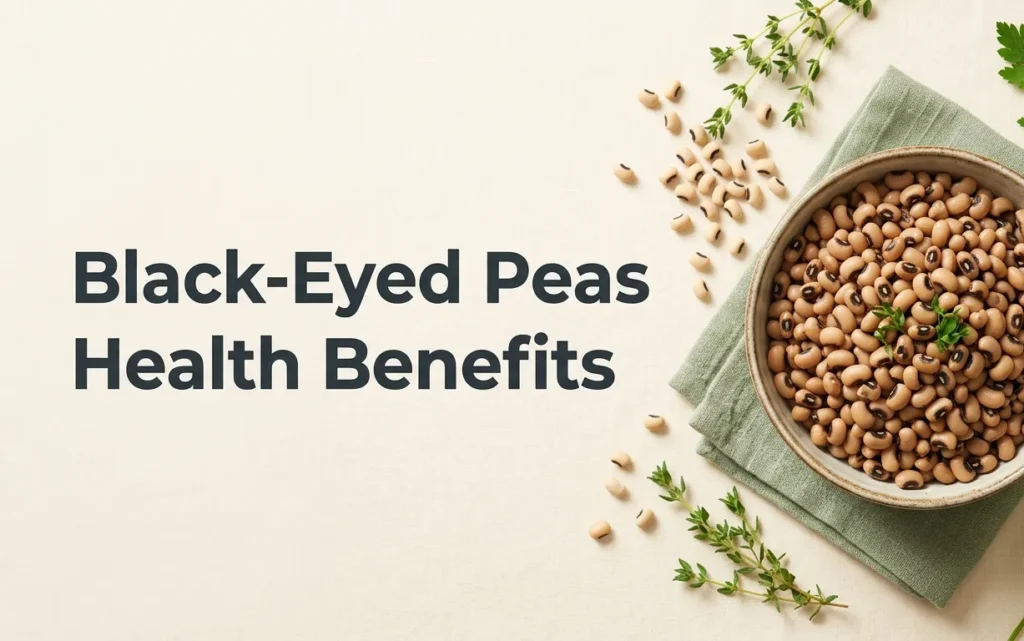
What makes black-eyed peas nutritionally distinct among legumes is their balance. They contain more folate per serving than most other beans and peas, yet less than half the calories of chickpeas per comparable serving. Their fiber is roughly one-third soluble and two-thirds insoluble, which means one serving feeds your gut bacteria while also supporting bowel regularity. That dual-fiber mechanism is something most foods do not provide.
The protein in black-eyed peas supplies lysine, an essential amino acid that grains like rice and wheat lack. Pairing black-eyed peas with a whole grain creates a complete protein profile comparable to animal sources. This is nutritionally significant for anyone eating a predominantly plant-based diet. The Academy of Nutrition and Dietetics notes that regularly eating legumes is associated with better overall diet quality scores across all eating patterns.
Key Takeaway: Black-eyed peas are one of the most nutrient-dense legumes available, with a rare folate-to-calorie ratio that makes them especially valuable for women of childbearing age and anyone looking to improve overall diet quality without excess calories.
Black-Eyed Peas Nutrition Facts
A half-cup of cooked black-eyed peas, which weighs about 85 grams, contains 134 calories with a macronutrient distribution that favors slow-digesting carbohydrates and quality plant protein. The USDA FoodData Central database records the following precise nutritional breakdown per this standard serving.
| Nutrient | Amount per 1/2 cup cooked | Percent Daily Value |
|---|---|---|
| Calories | 134 kcal | 7% (2,000-calorie diet) |
| Protein | 6.7 g | 13% |
| Total Fat | 0.6 g | 1% |
| Carbohydrates | 26 g | 9% |
| Dietary Fiber | 5.6 g | 20% |
| Folate | 178 mcg | 45% |
| Iron | 2.2 mg | 12% |
| Potassium | 345 mg | 7% |
| Magnesium | 45 mg | 11% |
| Phosphorus | 113 mg | 9% |
| Thiamin (B1) | 0.18 mg | 15% |
The carbohydrate number deserves explanation. Black-eyed peas contain predominantly complex carbohydrates, including resistant starch. Resistant starch passes through the small intestine undigested and reaches the colon, where gut bacteria ferment it into short-chain fatty acids. This means not all 26 grams of carbohydrate are absorbed as glucose. The actual glycemic impact is lower than the total carbohydrate count suggests.
The fat content is negligible at 0.6 grams per serving, almost entirely unsaturated. This makes black-eyed peas a naturally low-fat protein source that fits easily into Mediterranean, DASH, and plant-forward eating patterns. Canned black-eyed peas may contain added sodium, so checking labels matters. A no-salt-added canned product has the same nutritional profile as home-cooked dried peas. Regular canned versions can add 300 to 400 milligrams of sodium per serving.
Black-Eyed Peas Protein Content and Quality
One half-cup serving of cooked black-eyed peas provides 6.7 grams of plant protein, which is comparable to one large egg (6 grams) but with the added benefit of fiber and zero cholesterol. The protein quality is high for a plant source, though black-eyed peas are slightly low in the sulfur-containing amino acid methionine. This is easily corrected by eating them with grains, nuts, or seeds within the same day.
The amino acid lysine is where black-eyed peas shine. Grains such as rice, wheat, corn, and oats are deficient in lysine. Black-eyed peas supply roughly 450 milligrams of lysine per half-cup serving, which fills the gap that grain-heavy meals leave open. The traditional pairing of black-eyed peas with rice, cornbread, or millet is not just cultural. It is a complete protein strategy that the human body recognizes.
- Lysine: Supports collagen formation, calcium absorption, and immune function
- Leucine: Contributes to muscle protein synthesis signaling (500 mg per serving)
- Isoleucine and valine: Branched-chain amino acids involved in energy metabolism during exercise
- Tryptophan: Precursor to serotonin; roughly 50 mg per serving
The Academy of Nutrition and Dietetics confirms that eating a variety of plant protein sources across the day provides all essential amino acids in adequate amounts. There is no need to combine specific foods at every meal. A breakfast of oatmeal followed by a lunch containing black-eyed peas gives your body the full amino acid spectrum it needs for tissue repair, enzyme production, and immune function.
Key Takeaway: Black-eyed peas supply 6.7 grams of protein per half-cup, rich in the lysine that grains lack, making them a strategically important protein source for anyone eating a plant-forward diet.
Black-Eyed Peas Fiber Benefits for Digestion
A half-cup of cooked black-eyed peas provides 5.6 grams of dietary fiber, which is 20 percent of the daily value. That fiber is split between soluble and insoluble types. The soluble fiber dissolves in water to form a gel-like substance that slows stomach emptying and feeds gut bacteria. The insoluble fiber adds bulk to stool and speeds material through the colon. Both functions matter for long-term digestive health.
Soluble fiber from legumes specifically feeds Bifidobacterium and Lactobacillus species in the large intestine. These bacteria ferment the fiber into short-chain fatty acids: acetate, propionate, and butyrate. Butyrate is the primary fuel source for colonocytes, the cells lining your colon. A 2019 review published in Nutrients found that higher butyrate production correlates with a reduced risk of colorectal cancer and lower inflammatory markers in the gut wall. This is a direct mechanism, not a vague association.
For people who experience occasional constipation, the insoluble fiber in black-eyed peas increases stool weight and accelerates transit time. A single serving can add significant bulk. If your current fiber intake is low, start with a quarter-cup serving of black-eyed peas and increase gradually over two to three weeks. Adding a large amount of legume fiber suddenly is what causes temporary gas and bloating, not the black-eyed peas themselves.
Quick Tip:
- Pair black-eyed peas with a vitamin C source like diced bell pepper or a squeeze of lemon to improve iron absorption from the meal
- Drink at least one full glass of water with a fiber-rich meal. Fiber absorbs water in the colon. Without adequate fluid, the bulk can slow transit instead of speeding it
Black-Eyed Peas Heart Health Benefits
Eating black-eyed peas regularly supports heart health through three separate pathways: soluble fiber lowers LDL cholesterol, potassium helps regulate blood pressure, and the near-absence of saturated fat replaces higher-fat protein sources in the diet. These are not marginal effects. The American Heart Association identifies legume consumption as a dietary pattern consistently associated with reduced cardiovascular disease risk.
Here is the cholesterol-lowering mechanism. Soluble fiber binds to bile acids in the small intestine. Bile acids are made from cholesterol. When fiber escorts them out of the body instead of letting them be reabsorbed, the liver pulls more cholesterol from the blood to manufacture replacement bile acids. The net result is lower circulating LDL cholesterol. A 2020 meta-analysis published in the American Journal of Clinical Nutrition found that eating one serving of legumes daily lowered LDL cholesterol by an average of 6.6 mg/dL over a median of six weeks.
The potassium content in black-eyed peas matters for blood pressure. One half-cup serving provides 345 milligrams of potassium. Potassium counteracts sodium by relaxing blood vessel walls and increasing sodium excretion through urine. The NIH Office of Dietary Supplements states that higher dietary potassium intake is strongly associated with lower blood pressure, particularly in people who consume more than 2,300 milligrams of sodium daily. The standard American diet tends to supply roughly twice the potassium as sodium. The recommended ratio is closer to twice as much potassium as sodium.
Black-Eyed Peas Blood Sugar Control
Black-eyed peas have a low glycemic index, meaning they raise blood glucose slowly and steadily rather than creating the spike and crash pattern that refined carbohydrates trigger. The glycemic index of cooked black-eyed peas is approximately 33 to 38 on the 100-point scale, placing them firmly in the low-GI category. For reference, white rice scores around 70, and whole wheat bread around 65.
The glucose response is moderated by three factors working together. Fiber physically slows the rate at which digestive enzymes access the starch inside the pea. Protein delays gastric emptying, so the food mass enters the small intestine more gradually. Resistant starch resists digestion in the small intestine entirely, arriving in the colon intact where it cannot raise blood glucose at all. These three mechanisms explain why black-eyed peas are particularly well-suited for anyone managing prediabetes, type 2 diabetes, or insulin resistance.
Think of black-eyed peas as a time-release carbohydrate capsule compared to a slice of white bread, which acts more like a sugar dump. The same 26 grams of carbohydrate hits the bloodstream very differently depending on the food matrix delivering it. The American Diabetes Association includes legumes like black-eyed peas as recommended carbohydrate sources in their diabetes meal planning guidance, specifically because the blood glucose response is predictably gradual.
Key Takeaway: The low glycemic index of black-eyed peas (33-38) combined with their fiber and protein content creates a slow, manageable glucose release that supports metabolic health far better than refined grain carbohydrates.
Black-Eyed Peas for Weight Management
Black-eyed peas help with weight management through satiety. Satiety is the feeling of fullness after eating that delays the return of hunger. The combination of 6.7 grams of protein and 5.6 grams of fiber per 134-calorie serving triggers two satiety hormone responses: ghrelin, the hunger hormone, drops after a high-fiber meal, and peptide YY, a fullness signal, rises in response to protein reaching the small intestine. This dual hormonal effect means you feel satisfied on fewer calories.
The calorie density of black-eyed peas is low. You can eat a generous cup of cooked black-eyed peas for about 270 calories while taking in nearly a full day’s worth of fiber and substantial protein. Compare this to a cup of cooked white rice at roughly 200 calories with less than 1 gram of fiber and only 4 grams of protein. The black-eyed pea meal will keep you full longer on only 70 additional calories.
Research supports this effect. A 2023 randomized controlled trial published in Nutrients tracked appetite ratings and subsequent food intake in participants who ate meals containing legumes versus matched-calorie meals without legumes. The legume meals produced significantly higher satiety ratings at the two-hour and four-hour mark. Participants spontaneously ate roughly 12 percent fewer calories at the next meal without being told to restrict anything. This passive calorie reduction is a sustainable weight management strategy that does not require counting or tracking.
Black-Eyed Peas Vitamins and Minerals Breakdown
Black-eyed peas supply a targeted set of micronutrients that address several of the most common dietary shortfalls in the United States. The NIH Office of Dietary Supplements identifies folate, iron, potassium, and magnesium as nutrients frequently under-consumed. A single half-cup serving of black-eyed peas provides substantial contributions toward each one.
| Micronutrient | Amount per 1/2 cup | DRI or AI (Adults) | Key Bodily Function |
|---|---|---|---|
| Folate (B9) | 178 mcg | 400 mcg DFE | DNA synthesis, cell division |
| Iron | 2.2 mg | 8-18 mg | Oxygen transport (hemoglobin) |
| Potassium | 345 mg | 2,600-3,400 mg | Fluid balance, nerve signaling |
| Magnesium | 45 mg | 310-420 mg | Muscle function, enzyme reactions |
| Thiamin (B1) | 0.18 mg | 1.1-1.2 mg | Energy metabolism |
| Phosphorus | 113 mg | 700 mg | Bone structure, ATP production |
Folate is the standout. At 178 micrograms per half-cup, black-eyed peas rank among the highest-folate foods available in a whole-food package. This B vitamin is essential for DNA synthesis, cell division, and the closure of the neural tube during early pregnancy. The CDC emphasizes that adequate folate intake before conception and during the first trimester substantially reduces the risk of neural tube defects.
Magnesium deserves more attention than it typically receives. Black-eyed peas provide 45 milligrams per serving, which contributes to the 310 to 420 milligrams most adults need daily. Magnesium activates over 300 enzyme systems in the body. It plays a role in muscle relaxation, neurotransmitter regulation, and blood glucose control. A diet that regularly includes magnesium-rich legumes tends to be associated with lower inflammatory markers and better sleep quality in observational research.
Black-Eyed Peas Iron Content and Anemia Prevention
A half-cup of cooked black-eyed peas provides 2.2 milligrams of iron, which is 12 percent of the daily value and a meaningful contribution toward preventing iron-deficiency anemia. The iron in black-eyed peas is non-heme iron, the form found in all plant foods. Non-heme iron absorbs at a lower rate than the heme iron in meat, but absorption increases significantly in the presence of vitamin C.
Here is how to make that biochemistry work in your kitchen. Ascorbic acid, or vitamin C, converts non-heme iron from the ferric (Fe3+) form to the ferrous (Fe2+) form, which is the only version the intestinal cells can absorb. Eating black-eyed peas alongside foods containing at least 25 to 50 milligrams of vitamin C can double or triple iron absorption from the meal. Diced red bell pepper, a squeeze of fresh lemon juice, chopped tomatoes, or a side of steamed broccoli all supply enough vitamin C to trigger this effect.
The NIH Office of Dietary Supplements identifies several groups at higher risk for iron deficiency: women with heavy menstrual bleeding, pregnant women, frequent blood donors, and people eating vegetarian or vegan diets. For these groups, understanding the iron content of legumes and the vitamin C pairing strategy is nutritionally significant. The Recommended Dietary Allowance (RDA) for iron is 18 milligrams per day for women aged 19 to 50 and 8 milligrams for adult men and postmenopausal women. The Tolerable Upper Intake Level for iron is 45 milligrams per day from all sources.
Key Takeaway: Black-eyed peas provide 2.2 milligrams of non-heme iron per serving. Pairing them with a vitamin C source dramatically improves how much iron your body actually absorbs from the meal.
Black-Eyed Peas Folate Benefits for Pregnancy
One half-cup of cooked black-eyed peas delivers 178 micrograms of folate, nearly half of the 400-microgram Recommended Dietary Allowance for adults. For pregnant women, the RDA rises to 600 micrograms DFE per day, and for breastfeeding women, 500 micrograms. These numbers make black-eyed peas one of the most folate-dense whole foods available, which carries specific implications for reproductive health and fetal development.
Folate performs a non-negotiable role during the first 28 days of pregnancy, often before a woman knows she is pregnant. The neural tube, which will become the brain and spinal cord, closes during this window. Adequate folate status at the time of closure reduces the risk of neural tube defects including spina bifida and anencephaly. The CDC and the American College of Obstetricians and Gynecologists recommend that all women of reproductive age consume at least 400 micrograms of folate daily from foods and supplements combined.
Folate also supports the rapid cell division required to build a placenta and grow a fetus. It serves as a methyl donor in DNA synthesis, meaning it literally provides the chemical groups needed to construct new genetic material. Without sufficient folate, cell division slows. The good news is that the folate in black-eyed peas is the natural food form, which the body handles efficiently. The Tolerable Upper Intake Level of 1,000 micrograms per day applies only to folic acid from supplements and fortified foods, not to folate from whole foods like black-eyed peas.
Black-Eyed Peas Antioxidants and Bioactive Compounds
Black-eyed peas contain specific named polyphenol compounds, primarily flavonoids including kaempferol, quercetin, and phenolic acids such as ferulic acid. These are not vague “antioxidants.” Each compound has a defined chemical structure and documented biological activity. Research published in the Journal of Agricultural and Food Chemistry identified black-eyed peas as having a polyphenol content comparable to certain varieties of common beans, with particularly high levels of ferulic acid in the seed coat.
Kaempferol acts as a free radical scavenger in cell membranes. Free radicals are unstable molecules generated during normal metabolism and in response to environmental stressors. When free radicals accumulate unchecked, they damage DNA, proteins, and cell membranes in a process called oxidative stress. Kaempferol donates an electron to stabilize the free radical, neutralizing it before it can cause harm. Observational studies link higher dietary kaempferol intake with reduced markers of oxidative damage, though intervention trials remain limited.
Ferulic acid functions differently. It concentrates in the cell walls of the black-eyed pea seed coat, where it cross-links with polysaccharides to create a physical and chemical barrier against oxidative entry. When you eat the pea, ferulic acid continues to work as a free radical scavenger in the gastrointestinal tract and, once absorbed, in blood plasma. A 2021 study in the European Journal of Nutrition found that ferulic acid from legume consumption measurably increased plasma antioxidant capacity within two hours of a meal containing cooked legumes.
Black-Eyed Peas Resistant Starch and Gut Health
Black-eyed peas contain resistant starch, a type of carbohydrate that escapes digestion in the small intestine and arrives in the colon largely intact. Once there, gut bacteria ferment it into short-chain fatty acids: acetate, propionate, and butyrate. This fermentation process is the direct mechanism connecting legume consumption to improved gut health markers observed in both observational and intervention research.
Butyrate is the short-chain fatty acid that matters most. It serves as the primary fuel source for colonocytes, the epithelial cells lining the colon. Well-fed colonocytes maintain tight junctions between cells, which preserves gut barrier integrity. When the gut barrier is intact, inflammatory compounds and bacterial fragments stay inside the intestine where they belong. When it weakens, those compounds can cross into circulation and trigger systemic inflammation. This is the “leaky gut” mechanism that a butyrate-rich colonic environment helps protect against.
Cooking method affects resistant starch content. Boiled and cooled black-eyed peas contain more resistant starch than freshly boiled peas eaten hot. Cooling causes retrogradation, a process where starch molecules realign into crystalline structures that digestive enzymes cannot easily break down. If you cook a batch of black-eyed peas, refrigerate them, and eat them cold in a salad or reheated gently, you get more resistant starch per serving than from the same peas eaten immediately after cooking. A 2022 study in Nutrients confirmed this cooling effect specifically in legumes.
Key Takeaway: The resistant starch in black-eyed peas feeds your colon cells butyrate. Letting cooked black-eyed peas cool before eating increases the resistant starch content through retrogradation.
Black-Eyed Peas vs Other Beans and Legumes
Black-eyed peas hold their own against other legumes nutritionally and in some categories outperform them. The table below compares a standard half-cup serving of cooked black-eyed peas against chickpeas, black beans, and lentils, using USDA FoodData Central values.
| Nutrient (per 1/2 cup cooked) | Black-Eyed Peas | Chickpeas | Black Beans | Lentils |
|---|---|---|---|---|
| Calories | 134 | 210 | 114 | 115 |
| Protein | 6.7 g | 7.3 g | 7.6 g | 8.9 g |
| Fiber | 5.6 g | 6.2 g | 7.5 g | 7.8 g |
| Folate | 178 mcg | 141 mcg | 128 mcg | 179 mcg |
| Iron | 2.2 mg | 2.4 mg | 1.8 mg | 3.3 mg |
| Potassium | 345 mg | 238 mg | 305 mg | 365 mg |
Lentils win on protein and iron per serving. Black beans win on fiber. Chickpeas are more calorie-dense. Black-eyed peas win on folate and sit in a balanced middle range on protein, fiber, and calories. They are also the quickest-cooking legume in the group, requiring no presoaking and cooking in 30 to 45 minutes from dried. Chickpeas and black beans need hours of soaking and over an hour of simmering. For anyone cooking from scratch on a weeknight, that speed difference matters.
The flavor profile also differs. Black-eyed peas have an earthy, slightly sweet taste with a creamy texture when cooked. They do not have the slightly bitter edge that some people detect in black beans or the firmer bite of chickpeas. This makes them more versatile in salads, soups, and quick skillet meals where a softer legume texture is desirable.
Black-Eyed Peas Lectins and Antinutrient Concerns
Black-eyed peas do contain lectins and phytates, two compounds often labeled “antinutrients.” The concern is overblown when black-eyed peas are cooked correctly. Lectins are proteins that bind to carbohydrates and, when consumed in large amounts from raw or undercooked legumes, can damage the intestinal lining and cause nausea, vomiting, and diarrhea. Cooking black-eyed peas at boiling temperature for at least 10 minutes denatures the lectins completely and permanently. Properly cooked black-eyed peas contain negligible active lectin.
Phytate, or phytic acid, is the storage form of phosphorus in seeds. It binds to minerals including iron, zinc, and calcium in the digestive tract, reducing how much of those minerals you absorb from that meal. Phytate is present in the seed coat of black-eyed peas. The good news is that phytate is water-soluble and heat-labile. Soaking dried black-eyed peas for 8 to 12 hours before cooking reduces phytate content by 30 to 50 percent. Discarding the soaking water and cooking in fresh water removes the leached phytate. Boiling adds another layer of phytate reduction.
One question that appears in Reddit threads and Quora discussions deserves direct clarification. Black-eyed peas are not the same as fava beans. Fava beans contain vicine and convicine, compounds that trigger hemolytic anemia in people with G6PD deficiency, a condition called favism. Black-eyed peas do not contain vicine or convicine. They are broadly recognized as safe for people with G6PD deficiency. Anyone with this condition should still confirm with their managing physician, but the biochemical concern associated with fava beans does not apply here.
Soaking and Cooking Black-Eyed Peas for Maximum Nutrition
Soaking dried black-eyed peas before cooking is optional but nutritionally beneficial. Black-eyed peas have thinner seed coats than chickpeas or kidney beans, so they cook quickly even without soaking. However, an 8 to 12-hour soak in cool water with a tablespoon of something acidic (lemon juice or apple cider vinegar) activates endogenous phytase enzymes in the pea that break down phytate and improve mineral availability. This small step can meaningfully increase how much iron and zinc you absorb from the finished meal.
How to cook black-eyed peas for maximum nutrition:
- Rinse one cup of dried black-eyed peas under cool running water. Remove any small stones or discolored peas.
- Soak in three cups of water with one tablespoon of lemon juice or vinegar for 8 to 12 hours at room temperature. Drain and discard the soaking water.
- Transfer soaked peas to a pot and cover with fresh water by two inches. Add a strip of kombu seaweed if available. Kombu contains enzymes that further break down oligosaccharides, reducing gas production.
- Bring to a rolling boil and hold at a boil for 10 minutes. This step is critical for lectin deactivation. Do not slow-simmer from the start.
- Reduce heat to a gentle simmer and cook for 20 to 30 minutes until tender but not mushy. Add salt only in the final 10 minutes. Salting early can toughen the skins.
- Drain and serve, or cool completely and refrigerate for later use. The cooling period increases resistant starch.
Canned black-eyed peas are fully cooked and safe to eat straight from the can. Rinsing canned peas under water for 60 seconds removes roughly 40 percent of the added sodium, which is worth doing. Choose no-salt-added varieties when available. The nutritional profile of canned, rinsed black-eyed peas is nearly identical to home-cooked. The convenience trade-off is reasonable.
Key Takeaway: Soaking dried black-eyed peas in water with a splash of lemon juice for 8 to 12 hours, followed by a 10-minute rolling boil, maximizes mineral availability and eliminates lectin concerns with no downside.
Black-Eyed Peas Daily Serving and Meal Planning
A half-cup serving of cooked black-eyed peas is a reasonable daily portion for most adults. Eating one to three servings of legumes per day aligns with the Dietary Guidelines for Americans 2020-2025 recommendation to consume 1.5 to 3 cups of legumes per week. At half a cup per serving, that is three to six servings across seven days.
Black-eyed peas integrate easily into meals across multiple cuisines. Their earthy, mild flavor accepts almost any seasoning profile. Below are three practical ways to eat them that go beyond the traditional New Year’s Day bowl.
- Toss cold, cooked black-eyed peas into a salad with diced cucumber, cherry tomatoes, red onion, parsley, olive oil, and lemon juice. The lemon juice provides vitamin C for iron absorption
- Simmer black-eyed peas with canned diced tomatoes, smoked paprika, garlic, and chopped kale for a one-pot meal that combines legume protein with leafy green micronutrients
- Mash warm black-eyed peas with olive oil, cumin, and a pinch of salt, then spread on whole-grain toast for a fiber-and-protein snack that outperforms avocado toast on folate
Portion size matters most for two groups. People with chronic kidney disease who are monitoring potassium and phosphorus should track legume servings carefully. A half-cup portion of black-eyed peas contains 345 milligrams of potassium and 113 milligrams of phosphorus, which contributes to the daily renal diet limits their dietitian has set. Anyone new to high-fiber eating should start with a quarter-cup serving and increase slowly. The gut microbiome adapts to increased fiber within two to three weeks, and the initial gas and bloating phase is temporary.
Frequently Asked Questions About Black-Eyed Peas
What are the top health benefits of black-eyed peas?
Black-eyed peas support heart health through soluble fiber that lowers LDL cholesterol, aid digestion with 5.6 grams of total fiber per half-cup, and help stabilize blood sugar due to their low glycemic index and resistant starch content. They also provide 178 micrograms of folate per serving, which supports DNA synthesis and is essential for pregnancy. The combination of protein and fiber promotes lasting satiety that aids weight management.
Are black-eyed peas a good source of protein?
Black-eyed peas provide 6.7 grams of plant protein per half-cup serving. The protein is rich in lysine, an essential amino acid that grains lack. Pairing black-eyed peas with rice, cornbread, or quinoa creates a complete amino acid profile comparable to animal protein sources.
Do black-eyed peas cause gas and bloating?
Black-eyed peas can cause temporary gas if you are not accustomed to eating legumes regularly. Soaking dried peas for 8 to 12 hours, discarding the soaking water, boiling in fresh water for at least 10 minutes, and starting with small portions all reduce gas production. Your gut microbiome adapts to increased legume fiber within two to three weeks of consistent intake.
Are black-eyed peas safe for people with diabetes?
Black-eyed peas are an excellent carbohydrate choice for people with diabetes. Their glycemic index of 33 to 38 places them in the low-GI category. The fiber, protein, and resistant starch content slows glucose absorption, producing a gradual blood sugar rise rather than a spike. The American Diabetes Association includes legumes as recommended carbohydrate sources.
How do black-eyed peas compare to other beans nutritionally?
Black-eyed peas contain more folate (178 mcg) per half-cup than chickpeas (141 mcg) or black beans (128 mcg) and cook faster than both. Lentils provide more protein and iron. Black beans have more fiber. Black-eyed peas offer a balanced nutritional profile with the lowest calorie count among the commonly compared legumes at 134 per half-cup.
Should you soak black-eyed peas before cooking them?
Soaking black-eyed peas is not required for cooking because their thin seed coats allow them to cook through in 30 to 45 minutes from dry. But soaking for 8 to 12 hours in water with a splash of lemon juice or vinegar activates phytase enzymes that break down phytate, improving your ability to absorb the iron, zinc, and calcium from the peas.
Closing
Black-eyed peas earn their place on your plate through a combination of protein, fiber, folate, and minerals that few other foods match at 134 calories per serving. The research behind their health effects is not speculative. It rests on named compounds with identified mechanisms and a body of evidence spanning observational studies and intervention trials.
Start with a half-cup serving. Pair it with something that supplies vitamin C. Give your gut bacteria a few weeks to adjust if legumes are new to you. The payoff in satiety, blood sugar stability, and micronutrient intake is immediate and measurable.
The thing most people miss about black-eyed peas is that they are the fastest-cooking legume in the pantry. No overnight soak required unless you want the mineral absorption upgrade. On a Tuesday night when dinner needs to happen in 40 minutes, a pot of black-eyed peas with garlic, olive oil, and whatever greens are in the fridge is a genuinely nutritious meal that does not require a recipe. That is practical nutrition.