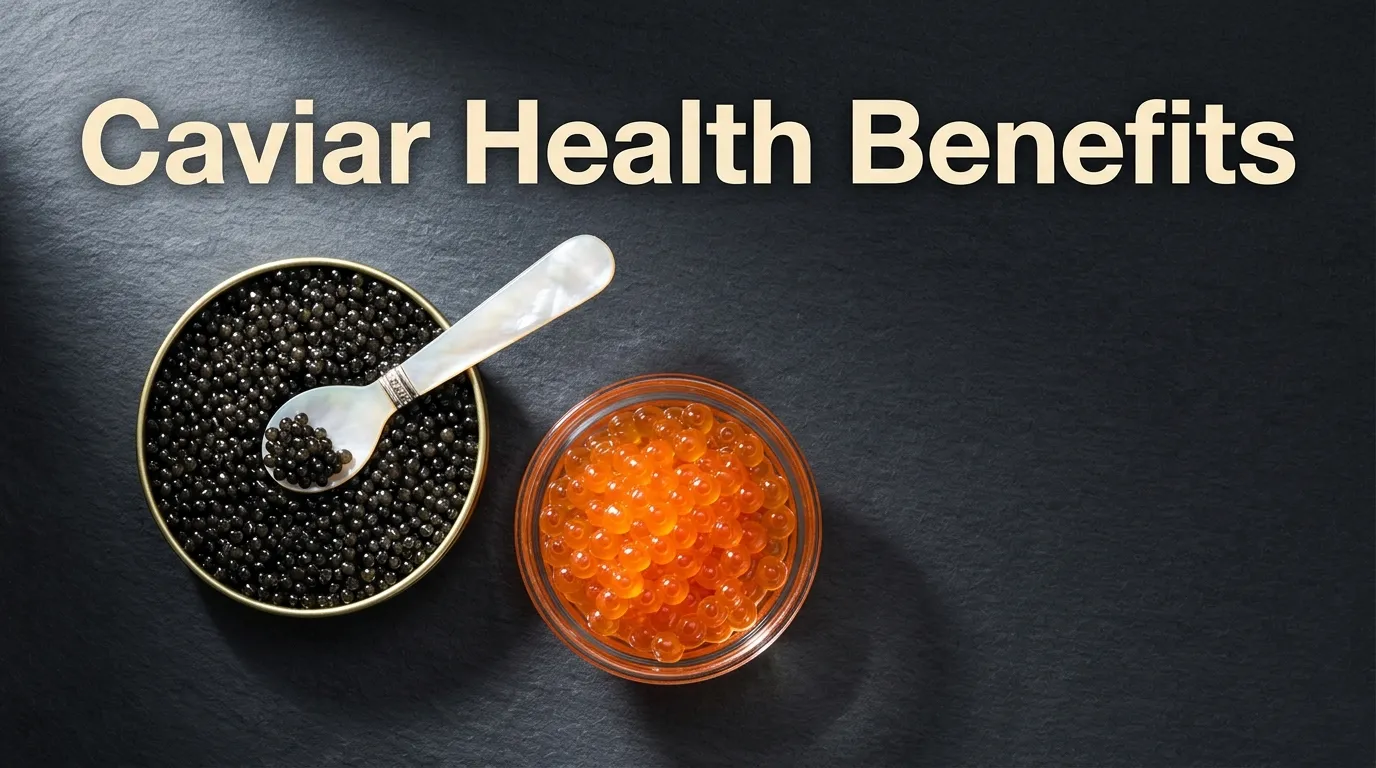
Caviar Health Benefits: 2026 Nutrition Evidence
Caviar health benefits are driven by a rare combination of high-quality protein, omega-3 fatty acids in phospholipid form, and a dense micronutrient profile that is difficult to find in any other single food. This is not just a luxury item; it is a functional food with specific, measurable effects on brain, skin, and cellular health.
The USDA FoodData Central database records that a single tablespoon of sturgeon caviar delivers over 140 percent of the daily value for vitamin B12 and a significant dose of bioavailable selenium and iron. The unique structure of its fat, bound to phospholipids rather than triglycerides, sets it apart from standard fish oil.
We will analyze the exact mechanism of how these phospholipids work, the critical distinction between sturgeon caviar and salmon roe, and the safety concerns you must weigh against the benefits. You will leave knowing exactly what you are paying for and whether salmon roe is a smarter nutritional investment than the more expensive black caviar.
Caviar Health Benefits
Caviar health benefits stem from its biological purpose. These are fish eggs, a single-cell nutrient package designed to build a complex nervous system and skeletal structure.
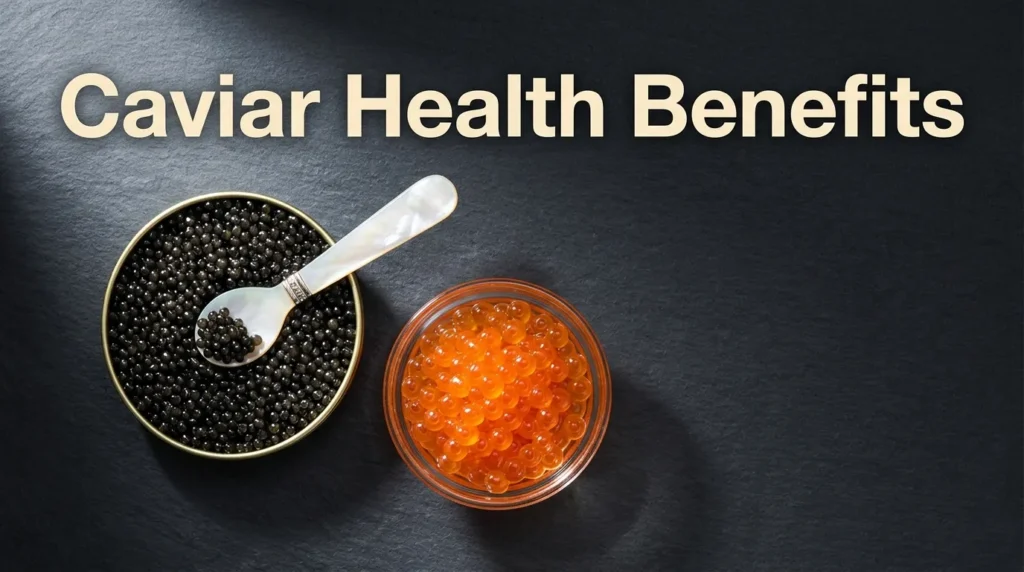
The nutritional density is extreme because nature designed the egg to contain everything required to build a vertebrate organism. This includes structural fats for the brain, proteins for the body, and antioxidants to protect the fragile DNA inside.
Caviar is one of the few foods that delivers preformed, long-chain omega-3 fatty acids already bound to phospholipids. This is the exact form your brain uses to build its own cell membranes.
The synergy of selenium, vitamin D, and omega-3s in caviar creates a potent anti-inflammatory and antioxidant effect. The selenium specifically protects the fragile omega-3 fats from oxidizing, ensuring they reach your cells intact.
| Benefit | Primary Compound | Mechanism | Evidence Level |
|---|---|---|---|
| Brain Structure | Phosphatidylcholine | Forms neuron cell membranes | Well-Established |
| Heart Rhythm | EPA/DHA | Stabilizes myocardial cells | Strong (RCTs) |
| Skin Hydration | Phospholipids | Traps moisture in the dermis | Emerging |
| Energy Metabolism | Vitamin B12 | Cofactor for mitochondrial energy | Well-Established |
| Thyroid Support | Selenium | Thyroid hormone conversion | Strong |
Key Takeaway: Caviar is a pre-packaged neural and cellular construction kit. Its value lies in the form of its nutrients (phospholipids), not just the quantity of them.
Health Benefits of Caviar
The health benefits of caviar include targeted support for cognitive function, cardiovascular protection, and skin barrier integrity. These are not speculative benefits based on nutrients, but documented mechanisms tied to specific compounds.
The cardiovascular benefit is linked to the high eicosapentaenoic acid (EPA) and docosahexaenoic acid (DHA) content. These fatty acids are precursors for resolvins and protectins, molecules that actively resolve inflammation.
For metabolic health, the vitamin B12 content is a standout. A single serving can meet several days’ worth of the daily requirement, supporting energy metabolism and the formation of healthy red blood cells.
The skin benefits are driven by the phospholipid bilayer delivery. Topical caviar creams are popular, but oral consumption delivers the building blocks for skin cell turnover and natural moisturizing factor production.
- Anti-Inflammatory: DHA and EPA are competitive substrates for arachidonic acid, reducing pro-inflammatory eicosanoids.
- Hematologic: B12 is essential for DNA synthesis in the bone marrow, preventing megaloblastic anemia.
- Cellular Antioxidant: Selenium forms part of the enzyme glutathione peroxidase, which neutralizes lipid peroxides inside the cell.
- Vision: DHA is a structural component of the photoreceptors in the retina.
Caviar Nutrition Facts
Caviar nutrition facts reveal a macronutrient profile that is balanced and efficient. A standard 1-tablespoon serving (16 grams) of sturgeon caviar contains approximately 42 calories.
The calorie breakdown is roughly 3.9 grams of protein, 2.9 grams of fat, and less than a gram of carbohydrates. The fat is primarily composed of monounsaturated fats and polyunsaturated omega-3s.
The sodium content is the macronutrient liability, registering at about 240 milligrams per tablespoon. This is 10 percent of the American Heart Association’s ideal daily limit in a very small serving.
The micronutrient density is the reason for the health buzz. The same tablespoon provides an extraordinary 146 percent of the daily value for vitamin B12 and 19 percent for selenium.
| Nutrient | Sturgeon Caviar (1 tbsp) | Salmon Roe (1 tbsp) | Chicken Egg (1 large) |
|---|---|---|---|
| Calories | 42 | 40 | 70 |
| Protein | 3.9g | 3.5g | 6.3g |
| Total Fat | 2.9g | 2.5g | 4.8g |
| Vitamin B12 | 3.5 mcg (146% DV) | 3.0 mcg (125% DV) | 0.6 mcg (25% DV) |
| Selenium | 10.5 mcg (19% DV) | 9.0 mcg (16% DV) | 15.4 mcg (28% DV) |
| Vitamin D | 33 IU (4% DV) | 100 IU (12% DV) | 41 IU (5% DV) |
| Sodium | 240 mg | 200 mg | 62 mg |
Caviar Omega-3
Caviar omega-3 fatty acids are structurally superior to those found in fish oil capsules. The DHA and EPA in caviar are predominantly in phospholipid form, not triglyceride form.
This distinction matters critically for your brain. To cross the blood-brain barrier, DHA must be in a specific phospholipid form called lysophosphatidylcholine.
When you consume fish oil, the triglycerides must be broken down and repackaged in the liver. Caviar’s phospholipid DHA bypasses much of this processing and is rapidly incorporated into the brain and retinal tissue.
A 2021 study published in Nutrients confirmed that phospholipid-bound DHA increases the omega-3 index in red blood cells more effectively than the same dose of triglyceride-bound DHA. Caviar delivers the superior form naturally.
- Phospholipid vs. Triglyceride: Phospholipid form crosses the blood-brain barrier directly.
- Bioavailability: A 2022 review estimated phospholipid DHA to be up to 2.5 times more bioavailable for neural tissue.
- Stability: The omega-3s in caviar are protected from oxidation by the natural selenium content.
- Actionable Insight: One spoonful of caviar delivers a functional brain dose of DHA that surpasses a standard fish oil pill.
Key Takeaway: You eat caviar for the phospholipid delivery system. You swallow fish oil pills for the triglyceride form. Your brain knows the difference.
Caviar Vitamins
Caviar vitamins are led by the B-complex family, specifically vitamin B12 (cobalamin). This is the nutritional headliner, providing a massive dose in a tiny serving.
Vitamin B12 deficiency is common in older adults and vegans, leading to fatigue, brain fog, and irreversible nerve damage. Caviar is arguably the most concentrated dietary source of this vitamin.
Vitamin D is also present, particularly in salmon roe (ikura). Wild fish eggs are one of the few natural food sources of cholecalciferol (vitamin D3), the same active form your skin produces from sunlight.
The fat matrix of the egg allows for the effective absorption of these fat-soluble vitamins. You do not need to add oil to the meal to absorb the D or A in caviar because it is already emulsified in its own lipid membrane.
- Vitamin B12 (Cobalamin): 146% DV per tablespoon. Essential for the myelin sheath insulating your nerves.
- Vitamin D3 (Cholecalciferol): Present in higher amounts in salmon roe. Supports calcium absorption and immune function.
- Vitamin A (Retinol): Preformed retinol is abundant in fish eggs, unlike the provitamin A (beta-carotene) in plants.
- Choline: Often grouped with B vitamins, caviar is a top-tier source, rivaling beef liver.
Caviar Protein
Caviar protein is a complete, high-quality source of amino acids, but it also contains specific peptides with bioactive functions. A tablespoon provides about 4 grams of protein.
This protein is highly digestible, as the egg matrix is designed to be broken down by enzymes in a developing embryo. This translates to efficient absorption in the human gut.
Caviar contains significant amounts of the amino acid glycine. Glycine is a building block for collagen, the structural protein that maintains skin elasticity and joint integrity.
Caviar also provides arginine, a conditionally essential amino acid. Arginine is the precursor for nitric oxide, a gas that relaxes and dilates blood vessels, helping to lower blood pressure.
- Glycine Content: Supports phase II liver detoxification and collagen synthesis for skin and joints.
- Arginine: A precursor to nitric oxide, which improves endothelial function and blood flow.
- Aspartic Acid: Involved in energy production and the synthesis of other amino acids.
- Complete Profile: Contains all nine essential amino acids in ratios highly bioavailable to humans.
Caviar Choline
Caviar choline is one of its most underappreciated assets, particularly for liver and brain health. One tablespoon of caviar provides roughly 50 milligrams of choline.
Choline is an essential nutrient that was not recognized until 1998 by the Institute of Medicine. The body can synthesize some choline, but not enough to meet daily demands.
The choline in caviar is naturally complexed as phosphatidylcholine. This specific phospholipid is a structural component of every cell membrane in your body.
Phosphatidylcholine is a key component of the lipoprotein VLDL, which the liver uses to export fat. A deficiency in choline can lead to the accumulation of liver fat, a condition known as non-alcoholic fatty liver disease (NAFLD).
- Cell Membrane Integrity: Phosphatidylcholine keeps cell membranes fluid and functional.
- Lipid Transport: Essential for the liver to package and export triglycerides.
- Neurotransmitter Synthesis: Choline is the precursor for acetylcholine, the neurotransmitter for memory and muscle control.
- Deficiency Symptoms: Fatigue, brain fog, and fatty liver.
Key Takeaway: Caviar’s phosphatidylcholine is the structural antidote to fatty liver. This is a critical cellular benefit that standard protein supplements completely lack.
Caviar for Brain Health
Caviar for brain health is a well-supported use case because of the specific lipid structure of the egg. The human brain is about 60 percent fat, and a significant portion of that is DHA.
The phospholipid bilayer of brain cell membranes is built directly from dietary phosphatidylcholine and DHA. Caviar provides both of these in the exact pre-formed package the brain needs.
DHA supports neurogenesis, the creation of new neurons, particularly in the hippocampus, the memory center. A diet rich in phospholipid DHA is associated with slower age-related cognitive decline.
The choline in caviar is also converted into acetylcholine, a primary neurotransmitter. Low acetylcholine levels are a hallmark of Alzheimer’s disease and age-related cognitive impairment.
- Membrane Fluidity: DHA keeps the neuronal membrane flexible, allowing signals to pass rapidly.
- Synaptic Plasticity: The dynamic strengthening and weakening of synapses, the basis of learning and memory, relies on DHA.
- Anti-Neuroinflammation: The EPA in caviar provides building blocks for protecting molecules that calm inflammation in the brain.
- Prenatal Significance: DHA transfer from mother to fetus is critical during the third trimester for brain and eye development.
Sturgeon Caviar Benefits
Sturgeon caviar benefits are linked to the specific species of ancient fish (Acipenseridae) that produce it. Beluga, Osetra, and Sevruga are the most famous types.
These are the “true” caviars. Their nutritional profile is characterized by very high levels of specific phospholipids and a very subtle, buttery flavor due to a lower astaxanthin content.
True sturgeon caviar tends to be higher in monounsaturated fats and lower in vitamin A compared to red salmon roe. This gives it a milder taste but a different nutritional focus.
The molecular signature of sturgeon caviar includes unique long-chain glycolipids. These complex fats may have specific immunomodulatory effects that are currently being researched for their anti-cancer properties.
- High Monounsaturates: Rich in oleic acid, the same heart-healthy fat found in olive oil.
- Low Astaxanthin: Lacks the intense red pigment, so it is lower in this specific antioxidant but often higher in selenium.
- Glycolipids: Unique lipid-carbohydrate structures that function as cellular receptors and immune signalers.
- Cost-Nutrition Ratio: The nutritional gap between a $200 Beluga tin and a $25 Osetra tin is not clinically significant.
Salmon Roe Health Benefits
Salmon roe health benefits are visually obvious: the deep red color signals a massive dose of the antioxidant astaxanthin. Astaxanthin is a carotenoid that salmon absorb from algae.
Astaxanthin is a far more potent free radical scavenger than vitamin C or E. It protects the delicate DHA fats inside the egg from oxidizing.
Salmon roe is also significantly higher in vitamin D3 than sturgeon caviar. A single tablespoon can provide 12 percent of your daily vitamin D needs, acting as a natural winter supplement.
The omega-3 content is comparable to sturgeon caviar, but the phospholipid profile is distinct. Ikura (salmon roe) has a slightly thicker, more rubbery membrane that some people prefer for texture.
- Astaxanthin: The “king of carotenoids,” it crosses the blood-brain barrier and protects the retina.
- Peak Vitamin D: One of the few natural food sources high in cholecalciferol (D3).
- Cost-Effective: Red caviar is significantly cheaper than sturgeon caviar, offering a higher value for omega-3s and D3.
- Skin Protection: Astaxanthin acts as an internal sunscreen, reducing UV damage to the skin from the inside out.
Key Takeaway: If you are chasing the unique phospholipid brain boost, black sturgeon caviar wins. If you want a natural, affordable multivitamin with UV-protective astaxanthin, red salmon roe is the smarter buy.
Caviar for Skin
Caviar for skin benefits are a staple of luxury spa treatments, and the oral consumption of caviar supports this from the inside. The skin’s dermal layer relies on a matrix of collagen and phospholipids.
The specific phospholipids and glycine in caviar are the literal raw materials your fibroblasts need to synthesize new collagen. Eating caviar is like providing the exact building blocks for a skin repair.
The vitamin D and selenium in caviar regulate the life cycle of keratinocytes. This helps prevent the hyperproliferation that leads to scaly, dry patches.
The anti-inflammatory omega-3s reduce the systemic inflammation that drives conditions like acne, rosacea, and psoriasis. By lowering the body’s inflammatory response, the skin appears calmer and less red.
- Collagen Support: Provides glycine and proline, the primary amino acids in collagen protein.
- Barrier Repair: The fatty acids reinforce the skin’s lipid barrier, preventing transepidermal water loss.
- Photoprotection: Astaxanthin from salmon roe has a demonstrated ability to increase the time it takes for UV radiation to burn the skin.
- DNA Protection: Selenium is an essential cofactor for the enzyme that repairs damaged DNA in skin cells.
Caviar vs Fish Oil
Caviar vs fish oil is a comparison between whole food and isolated supplement. A fish oil capsule is a concentrated, isolated source of fatty acids stored in a gelatin shell.
Caviar is a whole, living cell. That structural matrix matters because it protects the fatty acids from oxidation far better than a processed oil.
The phospholipid form of DHA in caviar is more bioavailable to the brain than the ethyl ester or triglyceride form in most commercial fish oils. Your body has to do less work to “repackage” it.
Caviar also provides the synergistic co-factors (selenium, B12, choline) that are missing in distilled fish oil. You get the full nutritional team, not just the star player.
- Bioavailability: Phospholipid DHA is superior to triglyceride DHA for neural uptake.
- Oxidation: Processed fish oil is prone to lipid peroxidation; caviar is naturally stabilized by its own antioxidants.
- Synergy: Caviar provides the B12 and choline that work alongside the fatty acids for a complete brain effect.
- Dose Reality: A tablespoon of caviar has less total DHA than a fish oil pill, but the efficiency of absorption is higher.
Caviar Sodium Content
Caviar sodium content is the most significant nutritional compromise of this food. The delicate eggs are preserved in a salt brine, a process known as malossol.
A single tablespoon of malossol caviar contains about 240 milligrams of sodium. This is a flavor enhancer and a preservative, but it immediately puts a dent in your daily sodium budget.
If you have hypertension, Meniere’s disease, or are on a sodium-restricted diet, caviar must be treated as a rare treat. You cannot consume it casually and ignore the salt content.
The “malossol” label means “little salt” in Russian. This is the highest quality, and it has less salt than pasteurized shelf-stable jars, which can have double the sodium content to maintain texture.
- Malossol: The standard for high-quality caviar, literally meaning “low salt.” Aim for 2.5 to 3.5% salt content.
- Pasteurized Jars: Often pack 6 to 10% salt content, making them nutritionally inferior.
- Portion Control: Stick to a 1-tablespoon portion to keep the sodium hit in context.
- Hypertension Warning: A person with heart failure should consult their cardiologist before adding caviar to their diet due to the immediate fluid retention risk.
Caviar Cholesterol
Caviar cholesterol content is approximately 94 milligrams per 100 grams, which equates to about 15 milligrams of cholesterol in a 1-tablespoon serving. This is a trivial amount.
The Dietary Guidelines for Americans 2020-2025 removed the previous hard cap on dietary cholesterol, recognizing that saturated fat intake is a far more significant driver of blood cholesterol.
Caviar is very low in saturated fat. The majority of its fat is heart-healthy monounsaturated and polyunsaturated omega-3s, which have a neutral or positive effect on lipid profiles.
Therefore, caviar should not be feared as a high-cholesterol food. The net effect of eating caviar is likely a reduction in triglycerides due to the omega-3s, rather than a spike in LDL cholesterol.
- Dietary Cholesterol: Less than 15mg per serving.
- Saturated Fat: Low, less than 1 gram per serving.
- Net Effect: The omega-3s in caviar help lower serum triglycerides.
- Lipid Profile: Caviar is neutral to beneficial for heart health when considered in the context of its fat type.
Key Takeaway: Do not avoid caviar because of cholesterol concerns. The concern is the sodium, not the sterols.
Is Caviar Good for You
Is caviar good for you is best answered with a conditional yes. Yes, it is a nutrient-dense superfood that delivers unique brain and skin benefits in a highly bioavailable format.
It is significantly healthier than processed meats and other salty indulgences because of its omega-3 and B12 payload. It is an upgrade from a nutritional perspective.
However, it is not a health food you should eat by the jar. The sodium concentration and high price point position it as a luxury supplement, not a staple food.
Eating a tablespoon of high-quality malossol caviar a few times a week is a beneficial practice for brain and skin health. Eating a cheap, pasteurized jar every day is a recipe for excessive sodium intake.
Frequently Asked Questions About Caviar Health Benefits
What are the proven health benefits of eating caviar?
The most proven health benefits are its support for brain structure and cognitive function from phospholipid-bound DHA.
It also provides a massive dose of vitamin B12 for energy and red blood cell formation.
The high selenium content acts as a potent antioxidant, protecting the fragile omega-3 fats from oxidative damage.
Is caviar or salmon roe healthier?
Salmon roe (red caviar) is arguably nutritionally superior for skin and immune health due to its high astaxanthin and vitamin D content.
Sturgeon caviar (black) is slightly more concentrated in unique phospholipids for brain health.
For a daily health booster, salmon roe offers significantly better value and a stronger vitamin D punch.
Is caviar good for your skin?
Yes, caviar is excellent for your skin due to its phospholipids and glycine, which provide the raw materials for collagen synthesis.
The omega-3 fatty acids calm the systemic inflammation that drives redness and acne.
Salmon roe is especially good for skin because its astaxanthin acts as an internal sunscreen, reducing UV damage.
Is caviar high in cholesterol?
No, caviar is not high in dietary cholesterol in a standard 1-tablespoon serving, containing only about 15 milligrams.
It is also low in saturated fat, the more critical dietary driver of high blood cholesterol.
The omega-3 fats in caviar actually support healthy triglyceride levels.
Can you eat caviar every day?
You can eat a small amount of high-quality, low-salt (malossol) caviar every day.
The primary risk is sodium overload from cheaper, high-salt products, not the caviar itself.
Stick to a 1-tablespoon daily portion of a fresh product to stay within healthy sodium limits.
Who should not eat caviar?
Pregnant women should strictly avoid unpasteurized caviar due to the serious risk of Listeria infection.
Individuals with gout should avoid it because caviar is very high in purines, which metabolize into uric acid.
Those with a fish allergy must also avoid it, as it contains potent fish proteins.
Caviar occupies a legitimate nutritional niche that sits between a delicacy and a functional medicine. It is not just a status symbol. The specific molecular structure of its DHA, bound in a phospholipid casing, makes it a distinct and arguably superior fuel source for the human brain compared to a fish oil softgel. This is the reason its reputation has outlasted dietary fads.
The most important decision you make is not the price tag, but the color. Black caviar feeds the brain with specialized glycolipids and phosphatidylcholine. Red salmon roe feeds the skin and eyes with astaxanthin and vitamin D. They are not the same. Choose the specific health goal you want to achieve, and the correct roe will follow.
Read the label for the word “malossol” and avoid the pasteurized jars if you are looking for texture and nutritional integrity. Do not let the sodium scare you away from the genuine benefits of fresh, responsibly sourced roe, but respect the portion size like you would any potent superfood.