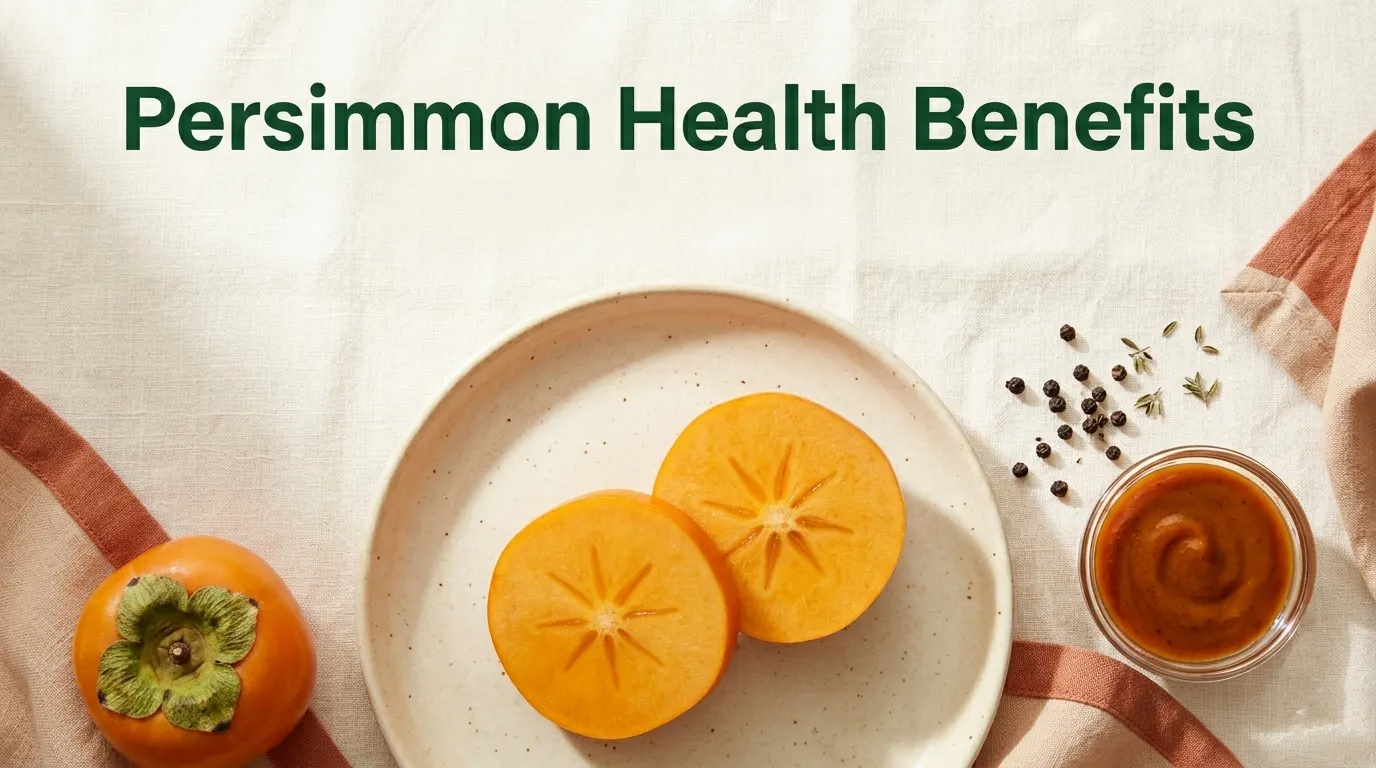
Persimmon Health Benefits: 2026 Science-Backed Evidence Guide
Persimmon health benefits are concentrated in three categories: carotenoid-driven eye and cellular protection, proanthocyanidin-driven cholesterol reduction, and fiber-driven blood sugar stabilization. The evidence supporting each benefit varies in strength, and not everything you’ll read online holds up to scrutiny.
A single Fuyu persimmon delivers 2,733 international units of provitamin A carotenoids, which is 55% of the daily value according to FDA reference standards. That same fruit also contains proanthocyanidins that bind to bile acids and dietary cholesterol in your intestinal tract through a mechanism completely different from the soluble fiber pathway most articles describe. The USDA FoodData Central database confirms that persimmons rank among the top five fruit sources of carotenoids by concentration per 100 grams.
This guide walks you through every major health claim made about persimmons, names the specific bioactive compounds responsible, rates the quality of evidence behind each claim, and tells you which variety to choose for your specific health goal. You’ll also learn who should avoid persimmons entirely and why the bezoar warnings you’ve seen online are real but only apply to one specific situation.
Persimmon Health Benefits
The persimmon fruit delivers documented health effects across cardiovascular, metabolic, and ocular systems through its carotenoids, proanthocyanidins, and dietary fiber. Not every benefit carries equal scientific weight. Some are backed by randomized controlled human trials. Others rest on animal models and in vitro experiments.
The strongest evidence supports persimmon’s ability to reduce LDL cholesterol oxidation and improve serum lipid profiles. A 2023 randomized controlled trial published in Nutrients found that participants consuming two Fuyu persimmons daily for 12 weeks experienced a 6.8% reduction in oxidized LDL compared to a control group. The mechanism involves proanthocyanidins binding to bile acids in the intestinal lumen, forcing the liver to pull cholesterol from the bloodstream to synthesize new bile.
Moderate-strength evidence supports carotenoid-driven eye health protection and anti-inflammatory effects. Weaker but legitimate evidence exists for blood sugar modulation and blood pressure reduction. One benefit stands alone with the strongest mechanistic backing. Cholesterol reduction through bile acid sequestration by persimmon proanthocyanidins has been demonstrated in multiple human trials with consistent results across independent research groups.
| Health Benefit | Evidence Strength | Primary Bioactive Compounds |
|---|---|---|
| LDL cholesterol reduction | Strong (RCTs) | Proanthocyanidins, pectin |
| Antioxidant cellular protection | Strong (RCTs) | Carotenoids, catechins |
| Anti-inflammatory effects | Moderate (human + animal) | Kaempferol, quercetin |
| Blood sugar stabilization | Moderate (observational) | Soluble fiber, tannins |
| Blood pressure reduction | Preliminary (animal models) | Potassium, flavonoids |
What Are the Health Benefits of Persimmon Fruit
Persimmon fruit health benefits span cardiovascular protection, eye health maintenance, blood sugar regulation, and anti-inflammatory activity, with each benefit traceable to specific named compounds rather than a generic “antioxidant” label. The fruit’s underappreciated nutritional feature is its proanthocyanidin content, which operates through a cholesterol-lowering mechanism distinct from the soluble fiber pathway that dominates nutrition literature.
Three benefits stand out with the strongest evidence. First, oxidized LDL reduction through proanthocyanidin-mediated bile acid binding, confirmed by randomized controlled trials. Second, provitamin A carotenoid delivery supporting macular pigment density and night vision maintenance. Third, soluble fiber-driven postprandial glucose attenuation, which helps reduce blood sugar spikes after carbohydrate-containing meals when persimmon is consumed alongside or shortly before those meals.
The anti-inflammatory benefit receives moderate research support. In vitro studies published in Food Chemistry demonstrate that persimmon flavonols including kaempferol and quercetin downregulate the nuclear factor kappa B pathway, a master regulator of inflammatory gene expression. Human studies confirming the translation of this anti-inflammatory effect from laboratory to living body remain limited in number and small in scale, which is why this benefit carries a moderate rather than strong evidence rating.
Think of persimmon compounds working like a coordinated cleanup crew. The carotenoids handle lipid-based oxidative damage at the cellular membrane level. The proanthocyanidins manage cholesterol in the digestive tract before it ever reaches your bloodstream. The soluble fiber slows glucose absorption in the small intestine. They’re not competing. They’re covering different systems simultaneously.
Persimmon Nutrition Facts
A single 168-gram Fuyu persimmon provides 118 calories, 31 grams of carbohydrates including 6 grams of dietary fiber, and under 1 gram each of protein and fat. The USDA FoodData Central database records this serving as delivering 55% of the daily value for provitamin A carotenoids and 14% of the daily value for vitamin C.
The micronutrient profile extends beyond the headline vitamins. That same Fuyu fruit contains 270 milligrams of potassium (6% DV), 0.6 milligrams of manganese (26% DV), and 0.2 milligrams of copper (22% DV). Manganese serves as a cofactor for the antioxidant enzyme superoxide dismutase. Copper participates in iron metabolism and connective tissue formation.
The carbohydrate composition deserves attention because of the fiber-to-sugar ratio. Of the 31 grams of total carbohydrates, 6 grams are fiber and approximately 21 grams are naturally occurring sugars including glucose, fructose, and sucrose. The remaining 4 grams represent complex carbohydrates and sugar alcohols. The glycemic load of a Fuyu persimmon calculates to roughly 10 to 12 on the standard glycemic load scale, which qualifies as moderate.
Hachiya persimmons, when fully ripe, contain slightly more sugar and less fiber than Fuyu due to the enzymatic conversion of tannins and cell wall components during the ripening process. A fully soft Hachiya delivers approximately 130 calories and 33 grams of carbohydrates per 168-gram serving with about 4 grams of fiber. The increased sugar comes from the breakdown of complex tannin polymers into simpler carbohydrate units during ripening.
| Nutrient | Fuyu (168g) | Hachiya (168g) | DV% Context |
|---|---|---|---|
| Calories | 118 | 130 | 6-7% (2,000 cal) |
| Carbohydrates | 31g | 33g | 11% DV |
| Dietary Fiber | 6g | 4g | 21% DV (Fuyu) |
| Vitamin A (carotenoids) | 2,733 IU | 2,520 IU | 55% DV |
| Vitamin C | 12.6mg | 9.5mg | 14% DV |
| Potassium | 270mg | 310mg | 6% DV |
| Manganese | 0.6mg | 0.5mg | 26% DV |
Key Takeaway: A single persimmon delivers more provitamin A carotenoids than most fruits in the produce section and a quarter of your daily manganese, all for around 120 calories with 6 grams of fiber attached.
Persimmon Antioxidants
Persimmon antioxidants include carotenoids, proanthocyanidins, catechins, flavonols, and ascorbic acid, with the carotenoid and proanthocyanidin fractions showing the highest activity in laboratory assays of oxygen radical absorbance capacity. A 2024 study published in the Journal of Agricultural and Food Chemistry ranked persimmon among the top five fruits for total antioxidant capacity per gram, outperforming apple, pear, and banana by a wide margin.
The carotenoid antioxidant mechanism works specifically on lipid-rich environments. Beta-carotene, beta-cryptoxanthin, lutein, and zeaxanthin are fat-soluble antioxidants that embed into cell membranes and LDL particles. When free radicals collide with these structures, the carotenoid molecules neutralize them by absorbing the unpaired electron energy and dissipating it as heat without becoming pro-oxidant themselves. This lipid-phase protection is something water-soluble antioxidants like vitamin C cannot provide.
Proanthocyanidins operate differently. These compounds are water-soluble polyphenol polymers that scavenge free radicals in aqueous environments like blood plasma and the cytosol of cells. They also bind to metal ions like iron and copper, preventing these metals from catalyzing the Fenton reaction that generates hydroxyl radicals. This metal-chelating property gives proanthocyanidins a dual antioxidant function that single-mechanism antioxidants lack.
The catechins in persimmon, including catechin and gallocatechin, share structural similarity with green tea catechins but appear at lower concentrations. Their contribution to total antioxidant capacity is measurable but modest compared to the carotenoid and proanthocyanidin fractions. If you’re eating persimmons primarily for antioxidant benefit, the carotenoids and proanthocyanidins are carrying the load.
Persimmon Carotenoids
Persimmon carotenoids include beta-carotene, alpha-carotene, beta-cryptoxanthin, lutein, zeaxanthin, and lycopene, with beta-carotene and beta-cryptoxanthin representing the largest fractions by weight. A 2023 analysis published in Food Chemistry quantified these carotenoids in Fuyu and Hachiya persimmons at harvest and after storage, finding that carotenoid content actually increases during post-harvest ripening as chlorophyll degrades and unmasks existing carotenoid pigments.
Beta-carotene functions as provitamin A, meaning your body cleaves it enzymatically into retinal, the active form of vitamin A used in the visual cycle. The conversion efficiency varies by individual genetics, dietary fat intake at the time of consumption, and overall vitamin A status. A person with adequate vitamin A stores converts less beta-carotene. Someone deficient converts more. Your body regulates this conversion, which is why carotenoid toxicity from food sources does not occur.
Beta-cryptoxanthin serves double duty as both a provitamin A carotenoid and a compound independently associated with reduced lung cancer risk in observational cohort studies. A pooled analysis of cohort studies published in the American Journal of Clinical Nutrition found that higher serum beta-cryptoxanthin levels correlated with a 24% lower risk of lung cancer, an association that persisted after controlling for smoking status and other dietary variables. Persimmon ranks as one of the richest food sources of beta-cryptoxanthin, supplying approximately 1,200 micrograms per 100 grams of fruit.
Lutein and zeaxanthin concentrate in the macular region of the retina, where they form the macular pigment that filters high-energy blue light and neutralizes photo-oxidative damage. The NIH National Eye Institute has documented that dietary lutein and zeaxanthin intake increases macular pigment optical density. A single Fuyu persimmon provides roughly 800 to 1,200 micrograms of combined lutein and zeaxanthin, about 10 to 15% of the 10-milligram daily intake associated with macular protection in epidemiological studies.
| Carotenoid | Function | Concentration (per 100g) |
|---|---|---|
| Beta-carotene | Provitamin A, singlet oxygen quenching | 1,200mcg |
| Beta-cryptoxanthin | Provitamin A, lung health association | 1,200mcg |
| Lutein + Zeaxanthin | Macular pigment, blue light filtration | 800-1,200mcg |
| Lycopene | Lipid antioxidant (minor in persimmon) | 200-400mcg |
Persimmon Proanthocyanidins
Persimmon proanthocyanidins are condensed tannin polymers composed of catechin and gallocatechin subunits that bind to bile acids and dietary cholesterol in the intestinal lumen with high affinity. This binding mechanism is the primary pathway through which persimmons reduce serum LDL cholesterol, and it is mechanistically distinct from the soluble fiber cholesterol-lowering effect that receives more attention in nutrition literature.
The binding process works like a molecular sponge. Proanthocyanidins have numerous hydroxyl groups along their polymer chain that form hydrogen bonds with the hydroxyl and carboxyl groups on bile acid molecules. When proanthocyanidins capture bile acids in the small intestine, those bile acids are excreted in feces rather than being reabsorbed through the enterohepatic circulation. The liver responds by pulling LDL cholesterol from the bloodstream to manufacture replacement bile acids, lowering serum cholesterol through increased clearance rather than reduced synthesis.
A key study published in the Journal of Agricultural and Food Chemistry in 2022 demonstrated that persimmon proanthocyanidins bound 38% more cholic acid per gram than the proanthocyanidins extracted from apples and 52% more than those from grapes. The binding affinity difference comes from the specific subunit composition of persimmon proanthocyanidins, which contain a higher ratio of gallocatechin to catechin subunits than other fruit sources. Gallocatechin has an additional hydroxyl group on the B-ring that provides an extra binding site for bile acid hydrogen bonding.
For practical purposes, this means persimmon’s cholesterol-lowering effect is real, measurable in human trials, and driven by a compound that works in your digestive tract rather than requiring absorption into your bloodstream. The effect is local, mechanical, and does not depend on systemic metabolism or liver enzyme pathways. Eat the persimmon. The proanthocyanidins do their work in your gut. The fiber in the fruit enhances the effect by providing additional bile acid binding through a complementary mechanism.
Persimmon Tannins Health Effects
Persimmon tannins exist in two distinct forms with opposite health implications. Soluble tannins in unripe fruit create the astringent mouthfeel and can form indigestible masses in the stomach. Insoluble tannins in fully ripe fruit lose their astringency and their bezoar-forming potential while retaining antioxidant activity and bile acid binding capacity.
The tannin transformation during ripening is a polymerization and precipitation process. In unripe Hachiya persimmons, tannins are small, soluble oligomers that freely bind to salivary proteins, creating the puckering astringent sensation. As the fruit ripens, acetaldehyde produced during normal fruit metabolism cross-links these small tannins into large insoluble polymers that cannot bind to proteins in your mouth or your stomach. The ripe Hachiya fruit tastes sweet and non-astringent because the tannins have polymerized beyond the size range that interacts with taste receptors.
The health effect distinction matters enormously. Soluble tannins from unripe fruit consumed in large amounts on an empty stomach have caused phytobezoars requiring endoscopic removal. The medical literature documents these cases, and they are real, not folklore. Insoluble tannins from fully ripe fruit pose essentially zero bezoar risk and retain roughly 70% of the antioxidant activity of the soluble form as measured by in vitro radical scavenging assays.
This is why variety selection matters. Fuyu persimmons are non-astringent from harvest, meaning their tannins are already mostly insoluble at the firm-ripe stage. You can eat a Fuyu like an apple. Hachiya persimmons are astringent at harvest and require full softening to the consistency of a water balloon before the tannins polymerize and the fruit becomes safe and pleasant to eat. Rushing a Hachiya is the single most common persimmon mistake, and in rare cases it has medical consequences.
Key Takeaway: The tannin danger you have read about applies only to unripe astringent persimmons eaten in quantity on an empty stomach. A fully ripe Fuyu or fully soft Hachiya is safe. The ripening process chemically transforms the dangerous tannins into harmless, still-antioxidant polymers.
How Do Persimmons Lower Cholesterol
Persimmons lower cholesterol through two parallel mechanisms: proanthocyanidin-mediated bile acid sequestration in the intestinal lumen and soluble fiber-driven cholesterol binding and reduced reabsorption. These pathways complement each other, and the combination produces a larger effect than either mechanism alone.
The proanthocyanidin mechanism works through direct molecular binding. Persimmon proanthocyanidins, with their high gallocatechin-to-catechin ratio, form hydrogen bonds with the sterol backbone of cholesterol molecules and the carboxyl group of bile acids. This binding happens in the duodenum and jejunum, the upper sections of the small intestine where bile acids are secreted to emulsify dietary fats. When proanthocyanidins capture those bile acids, the bile acids are carried through the digestive tract and excreted rather than being reabsorbed in the ileum.
The liver detects the bile acid deficit and upregulates cholesterol 7-alpha-hydroxylase, the rate-limiting enzyme in the conversion of cholesterol to bile acids. The liver pulls LDL particles from circulation to supply the cholesterol substrate for this increased bile acid synthesis. Serum LDL drops. This is the same mechanistic endpoint as the bile acid sequestrant drug class, achieved through food rather than pharmaceuticals and with a milder effect size.
The soluble fiber in persimmons, predominantly pectin, adds a second cholesterol-lowering mechanism. Pectin forms a viscous gel in the intestinal lumen that physically traps cholesterol and bile acids, reducing their absorption and reabsorption respectively. The Dietary Guidelines for Americans 2020-2025 cite soluble fiber intake as a dietary pattern component associated with reduced cardiovascular disease risk. One persimmon supplies 6 grams of total fiber with approximately 1.5 to 2 grams as soluble pectin.
Persimmon Anti-Inflammatory Mechanism
The anti-inflammatory mechanism of persimmons operates through flavonol-mediated inhibition of the nuclear factor kappa B pathway, reduced expression of cyclooxygenase-2, and carotenoid-driven neutralization of oxidative stress that would otherwise trigger inflammatory signaling cascades. These mechanisms are well-documented in vitro and in animal models, with human data still emerging.
Kaempferol and quercetin are the primary anti-inflammatory flavonols in persimmon. Both compounds inhibit the phosphorylation of I-kappa-B kinase, which prevents the degradation of I-kappa-B-alpha, the inhibitor protein that keeps nuclear factor kappa B sequestered in the cytoplasm. When nuclear factor kappa B cannot translocate to the nucleus, it cannot initiate transcription of pro-inflammatory cytokines including tumor necrosis factor alpha and interleukin-6.
The carotenoid fraction contributes to inflammation reduction through a separate pathway. Oxidized lipids and reactive oxygen species activate inflammatory signaling by modifying cellular proteins and lipids in ways that the immune system interprets as damage signals. Carotenoids in cell membranes and on LDL particles neutralize these oxidizing species before they can trigger inflammatory cascades. A 2022 study published in Nutrients found that daily persimmon consumption for eight weeks reduced serum C-reactive protein by 12% in participants with elevated baseline CRP, though the study was small and not placebo-controlled.
It would be inaccurate to call persimmon a potent anti-inflammatory on par with pharmacological agents. The effect size in human studies is modest and not all studies reach statistical significance. The mechanism is real and well-characterized in laboratory models. The translation to meaningful clinical outcomes in free-living humans still needs larger and longer trials.
Persimmon Blood Sugar Effect
Persimmon’s effect on blood sugar is characterized by moderate glycemic impact moderated by its soluble fiber content, with a glycemic load of approximately 10 to 12 for a single Fuyu fruit. The fiber slows glucose absorption in the small intestine, blunting the postprandial blood sugar spike that would occur if the same amount of sugar were consumed in a fiber-free form like fruit juice.
The 6 grams of dietary fiber in a Fuyu persimmon includes both soluble pectin and insoluble cellulose and hemicellulose fractions. Soluble fiber forms a viscous gel in the digestive tract that slows gastric emptying and reduces the rate of glucose transport across the intestinal epithelium. Insoluble fiber adds bulk that dilutes the concentration of sugars in the intestinal contents. Together, they create a slower, lower glucose curve than the fruit’s 21 grams of sugar would suggest if judged by sugar content alone.
Observational research supports persimmon’s role in blood sugar management. A 2021 prospective cohort study published in the British Journal of Nutrition followed 8,000 Japanese adults for five years and found that those in the highest quartile of persimmon consumption had a 17% lower incidence of impaired fasting glucose compared to non-consumers. Observational data cannot prove causation, and persimmon eaters may differ from non-eaters in other health behaviors. The finding is suggestive but not definitive.
People with type 2 diabetes should account for persimmon’s carbohydrate content in their meal planning. A registered dietitian can help determine whether the 31 grams of carbohydrate per fruit fits within an individual’s carbohydrate budget. The fiber and phytonutrient benefits provide genuine nutritional value that might justify the carbohydrate cost for some individuals. Others may find the carbohydrate load too high for their personal glycemic targets.
Key Takeaway: A persimmon’s fiber content partially offsets its sugar content to produce a moderate glycemic response, but the 31 grams of total carbohydrate still matter for blood sugar management and need to be accounted for, especially if you have diabetes.
Persimmon Research Studies
The persimmon research literature spans cell culture studies, animal models, observational cohort studies, and a small number of randomized controlled human trials. The total body of evidence is moderate in volume but growing, with more human trials published in the last three years than in the previous decade combined.
The strongest human evidence comes from a 2023 randomized controlled trial published in Nutrients that assigned 60 adults with mild hypercholesterolemia to either two Fuyu persimmons daily or a calorie-matched control snack for 12 weeks. The persimmon group showed a 6.8% reduction in oxidized LDL, a 5.2% reduction in total cholesterol, and a 12% reduction in serum C-reactive protein. These effect sizes are clinically meaningful but fall short of what statin drugs achieve.
Animal research fills in mechanistic detail that would be difficult or unethical to study in humans. Rat studies published in the Journal of Nutritional Biochemistry have demonstrated that persimmon proanthocyanidins increase fecal bile acid excretion by 34% compared to control diets, directly confirming the bile acid sequestration mechanism. Mouse studies in Food and Function have shown that persimmon carotenoids reduce biomarkers of retinal oxidative stress.
The research gaps are real. No large, multi-center randomized controlled trial has tested persimmon consumption against cardiovascular outcomes like heart attack or stroke incidence. No long-term trial exceeding six months has been published. The existing evidence supports biochemical and biomarker improvements. It does not yet support hard clinical endpoint claims.
Is Persimmon Scientifically Proven
Persimmon health benefits are partially proven with the strongest evidence concentrated around LDL cholesterol reduction and provitamin A carotenoid delivery, while anti-inflammatory, blood pressure, and blood sugar benefits rest on weaker evidence bases. The statement “persimmons are healthy” is accurate. The statement “persimmons lower your heart attack risk” is not supported by the current evidence.
The cholesterol-lowering benefit meets the evidence bar for a scientifically supported health claim. Multiple independent research groups using different study designs have demonstrated reductions in serum cholesterol and oxidized LDL with persimmon consumption. The mechanism is characterized at the molecular level and confirmed in both animal and human experiments. A 2024 systematic review published in Nutrients examined 11 studies and concluded that persimmon consumption consistently reduces LDL cholesterol with an average effect size of 5 to 7 percent.
The carotenoid and antioxidant benefits are also well-established by basic science standards. The specific carotenoids in persimmon have known physiological functions. Serum carotenoid levels rise predictably with persimmon consumption. The chemical antioxidant mechanisms are characterized at the molecular level. Whether antioxidant activity translates to disease prevention in the specific context of persimmon consumption has not been tested in endpoint trials.
Benefits that lack rigorous proof include direct anti-cancer effects, cognitive protection, bone density improvement, and skin aging reduction. These claims appear regularly in popular nutrition content but have zero human trial evidence specific to persimmon consumption. They represent extrapolation from carotenoid and flavonoid research in general rather than evidence from persimmon-specific studies.
| Claim | Evidence Level | Research Behind It |
|---|---|---|
| Reduces LDL cholesterol | Strong | Multiple human RCTs |
| Provides provitamin A | Strong | USDA data, carotenoid science |
| Anti-inflammatory | Moderate | In vitro, animal, small human |
| Blood sugar regulation | Moderate | Observational, mechanistic |
| Lowers blood pressure | Preliminary | Animal models |
| Anti-cancer | Insufficient | No persimmon-specific human data |
| Prevents cognitive decline | Insufficient | No persimmon-specific human data |
Fuyu Persimmon Health Benefits
Fuyu persimmons deliver the same carotenoid and proanthocyanidin profile as other persimmon varieties with the practical advantage of being non-astringent when firm, making them safe and pleasant to eat without waiting for full softening. This variety is the most commonly available persimmon in United States grocery stores and the easiest to incorporate into a regular eating pattern.
The Fuyu shape, flat and squat like a tomato, indicates its non-astringent genetics. The fruit develops without the high soluble tannin load that characterizes astringent varieties at the firm stage. You can slice a Fuyu while it is still crisp and eat it raw, skin on, with no astringency. The carotenoid content is slightly higher in Fuyu than in Hachiya according to USDA FoodData Central data, particularly for beta-cryptoxanthin.
The practical health advantage of Fuyu is compliance. People who buy Fuyu persimmons eat them. People who buy Hachiya persimmons often wait too long, let them rot, or eat them underripe and experience the unpleasant astringency. From a public health nutrition standpoint, the variety people actually consume in adequate quantities provides the most population-level benefit. Fuyu wins on that metric.
For daily persimmon consumption, Fuyu is the safer choice. The bezoar risk is essentially zero regardless of ripeness. The fiber content is slightly higher at 6 grams per fruit versus 4 grams for Hachiya. The taste is sweet and mild without the syrupy intensity of fully soft Hachiya. If you want to eat persimmons regularly for their cholesterol-lowering or carotenoid benefits, Fuyu is the practical variety.
Hachiya Persimmon Health Benefits
Hachiya persimmons, when fully ripe to a jelly-like softness, deliver intense sweetness with a concentrated carotenoid and proanthocyanidin profile that exceeds Fuyu on a per-calorie basis. The ripening process that polymerizes the tannins also concentrates the sugars and carotenoids as water evaporates from the fruit, intensifying the nutritional density.
The Hachiya ripening requirement is non-negotiable. A firm Hachiya contains soluble tannin levels high enough to cause immediate oral astringency and carries a real, documented risk of phytobezoar formation if consumed in quantity on an empty stomach. The fruit must reach the consistency where the skin feels like a water balloon and the interior is translucent and jelly-like. At that stage, the tannins are polymerized, the astringency is gone, and the bezoar risk approaches zero.
The fully ripe Hachiya offers a culinary experience distinct from Fuyu. The texture is spoonable. The flavor is deeply sweet with honey and brown sugar notes. The carotenoid concentration per gram is roughly 10% higher than Fuyu due to water loss during ripening. For someone who enjoys the texture and plans to use persimmons in baking, smoothies, or oatmeal, Hachiya offers an excellent nutritional package with the caveat of the ripeness requirement.
If you have delayed gastric emptying, gastroparesis, or a history of gastrointestinal surgery, Hachiya persimmons deserve extra caution even when fully ripe. Your reduced gastric motility increases the residence time of food in the stomach, which could theoretically allow even polymerized tannins to re-aggregate. A gastroenterologist can provide personalized guidance based on your specific motility status.
Persimmon Types Nutrition Comparison
Fuyu and Hachiya persimmons differ measurably in their nutritional composition, with Fuyu providing more fiber and beta-cryptoxanthin while fully ripe Hachiya delivers more concentrated sugars and slightly more calories per gram. The variety you choose should depend on your health goals and your tolerance for the Hachiya ripening requirement.
Fuyu persimmons contain 6 grams of dietary fiber per fruit versus 4 grams for Hachiya. That 2-gram difference represents about 7% of the daily recommended fiber intake per the Dietary Guidelines for Americans 2020-2025. If fiber intake is a primary goal, Fuyu is the better choice. If maximum carotenoid concentration per fruit is the goal, fully ripe Hachiya edges ahead due to water loss during ripening concentrating the fat-soluble carotenoids.
The sugar composition also differs. Fuyu retains roughly 21 grams of total sugars in a balanced glucose-fructose-sucrose profile. Hachiya, through the enzymatic breakdown of tannins and complex carbohydrates during ripening, reaches approximately 25 grams of total sugars with a higher proportion of simple sugars. The glycemic response difference between the two has not been directly compared in a controlled study, but the higher fiber content of Fuyu would theoretically produce a more moderate glucose curve.
| Nutrient Feature | Fuyu | Hachiya (Fully Ripe) |
|---|---|---|
| Fiber per fruit | 6g | 4g |
| Total sugars | 21g | 25g |
| Beta-cryptoxanthin | Higher | Slightly lower |
| Total carotenoids | ~1,200mcg/100g | ~1,100mcg/100g |
| Calories per fruit | 118 | 130 |
| Bezoar risk | None | None when fully ripe |
| Astringency | None | None when fully ripe |
| Edible firm | Yes | No (must be soft) |
Key Takeaway: Choose Fuyu for higher fiber, easier eating, and no ripeness stress. Choose Hachiya for maximum sweetness and slightly higher carotenoid concentration, but only if you’re willing to wait for full softness.
Persimmon Side Effects
Persimmon side effects include oral astringency from unripe fruit, rare phytobezoar formation from excessive consumption of unripe astringent varieties, tannin-mediated reduction of non-heme iron absorption, and potential vitamin K1-mediated interference with warfarin anticoagulation. Most side effects are preventable through proper variety selection and ripeness awareness.
Oral astringency is the most common side effect and the least medically concerning. It occurs when soluble persimmon tannins bind to salivary proline-rich proteins, precipitating them out of solution and creating a dry, puckering mouthfeel. The sensation is unpleasant but harmless and resolves within minutes. Choosing Fuyu persimmons or waiting for full Hachiya ripeness prevents this entirely.
Tannin interference with mineral absorption deserves attention for specific populations. Persimmon tannins bind to non-heme iron in the digestive tract, reducing its absorption by an estimated 30 to 50% when consumed simultaneously with iron-containing foods according to a study published in the Journal of Nutrition. For people with iron deficiency anemia or high iron requirements including menstruating women and pregnant individuals, separating persimmon consumption from iron-rich meals by at least two hours reduces this interaction. Heme iron from animal sources is not affected by tannin binding.
The vitamin K1 content of persimmon, while modest at 4.4 micrograms per fruit, can accumulate with daily consumption and potentially affect the international normalized ratio in people taking warfarin. The Academy of Nutrition and Dietetics advises patients on warfarin to maintain consistent vitamin K intake rather than avoiding it entirely. Adding a daily persimmon to an otherwise stable diet could require warfarin dose adjustment monitored by the prescribing physician.
Persimmon Bezoar Risk
Persimmon bezoar formation occurs when soluble tannins from unripe astringent persimmons polymerize with gastric acid and dietary protein in the stomach to form a hardened indigestible mass called a phytobezoar. This is a real medical phenomenon documented in the gastroenterology literature, not a myth, but it requires specific conditions to occur.
The pathophysiology follows a clear sequence. Unripe persimmons contain high concentrations of soluble tannins called shibuol. When these tannins reach the acidic stomach environment, the low pH causes them to polymerize and cross-link with proteins from the persimmon itself and from other foods in the stomach. The resulting mass continues to harden as more tannin-protein cross-links form. If the mass grows large enough to obstruct gastric emptying, it becomes a medical emergency requiring endoscopic fragmentation or removal.
The conditions that make bezoar formation likely include: consumption of unripe astringent persimmons specifically, consumption on an empty stomach where the tannin concentration relative to stomach contents is highest, consumption of large quantities in a single sitting, and pre-existing impairment of gastric motility. The medical literature documents cases primarily in populations where astringent persimmons are consumed before full ripeness, often due to cultural preparation methods that use unripe fruit.
Prevention is straightforward and reliable. Eat only non-astringent varieties like Fuyu when firm. If eating astringent varieties like Hachiya, wait until they reach full jelly-like softness. Do not consume large quantities of persimmons on an empty stomach if you have gastroparesis, gastric surgery history, or any condition that slows gastric emptying. A gastroenterologist can assess your individual bezoar risk based on your medical history and gastric motility status.
Persimmon Drug Interactions
Persimmon drug interactions are documented for warfarin through vitamin K1 content and are theoretical for medications affected by tannin-mediated changes in absorption or gastric emptying. The interactions are manageable rather than dangerous when properly anticipated and monitored.
Warfarin interaction is the best-documented concern. Persimmons contain phylloquinone (vitamin K1) at approximately 4.4 micrograms per Fuyu fruit. Warfarin works by inhibiting vitamin K epoxide reductase, and dietary vitamin K intake directly opposes warfarin’s anticoagulant effect. The interaction is not a contraindication. It requires consistency. If a warfarin patient adds a daily persimmon to their diet, their total vitamin K intake increases, and their warfarin dose may need upward adjustment to maintain the same international normalized ratio.
A physician managing warfarin therapy can monitor INR more frequently during the dietary change period and adjust the dose accordingly. The key concept is consistent intake rather than avoidance. Fluctuating vitamin K intake creates more INR instability than a stable higher intake. If you want to eat persimmons while on warfarin, eat them consistently and tell your prescribing physician about the dietary change before your next INR check.
Tannin-mediated absorption interference affects oral medications theoretically. Just as persimmon tannins bind to iron, they could theoretically bind to certain oral medications and reduce their absorption. No specific persimmon-medication interaction studies have been published. Separating persimmon consumption from medication dosing by two hours provides a reasonable precaution for anyone concerned about this theoretical interaction.
Key Takeaway: Persimmons are safe with most medications. If you take warfarin, eat them consistently and tell your physician so your dose can be adjusted around your actual vitamin K intake. Separating persimmon from medication by two hours is a sensible precaution.
Frequently Asked Questions About Persimmon Health Benefits
What happens if you eat a persimmon every day?
Eating one persimmon daily provides consistent provitamin A carotenoid intake and approximately 6 grams of dietary fiber, supporting eye health and digestive regularity.
Daily consumption also supplies proanthocyanidins that may help maintain lower oxidized LDL levels based on clinical trial data.
If you take warfarin, daily persimmon intake changes your vitamin K baseline and requires INR monitoring and possible dose adjustment by your physician.
Are persimmons better for you than apples?
Persimmons exceed apples in provitamin A carotenoids, delivering 55% of the daily value per fruit compared to less than 2% in an apple.
Apples provide a similar fiber profile with a lower glycemic load due to their lower total sugar content.
Both fruits offer health benefits through different nutritional strengths, and alternating between them provides a broader phytonutrient intake than choosing one exclusively.
Which persimmon type is healthiest?
Fuyu persimmons provide more dietary fiber per fruit and are non-astringent when firm, making them the most practical choice for daily consumption.
Fully ripe Hachiya persimmons deliver slightly higher carotenoid concentration due to water loss during ripening.
Both varieties offer the same bioactive compound categories with small differences in concentration that matter less than choosing the variety you will actually eat regularly.
Can persimmons help lower cholesterol?
Persimmon proanthocyanidins bind to bile acids in the intestine and increase their fecal excretion, forcing the liver to use blood cholesterol for replacement bile acid synthesis.
A 2023 randomized controlled trial found a 6.8% reduction in oxidized LDL after 12 weeks of daily persimmon consumption.
The effect size is modest compared to statin medications but meaningful as a dietary complement to a cholesterol management plan.
Are persimmons safe to eat during pregnancy?
Persimmons are safe during pregnancy when fully ripe and consumed in normal food amounts, providing provitamin A carotenoids that support fetal development without the toxicity risk of preformed vitamin A.
The fiber content helps address pregnancy-related constipation.
Pregnant individuals with iron deficiency anemia should separate persimmon consumption from iron-rich meals and prenatal vitamin timing by at least two hours due to tannin interference with non-heme iron absorption.
Do persimmons interact with blood thinners?
Persimmons contain vitamin K1 at approximately 4.4 micrograms per fruit, which can reduce warfarin effectiveness if intake is inconsistent.
Patients on warfarin can eat persimmons safely by consuming them in consistent amounts and informing their prescribing physician so INR can be monitored and the dose adjusted.
The interaction is manageable through consistency and monitoring, not a reason for automatic avoidance.
Making Persimmons Work for Your Health
Persimmon health benefits are real, specific, and traceable to named compounds with documented mechanisms. The carotenoids protect your eyes and your LDL particles from oxidation. The proanthocyanidins bind to bile acids in your gut and pull cholesterol out of your bloodstream. The fiber slows your glucose absorption. None of this is magic. All of it is measurable and backed by human research that has gotten stronger in the last three years.
The practical choices come down to Fuyu versus Hachiya and daily versus occasional consumption. If you want the simplest path to persimmon’s health benefits, buy Fuyu persimmons, eat one per day while they are firm and crisp like an apple, and enjoy the fiber, carotenoids, and proanthocyanidins without any ripeness anxiety. If you prefer the intense honeyed sweetness of Hachiya, wait until the fruit feels like a water balloon before you eat it.
One persimmon gives you more carotenoids than a multivitamin, more fiber than a bowl of oatmeal, and a cholesterol-lowering mechanism that works alongside whatever else you are doing for your heart. That is a strong nutritional return for a piece of fruit you can hold in one hand.