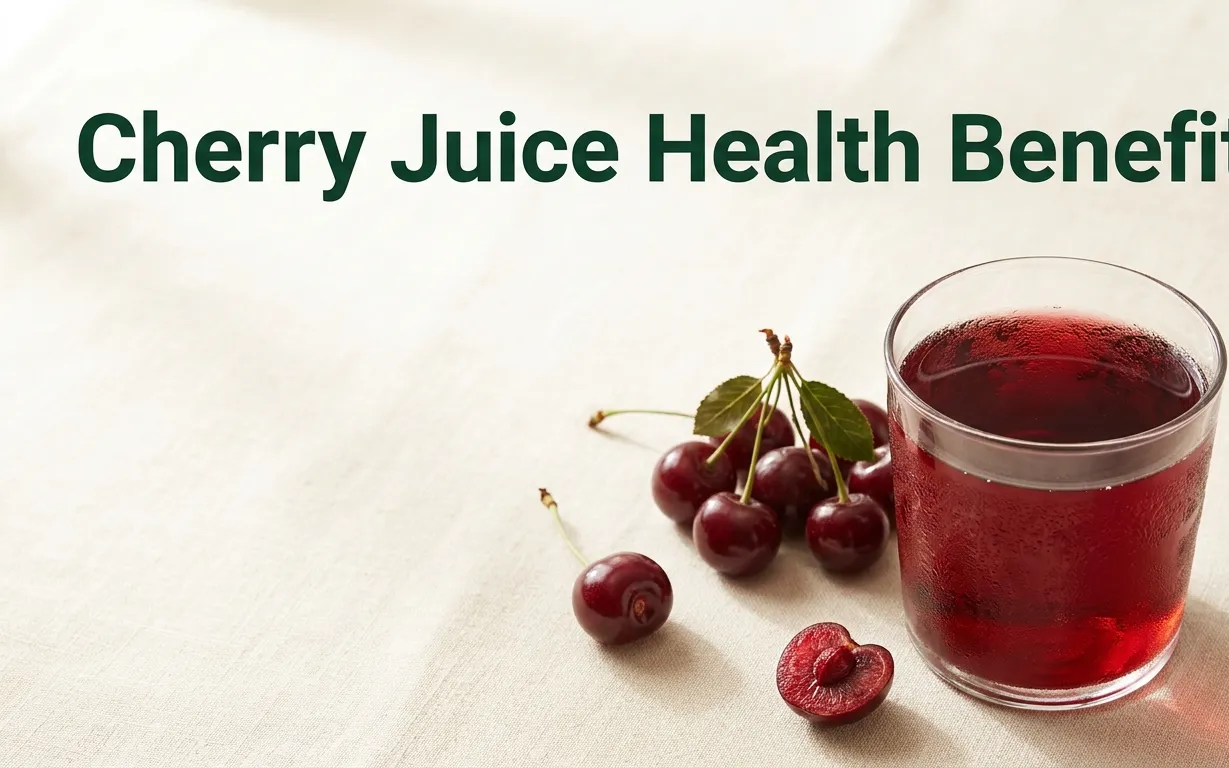
Cherry Juice Health Benefits: 2026 Research Ranked
The best-documented health benefits of cherry juice are reducing uric acid levels in people with gout, decreasing markers of systemic inflammation, improving sleep duration and quality, and accelerating muscle recovery after intense exercise. These four benefits are backed by multiple randomized controlled trials in humans. The bioactive compounds responsible are a specific group of flavonoid pigments called anthocyanins, which give tart and black cherries their deep red color, and a small but physiologically relevant amount of naturally occurring melatonin.
What separates cherry juice from a generic fruit juice is the concentration and type of anthocyanins it delivers. A 2023 analysis published in the European Journal of Nutrition identified cyanidin-3-glucosylrutinoside and cyanidin-3-rutinoside as the dominant anthocyanins in tart Montmorency cherry juice, and these specific compounds have demonstrated xanthine oxidase inhibition, the same mechanism targeted by the gout medication allopurinol. This is not a vague antioxidant claim. It is a named compound interacting with a named enzyme in a way that has been measured in human serum.
This article ranks the major cherry juice health claims by the strength of their clinical evidence in 2026. You will learn which benefits have multiple randomized controlled trials behind them and which are still preliminary, how tart cherry juice differs from black cherry juice, how much to drink and when, what to look for on a label, and who should be cautious about adding cherry juice to their daily routine.
cherry juice health benefits
Cherry juice health benefits that are supported by human clinical trials include lowering serum uric acid levels, reducing inflammatory markers like C-reactive protein, improving sleep efficiency, and decreasing muscle soreness after strenuous exercise. The evidence for these benefits comes primarily from studies on tart cherry juice, specifically from the Montmorency variety grown in North America. Black cherry juice is less studied but contains a related anthocyanin profile and likely provides overlapping benefits, though direct head-to-head trials are sparse.

The mechanism that unites most of the benefits is the anthocyanin content. Anthocyanins are water-soluble flavonoid pigments that accumulate in the skin and flesh of dark cherries. When you drink cherry juice, the anthocyanins and their gut-derived phenolic acid metabolites enter your bloodstream and tissues, where they inhibit pro-inflammatory enzymes like cyclooxygenase-2 (COX-2) and modulate the nuclear factor kappa-B (NF-kB) signaling pathway that controls the expression of inflammatory genes.
| Health Benefit | Evidence Quality | Key Mechanism | Studied Cherry Type |
|---|---|---|---|
| Gout and Uric Acid Reduction | Strong (multiple RCTs) | Anthocyanins inhibit xanthine oxidase, lowering uric acid production. | Tart cherry (Montmorency) |
| Exercise Recovery | Strong (multiple RCTs) | Anti-inflammatory action on damaged muscle tissue reduces DOMS. | Tart cherry (Montmorency) |
| Sleep Quality | Moderate (several RCTs) | Natural melatonin content plus tryptophan sparing from anti-inflammatory effect. | Tart cherry (Montmorency) |
| General Inflammation | Moderate (RCTs and observational) | Anthocyanins downregulate NF-kB and COX-2 pathways. | Both tart and sweet cherries |
| Blood Pressure | Emerging (small RCTs) | Polyphenols may improve endothelial function and nitric oxide availability. | Tart cherry concentrate |
| Arthritis Pain | Preliminary (small studies) | Anti-inflammatory mechanism similar to gout pathway but less studied in OA. | Tart cherry |
The Academy of Nutrition and Dietetics classifies cherry juice as a functional food, meaning it provides health benefits beyond basic nutrition due to its specific bioactive compound content. This classification does not mean it replaces medication or that it is a cure. It means the body of research has matured to a point where a registered dietitian may recommend it as a complementary dietary strategy for specific conditions.
tart cherry juice benefits
Tart cherry juice benefits are concentrated in three areas where human randomized controlled trials have been published: gout management, exercise recovery, and sleep improvement. The tart cherry variety, Prunus cerasus, contains a higher anthocyanin concentration per serving than sweet cherry varieties typically eaten fresh. The most studied cultivar is the Montmorency tart cherry, which accounts for approximately 95 percent of the tart cherries grown in the United States and Canada.
The gout research is the most clinically notable. A 2019 randomized controlled trial published in the American Journal of Clinical Nutrition assigned participants with hyperuricemia to drink either 8 ounces of tart cherry juice or a placebo beverage daily for four weeks. The cherry juice group showed a significant reduction in serum uric acid and a decrease in the inflammatory marker C-reactive protein compared to placebo. The proposed mechanism is direct inhibition of xanthine oxidase, the enzyme that produces uric acid as an end product of purine metabolism. This is the same enzyme targeted by the prescription medication allopurinol, though cherry juice is far less potent and is considered a dietary adjunct rather than a pharmaceutical replacement.
Exercise recovery is the most researched sports nutrition application. A 2020 meta-analysis published in the Journal of the International Society of Sports Nutrition pooled data from ten randomized trials and concluded that tart cherry juice supplementation significantly reduced muscle soreness and accelerated strength recovery following high-intensity eccentric exercise. The typical protocol used in these studies is 8 to 12 ounces of tart cherry juice consumed twice daily for four to five days before and two to three days after the damaging exercise bout. The anthocyanins are believed to reduce the secondary inflammatory response that follows exercise-induced muscle damage, not to prevent the initial damage itself.
black cherry juice health benefits
Black cherry juice health benefits are less extensively documented in clinical trials than tart cherry juice benefits, but the existing research and the shared anthocyanin biochemistry suggest overlapping effects. Black cherry, Prunus serotina, contains a distinct anthocyanin profile dominated by cyanidin-3-rutinoside, which is chemically similar to the cyanidin-3-glucosylrutinoside found in tart cherries. Both compounds have demonstrated anti-inflammatory and antioxidant activity in laboratory studies.
The USDA FoodData Central database records that black cherry juice provides comparable potassium and vitamin C content to tart cherry juice, with slightly higher natural sugar content per serving. The anthocyanin concentration in commercially available black cherry juice depends heavily on processing. Concentrated and reconstituted black cherry juices vary widely, and some products labeled “black cherry juice” are blends that include apple or grape juice as the primary ingredient with black cherry flavoring added.
For the consumer choosing between black cherry and tart cherry juice, the practical answer based on the current evidence in 2026 is that tart cherry juice has the stronger body of human clinical trial data behind it. Black cherry juice is not a poor choice. The biochemistry of its anthocyanins is similar, and animal studies show comparable anti-inflammatory effects. However, the specific dosing protocols that have been tested for gout, sleep, and exercise recovery used tart cherry juice. If you are choosing a juice specifically for one of these evidence-based purposes, tart cherry provides the most direct research support for your decision.
Key Takeaway: Choose tart cherry juice for the strongest human clinical trial backing. Black cherry juice likely provides similar benefits due to overlapping anthocyanin chemistry, but the exact studies you are relying on were conducted on tart cherry varieties.
anthocyanins in cherry juice
Anthocyanins in cherry juice are the specific bioactive compounds responsible for the majority of the documented health effects. These are water-soluble flavonoid pigments that belong to the polyphenol family. In tart Montmorency cherry juice, the dominant anthocyanins are cyanidin-3-glucosylrutinoside and cyanidin-3-rutinoside. An 8-ounce serving of tart cherry juice typically delivers between 30 and 60 milligrams of total anthocyanins, depending on the cherry variety, growing conditions, and processing method.
The way these anthocyanins work in the human body is more complex than simple antioxidant activity. After you drink cherry juice, the parent anthocyanins are poorly absorbed in the small intestine, with only about 1 to 2 percent reaching the bloodstream intact. The rest travel to the colon, where gut bacteria metabolize them into smaller phenolic acids, including protocatechuic acid, vanillic acid, and ferulic acid. These metabolites are absorbed into the bloodstream and are now believed to be the primary biologically active compounds. They circulate through the body and can be measured in the plasma within one to two hours after consumption.
The specific anti-inflammatory mechanism that matters for gout and arthritis is the inhibition of xanthine oxidase and the downregulation of the NF-kB pathway. When NF-kB is activated inside a cell, it travels to the nucleus and switches on the genes that produce pro-inflammatory cytokines like interleukin-6 and tumor necrosis factor-alpha. Anthocyanins and their metabolites interfere with this signaling cascade. A 2021 study in Nutrients demonstrated that serum collected from volunteers after drinking tart cherry juice showed reduced NF-kB activation in cultured immune cells exposed to an inflammatory stimulus, confirming that the compounds reach a concentration in human blood sufficient to produce a measurable biological effect.
cherry juice melatonin content
Cherry juice contains a naturally occurring but nutritionally modest amount of melatonin, the hormone that regulates the sleep-wake cycle. Tart Montmorency cherries have been measured to contain approximately 0.1 to 0.3 micrograms of melatonin per 8-ounce serving. For context, a standard over-the-counter melatonin supplement typically provides 1 to 5 milligrams, which is 1,000 to 50,000 times more than the amount in a glass of cherry juice.
The melatonin content alone does not explain the sleep improvements observed in cherry juice trials. The more complete mechanism likely involves a combination of factors. The anthocyanins reduce systemic inflammation, and chronic low-grade inflammation is known to disrupt sleep architecture. Tryptophan, the amino acid precursor to serotonin and melatonin, is present in cherries in small amounts. The anthocyanins also inhibit indoleamine 2,3-dioxygenase, an enzyme that breaks down tryptophan. This tryptophan-sparing effect may increase the availability of tryptophan for conversion into serotonin and then melatonin in the brain.
A 2018 randomized controlled trial published in the American Journal of Therapeutics gave older adults with insomnia 8 ounces of tart cherry juice twice daily for two weeks. The cherry juice group showed a statistically significant increase in total sleep time of 84 minutes and improved sleep efficiency on polysomnography compared to placebo. The authors attributed the effect to the combined action of melatonin, tryptophan sparing, and anti-inflammatory activity rather than to melatonin alone. The sleep benefits of cherry juice are real and clinically measured, but they are not equivalent to the effect of a melatonin supplement. They are more gradual, accumulating over days to weeks of consistent consumption.
cherry juice for inflammation
Cherry juice reduces markers of systemic inflammation, and this benefit is supported by multiple human trials measuring C-reactive protein (CRP), interleukin-6, and tumor necrosis factor-alpha before and after cherry juice supplementation. The anti-inflammatory effect is the foundational mechanism that underlies the gout, arthritis, and exercise recovery benefits. It is the common thread connecting the clinical outcomes.
A 2019 systematic review published in the European Journal of Clinical Nutrition analyzed data from eleven randomized controlled trials that investigated the effect of cherry consumption on inflammatory biomarkers. The review found that cherry juice and cherry powder supplementation consistently reduced CRP levels compared to control, with a more pronounced effect in studies that used higher anthocyanin doses and longer supplementation periods. The typical protocol was 8 to 16 ounces of tart cherry juice per day for two to four weeks.
The anti-inflammatory mechanism operates through the inhibition of COX-2 and the NF-kB pathway. COX-2 is the enzyme that converts arachidonic acid into prostaglandins, which are lipid signaling molecules that promote pain, fever, and the redness and swelling of acute inflammation. By partially inhibiting COX-2, the anthocyanins in cherry juice reduce the production of these pro-inflammatory prostaglandins. This is the same enzyme targeted by non-steroidal anti-inflammatory drugs (NSAIDs) like ibuprofen, though cherry juice is a far milder inhibitor and does not carry the gastrointestinal or renal risks associated with long-term NSAID use.
For a person considering cherry juice specifically for inflammation, the effect is modest and best suited for chronic, low-grade inflammatory states rather than acute injury or severe inflammatory disease. A person with osteoarthritis who drinks tart cherry juice daily may experience a small but noticeable reduction in morning stiffness and joint discomfort over several weeks. A person with an acute ankle sprain is not going to find cherry juice an adequate substitute for ice, elevation, and physician-directed anti-inflammatory medication.
Key Takeaway: The anti-inflammatory effect of cherry juice is real, measured in human blood markers, and is the biological foundation for most of its other health benefits. It is modest, consistent with food-level effects, not pharmaceutical-level effects.
cherry juice for gout
Cherry juice reduces the frequency of gout attacks and lowers serum uric acid levels through the direct inhibition of xanthine oxidase by anthocyanins and their metabolites. This is the strongest, most clinically specific health benefit in the cherry juice research portfolio. A landmark 2016 study published in Arthritis and Rheumatology followed over 600 participants with gout and found that cherry intake over a two-day period was associated with a 35 percent lower risk of recurrent gout attacks compared to no cherry intake.
The mechanism is not theoretical. It has been measured in human serum. Xanthine oxidase is the enzyme responsible for the final step in uric acid production. When you inhibit it, less uric acid forms. The anthocyanins in cherry juice, particularly cyanidin-3-glucosylrutinoside and cyanidin-3-rutinoside, bind to the active site of xanthine oxidase and reduce its activity. A 2020 study published in the Journal of Functional Foods measured xanthine oxidase activity in blood samples before and after cherry juice consumption and found a measurable reduction that correlated with the concentration of cherry-derived phenolic metabolites in the plasma.
The American College of Rheumatology, in its 2020 Guideline for the Management of Gout, does not formally recommend cherry juice as a primary treatment but acknowledges that dietary modification, including cherry consumption, may be a useful adjunct for some patients. The first-line medical treatment for recurrent gout remains urate-lowering therapy with allopurinol or febuxostat. Cherry juice is not a substitute for these medications. It is a dietary strategy that may reduce the frequency of flares in patients who are already on appropriate medical management.
For gout patients, the practical dosing protocol tested in studies is 8 ounces of tart cherry juice concentrate diluted in water or 8 to 16 ounces of ready-to-drink tart cherry juice daily, consumed consistently rather than only during acute flares. The effect on uric acid is gradual, accumulating over days to weeks of regular intake. Drinking cherry juice only when a gout attack begins is less effective than consistent daily consumption for prevention.
does cherry juice help with arthritis
Cherry juice may reduce symptoms in osteoarthritis and rheumatoid arthritis through the same anti-inflammatory mechanisms that help with gout, but the evidence for arthritis is less robust and comes from smaller studies. The Arthritis Foundation acknowledges cherry juice as a potentially helpful complementary dietary strategy for managing arthritis symptoms, citing the anthocyanin content and its COX-2 inhibitory effect.
A 2019 pilot study published in the Journal of Food Science gave women with osteoarthritis 10.5 ounces of tart cherry juice twice daily for three weeks. The results showed a significant reduction in the inflammatory marker CRP and a self-reported decrease in joint pain and stiffness compared to baseline. The study was small, with approximately 20 participants, and was not placebo-controlled, which limits the strength of the conclusion. The effect direction is consistent with the broader anti-inflammatory literature, but the specific arthritis evidence base does not yet include the large, multi-center randomized controlled trials that exist for gout.
The distinction between osteoarthritis and rheumatoid arthritis matters here. Osteoarthritis is a degenerative joint disease driven by mechanical wear and low-grade inflammation. Rheumatoid arthritis is an autoimmune disease driven by a different inflammatory pathway. Cherry juice has been studied primarily in osteoarthritis and gout contexts. The data in rheumatoid arthritis are extremely limited, and no rheumatology organization recommends cherry juice as a disease-modifying intervention for RA. A person with RA who wishes to try cherry juice should discuss it with their rheumatologist and should not alter their prescribed disease-modifying antirheumatic drug regimen without medical supervision.
cherry juice for sleep
Cherry juice improves sleep duration and quality when consumed consistently, with the evidence strongest in older adults experiencing insomnia. The mechanism involves the natural melatonin content, the tryptophan-sparing effect of anthocyanins that increases serotonin and melatonin synthesis, and the reduction in systemic inflammation that can disrupt normal sleep architecture.
A 2018 randomized controlled trial published in the American Journal of Therapeutics studied older adults with chronic insomnia. Participants drank 8 ounces of tart cherry juice twice daily, once in the morning and once in the evening, for two weeks. The cherry juice group experienced an average increase in total sleep time of 84 minutes compared to placebo. Sleep efficiency, measured by polysomnography as the percentage of time in bed actually spent asleep, also improved significantly. The effect was attributed to the combination of melatonin, tryptophan metabolism enhancement, and the anti-inflammatory activity of the anthocyanins.
The magnesium content of cherry juice may also contribute modestly. An 8-ounce serving of tart cherry juice provides approximately 20 to 25 milligrams of magnesium, which is about 5 to 6 percent of the daily value. Magnesium is a cofactor for the enzyme that converts tryptophan into serotonin and has its own independent calming effect on the nervous system. The amount in a single glass is too small to act as a sedative, but in combination with the melatonin and the anti-inflammatory effects, it may contribute to the overall sleep-promoting effect.
For someone considering cherry juice for sleep, the evidence supports consistent daily use rather than a single dose taken only on nights when sleep is difficult. The improvements in clinical trials appeared after approximately one to two weeks of twice-daily consumption. Drinking a single glass at bedtime without prior consistent intake is less likely to produce a noticeable effect.
Key Takeaway: Cherry juice helps sleep through a combined effect of melatonin, tryptophan sparing, and inflammation reduction, not through melatonin alone. It takes one to two weeks of consistent twice-daily consumption to work, not a single bedtime dose.
cherry juice for exercise recovery
Cherry juice accelerates muscle strength recovery and reduces perceived soreness after high-intensity or unaccustomed exercise. This benefit is supported by multiple randomized controlled trials conducted on runners, weightlifters, and team sport athletes. A 2020 meta-analysis published in the Journal of the International Society of Sports Nutrition analyzed ten studies and found a consistent, moderate effect of tart cherry juice on reducing delayed onset muscle soreness (DOMS) and accelerating the return of maximal voluntary muscle contraction force.
The standard protocol used in exercise recovery research is 8 to 12 ounces of tart cherry juice consumed twice daily, typically beginning four to five days before the exercise event and continuing for two to three days after. The pre-loading phase is important because the anthocyanins need time to accumulate in the tissues and exert their anti-inflammatory effect before the muscle damage occurs. The post-exercise phase reduces the secondary inflammatory response that contributes to soreness and strength loss.
The mechanism in exercise recovery is the same COX-2 and NF-kB inhibition that underlies the gout and general inflammation benefits. Intense eccentric exercise, think downhill running or heavy squats, creates micro-tears in muscle fibers. The body’s repair response includes an influx of immune cells that release pro-inflammatory cytokines. This inflammatory response is part of the normal adaptation process that makes muscles stronger, but excessive inflammation delays the return of function and increases soreness. Cherry juice appears to moderate this response without fully suppressing it. Muscle strength returns faster, and soreness is reduced, but the adaptive signal for muscle growth is not eliminated. This makes cherry juice a practical recovery aid for athletes in multi-day competitions or training blocks where rapid return of muscle function matters.
best time to drink cherry juice for sleep
The best time to drink cherry juice for sleep is approximately one to two hours before your intended bedtime, ideally as part of a consistent twice-daily consumption pattern that includes a morning dose. The melatonin in cherry juice reaches peak plasma concentration within 60 to 90 minutes after consumption, and the evening dose provides the direct melatonin signal that helps initiate sleep.
The morning dose does not directly help you fall asleep that night. It serves a different purpose. Consistent anthocyanin intake throughout the day maintains the anti-inflammatory effect and the tryptophan-sparing activity. Inflammation disrupts sleep architecture by activating the sympathetic nervous system and increasing nighttime cortisol. The morning dose controls inflammation and creates the biochemical conditions for better sleep. The evening dose adds the melatonin signal on top of that prepared foundation.
Drinking cherry juice immediately at bedtime is less effective because the liquid volume can trigger the need to urinate during the night, disrupting sleep. Finishing the evening dose 60 to 90 minutes before lights out allows time for the melatonin to enter your bloodstream and for your body to process the fluid volume before you lie down. The total daily intake in the sleep studies was 16 ounces, divided into two 8-ounce servings. Adjusting the timing of the evening dose to avoid nighttime bathroom trips is a practical refinement that improves the net sleep benefit.
how much cherry juice to drink per day
The clinically studied dose of cherry juice for the health benefits discussed in this article is 8 to 16 ounces per day, with the higher end used for exercise recovery and the lower end for maintenance anti-inflammatory effects. This range is based on the dosing protocols used in the randomized controlled trials. The most common protocol across all studies is 8 ounces twice daily for a total of 16 ounces, or 8 ounces of concentrate diluted in water.
The calorie and sugar content of this dose is an important practical consideration. At 120 to 140 calories and 25 to 28 grams of natural sugar per 8-ounce serving, 16 ounces of tart cherry juice provides 240 to 280 calories and 50 to 56 grams of sugar. The Dietary Guidelines for Americans 2020-2025 recommend that added sugars account for less than 10 percent of total daily calories. The sugar in 100 percent cherry juice is naturally occurring, not added, but the metabolic effect on blood glucose is similar to added sugar. A person with diabetes or prediabetes should account for these carbohydrates in their meal planning and may need to adjust their daily dose or choose a tart cherry supplement capsule instead, which provides anthocyanins without the sugar load.
For someone looking for a starting dose, 8 ounces per day of 100 percent tart cherry juice is a reasonable place to begin and assess tolerance and effect. If you are using it for exercise recovery around a specific event, the research supports increasing to 8 ounces twice daily beginning four to five days before the event. If you are using it for general inflammation or sleep support, consistent daily consumption of 8 ounces is a practical long-term dose.
Key Takeaway: Eight ounces per day is the evidence-based starting point for general health benefits. The research supports doubling that to 16 ounces for acute situations like exercise recovery. The sugar content, 25-28 grams per 8 ounces, must be accounted for in your daily carbohydrate budget.
tart cherry juice vs black cherry juice
Tart cherry juice and black cherry juice are related but distinct products with different anthocyanin profiles and different levels of clinical trial support. Tart cherry juice comes from Prunus cerasus, specifically the Montmorency variety in North America. Black cherry juice comes from Prunus serotina, a native North American species with a darker fruit and a different dominant anthocyanin. Both are distinct from sweet cherry juice, which comes from Prunus avium and has a much lower anthocyanin content.
| Feature | Tart Cherry Juice (Montmorency) | Black Cherry Juice |
|---|---|---|
| Primary Anthocyanin | Cyanidin-3-glucosylrutinoside | Cyanidin-3-rutinoside |
| Anthocyanin Concentration | High (30-60 mg per 8 oz) | Moderate to High (varies by processing) |
| Clinical Trials (Human RCTs) | Multiple for gout, sleep, recovery | Very limited |
| Typical Sugar Content | 25-28g per 8 oz | 28-32g per 8 oz |
| Taste Profile | Tart, sour, astringent | Sweeter, less tart |
| Best Use Case | Evidence-based therapeutic use | General antioxidant support |
The practical recommendation for a consumer choosing between the two is that tart cherry juice has the clinical trial pedigree. If you are choosing cherry juice for a specific purpose like gout prevention or sleep improvement, tart Montmorency cherry juice is what the studies used, and it is what you should buy. If you prefer the taste of black cherry juice and are drinking it for general health and antioxidant support rather than a specific therapeutic outcome, it is a reasonable choice. The most important label check, regardless of which cherry type you choose, is verifying that the product is 100 percent cherry juice without added sugars, and that cherry juice, not apple or grape juice, is the first and primary ingredient.
cherry juice concentrate vs juice
Cherry juice concentrate is the concentrated form of cherry juice with most of the water removed, and it provides a more anthocyanin-dense dose per ounce than ready-to-drink juice. One ounce of concentrate, when diluted in water, is equivalent to approximately 8 ounces of single-strength juice. The advantage of concentrate is convenience, longer shelf life, and the ability to control the dilution and therefore the strength of the dose.
The disadvantage of concentrate is that the processing involves heat, which can degrade some of the heat-sensitive anthocyanins. A 2021 study in the Journal of Food Science compared the anthocyanin content of fresh tart cherry juice, reconstituted concentrate, and ready-to-drink bottled juice. The fresh juice had the highest anthocyanin levels. The reconstituted concentrate retained approximately 75 to 85 percent of the anthocyanin content of fresh juice. The ready-to-drink bottled juice, depending on pasteurization method and storage time, retained 60 to 80 percent.
Concentrate and single-strength juice that are both labeled as 100 percent cherry juice are functionally comparable when the concentrate is diluted according to package directions. The daily dose recommendation of 8 to 16 ounces of ready-to-drink juice translates to 1 to 2 ounces of concentrate diluted in water. For someone who finds the tart flavor too intense at full strength, concentrate allows for diluting into a larger volume of water, which makes it easier to drink across the day.
cherry juice side effects
Cherry juice side effects are generally mild and gastrointestinal. The most commonly reported issues are abdominal bloating, gas, and loose stools. These effects are attributable to the sugar alcohol sorbitol and the fermentable oligosaccharides, disaccharides, monosaccharides, and polyols (FODMAPs) naturally present in cherries. A person with irritable bowel syndrome (IBS) or a general sensitivity to high-FODMAP foods may experience bloating and discomfort after drinking cherry juice, particularly at the higher 16-ounce daily dose used in some studies.
The sugar content is a side effect consideration for people with diabetes or insulin resistance. While the sugar in cherry juice is naturally occurring and not added, 25 to 28 grams of sugar per 8-ounce serving is a significant carbohydrate load. This amount is comparable to many soft drinks. A person managing their blood glucose should drink cherry juice with a meal rather than on an empty stomach to slow gastric emptying and blunt the glucose absorption curve.
Cherries contain salicylates, compounds related to aspirin. The amount in a serving of cherry juice is far lower than a therapeutic dose of aspirin and is not a concern for most people. However, individuals with a known salicylate sensitivity or those on high-dose blood-thinning medications like warfarin should be aware of this. A single serving of cherry juice is not going to interact with warfarin in a clinically significant way, but a person consuming large amounts daily while on anticoagulants should discuss this with their prescribing physician. The Academy of Nutrition and Dietetics recommends that any patient on warfarin inform their healthcare provider about all dietary supplements and significant dietary changes, including functional foods like cherry juice.
how to choose quality cherry juice
Choosing a quality cherry juice requires reading the ingredient list and verifying three things: the juice is 100 percent cherry juice, there is no added sugar, and the cherry variety is identified on the label. Many products marketed as cherry juice are actually juice blends where apple juice or white grape juice appears as the first ingredient, with cherry juice concentrate listed further down. These products have a lower anthocyanin content and more sugar from less functional fruit sources.
To choose a quality cherry juice:
- Read the ingredient list on the back label, not the front label claims. The only ingredient should be tart cherry juice, tart cherry juice concentrate, or a combination. If apple juice, pear juice, grape juice, or cane sugar appears, put the bottle back. You are buying sugar-sweetened fruit punch.
- Look for the cherry variety on the label. Products made from Montmorency tart cherries will often state this on the front or back label. This matters because it identifies the specific cherry type used in the clinical trials.
- Check the Nutrition Facts panel for the total sugar content per 8-ounce serving. A 100 percent tart cherry juice should contain approximately 25 to 28 grams of sugar, all naturally occurring. If the sugar content is significantly higher, the product may be a blend. If the added sugars line on the label lists anything other than 0 grams, the product has been sweetened.
- Choose organic if your budget allows and if pesticide exposure is a concern you prioritize. Cherries can contain pesticide residues when conventionally grown. The Environmental Working Group does not list cherries on its Dirty Dozen list, but they are not on the Clean Fifteen list either. Organic certification ensures the cherries were grown without synthetic pesticides, but it does not affect the anthocyanin content.
A high-quality cherry juice has a short, single-ingredient label, identifies the cherry variety, and contains no added sweeteners. It will taste tart and astringent, not sweet like a fruit punch. The tartness is the taste of the anthocyanins. If the juice tastes like a dessert beverage, check the label again.
Key Takeaway: The best cherry juice has one ingredient: tart cherry juice. Avoid products where apple or grape juice appears first. The tart, astringent taste is a sensory confirmation of the anthocyanin content you are paying for.
================================================================
Frequently Asked Questions About Cherry Juice Health Benefits
What are the main health benefits of drinking cherry juice?
The main evidence-based health benefits of cherry juice are lowering uric acid levels in gout, reducing systemic inflammation markers, improving sleep quality and duration, and accelerating muscle recovery after strenuous exercise.
These benefits come from the anthocyanin pigments and melatonin naturally present in tart cherries.
The strongest clinical trial evidence supports the gout and exercise recovery applications.
How much cherry juice should I drink for sleep?
Clinical sleep studies used 8 ounces of tart cherry juice twice daily for a total of 16 ounces, consumed consistently for at least one to two weeks.
Drink the evening serving one to two hours before your intended bedtime to allow the melatonin to enter your bloodstream and to avoid nighttime bathroom trips.
A single dose taken only on nights when sleep is poor is less effective than consistent daily intake.
Is tart cherry juice better than black cherry juice?
Tart cherry juice has more human clinical trial evidence supporting its health benefits than black cherry juice, which has very few published randomized controlled trials.
The anthocyanin profiles are chemically similar but not identical, with tart cherries containing primarily cyanidin-3-glucosylrutinoside and black cherries containing primarily cyanidin-3-rutinoside.
For evidence-based therapeutic use like gout or exercise recovery, choose tart cherry juice because the dosing protocols were validated on that variety.
Can cherry juice help with gout attacks?
Cherry juice can reduce the frequency of recurrent gout attacks when consumed consistently, with research showing a 35 percent lower risk of attacks in cherry consumers.
The mechanism is direct inhibition of xanthine oxidase by anthocyanins, which lowers uric acid production.
Cherry juice is a dietary adjunct and is not a substitute for prescribed urate-lowering medication from a rheumatologist.
What is the best time of day to drink cherry juice?
For sleep benefits, drink one serving in the morning and one serving one to two hours before bedtime.
The morning dose provides the anti-inflammatory anthocyanin effect throughout the day, and the evening dose delivers the melatonin signal that helps initiate sleep.
For exercise recovery, the timing relative to exercise matters more than the time of day, with pre-loading beginning four to five days before the event.
Does cherry juice have side effects?
The most common side effects are gastrointestinal, including bloating, gas, and loose stools due to the sorbitol and FODMAP content naturally present in cherries.
The sugar content of 25 to 28 grams per 8-ounce serving must be accounted for by people with diabetes or insulin resistance.
Cherries contain salicylates, and individuals on high-dose blood thinners should inform their prescribing physician if they begin drinking cherry juice regularly.
The cherry juice health benefits with the strongest research support in 2026 are gout attack reduction, exercise recovery acceleration, sleep improvement, and systemic inflammation reduction. The responsible compounds are named anthocyanins and melatonin, working through measured mechanisms like xanthine oxidase inhibition and NF-kB pathway downregulation. Tart cherry juice has the most clinical trials. Black cherry juice is a reasonable alternative with less direct evidence. Concentrate and single-strength juice are comparable when the concentrate is properly diluted.
If you decide to try cherry juice for one of these purposes, pick a product with a single ingredient on the label and no added sugar. Start with 8 ounces per day and give it at least two weeks of consistent daily intake before evaluating whether it is working for you. The effect is not pharmaceutical. It is modest, gradual, and cumulative.
A registered dietitian nutritionist can help you determine whether cherry juice fits into your overall dietary pattern and your specific health management plan, particularly if you have diabetes, IBS, gout on medication, or you are an athlete looking to optimize recovery nutrition. Cherry juice is a functional food with real science behind it. Use it as the research directs, and it will serve you well.