Skittles Nutrition Facts: 2026 Calories, Sugar, and Ingredients
Skittles are almost pure sugar with a small amount of hydrogenated palm kernel oil for texture, providing approximately 110 calories and 21 grams of sugar per standard 1-ounce serving (about 27 pieces). The candy contains zero protein, zero fiber, and negligible amounts of vitamins or minerals, making it a source of empty calories with no nutritional value beyond quick energy .
This 2026 guide breaks down exactly what is in every type of Skittles product, from the original chewy candies to fun size packs, sour versions, and even the newer gummy varieties. You will learn how different serving sizes affect calorie and sugar intake, what the ingredient list actually means for your health, and how to fit this candy into a balanced diet if you choose to eat it. We also compare Skittles to other popular candies and explain why the numbers on the label matter for weight management, blood sugar control, and dental health.
Skittles Original Nutrition Facts: Standard Serving
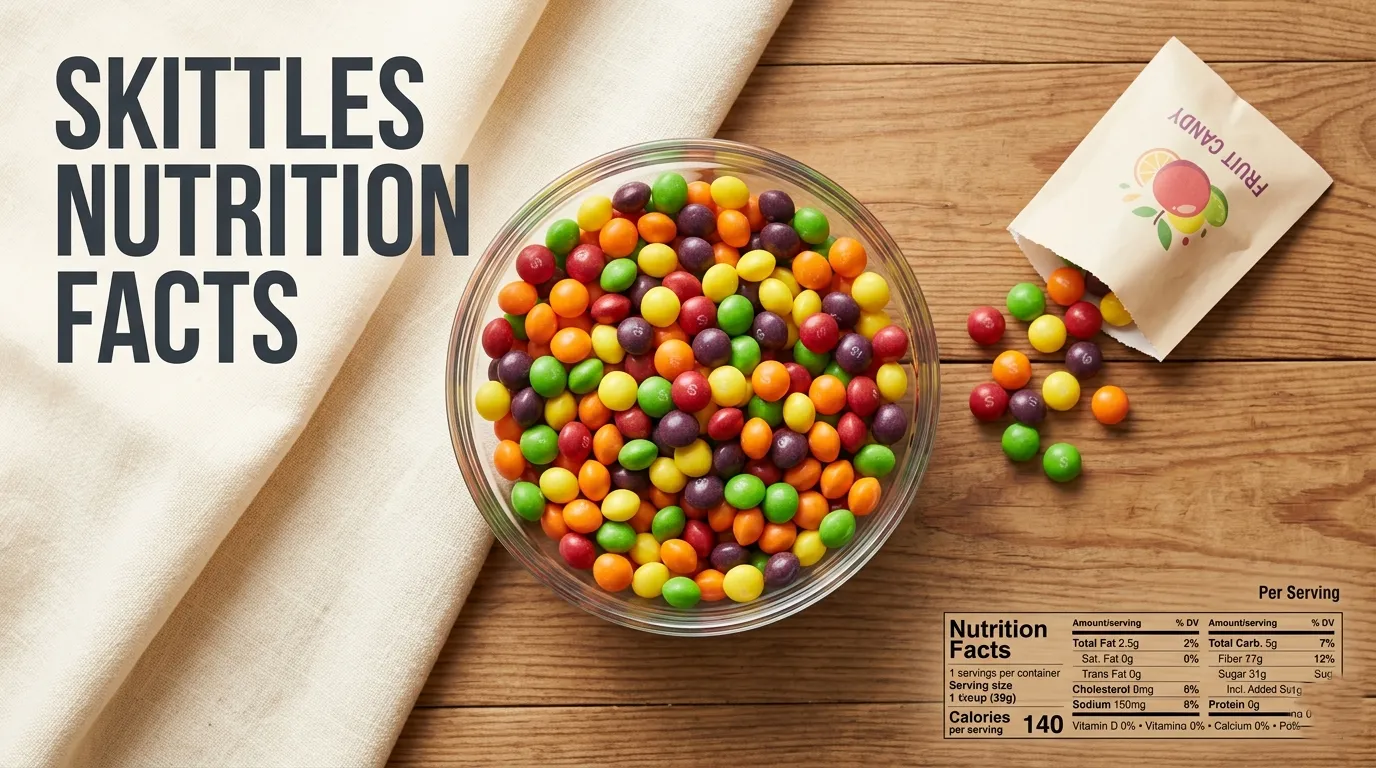
The original Skittles nutrition facts show 110 calories, 26 grams of total carbohydrates, and 21 grams of sugar per 1-ounce (28g) serving containing approximately 27 pieces . The candy contains 1 gram of fat, all of which comes from hydrogenated palm kernel oil used to create the chewy texture. There is no protein, no dietary fiber, and no cholesterol.
Sugar makes up the vast majority of the carbohydrate content. The 21 grams of sugar per serving equals about 5 teaspoons of sugar. For context, the American Heart Association recommends no more than 25 grams (6 teaspoons) of added sugar per day for women and 36 grams (9 teaspoons) for men. A single serving of Skittles covers most or all of that daily allowance.
| Nutrient | Per 1 oz serving (27 pieces) | % Daily Value |
|---|---|---|
| Calories | 110 | 6% |
| Total Fat | 1g | 1% |
| Saturated Fat | 1g | 5% |
| Sodium | 10mg | 0% |
| Total Carbohydrates | 26g | 9% |
| Dietary Fiber | 0g | 0% |
| Sugars | 21g | – |
| Protein | 0g | 0% |
Key Takeaway: One small handful of Skittles delivers nearly an entire day’s worth of added sugar. The serving size is only 27 pieces, which is less than most people eat in a single sitting.
Fun Size Skittles Nutrition Facts
The fun size Skittles nutrition facts show 60 calories, 14 grams of total carbohydrates, and 11 grams of sugar per single pack . Fun size packs are the small rectangular packages often found in variety packs or given out on Halloween. Each pack contains approximately 12 to 15 pieces, roughly half the amount of a standard serving.
Fun size packs contain 0.5 grams of fat, 11 grams of added sugar (22 percent of the daily value), and zero protein . For portion control, fun size packs are actually a reasonable option because the packaging limits how many pieces you eat at once. One fun size pack every now and then is very different from eating directly from a large bag.
People trying to reduce sugar intake should note that 11 grams of sugar is still significant. That is nearly 3 teaspoons of sugar in a tiny package. Eating two fun size packs equals a full standard serving with 22 grams of sugar. Eating the entire 10-pack variety bag common around Halloween delivers 110 grams of sugar and 600 calories.
Skittles Sour Nutrition Facts
The Skittles sour nutrition facts show 120 calories, 28 grams of total carbohydrates, and 21 grams of sugar per 27-piece serving . Sour Skittles contain slightly more calories than the original version because of a higher carbohydrate count. The sour coating adds citric acid, which provides the tart flavor without changing the basic sugar content.
Sour Skittles contain 1 gram of fat and 5 milligrams of sodium per serving . The ingredient list includes sugar, corn syrup, citric acid, hydrogenated palm kernel oil, and various artificial colors. The sour version also contains tapioca dextrin and modified corn starch as texturizers.
The citric acid in sour Skittles makes them more problematic for dental health than regular Skittles. Citric acid erodes tooth enamel directly, separate from the cavity-causing effects of sugar. People who eat sour candies should rinse their mouths with water afterward and wait at least 30 minutes before brushing to avoid scrubbing softened enamel.
Skittles Gummies Nutrition Facts
Skittles gummies have a different nutritional profile than the original chewy Skittles. According to product information, a 20-piece serving of Skittles gummies contains 130 calories, 32 grams of total carbohydrates, and 26 grams of sugar . The gummy version also contains 1 gram of protein because gelatin is a primary ingredient.
Gelatin is the key difference between gummy and original Skittles. Original Skittles get their texture from hydrogenated palm kernel oil. Gummy Skittles use gelatin, an animal-derived protein, which adds the 1 gram of protein per serving. For vegetarians or vegans, this distinction matters because gelatin comes from animal collagen.
The gummy version also contains modified corn starch, water, and natural and artificial flavors. The sugar content per serving is 5 grams higher than the original version, making gummy Skittles slightly more sugar-dense. A 20-piece serving of gummies delivers 26 grams of sugar, or about 6.5 teaspoons.
Skittles Singles To Go Drink Mix Nutrition Facts
The Skittles Singles To Go drink mix is a zero-sugar product with only 5 to 10 calories per stick depending on the flavor . These powdered drink mixes are designed to add Skittles-like flavor to water without the sugar and calories of the candy. The strawberry, green apple, and grape flavors contain 5 calories per stick, while orange contains 10 calories.
The drink mix contains zero sugar, zero fat, and zero protein . Sweetening comes from artificial sweeteners rather than sugar. Calcium levels vary by flavor, with strawberry/green apple providing 47mg of calcium per serving (4 percent DV) and grape providing zero. Sodium is also variable, with orange containing 40mg per serving and other flavors containing zero.
For people trying to reduce sugar intake but craving fruit candy flavors, the drink mix is a significantly better choice than the candy itself. A single stick contains less than 2 grams of carbohydrates and no added sugar, compared to 21 grams of sugar in the candy version.
Quick Tip: If you want the Skittles taste without the sugar crash, the drink mix is your best option. Mix one stick into 16.9 ounces of water for a flavored beverage with 5 to 10 calories and zero sugar.
Skittles Ingredients: What Is Actually in the Candy
Skittles ingredients include sugar as the primary component, followed by corn syrup, hydrogenated palm kernel oil, citric acid, and a long list of artificial colors . The exact formula varies slightly between countries because of different food coloring regulations, but the basic structure remains the same.
Standard Skittles Original ingredients:
- Sugar (first and primary ingredient)
- Corn syrup
- Hydrogenated palm kernel oil
- Citric acid
- Tapioca dextrin
- Modified corn starch
- Natural and artificial flavors
- Sodium citrate
- Carnauba wax (glazing agent)
- Artificial colors: Red 40 Lake, Yellow 5 Lake, Blue 2 Lake, Yellow 6 Lake, Titanium Dioxide, Blue 1 Lake, Yellow 6, Red 40, Yellow 5, Blue 1
Hydrogenated palm kernel oil provides the fat content (1g per serving) and creates the smooth, chewy texture. Some international versions use palm oil or palm fat instead of hydrogenated palm kernel oil . Carnauba wax gives Skittles their shiny appearance. The artificial colors create the signature rainbow appearance.
People with soy allergies should check packaging carefully because some international versions contain vegetable fat that includes soy . Titanium dioxide (E171) has been banned for food use in the European Union but remains approved in many other countries including the United States.
Skittles vs Other Candies: Nutritional Comparison
Skittles contain similar sugar levels to most other fruit-flavored chewy candies but have slightly less fat than chocolate-based candies. A standard serving of M&M’s (about 28 pieces) contains 140 calories, 6 grams of fat, and 16 grams of sugar. Skittles have fewer calories and less fat but more sugar.
| Candy | Serving Size | Calories | Sugar (g) | Fat (g) | Protein (g) |
|---|---|---|---|---|---|
| Skittles Original | 27 pieces (28g) | 110 | 21 | 1 | 0 |
| Skittles Sour | 27 pieces | 120 | 21 | 1 | 0 |
| M&M’s Milk Chocolate | 28 pieces | 140 | 16 | 6 | 2 |
| Starburst | 4 pieces (32g) | 160 | 22 | 3 | 0 |
| Gummy Bears | 14 pieces (30g) | 100 | 14 | 0 | 2 |
Chocolate candies provide more fat and calories but less sugar per serving. The fat in chocolate slows sugar absorption somewhat, leading to a less dramatic blood sugar spike than pure sugar candies like Skittles. For blood sugar management, chocolate-based candies are marginally better than pure sugar candies, though neither is a good choice for frequent consumption.
Skittles Sugar Content: How Much Is Too Much
The sugar content in a standard serving of Skittles is 21 grams, which equals approximately 5 teaspoons of sugar. To put this in perspective, eating just 27 Skittles pieces delivers the same amount of sugar as drinking half a can of regular soda or eating two glazed donut holes. The World Health Organization recommends limiting added sugar intake to less than 10 percent of total daily calories, which is about 50 grams (12 teaspoons) for a 2,000 calorie diet.
Eating a full bag of Skittles, such as the sharing size bag that contains multiple servings, can easily deliver 60 to 100 grams of sugar in one sitting. This amount of sugar causes a rapid rise in blood glucose followed by a crash. The crash often triggers hunger and cravings for more sugar, creating a cycle that is hard to break.
People with diabetes, prediabetes, or insulin resistance should be particularly careful with Skittles. The rapid glucose spike requires significant insulin release. Over time, repeated large sugar spikes can worsen insulin resistance. If you have diabetes and choose to eat Skittles, account for the 21 grams of sugar per serving in your carbohydrate counting and adjust medication or insulin as directed by your endocrinologist.
Key Takeaway: The sugar in Skittles adds up extremely quickly. Eating a full sharing size bag (about 3 servings) delivers 63 grams of sugar, exceeding the WHO’s daily recommended limit for added sugar for an entire day.
Are Skittles Vegan and Allergen Free
Skittles Original are considered vegan in the United States because they contain no animal-derived ingredients. The candy uses hydrogenated palm kernel oil instead of gelatin or other animal products. However, the vegan status of Skittles varies by country. Skittles sold in the UK and some other European countries contain E120 (cochineal or carmine), a red coloring derived from insects, which makes those versions not vegan.
Regarding allergens, Skittles do not contain the top eight major allergens (milk, eggs, fish, crustacean shellfish, tree nuts, peanuts, wheat, and soy) in their standard US formulation. However, some international versions contain soy, and all Skittles are produced in facilities that may process allergens. People with severe allergies should check package labels for cross-contamination warnings.
Palm oil and hydrogenated palm kernel oil are used in Skittles production. Some consumers avoid palm oil because of environmental concerns related to rainforest deforestation and habitat destruction. Skittles’ parent company Mars Incorporated has made commitments to sustainable palm oil sourcing, but the ingredient remains controversial among environmentally conscious consumers.
Skittles Dental Health Impact
The combination of sugar, acid, and sticky texture makes Skittles particularly damaging to teeth. The 21 grams of sugar per serving feed bacteria in the mouth that produce acid as a byproduct. This acid dissolves tooth enamel, leading to cavities. The chewy texture means Skittles stick to tooth surfaces longer than candies that dissolve quickly.
Sour Skittles present an additional risk because they contain citric acid. The acid in sour candies directly erodes enamel regardless of sugar content. A 2024 study in the Journal of the American Dental Association found that sour candies cause more rapid enamel erosion than regular sugar candies because of their lower pH and higher acid content.
To minimize dental damage when eating Skittles:
- Eat the entire serving at once rather than snacking on individual pieces over several hours (frequent sugar exposure is worse than one concentrated exposure)
- Rinse your mouth with water immediately after eating
- Do not brush your teeth for at least 30 minutes after eating (enamel is softened by acid and brushing can damage it further)
- Chew sugar-free gum with xylitol afterward to stimulate saliva production and neutralize acid
- Eat Skittles with a meal rather than alone, as increased saliva production during meals helps wash away sugar
Can Diabetics Eat Skittles
People with diabetes can eat Skittles in very limited quantities, but the candy’s high sugar content and rapid absorption make it a poor choice for regular consumption. The 21 grams of sugar per serving are almost entirely simple sugars that enter the bloodstream within minutes of eating. This rapid absorption causes a sharp blood glucose spike.
The one situation where Skittles are useful for people with diabetes is treating hypoglycemia (low blood sugar). Many diabetes educators specifically recommend Skittles or similar hard candies for treating lows because they act quickly and the dose is easy to measure. Four to five Skittles pieces provide approximately 4 to 5 grams of fast-acting carbohydrates, which is a standard dose for treating mild hypoglycemia.
For everyday snacking, people with diabetes should choose lower-sugar, higher-fiber options instead of Skittles. If you do choose to eat Skittles as a treat, account for the full 21 grams of carbohydrates per serving in your meal plan. Eat them with a source of protein or fat to slow glucose absorption. Check your blood sugar 2 hours after eating to understand how your body responds.
Quick Tip: If you have diabetes, keep a small bag of Skittles in your bag or car specifically for hypoglycemia treatment. Four to five pieces deliver about 4 grams of fast-acting sugar, making them perfect for mild lows. But do not eat them as a regular snack.
Frequently Asked Questions About Skittles Nutrition Facts
How many calories are in a full bag of Skittles?
The calories in a full bag of Skittles depend on the bag size. A standard 1.8-ounce bag (about 51 grams) contains approximately 220 calories. A sharing size 4-ounce bag contains about 440 calories. A party size 18.56-ounce bag contains approximately 2,040 calories and 378 grams of sugar.
Are Skittles gluten free?
Yes, Skittles Original and most Skittles varieties are considered gluten free. The ingredients do not contain wheat, barley, rye, or any gluten-containing grains. However, Skittles are produced in facilities that may also process gluten-containing products. People with celiac disease should check packaging for specific gluten-free labeling.
How much sugar is in a fun size Skittles pack?
A fun size Skittles pack contains 11 grams of sugar. This is approximately 2.75 teaspoons of sugar. The fun size pack also contains 60 calories and 14 grams of total carbohydrates. Fun size packs are about half the size of a standard serving .
Do Skittles have any nutritional value?
Skittles have essentially no nutritional value. They contain zero protein, zero fiber, zero vitamins, and zero minerals of any significance. The 1 gram of fat per serving provides no nutritional benefit. Skittles are a source of empty calories and added sugar with no redeeming nutritional qualities.
Why do Skittles have different ingredients in different countries?
Skittles have different ingredients in different countries because of varying food regulations. The European Union bans certain artificial colors including Yellow 5, Yellow 6, and Red 40, and also banned titanium dioxide (E171) in 2022. Skittles sold in the EU use natural colors derived from fruits and vegetables instead of artificial dyes.
Are Skittles worse for you than chocolate?
Skittles are not necessarily worse than chocolate, but they are worse in different ways. Skittles have less fat and fewer calories per serving but significantly more sugar. The pure sugar in Skittles causes faster blood glucose spikes than chocolate, where fat slows sugar absorption. Chocolate at least provides small amounts of protein and minerals like iron and magnesium.
Skittles are candy, plain and simple. They offer no nutritional benefits, deliver a large dose of sugar in a small package, and provide nothing your body actually needs. The 2026 nutrition facts confirm what has always been true: Skittles are an occasional treat, not a food to eat regularly. If you love them, eat a fun size pack, not the sharing size bag. Rinse your mouth with water after eating. Count the sugar toward your daily limit. And enjoy them for what they are, a rainbow-colored sugar delivery system that tastes good but does nothing good for your body.