Applebee’s Nutrition Facts 2026: Healthy Menu Guide
INTRO:
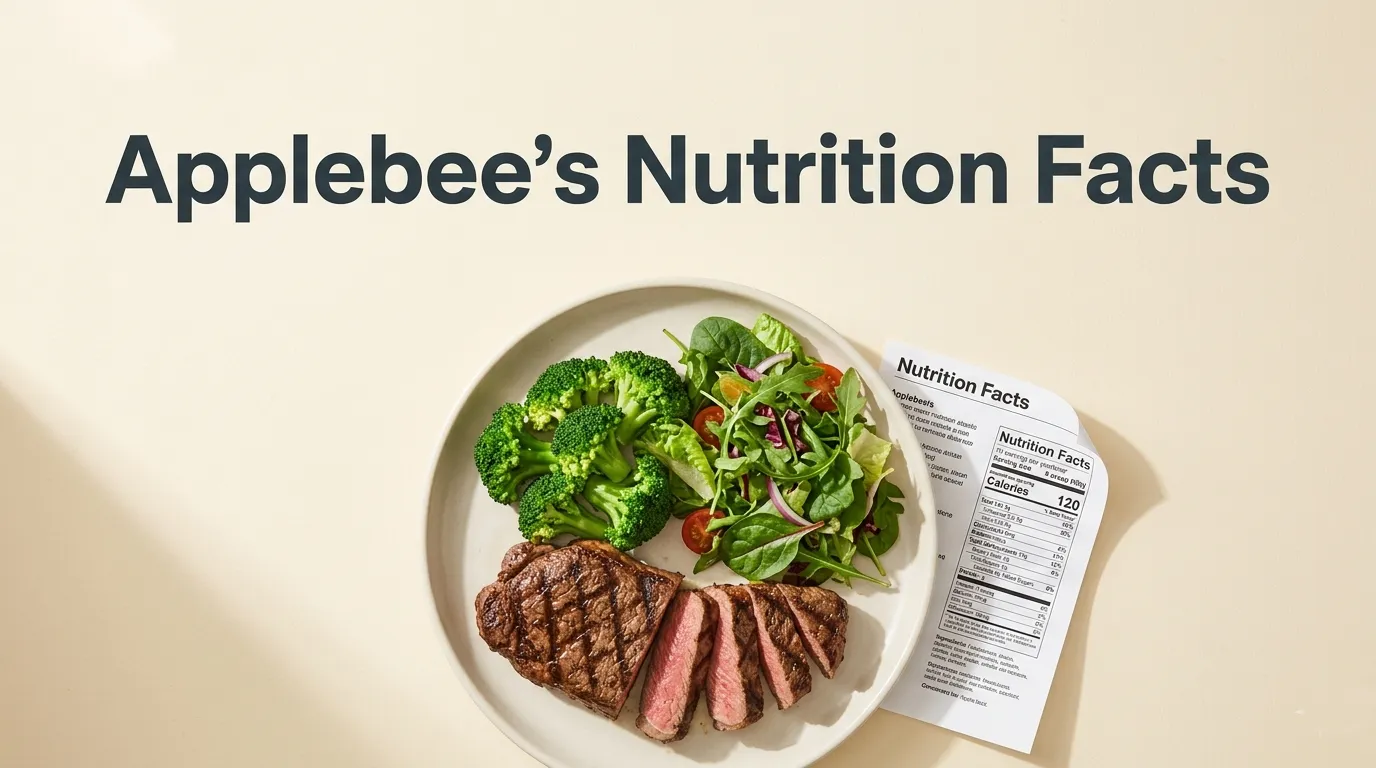
Applebee’s nutrition facts reveal a menu where single entrees can range from a reasonable 540 calories to a staggering 2,190 calories with over 6,000 milligrams of sodium. The gap between the best and worst choices on this menu is wider than almost any other national casual dining chain.
The American Heart Association recommends adults limit sodium to no more than 2,300 milligrams per day. Several popular Applebee’s platters deliver more than double that number before you add a beverage, an appetizer, or a dessert. Knowing which sections of the menu hide the sodium, saturated fat, and calorie bombs is not about deprivation. It is about understanding the patterns so you can order with full awareness.
This guide walks you through the exact numbers on the Applebee’s menu in 2026. You will learn which items are genuinely reasonable, which salads have more calories than a burger, how to spot the structural traps in the appetizer and pasta sections, and what to order if you are keto, gluten-free, or counting Weight Watchers points. By the time you finish, you will know how to eat at Applebee’s without a nutritional hangover.
Applebee’s Nutrition Facts
Applebee’s nutrition facts are published by the company for every standard menu item, covering calories, macronutrients, sodium, and allergen information. The data is available on the official website and in-restaurant upon request, following the FDA’s menu labeling rule that requires chain restaurants with 20 or more locations to disclose calorie counts on menus.
The raw numbers tell a story of extremes. The grilled chicken entrees cluster around 550 to 900 calories. The pasta dishes and rib platters regularly exceed 1,200 calories. The appetizer section alone can deliver over 1,500 calories before the main course arrives. Sodium is the consistent nutritional challenge across the board, with very few items falling below 1,000 milligrams. The Dietary Guidelines for Americans 2020-2025 recommend that healthy eating patterns limit added sugars, saturated fat, and sodium. Applebee’s menu, built for flavor impact in a competitive casual dining market, pushes hard against all three of those limits.
Understanding the menu requires recognizing that these are restaurant portions. The serving sizes are generous because that is what the casual dining customer expects. The nutritional numbers reflect an entire plated entree, often with one or two sides included in the count. When you see a 1,200-calorie entree, that is the complete plate in front of you, not a fraction of it. The sections that follow will teach you how to navigate each part of the menu.
| Menu Section | Calorie Range (Typical) | Sodium Range (Typical) |
|---|---|---|
| Soups and Salads | 270 to 1,540 cal | 600 to 3,300 mg |
| Chicken Entrees | 540 to 1,240 cal | 1,400 to 3,200 mg |
| Steak and Ribs | 370 to 2,190 cal | 1,200 to 6,010 mg |
| Pasta | 1,110 to 1,680 cal | 2,100 to 4,480 mg |
| Appetizers | 300 to 2,170 cal | 680 to 5,720 mg |
| Burgers and Sandwiches | 800 to 1,610 cal | 1,600 to 3,960 mg |
Ranges reflect published Applebee’s nutrition data and include standard sides where applicable.
Applebee’s Menu Nutrition Facts
The Applebee’s menu nutrition facts break down into clear winners and losers once you know which sections to target. The grilled chicken, the lighter fare section, and the 6-ounce sirloin steak represent the nutritionally strongest parts of the menu. The pasta bowls, the rib platters, and the shared appetizers represent the heaviest.
The “Lighter Fare” or equivalent section, which has existed in various names over the years, is not automatically healthy just because the menu calls it light. Some items in this section do clock in under 600 calories with reasonable sodium levels. Others use the term loosely and still deliver over 800 calories and 2,000 milligrams of sodium. The menu language is marketing. The nutrition panel is the truth. A term like “Cedar Grilled Lemon Chicken” sounds lean and clean, and in this specific case, it mostly is, at 540 calories. A term like “Fiesta Lime Chicken,” which sounds similarly fresh, comes in at 1,240 calories largely because of the cheese, ranch dressing, and rice. The difference between those two similarly named chicken dishes is 700 calories. That is more than an entire additional meal for some people.
Learning to scan the menu for these traps is a skill you develop once and use forever. The core strategy is simple. Target grilled proteins paired with steamed vegetables or a side salad. Avoid anything described as “loaded,” “crispy,” “creamy,” “smothered,” or “fried,” unless you have checked the specific nutrition numbers and made a conscious decision to allocate your daily budget to it.
Applebee’s Calories
Applebee’s menu calories range from roughly 270 for a cup of soup to over 2,190 for a full rack of ribs with sides. The average entree, without an appetizer or drink, lands between 900 and 1,400 calories.
This average is the number you need to internalize. A 1,200-calorie entree represents 60 percent of a standard 2,000-calorie daily intake. Add a soda (200 calories) and a shared appetizer (400 calories for your portion), and you have consumed nearly an entire day’s energy in one sitting. The Academy of Nutrition and Dietetics teaches that restaurant meals tend to be larger and more calorie-dense than home-cooked equivalents, a pattern confirmed by multiple studies analyzing chain restaurant nutrition data. The calorie count is not hidden from you. It is printed on the menu by federal law. The challenge is that the number feels abstract when you are hungry and looking at a photograph of sizzling fajitas. Your brain’s reward system responds to the image. Your prefrontal cortex has to actively override that with the number.
A practical approach is to decide your calorie ceiling before you open the menu. If you want to keep lunch to 600 calories, you know immediately that you are scanning the soup and salad section or the lighter chicken entrees. If this is your main meal of the day and you have 1,200 calories to spend, the options open up to include a steak, a grilled chicken plate, or a burger without the fries. The number guides the choice. The choice does not happen by accident.
Key Takeaway: The average Applebee’s entree is 900 to 1,400 calories. Decide your per-meal calorie budget before you look at the menu, and let the published numbers filter your choices.
Healthy Options at Applebee’s
Healthy options at Applebee’s are concentrated in the grilled protein entrees with vegetable sides. The Cedar Grilled Lemon Chicken at 540 calories, the 6-ounce sirloin with steamed vegetables at 370 calories, and the Blackened Cajun Salmon at 570 calories are consistently the strongest nutritional picks on the published menu.
These items share a pattern. They feature a lean protein cooked without heavy breading or cream sauces, paired with a vegetable side instead of fries or loaded mashed potatoes. The salmon provides omega-3 fatty acids, though the exact amount depends on the portion size and whether the fish is farmed or wild. The sirloin delivers highly bioavailable heme iron and complete protein. The grilled chicken breast is a lean protein with minimal saturated fat. What makes these choices healthy is not that they are perfect. The sodium on all three still hovers between 1,200 and 1,800 milligrams. They are simply the best available on a menu where the alternative is a 1,680-calorie pasta bowl with 4,480 milligrams of sodium.
The side dish decision does a surprising amount of nutritional heavy lifting. Steamed broccoli adds fiber, vitamin C, and vitamin K for approximately 60 calories. French fries add 400 to 500 calories of refined carbohydrates fried in oil. Loaded mashed potatoes add butter, sour cream, bacon, and cheese. The base protein choice might be reasonable. The sides are where the calorie count either stays manageable or spirals.
- Request steamed vegetables instead of fries or mashed potatoes whenever possible.
- Ask for sauces and dressings on the side. This gives you control over the amount.
- Skip the bread basket or tortilla chips if your meal already includes a starchy side.
- Choose water, unsweetened iced tea, or diet soda to avoid liquid calories that add 200 to 400 calories with zero satiety.
Lowest Calorie Applebee’s Meals
The lowest calorie Applebee’s meals are the 6-ounce sirloin steak without sides at approximately 250 to 280 calories for the steak alone, and the Cedar Grilled Lemon Chicken at 540 calories with sides. The house salad with grilled chicken and a light dressing also lands under 500 calories.
These items represent the nutritional floor of the menu. Everything below this calorie count is either a side dish, a cup of soup, or a modification of an existing entree. The 6-ounce sirloin steak is the single lowest-calorie protein entree on the menu when you strip away the calorie-heavy default sides. A lean cut of beef cooked without added fats delivers protein efficiently. The Academy of Nutrition and Dietetics recognizes lean beef as a nutrient-dense protein source when consumed in appropriate portions. The key word is appropriate. A 6-ounce portion is slightly larger than the 3 to 4-ounce cooked serving that the Dietary Guidelines for Americans use as a reference, but it is still within a reasonable range for a main meal.
The Cedar Grilled Lemon Chicken is the most consistently available low-calorie complete meal on the menu that requires zero modifications. It arrives at 540 calories with sides included. The grilled chicken breast provides the protein base, and the lemon-herb seasoning avoids the butter, cream, and cheese that drive up the calorie count on other chicken entrees. If you are counting calories strictly, this single item should be your default order. It delivers a full restaurant meal experience at a calorie count that leaves room for the rest of your day.
| Low-Calorie Entree | Calories | Total Fat | Protein | Sodium |
|---|---|---|---|---|
| 6 oz Sirloin (no sides) | 250 | 10 g | 38 g | 620 mg |
| Cedar Grilled Lemon Chicken | 540 | 23 g | 52 g | 1,760 mg |
| Blackened Cajun Salmon | 570 | 34 g | 45 g | 1,860 mg |
| Grilled Chicken Breast (plain) | 190 | 4 g | 36 g | 490 mg |
| House Salad with Grilled Chicken | 440 | 19 g | 43 g | 1,150 mg |
Nutritional values are based on Applebee’s published data and reflect standard preparation. Modifications may alter these numbers.
Applebee’s Sodium Content
Applebee’s sodium content is the single most urgent nutritional concern on the menu. Multiple popular entrees exceed 3,000 milligrams of sodium, with some platters climbing past 6,000 milligrams. The American Heart Association’s ideal daily limit is 2,300 milligrams.
Sodium functions as a flavor delivery system in casual dining. It is not just the salt shaker. It is in the marinades, the sauces, the seasoned fries, the cheese, the breading, and the soup bases. Every component of a plated entree carries its own sodium load, and when they combine on the plate, the total number can shock even a knowledgeable eater. A rack of ribs with fries and coleslaw can deliver 6,010 milligrams of sodium in a single serving. That is more than two and a half times the daily limit. The physiological effect of consuming 6,000 milligrams of sodium in a single meal is immediate fluid retention as your kidneys work to excrete the excess while maintaining osmotic balance. For someone with sodium-sensitive hypertension, this can produce a measurable blood pressure increase that persists for hours after the meal.
The Cleveland Clinic’s preventive cardiology guidance emphasizes that restaurant meals are the primary source of excess dietary sodium for most Americans. The salt shaker on the table contributes a fraction of the total. The sodium is already embedded in the food before it reaches you. People with hypertension, heart failure, chronic kidney disease, or Meniere’s disease should review the Applebee’s nutrition panel closely before ordering and discuss specific menu items with their physician if sodium intake is part of a prescribed management plan.
Key Takeaway: Assume every Applebee’s entree is high in sodium and check the number for your specific item. If it exceeds 2,000 milligrams, you are eating nearly a full day’s sodium budget in one plate.
Applebee’s Salad Nutrition
Applebee’s salad nutrition is wildly inconsistent. The house salad with grilled chicken lands around 440 calories, a genuinely reasonable entree. The Oriental Chicken Salad, depending on the size ordered, can reach 1,540 calories, which is more than a bacon cheeseburger and fries on the same menu.
The salad trap is one of the oldest in the casual dining playbook. The word “salad” carries a health halo that the nutritional numbers often do not support. A salad built from fried chicken tenders, wonton strips, toasted almonds, and a sweet Asian dressing poured generously is a dessert-level calorie delivery system with some shredded cabbage underneath it. The greens are real. Everything on top of them is where the trouble lives. The grilled chicken salads consistently outperform the crispy chicken salads. Removing the fried component alone can cut 300 to 400 calories. The dressing decision is the next largest factor. A full portion of ranch or honey mustard dressing adds 200 to 300 calories and 500 to 800 milligrams of sodium. Ordering dressing on the side and using half the ramekin is the single most effective salad modification you can make.
For someone who genuinely wants a salad as a healthy choice, the blueprint is clear. Start with a base that features grilled chicken or salmon. Ask for dressing on the side. Request that any crispy toppings like wontons or tortilla strips be left off or served on the side so you control the amount. A salad ordered this way will reliably land under 600 calories. A salad ordered as the menu describes it, with full dressing and all toppings, can rival any pasta dish for caloric density.
| Salad | Calories | Fat | Carbs | Protein | Sodium |
|---|---|---|---|---|---|
| House Salad (no protein) | 270 | 19 g | 19 g | 8 g | 600 mg |
| House Salad with Grilled Chicken | 440 | 19 g | 20 g | 43 g | 1,150 mg |
| Oriental Chicken Salad (Half) | 790 | 51 g | 52 g | 31 g | 1,550 mg |
| Oriental Chicken Salad (Full) | 1,540 | 103 g | 103 g | 40 g | 2,940 mg |
| Grilled Chicken Caesar Salad | 800 | 52 g | 27 g | 55 g | 1,780 mg |
Dressing is included in the published totals. Half-size portions are available for select salads.
Applebee’s Appetizers Calories
Applebee’s appetizers are calorie-dense shareable plates that often exceed the calorie count of a reasonable entree. The Boneless Wings platter can reach 1,230 calories. The Brew Pub Pretzels with Beer Cheese dip come in at 1,160 calories. The Mozzarella Sticks deliver 910 calories. These are starters, not the main course.
The appetizer section is where casual dining chains do the most nutritional damage to an otherwise reasonable meal plan. A group of four sharing two appetizers before their entrees arrive can easily add 500 to 600 calories per person before anyone has taken a bite of their actual dinner. The psychology of shared appetizers makes the consumption nearly invisible. You are not ordering 600 calories for yourself. You are grabbing a few boneless wings and a mozzarella stick while you talk. But a small handful of boneless wings with ranch dressing is calorically identical to eating an entire grilled chicken sandwich, and it registers in your brain as “just a snack before the meal.”
The word “shareable” on the menu is a double-edged signal. It means the portion is large, which also means the calorie count is large. Dividing it among the table reduces your individual intake, but only if you genuinely stop at a small portion. If you want an appetizer without sabotaging your meal, the soup options are the least damaging choice. A cup of Chicken Tortilla Soup is around 270 calories. The French Onion Soup is roughly 360 calories. Both are warm, satisfying starters that do not push your meal’s total calorie count into the danger zone.
Key Takeaway: Treat Applebee’s appetizers as full-calorie menu items. The Boneless Wings shareable plate has more calories than a Cedar Grilled Lemon Chicken entree.
Applebee’s Pasta Calories
Applebee’s pasta dishes are among the most calorie-dense items on the menu. The Four Cheese Mac and Cheese with Honey Pepper Chicken Tenders clocks in at 1,680 calories. The Classic Broccoli Chicken Alfredo comes in at 1,310 calories. Even the relatively simpler pasta options hover around 1,100 calories.
Pasta at a restaurant is fundamentally different from pasta cooked at home. The portion sizes are enormous, often 3 to 4 cups of cooked pasta per serving. The sauces are built on butter, cream, and cheese, delivering concentrated calories in every spoonful. The protein add-ons, grilled chicken or shrimp, are the healthiest part of the dish, but they are swimming in a sea of refined carbohydrates and saturated fat. A single restaurant pasta entree can deliver 60 to 80 percent of an entire day’s calorie needs in one bowl. The refined wheat pasta digests rapidly into glucose, triggering an insulin response that, for some people, leads to a post-meal energy crash and renewed hunger a few hours later.
The pasta section is not a place where small modifications fix the problem. Removing the chicken from the Alfredo saves some calories but still leaves you with a bowl of butter, cream, and refined pasta. If you genuinely want pasta at Applebee’s, the best strategy is to order one entree and split it between two people, each pairing their half with a side salad. This brings the per-person calorie count below 700 while still letting you eat the dish you wanted. If you are dining solo, ask the server to box half the pasta before it reaches the table. You have now created two meals from one order without relying on willpower to stop eating a full plate of hot pasta in front of you.
Applebee’s Oriental Chicken Salad Calories
A full-size Applebee’s Oriental Chicken Salad contains 1,540 calories, 103 grams of fat, 103 grams of carbohydrates, and 2,940 milligrams of sodium. The half-size version cuts those numbers roughly in half at 790 calories, but the sodium remains high at 1,550 milligrams.
This salad is the most frequently cited example of the health halo problem in casual dining. It contains greens, almonds, and chicken. The menu description sounds fresh and light. The nutritional reality is that the fried chicken tenders, the crispy wonton strips, and the sweet vinaigrette dressing combine to create a calorie load heavier than most burgers on the Applebee’s menu. The full-size Oriental Chicken Salad has more calories than the Classic Burger with fries, which sits at roughly 1,200 calories. The 103 grams of fat represents roughly 160 percent of the Daily Value based on a 2,000-calorie diet. The 103 grams of carbohydrates is equivalent to eating seven slices of white bread.
The half-size portion is the sensible move if you want this specific salad. At 790 calories, it functions as a reasonable single meal. The dressing still needs to be ordered on the side. The vinaigrette is the primary sodium and sugar delivery vehicle in this dish. Using half the provided dressing can reduce the sodium by 300 to 400 milligrams and the sugar by 8 to 10 grams. Ask for the dressing on the side. Dip your fork in the dressing, then pick up a bite of salad. You will get the flavor with a fraction of the volume.
Applebee’s Ribs Nutrition
A full rack of Applebee’s Double-Glazed Baby Back Ribs with fries and coleslaw delivers approximately 2,190 calories, 140 grams of fat, and a staggering 6,010 milligrams of sodium. The half rack with sides still comes in at 1,160 calories and 3,200 milligrams of sodium.
The rib platter is the single most nutritionally extreme item on the standard Applebee’s menu. The 6,010 milligrams of sodium on the full rack is the most attention-worthy number on the entire published nutrition panel. This is not a typographical error. Barbecue sauce, dry rub, brined pork, seasoned fries, and coleslaw dressing all carry sodium. When they combine on one plate, the total eclipses what most health organizations recommend across three full days of eating. The calorie count is also extreme at 2,190, which exceeds the total daily energy needs of many smaller or sedentary adults.
The ribs themselves are a fatty cut of pork. Baby back ribs are marbled with intramuscular fat that renders during cooking, creating the tender texture that makes them popular. That fat is predominantly saturated. The glaze adds sugar. The fries add refined carbohydrates and more sodium. The coleslaw is made with mayonnaise, adding additional fat. This is a plate designed for indulgence, not daily nutrition. If ribs are your reason for visiting Applebee’s, order the half rack and substitute steamed broccoli for the fries. Request the barbecue sauce on the side so you control the amount. This drops the meal below 900 calories and cuts the sodium roughly in half, though it will still be high. The half rack with modifications is a manageable occasional indulgence. The full rack as served is a nutritional event you should plan for intentionally.
Key Takeaway: The full rack of ribs is the most sodium-heavy item on the menu at over 6,000 milligrams. Even the half rack requires side modifications to become a reasonable meal.
Applebee’s Weight Watchers Points
Applebee’s Weight Watchers points vary widely by entree, but the Cedar Grilled Lemon Chicken, the 6-ounce sirloin with steamed vegetables, and the Blackened Cajun Salmon are consistently the lowest-point complete entree options. These items, depending on the current WW points system iteration, typically land in the 8 to 15 point range.
Weight Watchers, now branded as WW, assigns points based on a food’s calorie, saturated fat, sugar, and protein content. Protein lowers the point value. Saturated fat and sugar raise it. The Applebee’s items that score lowest are the ones already identified as the nutritionally strongest. Grilled lean proteins with vegetable sides fit the WW algorithm well. The 6-ounce sirloin without the starchy sides is essentially pure protein with some saturated fat, keeping its point value moderate. The Blackened Cajun Salmon adds healthy fats from the fish, which count differently in the points formula than the saturated fat from beef or fried foods.
The items that destroy a daily WW points budget are the ones you would predict. The Oriental Chicken Salad, full size, can consume 40 to 50 points in a single meal. The pasta dishes routinely sit in the 30 to 40 point range. The full rack of ribs with sides can exceed 60 points, which is more than many members’ entire daily allotment. If you are tracking WW points at Applebee’s, stick to the grilled protein section. Avoid the appetizers entirely unless you are splitting one among four or more people. Choose zero-point sides wherever the menu allows substitutions, and always check the published nutrition information against the WW app, which stays updated as Applebee’s modifies its recipes.
| Entree | Approximate WW Points (2026 Estimate) |
|---|---|
| 6 oz Sirloin with Steamed Broccoli | 8 to 10 pts |
| Cedar Grilled Lemon Chicken | 10 to 12 pts |
| Blackened Cajun Salmon | 10 to 14 pts |
| Half Rack Ribs (no fries, add broccoli) | 18 to 24 pts |
| Oriental Chicken Salad (Full) | 40 to 48 pts |
Point estimates are based on the WW PersonalPoints or equivalent system. Confirm exact values in the WW app.
Applebee’s Keto Options
Applebee’s keto options exist if you are willing to modify. The 6-ounce sirloin steak without starchy sides, the Blackened Cajun Salmon with steamed broccoli, and a bunless bacon cheeseburger are all compatible with a ketogenic diet. No standard pasta dish or appetizer platter will fit.
A ketogenic diet typically limits net carbohydrates to 20 to 50 grams per day. The Applebee’s menu is built on a foundation of breaded items, pasta, buns, tortillas, fries, and sugary sauces. Navigating it for keto requires stripping away the carbohydrate layers from the protein. The all-day bacon cheeseburger without the bun, without ketchup, and with a side salad instead of fries delivers a high-fat, moderate-protein, low-carb meal that fits ketogenic macros. The sirloin steak with butter on top and steamed broccoli on the side does the same. The Blackened Cajun Salmon with a side of steamed broccoli and a request for extra butter is a keto-friendly meal that requires only one substitution.
The hidden carbohydrates at Applebee’s are in the sauces and dressings. Barbecue sauce is sugar-based. The honey pepper glaze on the chicken tenders is sweetened. Ketchup contains added sugar. Ranch and blue cheese dressings are generally low-carb. Oil and vinegar dressings are essentially zero-carb. When ordering keto, ask about sauce ingredients specifically. A grilled chicken breast that is perfectly keto on its own can gain 15 to 20 grams of sugar the moment it is glazed with a sweet barbecue sauce. The menu descriptions will not always warn you about this. You have to ask.
Quick Tip:
- Always request no bun, no croutons, no tortilla strips, no wontons.
- Choose steamed broccoli, side salad, or green beans as your sides.
- Avoid all barbecue sauces, honey glazes, and sweet Asian dressings.
- Add butter, olive oil, or avocado if available for healthy keto fat sources.
Applebee’s Gluten Free
Applebee’s does not have a certified gluten-free kitchen, but it does offer menu items identified as gluten-sensitive. These items are prepared without gluten-containing ingredients, though cross-contamination with wheat, barley, and rye from shared cooking surfaces and fryers is a genuine risk the company acknowledges.
For someone with celiac disease, the cross-contamination risk is the determining factor. The Academy of Nutrition and Dietetics advises that people with celiac disease should eat at restaurants with clear gluten-free protocols, including separate preparation areas and dedicated fryers. Applebee’s kitchens do not operate this way as a corporate standard. Individual locations may vary in their ability to accommodate a strict gluten-free request, but the company’s official position is that cross-contamination is possible. This means the decision to eat at Applebee’s with celiac disease should be made after a conversation with the specific restaurant location about their kitchen practices.
For someone with non-celiac gluten sensitivity or someone simply avoiding gluten by choice, the gluten-sensitive menu items are more accessible. Grilled proteins without marinades that contain soy sauce, steamed vegetables, and salads without croutons or crispy toppings can all be prepared without gluten. The fries, however, are a problem. Applebee’s fries are cooked in shared fryers that also cook breaded items containing wheat. Even if the fries themselves are made from potatoes, the oil is contaminated with gluten from other foods. A gluten-sensitive diner who is not celiac may tolerate this. A celiac diner should not risk it.
Key Takeaway: Applebee’s offers gluten-sensitive items, but the kitchen is not gluten-free. People with celiac disease should discuss cross-contamination protocols with the specific location before ordering.
What Is the Healthiest Thing to Eat at Applebee’s
The healthiest thing to eat at Applebee’s is the 6-ounce sirloin steak with steamed vegetables, no added butter, and a side salad with dressing on the side. This meal delivers high-quality protein, heme iron, fiber from the vegetables, and manageable sodium relative to the rest of the menu, all for approximately 370 to 500 calories depending on dressing use.
The Blackened Cajun Salmon is a close second and may be the better choice for someone prioritizing heart-healthy omega-3 fatty acids over heme iron. At 570 calories with reasonable fat quality from the salmon, this entree adds the anti-inflammatory benefit of marine omega-3s while keeping the saturated fat lower than the sirloin. The Cedar Grilled Lemon Chicken is the best poultry option at 540 calories. It is broadly available, requires no modifications to be reasonable, and delivers a filling 52 grams of protein.
These three entrees, the sirloin, the salmon, and the lemon chicken, form the core of a healthy Applebee’s order. They are not perfect. The sodium on all three still runs between 1,200 and 1,860 milligrams, which is high for a single meal. But compared to the 3,000, 4,000, and 6,000-milligram sodium levels on the pasta dishes, the rib platters, and the fried appetizers, they are the best available choices on this menu. Pair any of them with water or unsweetened iced tea, skip the appetizer, and you have eaten a reasonable restaurant meal that fits within most healthy eating patterns.
FAQ Section
Frequently Asked Questions About Applebee’s Nutrition
What is the lowest calorie meal at Applebee’s?
The 6-ounce sirloin steak with steamed broccoli is the lowest calorie complete meal at approximately 370 calories.
The Cedar Grilled Lemon Chicken at 540 calories is the lowest calorie entree that comes with its standard sides without modification.
A plain grilled chicken breast on its own is around 190 calories, and a house salad without protein is 270 calories.
Is Applebee’s food high in sodium?
Yes, Applebee’s food is exceptionally high in sodium across the menu.
Many entrees exceed 2,000 milligrams, and the rib platters can surpass 6,000 milligrams in a single serving.
The American Heart Association recommends no more than 2,300 milligrams for an entire day, making most Applebee’s entrees incompatible with a low-sodium eating pattern.
Does Applebee’s have keto-friendly options?
Yes, with modifications, the 6-ounce sirloin, Blackened Cajun Salmon, and bunless bacon cheeseburger are keto-compatible.
You must substitute steamed vegetables for any starchy sides and avoid all barbecue sauces, glazes, and ketchup.
Cross-contamination from shared fryers is not a keto concern, but added sugars in sauces are.
Is the Applebee’s Oriental Chicken Salad actually healthy?
No, the full-size Oriental Chicken Salad is not a healthy menu choice at 1,540 calories and 103 grams of fat.
The half-size version at 790 calories is more reasonable but still high in sodium at 1,550 milligrams.
The fried chicken and wonton strips cancel out any nutritional benefit from the greens.
Can I eat at Applebee’s on Weight Watchers?
Yes, you can eat at Applebee’s on Weight Watchers by choosing grilled protein entrees with vegetable sides.
The 6-ounce sirloin with steamed broccoli and the Cedar Grilled Lemon Chicken are typically the lowest-point complete meals.
Always verify exact points in the WW app, as recipe changes can shift point values.
Does Applebee’s have a gluten-free menu?
Applebee’s offers gluten-sensitive menu items but does not have a certified gluten-free kitchen or dedicated preparation areas.
Cross-contamination with wheat is possible, which may not be safe for people with celiac disease.
Non-celiac gluten-sensitive diners can select grilled proteins and steamed vegetables, avoiding the shared fryer used for breaded items.
CLOSING:
You now know where the nutritional landmines sit on the Applebee’s menu. The appetizer section, the pasta bowls, and the full rack of ribs are not everyday eating. They are occasional indulgences that you should choose with your eyes open to the sodium and calorie numbers. The grilled protein section, the sirloin, the salmon, and the lemon chicken, can give you a reasonable restaurant meal that leaves room for the rest of your day.
The single most useful thing you can do with this information is to pick your go-to order right now, before you are hungry, before the menu is in your hands, and before the smell of sizzling fajitas hits your table. Decide that your default order at Applebee’s is the Cedar Grilled Lemon Chicken, or the sirloin with broccoli, or the half Oriental Chicken Salad with dressing on the side. Make that decision once as a rational eater. Then when you sit down, you already know what you are eating. The rest is just execution.