Oyster Nutrition Facts: 2026 Complete Guide to Nature’s Multivitamin
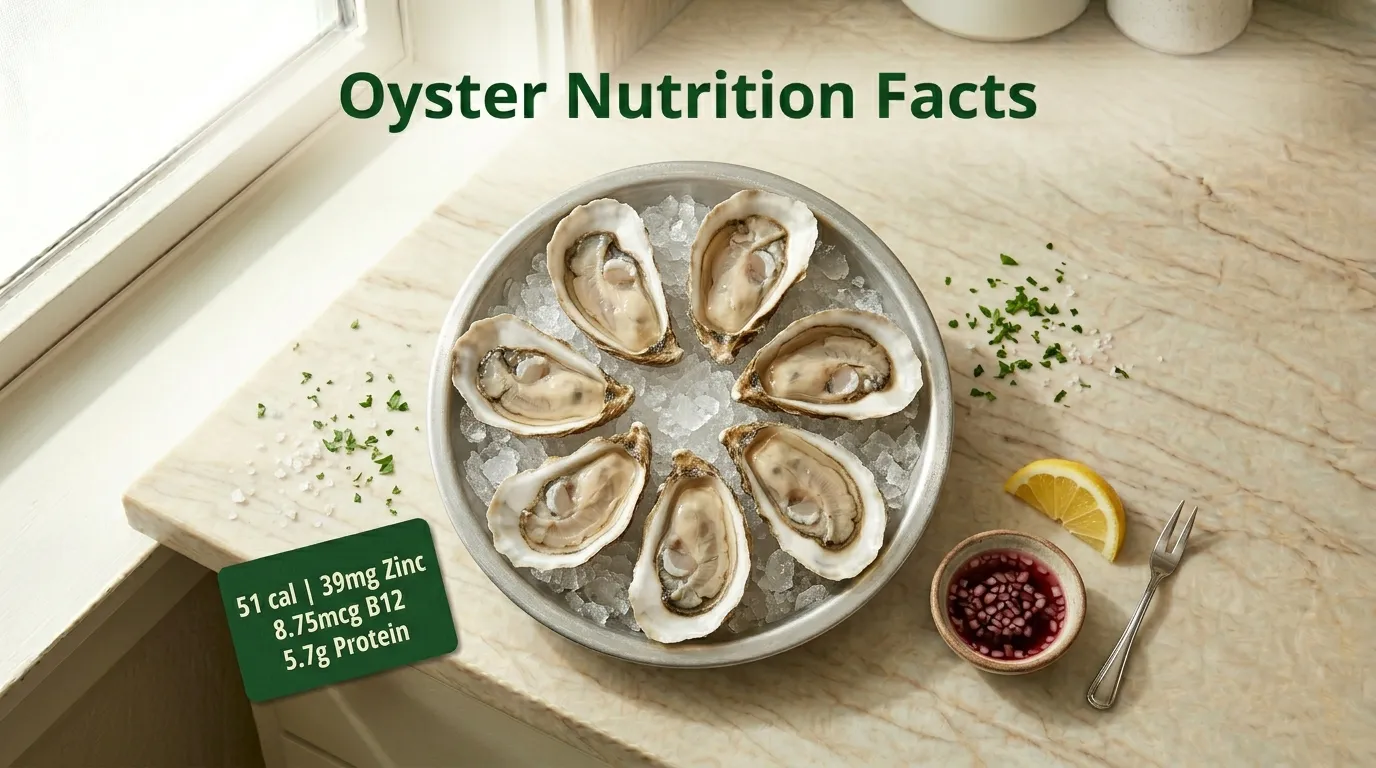
A standard 100-gram (approximately 6 medium) serving of raw Eastern oysters contains just 51 calories, yet delivers an astonishing nutritional punch including 5.71g of protein, 1.71g of fat, and over 729% of the Daily Value for vitamin B12 . This makes oysters one of the most nutrient-dense foods on the planet, often described as a “multivitamin from the sea.”
The USDA National Nutrient Database confirms that raw Eastern oysters provide a unique combination of micronutrients rarely found together in a single food . A single serving contains nearly 40mg of zinc (over 350% DV), 8.75mcg of vitamin B12 (over 360% DV), 4.61mg of iron (26% DV), and 39.5mcg of selenium (72% DV) . A 2026 study published in the Journal of Oceanology and Limnology identified protein, essential fatty acids, selenium, zinc, taurine, EPA, and DHA as core nutritional components of Pacific oysters .
This guide provides complete oyster nutrition facts for 2026, including variety-specific comparisons (Eastern vs. Pacific), cooked vs. raw differences, mineral content breakdowns, omega-3 fatty acid profiles, and safety considerations for different populations.
Key Takeaway: Oysters are one of the most nutrient-dense foods available, providing exceptional amounts of zinc, vitamin B12, selenium, and iron for very few calories.
Raw Oyster Nutrition Facts (Eastern)
Raw Eastern oysters (Crassostrea virginica) are the most common variety found along the Atlantic coast. A 100-gram serving (approximately 6 medium oysters) contains 51 calories, 5.71g protein, 1.71g fat, 2.72g carbohydrates, and 0g fiber .
The macronutrient profile is ideal for low-calorie, high-protein eating. Protein contributes approximately 45% of total calories, fat contributes 30%, and carbohydrates contribute 21%. The fat content includes heart-healthy omega-3 fatty acids, particularly EPA and DHA .
For portion control, a single medium raw Eastern oyster contains approximately 10 calories, 0.99g protein, 0.34g fat, 0.55g carbohydrates, and 0.62g sugar . Six oysters provide a complete serving with only 60 calories, making them an excellent choice for weight management.
| Nutrient | Per 100g (6 medium) | Per 1 medium oyster | % Daily Value (100g) |
|---|---|---|---|
| Calories | 51 | 10 | 3% |
| Protein | 5.71g | 0.99g | 11% |
| Total Fat | 1.71g | 0.34g | 2% |
| Carbohydrates | 2.72g | 0.55g | 1% |
| Fiber | 0g | 0g | 0% |
| Sugars | 0.62g | 0.10g | — |
Key Takeaway: Raw Eastern oysters are extremely low in calories and carbohydrates, making them suitable for low-carb, keto, and weight loss diets.
Pacific Oyster Nutrition Facts
Pacific oysters (Crassostrea gigas) are larger and have a slightly different nutritional profile than their Eastern counterparts. A 100-gram serving of raw Pacific oysters contains 81 calories, 9.45g protein, 2.30g fat, 4.95g carbohydrates, and 0g fiber .
A 2026 study from the Journal of Oceanology and Limnology conducted comprehensive quality evaluation of C. gigas from various sources in the North Yellow Sea, China . The research identified that protein, essential fatty acids (EPA and DHA), selenium, zinc, taste amino acids, and taurine are the core nutritional components contributing to 82.25% of the cumulative variance in oyster quality .
The study found that diploid oysters of medium size from Rushan demonstrated superior nutritional quality compared to other tested samples . This research provides the first comprehensive and systematic investigation of C. gigas nutritional quality, revealing that geographic origin, ploidy, size, and culture mode all affect nutritional composition.
| Nutrient | Per 100g | Per 1 medium (50g) | % Daily Value (100g) |
|---|---|---|---|
| Calories | 81 | 40 | 4% |
| Protein | 9.45g | 4.72g | 19% |
| Total Fat | 2.30g | 1.15g | 3% |
| Carbohydrates | 4.95g | 2.48g | 2% |
| Vitamin C | 8.0mg | 4.0mg | 9% |
Key Takeaway: Pacific oysters have more calories and protein than Eastern oysters but are still nutrient-dense. They contain measurable vitamin C, which Eastern oysters lack.
Vitamin B12 in Oysters
Oysters are arguably the world’s best dietary source of vitamin B12 (cobalamin). Raw Eastern oysters contain 8.75mcg of vitamin B12 per 100g serving . Pacific oysters contain even more at 16.00mcg per 100g . This represents 365% and 667% of the Daily Value, respectively.
Vitamin B12 is essential for red blood cell formation, neurological function, and DNA synthesis. The National Institutes of Health recommends 2.4mcg daily for most adults. A single medium Pacific oyster contains approximately 8mcg of B12 , exceeding the entire daily requirement in just one oyster.
The form of B12 found in oysters is primarily methylcobalamin and adenosylcobalamin, the active forms that the body can use immediately without conversion. This is significant because some people (particularly older adults and those with digestive issues) cannot convert synthetic cyanocobalamin found in many supplements into the active form. A 2026 comparative analysis of nutrient profiles confirmed that oysters provide a 729% higher daily need coverage for vitamin B12 compared to nuts and cocoa .
Vitamin B12 content comparison:
- Eastern oysters (100g): 8.75mcg (365% DV)
- Pacific oysters (100g): 16.00mcg (667% DV)
- Beef liver (100g): 70-80mcg (higher, but significantly higher in calories)
- Salmon (100g): 3-4mcg (approximately 150% DV)
- Eggs (2 large): 1.2mcg (50% DV)
Key Takeaway: A single medium Pacific oyster provides more vitamin B12 than you need in an entire day. Oysters are an exceptional source for vegetarians who eat seafood or anyone with B12 deficiency concerns.
Zinc Content in Oysters
Oysters are the single best dietary source of zinc, a mineral essential for immune function, wound healing, DNA synthesis, and cell division. Raw Eastern oysters contain 39.30mg of zinc per 100g serving . This represents approximately 357% of the Daily Value (11mg for adult men, 8mg for adult women).
Zinc bioavailability from oysters is excellent. Animal-based zinc sources (oysters, red meat, poultry) are absorbed more efficiently than plant-based sources because they do not contain phytates that inhibit absorption. A 2026 nutrient comparison database confirmed that oysters contain 32 times more zinc than hazelnuts and 14 times more than cashews .
Zinc deficiency affects approximately 17% of the global population, with symptoms including impaired immune function, hair loss, delayed wound healing, and loss of taste or smell. A single serving of 6 raw oysters provides nearly 40mg of highly bioavailable zinc, far exceeding daily requirements. However, the Tolerable Upper Intake Level for zinc is 40mg daily for adults. Regular consumption of large quantities of oysters could theoretically approach this limit.
Zinc content comparison:
- Oysters (100g): 39.30mg (357% DV)
- Beef (100g): 4-5mg (45% DV)
- Pumpkin seeds (100g): 7-8mg (70% DV)
- Cashews (100g): 5.78mg (53% DV)
Key Takeaway: Six raw oysters provide nearly the entire upper intake limit for zinc. This is beneficial for deficiency but warrants moderation for regular high-quantity consumption.
Selenium and Iron in Oysters
Selenium: Raw Eastern oysters contain 39.5mcg of selenium per 100g serving , representing 72% of the Daily Value (55mcg). Selenium is essential for thyroid hormone metabolism, antioxidant defense systems, and reproduction. It works synergistically with vitamin E to protect cell membranes from oxidative damage.
Pacific oysters provide a similar selenium content profile. A 100g serving contains approximately 14.3-39.5mcg depending on variety and growing conditions . The 2026 Journal of Oceanology and Limnology study identified selenium as a core nutritional component of high-quality oysters, alongside protein, essential fatty acids, and zinc .
Iron: Oysters are also an excellent source of iron. Raw Eastern oysters contain 4.61mg of iron per 100g , representing 26% of the Daily Value (18mg for premenopausal women, 8mg for men). The iron in oysters is heme iron, which is absorbed at 15-35% efficiency compared to 2-20% for non-heme iron from plant sources.
The combination of iron, zinc, and selenium in a single low-calorie food makes oysters unique among protein sources. Red meat provides iron and zinc but at significantly higher calorie and saturated fat costs. Plant sources provide these minerals but with lower bioavailability and often higher carbohydrate content.
Quick Tip: The heme iron in oysters is particularly beneficial for individuals with iron deficiency anemia, especially premenopausal women who have higher iron requirements.
Omega-3 Fatty Acids (EPA and DHA)
Oysters are a meaningful source of long-chain omega-3 fatty acids, specifically eicosapentaenoic acid (EPA) and docosahexaenoic acid (DHA). A 100g serving of oysters contains approximately 1.056g of polyunsaturated fatty acids, with EPA, DHA, and linoleic acid being the prominent fatty acids .
The n-3/n-6 index in oysters is high, indicating a predominance of anti-inflammatory omega-3 fatty acids over pro-inflammatory omega-6 fatty acids . This ratio is important for cardiovascular health, brain function, and reducing systemic inflammation.
A 2025 biochemical profile of Crassostrea madrasensis confirmed that polyunsaturated fatty acids were the highest fraction of total lipids . This means that despite oysters containing moderate total fat, the majority of that fat is in the heart-healthy unsaturated form rather than saturated fat.
Omega-3 content comparison (per 100g):
- Oysters: Approximately 0.5-1.0g EPA/DHA combined
- Salmon: 2.0-2.5g EPA/DHA combined (higher, but more calories)
- Sardines: 1.5-2.0g EPA/DHA combined
- Chicken breast: 0.0-0.1g EPA/DHA combined
Key Takeaway: Oysters provide meaningful omega-3s with far fewer calories than fatty fish like salmon. They are an excellent option for people who need to limit calorie intake but want anti-inflammatory benefits.
Cooked vs. Raw Oyster Nutrition
The nutrition profile of oysters changes significantly with cooking method. While raw oysters provide the purest nutrient profile, cooking is necessary for safety for many populations and can alter nutrient bioavailability.
Raw oysters retain all water-soluble vitamins (B vitamins, vitamin C) that may be lost or degraded during cooking. The zinc, iron, and selenium content remains unchanged, as minerals are heat-stable. Raw oysters also contain naturally occurring enzymes that may aid digestion, though this benefit is not well-established in research.
Cooked oysters (steamed, baked, grilled, or fried) have nutrient concentrations that appear higher on a per-weight basis because water loss during cooking concentrates the solids. A 100g serving of cooked oysters contains more calories, protein, fat, and minerals than 100g of raw oysters simply because the water has been removed.
However, high-heat cooking can degrade some heat-sensitive vitamins, particularly thiamin (B1), vitamin C, and to a lesser extent, vitamin B12. Frying adds significant fat and calories. Breaded and fried oysters contain approximately 100-150 additional calories per serving from oil and breading.
To maximize oyster nutrition:
- Step 1: Choose raw or lightly steamed oysters to preserve water-soluble vitamins.
- Step 2: If cooking, use moist heat methods (steaming, poaching) rather than dry heat or frying.
- Step 3: Avoid breaded and fried oysters if you are watching calories or fat intake.
- Step 4: Serve with lemon wedges (vitamin C enhances non-heme iron absorption, though oyster iron is already heme).
- Step 5: Consume oysters shortly after cooking, as B vitamins degrade with prolonged heat holding.
Quick Tip: For nutrient preservation, raw is best. For safety (pregnancy, immunocompromised, elderly), thorough cooking is mandatory regardless of nutrient loss.
Oyster Protein Quality
The protein quality of oysters is exceptionally high, as confirmed by a 2025 biochemical analysis of Crassostrea madrasensis . Researchers found that oysters contain total amino acid content of 99.33g per 100g of crude protein. The essential amino acid lysine was the most abundant, while valine had the lowest essential amino acid score (0.17) and threonine had the highest (3.62).
The Protein Efficiency Ratio (PER) of oyster protein is 3.92, which significantly exceeds the standard reference protein (casein, with a PER of 2.5) . The Essential Amino Acid Index (EAAI) is 120.2, and the Biological Value (BV) is 174.0 .
These metrics indicate that oyster protein is of superior quality. Biological Value measures how efficiently the body uses absorbed protein. A BV of 174 means oyster protein is utilized more efficiently than whole egg (BV of 100), which is the reference standard for high-quality protein.
Protein quality metrics:
- Oyster BV: 174.0
- Whole egg BV: 100
- Cow’s milk BV: 91
- Beef BV: 80
- Plant proteins BV: 50-80 (depending on complementation)
Key Takeaway: Oyster protein quality exceeds even whole eggs, making oysters one of the most efficient protein sources available for muscle synthesis and tissue repair.
Oyster Minerals and Trace Elements
Beyond zinc, selenium, and iron, oysters provide a broad spectrum of essential minerals and trace elements. A 100g serving of raw Eastern oysters contains :
| Mineral | Amount per 100g | % Daily Value |
|---|---|---|
| Calcium | 59mg | 6% |
| Iron | 4.61mg | 26% |
| Magnesium | 18mg | 4% |
| Phosphorus | 97mg | 8% |
| Potassium | 156mg | 3% |
| Sodium | 85mg | 4% |
| Zinc | 39.30mg | 357% |
| Copper | 5.707mg | 634% |
| Selenium | 39.5mcg | 72% |
| Manganese | 0.591mg | 26% |
The copper content is particularly notable at 5.707mg per 100g , representing 634% of the Daily Value. Copper is essential for iron metabolism, nervous system function, and collagen formation. However, the Tolerable Upper Intake Level for copper is 10mg daily for adults. Six raw oysters approach this limit, so regular consumption of very large quantities could be problematic.
A 2026 comprehensive evaluation of Pacific oysters confirmed that mineral content varies by geographic origin, size, and culture method . Oysters from Rushan showed superior mineral profiles compared to other sources. Medium-sized oysters had better nutritional quality than small or large specimens.
Key Takeaway: Oysters provide an unmatched concentration of trace minerals, particularly zinc and copper. This is beneficial but warrants awareness of upper intake limits for regular high-quantity consumers.
Oyster Vitamins Overview
The vitamin profile of oysters is impressive, particularly for B vitamins and vitamin D. Raw Eastern oysters provide :
| Vitamin | Amount per 100g | % Daily Value |
|---|---|---|
| Vitamin B12 | 8.75mcg | 365% |
| Riboflavin (B2) | 0.090mg | 7% |
| Niacin (B3) | 0.925mg | 6% |
| Vitamin B6 | 0.031mg | 2% |
| Folate | 7mcg | 2% |
| Vitamin A (RAE) | 13mcg | 1% |
| Vitamin E | 0.85mg | 6% |
Oysters are one of the few naturally occurring dietary sources of vitamin D. Pacific oysters contain 81 IU (2mcg) of vitamin A (RAE) per 100g , though vitamin D content is more notable in some species.
According to Oxford Reference, one dozen oysters (approximately 120g of edible portion) provides an exceptionally rich source of vitamin B12, a rich source of iron, iodine, selenium, and vitamin D, and a good source of protein and niacin . This makes oysters uniquely valuable for individuals with malabsorption issues or increased nutrient requirements.
Quick Tip: For vitamin B12 specifically, oysters outperform nearly every other food source except organ meats like liver. For individuals avoiding red meat, oysters are an excellent alternative.
Oyster Safety and Foodborne Illness Risk
Raw oyster consumption carries a risk of foodborne illness, particularly from Vibrio vulnificus and Vibrio parahaemolyticus bacteria naturally present in warm coastal waters. The Centers for Disease Control and Prevention (CDC) estimates that approximately 80,000 people in the United States get vibriosis each year, and 100 people die from it. People with compromised immune systems are at highest risk.
The risk of Vibrio infection increases during warmer months (May through October) when water temperatures rise. Oysters harvested during these months are more likely to harbor bacteria. Cooking oysters thoroughly kills Vibrio and other pathogens.
Populations who should never eat raw oysters:
- Pregnant women: Risk of bacterial infection that could harm the fetus
- People with liver disease: Cirrhosis or hemochromatosis increases susceptibility
- Diabetics: Immunocompromised status increases risk severity
- People with cancer (undergoing chemotherapy): Suppressed immune systems
- People with HIV/AIDS: Increased vulnerability to infection
- People taking immunosuppressive medications: Transplant recipients, autoimmune disease patients
- Elderly individuals: Age-related immune decline
For these populations, only thoroughly cooked oysters are safe. Cooking at 145°F (63°C) for 15 seconds kills Vibrio bacteria. Steaming, baking, broiling, or frying until the flesh is opaque throughout eliminates the risk.
If you have hemochromatosis (iron overload disorder), oysters’ high iron content may be problematic. Consult your physician before including oysters regularly in your diet. The iron content per serving (4.61mg) is significant but not excessive for most people.
Key Takeaway: Raw oysters are delicious and nutritious but carry real food safety risks. Pregnant women, immunocompromised individuals, and people with liver disease should only eat thoroughly cooked oysters.
Oyster Nutrition for Specific Diets
Keto and Low-Carb Diets: Oysters are excellent for ketogenic diets. Eastern raw oysters contain 2.72g total carbohydrates and 0g fiber per 100g, meaning approximately 2.72g net carbs per serving . A serving of six oysters fits easily into a 20g daily carb limit. The high zinc content also supports immune function, which can be beneficial during the metabolic adaptation phase of keto.
Weight Loss: At 51 calories per 100g (approximately 10 calories per oyster), oysters provide one of the lowest calorie-to-protein ratios available . The high protein content (5.71g/100g) combined with low calories makes oysters extremely satiating. The texture also requires chewing, which increases satiety signals compared to liquid protein sources.
Diabetic Diet: The low carbohydrate content (2.72g/100g) and absence of added sugar make oysters safe for diabetics. The zinc content supports insulin function and glucose metabolism. Research suggests that zinc plays a role in insulin synthesis, storage, and secretion. However, raw oysters carry Vibrio risk that is higher for diabetics due to immunocompromise. Diabetics should eat fully cooked oysters.
Pregnancy: Raw oysters are off-limits during pregnancy due to Vibrio and Listeria risks. However, thoroughly cooked oysters provide exceptional nutrition for fetal development. Vitamin B12 supports neural tube formation and neurological development. Zinc supports cell division and growth. Iron helps prevent maternal anemia. Cook oysters until the flesh is opaque and firm throughout before consuming during pregnancy.
Quick Tip: If you have a health condition that compromises immunity, always request oysters cooked thoroughly. Do not rely on restaurant “lightly steamed” preparations; ask for well-done.
Frequently Asked Questions About Oyster Nutrition Facts
H3: How many calories are in one raw oyster?
One raw Eastern oyster contains approximately 10 calories, 0.99g protein, 0.34g fat, 0.55g carbohydrates, and 0.10g sugar . Pacific oysters are larger and contain approximately 33 calories per oyster .
H3: Are oysters good for you?
Yes, oysters are exceptionally nutritious. They provide more zinc per serving than any other food, exceptional amounts of vitamin B12, significant iron and selenium, high-quality protein, and omega-3 fatty acids . However, raw oysters carry food safety risks for pregnant women, elderly individuals, and immunocompromised people.
H3: How much zinc is in a serving of oysters?
A 100g serving (approximately 6 medium raw Eastern oysters) contains 39.30mg of zinc , representing approximately 357% of the Daily Value for adult men (11mg) and 491% for adult women (8mg). A single oyster contains approximately 6-7mg of zinc.
H3: Can you eat oysters every day?
Daily oyster consumption is safe for most healthy adults in moderation (3-6 oysters per day). However, the high zinc and copper content could theoretically approach upper intake limits with very large daily quantities. The Tolerable Upper Intake Level for zinc is 40mg daily for adults, and six oysters provide approximately 39mg. Individuals with hemochromatosis should avoid daily consumption due to iron content.
H3: Are raw oysters or cooked oysters more nutritious?
Raw oysters retain more water-soluble vitamins (particularly B vitamins and vitamin C) that can be degraded by heat. However, cooked oysters have higher nutrient concentrations by weight because water loss concentrates solids. Mineral content (zinc, iron, selenium) is not affected by cooking. The choice between raw and cooked should prioritize safety over minor nutrient differences for at-risk populations.
H3: Are oysters high in cholesterol?
A 100g serving of raw Eastern oysters contains 79mg of cholesterol . This is moderate compared to shrimp (195mg/100g) or eggs (373mg/100g). Current dietary guidelines no longer restrict dietary cholesterol for most people, as saturated fat intake has a greater effect on blood cholesterol levels. Oysters are low in saturated fat (0.948g/100g) .
Oysters are one of the most nutrient-dense foods available, providing exceptional amounts of zinc, vitamin B12, selenium, iron, copper, and omega-3 fatty acids for very few calories . A single serving of six oysters contains more zinc than you need in a full day and more vitamin B12 than you need in three days .
The single most practical takeaway is this: if you are healthy and not in a high-risk group, raw oysters offer the most complete nutritional profile with maximum vitamin preservation. If you are pregnant, elderly, immunocompromised, or have liver disease, thoroughly cooked oysters provide nearly identical mineral benefits without the Vibrio risk. For weight loss, low-carb, and diabetic diets, oysters are an excellent protein choice.
When consuming raw oysters, source them from reputable suppliers who follow cold chain protocols. Oysters harvested from colder waters (November through April) have lower bacterial loads than summer-harvested oysters. Always check local health department advisories before consuming raw shellfish, and when in doubt, cook thoroughly.