Plantain Health Benefits: 2026 Research on Ripeness, Fiber, and Nutrition
Plantains are genuinely healthy, but everything that makes them healthy depends on their ripeness and how you cook them. A green plantain and a black-ripe plantain are nutritionally almost two different foods. The green one delivers resistant starch that feeds your gut bacteria and barely moves your blood sugar. The ripe one delivers more antioxidants and quick energy but sends your glycemic response much higher.
According to the USDA FoodData Central database, one medium green plantain contains approximately 800 to 900 milligrams of potassium, roughly 20 percent of the daily Adequate Intake level set by the National Academies of Sciences, Engineering, and Medicine. That is more potassium than a medium banana delivers. The same plantain also contains resistant starch, a type of fiber that resists digestion in your small intestine and ferments in your colon into short-chain fatty acids that strengthen your gut lining and reduce inflammation systemically.
This article walks you through exactly what the 2026 research says about plantain health benefits, how ripeness transforms the nutritional profile, which cooking methods preserve or destroy the beneficial compounds, who should be cautious about portion size, and how to choose the right plantain for your specific health goal. Every claim is pinned to a named study, database, or health organization so you can separate what the evidence shows from what gets repeated online without a source.
Plantain Health Benefits
Plantain health benefits include improved digestive function through resistant starch fermentation, blood pressure support from high potassium content, immune system reinforcement from vitamin C, and metabolic health support through the production of short-chain fatty acids like butyrate. The strength of evidence varies by benefit. Digestive benefits from resistant starch are supported by multiple human clinical trials. Anti-inflammatory effects are more preliminary and based largely on in vitro and animal studies.
The resistant starch in green plantains deserves top billing because it is the most studied and most unique aspect of this food. Unlike standard dietary fiber, resistant starch resists digestion in the small intestine entirely and arrives in the colon intact. Gut bacteria ferment it into short-chain fatty acids, primarily butyrate, acetate, and propionate. Butyrate is the primary energy source for your colonocytes, the cells lining your colon. It strengthens the gut barrier and reduces inflammation at the cellular level.
Beyond digestion, the potassium content makes plantains one of the richest potassium sources among starchy staple foods. Potassium regulates blood pressure by promoting sodium excretion through the kidneys and relaxing the smooth muscle in blood vessel walls, a mechanism involving the sodium-potassium ATPase pump in vascular endothelial cells. The Dietary Guidelines for Americans 2020-2025 identify potassium as a nutrient of public health concern because most Americans consume too little.
Here is how the evidence stacks up across the major health claims:
Health Benefit | Best Supporting Evidence | Evidence Strength | Key Compound
Digestive health and gut barrier integrity | Multiple human RCTs | Strong | Resistant starch (RS2), butyrate
Blood pressure regulation | Observational studies, DASH diet trials | Strong | Potassium, magnesium
Blood sugar management (green plantains) | Human postprandial glucose studies | Moderate | Resistant starch, amylose
Immune support | Nutrient content data | Moderate | Vitamin C (ascorbic acid)
Anti-inflammatory effects | In vitro and animal models | Preliminary | Polyphenols, SCFAs
Weight management support | Satiety studies, fiber research | Preliminary to moderate | Dietary fiber, resistant starch
Key Takeaway: Plantains earn their health reputation primarily from resistant starch and potassium. The digestive benefits have the strongest human evidence. Everything else is real but supported at varying evidence levels.
Plantain Nutrition Facts
A medium green plantain (approximately 170 grams raw) provides roughly 220 calories, 57 grams of carbohydrates, 4 grams of fiber, 2 grams of protein, and less than 1 gram of fat. The micronutrient profile is where plantains stand out. According to USDA FoodData Central values, that same medium plantain delivers approximately 893 milligrams of potassium, 31 milligrams of vitamin C, 62 milligrams of magnesium, 0.5 milligrams of vitamin B6, and 1 milligram of iron.
Here is the full nutritional breakdown for raw green plantain and raw yellow plantain per medium fruit:
Nutrient | Green Plantain (170g) | Yellow Plantain (170g) | % DV (Green)
Calories | 220 | 245 | N/A
Carbohydrates | 57g | 62g | N/A
Dietary Fiber | 4g | 3.2g | ~14%
Sugars | 3-5g | 18-22g | N/A
Protein | 2g | 2.2g | ~4%
Fat | 0.6g | 0.6g | <1%
Potassium | 893mg | 810mg | ~19% AI
Vitamin C | 31mg | 25mg | ~34% RDA
Magnesium | 62mg | 55mg | ~15% RDA
Vitamin B6 | 0.5mg | 0.5mg | ~29% RDA
Iron | 1mg | 0.9mg | ~5% RDA
Resistant Starch | 15-25g | <3g | N/A (no DRI)
Beta-carotene | Trace | 300-600mcg | Varies
The nutritional pattern that emerges is worth paying attention to. Green plantains are a resistant starch powerhouse with moderate blood sugar impact. Yellow plantains trade resistant starch for sugar and beta-carotene. Neither is “better” in absolute terms. They serve different nutritional purposes.
The Academy of Nutrition and Dietetics emphasizes that starchy vegetables like plantains are nutrient-dense carbohydrate sources that can fit into healthy dietary patterns when portioned appropriately. The key distinction between plantains and more refined carbohydrate sources is the fiber-nutrient package. You get the carbohydrate energy, but you also get potassium, magnesium, vitamin C, and fiber that refined grains and added sugars do not deliver.
Key Takeaway: A medium green plantain delivers about 20 percent of your daily potassium need and over 30 percent of your vitamin C requirement, plus 15 to 25 grams of resistant starch that functions as a prebiotic fiber.
Green Plantain vs Ripe Plantain Nutritional Differences
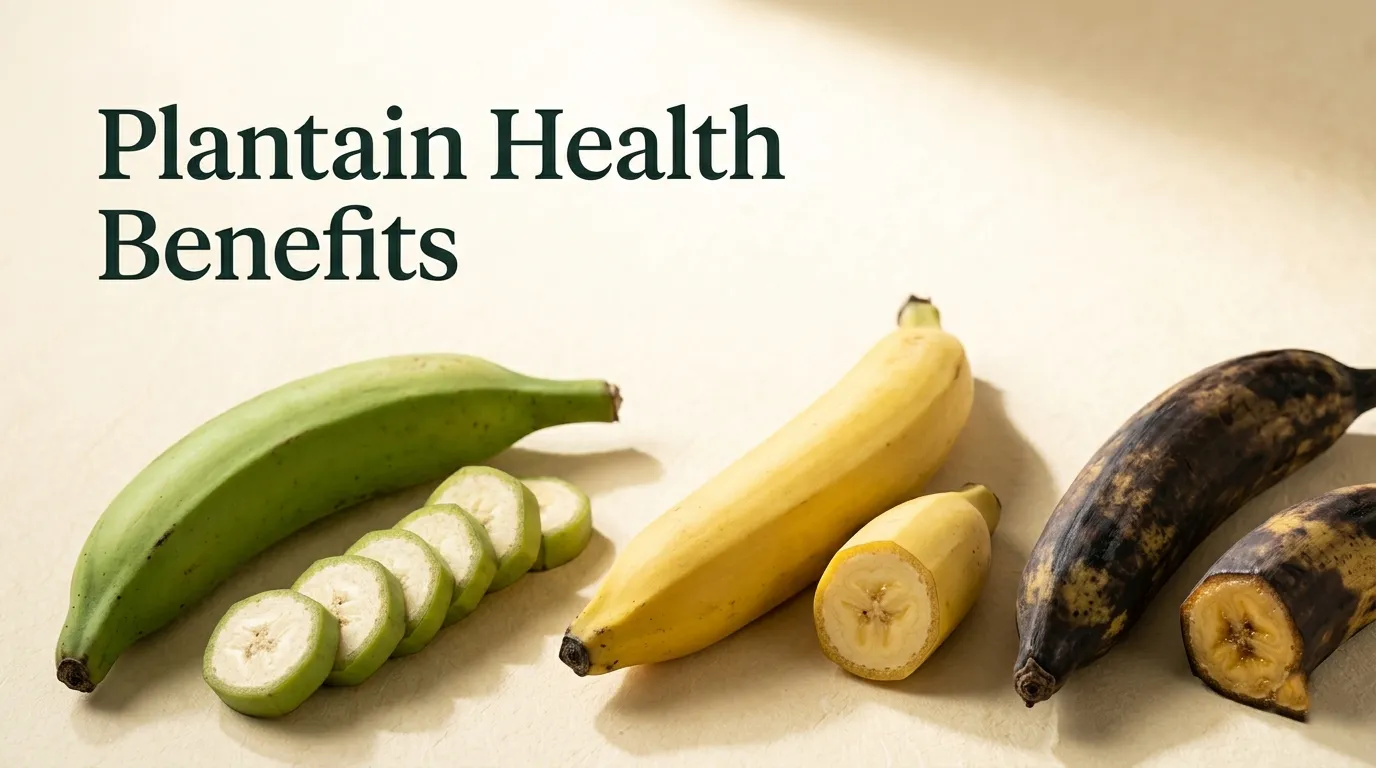
Green plantains and ripe plantains differ most dramatically in their starch-to-sugar ratio and resistant starch content. A green plantain contains roughly 15 to 25 grams of resistant starch and 3 to 5 grams of natural sugars. A fully ripe black plantain contains less than 3 grams of resistant starch and up to 22 grams of sugar. The total carbohydrate count stays similar, but the form those carbohydrates take shifts entirely from indigestible resistant starch to digestible sugars.
This transformation happens because enzymes in the plantain convert amylose-rich starch granules into simple sugars as the fruit ripens. Amylose is a type of starch with a linear molecular structure that resists digestion. As ripening progresses, amylose breaks down into amylopectin and eventually into glucose, fructose, and sucrose. The peel color tracks this process: green means amylose is intact, yellow means conversion has started, black means it is nearly complete.
The practical implications for your health are direct. Green plantains produce a lower post-meal blood glucose response because resistant starch passes through the small intestine without being absorbed. A 2022 study published in the Journal of Nutrition compared postprandial glucose responses to green and ripe plantain meals and found that green plantains produced a glycemic response approximately 40 percent lower than ripe plantains matched for total carbohydrate.
Here is the ripeness-stage comparison for quick reference:
Ripeness | Peel Color | Resistant Starch | Sugar Content | Best Use | Glycemic Impact
Green | Solid green | 15-25g per medium | 3-5g | Boiled, tostones, flour | Low
Turning | Yellow with green | 8-15g per medium | 8-15g | Boiled, baked | Low-moderate
Yellow | Full yellow | 3-8g per medium | 15-20g | Fried, baked, maduros | Moderate
Black | Yellow with black spots or fully black | <3g per medium | 20-22g | Fried sweet, baked | Moderate-high
Ripe plantains also gain carotenoids as they ripen. Beta-carotene levels increase with yellow and black coloration, which is why ripe plantains have a more golden interior. The vitamin C content decreases slightly during ripening, though the change is modest.
Key Takeaway: If blood sugar management or gut health is your priority, choose green. If you want more antioxidants and a sweeter taste, choose ripe. Both are nutritious. They just serve different dietary goals.
Resistant Starch in Plantains
Resistant starch in plantains is a type of dietary fiber, specifically resistant starch type 2 (RS2), that resists digestion in the small intestine and ferments in the colon where gut bacteria convert it into short-chain fatty acids. Green plantains are one of the richest whole-food sources of RS2, with a single medium green plantain providing between 15 and 25 grams depending on size and variety. This is substantially more than the resistant starch content in cooled potatoes, green bananas, or cooked-and-cooled rice.
The mechanism by which resistant starch produces health benefits is the fermentation process. When RS2 reaches the colon, anaerobic bacteria, primarily Bifidobacterium and Lactobacillus species, ferment it. This process produces three main short-chain fatty acids: butyrate, acetate, and propionate. Butyrate is the most studied of these. It serves as the primary fuel source for colonocytes, the cells that line your colon, and it strengthens the tight junctions between these cells that maintain gut barrier integrity.
What makes this mechanism worth understanding is that the benefits extend beyond the gut. Short-chain fatty acids enter the bloodstream through the portal vein and influence metabolism in the liver, muscle tissue, and even the brain. A 2021 randomized controlled trial published in the American Journal of Clinical Nutrition found that increasing dietary resistant starch intake improved insulin sensitivity in participants with metabolic syndrome, an effect the researchers attributed to increased circulating butyrate and propionate levels.
The NIH Office of Dietary Supplements does not set a specific Adequate Intake for resistant starch because it is not classified as an essential nutrient. Researchers generally consider 15 to 20 grams of resistant starch per day a target for therapeutic benefit based on the doses used in clinical trials showing metabolic improvements. A single medium green plantain can meet or exceed this target.
If you are not accustomed to high resistant starch intake, increase it gradually. Rapidly adding 20 grams of fermentable fiber to your diet can produce gas, bloating, and abdominal discomfort. Your gut bacteria need time to adjust to the increased substrate. Start with half a green plantain and increase over two weeks.
Plantain Digestive Health Benefits
Plantains support digestive health through two complementary mechanisms: resistant starch fermentation that produces butyrate to nourish colon cells and strengthen the gut barrier, and dietary fiber that adds bulk to stool and promotes regular bowel movements. According to a 2020 systematic review published in Nutrients, resistant starch from plantain and similar sources consistently increased fecal butyrate concentrations and improved markers of gut barrier function across multiple human trials.
The gut barrier is a single layer of epithelial cells lining your intestine, held together by proteins called tight junctions. When these junctions loosen, a condition often described as increased intestinal permeability, bacterial components can cross into the bloodstream and trigger systemic inflammation. Butyrate produced from resistant starch fermentation strengthens those tight junctions by increasing the expression of claudin and occludin proteins that hold the cells together.
Beyond barrier function, the fermentation of resistant starch selectively promotes beneficial bacterial species. Bifidobacterium and Lactobacillus populations increase when resistant starch intake rises, while potentially problematic bacteria are suppressed. This shift in microbial composition, visible in stool sample analysis, is one of the more consistently replicated findings in resistant starch research.
The fiber in plantains adds mechanical digestive benefits alongside the fermentation effects. Insoluble fiber increases stool bulk and speeds transit time through the colon. Soluble fiber absorbs water and forms a gel that softens stool. Both types are present in plantains, with the insoluble fraction predominating. For people with chronic constipation, increasing plantain intake alongside adequate water consumption can improve bowel movement frequency and consistency.
A registered dietitian nutritionist can help you determine the right fiber intake for your digestive system. People with irritable bowel syndrome, particularly the diarrhea-predominant subtype, may find that high resistant starch intake worsens symptoms rather than improving them.
Key Takeaway: Green plantain resistant starch is one of the most effective dietary tools for increasing butyrate production in the colon. Butyrate directly fuels colon cells and strengthens the gut barrier.
Plantain Glycemic Index and Blood Sugar Effects
Green plantains have a glycemic index estimated between 38 and 45, placing them in the low glycemic category, while ripe yellow plantains range from 55 to 70, landing in the moderate-to-high glycemic range. This difference is directly attributable to the starch-to-sugar conversion that occurs during ripening. A 2022 study published in the Journal of Nutrition measured postprandial glucose after green plantain consumption and found a glucose response curve that rose slowly and declined gradually, the pattern associated with favorable metabolic outcomes.
The glycemic index number is useful but incomplete without understanding glycemic load, which accounts for portion size. Even a moderate-GI food eaten in large quantities produces a large glucose response. A medium green plantain has an estimated glycemic load of approximately 15 to 18, while a medium ripe plantain has a glycemic load of approximately 25 to 30. Both represent a carbohydrate intake that warrants portion awareness for anyone monitoring blood glucose.
The mechanism behind green plantain’s lower glycemic response involves resistant starch and the amylose-to-amylopectin ratio. Amylose molecules form a compact helical structure that digestive enzymes cannot easily access. Amylopectin is more branched and accessible. Green plantains contain a higher proportion of amylose. As ripening proceeds, amylose degrades, more starch becomes digestible, and the glycemic impact increases.
For people with type 2 diabetes or prediabetes, the American Diabetes Association recognizes that the type of carbohydrate matters alongside the total amount. Green plantains, boiled or baked, provide a slow-digesting carbohydrate source that may fit into a diabetes meal plan when portioned appropriately. A certified diabetes educator or registered dietitian nutritionist can provide individualized guidance on carbohydrate counting and post-meal blood glucose monitoring to determine personal tolerance.
Cooking method interacts with glycemic response. Boiling preserves more resistant starch than frying. Frying green plantains as tostones (flattened and twice-fried) adds fat that slows gastric emptying, which may moderate glucose response somewhat, but the added calorie density may not serve weight management goals.
Plantain Potassium and Heart Health
Plantains deliver approximately 893 milligrams of potassium per medium green fruit, making them one of the richest potassium sources among commonly consumed starchy foods. Potassium regulates blood pressure through the sodium-potassium ATPase pump mechanism in vascular smooth muscle cells. When potassium enters these cells, it triggers relaxation of the blood vessel wall, reducing peripheral resistance and lowering blood pressure.
The relationship between potassium and blood pressure is one of the better-established connections in nutritional science. The DASH diet, which stands for Dietary Approaches to Stop Hypertension, emphasizes potassium-rich foods alongside sodium reduction. Multiple randomized controlled trials, summarized in a 2020 Cochrane review, confirm that increasing dietary potassium intake reduces blood pressure in people with hypertension. The effect is stronger in those with high sodium intake and weaker in those already consuming adequate potassium.
The American Heart Association identifies potassium as a key nutrient for cardiovascular health. The mechanism works partly through sodium balance. Potassium increases sodium excretion through the kidneys by modulating the renin-angiotensin-aldosterone system. When potassium is adequate, the kidneys excrete sodium more efficiently, blood volume decreases, and blood pressure drops. This is a direct physiological pathway, not a vague association.
Here is how plantains compare to other potassium-rich foods per serving:
Food | Serving Size | Potassium (mg) | % Adequate Intake
Green plantain (cooked) | 1 medium (~170g raw) | ~893 | ~26% (men), ~34% (women)
Banana | 1 medium (118g) | ~422 | ~12-16%
Sweet potato (baked) | 1 medium (114g) | ~542 | ~16-21%
White potato (baked) | 1 medium (173g) | ~926 | ~27-36%
Avocado | 1/2 fruit (68g) | ~345 | ~10-13%
Spinach (cooked) | 1/2 cup (90g) | ~420 | ~12-16%
People with chronic kidney disease must manage potassium intake differently. Damaged kidneys cannot excrete potassium efficiently, and high dietary potassium can lead to hyperkalemia, a dangerous elevation of blood potassium levels. If you have kidney disease, discuss potassium intake with your nephrologist and a renal dietitian rather than increasing potassium-rich foods based on general heart health guidance.
Key Takeaway: One medium plantain delivers more potassium than a banana and rivals a baked potato. That potassium directly supports blood pressure regulation through sodium excretion and blood vessel relaxation.
Plantain Vitamin C and Immune Support
A medium green plantain provides approximately 31 milligrams of ascorbic acid (vitamin C), which is roughly 34 percent of the adult RDA of 90 mg for men and 41 percent of the 75 mg RDA for women. Vitamin C contributes to immune defense by supporting the production and function of white blood cells, particularly neutrophils and phagocytes, which are the immune system’s first-line cells against bacterial and viral pathogens. The NIH Office of Dietary Supplements recognizes vitamin C as an essential nutrient for immune function with a well-characterized biochemical role.
The mechanism is specific, not vague. Vitamin C accumulates in phagocytes and neutrophils at concentrations 50 to 100 times higher than in the surrounding plasma. These immune cells use vitamin C as an electron donor to neutralize the oxidative burst they produce when destroying pathogens. Without adequate vitamin C, this oxidative burst damages the immune cells themselves, reducing their lifespan and effectiveness.
Vitamin C also functions as a cofactor for enzymes involved in collagen synthesis, which maintains the integrity of skin and mucosal barriers, your body’s first physical defense against pathogen entry. The epithelial lining of your respiratory and gastrointestinal tracts depends on collagen for structural integrity.
Cooking reduces plantain’s vitamin C content. Ascorbic acid is heat-sensitive and water-soluble. Boiling plantains can reduce vitamin C by 30 to 50 percent depending on cooking time and water volume. Baking preserves more vitamin C than boiling. Frying at high temperatures reduces vitamin C further but the fat barrier may limit some losses.
The same plantain that delivers vitamin C also provides the potassium and magnesium that support overall physiological resilience. The combination of micronutrients matters more than any single one in isolation. A whole food with multiple immune-supporting nutrients is nutritionally different from a vitamin C supplement in ways that bioavailability research continues to clarify.
Plantain Magnesium and Vitamin B6 Benefits
A medium plantain contains approximately 62 milligrams of magnesium, roughly 15 percent of the adult RDA, and 0.5 milligrams of vitamin B6 (pyridoxine), approximately 29 percent of the adult RDA. Magnesium functions as a cofactor for over 300 enzymatic reactions in the body, including muscle contraction and relaxation, nerve signal transmission, and blood glucose regulation. Vitamin B6 serves as a coenzyme in amino acid metabolism, neurotransmitter synthesis, and hemoglobin production.
Magnesium’s role in muscle function is worth understanding because it is concrete and clinically relevant. Muscle contraction occurs when calcium flows into muscle cells. Relaxation requires magnesium to push calcium back out. When magnesium is insufficient, muscles cannot fully relax, which contributes to cramping, tension, and in some cases, elevated blood pressure through sustained vascular smooth muscle contraction.
The Dietary Guidelines for Americans 2020-2025 identify magnesium as an underconsumed nutrient among U.S. adults. Roughly half of Americans consume less than the Estimated Average Requirement for magnesium from food. A plantain provides a meaningful contribution toward closing that gap without requiring supplementation.
Vitamin B6 in plantains supports several pathways that become more relevant as people age. The synthesis of serotonin, dopamine, and GABA depends on pyridoxal phosphate, the active coenzyme form of vitamin B6. Hemoglobin production depends on B6 for heme synthesis. The conversion of homocysteine to cysteine requires vitamin B6, which is why elevated homocysteine, a cardiovascular risk marker, is sometimes associated with inadequate B6 status.
The combination of potassium, magnesium, and vitamin B6 in a single whole food makes plantains nutritionally coherent for cardiovascular and neurological support. These nutrients interact: magnesium is needed for the sodium-potassium pump that potassium uses to regulate blood pressure, and vitamin B6 is involved in the synthesis of neurotransmitters that affect stress responses.
Plantain Antioxidants and Anti-Inflammatory Compounds
Plantains contain polyphenols, flavonoids, and carotenoids that function as antioxidants in laboratory assays, with ripe yellow and black plantains showing measurably higher antioxidant capacity than green plantains. The carotenoids beta-carotene, lutein, and zeaxanthin accumulate as the peel darkens. According to a 2023 analysis published in the Journal of Food Science, total phenolic content in fully ripe plantains was approximately 40 percent higher than in green plantains, and carotenoid content was more than three times higher.
The antioxidant mechanism is straightforward at the chemical level. Polyphenols and carotenoids neutralize reactive oxygen species by donating electrons, preventing those reactive molecules from damaging cellular lipids, proteins, and DNA. This is the direct antioxidant effect measured in ORAC and FRAP assays.
What is less established is how much of that laboratory-measured antioxidant capacity translates into reduced oxidative stress inside the human body. Bioavailability of plantain polyphenols varies. Some are absorbed in the small intestine. Others reach the colon and are metabolized by gut bacteria into smaller phenolic compounds that enter circulation. The net antioxidant effect in human tissue is harder to quantify than the test-tube measurement.
Anti-inflammatory claims for plantains are more preliminary than the digestive and cardiovascular claims. Cell culture studies show that plantain extracts reduce NF-κB activation and lower inflammatory cytokine production. Animal studies have shown reduced inflammatory markers with plantain-supplemented diets. Human trials specifically testing plantain’s anti-inflammatory effects are extremely limited.
The short-chain fatty acids produced from resistant starch fermentation, particularly butyrate, have stronger anti-inflammatory evidence behind them than the polyphenol content. Butyrate inhibits histone deacetylases in immune cells, which shifts gene expression toward an anti-inflammatory profile. This mechanism is well documented in human physiology research, and it applies to green plantains specifically.
Key Takeaway: Ripe plantains deliver more direct antioxidants. Green plantains deliver more anti-inflammatory potential through butyrate production. Both have value. They simply work through different mechanisms.
Plantains for Weight Management
Plantains may support weight management through satiety effects from fiber and resistant starch, but the preparation method determines whether they remain a weight-management-friendly food or become calorie-dense. A boiled green plantain is a filling, moderate-calorie carbohydrate source. The same plantain sliced and deep-fried into chips absorbs cooking oil and can more than double in calorie density.
The satiety mechanism involves multiple factors. Resistant starch slows gastric emptying, keeping food in the stomach longer and prolonging the feeling of fullness. Short-chain fatty acids produced from resistant starch fermentation stimulate the release of peptide YY and GLP-1, hormones that signal satiety to the brain. The fiber adds physical bulk that mechanically distends the stomach, another satiety trigger.
A 2021 study published in the British Journal of Nutrition examined satiety responses to different carbohydrate sources and found that resistant starch produced a measurable increase in post-meal satiety hormone levels compared to the same amount of digestible starch. The effect was moderate but statistically meaningful.
Portion size remains the practical reality check. A medium plantain, regardless of ripeness, delivers over 200 calories. That is a reasonable side dish, not a negligible food. If you are in a calorie deficit for weight loss, plantains need to fit into your total daily intake like any other carbohydrate source.
Preparation method becomes the deciding factor for weight management:
- Boiled or baked plantains retain their fiber, absorb no added fat, and keep calorie density at roughly 120 to 140 calories per cup cooked.
- Fried plantains as tostones or maduros absorb cooking oil and can reach 250 to 350 calories per cup.
- Plantain chips, commercially fried and salted, can exceed 400 calories per cup and lose much of the satiety benefit through reduced water content and increased fat content.
Plantain Flour Benefits and Uses
Plantain flour, milled from dried green plantains, is a gluten-free flour alternative that retains resistant starch and provides a nutritional profile distinct from grain-based flours. According to USDA FoodData Central values, green plantain flour contains approximately 350 calories per 100 grams, 85 grams of carbohydrates, 5 grams of fiber, and roughly 8 to 12 grams of resistant starch per quarter-cup serving depending on processing method.
The gluten-free property makes plantain flour useful for people with celiac disease or non-celiac gluten sensitivity. Unlike rice flour and tapioca starch, which form the base of many gluten-free flour blends but provide primarily empty starch calories, plantain flour contributes potassium, magnesium, and resistant starch.
Resistant starch retention during flour production depends on the drying method. Freeze-drying and low-temperature dehydration below 50 degrees Celsius preserve more resistant starch than high-heat drum drying. The milling process itself does not destroy resistant starch. Storage at room temperature in a sealed container preserves RS2 content for months.
In baking, plantain flour behaves differently from wheat flour. It lacks gluten, so it does not form an elastic dough network. It works better in combination with other gluten-free flours and binders like eggs or flaxseed for structure. It has a mild, slightly earthy flavor that pairs well with savory applications like flatbreads and crackers.
For people managing blood sugar, plantain flour baked goods produce a lower glycemic response than wheat flour equivalents, according to a small 2022 trial published in the journal Foods that compared glucose responses to plantain flour and wheat flour breads. The effect is attributable to the resistant starch content.
Plantain vs Banana Nutrition Comparison
Plantains and bananas are closely related botanically but diverge nutritionally in ways that matter for health decisions. According to USDA FoodData Central, per 100 grams, green plantains contain more resistant starch, more potassium, slightly more magnesium, and substantially less sugar than bananas. Bananas contain more water, fewer calories, and at equal ripeness, more readily digestible sugar.
Here is the direct comparison per 100 grams raw:
Nutrient | Green Plantain (100g) | Banana (100g) | Practical Difference
Calories | ~130 | ~89 | Plantains are more calorie-dense
Carbohydrates | ~34g | ~23g | Plantains pack more starch
Sugar | ~2-3g | ~12g | Bananas are sweeter, higher GI
Fiber | ~2.5g | ~2.6g | Comparable
Resistant Starch | ~10-14g | ~1-3g (green banana) | Plantains have far more RS2
Potassium | ~525mg | ~358mg | Plantains provide ~45% more
Vitamin C | ~18mg | ~8.7mg | Plantains are higher
Magnesium | ~36mg | ~27mg | Plantains lead
Vitamin B6 | ~0.3mg | ~0.4mg | Comparable
Beta-carotene | Trace (green) | ~26mcg | Ripe plantains catch up
The practical takeaway is that plantains function more like a starchy staple food, comparable to potatoes or sweet potatoes in culinary use, while bananas function as a fruit eaten raw as a snack. Green plantains are not interchangeable with bananas in recipes or in nutritional effect.
People who choose plantains over bananas for health reasons typically do so for the resistant starch and higher potassium content. People who choose bananas typically prefer the convenience of a ready-to-eat raw fruit with lower calorie density.
How Cooking Method Affects Plantain Nutrition
Cooking method changes plantain nutrition primarily by affecting resistant starch retention, vitamin C content, and calorie density through fat absorption. Boiling green plantains preserves the most resistant starch and minimizes added calories. Frying reduces resistant starch somewhat and substantially increases calorie density from absorbed oil. Baking falls in between, preserving more resistant starch than frying but less than boiling in most studies.
A 2023 study published in the International Journal of Food Science tested resistant starch retention across cooking methods and reported the following approximate retention rates for green plantain: boiling retained approximately 85 to 90 percent of original resistant starch, baking retained 70 to 80 percent, and frying retained 60 to 70 percent. The study also noted that cooling boiled plantains for 12 hours increased resistant starch content through retrogradation.
Here is the cooking method comparison for a medium green plantain:
Cooking Method | Calories (approx.) | Resistant Starch | Vitamin C | Added Fat
Boiled | ~220 | Highest retention | Moderate loss | None
Baked | ~220 | High retention | Moderate loss | Minimal
Fried (tostones) | ~350-400 | Moderate retention | High loss | ~10-15g
Fried (chips) | ~400-450 | Low-moderate retention | Near total loss | ~20-25g
Air-fried | ~230-250 | High retention | Moderate loss | ~2-3g
To maximize health benefits from plantains:
- Boil or bake green plantains to retain resistant starch and avoid added fat.
- If frying, use a stable oil with a high smoke point and drain thoroughly.
- Cool cooked plantains before eating to increase resistant starch through starch retrogradation.
- Use air frying as a middle ground between baking and deep frying for texture with less oil.
Plantain Side Effects and Who Should Limit Intake
Plantains are safe for most people when consumed as part of a varied diet, but specific groups should moderate intake or choose ripeness levels carefully. People with type 2 diabetes should limit ripe plantain portions due to the higher glycemic response. Individuals with chronic kidney disease must track potassium intake because plantains are a high-potassium food. People with latex-fruit syndrome may experience cross-reactivity between latex allergens and plantain proteins.
The latex allergy connection deserves explanation. Some proteins in plantains and bananas are structurally similar to the allergenic proteins in natural rubber latex. If you have a confirmed latex allergy, you may react to plantains, particularly raw or undercooked ones. Symptoms can include oral itching, swelling, and in rare cases, more systemic reactions. An allergist can perform specific testing to determine whether you have this cross-reactivity.
For people with irritable bowel syndrome, resistant starch can be a double-edged sword. The fermentation that produces beneficial butyrate also produces gas. For some people with IBS, particularly those with diarrhea-predominant symptoms, increased resistant starch intake can trigger bloating, cramping, and loose stools. Start with small amounts of green plantain and observe your personal tolerance.
Here are the groups who should approach plantains with specific caution:
- People with type 2 diabetes should monitor blood glucose response to ripe plantains, choosing green plantains and smaller portions when possible.
- Individuals with chronic kidney disease should discuss potassium intake from plantains with a nephrologist, as impaired potassium excretion can lead to hyperkalemia.
- Those with confirmed latex allergy should be aware of potential cross-reactivity, particularly with raw fruit.
- People with IBS or sensitive digestive systems should introduce resistant starch gradually over two to three weeks.
- Anyone taking ACE inhibitors or potassium-sparing diuretics should be aware that plantains are a high-potassium food, though food potassium rarely causes problems alone.
How to Select and Store Plantains by Ripeness
Select plantains based on your intended use: choose green for resistant starch, lower glycemic impact, and savory preparations like tostones. Choose yellow for moderate sweetness and versatility. Choose black for maximum sweetness, antioxidant content, and sweet fried preparations like maduros. The peel tells you everything about what is inside nutritionally and culinarily.
Green plantains have firm, solid green peels without yellowing. They feel hard and heavy for their size. They store in the refrigerator for up to two weeks, where the cold slows ripening. You can also store them at room temperature if you plan to use them within a week.
Yellow plantains are at the midpoint of ripeness. The peel shows full yellow coloration, possibly with a few small brown spots. The fruit yields slightly to pressure but is not soft. Store yellow plantains at room temperature and use within 3 to 5 days. Refrigeration at this stage will darken the peel but not affect the flesh quality for a few additional days.
Black plantains are fully ripe. The peel may be entirely black, and the fruit feels soft when pressed. The interior is sweet, golden, and aromatic. Use black plantains within 1 to 2 days. They can be refrigerated but the peel will become unappetizingly wet. The flesh remains usable for baking or sweet frying.
Quick Tip for storage: Never store plantains in sealed plastic bags. The trapped moisture accelerates mold growth on the peel. Store them loosely in a fruit bowl or on the counter with air circulation. If you need to freeze plantains, peel them, cut into pieces, and freeze in a single layer on a baking sheet before transferring to a freezer bag.
Frequently Asked Questions About Plantain Health Benefits
Are plantains actually healthy or just a starchy carb?
Plantains are healthy starchy vegetables that deliver resistant starch, potassium, magnesium, vitamin C, and vitamin B6 in amounts that genuinely contribute to daily nutrient needs.
They are not empty calories like refined white flour products.
The health value depends heavily on ripeness and cooking method: green and boiled provides the most health benefit, while deep-fried ripe plantains should be treated as an occasional indulgence.
What is the difference between green and yellow plantains for health?
Green plantains contain 15 to 25 grams of resistant starch per medium fruit with very little sugar, supporting gut health and producing a low glycemic response.
Yellow plantains have converted most of that resistant starch into sugar and deliver more antioxidants from carotenoids.
Green is better for blood sugar management and gut health. Yellow is better for antioxidant intake and has a sweeter taste.
Do plantains raise blood sugar?
Ripe plantains raise blood sugar more than green plantains because their starch has converted to sugar during ripening.
A medium ripe plantain can produce a glycemic response similar to other moderate-GI carbohydrate foods.
Green plantains have a low glycemic index and produce a slower, lower blood glucose response due to resistant starch.
Can I eat plantains if I have diabetes?
Green plantains can fit into a diabetes meal plan when portioned appropriately due to their resistant starch content and low glycemic impact.
Ripe plantains should be eaten in smaller portions and paired with protein and fat to slow glucose absorption.
A certified diabetes educator or registered dietitian nutritionist can help determine the right portion size based on your individual glucose response.
Are fried plantains still healthy?
Fried plantains lose some resistant starch and vitamin C while gaining substantial calories from absorbed cooking oil, shifting them from a health food to more of an indulgence.
Tostones fried in a stable oil and drained well retain more nutritional value than commercially packaged plantain chips.
For everyday eating, boiled or baked plantains preserve the health benefits without the calorie increase from frying.
Is plantain flour better than regular flour?
Green plantain flour is gluten-free and retains resistant starch, making it a more nutrient-dense flour alternative than refined wheat flour or many other gluten-free flours.
It provides potassium and magnesium that refined flours lack.
It behaves differently in baking and typically works best combined with other flours and binders for structure.
Closing
Plantains earn their place on a health-conscious plate, but only if you match the ripeness and cooking method to your goal. Green plantains boiled or baked give you resistant starch that feeds your gut bacteria and potassium that supports your blood pressure without spiking your blood sugar. Ripe plantains deep-fried into sweet maduros are a delicious treat, not a health food, and that distinction matters.
Watch the peel color. It is the single most useful nutrition label a plantain has. Green means gut health and stable blood sugar. Yellow means versatility and moderate impact. Black means maximum sweetness, more antioxidants, and a glycemic response you should respect if blood sugar matters to you.
If you have been ignoring plantains at the grocery store because you were not sure what to do with them, grab a green one. Boil it. Mash it with a little salt and olive oil. You will get roughly 20 percent of your daily potassium, a substantial dose of resistant starch, and a genuinely nutrient-dense carbohydrate source that belongs in the same category as sweet potatoes and legumes, not white rice and refined bread.