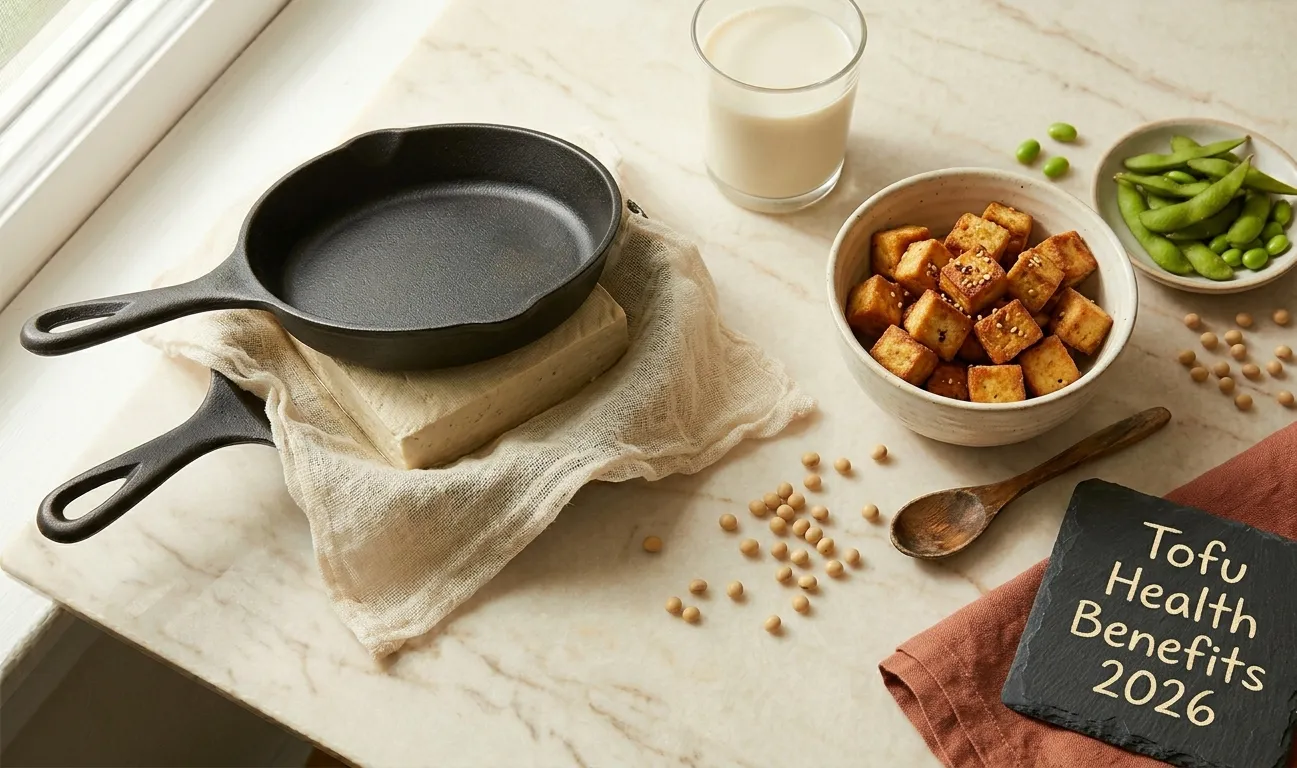
Tofu Health Benefits: 2026 Evidence for Heart, Cancer & Weight
Tofu offers significant health benefits, particularly for heart health and cancer prevention, supported by decades of clinical research and new 2026 findings. It provides high-quality plant protein, lowers LDL cholesterol, and contains isoflavones that are linked to reduced risks of breast cancer and heart disease.
Recent data from the Journal of Nutrition (January 2026) found that high intake of soy foods like natto and tofu is associated with a 56% lower risk of atrial fibrillation in women. Furthermore, in the era of GLP-1 medications (like Ozempic and Wegovy), tofu is emerging as a “clean protein” staple to prevent muscle loss and nutrient deficiency.
This article reviews the full spectrum of tofu’s health benefits based on 2026 research. You will learn the truth about soy and cancer, how tofu protects your heart, and the best ways to incorporate it into your diet.
tofu health benefits
Tofu provides a unique combination of complete protein, essential minerals, and bioactive phytoestrogens that support cardiovascular, metabolic, and bone health.
The primary benefits recognized by major health organizations include lowering LDL (“bad”) cholesterol, reducing the risk of certain cancers, and supporting blood sugar control.
| Benefit | Mechanism | Evidence Strength |
|---|---|---|
| Heart Health | Lowers LDL cholesterol and triglycerides | Strong (Meta-analyses) |
| Cancer Prevention | Blocks Aryl Hydrocarbon Receptors; weak estrogen binding | Strong (Breast/Prostate) |
| Weight Management | High satiety, low calorie density, supports muscle preservation | Moderate |
| Bone Health | Rich in calcium and magnesium (depending on coagulant) | Strong (Osteoporosis) |
Key Takeaway: Tofu is a whole food that delivers multi-system health benefits without the saturated fat or cholesterol found in animal proteins.
H2: is tofu good for you
Yes, tofu is exceptionally good for you. It is considered a “clean” whole food because it typically contains only three ingredients: soybeans, water, and a coagulant (like calcium sulfate or magnesium chloride).
Unlike highly processed meat alternatives, tofu retains all the beneficial components of the soybean. A 2026 analysis highlights that as consumers push back against ultra-processed foods (UPFs), tofu’s simplicity is a major asset. It contains no cholesterol, very little saturated fat, and is naturally gluten-free.
However, context matters. Tofu is beneficial when it replaces red meat or processed foods in your diet. “Adding tofu to a diet already high in calories and saturated fat won’t magically erase the rest of the meal,” caution experts, but as a substitution, it is a net positive for longevity.
Key Takeaway: Tofu is good for you because it is a nutrient-dense, minimally processed plant food that displaces less healthy protein sources.
soy breast cancer risk
Tofu does not cause breast cancer. In fact, eating tofu may lower your risk of breast cancer and reduce the chance of recurrence in survivors.
This is the most persistent myth about soy, and it is scientifically false. The confusion stems from the fact that soy contains “phytoestrogens” (isoflavones), which have a similar chemical structure to human estrogen. However, because estrogen can fuel some breast cancers, people worry.
Cleveland Clinic oncologists Dr. Erin Roesch and Dr. Tiffany Onger clarify that isoflavones do not make the same bond with cell receptors to fuel cancer growth. In fact, isoflavones act as “weak estrogens.” They bind to the receptors and block the body’s stronger, natural estrogen from attaching. It acts like a placeholder that stops the real fuel from getting in.
Key 2026 Consensus:
- No increased risk: Human studies consistently show no link between tofu and breast cancer.
- Potential protective effect: Some studies suggest soy consumption lowers risk, particularly for estrogen-receptor-positive cancers.
- Supplements vs. Food: Avoid high-dose isoflavone supplements, but eat the whole food.
Key Takeaway: Eating tofu is safe and likely protective against breast cancer. The fear is based on outdated rodent studies that do not apply to human metabolism.
isoflavones mechanism
The health benefits of tofu come from isoflavones, specifically genistein and daidzein, which interact with your cells at a molecular level to fight disease.
There are two primary mechanisms driving tofu’s superfood status:
1. The Aryl Hydrocarbon Receptor (AHR) Blockade
Recent analysis highlighted by Plant Based Science London reveals that isoflavones are antagonists to the Aryl Hydrocarbon Receptor (AHR) in cancer cells. Cancer cells overexpress this receptor. When AHR is activated by certain meat-derived compounds or pollutants, it tells cells to grow and replicate. Genistein blocks this signal, essentially telling cancer cells to “self-destruct” (apoptosis) instead of multiplying.
2. Selective Estrogen Receptor Modulation (SERM)
Isoflavones act as SERMs. They have a stronger affinity for the beta (β) estrogen receptor, which is associated with tumor suppression, rather than the alpha (α) receptor, which is linked to breast cell proliferation. By binding to the beta receptor, they inhibit the more potent estrogens produced by the ovaries.
Quick Tip: This mechanism explains why tofu specifically helps with hormone-related cancers and menopausal symptoms without the risks associated with hormone replacement therapy.
Key Takeaway: Tofu’s isoflavones work by hijacking cellular receptors to block cancer growth signals and weakens the impact of the body’s natural estrogen.
tofu cardiovascular benefits
Tofu is a powerful food for preventing heart disease, the leading cause of death worldwide, by improving multiple risk factors simultaneously.
Heart health is where the evidence for tofu is strongest. The Soy Nutrition Institute (SNI) Global states that “hundreds of clinical trials demonstrate that soy has a benefit” on heart health. Tofu works on your blood lipids in three distinct ways:
- Lowers LDL Cholesterol: Soluble fiber and isoflavones help reduce the “bad” cholesterol.
- Lowers Triglycerides: Substituting tofu for animal protein reduces overall fat intake, lowering blood triglycerides.
- Antioxidant Protection: Isoflavones protect LDL particles from oxidation (oxidized LDL is more damaging to arteries than regular LDL).
Furthermore, a 2026 Japanese cohort study (the Suita Study) found that a healthy plant-based diet rich in soy is associated with lower cardiovascular disease mortality. The effect is so pronounced that the FDA has recognized the qualified health claim linking soy protein to reduced heart disease risk.
Key Takeaway: Replacing red meat with tofu just a few times a week can meaningfully improve your cholesterol panel and lower your blood pressure.
natto atrial fibrillation
A landmark 2026 study published in the Journal of Nutrition found that eating fermented soy foods like natto significantly reduces the risk of Atrial Fibrillation (AFib), an irregular heartbeat that increases stroke risk.
While tofu is the focus, soy diversity matters. The prospective cohort study followed over 5,000 participants for an average of 12.6 years.
The Findings:
- For Women: High intake of natto (fermented soy beans) was linked to a 56% lower risk of developing AFib (Hazard Ratio: 0.44).
- Vitamin K Link: Natto is exceptionally high in Vitamin K2 (menaquinone-7). Women with the highest vitamin K intake had a 67% lower risk of AFib.
- Why? Vitamin K helps prevent calcium buildup in the heart’s electrical system and arteries, keeping the rhythm steady.
Note: This specific data on natto shows the power of fermented soy. While tofu has less Vitamin K2 than natto, eating a variety of soy foods is best for AFib prevention.
Key Takeaway: To protect your heart rhythm, consider adding natto (fermented soybeans) to your diet alongside tofu for its high Vitamin K2 content.
soy cholesterol lowering
Soy protein directly lowers cholesterol levels, acting as a natural intervention for hyperlipidemia.
The mechanism is well-established. Soy protein isolates and whole soy foods like tofu increase the excretion of bile acids. Bile acids are made from cholesterol in the liver. When soy binds to these acids and helps excrete them, the liver must pull cholesterol from the blood to make more bile, effectively lowering your serum cholesterol levels.
How much tofu do you need?
Experts at the Soy Nutrition Institute suggest aiming for 25 grams of soy protein per day to achieve these cholesterol-lowering benefits.
| Food | Serving Size | Soy Protein (approx) |
|---|---|---|
| Firm Tofu | 1/2 cup (126g) | 10g |
| Edamame | 1/2 cup | 10g |
| Soy Milk | 1 cup | 7g |
| Tempeh | 3 oz | 15g |
Key Takeaway: You don’t need to eat mountains of tofu. One half-cup block plus a cup of soy milk gets you to the clinically studied 25g protein target for cholesterol reduction.
tofu protein quality
Tofu is a complete protein, meaning it contains all nine essential amino acids your body cannot produce on its own, making it comparable to meat and eggs.
Unlike most plant foods (like beans or rice) that are missing one or two amino acids, soy is a complete package. It is one of the few plant sources, along with quinoa, that meets the PDCAAS (Protein Digestibility Corrected Amino Acid Score) of 1.0—the highest possible score, equivalent to egg white and milk protein.
Tofu vs. Animal Protein:
| Feature | Tofu (3 oz) | Chicken Breast (3 oz) |
|---|---|---|
| Protein | 8-10g | 25g |
| Saturated Fat | 0.5g | 1g |
| Cholesterol | 0mg | 70mg |
| Fiber | 1g | 0g |
| Isoflavones | High | None |
While chicken has more protein per ounce, tofu comes packaged with fiber and disease-fighting phytochemicals. Tofu is slightly lower in the amino acid methionine, which some longevity researchers believe may be beneficial for cellular aging (methionine restriction).
Quick Tip: For muscle building, tofu has a high concentration of Leucine (the trigger for muscle protein synthesis), making it an excellent choice post-workout, especially for older adults trying to prevent sarcopenia.
Key Takeaway: You can rely on tofu as your sole protein source in a meal. It provides all the essential building blocks for muscle and tissue repair.
GLP-1 nutrition
In 2026, tofu is being recognized as the ideal food for people taking GLP-1 weight loss medications like Ozempic and Wegovy due to its high nutrient density and protein-to-calorie ratio.
GLP-1 agonists suppress appetite, which often leads to rapid weight loss. However, a major risk is losing lean muscle mass and bone density, which slows metabolism. Patients need to maximize protein intake while eating very few total calories.
Tofu solves this problem:
- High Protein, Low Calorie: Tofu provides a high concentration of protein without the high calorie load or saturated fat of meat.
- Calcium & Magnesium: Many people on GLP-1s struggle to eat enough dairy. Tofu (especially calcium-set tofu) provides bone-protective calcium and magnesium.
- Clean Label: Users often develop aversions to artificial ingredients. Tofu’s simple ingredient list (soy, water, coagulant) is palatable and easy to digest.
Registered dietitians are now building “GLP-1 meal plans” specifically featuring tofu scrambles and high-protein tofu smoothies to ensure patients lose fat, not muscle.
Key Takeaway: If you are taking weight loss medication, tofu is a strategic tool to preserve muscle mass while maintaining a steep calorie deficit.
tofu nutrition facts
A standard 1/2 cup (126g) serving of firm tofu provides approximately 90-100 calories, 10g of protein, 5g of fat, and 2g of carbohydrates.
The exact nutrition changes based on the type of coagulant used (calcium sulfate vs. magnesium chloride/nigari).
Nutritional Profile (Firm Tofu, 1/2 cup)
- Calories: 90-100
- Protein: 10g (20% DV)
- Fat: 5g (mostly polyunsaturated)
- Carbs: 2g
- Fiber: 1g
- Calcium: 15-20% DV (depending on coagulant)
- Iron: 10% DV
- Manganese: 30% DV
| Type | Texture | Best Use | Protein (per 3oz) |
|---|---|---|---|
| Silken | Smooth, creamy | Smoothies, soups, desserts | 6g |
| Soft | Custard-like | Soups (e.g., Sundubu-jjigae) | 7g |
| Firm | Solid, holds shape | Stir-fries, baking, grilling | 8-9g |
| Extra-Firm | Dense, chewy | Steaks, skewers, scrambling | 10-11g |
Key Takeaway: Firm and Extra-Firm tofu offer the highest protein and calcium density, making them the best choice for main dishes.
tofu calcium iron
Tofu is an excellent non-dairy source of calcium and a good source of iron, particularly important for vegans, vegetarians, and women.
Calcium: The calcium content of tofu depends entirely on the coagulant used.
- Calcium-set tofu (made with calcium sulfate): Contains up to 350mg of calcium per half-cup (roughly the same as a glass of milk).
- Nigari-set tofu (made with magnesium chloride): Contains very little calcium (approx 20-40mg per serving).
- Check the label: Look for “calcium sulfate” in the ingredients to ensure you are getting the bone-building benefits.
Iron:
- Tofu provides non-heme iron (the plant type). While not as easily absorbed as heme iron from meat, the iron in tofu is significant (approx 2mg per serving).
- Pro Tip: Pair tofu with Vitamin C (squeeze lemon juice on your stir-fry or add bell peppers) to increase iron absorption by up to 6 times.
Key Takeaway: If you are lactose intolerant or vegan, choose tofu made with calcium sulfate to meet your daily calcium requirements for bone health.
tofu serving size
The scientifically supported “optimal” serving size for heart health is approximately 25 grams of soy protein per day, equivalent to about 1.5 to 2 servings of tofu.
One standard serving of tofu is 1/2 cup (approximately 126g).
How to hit the 25g target:
- Breakfast: 1 cup soy milk in coffee/smoothie (7g protein).
- Lunch: 1/2 block firm tofu (10g protein) in a salad.
- Dinner: 1/2 cup edamame (8g protein) as an appetizer.
- Total: 25g protein.
Safety note: Unlike Vitamin C or B12, you cannot “overdose” on tofu. Studies on Asian populations consuming 2-3 servings daily show the lowest rates of heart disease and breast cancer. Most Americans eat less than one serving per week, so increasing intake is generally beneficial.
Key Takeaway: Aim for 2 to 3 servings of soy foods (tofu, edamame, or soy milk) spread throughout the day to reach the clinically effective 25g protein threshold.
how to eat tofu
To maximize the health benefits and taste of tofu, you must prepare it correctly. The key is removing water and adding flavor.
1. Press It (For Firm/Extra-Firm)
Water-logged tofu won’t absorb marinades or get crispy.
- Wrap the block in a clean kitchen towel.
- Place a heavy object (cast iron pan, cookbooks) on top for 15-30 minutes.
- Pour off the drained liquid.
2. Freeze It (For Meaty Texture)
Freezing tofu changes its crystal structure, making it spongy and excellent at soaking up sauces. Thaw, press, and then marinate.
3. Cooking Methods
- Baking: Toss cubed tofu in cornstarch and bake at 400°F (200°C) for 20-25 minutes for crispy “croutons.”
- Pan-frying: Use a non-stick pan with minimal oil for golden brown edges.
- Scrambling: Crumble firm tofu into a pan with turmeric (for yellow color), nutritional yeast, and black salt for a vegan “egg” scramble.
- Blending: Use silken tofu blended with cocoa powder and maple syrup for a high-protein chocolate pudding.
Quick Tip: Marinade tofu for at least 30 minutes. Because it is bland on its own, it acts as a sponge for soy sauce, ginger, garlic, or chili paste.
Key Takeaway: Treat tofu like a blank canvas. Press it to remove water, season it well, and it will take on the flavor of whatever sauce or spice you pair it with.
Frequently Asked Questions About Tofu
Is tofu safe for men to eat (does it lower testosterone)?
Yes, tofu is safe for men. The isoflavones in tofu have not been shown to lower testosterone levels or feminize men in any clinical human study. In fact, several studies suggest soy consumption is associated with a lower risk of prostate cancer.
How much tofu should I eat per day for health benefits?
Research suggests that 2 to 3 servings per day (roughly 25g of soy protein) is optimal for lowering cholesterol. One serving is half a cup (126g) of firm tofu. Even 1 serving per day provides significant benefits compared to eating none.
Is tofu considered an ultra-processed food?
No. Tofu is considered a minimally processed whole food. It is made by curdling fresh soy milk (similar to cheese making) and pressing it into blocks. It contains no synthetic preservatives or artificial ingredients, unlike many modern meat alternatives.
Does tofu help with menopause symptoms?
Yes, studies suggest that the isoflavones in tofu can help reduce the frequency and severity of hot flashes during menopause. By binding to estrogen receptors, the phytoestrogens mimic some of the effects of the body’s declining estrogen without the risks associated with hormone therapy.
Which is healthier: firm tofu or silken tofu?
Firm tofu is generally healthier if you are looking for protein, calcium, and iron content because it is more concentrated (less water). Silken tofu is lower in calories and fat but also lower in protein and minerals. Both are healthy; choose firm for main dishes and silken for desserts or sauces.
Can I eat tofu if I have a thyroid condition?
Yes, but with timing considerations. Very high doses of isoflavones can interfere with the absorption of synthetic thyroid medication (levothyroxine). However, eating normal food amounts of tofu is safe. Simply take your thyroid medication on an empty stomach and wait 4 hours before eating tofu, just as you would with calcium supplements or iron pills.
Closing
Tofu is one of the most evidence-backed foods you can eat. It disproves the old myths about cancer risk, proving instead to be a protective, functional food. Modern 2026 research confirms its role in managing cholesterol, preventing atrial fibrillation, and even supporting the unique nutritional needs of GLP-1 weight loss medication users.
Whether you are looking to lower your heart disease risk, add a complete protein to your plant-based diet, or simply find a versatile ingredient for your kitchen, tofu delivers. Start with firm tofu, press it, bake it, and enjoy it as a clean, simple, and delicious staple.