Sunny D Nutrition 2026: Ingredients, Sugar and Health Analysis
Sunny D nutrition facts reveal a beverage that delivers 60 calories and 14 grams of added sugar per 8-ounce serving, with 100 percent of the Daily Value for vitamin C from added ascorbic acid, but almost none of the other nutrients found in whole oranges or 100 percent orange juice. The drink is a fortified, flavored, sweetened beverage, not fruit juice, and its nutritional profile reflects that distinction clearly once you read past the front label.
The Dietary Guidelines for Americans 2020-2025 identify sugar-sweetened beverages as the single largest source of added sugars in the American diet and recommend limiting added sugars to less than 10 percent of daily calories. One 8-ounce serving of SunnyD uses 28 percent of that 50-gram daily limit on a standard 2,000-calorie eating pattern. Many people pour a larger glass, and the math gets worse from there.
This guide walks you through every number on the SunnyD nutrition label, explains what each ingredient does and what the FDA says about its safety, compares SunnyD to orange juice and whole oranges across every relevant metric, and addresses the specific health questions that matter for children, people with diabetes, and anyone trying to make informed beverage choices. You will finish this article knowing exactly what is in SunnyD and whether it belongs in your refrigerator.
Sunny D Nutrition Facts: The Complete Nutritional Breakdown
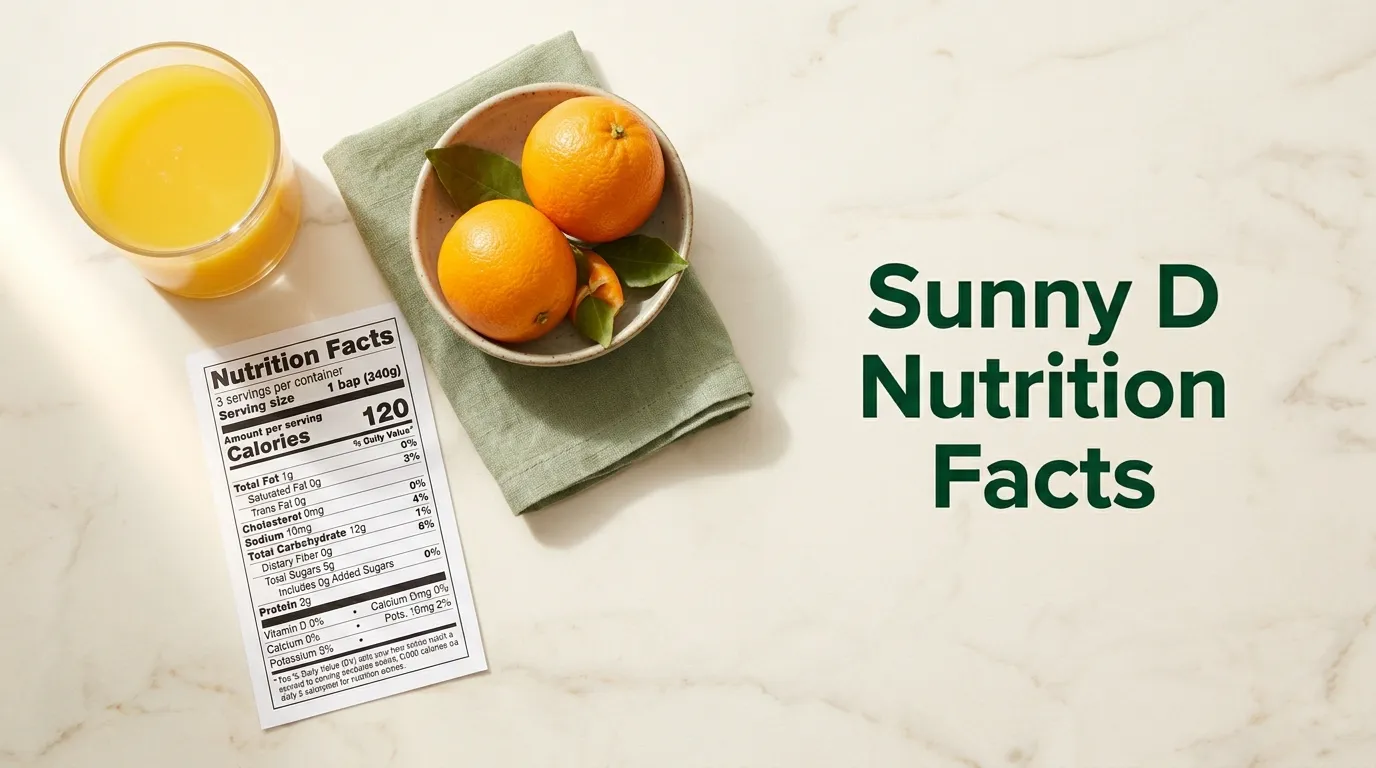
Sunny D nutrition facts per 8-fluid-ounce serving of Tangy Original include 60 calories, 0 grams of fat, 0 grams of protein, 16 grams of total carbohydrates, 0 grams of dietary fiber, 14 grams of total sugars representing all added sugars, and 170 milligrams of sodium. The beverage provides 90 milligrams of vitamin C as ascorbic acid, equal to 100 percent of the Daily Value, and contains no vitamin A, vitamin D, calcium, iron, or potassium.
The nutritional profile tells a clear story when you know what to look for. Calories come exclusively from carbohydrates, with all 14 grams of sugar classified as added sugar. The USDA and FDA define added sugars as sugars that are added during food processing or packaged as such. SunnyD contains no naturally occurring fruit sugars because the beverage contains less than 2 percent concentrated orange juice. The sugar is added, primarily from high fructose corn syrup.
Sodium at 170 milligrams per serving is unusual for a sweet beverage. Most fruit drinks and sodas contain little to no sodium. SunnyD adds sodium through preservatives and processing aids, including sodium hexametaphosphate and sodium benzoate. The sodium content is not a hydration feature. It is a processing requirement for shelf stability and flavor balance.
| Nutrient | SunnyD Amount (8 oz) | % Daily Value | What It Means |
|---|---|---|---|
| Calories | 60 | 3% of 2,000-calorie diet | Low calorie relative to soda (90-140 cal) |
| Total Fat | 0g | 0% | No fat content |
| Sodium | 170mg | 7% | Moderate for a beverage |
| Total Carbohydrates | 16g | 6% | All from added sugars |
| Dietary Fiber | 0g | 0% | No fiber |
| Total Sugars | 14g | N/A (added sugar) | 28% of AHA daily added sugar limit (50g) |
| Protein | 0g | 0% | No protein |
| Vitamin C | 90mg | 100% | Synthetic ascorbic acid |
| Vitamin A | 0% | 0% | None |
| Calcium | 0% | 0% | None |
| Iron | 0% | 0% | None |
| Potassium | 0mg | 0% | None |
The zero values for vitamin A, calcium, iron, and potassium are nutritionally informative. A whole orange provides vitamin A from carotenoids, calcium for bone health, and potassium for blood pressure regulation. A glass of 100 percent orange juice delivers substantial potassium, which the Dietary Guidelines for Americans 2020-2025 identify as an underconsumed nutrient of public health concern. SunnyD delivers none of these. The vitamin C content is real but isolated, a single nutrient added to a beverage otherwise composed of water, sweeteners, and additives.
Sunny D Nutrition Facts Ingredients: Full Ingredient List and Functions
Sunny D nutrition facts ingredients for Tangy Original include: water, high fructose corn syrup, and less than 2 percent of concentrated orange juice, citric acid, ascorbic acid (vitamin C), sodium hexametaphosphate, modified corn starch, canola oil, cellulose gum, xanthan gum, potassium sorbate, sodium benzoate, calcium disodium EDTA, acesulfame potassium, sucralose, Yellow 5, Yellow 6, and artificial and natural flavors. Every ingredient beyond water, high fructose corn syrup, and the trace of juice concentrate serves a processing, preservation, or sensory function.
The ingredient list follows FDA labeling regulations that require ingredients to be listed in descending order by weight. Water is first, as you would expect for a beverage that is primarily water. High fructose corn syrup is second, supplying the 14 grams of sugar per serving. The “less than 2 percent” phrase signals that all remaining ingredients, including the concentrated orange juice, citric acid, vitamin C, preservatives, stabilizers, sweeteners, and colors, collectively represent a small fraction of the total formula by weight.
This ingredient structure explains why SunnyD can claim “100% Vitamin C” while containing almost no actual fruit. The vitamin C comes from added ascorbic acid, a synthetic vitamin identical in chemical structure to the vitamin C found in fruit. The trace of concentrated orange juice contributes flavor notes and allows the label to reference orange juice. It does not meaningfully contribute to the nutritional content beyond a few milligrams of naturally occurring vitamin C.
Key ingredient categories and their functions:
- Sweeteners: High fructose corn syrup (primary calorie source), acesulfame potassium (non-nutritive sweetener), sucralose (non-nutritive sweetener)
- Acidulants: Citric acid (tartness and preservative), ascorbic acid (vitamin C fortification and antioxidant)
- Preservatives: Potassium sorbate (mold inhibitor), sodium benzoate (yeast and bacteria inhibitor), calcium disodium EDTA (metal chelator, preserves color and flavor)
- Stabilizers and thickeners: Modified corn starch (texture), cellulose gum (mouthfeel), xanthan gum (suspension)
- Colorants: Yellow 5 (tartrazine), Yellow 6 (sunset yellow FCF)
- Processing aids: Sodium hexametaphosphate (sequestrant, texture), canola oil (carrier for fat-soluble flavors)
The ingredient list is FDA-compliant and every additive has a regulatory status. The question is not whether the ingredients are legal. They are. The question is what they add up to nutritionally, which is a sweetened, flavored, fortified water product that looks like orange juice on the shelf but shares almost no nutritional identity with it beyond the vitamin C.
Key Takeaway: SunnyD is composed primarily of water and high fructose corn syrup, with a trace of orange juice concentrate for flavor and over a dozen additives for stability, color, taste, and preservation.
Sunny D Tangy Original Nutrition: Macro and Micro Profile
SunnyD Tangy Original nutrition provides 60 calories and 16 grams of carbohydrate per 8-ounce serving, with the entire carbohydrate content coming from added sugars. The micronutrient profile begins and ends with vitamin C. There are no B vitamins, no vitamin A, no vitamin D, no vitamin E, no calcium, no magnesium, no potassium, and no iron in measurable amounts.
The macronutrient profile is the simplest possible: carbohydrates only. There is no fat, no protein, and no fiber. A beverage with this nutritional profile is sometimes described as “empty calories” in nutrition science because it delivers energy without the protein, fiber, or micronutrients that normally accompany calories in whole foods. The Academy of Nutrition and Dietetics encourages consumers to choose nutrient-dense foods and beverages that provide vitamins, minerals, and other health-promoting components with relatively few calories. SunnyD provides one vitamin alongside 14 grams of added sugar.
The vitamin C at 90 milligrams per serving equals 100 percent of the Daily Value, which is set at the level sufficient to meet the needs of 97 to 98 percent of healthy individuals. The NIH Office of Dietary Supplements sets the Recommended Dietary Allowance for vitamin C at 90 milligrams per day for adult men and 75 milligrams per day for adult women, with an additional 35 milligrams recommended for smokers. A single 8-ounce serving of SunnyD hits or exceeds the RDA for most adults.
| Nutrient | SunnyD (8 oz) | 100% Orange Juice (8 oz) | Whole Orange (1 medium) |
|---|---|---|---|
| Calories | 60 | 110 | 62 |
| Carbohydrates | 16g | 26g | 15g |
| Sugars | 14g (all added) | 21g (all natural) | 12g (all natural) |
| Fiber | 0g | 0.5g | 3.1g |
| Protein | 0g | 2g | 1.2g |
| Vitamin C | 90mg (100% DV) | 124mg (138% DV) | 70mg (78% DV) |
| Potassium | 0mg | 500mg (11% DV) | 237mg (5% DV) |
| Folate | 0mcg | 74mcg (19% DV) | 40mcg (10% DV) |
| Vitamin A | 0% DV | 0% DV | 6% DV |
| Calcium | 0% DV | 2% DV | 5% DV |
The comparison table exposes the nutritional gap between SunnyD and real orange products. Orange juice provides potassium, folate, and small amounts of several other micronutrients alongside its vitamin C. A whole orange provides fiber, which slows sugar absorption, supports digestive health, and increases satiety. SunnyD provides vitamin C and added sugar. Everything else is zero.
Sunny D Calories: How Each Variety Compares
SunnyD calories range from 10 to 60 per 8-ounce serving depending on the variety. The Tangy Original formula contains 60 calories. Lower-calorie versions use higher proportions of artificial sweeteners to reduce sugar and calorie content while maintaining sweetness. The calorie differences between varieties reflect differences in sugar content rather than changes to any other nutritional component.
The calorie count of 60 per 8-ounce serving places SunnyD Tangy Original lower than most sodas, which typically contain 90 to 140 calories per 8 ounces, and lower than 100 percent orange juice at 110 calories. This calorie advantage comes from two sources. SunnyD uses non-nutritive sweeteners, acesulfame potassium and sucralose, alongside high fructose corn syrup to achieve sweetness with less sugar than would be required if sugar were the sole sweetener. The 16 grams of carbohydrate in SunnyD compares to 26 grams in orange juice.
The calorie reduction is intentional product design. By blending caloric and non-caloric sweeteners, SunnyD achieves a sweetness level comparable to full-sugar beverages while keeping the calorie count lower. This approach positions SunnyD between diet drinks and full-sugar drinks on the calorie spectrum.
| SunnyD Variety | Calories (8 oz) | Sugar (g) | Sweetener System |
|---|---|---|---|
| Tangy Original | 60 | 14 | HFCS + Ace-K + sucralose blend |
| Smooth (if available) | 60-70 | 14-16 | Similar to original |
| Lower-sugar variants | 10-30 | 2-5 | Primarily non-nutritive sweeteners |
A calorie count of 60 per serving does not make SunnyD a weight management beverage. The calories come from added sugar with no fiber, protein, or other nutrients that contribute to satiety. Liquid calories from sugar-sweetened beverages are less satiating than solid food calories. A 2019 study published in the journal Nutrients found that liquid carbohydrates produce weaker satiety signaling than solid carbohydrates matched for calorie content. You may consume 60 calories of SunnyD and feel no reduction in hunger, meaning those calories add to your total daily intake rather than displacing other calories.
Sunny D Carbs: Total and Added Sugar Breakdown
SunnyD carbohydrates total 16 grams per 8-ounce serving, and all 16 grams are simple sugars with zero grams of dietary fiber or complex carbohydrates. The FDA nutrition facts label for SunnyD lists 14 grams of total sugars and 14 grams of added sugars, with the small discrepancy between total carbohydrates, 16 grams, and total sugars, 14 grams, accounted for by other carbohydrate sources including the modified corn starch and stabilizer gums.
The carbohydrate profile of SunnyD is the simplest possible for a sweetened beverage. There is no starch to digest slowly. There is no fiber to delay absorption. The sugars in solution begin absorbing in the small intestine within minutes of consumption, producing a rapid blood glucose rise. The glycemic response to SunnyD has not been published in peer-reviewed research specifically, but beverages with comparable sugar content and zero fiber predictably produce rapid post-meal blood glucose elevation.
The Dietary Guidelines for Americans 2020-2025 recommend limiting added sugars to less than 10 percent of total daily calories. On a standard 2,000-calorie diet, that translates to 50 grams of added sugar per day. One 8-ounce glass of SunnyD uses 28 percent of that limit. If you pour a more generous 16-ounce glass, which many people do, you consume 120 calories and 28 grams of added sugar, 56 percent of the daily limit in a single beverage.
| Serving Size | Calories | Total Carbs | Added Sugar (g) | % Daily Added Sugar Limit |
|---|---|---|---|---|
| 8 oz (label serving) | 60 | 16g | 14g | 28% |
| 12 oz (small glass) | 90 | 24g | 21g | 42% |
| 16 oz (typical pour) | 120 | 32g | 28g | 56% |
| 20 oz (bottle) | 150 | 40g | 35g | 70% |
People who track carbohydrates for medical reasons, including those with type 1 diabetes who count carbs for insulin dosing, should note that the full 16 grams of total carbohydrate per 8-ounce serving will affect blood glucose. The zero fiber and zero protein means there is nothing present to slow the absorption of the sugar load.
Key Takeaway: SunnyD delivers 14 grams of added sugar per 8-ounce serving, all absorbing rapidly with zero fiber, and a typical 16-ounce pour uses more than half of your daily added sugar allowance.
Sunny D Sugar Content: AHA Limits and What 14g Means
SunnyD sugar content of 14 grams per 8-ounce serving equals roughly 3.5 teaspoons of added sugar. The American Heart Association recommends that adult women limit added sugars to no more than 25 grams, roughly 6 teaspoons per day, and adult men to no more than 36 grams, roughly 9 teaspoons per day. One serving of SunnyD consumes 56 percent of the AHA limit for women and 39 percent for men.
These AHA limits are stricter than the Dietary Guidelines’ 10 percent of calories recommendation because the AHA’s evidence review found that added sugar intake above these thresholds is associated with increased cardiovascular disease risk through multiple pathways including weight gain, elevated triglycerides, and increased blood pressure. The AHA limits are not arbitrary. They represent the sugar intake level above which risk markers begin to shift in population studies.
Children have even lower sugar limits under AHA guidelines. The AHA recommends that children aged 2 to 18 consume no more than 25 grams of added sugar per day, and children under 2 should have zero added sugar. One 8-ounce serving of SunnyD uses 56 percent of a child’s daily sugar allowance. A second glass puts them over the limit before any other food enters the picture.
| Group | AHA Daily Added Sugar Limit | SunnyD 8 oz (14g) % of Limit | SunnyD 16 oz (28g) % of Limit |
|---|---|---|---|
| Adult women | 25g (6 tsp) | 56% | 112% |
| Adult men | 36g (9 tsp) | 39% | 78% |
| Children (2-18) | 25g (6 tsp) | 56% | 112% |
| Children under 2 | 0g | Exceeds limit | Exceeds limit |
The sugar in SunnyD comes primarily from high fructose corn syrup, with additional sweetness from acesulfame potassium and sucralose contributing sweetness without contributing to the sugar gram count. The beverage is designed so that the combination of caloric and non-caloric sweeteners produces a sweetness level that consumer testing has optimized while the sugar gram count on the label is lower than if HFCS were the sole sweetener.
If you are comparing beverages on sugar content alone, SunnyD’s 14 grams per 8 ounces is lower than regular soda at 25 to 30 grams and lower than 100 percent orange juice at 21 grams. The difference is the artificial sweetener blend. SunnyD achieves sweetness with less sugar through non-nutritive sweeteners, a strategy that reduces the sugar gram count on the label but introduces different ingredients that some consumers prefer to avoid.
Sunny D Vitamin C: The Full Story Behind 100% DV
SunnyD vitamin C content delivers 90 milligrams of ascorbic acid per 8-ounce serving, meeting 100 percent of the Daily Value. The vitamin C in SunnyD is not from oranges in any meaningful sense. It is added synthetic ascorbic acid, chemically identical to natural vitamin C but produced through industrial fermentation rather than extracted from fruit.
Ascorbic acid is the chemical name for vitamin C. Whether synthesized in a factory or biosynthesized in an orange, the molecule is the same: C6H8O6. The NIH Office of Dietary Supplements states that synthetic ascorbic acid has bioavailability comparable to naturally occurring vitamin C in foods. Your body absorbs and uses the vitamin C from SunnyD the same way it uses vitamin C from an orange.
The 100 percent Daily Value claim is factually correct and regulated by the FDA. The DV for vitamin C is 90 milligrams for adults and children aged 4 years and older. A product can claim to provide 100 percent of the DV if one serving contains at least 90 milligrams. SunnyD meets this standard through fortification. The claim is real. The vitamin C content is real. What the claim does not tell you is what else is or is not in the beverage alongside that vitamin C.
| Vitamin C Source | Amount per Serving | Other Nutrients Present | Sugar Content |
|---|---|---|---|
| SunnyD (8 oz) | 90mg (100% DV) | None significant | 14g added sugar |
| Orange juice (8 oz) | 124mg (138% DV) | Potassium, folate, thiamine | 21g natural sugar |
| Whole orange (1 medium) | 70mg (78% DV) | Fiber, potassium, folate, vitamin A | 12g natural sugar |
| Vitamin C supplement (500mg) | 500mg (556% DV) | None | 0g |
The vitamin C fortification of SunnyD is not a health gimmick. It is a deliberate product formulation choice that allows SunnyD to make a positive nutrient claim on a product that would otherwise have no nutritional strengths to highlight. The vitamin C is real and bioavailable. The question is whether getting your vitamin C from a beverage that also delivers 14 grams of added sugar and multiple artificial additives is the best way to meet your vitamin C needs.
For people who struggle to meet vitamin C requirements through fruit and vegetable intake, the fortification provides genuine nutritional value. For people who eat a varied diet with citrus fruits, bell peppers, broccoli, strawberries, or potatoes, the vitamin C in SunnyD is redundant. The Tolerable Upper Intake Level for vitamin C is 2,000 milligrams per day for adults. One serving of SunnyD at 90 milligrams is far below any safety concern for vitamin C itself.
Key Takeaway: SunnyD’s 100% vitamin C claim is legitimate and the ascorbic acid is bioavailable, but getting vitamin C from SunnyD means consuming 14 grams of added sugar and artificial additives that don’t come with whole food vitamin C sources.
What Is Sunny D Made Of: Base Ingredients Explained
SunnyD is made primarily of water, high fructose corn syrup, and a small fraction of concentrated orange juice along with citric acid for tartness, ascorbic acid for vitamin C fortification, and over a dozen additional ingredients for preservation, color, texture, and flavor stability. The beverage is classified as a “citrus punch” or “orange-flavored drink” rather than juice because its fruit juice content is minimal.
The base of SunnyD is water, which makes up more than 80 percent of the formula by weight. High fructose corn syrup is the second ingredient, contributing all of the caloric sweetener load and the 14 grams of sugar on the label. High fructose corn syrup is a liquid sweetener made from corn starch that has been enzymatically processed to convert some of its glucose into fructose. The FDA recognizes HFCS as generally recognized as safe, and it is metabolized similarly to sucrose, table sugar, by the human body.
The concentrated orange juice appears at “less than 2 percent” on the ingredient list. This means that for every 100 grams of finished SunnyD, less than 2 grams come from orange juice concentrate. The juice provides some natural orange flavor compounds but contributes negligible nutritional content. The orange color of SunnyD comes primarily from artificial colorants, Yellow 5 and Yellow 6, rather than from the juice content.
| Base Ingredient | Approximate Proportion | Function |
|---|---|---|
| Water | More than 80% | Solvent, hydration base |
| High fructose corn syrup | ~8-10% | Sweetness, calories, body |
| Concentrated orange juice | Less than 2% | Flavor notes, label claim |
| Citric acid | ~0.3-0.5% | Tartness, pH control, preservative |
| Ascorbic acid | ~0.05% | Vitamin C fortification, antioxidant |
The citric acid in SunnyD provides the tart, tangy flavor that mimics citrus juice and lowers the beverage’s pH to inhibit microbial growth. Citric acid is produced commercially through fermentation of sugar by the mold Aspergillus niger and is one of the most widely used food additives globally. The FDA considers it GRAS. In SunnyD, citric acid works alongside the preservatives potassium sorbate and sodium benzoate to create a shelf-stable product.
Sunny D Ingredients: Preservatives, Stabilizers, and Additives
SunnyD ingredients include three preservatives, potassium sorbate, sodium benzoate, and calcium disodium EDTA, and three stabilizers, modified corn starch, cellulose gum, and xanthan gum. Each of these additives has a defined function, FDA regulatory status, and safety profile that can be evaluated independently.
Potassium sorbate and sodium benzoate are antimicrobial preservatives that work best in acidic conditions, which is why they appear together in SunnyD and many other citrus-flavored beverages. Potassium sorbate inhibits molds and yeasts. Sodium benzoate inhibits bacteria and is most effective at pH below 4.5, which SunnyD achieves through its citric acid content. Sodium benzoate can react with ascorbic acid, vitamin C, under certain conditions to form benzene, a carcinogen. The FDA monitors benzene levels in beverages and has worked with manufacturers to minimize this reaction through formulation adjustments.
Calcium disodium EDTA is a chelating agent that binds metal ions like iron and copper. These metals, present in trace amounts in water and ingredients, can catalyze oxidation reactions that degrade color, flavor, and vitamin content over time. By binding them, EDTA preserves the product’s shelf stability and appearance.
| Additive | Function | FDA Status | Safety Notes |
|---|---|---|---|
| Potassium sorbate | Preservative (molds, yeasts) | GRAS | Generally well tolerated |
| Sodium benzoate | Preservative (bacteria) | GRAS | Possible benzene formation with ascorbic acid |
| Calcium disodium EDTA | Metal chelator | GRAS | Prevents oxidation, preserves color |
| Modified corn starch | Thickener, texture | GRAS | Standard processed food additive |
| Cellulose gum | Thickener, stabilizer | GRAS | Derived from plant fiber |
| Xanthan gum | Suspension agent | GRAS | Produced by bacterial fermentation |
| Sodium hexametaphosphate | Sequestrant, texture | GRAS | Contributes sodium content |
| Canola oil | Carrier for flavors | GRAS | Trace amount, not nutritionally relevant |
The stabilizer system, modified corn starch, cellulose gum, and xanthan gum, creates the mouthfeel and physical stability of SunnyD. Without these ingredients, the beverage would separate, feel thin, and lack the body that consumers expect from a juice-like drink. They are collectively responsible for the texture that makes SunnyD feel more substantial than flavored water.
Sunny D Artificial Sweeteners: Acesulfame Potassium and Sucralose
SunnyD artificial sweeteners include acesulfame potassium, often abbreviated as Ace-K, and sucralose, the sweetener sold under the brand name Splenda. These non-nutritive sweeteners provide sweetness without calories, allowing SunnyD to achieve its target sweetness profile at 60 calories and 14 grams of sugar rather than the higher sugar content required if HFCS were the only sweetener.
Acesulfame potassium is approximately 200 times sweeter than sucrose by weight. The FDA approved Ace-K in 1988 for use in specific food categories and later expanded its approval. The FDA has established an Acceptable Daily Intake of 15 milligrams per kilogram of body weight per day. For a 70-kilogram adult, that is 1,050 milligrams per day. The amount of Ace-K in a typical serving of SunnyD is not publicly disclosed by the manufacturer but is a fraction of a gram. Decades of safety reviews by the FDA and EFSA have upheld Ace-K’s safety at approved use levels.
Sucralose is approximately 600 times sweeter than sucrose. It is made through a process that substitutes three chlorine atoms for three hydroxyl groups on a sucrose molecule, creating a compound that tastes sweet but passes through the digestive tract largely unabsorbed. The FDA approved sucralose in 1998, and it is approved for use in the European Union under the designation E955. The FDA ADI for sucralose is 5 milligrams per kilogram of body weight per day.
| Sweetener | Sweetness vs. Sugar | FDA ADI | Calories | Metabolism |
|---|---|---|---|---|
| High fructose corn syrup | 1x (reference) | N/A (caloric sweetener) | 4 cal/g | Metabolized to glucose, fructose, and fat |
| Acesulfame potassium (Ace-K) | 200x | 15 mg/kg/day | 0 | Excreted unchanged in urine |
| Sucralose | 600x | 5 mg/kg/day | 0 | Mostly unabsorbed, excreted in feces |
The dual-sweetener strategy uses HFCS for bulk sweetness and body, Ace-K for a clean sweet taste with rapid onset, and sucralose for sweetness that lingers and rounds out the flavor profile. This approach reduces total sugar and calories while maintaining palatability.
Some people choose to avoid artificial sweeteners due to personal preference, concerns about gut microbiota effects suggested by preliminary research, or the general principle of minimizing ultra-processed food intake. A registered dietitian can provide individualized guidance on whether artificially sweetened beverages fit into your dietary pattern.
Sunny D Food Dyes: Yellow 5, Yellow 6, and Safety Status
SunnyD food dyes include Yellow 5, also known as tartrazine, and Yellow 6, also known as sunset yellow FCF. These synthetic colorants give SunnyD its characteristic bright orange appearance. The trace amount of orange juice concentrate in SunnyD, less than 2 percent, would not produce a visibly orange beverage on its own.
Yellow 5 and Yellow 6 are both FDA-certified color additives, meaning they undergo batch certification by the FDA to ensure purity and identity before use in food products. The FDA has established Acceptable Daily Intake levels for both colors. Yellow 5 has an ADI of 5 milligrams per kilogram of body weight per day. Yellow 6 has an ADI of 3.75 milligrams per kilogram of body weight per day. The amounts of these dyes used in a single serving of SunnyD are small and within regulatory limits.
The safety controversy around synthetic food dyes involves behavioral effects in children rather than carcinogenicity or organ toxicity. A 2007 study published in The Lancet found that a mixture of artificial food dyes, including Yellow 5 and Yellow 6, combined with the preservative sodium benzoate, was associated with increased hyperactivity in a subgroup of children. The study could not isolate which specific dye or combination was responsible. The evidence was sufficient that the European Union now requires a warning label on foods containing certain artificial colors, stating that they “may have an adverse effect on activity and attention in children.”
| Dye | FDA Status | ADI | Known Concerns |
|---|---|---|---|
| Yellow 5 (tartrazine) | FDA certified | 5 mg/kg/day | Possible behavioral effects in sensitive children; rare allergic reactions |
| Yellow 6 (sunset yellow FCF) | FDA certified | 3.75 mg/kg/day | Possible behavioral effects in sensitive children |
The FDA has reviewed the evidence on food dyes and child behavior multiple times and has not changed its conclusion that the dyes are safe for the general population. The American Academy of Pediatrics has taken a more cautious position, stating that while the evidence is not conclusive, parents may reasonably choose to limit their children’s exposure to artificial food colorings.
For children who show behavioral sensitivity to food dyes, SunnyD is a beverage to avoid because it contains two of the dyes most commonly associated with sensitivity reactions. A pediatrician or pediatric allergist can help parents determine whether food dyes affect their specific child.
Key Takeaway: SunnyD’s orange color comes from Yellow 5 and Yellow 6, FDA-certified dyes that are legally approved but linked to behavioral effects in a subset of sensitive children, a concern the American Academy of Pediatrics has acknowledged.
Sunny D Sodium Content: Why a Sweet Drink Contains 170mg
SunnyD sodium content of 170 milligrams per 8-ounce serving represents 7 percent of the Daily Value and comes primarily from sodium hexametaphosphate and sodium benzoate, not from added salt for flavor. The sodium is present as a functional necessity for processing and preservation rather than for taste or hydration.
Sodium hexametaphosphate is a sequestrant, a compound that binds minerals and metals in solution to prevent them from reacting with other ingredients. It helps stabilize the beverage’s color, clarity, and flavor over time. It also contributes to mouthfeel. Sodium hexametaphosphate is a sodium salt, and its sodium content appears on the nutrition facts panel.
Sodium benzoate, the antimicrobial preservative discussed earlier, also contributes sodium. The sodium in sodium benzoate is part of the molecule’s structure, not an added flavoring. When sodium benzoate dissolves in water, the sodium ion separates from the benzoate ion, contributing to the beverage’s total sodium count.
| Sodium Source | Function | Sodium Contribution |
|---|---|---|
| Sodium hexametaphosphate | Sequestrant, texture | Primary sodium source |
| Sodium benzoate | Preservative | Secondary sodium source |
The 170 milligrams of sodium is not physiologically problematic for most healthy adults. The AHA recommends limiting sodium to 2,300 milligrams per day, and SunnyD’s 170 milligrams represents 7 percent of that limit. The sodium content becomes relevant for people on medically prescribed low-sodium diets of 1,500 milligrams per day or less, where 170 milligrams represents 11 percent or more of the daily allowance in a beverage that would not typically be a sodium source.
For parents monitoring sodium intake in children, the sodium in SunnyD is a small but unnecessary contribution. Children’s sodium needs are lower than adults, and the Dietary Guidelines for Americans 2020-2025 recommend that children aged 2 to 13 consume between 1,200 and 2,200 milligrams per day depending on age. A child drinking SunnyD is consuming sodium alongside sugar from a beverage that could be water or milk.
Is Sunny D Healthy: An Honest Nutritional Assessment
Is SunnyD healthy? By the standards of the Dietary Guidelines for Americans 2020-2025, which recommend water, unsweetened tea and coffee, and fat-free or low-fat milk as primary beverage choices, SunnyD is not a healthy beverage. It is a sugar-sweetened, ultra-processed drink with added vitamins and artificial ingredients. The vitamin C content is real. The sugar, additives, and absence of other nutrients are also real.
The health assessment depends on your frame of reference. Compared to water or milk, SunnyD is nutritionally inferior on every metric except vitamin C content, which most people meet through diet and which whole foods provide alongside fiber and other nutrients. Compared to soda, SunnyD has fewer calories, less sugar, and provides vitamin C that soda does not. The comparison to soda makes SunnyD look less unhealthy rather than healthy.
The concept of a “health halo” applies to SunnyD. The orange color, the citrus imagery, and the prominent vitamin C claim create an impression of healthfulness that the full ingredient list and nutritional profile do not support. SunnyD is not orange juice. It is not a fruit product. It is a sweetened, flavored, fortified beverage that happens to be orange in color.
| Health Criterion | SunnyD Assessment |
|---|---|
| Added sugar content | 14g per serving (28% daily limit), exceeds AAP child recommendations |
| Micronutrient density | One nutrient (vitamin C), no others |
| Fiber content | Zero |
| Protein content | Zero |
| Whole fruit content | Less than 2% juice concentrate |
| Artificial additives | Multiple: sweeteners, colors, preservatives, stabilizers |
| Hydration value | Hydrates but delivers sugar and sodium water does not |
| Role in healthy dietary pattern | Displaces water and milk, adds sugar and additives |
The Academy of Nutrition and Dietetics encourages consumers to focus on overall dietary patterns rather than individual foods or beverages. An occasional SunnyD in the context of an otherwise nutrient-dense, low-added-sugar diet is not a health crisis. A daily SunnyD habit, particularly for children, contributes to added sugar intake that exceeds recommendations and displaces beverages that would provide protein, calcium, vitamin D, and other nutrients that support growth and health.
Key Takeaway: SunnyD is a sugar-sweetened, ultra-processed beverage with added vitamin C, nutritionally superior to soda but inferior to water, milk, and whole fruit, and best treated as an occasional treat rather than a daily beverage.
Sunny D vs Orange Juice: Complete Nutritional Comparison
SunnyD versus orange juice compares a fortified citrus-flavored drink to 100 percent fruit juice, and the nutritional differences are substantial across every category except vitamin C. Orange juice provides more total calories and sugar, but its sugars are naturally occurring rather than added, and it delivers potassium, folate, thiamine, and flavonoids that SunnyD does not.
The 110 calories in 8 ounces of orange juice come entirely from naturally occurring fruit sugars, primarily sucrose, glucose, and fructose, extracted from oranges. The USDA FoodData Central database records that orange juice contains 500 milligrams of potassium per 8-ounce serving, 11 percent of the Daily Value. Potassium is an underconsumed nutrient of public health concern per the Dietary Guidelines. Orange juice also provides 74 micrograms of folate, 19 percent of the Daily Value, a B vitamin critical for red blood cell formation and neural tube development during pregnancy.
SunnyD provides none of these nutrients. The 60 calories in SunnyD come from added sugar, primarily high fructose corn syrup. The potassium reading is zero. The folate reading is zero. The trade-off for 50 fewer calories is the loss of every micronutrient except vitamin C and the substitution of natural fruit sugars with added sweeteners and artificial additives.
| Nutrient | SunnyD (8 oz) | Orange Juice (8 oz) | Advantage |
|---|---|---|---|
| Calories | 60 | 110 | SunnyD (fewer calories) |
| Total Sugars | 14g | 21g | SunnyD (less sugar) |
| Sugar Source | Added (HFCS) | Natural (fruit) | Orange juice |
| Vitamin C | 90mg (100% DV) | 124mg (138% DV) | Orange juice |
| Potassium | 0mg | 500mg (11% DV) | Orange juice |
| Folate | 0mcg | 74mcg (19% DV) | Orange juice |
| Thiamine | 0mg | 0.2mg (17% DV) | Orange juice |
| Flavonoids | None | Hesperidin, naringenin | Orange juice |
| Fiber | 0g | 0.5g | Comparable |
| Additives | Multiple | None (pure juice) | Orange juice |
| Protein | 0g | 2g | Orange juice |
The sugar in orange juice, while natural, is still concentrated fruit sugar without the fiber of a whole orange. The American Academy of Pediatrics recommends limiting fruit juice intake to 4 ounces per day for children aged 1 to 3, 4 to 6 ounces for children aged 4 to 6, and 8 ounces for children aged 7 to 18. SunnyD is not juice and would not fall under these guidelines. It falls under the category of sugar-sweetened beverages that the AAP recommends children avoid.
For adults without blood sugar concerns, orange juice provides a more complete nutritional package than SunnyD. For people who need to strictly limit sugar or calories, SunnyD’s lower numbers may look appealing, but water with a whole orange provides better nutrition without any additives.
Sunny D for Kids: AAP Guidelines and Pediatric Considerations
SunnyD for kids conflicts with American Academy of Pediatrics beverage recommendations in several ways. The AAP recommends that children consume primarily water and milk, limit 100 percent fruit juice to small amounts, and avoid sugar-sweetened beverages entirely. SunnyD is a sugar-sweetened beverage. It contains artificial food dyes that may affect some children’s behavior. It displaces beverages that provide protein, calcium, and vitamin D.
The AAP’s 2017 policy statement on fruit juice in children’s diets draws a clear distinction between 100 percent fruit juice and fruit drinks. Fruit drinks, including SunnyD, are not recommended for children of any age. The statement notes that fruit drinks are a leading source of added sugar in children’s diets and contribute to dental caries, unhealthy weight gain, and the displacement of nutrient-dense foods and beverages. The AAP specifically recommends against serving fruit drinks to children.
Pediatric dental health is another consideration with SunnyD. The combination of sugar and citric acid creates an acidic, sugary liquid that bathes teeth with each sip. Pediatric dentists see a clear relationship between frequent consumption of sweetened beverages and early childhood caries. Water and milk are non-cariogenic beverages. SunnyD is not.
| AAP Beverage Recommendation | SunnyD Status |
|---|---|
| 0-6 months: Breast milk or formula only | Not appropriate |
| 6-12 months: Water with meals, no juice | Not appropriate |
| 1-2 years: Water and whole milk, no sugar-sweetened drinks | Not recommended |
| 2-5 years: Water and milk, limited 100% juice (4-6 oz) | Not recommended |
| 6-18 years: Water and milk, 100% juice limited to 8 oz | Not recommended |
The artificial food dyes in SunnyD, Yellow 5 and Yellow 6, add a second pediatric concern beyond sugar. The Southampton study published in The Lancet and subsequent research reviews have led the European Union to require warning labels on foods containing these dyes. The AAP has not issued a formal recommendation to avoid artificial food dyes, but individual pediatricians may suggest limiting them for children with attention or behavioral concerns.
If you choose to serve SunnyD to children, a pediatrician can help you assess whether the sugar and additive content is appropriate for your child’s overall dietary pattern and health status. A pediatric dentist can advise on minimizing dental risk if sweetened beverages are consumed occasionally.
Key Takeaway: SunnyD does not align with American Academy of Pediatrics beverage recommendations for any age group due to its added sugar, artificial dye content, and lack of meaningful nutritional value beyond added vitamin C.
Sunny D Diabetes: Blood Sugar and Insulin Considerations
SunnyD for diabetes management requires the same carbohydrate counting and blood sugar consideration as any other sugar-containing beverage. The 16 grams of total carbohydrate per 8-ounce serving will raise blood glucose predictably and require insulin dosing for people with type 1 diabetes. For people with type 2 diabetes or insulin resistance, the rapid sugar absorption from a liquid with zero fiber presents a glycemic challenge.
The American Diabetes Association does not comment on specific beverage brands but provides general guidance that sugar-sweetened beverages should be minimized in a diabetes eating pattern. The ADA recommends water, unsweetened tea and coffee, and other zero-calorie or very-low-calorie beverages as primary choices. Sugar-sweetened beverages, including fruit drinks, are identified as sources of added sugar that should be limited.
SunnyD’s 14 grams of added sugar per 8-ounce serving is a countable, predictable carbohydrate load. A person with type 1 diabetes using insulin-to-carbohydrate ratios can dose for it. The problem is not that the sugar is unpredictable. The problem is that liquid sugar hits the bloodstream faster than solid food carbohydrates. Without fiber, fat, or protein to slow gastric emptying, the glucose from SunnyD can appear in the bloodstream within 15 to 30 minutes, potentially outpacing the action of some insulin formulations.
| Diabetes Consideration | SunnyD Assessment |
|---|---|
| Total carbohydrate per 8 oz | 16g (one carb count, 15g rounding) |
| Glycemic impact speed | Rapid (liquid, no fiber, no fat, no protein) |
| Added sugar | 14g (all sugar is added, not naturally occurring) |
| Artificial sweeteners | Present (Ace-K, sucralose) |
| ADA alignment | Not aligned with ADA beverage recommendations |
People with type 2 diabetes who are not on insulin may find that SunnyD’s 16 grams of carbohydrate raises their blood glucose more than they expect because of the rapid absorption. Blood glucose monitoring before and after consuming SunnyD can provide individualized information about glycemic response.
A registered dietitian or certified diabetes care and education specialist can help people with diabetes determine whether and how to include SunnyD in their eating pattern. An endocrinologist managing diabetes care can provide guidance on insulin adjustments if needed for occasional sugar-sweetened beverage consumption.
Frequently Asked Questions About Sunny D
What are the main ingredients in Sunny D?
The main ingredients in SunnyD are water, high fructose corn syrup, and less than 2 percent of concentrated orange juice, citric acid, ascorbic acid (vitamin C), and multiple preservatives, stabilizers, artificial sweeteners, and food dyes.
The beverage is primarily water and high fructose corn syrup with a small fraction of juice concentrate for flavor and over a dozen additives for preservation, color, and texture.
SunnyD is classified as a citrus punch or orange-flavored drink, not fruit juice.
Is Sunny D healthier than orange juice?
SunnyD has fewer calories, 60 versus 110 per 8 ounces, and less sugar, 14 grams versus 21 grams, than orange juice, but orange juice provides potassium, folate, thiamine, and flavonoids that SunnyD does not.
Orange juice’s sugars are naturally occurring from fruit, while SunnyD’s sugars are added primarily from high fructose corn syrup.
Orange juice is nutritionally more complete, but the healthiest choice among orange-colored options is a whole orange, which provides fiber along with its nutrients.
Does Sunny D contain real fruit juice?
SunnyD contains less than 2 percent concentrated orange juice, which is a trace amount used for flavor notes rather than nutritional contribution.
The product cannot legally be labeled as juice because its juice content is far below regulatory thresholds.
The orange color, flavor, and vitamin C in SunnyD come primarily from added ingredients, not from the trace of juice concentrate.
How much sugar is in one serving of Sunny D?
One 8-ounce serving of SunnyD Tangy Original contains 14 grams of added sugar, which equals approximately 3.5 teaspoons.
This represents 28 percent of the American Heart Association’s daily added sugar limit for adults on a 2,000-calorie diet and 56 percent of the AHA limit for women and children.
A more typical 16-ounce pour doubles these numbers to 28 grams and 56 percent of the adult daily limit.
Is Sunny D safe for children to drink?
SunnyD does not align with American Academy of Pediatrics beverage recommendations for children due to its added sugar content, artificial food dyes, and lack of meaningful nutritional value beyond added vitamin C.
The AAP recommends water and milk as primary beverages for children and advises against sugar-sweetened drinks including fruit drinks.
The artificial dyes Yellow 5 and Yellow 6 in SunnyD may affect behavior in a subset of sensitive children.
Can people with diabetes drink Sunny D?
People with diabetes can technically fit SunnyD into their carbohydrate budget, but the 16 grams of liquid carbohydrate absorb rapidly and can spike blood glucose faster than solid foods with equivalent carb counts.
The American Diabetes Association recommends water, unsweetened tea and coffee, and zero-calorie beverages as primary choices rather than sugar-sweetened drinks.
Anyone with diabetes who chooses to drink SunnyD should monitor their blood glucose response and discuss their beverage choices with their diabetes care team.
SunnyD is what its ingredient list says it is: water, high fructose corn syrup, and a small fraction of juice concentrate, fortified with vitamin C and engineered with a dozen additives to look, taste, and feel like a juice product on the shelf. The vitamin C content is real and bioavailable. The 14 grams of added sugar per serving is also real. The zero potassium, zero folate, zero fiber, and zero protein values are as real as the vitamin C.
The beverage exists in a middle ground between soda and juice. It has fewer calories and less sugar than either, which is a genuine advantage if you are choosing among sweetened beverages. It has none of the micronutrient breadth of real juice and none of the fiber of whole fruit. It introduces artificial sweeteners and food dyes that some people have specific reasons to avoid.
What you do with this information depends on your health priorities. If you are a parent trying to decide what goes in your child’s cup, water and milk are the evidence-backed answers. If you are an adult who enjoys SunnyD occasionally and your overall diet is nutrient-dense, an occasional glass won’t undo the rest of your eating pattern. If you have diabetes, are managing your weight, or are sensitive to food dyes, you now know what’s in the bottle and can decide accordingly.