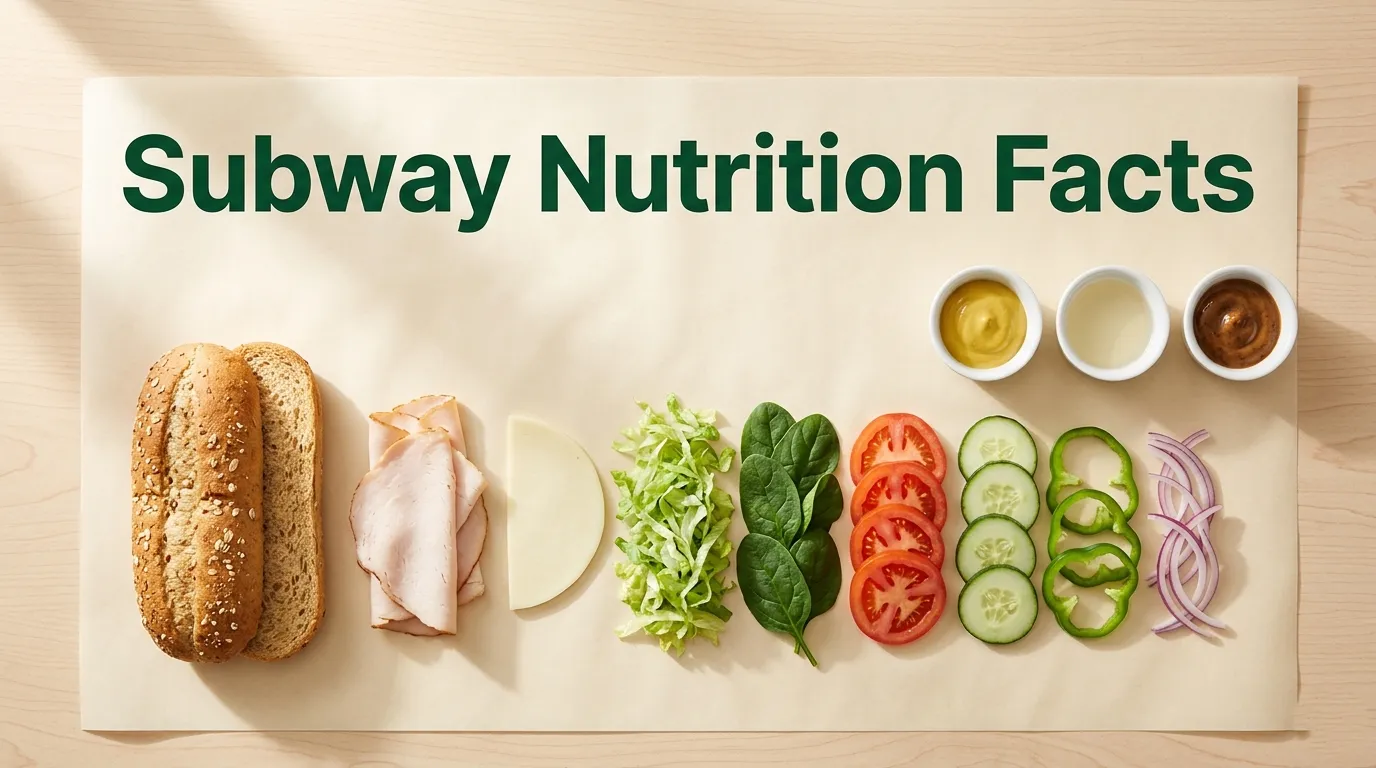
Subway Nutrition Facts 2026: Calories, Macros & Smart Picks
Subway nutrition facts vary dramatically depending on your bread choice, protein selection, sauce additions, and whether you order a six-inch or footlong, with sandwiches ranging from under 250 calories to well over 1,200 calories before adding chips or a drink. The menu offers genuinely balanced options and dietary landmines in equal measure.
The FDA requires chain restaurants with 20 or more locations to post calorie information on menus and make full nutrition data available. Subway complies, and their published nutrition facts reveal sandwiches that can deliver 25 grams of protein with 5 grams of fiber and a full serving of vegetables, or sandwiches that pack more than 2,000 mg of sodium and 50 grams of fat into a single footlong. According to the Dietary Guidelines for Americans 2020-2025, the recommended daily sodium limit for adults is 2,300 mg, and the American Heart Association’s ideal limit is 1,500 mg. A single Subway sandwich can easily consume your entire daily sodium allowance, which makes understanding the nutrition facts before you order the difference between a meal that supports your health and one that works against it.
This article breaks down the complete nutritional picture at Subway in 2026. You will see exact calorie and macro data for every bread option, learn which sandwiches rank healthiest and which deserve caution, understand how sauces and cheese silently add hundreds of calories, and walk away with a practical framework for building a Subway order that genuinely fits your dietary goals.
Subway Nutrition Facts
Subway nutrition facts, as published by the company and compliant with FDA menu labeling regulations, show that a standard six-inch sub contains between 250 and 550 calories on average, with protein ranging from 15 to 30 grams, carbohydrates from 35 to 50 grams, and sodium from 500 to over 1,200 mg depending on the bread, protein, and topping selections made.
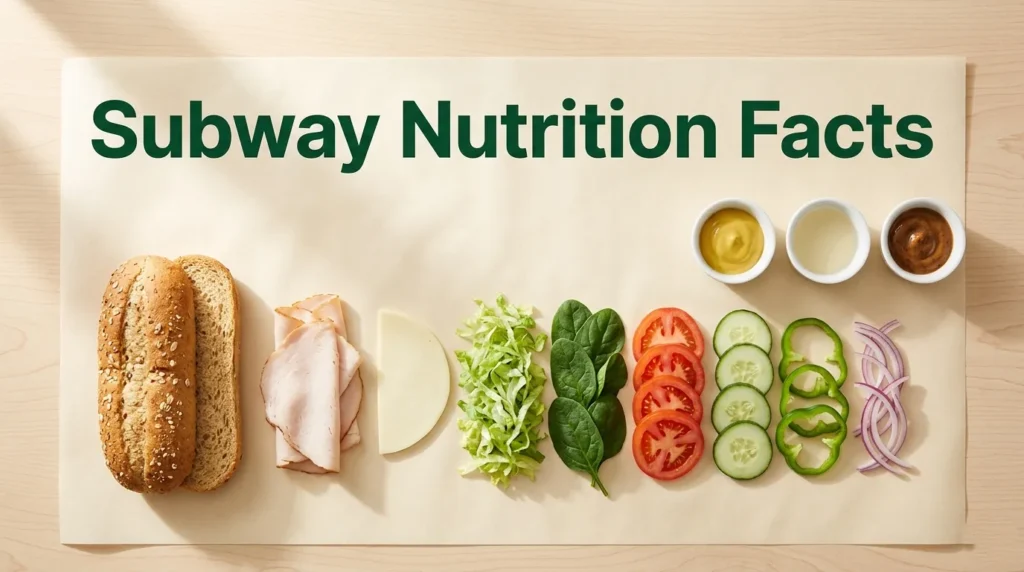
The nutritional spread across the menu is wide enough that two different six-inch sandwiches can differ by 300 calories, 25 grams of protein, and 800 mg of sodium. This is not a menu where everything is similar and small adjustments make minor differences. The choices you make at the bread, protein, sauce, and cheese steps of the ordering process compound into final meals that are nutritionally worlds apart. A six-inch Veggie Delite on nine-grain wheat bread with no cheese and mustard delivers roughly 230 calories, 8 grams of protein, and 340 mg of sodium. A six-inch BMT on Italian white bread with provolone and mayonnaise delivers approximately 540 calories, 25 grams of protein, and 1,560 mg of sodium. Same restaurant. Same size. Completely different nutritional events.
Understanding Subway nutrition facts requires knowing what to look for and where the hidden calorie and sodium loads come from. The core nutritional variables are:
Bread: The six-inch bread base alone provides 160 to 250 calories and 200 to 400 mg of sodium. Nine-grain wheat, Italian, and multigrain flatbread differ meaningfully in fiber and added sugar.
Protein: Lean options like turkey and rotisserie chicken provide 20 to 25 grams of protein with 2 to 5 grams of fat. Processed meats like pepperoni, salami, and bologna add saturated fat, sodium, and nitrates.
Cheese: Each six-inch cheese portion adds 40 to 80 calories, 3.5 to 6 grams of fat (mostly saturated), and 100 to 200 mg of sodium.
Sauces: This is where orders commonly derail. Mayonnaise adds 100 calories and 11 grams of fat per tablespoon. Chipotle southwest adds 100 calories. Even sweet onion sauce adds 40 calories and 8 grams of sugar per serving.
Vegetables: The one category where adding more is always better. Lettuce, spinach, tomatoes, cucumbers, peppers, and onions add fiber, volume, vitamins, and negligible calories.
The table below shows the base nutritional range for six-inch subs by protein type before sauce additions, using Subway’s published nutrition information for 2026.
Protein Type | Calories (6-inch) | Protein (g) | Fat (g) | Sodium (mg) | Fiber (g)
Oven-roasted turkey | 250 to 280 | 20 | 4.5 | 800 | 5
Rotisserie chicken | 290 to 350 | 24 | 6 | 700 | 5
Black Forest ham | 260 to 290 | 20 | 5 | 1,100 | 5
Tuna salad | 450 | 20 | 29 | 650 | 5
Steak and cheese | 360 | 26 | 11 | 1,100 | 5
Meatball marinara | 440 | 21 | 20 | 1,200 | 6
BMT | 380 | 22 | 22 | 1,300 | 5
Veggie Delite | 230 | 8 | 3 | 340 | 5
Key Takeaway: A Subway six-inch sub can be 230 calories or 540 calories, 340 mg sodium or 1,560 mg. The nutritional difference between a basic vegetable sub with mustard and a BMT with cheese and mayo is larger than an entire additional meal.
Subway Calories Calculator
Subway provides a nutrition calculator on their website and app that updates calorie and nutrient totals in real time as you build your order, selecting bread, protein, cheese, vegetables, and sauces. This tool is the single most reliable way to know exactly what your custom sub, wrap, or salad contains before you order it.
The calculator works by starting with a base item and layering nutritional data for each ingredient. A six-inch turkey on nine-grain wheat starts at a base value. Adding American cheese increments the calorie count by 40, fat by 3.5 grams, and sodium by approximately 180 mg. Adding a tablespoon of mayonnaise increments by 100 calories and 11 grams of fat. The calculator handles these additions sequentially, so what you see on screen reflects your exact customizations. This matters because the nutrition facts printed on the menu board or posted online are for the sandwich as typically prepared, which means with standard vegetables but without cheese or sauce unless those are default to the recipe. Your actual order may differ substantially.
To use the nutrition calculator effectively for your dietary goals:
Start by selecting your bread or wrap base, noting the calorie and sodium contribution before adding anything else.
Choose your protein. Compare the calorie and sodium differences between turkey, ham, chicken, tuna, and vegetarian options.
Decide on cheese with intention, recognizing that each slice adds 40 to 80 calories and saturated fat.
Add all the vegetables you want. The calculator will confirm they add negligible calories while increasing fiber and volume.
Select sauces carefully, adding them one at a time to see the calorie impact. A single sauce swipe can undo an otherwise lean sandwich.
Review the final totals for calories, sodium, and protein before ordering.
The calculator also serves as an educational tool. If you toggle between artisan Italian and nine-grain wheat bread, you can see the fiber difference. If you swap American cheese for provolone, you can see the sodium change. The tool makes visible the nutritional consequences of every customization, and spending five minutes with it before your next Subway visit will teach you more about the menu than any article or summary can.
Quick Tip:
Build your typical order in the calculator once and save a screenshot. You will have an immediate reference for calorie and sodium totals without recalculating each visit.
Compare your usual order against a “light” version with one sauce removed and cheese omitted to see how many calories and sodium milligrams you can save with minimal effort.
Subway Bread Nutrition Facts
Subway bread nutrition facts show that the nine-grain wheat and artisan Italian breads, the two most popular choices, are nutritionally similar in calories and macronutrients but differ meaningfully in fiber and added sugar content, and neither is a true “whole grain” product in the way a 100% whole wheat bread from a grocery store is.
Subway offers nine bread and wrap options in 2026. Each six-inch serving of bread provides between 160 and 250 calories, 30 to 45 grams of carbohydrates, and 200 to 400 mg of sodium before any fillings or toppings are added. The bread alone accounts for roughly half the calories and a quarter to a third of the sodium in a finished six-inch sandwich, which makes bread selection the single most impactful nutritional decision after protein choice.
The nine-grain wheat bread is often assumed to be the healthiest option. It provides 5 grams of fiber per six-inch serving compared to Italian white bread’s 1 to 2 grams. However, both breads contain added sugar, with the nine-grain wheat listing sugar as an ingredient and providing approximately 5 to 7 grams per serving. The artisan Italian white bread provides less fiber but similar total calories. Neither bread is a true high-fiber whole grain product by the standards of the Dietary Guidelines for Americans, which recommend that at least half of grain intake be whole grains. A grocery store 100% whole wheat bread typically provides 3 to 4 grams of fiber per slice and lists whole wheat flour as the first ingredient with minimal added sugar.
The table below compares all standard Subway bread options per six-inch serving based on Subway’s published nutrition information.
Bread Type | Calories | Carbs (g) | Fiber (g) | Sugar (g) | Protein (g) | Sodium (mg)
Italian white | 160 | 34 | 1 | 3 | 6 | 280
Nine-grain wheat | 180 | 36 | 5 | 6 | 8 | 290
Multigrain flatbread | 220 | 39 | 2 | 4 | 8 | 390
Italian herbs and cheese | 220 | 36 | 2 | 5 | 8 | 410
Honey oat | 250 | 44 | 5 | 8 | 9 | 320
Parmesan oregano | 170 | 34 | 2 | 3 | 7 | 340
Gluten-free wrap | 210 | 35 | 2 | 3 | 5 | 310
Artisan Italian and nine-grain wheat are the two lowest-calorie bread options and the most sodium-reasonable. The Italian herbs and cheese bread adds 60 calories and 130 mg of sodium compared to plain Italian, with the difference coming entirely from the cheese and herb topping baked onto the crust. The multigrain flatbread contains more calories and sodium than the wheat bread despite the “multigrain” name that sounds healthier. Name alone is not a reliable guide at Subway. Check the numbers.
Key Takeaway: Nine-grain wheat provides the most fiber (5 grams per six-inch) while Italian white is the lowest-calorie option (160 calories). Neither is a true whole grain bread, but the wheat option provides more fiber and slightly more protein.
Subway Footlong vs 6 Inch Nutrition
A Subway footlong contains exactly double the calories, protein, carbohydrates, fat, and sodium of a six-inch sub of the same variety because the footlong uses two of the same bread portion and double the standard protein serving, making the nutritional math straightforward for portion comparison.
This doubling principle holds true across the entire menu. A six-inch oven-roasted turkey on nine-grain wheat with vegetables and no cheese contains approximately 280 calories and 810 mg of sodium. The footlong version contains 560 calories and 1,620 mg of sodium. The same ratio applies to every sandwich. The only variable is that vegetable toppings and sauce portions may not always be precisely doubled in practice, as those are added by hand and can vary slightly between locations and sandwich artists. But the structured ingredients (bread, meat, cheese) follow the double formula.
The practical implications of the footlong are stark for anyone watching sodium intake. A single footlong BMT on Italian bread with cheese and mayonnaise can deliver over 2,600 mg of sodium, which exceeds the American Heart Association’s recommended daily limit of 2,300 mg and nearly doubles the ideal 1,500 mg limit. You can eat a healthy-looking sandwich and still hit your sodium ceiling for the entire day in one meal. The footlong turkey, often chosen as a healthier option, still delivers over 1,600 mg of sodium without cheese or sauce. Add American cheese and sweet onion sauce, and that number climbs above 2,000 mg.
For weight management, the six-inch portion is almost always the better choice unless you are an athlete with high caloric needs or you are splitting the footlong across two meals. A six-inch turkey with vegetables, no cheese, and mustard provides a filling 280-calorie lunch with 20 grams of protein and 5 grams of fiber. The same sandwich as a footlong pushes past 550 calories, a reasonable dinner portion but a large lunch for someone in a calorie deficit. The six-inch format also allows for pairing with a side like apple slices or a small soup without exceeding a 500-calorie meal target.
Quick Tip:
Order the six-inch and add a side salad or bowl of minestrone soup for a filling meal under 500 total calories rather than defaulting to the footlong.
If you want the footlong value, eat half now and save half for later. The sandwich components hold up reasonably well refrigerated for several hours, especially if you order sauces on the side and add them only to the portion you eat immediately.
Healthiest Subway Sandwiches
The healthiest Subway sandwiches in 2026 are the oven-roasted turkey, rotisserie-style chicken, and Veggie Delite on nine-grain wheat bread with all available vegetables, no cheese, and mustard or vinegar instead of creamy sauces, delivering 230 to 300 calories, 15 to 24 grams of protein, 5 grams of fiber, and sodium levels that stay under 850 mg per six-inch serving.
These three sandwiches share a nutritional profile that aligns with the Dietary Guidelines for Americans 2020-2025 recommendations for lean protein, vegetable intake, and limited saturated fat and added sugar. The turkey and chicken options provide complete protein from animal sources with low saturated fat (1 to 2 grams per serving). The Veggie Delite, while lower in protein, delivers volume and fiber from the vegetable toppings with the fewest calories of any sub on the menu.
What makes these sandwiches the healthiest is not just what they include but what they exclude: no processed meat blends with added sodium phosphate and nitrates, no heavy sauces, and no cheese unless you choose to add it. The sodium content, while still high by whole-food standards, is manageable within a day’s intake. A turkey six-inch at 800 mg of sodium leaves room for other meals without exceeding the 2,300 mg daily limit. A BMT at 1,300 mg does not.
The table below ranks the healthiest six-inch Subway sandwich choices based on calorie control, protein content, sodium level, and saturated fat.
Sandwich (6-inch, nine-grain, no cheese) | Calories | Protein (g) | Sodium (mg) | Sat Fat (g) | Fiber (g)
Veggie Delite | 230 | 8 | 340 | 0.5 | 5
Oven-roasted turkey | 270 | 20 | 810 | 1 | 5
Rotisserie chicken | 300 | 24 | 690 | 1.5 | 5
Black Forest ham | 280 | 20 | 1,100 | 1.5 | 5
Tuna (light mayonnaise version) | 430 | 19 | 620 | 4 | 5
Steak and cheese | 360 | 26 | 1,100 | 5 | 5
The rotisserie-style chicken has the best balance of high protein to moderate sodium among the meat options. The Veggie Delite wins on calories and sodium but lacks sufficient protein to be satiating for most adults as a standalone meal. The turkey offers a middle ground: adequate protein, acceptable sodium, and low saturated fat. The tuna, while listed as a caution due to higher fat and calories, is not inherently unhealthy, but the calorie density and fat content do not align with weight-loss goals for most people unless it is ordered as a salad without bread.
Key Takeaway: Turkey on nine-grain with vegetables, no cheese, and mustard is the best all-around healthy Subway order. Rotisserie chicken is a close second with slightly more protein and less sodium.
Subway Sodium Content
Subway sodium content is the single largest nutritional concern across the entire menu, with many six-inch sandwiches exceeding 1,000 mg of sodium and footlong versions routinely exceeding 2,000 mg before adding chips or a drink, which can push a single meal past the FDA’s full-day Daily Value of 2,300 mg.
The sodium comes from multiple sources layered together. The bread contributes 280 to 410 mg per six-inch portion. The deli meats and processed proteins, including turkey, ham, roast beef, and especially pepperoni and salami, are cured with sodium phosphate and sodium nitrite, adding 400 to 800 mg per serving. Cheese adds another 100 to 200 mg per slice. Pickles, jalapeños, and banana peppers are brined and add sodium. Sauces, especially the creamy ones, contribute additional sodium. By the time a six-inch sub is assembled with cheese and sauce, the sodium total often climbs above 1,200 mg, which is more than half the daily limit in a single sandwich.
The American Heart Association recommends an ideal limit of 1,500 mg of sodium per day for most adults, with an upper limit of 2,300 mg. High sodium intake is associated with elevated blood pressure and increased risk of heart disease and stroke. For people with hypertension, kidney disease, or a family history of cardiovascular disease, the sodium content at Subway is not a minor concern. It is the primary nutritional factor to manage.
The sandwiches with the highest sodium per six-inch serving include:
BMT: approximately 1,300 mg
Meatball marinara: approximately 1,200 mg
Black Forest ham: approximately 1,100 mg
Steak and cheese: approximately 1,100 mg
Spicy Italian: approximately 1,500 mg
The sandwiches with the lowest sodium per six-inch serving include:
Veggie Delite: approximately 340 mg
Rotisserie chicken: approximately 690 mg
Tuna salad: approximately 650 mg
Oven-roasted turkey: approximately 810 mg
To reduce sodium in your Subway order, omit the cheese and pickled toppings, choose mustard or oil and vinegar instead of creamy sauces, avoid the most sodium-heavy proteins like salami and pepperoni, and stick with the Veggie Delite, rotisserie chicken, or tuna as your protein base. Even these adjustments will not bring sodium below whole-food meal levels, but they can keep a single Subway sandwich from exceeding your entire day’s sodium allowance.
Key Takeaway: Sodium is the biggest nutritional risk at Subway. A single six-inch can deliver over half the daily limit. Skip cheese, pickled toppings, and creamy sauces, and choose rotisserie chicken or veggie options to keep sodium manageable.
Subway Protein Bowl Nutrition
Subway protein bowls, which are the fillings of any sandwich served without bread in a salad-like bowl format, eliminate the bread component entirely and reduce the total calories of a standard order by 160 to 250 calories while maintaining the same protein content, making them a strong option for low-carb, keto, and calorie-deficit eating patterns.
The protein bowl concept is simple. Subway takes the same protein portion, cheese, vegetables, and sauces that would go into a six-inch or footlong sub and serves them in a bowl without the bread. The protein and vegetable content remains identical to the sandwich version. The only nutritional change is the subtraction of the bread, which removes 160 to 250 calories, 30 to 45 grams of carbohydrates, and 200 to 400 mg of sodium per six-inch equivalent portion.
For someone following a low-carb diet, a protein bowl with turkey or chicken, all vegetables, cheese, and a full-fat sauce like ranch or chipotle can provide a satisfying meal with 300 to 450 calories, 25 to 30 grams of protein, and 10 to 15 grams of net carbohydrates depending on vegetable volume and sauce selection. This compares favorably to the 500 to 700 calorie sandwich version with 50 to 70 grams of carbohydrates.
The protein bowl also addresses the sodium issue partially by removing the bread’s sodium contribution, which is 280 to 410 mg. A turkey protein bowl with vegetables and no cheese contains roughly 500 to 600 mg of sodium, compared to 810 mg for the sandwich version. This is still not a low-sodium meal by whole-food standards but represents a meaningful reduction.
The table below compares a turkey protein bowl to its six-inch sandwich equivalent on nine-grain wheat bread.
Item | Calories | Protein (g) | Carbs (g) | Sodium (mg)
Turkey sandwich (6-inch, no cheese) | 270 | 20 | 41 | 810
Turkey protein bowl (no cheese) | 90 | 20 | 10 | 500
Difference | Lower by 180 | Same | Lower by 31 | Lower by 310
The protein bowl option works well for people with diabetes who need to limit carbohydrate intake per meal, for anyone following a low-carb or ketogenic eating pattern, and for people who simply want more volume from vegetables without the caloric density of bread. The tradeoff is satiety. Bread provides bulk and satisfaction that a bowl of protein and vegetables may not match for some people. Adding extra vegetables, avocado if available, and a serving of cheese can help bridge the satiety gap.
Is Subway Actually Healthy
Subway can be healthy if you make specific, informed choices, but the default menu and typical consumer ordering patterns lean toward sandwiches that are high in sodium, made with processed meats, built on refined grain breads, and topped with calorie-dense sauces that undermine the restaurant’s health halo.
The “healthy” reputation comes from marketing, the visible vegetable selection, and the ability to customize. These factors are real. You can watch vegetables being added. You can choose lean proteins. You can say no to cheese and sauce. But the baseline nutritional reality of the standard menu items is less impressive. The bread is not whole grain in the way the Dietary Guidelines for Americans 2020-2025 recommend. The meats, including turkey and ham, are processed deli products preserved with sodium phosphate and sodium nitrite. The sodium levels are high across the board. The sauces are mostly fat and sugar vehicles.
A 2023 study published in the Journal of the Academy of Nutrition and Dietetics examined fast-casual restaurant purchases and found that consumers at Subway ordered meals averaging approximately 950 calories, which was not meaningfully different from meals ordered at competitors without a health halo. The study noted that side items and drinks, not just sandwich choices, drove total meal calories. Someone ordering a “healthy” turkey sub who adds chips and a full-sugar soda has not achieved a meaningfully healthier meal than someone ordering a burger and water. Context matters.
Where Subway does well is in offering genuine vegetables, providing full nutritional transparency, and allowing customization that can produce genuinely balanced meals. A six-inch turkey on wheat with all vegetables, no cheese, mustard, and a side of apple slices instead of chips delivers a meal with fewer than 400 calories, 20 grams of protein, 5 grams of fiber, and manageable sodium. That is a solid fast-casual lunch. The key is that the customer must actively choose every element that makes the meal healthy. The default path, the footlong combo with cheese, mayo, chips, and soda, is not.
Key Takeaway: Subway can be healthy but it is not healthy by default. Your choices at the bread, protein, cheese, sauce, and side steps determine whether your meal supports your health goals or works against them.
Subway Wraps Nutrition Facts
Subway wraps, including the tomato basil and spinach varieties, contain 210 to 290 calories per wrap serving before fillings, which is slightly more than a six-inch bread serving (160 to 250 calories) but significantly less than a full footlong bread portion, and they provide a similar macronutrient profile with an additional 1 to 2 grams of fiber depending on the variety.
The wrap option occupies a middle ground between the six-inch and footlong bread portions in terms of calories and carbohydrates. A tomato basil wrap contains approximately 210 calories and 35 grams of carbohydrates. A spinach wrap contains approximately 290 calories and 44 grams of carbohydrates. Compare this to the six-inch nine-grain wheat at 180 calories and 36 grams of carbohydrates, and the footlong at 360 calories and 72 grams. The wrap provides a larger eating surface than the six-inch bread but fewer total carbohydrates than the footlong, making it a practical choice for someone who wants the footlong-sized eating experience without the full carbohydrate load.
However, the wrap is not automatically healthier than bread. The spinach wrap, despite the vegetable name, does not contain meaningful spinach in nutritional terms. Its green color comes from spinach powder, and the wrap itself is made from refined wheat flour, vegetable oils, and added sugar, similar to the bread options. The fiber content is comparable to the nine-grain wheat bread rather than superior to it. The wrap is a textural and format preference, not a nutritional upgrade.
For people with specific dietary needs:
Gluten-free: Subway offers a gluten-free wrap option, though cross-contamination risk exists in the shared preparation environment. The gluten-free wrap contains approximately 210 calories per serving.
Low-carb: The wrap is not a low-carb option. It contains similar total carbohydrates to bread and is made from wheat flour.
Calorie control: The wrap is slightly higher in calories than the six-inch bread but lower than the footlong. For a filling meal without the full footlong commitment, the wrap with double protein can be a practical middle path.
Quick Tip:
If you prefer wraps for texture but want to keep calories low, order a six-inch sub’s worth of fillings in the wrap format rather than a footlong’s worth. You will get the wrap experience without the calorie inflation of double fillings.
Subway Sauces Calories
Subway sauces range from 0 calories for mustard and vinegar to 100 calories per tablespoon for mayonnaise and chipotle southwest, with full-fat creamy sauces adding the most calories, saturated fat, and sodium to an otherwise lean sandwich. Sauce selection is the step where many otherwise healthy orders silently gain 100 to 300 unnecessary calories.
The sauce bar at Subway is the least transparent part of the ordering process. Sandwich artists add sauce by sight, typically in amounts that exceed the standard serving size posted in nutrition data. A “standard” mayonnaise serving is one tablespoon or 100 calories. In practice, a heavy-handed squeeze bottle application can deliver 1.5 to 2 tablespoons, or 150 to 200 calories, on a single six-inch sub. The same applies to chipotle southwest, ranch, and other creamy dressings. What you see going onto your sandwich is often more than what the nutrition calculator assumes.
The table below lists Subway sauces and their standard per-serving calorie and fat content.
Sauce (1 standard serving) | Calories | Fat (g) | Sugar (g)
Mustard (yellow) | 0 | 0 | 0
Vinegar | 0 | 0 | 0
Sweet onion sauce | 40 | 0 | 8
BBQ sauce | 45 | 0 | 10
Honey mustard | 50 | 2.5 | 5
Oil (1 tsp) | 45 | 5 | 0
Ranch | 90 | 10 | 1
Mayonnaise | 100 | 11 | 1
Chipotle southwest | 100 | 10 | 2
Mustard and vinegar are the clear winners for adding flavor without calories. Sweet onion, BBQ, and honey mustard add sugar but no fat, making them moderate options for someone who wants more flavor. Ranch, mayonnaise, and chipotle southwest add substantial fat and calories and can easily turn a 280-calorie turkey sub into a 380-calorie sandwich with a single sauce addition.
A practical strategy for sauce management: order your sub with mustard and vinegar as the base flavor profile. Add one small serving of a higher-calorie sauce on the side or in a minimal amount if you genuinely enjoy it. Do not let multiple sauces accumulate. A turkey sub with mustard, vinegar, and a small amount of chipotle southwest is a reasonable compromise. A turkey sub with mayonnaise, ranch, and chipotle southwest is a sauce delivery vehicle that happens to contain turkey.
Key Takeaway: Sauces can add 100 to 300 calories to an otherwise healthy sandwich. Mustard and vinegar are zero-calorie flavor options. If you use creamy sauces, limit to one and ask for a light application.
Subway Salad Nutrition
Subway salads are the breadless versions of their standard sandwiches and contain the same protein, cheese, and vegetable toppings served over a bed of lettuce and spinach instead of on bread, reducing the total calorie count by 160 to 250 calories and the carbohydrate count by 30 to 45 grams per six-inch-equivalent portion.
The salad format eliminates the primary nutritional concern of Subway’s menu, which is the refined carbohydrate bread base, while preserving the protein and vegetable content that makes the restaurant a viable fast-casual option. A turkey salad with all vegetables and no cheese contains approximately 90 to 110 calories and 20 grams of protein before dressing, compared to 270 calories for the sandwich version. The protein is identical. The sodium is reduced by roughly 300 mg because the bread’s sodium contribution is removed.
Dressing choice on salads matters more than sauce choice on sandwiches because salads typically receive a larger volume of dressing relative to the food surface area. A standard two-tablespoon serving of ranch dressing adds 180 calories and 20 grams of fat to a salad. Subway offers light versions of some dressings, but these often contain added sugars and sodium to compensate for fat reduction. The oil and vinegar option, with one teaspoon of oil and free vinegar, provides 45 calories of fat with no added sugar. This is the cleanest dressing choice for a Subway salad.
For someone following a low-carb, keto, or diabetic meal plan, the Subway salad is the best menu format. A double-meat rotisserie chicken salad with all vegetables, cheese, avocado if the location offers it, and oil and vinegar dressing can provide 400 to 500 calories, 40 to 50 grams of protein, and 10 to 15 grams of net carbohydrates. That is a nutritionally complete meal without the blood sugar impact of the bread.
Quick Tip:
Order any sandwich as a salad at Subway. The price is typically the same, and you get a generous bowl of vegetables with your protein. Ask for dressing on the side and add it yourself to control the amount.
Subway Low Carb Choices
Subway’s best low-carb choices are the protein bowls and chopped salads, which eliminate the bread base entirely and deliver 10 to 20 grams of net carbohydrates per meal depending on vegetable and sauce selection, with the double-meat option increasing protein to 40 to 50 grams without adding carbohydrates.
The standard six-inch Subway sandwich on nine-grain wheat contains 36 to 41 grams of carbohydrates from the bread alone, plus additional carbohydrates from sauces and vegetables, bringing the total to 45 to 55 grams. This is too high for a strict low-carb or ketogenic diet, which typically limits daily carbohydrate intake to 20 to 50 grams total. Removing the bread via the protein bowl or salad format solves this problem immediately.
For a keto-friendly Subway order in 2026, build around these guidelines:
Choose the protein bowl or salad format, never bread or wrap.
Select rotisserie chicken, turkey, steak, or tuna as your protein. Avoid meatball (sugary marinara sauce) and sweetened chicken teriyaki options.
Add all non-starchy vegetables including lettuce, spinach, tomatoes, cucumbers, bell peppers, and olives. Limit onions and skip sweet corn or other starchy add-ons if they are available.
Add cheese for fat and satiety. Provolone, American, and cheddar all work within keto macros.
Choose a high-fat, low-sugar dressing like ranch, chipotle southwest, Caesar, or oil and vinegar. Avoid sweet onion, honey mustard, and BBQ sauce.
Double the protein portion for additional satiety without adding carbohydrates.
A typical keto Subway order might be a double-meat rotisserie chicken salad with provolone, all vegetables, and ranch dressing. This provides approximately 500 calories, 50 grams of protein, 30 grams of fat, and 8 to 12 grams of net carbohydrates. It is a filling, nutritionally complete meal that fits within strict low-carb parameters.
For less restrictive low-carb eaters who still want bread, the six-inch nine-grain wheat provides 5 grams of fiber and 36 grams of total carbohydrates, yielding 31 grams of net carbs, which may fit into a moderate low-carb day if the rest of the day’s intake is controlled. The wrap is not a lower-carb alternative to bread. It contains similar total carbohydrates.
Key Takeaway: Protein bowls and salads are the only truly low-carb formats at Subway. A double-meat chicken salad with cheese and ranch dressing delivers a keto-compatible meal with under 12 grams of net carbs.
Subway Breakfast Nutrition
Subway breakfast nutrition in 2026 centers on flatbread sandwiches and egg-based options that range from 180 to 500 calories, with the egg white and turkey flatbread representing the leanest choice and the steak and cheese breakfast sandwich representing the most calorie-dense and sodium-heavy option.
The breakfast menu at Subway is built around flatbread, eggs (whole or whites), cheese, and breakfast proteins including turkey, ham, bacon, and steak. The flatbread base provides approximately 210 calories and 390 mg of sodium per serving, similar to the lunch and dinner flatbread options. The egg patties, whether whole egg or egg white, are pre-cooked and reheated products that contain added sodium and stabilizers. The breakfast proteins are the same processed deli meats used in the lunch menu, carrying the same sodium and preservative considerations.
The healthiest breakfast choices, ranked by protein-to-calorie ratio and sodium control, are:
Egg white and turkey on flatbread: approximately 280 calories, 19 grams of protein, 700 mg sodium
Egg and cheese on flatbread: approximately 360 calories, 18 grams of protein, 680 mg sodium
Egg white and cheese on flatbread: approximately 270 calories, 18 grams of protein, 620 mg sodium
The breakfast sandwiches to approach cautiously include the bacon, egg, and cheese, which adds saturated fat from bacon and pushes sodium above 1,000 mg, and the steak and cheese, which can exceed 500 calories and 1,200 mg of sodium in a single breakfast serving.
Subway also offers breakfast wraps and some regional breakfast bowl options. The wrap is similar to the flatbread in nutritional terms. A breakfast bowl consisting of eggs, protein, and vegetables without the flatbread will reduce calories and carbohydrates, making it the best choice for low-carb or calorie-restricted diets.
A Registered Dietitian Nutritionist would likely note that Subway breakfast, while offering egg-based protein options, still relies on processed meat and refined flour flatbreads as the delivery format. For someone eating Subway breakfast regularly, the egg white and turkey flatbread with vegetables and no cheese provides the best nutritional balance, delivering adequate protein and moderate calories. For occasional convenience, any option can fit into a balanced diet when sodium is managed in the rest of the day’s meals.
Subway Cheese Nutrition
Subway cheese options add 40 to 80 calories, 3.5 to 6 grams of fat (primarily saturated), and 100 to 200 mg of sodium per six-inch serving, with provolone and American cheese being the most commonly selected options that are nutritionally similar in calories but differ slightly in sodium and fat content.
The cheese at Subway is processed cheese product in the case of American cheese and a more traditional provolone for the Italian-style option. Both are pre-portioned slices designed to fit the sandwich format. The nutritional differences between cheese types are small per serving but become meaningful if you order double cheese or if you are tracking saturated fat for cardiovascular health.
Cheese Type (1 portion) | Calories | Fat (g) | Sat Fat (g) | Sodium (mg)
American cheese | 40 | 3.5 | 2 | 200
Provolone | 50 | 4 | 2.5 | 130
Monterey cheddar | 60 | 5 | 3 | 170
Mozzarella | 40 | 3 | 2 | 150
Pepper jack | 60 | 5 | 3 | 180
Provolone is marginally the best choice for sodium-conscious consumers at 130 mg per serving compared to American cheese at 200 mg. The calorie difference between provolone and American is small (50 vs. 40 calories), so neither represents a significant calorie savings over the other. Monterey cheddar and pepper jack add slightly more calories and fat but also provide a stronger flavor, which may allow you to use less sauce since the cheese adds its own flavor profile.
For someone who enjoys cheese and wants to include it in their Subway order, the nutritional impact of a single slice is modest and manageable within most dietary patterns. Adding cheese to an otherwise lean turkey sandwich increases the calorie count from 270 to 320 and the sodium from 810 to 940 mg. These are not deal-breaking increases for an otherwise healthy order. The saturated fat addition of 2.5 grams from one slice of provolone is also reasonable.
The cheese becomes a problem only when layered on top of multiple other high-calorie additions. A turkey sub with provolone, avocado (if available), and a light application of chipotle southwest sauce is a balanced, satiating meal. A turkey sub with double cheese, bacon, mayonnaise, and ranch dressing is a fat and sodium delivery vehicle that happens to contain turkey. Cheese is not the villain. The accumulation of multiple high-fat, high-sodium additions is.
Key Takeaway: One slice of cheese adds 40 to 60 calories and manageable sodium. Provolone is slightly lower in sodium than American. The issue is not cheese alone but cheese plus sauce plus bacon plus double protein all on one sandwich.
Subway Toppings Calories
Subway vegetable toppings including lettuce, spinach, tomatoes, cucumbers, green peppers, onions, and banana peppers contribute 5 to 15 calories per full serving and negligible sodium per individual vegetable, making them the one category at Subway where unlimited additions improve the nutritional profile without meaningful caloric cost.
The vegetable toppings are Subway’s strongest nutritional asset. They provide dietary fiber, vitamin A, vitamin C, potassium, and various phytonutrients while adding volume and crunch to sandwiches. A fully loaded six-inch sub with all vegetables can include a full cup of raw vegetables, which the Dietary Guidelines for Americans 2020-2025 would classify as one vegetable serving. For a fast-casual restaurant meal, this is genuinely unusual and nutritionally valuable.
Vegetable Topping (1 serving) | Calories | Notable Micronutrients
Lettuce (shredded) | 5 | Vitamin K
Spinach | 5 | Vitamin A, vitamin K, iron
Tomatoes (3 slices) | 5 | Vitamin C, lycopene
Cucumbers (3 slices) | 5 | Hydration, minimal micronutrients
Green peppers (3 rings) | 5 | Vitamin C
Onions (3 rings) | 5 | Prebiotic fiber, quercetin
Banana peppers | 5 | Vitamin C (negligible), sodium from brine
Jalapeños | 5 | Capsaicin, negligible sodium from brine
Pickles (3 chips) | 5 | Sodium from brine (approximately 100 mg per serving)
The pickled vegetables (banana peppers, jalapeños, pickles) are the only toppings that add notable sodium, approximately 80 to 120 mg per serving from the brine. This is modest compared to the sodium contributions from bread, meat, and cheese, but worth noting for someone reducing sodium to the minimum possible level.
The strategy for maximizing nutritional value at Subway is simple on the vegetable front: add every vegetable you enjoy. Do not limit yourself to lettuce and tomato. Load spinach for vitamin K and iron. Add green peppers for vitamin C. The fiber from the vegetables adds satiety to your meal and slightly slows the digestion of the refined carbohydrates in the bread, moderating the blood sugar response compared to eating the bread and meat alone.
Subway Kids Meal Nutrition
Subway kids meals in 2026 typically include a smaller four-inch sub or a simplified sandwich build paired with a kid-sized side and drink, with calorie totals ranging from 300 to 500 calories depending on the sandwich choice and whether apple slices or chips are selected as the side.
The kids meal format at Subway addresses a real need for portion-controlled fast-casual options for children. The four-inch sub portion is smaller than the adult six-inch, proportionally reducing calories, sodium, and saturated fat to levels more appropriate for a child’s daily nutritional needs. A turkey four-inch with vegetables, no cheese, apple slices, and milk or water can deliver a balanced meal of approximately 350 calories with 15 grams of protein. This compares favorably to traditional fast-food kids meals that often exceed 500 calories with lower protein and vegetable content.
The standard kids meal components include:
A four-inch sub from a limited selection (usually turkey, ham, or Veggie Delite)
Choice of side: apple slices or baked chips
Choice of drink: low-fat milk, water, or occasionally juice
Optional cookie or yogurt
The Academy of Nutrition and Dietetics emphasizes that children’s meals should provide nutrient density rather than just calorie control. Subway’s kids meal, with the inclusion of vegetables on the sandwich and fruit as a side, does better on this metric than most fast-food competitors. The vegetable exposure alone, for children who may not otherwise eat raw spinach or peppers, is a practical benefit.
For parents ordering Subway kids meals, the best nutritional choices are the turkey or Veggie Delite four-inch, apple slices, and water or milk. Avoid the chips and sugary drink options. Skip the cookie unless it is an occasional treat. Ask for vegetables on the sandwich even if your child typically picks them off. Repeated exposure to vegetables in a familiar context matters for long-term eating habit formation.
Key Takeaway: Subway kids meals offer portion control and vegetable inclusion that outperform most fast-food competitors. Choose turkey on wheat with vegetables, apple slices, and water or milk for the most nutritionally complete kids meal option.
Frequently Asked Questions About Subway Nutrition
What is the healthiest sandwich at Subway?
The healthiest sandwich at Subway is the six-inch oven-roasted turkey on nine-grain wheat bread with all vegetables, no cheese, and mustard or vinegar instead of creamy sauces. It delivers approximately 270 calories, 20 grams of protein, 5 grams of fiber, and 810 mg of sodium. The rotisserie-style chicken is a close second with 300 calories and 24 grams of protein plus slightly less sodium at 690 mg.
How many calories in a Subway footlong?
A Subway footlong contains exactly double the calories of the same six-inch sandwich, ranging from approximately 460 calories for a Veggie Delite footlong to over 1,200 calories for a meatball marinara or BMT footlong with cheese and mayonnaise. The bread alone in a footlong provides 320 to 500 calories before any fillings or toppings.
Is Subway bread actually healthy?
Subway bread is not a true whole grain product and contains added sugar and refined flour, but the nine-grain wheat option provides 5 grams of fiber per six-inch serving and is a reasonable choice within the context of a fast-casual restaurant meal. It is healthier than fast-food burger buns or fried chicken breading, but it is not nutritionally equivalent to 100% whole wheat bread from a grocery store.
What Subway sandwich has the most protein?
The double-meat rotisserie-style chicken or steak and cheese sandwiches provide the most protein, with double chicken delivering approximately 48 grams of protein on a six-inch sub. Single-meat options with the highest protein include steak and cheese (26 grams) and rotisserie chicken (24 grams) per standard six-inch serving.
How much sodium is in a Subway sandwich?
Sodium in a six-inch Subway sandwich ranges from 340 mg in a Veggie Delite to over 1,500 mg in a Spicy Italian or BMT with cheese and sauce. Most standard six-inch meat sandwiches contain 800 to 1,200 mg of sodium, which is 35 to 52% of the FDA’s Daily Value of 2,300 mg.
Can you eat Subway while trying to lose weight?
Yes, you can eat Subway while losing weight by ordering a six-inch lean protein sandwich on nine-grain wheat with all vegetables, no cheese, mustard instead of creamy sauces, and a water or zero-calorie drink instead of soda. A turkey six-inch at 270 calories paired with apple slices creates a filling sub-400-calorie meal that fits easily into a calorie deficit.
Subway is what you make it. The menu contains genuinely balanced meals and sodium-dense, calorie-heavy options in equal measure, and the difference between them comes down to five decisions: bread, protein, cheese, sauce, and side.
Pick the nine-grain wheat or Italian bread. Choose turkey or rotisserie chicken. Load every vegetable on the line. Say no to cheese or stick to one slice. Use mustard, vinegar, or a light touch of one creamy sauce. Grab apple slices or skip the side. Drink water. That order pattern, consistently applied, makes Subway a genuinely useful tool in a healthy eating pattern.
If you walk in and order a footlong BMT on Italian herbs and cheese bread with double provolone, mayonnaise, and chips, you are eating a meal that works against your health goals regardless of what the marketing says. The nutrition facts are available. The calculator works. The vegetables are real. The rest is your call.