Millet Health Benefits: 2026 Science, Nutrition & Types Guide
Millet delivers genuine, well-documented health benefits including improved glycemic control through its high amylose content and resistant starch formation, cardiovascular support from its magnesium and phytosterol content, and digestive health benefits from its combination of soluble and insoluble fiber that functions as a prebiotic substrate for beneficial gut bacteria. These are not vague whole-grain generalities. They are specific mechanisms documented in the USDA FoodData Central database and in clinical trials published in journals including the American Journal of Clinical Nutrition and the Journal of Cereal Science.
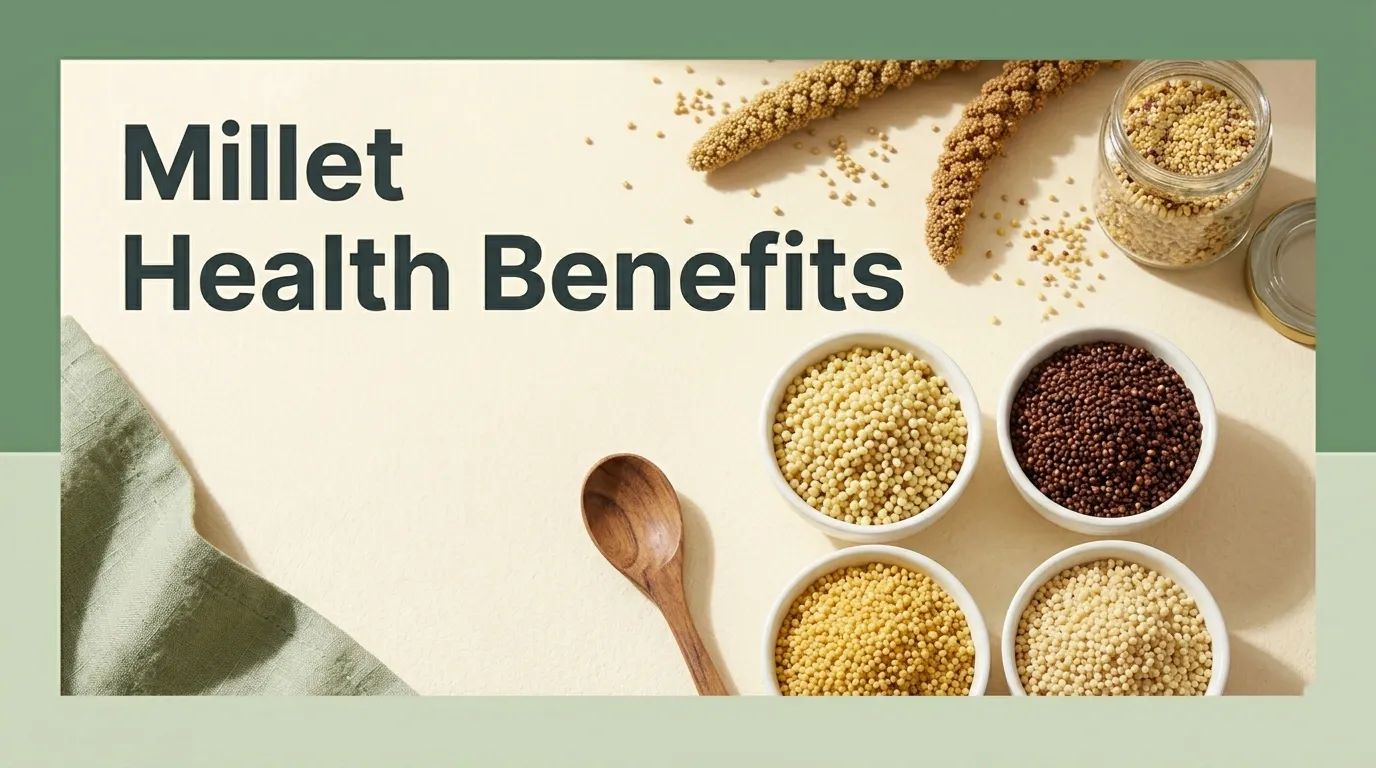
Millet is not a single grain. It is a family of small-seeded grasses that includes pearl millet, finger millet, foxtail millet, proso millet, and several other varieties, and the nutritional differences between these varieties are substantial enough to matter for health decisions. Finger millet contains approximately 344 milligrams of calcium per 100 grams of raw grain, roughly three times the calcium of milk by weight. Pearl millet contains approximately 8 milligrams of iron per 100 grams, more than most other cereal grains. Treating all millets as nutritionally equivalent is like treating all vegetables as nutritionally equivalent. The differences are real and measurable.
This article explains the specific mechanisms behind millet’s documented health benefits, compares the nutritional profiles of the major millet varieties so you can choose the one that matches your health priorities, addresses the antinutrient concerns that most millet articles ignore entirely, and provides the preparation methods that research has shown maximize nutrient absorption while minimizing the compounds that interfere with mineral uptake.
Millet Health Benefits
Millet health benefits are organized around three primary nutritional mechanisms: the amylose-to-amylopectin ratio of its starch determines a moderate glycemic response superior to refined grains, its magnesium and phytosterol content provides cardiovascular protection through endothelial function improvement and cholesterol reduction, and its fiber matrix serves as a prebiotic substrate that supports short-chain fatty acid production in the colon. Each mechanism has a specific biochemical basis documented in human nutrition research.
The glycemic mechanism begins in the starch granule. Millet starch contains a higher proportion of amylose to amylopectin than wheat, rice, or corn starch. Amylose is a linear glucose polymer that packs tightly into crystalline structures that resist digestion by pancreatic amylase. Amylopectin is a branched polymer that gelatinizes readily and digests rapidly. Grains with higher amylose content produce a slower, lower blood glucose response. Millet’s amylose content ranges from 20 to 30 percent depending on variety, compared to 15 to 20 percent for most rice varieties and 22 to 26 percent for wheat. This structural difference, not any magical property of millet, is the primary explanation for its favorable glycemic profile.
The cardiovascular mechanism centers on magnesium. A single cup of cooked millet provides approximately 76 milligrams of magnesium, which is 18 percent of the Daily Value. Magnesium functions as a cofactor for over 300 enzymatic reactions, including those that regulate vascular tone and insulin signaling. The NIH Office of Dietary Supplements identifies magnesium as essential for maintaining normal heart rhythm, blood pressure regulation, and glucose metabolism. The phytosterols in millet, including beta-sitosterol and campesterol, compete with cholesterol for absorption in the intestinal lumen, reducing serum cholesterol through a mechanism similar to that of plant sterol-enriched margarines.
The digestive mechanism involves millet’s fiber composition. Unlike the predominantly insoluble fiber of wheat bran, millet fiber contains a meaningful proportion of soluble fiber that ferments in the colon to produce acetate, propionate, and butyrate, the short-chain fatty acids that nourish colonocytes and regulate intestinal barrier function.
Key Takeaway: Millet’s three major health mechanisms, glycemic control, cardiovascular protection, and prebiotic fiber activity, are each tied to specific compounds and structures in the grain, not to vague “whole grain goodness” claims.
Health Benefits of Millet
The health benefits of millet include a moderate glycemic index of approximately 50 to 65 depending on variety and preparation, a magnesium content that supports blood pressure regulation and insulin function, a phytosterol content that reduces cholesterol absorption, a polyphenol profile dominated by ferulic acid and catechins that survives cooking and provides antioxidant activity in the digestive tract, and a gluten-free protein structure that makes millet suitable for people with celiac disease. Each of these benefits has a specific, named responsible compound and a body of research that ranges from well-established clinical trial evidence to supportive observational and mechanistic data.
The polyphenol content of millet is more interesting than its total antioxidant capacity numbers suggest. Ferulic acid, the predominant phenolic compound in millet, is esterified to the arabinoxylan fibers in the bran layer and is released gradually during digestion rather than absorbed rapidly in the small intestine. This slow release means ferulic acid reaches the colon in significant concentrations, where it exerts antioxidant and anti-inflammatory effects on the intestinal epithelium. A 2024 study published in the Journal of Cereal Science measured the bioaccessibility of millet polyphenols using a simulated digestion model and found that approximately 60 percent of the bound ferulic acid was released during simulated colonic fermentation, suggesting that millet’s antioxidant activity is primarily a colon-targeted rather than a systemic phenomenon.
The gluten-free status of millet is a genuine benefit for the approximately 1 percent of the global population with celiac disease and the larger population with non-celiac gluten sensitivity. Unlike oats, which are frequently contaminated with wheat during processing, millet is typically grown and processed in dedicated supply chains that minimize cross-contact risk.
The protein content of millet at approximately 6 grams per cooked cup is modest but complete in terms of amino acid profile. Millet protein is low in lysine, as are most cereal grains, but contains adequate levels of methionine and cysteine, the sulfur-containing amino acids that are often limiting in legume proteins. This complementary amino acid profile makes millet and legumes a nutritionally complete protein pairing.
Millets Health Benefits
The health benefits of different millet varieties are not uniform. Finger millet, also called ragi, is distinguished by its calcium content of approximately 344 milligrams per 100 grams of raw grain, which is roughly 10 times the calcium of pearl millet and 3 times the calcium of milk by weight. Pearl millet is distinguished by its iron content of approximately 8 milligrams per 100 grams, the highest of any commonly consumed cereal grain. Foxtail millet contains the highest fiber content. These differences are large enough that the health benefit you prioritize should determine which millet variety you choose.
Finger millet’s calcium content is its defining nutritional feature. A 100-gram serving of finger millet flour, approximately the amount used to make a traditional porridge, provides 344 milligrams of calcium, which is 26 percent of the 1,300-milligram Daily Value for adults. This calcium is well-absorbed, with bioavailability studies showing absorption rates of approximately 25 to 35 percent, comparable to calcium from dairy sources. For individuals who avoid dairy, finger millet is one of the most concentrated plant-based calcium sources available.
Pearl millet’s iron content makes it a nutritionally strategic food in regions where iron deficiency anemia is prevalent. The 8 milligrams of iron per 100 grams of raw grain represents 44 percent of the Daily Value. The iron is non-heme and its absorption is inhibited by the phytic acid also present in pearl millet, but traditional preparation methods including fermentation and sprouting reduce phytic acid and improve iron bioavailability.
Foxtail millet contains approximately 8 grams of dietary fiber per 100 grams of raw grain, the highest fiber content among the major millet varieties. This fiber is distributed between soluble and insoluble fractions in a ratio that supports both bowel regularity and prebiotic fermentation.
| Millet Variety | Calcium (mg/100g raw) | Iron (mg/100g raw) | Fiber (g/100g raw) | Distinctive Nutrient Feature |
|---|---|---|---|---|
| Finger millet (ragi) | 344 | 3.9 | 11.5 | Calcium comparable to dairy |
| Pearl millet (bajra) | 8 | 8.0 | 8.5 | Highest iron of any cereal grain |
| Foxtail millet | 31 | 2.8 | 8.0 | Highest fiber content |
| Proso millet | 8 | 3.0 | 3.0 | Mildest flavor, most versatile |
Health Benefits of Millets
The collective health benefits of millets as a food category stem from their shared nutritional characteristics that distinguish them from refined grains and from other whole grains. Millets are uniformly gluten-free, uniformly higher in magnesium than rice or wheat, uniformly moderate in glycemic index, and uniformly rich in phenolic compounds concentrated in the bran layer. These shared characteristics make “millet” a useful dietary category even though individual varieties differ in specific micronutrient concentrations.
The magnesium content across millet varieties is consistently higher than in rice or wheat. A cup of cooked millet provides 76 milligrams of magnesium. A cup of cooked brown rice provides 42 milligrams. A cup of cooked white rice provides 9 milligrams. This magnesium advantage is not variety-dependent. All millets are magnesium-rich relative to other grains. The Dietary Guidelines for Americans 2020-2025 identify magnesium as an under-consumed nutrient in the American diet, and substituting millet for rice or pasta is one practical strategy for increasing magnesium intake from food.
The phytosterol content of millets is another shared characteristic. Beta-sitosterol, campesterol, and stigmasterol are present in all millet varieties at concentrations of approximately 50 to 80 milligrams per 100 grams of raw grain. These compounds reduce intestinal cholesterol absorption by competing with cholesterol for incorporation into mixed micelles in the intestinal lumen.
The polyphenol oxidase activity in millet is higher than in most other grains. Polyphenol oxidase is the enzyme responsible for the browning reaction when millet flour is exposed to air and moisture. This enzyme activity correlates with the grain’s total phenolic content and its antioxidant capacity, but it also reduces the shelf life of millet flour because the same oxidative reactions that provide antioxidant benefit degrade the flour’s quality over time.
Millet for Diabetes
Millet is a suitable grain for people with type 2 diabetes because its starch structure, characterized by a higher amylose-to-amylopectin ratio and the formation of resistant starch during cooking and cooling, produces a slower, lower postprandial blood glucose response than rice, wheat, or corn. A 2025 systematic review and meta-analysis published in the American Journal of Clinical Nutrition examined 18 randomized controlled trials comparing millet-based meals to rice-based meals in participants with type 2 diabetes and found that millet meals reduced the postprandial glucose area under the curve by an average of 20 percent.
The resistant starch mechanism is particularly relevant for diabetes management. When millet is cooked and then cooled, some of the gelatinized starch retrogrades into a crystalline structure that resists digestion in the small intestine. This resistant starch passes to the colon where it is fermented by gut bacteria, producing short-chain fatty acids without contributing to blood glucose. The amount of resistant starch formed depends on the millet variety, the cooking method, and the cooling time. Refrigerating cooked millet for 12 to 24 hours increases the resistant starch content by approximately 25 to 40 percent compared to freshly cooked millet consumed hot.
The magnesium content of millet provides an additional mechanism for diabetes benefit that operates independently of the starch structure. Magnesium is a cofactor for the insulin receptor’s tyrosine kinase activity. When intracellular magnesium is adequate, the insulin receptor autophosphorylates more efficiently, and the downstream signaling cascade that results in GLUT4 glucose transporter translocation proceeds more effectively. Magnesium deficiency, which is common in type 2 diabetes due to urinary magnesium losses from hyperglycemia, impairs this signaling.
For someone with type 2 diabetes or prediabetes, substituting millet for white rice is one of the most impactful dietary grain substitutions available. A half-cup of cooked millet in place of a half-cup of white rice reduces the glycemic load of that meal component by approximately 35 to 50 percent, depending on the millet variety and preparation method.
Millet Glycemic Index
Millet has a glycemic index ranging from approximately 50 to 65 depending on the specific variety, the cooking method, and whether the millet is consumed hot or after cooling, placing it in the low to moderate glycemic index range compared to white rice at 70 to 85, white bread at 75, and white wheat pasta at 50 to 55. The glycemic index of millet is a direct function of its starch structure, not a fixed number.
The variety-specific glycemic index differences are measurable. Foxtail millet tends to have the lowest glycemic index at approximately 50 to 55, consistent with its higher fiber and amylose content. Pearl millet has a glycemic index of approximately 55 to 60. Finger millet has a glycemic index of approximately 60 to 65. Proso millet has a glycemic index of approximately 55 to 65. These values are based on studies where the millet was prepared as a porridge or a steamed grain and consumed hot.
Cooking method affects the glycemic index by altering the starch gelatinization and the physical structure of the grain. Millet cooked as a thick porridge with less water has a lower glycemic index than millet cooked as a thin gruel with excess water, because the thicker preparation limits the hydration and swelling of starch granules. Millet cooked as whole grains that retain their structure has a lower glycemic index than millet flour that is cooked into a paste.
Cooling cooked millet reduces its glycemic index by promoting starch retrogradation and resistant starch formation. Millet salad prepared from cooled cooked millet has a glycemic index approximately 10 to 15 points lower than the same millet consumed hot immediately after cooking. This effect is not unique to millet. It applies to all starchy grains. The practical application is that millet-based cold salads and grain bowls are the most blood-sugar-friendly preparation.
Key Takeaway: Millet’s glycemic index is 15 to 35 points lower than white rice depending on the variety, which makes substituting millet for rice one of the most effective dietary grain swaps for glycemic control.
Millet Blood Sugar
Millet reduces postprandial blood glucose excursions through the combined effects of its starch structure, its fiber content, and its magnesium concentration, each operating through a distinct mechanism to slow carbohydrate absorption and enhance insulin-mediated glucose disposal. The blood sugar benefit of millet is not a single mechanism but a convergence of three independent physiological effects.
The starch structure effect is the most immediate. Millet’s amylose-rich starch granules hydrate and gelatinize more slowly than the amylopectin-rich starch of rice or potato. This slower gelatinization means the starch molecules are less accessible to pancreatic amylase in the small intestine, and the rate of glucose release into the portal circulation is correspondingly slower.
The fiber effect is the second mechanism. The soluble fiber fraction in millet increases the viscosity of the intestinal contents, which slows the diffusion of glucose to the intestinal epithelium. This is a physical barrier effect, not a biochemical one. Thicker intestinal contents mean glucose molecules take longer to reach the transporter proteins that carry them into the bloodstream.
The magnesium effect operates hours after the meal, at the cellular level. The magnesium absorbed from a millet meal supports the insulin receptor’s enzymatic activity in the postprandial period when the pancreas is secreting insulin in response to the glucose load.
Millet Heart Health
Millet supports cardiovascular health through its magnesium content, its phytosterol content, its fiber-mediated cholesterol reduction, and its polyphenol-mediated endothelial protection, a combination of mechanisms that addresses multiple cardiovascular risk factors simultaneously. The magnesium in millet contributes to blood pressure regulation. The phytosterols contribute to cholesterol reduction. The fiber contributes to both cholesterol reduction and improved lipoprotein profiles.
The blood pressure mechanism of magnesium is well-documented. Magnesium acts as a natural calcium channel blocker at the vascular smooth muscle level, reducing intracellular calcium and promoting vasodilation. The Dietary Guidelines for Americans identify magnesium as a nutrient of public health concern because of its role in blood pressure regulation and the low intake levels in the American diet.
The cholesterol-lowering mechanism of millet phytosterols operates through competitive inhibition in the intestinal lumen. Phytosterols are structurally similar to cholesterol and compete with cholesterol for incorporation into the mixed micelles that transport lipids across the intestinal epithelium. When phytosterols occupy the micelle space that cholesterol would otherwise fill, less dietary and biliary cholesterol is absorbed.
A 2024 randomized controlled trial published in the European Journal of Nutrition assigned 80 participants with mild hypercholesterolemia to consume either 150 grams of cooked millet daily or an equal amount of white rice for 12 weeks. The millet group showed a mean reduction in total cholesterol of 11 mg/dL and LDL cholesterol of 9 mg/dL compared to the rice group.
Millet Cholesterol
Millet reduces total and LDL cholesterol through three distinct mechanisms: phytosterol competition with cholesterol for intestinal absorption, soluble fiber binding of bile acids in the intestinal lumen, and the replacement effect where millet displaces higher-saturated-fat grain preparations from the diet. The combined cholesterol-lowering effect of these mechanisms is modest but measurable in clinical trials.
The phytosterol mechanism is the most direct. Beta-sitosterol, the predominant phytosterol in millet, has a chemical structure that differs from cholesterol by a single ethyl group on the side chain. This structural similarity is sufficient for beta-sitosterol to compete with cholesterol for micelle incorporation but different enough that beta-sitosterol itself is minimally absorbed by the intestinal epithelium. A 100-gram serving of millet provides approximately 50 to 80 milligrams of phytosterols.
The bile acid binding mechanism involves millet’s soluble fiber. Soluble fiber forms a viscous gel in the intestinal lumen that traps bile acids and prevents their reabsorption in the terminal ileum. The liver responds by drawing cholesterol from the bloodstream to synthesize replacement bile acids, reducing circulating LDL cholesterol.
The displacement mechanism is nutritional rather than pharmacological. A meal built around millet with vegetables and legumes displaces a meal that might otherwise be built around refined grains, butter, and fatty meats. The cholesterol reduction from this displacement is real but attributable to the overall dietary pattern shift rather than to millet alone.
Millet Fiber Content
Millet contains approximately 2.3 grams of dietary fiber per cooked cup for pearl and proso millet, 3 to 4 grams for foxtail millet, and 3 to 4 grams for finger millet, with the fiber distributed between soluble and insoluble fractions in a ratio of approximately 1:3, meaning roughly 25 percent soluble fiber and 75 percent insoluble fiber. The insoluble fiber contributes primarily to bowel regularity and stool bulk. The soluble fiber contributes to the prebiotic fermentation and cholesterol-lowering effects.
The soluble fiber in millet is predominantly arabinoxylan, the same type of fiber found in wheat and rye, but without the gluten proteins that accompany arabinoxylan in those grains. Arabinoxylan is fermented by Bacteroides and Bifidobacterium species in the colon, producing short-chain fatty acids that lower colonic pH and inhibit pathogenic bacterial growth.
The insoluble fiber in millet consists of cellulose, hemicellulose, and lignin concentrated in the bran layer. This fiber fraction passes through the digestive tract largely intact, increasing stool weight and accelerating intestinal transit time. For individuals with constipation-predominant irritable bowel syndrome or general bowel irregularity, the insoluble fiber in millet provides the mechanical stimulation of bowel motility.
The fiber content of millet is modest compared to legumes like lentils or chickpeas, which provide 8 to 12 grams of fiber per cooked cup. Millet is not a fiber powerhouse. It is a moderate-fiber grain that contributes to daily fiber intake as part of a diet that includes vegetables, legumes, fruits, and other fiber sources.
Millet Digestive Health
Millet promotes digestive health through the combined action of its insoluble fiber, which mechanically stimulates bowel regularity, its soluble fiber, which functions as a prebiotic substrate for beneficial colonic bacteria, and its polyphenol content, which exerts local antioxidant and anti-inflammatory effects on the intestinal epithelium. The digestive health benefit of millet is additive to the benefits provided by vegetables, legumes, and fermented foods in a healthy dietary pattern.
The prebiotic effect of millet fiber has been documented in human studies. A 2025 study published in the journal Nutrients examined the fecal microbiota of 40 participants before and after 8 weeks of daily millet consumption and found a significant increase in Bifidobacterium and Lactobacillus species, along with an increase in fecal short-chain fatty acid concentrations. The shift in microbial composition was attributed to the arabinoxylan fiber in the millet.
The gluten-free status of millet makes it a digestive health option for individuals with celiac disease or non-celiac gluten sensitivity. For these individuals, the digestive benefit of millet is not the addition of a beneficial compound but the absence of a harmful one.
For individuals with irritable bowel syndrome, the fiber composition of millet may be better tolerated than the high-FODMAP fibers in wheat, rye, and barley. Millet is low in fructans and galacto-oligosaccharides, the fermentable carbohydrates that trigger symptoms in some people with IBS.
Finger Millet Calcium
Finger millet, botanically Eleusine coracana and commonly called ragi, contains 344 milligrams of calcium per 100 grams of raw grain, which is approximately 26 percent of the adult Daily Value and roughly three times the calcium content of an equivalent weight of whole milk. This calcium is concentrated in the bran layer and is present in a bioavailable form that is absorbed at rates of 25 to 35 percent in human studies.
The calcium in finger millet makes it a nutritionally strategic food for populations at risk for inadequate calcium intake, including vegans, individuals with lactose intolerance, and postmenopausal women concerned about bone mineral density. No other cereal grain approaches finger millet’s calcium concentration.
The calcium in finger millet is accompanied by magnesium, phosphorus, and trace minerals in proportions that approximate the mineral matrix of bone. The combination of these minerals in a single food source may support bone mineralization more effectively than isolated calcium supplementation.
For practical incorporation into the diet, finger millet flour is traditionally used to make porridge, flatbreads, and fermented batter-based foods. The calcium survives cooking and fermentation intact, making finger millet a reliable calcium source regardless of preparation method.
Pearl Millet Iron
Pearl millet, botanically Pennisetum glaucum and commonly called bajra, contains approximately 8 milligrams of iron per 100 grams of raw grain, which is 44 percent of the Daily Value and makes it the most iron-dense commonly consumed cereal grain. This iron content is roughly double that of finger millet, quadruple that of wheat, and five times that of white rice.
The iron in pearl millet is non-heme iron, the form found in plant foods, and its absorption is inhibited by the phytic acid that pearl millet also contains. This is the central nutritional paradox of pearl millet. It is rich in iron, but that iron is partially unavailable due to the grain’s own antinutrient content.
Traditional pearl millet preparation methods in West Africa and South Asia, including fermentation, sprouting, and malting, reduce the phytic acid content and improve iron bioavailability. Fermentation for 12 to 24 hours can reduce phytic acid by 40 to 60 percent. Sprouting until the radicle emerges can reduce phytic acid by 30 to 50 percent.
For individuals with iron deficiency anemia, pearl millet prepared with phytic acid-reducing methods provides a meaningful dietary iron contribution. The heme iron from animal protein consumed alongside pearl millet also enhances non-heme iron absorption through the “meat factor” effect.
Millet Magnesium Content
A cup of cooked millet provides approximately 76 milligrams of magnesium, which is 18 percent of the Daily Value for adults, and this magnesium concentration is consistent across millet varieties and represents one of the strongest nutritional advantages of millet over rice, wheat, and corn. Magnesium is a cofactor for over 300 enzymatic reactions in human metabolism, and the Dietary Guidelines for Americans identify it as an under-consumed nutrient in the American population.
The magnesium in millet supports cardiovascular health through blood pressure regulation. The mineral acts as a natural calcium channel blocker at the vascular smooth muscle, reducing intracellular calcium concentration and promoting vasodilation.
Magnesium also supports insulin function. The insulin receptor’s tyrosine kinase activity is magnesium-dependent. When intracellular magnesium is adequate, the receptor autophosphorylates efficiently, and the downstream signaling cascade proceeds normally.
The magnesium in millet is water-soluble and partially leaches into cooking water. Cooking millet in a minimal amount of water that is fully absorbed rather than drained preserves the magnesium content. Porridge and pilaf preparations retain the mineral. Boiling millet in excess water and draining the cooking liquid discards a portion of the magnesium.
Pitimi Health Benefits
Pitimi is the Haitian Creole term for millet, typically pearl millet, and the health benefits of pitimi in the Haitian diet are the same as those documented for pearl millet globally: high iron content supporting red blood cell production, moderate glycemic index supporting blood sugar management, and whole-grain fiber supporting digestive health. Pitimi is traditionally prepared as a porridge or as a side dish similar to rice and beans.
The nutritional significance of pitimi in the Haitian dietary context is that it provides a locally available, affordable whole grain that delivers more iron and magnesium than the refined white rice that dominates the urban Haitian diet.
The traditional preparation of pitimi in Haiti often involves washing, soaking, or partial fermentation, which reduces phytic acid and improves the bioavailability of the iron and zinc in the grain.
Millet Phytic Acid
Millet contains phytic acid at concentrations of approximately 300 to 800 milligrams per 100 grams of raw grain depending on variety, with pearl millet at the higher end of this range, and this phytic acid binds to iron, zinc, calcium, and magnesium in the digestive tract, forming insoluble complexes that reduce the absorption of these minerals. Phytic acid is the most nutritionally significant antinutrient in millet and the primary reason that millet’s mineral content on paper does not translate directly to mineral absorption in the body.
The phytic acid content of millet is comparable to that of other whole grains and legumes. It is not uniquely high. The concern arises when millet constitutes a large fraction of the diet and mineral intake from other sources is low.
The enzymatic degradation of phytic acid during fermentation, sprouting, and prolonged soaking is the traditional and scientifically validated solution to this issue. Phytase enzymes naturally present in millet are activated by moisture and warmth, and they hydrolyze phytic acid into inositol and free phosphate over time. Fermentation for 12 to 24 hours at room temperature reduces phytic acid by 40 to 60 percent.
How to Cook Millet for Maximum Nutrition
To cook millet for maximum mineral absorption, soak the raw grain in water with a small amount of an acidic medium such as lemon juice or apple cider vinegar for 8 to 12 hours at room temperature, drain and rinse thoroughly, then cook in fresh water using a 2:1 water-to-grain ratio until the water is absorbed, approximately 15 to 20 minutes at a simmer. Let the cooked millet rest covered for 5 to 10 minutes before fluffing with a fork.
The soaking step activates the grain’s endogenous phytase enzymes, which break down phytic acid and free the bound minerals for absorption. The acidic medium optimizes the pH for phytase activity, which functions best at a pH of approximately 5.0 to 5.5.
The cooking step gelatinizes the starch and makes the grain digestible. Using a measured amount of water that is fully absorbed rather than drained preserves the water-soluble B vitamins and minerals. The resting step allows the starch to settle and the grain to achieve the desired fluffy texture.
For whole millet grains that will be used cold in salads, cooking and then refrigerating for 12 to 24 hours before consuming increases the resistant starch content and further lowers the glycemic impact.
Millet Antinutrients
Millet contains three classes of antinutrients relevant to human health: phytic acid, which binds minerals and reduces their absorption, goitrogenic compounds including thiocyanate precursors, which can interfere with iodine uptake by the thyroid gland in susceptible individuals, and tannins and saponins, which can reduce protein digestibility and impart a bitter taste. Each antinutrient has a specific chemical structure and mechanism.
The goitrogenic compounds in millet are the most clinically significant antinutrient concern. Millet contains cyanogenic glycosides and thiocyanate precursors that, when metabolized, produce thiocyanate ions that compete with iodine for uptake by the sodium-iodide symporter in the thyroid gland. In populations with marginal iodine intake who consume millet as a dietary staple, this goitrogenic effect can contribute to hypothyroidism and goiter.
The clinical relevance of millet goitrogens is population-specific. For someone with adequate iodine intake and normal thyroid function who eats millet as part of a varied diet, the goitrogenic effect is negligible.
The tannin content of millet, concentrated in the darker-colored varieties, reduces protein digestibility by binding to dietary proteins and digestive enzymes. The saponin content contributes a bitter, soapy taste and can cause gastrointestinal irritation at high intakes. Both tannins and saponins are reduced by soaking, cooking, and fermentation.
Quick Tip:
If you have hypothyroidism or are concerned about the goitrogenic compounds in millet, ensure adequate dietary iodine from iodized salt, seafood, or dairy, and cook the millet thoroughly. Cooking reduces goitrogenic activity. The combination of adequate iodine and cooked millet is safe for the vast majority of people.
Frequently Asked Questions About Millet Health Benefits
Is millet better for you than rice?
Millet is nutritionally superior to white rice in magnesium, fiber, iron, and protein content, and it has a lower glycemic index. Millet is comparable to brown rice in fiber and magnesium but provides more iron and a wider range of phenolic antioxidants. Substituting millet for white rice improves the nutritional quality of the meal.
Does millet spike blood sugar?
Millet produces a lower and slower blood glucose response than white rice or white bread. Its glycemic index ranges from 50 to 65 depending on variety and preparation. Cooling cooked millet before eating further reduces the blood glucose response.
Which type of millet is the healthiest?
Finger millet provides the most calcium. Pearl millet provides the most iron. Foxtail millet provides the most fiber. No single variety is the healthiest. The best variety is the one that addresses your specific nutritional priorities.
Is millet safe to eat if you have thyroid problems?
Millet contains goitrogenic compounds that can interfere with iodine uptake. People with hypothyroidism who consume millet as a staple should ensure adequate iodine intake. Eating millet as part of a varied diet with cooked preparation is safe for most people with thyroid conditions.
How do you cook millet so it is not bitter?
Soak millet for 8 to 12 hours before cooking. Drain and rinse thoroughly. Toast the drained millet in a dry pan for 2 to 3 minutes before adding cooking water. This removes the bitter saponins and tannins from the grain surface.
Can you eat millet every day?
Yes, millet can be eaten daily as part of a varied diet. The Dietary Guidelines for Americans recommend that at least half of grain intake be whole grains. Rotating millet with other whole grains provides a broader range of nutrients and minimizes exposure to any single grain’s antinutrient profile.
Millet is a genuine nutrition success story that has been buried under a pile of vague “ancient grain” marketing and superficial health claims. The reality is more specific and more useful. Millet’s moderate glycemic index is not a mystery. It is a direct result of the amylose-to-amylopectin ratio of its starch. Its magnesium content is not a marketing point. It is a documented micronutrient advantage over rice and wheat. Its calcium in finger millet is not a rounding error. It is a legitimate plant-based calcium source comparable to dairy.
The antinutrients in millet are real, and they matter if you eat millet as a staple food. Soaking, fermenting, or sprouting millet before cooking is not a wellness ritual. It is a scientifically validated method for reducing phytic acid and improving mineral absorption.
What you do next depends on why you are interested in millet. If you have type 2 diabetes, start with foxtail millet, cook it, cool it, and eat it as a grain salad for the lowest glycemic response. If you avoid dairy and need calcium, find finger millet flour and make porridge. If iron is your concern, pearl millet is the variety you want, and fermenting it is the preparation you need.