Health Benefits of Honeydew: Why This Pale Green Melon Deserves a Spot on Your Plate (2026)
Honeydew melon delivers a combination of hydration, vitamin C, potassium, and specific phytonutrients that directly support fluid balance, blood pressure regulation, and skin maintenance. The health benefits of honeydew are real and backed by its nutritional profile, though this fruit will not single-handedly transform your health any more than an apple or a handful of grapes will. What it offers is a low-calorie, high-water food that fills specific nutrient gaps many people don’t realize they have.
One cup of honeydew balls contains roughly 64 calories and supplies more than half of the daily vitamin C requirement for an adult. The USDA FoodData Central database confirms that the same serving provides approximately 388 milligrams of potassium, a mineral that the Dietary Guidelines for Americans 2020-2025 identify as underconsumed across the general population. This isn’t a miracle fruit. It’s a practical one, and its benefits make the most sense when you understand exactly which compounds are doing what inside your body.
This article walks you through every evidence-backed health benefit of honeydew melon, from hydration and blood pressure to skin and digestion. You’ll learn the specific nutrients responsible, which benefits have strong research behind them, which claims are overstated, who benefits most from eating more honeydew, and who should be cautious.
Health Benefits of Honeydew Melon
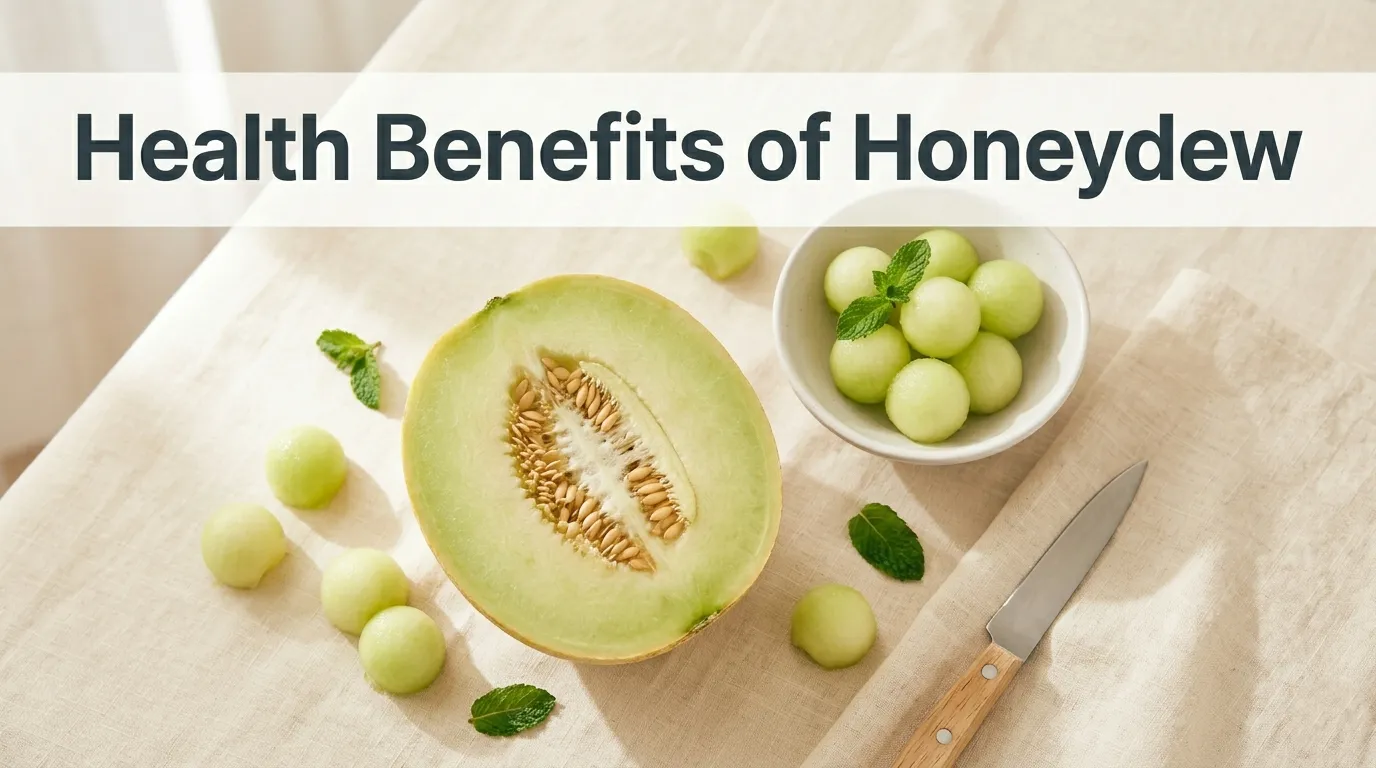
Honeydew melon is a round to oval fruit with a smooth, pale yellow rind and soft, greenish-white flesh that belongs to the Cucumis melo species, the same broad family as cantaloupe and casaba melon. Its primary health contributions come from its water content, which sits near 90%, its vitamin C concentration, and its potassium load per calorie delivered. One cup of diced honeydew, approximately 170 grams, provides 64 calories, 16 grams of carbohydrate, 1.4 grams of fiber, and less than 1 gram each of protein and fat.
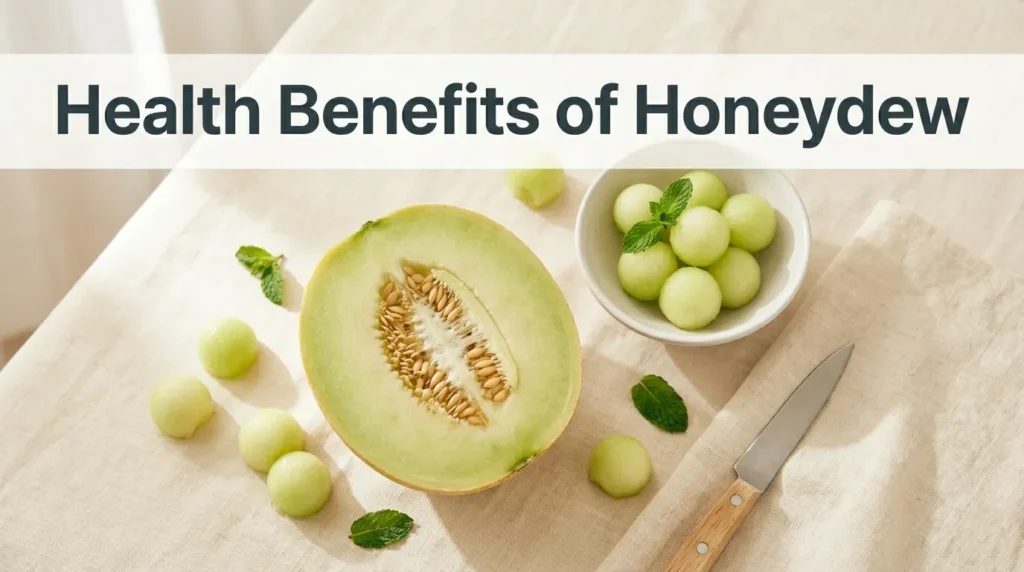
The nutritional value of honeydew is concentrated in its micronutrient profile rather than its macronutrient density. Vitamin C, a water-soluble antioxidant, leads the charge at roughly 32 milligrams per cup, which covers about 36% of the recommended daily intake for adult women and 29% for adult men. Potassium follows at 388 milligrams per cup. Smaller but meaningful amounts of vitamin B6, folate, and vitamin K appear in each serving.
Unlike deeply colored fruits such as blueberries or pomegranates, honeydew lacks the anthocyanin pigments that generate deep purple and red tones. Its pale interior means the antioxidant profile relies more on vitamin C and smaller concentrations of flavonoids rather than on the carotenoid and anthocyanin families. That doesn’t make it inferior. It makes it different, and the specific benefits it offers match its particular nutrient blend.
Key Takeaway: Honeydew delivers high-volume hydration, roughly one-third of your daily vitamin C, and a meaningful potassium dose in a low-calorie package, making it a practical nutrient-dense choice rather than an antioxidant powerhouse.
Honeydew Melon Nutrition Facts Table
A standard one-cup serving of raw honeydew melon balls provides the following nutritional breakdown, sourced from the USDA FoodData Central database.
| Nutrient | Amount Per 1 Cup (177g) | % Daily Value |
|---|---|---|
| Calories | 64 kcal | — |
| Water | 159 g | — |
| Protein | 0.9 g | 2% |
| Total Fat | 0.3 g | <1% |
| Total Carbohydrate | 16.1 g | 6% |
| Dietary Fiber | 1.4 g | 5% |
| Total Sugars | 14.4 g | — |
| Vitamin C | 31.9 mg | 36% (women), 29% (men) |
| Potassium | 388 mg | 8% |
| Vitamin B6 | 0.15 mg | 9% |
| Folate | 34 mcg | 8% |
| Vitamin K | 5.1 mcg | 4% |
| Magnesium | 17.7 mg | 4% |
Honeydew sugars are naturally occurring fructose and glucose, not added sugars. The glycemic load per cup is low to moderate, estimated between 5 and 7 depending on ripeness. Riper melons contain more free sugars and a slightly higher glycemic response.
The vitamin C content in honeydew degrades with prolonged storage and exposure to air. A honeydew that sits cut in the refrigerator for three days will contain measurably less vitamin C than one freshly sliced. The potassium content remains stable across storage conditions.
Key Takeaway: A single cup of honeydew provides 64 calories, approximately 14 grams of natural sugar, and strong vitamin C coverage, making it a hydrating fruit that fits easily into most dietary patterns.
Honeydew Health Benefits Backed by Science
The most well-supported honeydew health benefits include improved hydration status, dietary potassium intake that supports normal blood pressure, and vitamin C-dependent collagen synthesis. The strength of evidence varies across these benefits, with hydration and blood pressure support backed by strong mechanistic and population-level data, while skin benefits are more indirect and dependent on overall dietary pattern.
Think of honeydew’s nutrient package like a three-person team where each member has a clear job. Vitamin C handles antioxidant defense and collagen maintenance. Potassium manages fluid balance and counterbalances dietary sodium. Water simply keeps your total body fluid where it needs to be. None of these roles are flashy. All of them are physiologically non-negotiable, and honeydew contributes to all three in a single food.
The claims that require more skepticism involve honeydew’s direct effect on weight loss, its supposed detoxification properties, and any suggestion that it uniquely prevents chronic disease. No single fruit prevents disease. Dietary patterns do. Honeydew supports several protective dietary patterns. It does not replace them.
A 2021 review published in Nutrients examined the health outcomes associated with cucurbit fruit consumption, including honeydew and cantaloupe, and found consistent associations between higher intake and improved hydration markers and dietary potassium density. The researchers noted that the benefits were most pronounced in populations with habitually low fruit and vegetable intake. In other words, honeydew helps most when it displaces less nutrient-dense foods, not when it’s added on top of an already complete diet.
Honeydew Melon Health Benefits for Hydration
Honeydew melon is approximately 90% water by weight, which means a one-cup serving delivers roughly 159 grams of water alongside electrolytes that support fluid retention. This combination makes honeydew more effective at maintaining hydration than drinking plain water alone, particularly when consumed after light exercise or during hot weather when electrolyte losses through sweat are elevated.
The hydration mechanism works through a simple osmotic principle. Water consumed with small amounts of potassium, magnesium, and natural sugars is absorbed across the intestinal wall more gradually than plain water. The result is a slower, more sustained fluid delivery to your bloodstream rather than a rapid influx that your kidneys quickly filter into urine. This isn’t unique to honeydew. Watermelon, cucumber, and oranges do the same thing. Honeydew simply does it with a particularly clean, mild flavor that many people find easy to eat in volume.
A practical advantage honeydew holds over plain water is palatability. People eat more of what tastes good, and a chilled bowl of ripe honeydew on a July afternoon requires no convincing. For older adults, who are at elevated risk of dehydration due to a blunted thirst sensation, fruit with high water content serves as a useful hydration strategy. The Academy of Nutrition and Dietetics specifically recommends water-rich fruits and vegetables as part of a hydration plan for older adults who struggle to drink adequate fluids.
This hydration benefit is well-established and requires no exotic compounds or proprietary blends. The water is real. The electrolytes are measurable. The effect is reproducible. Any healthy adult can test this themselves. Eat two cups of honeydew after a hot walk and notice whether you feel better than when you drink the equivalent volume of plain water. The electrolyte difference matters.
Honeydew and Blood Pressure Regulation
Honeydew supports blood pressure regulation primarily through its potassium content of 388 milligrams per cup, a mineral that directly counteracts the hypertensive effects of dietary sodium. Potassium increases sodium excretion through urine and relaxes tension in blood vessel walls, both mechanisms that help maintain blood pressure within a normal range.
The sodium-to-potassium ratio in the diet matters more than either mineral alone. The average American adult consumes roughly 3,400 milligrams of sodium per day while falling short of the 2,600 to 3,400 milligram daily potassium recommendation for adults. This imbalance, high sodium paired with low potassium, is consistently associated with elevated blood pressure in population studies.
A single cup of honeydew won’t fix a high-sodium diet. What it does is shift the dietary ratio in the right direction, especially when it replaces a salty snack. Someone who eats a bag of pretzels adds roughly 450 milligrams of sodium with almost zero potassium. Swapping that snack for a cup of honeydew removes the sodium load and adds nearly 400 milligrams of potassium. The net shift across a week of consistent swaps is measurable.
The Dietary Guidelines for Americans 2020-2025 specifically name potassium as a nutrient of public health concern because low intake is linked to higher blood pressure and increased cardiovascular risk. Honeydew, cantaloupe, bananas, potatoes, and spinach are all listed among the top potassium sources the guidelines encourage. For someone with mild hypertension or a family history of high blood pressure, increasing potassium-rich fruits and vegetables is one of the most evidence-supported dietary changes available, with effects comparable in some studies to modest sodium restriction.
Key Takeaway: One cup of honeydew supplies about 8% of the daily potassium recommendation with virtually no sodium, making it a practical food for improving the dietary potassium-to-sodium ratio linked to healthier blood pressure.
Vitamin C in Honeydew and Immune Function
Honeydew provides 31.9 milligrams of vitamin C, also known as ascorbic acid, per one-cup serving, covering roughly one-third of the daily requirement for adults. Vitamin C supports immune function through several well-characterized mechanisms: it accumulates in phagocytes and lymphocytes, protects these immune cells from oxidative damage during infection response, and supports the skin’s epithelial barrier against pathogen entry.
The immune role of vitamin C is real but often overstated in wellness marketing. It does not prevent colds in the general population. The NIH Office of Dietary Supplements states that regular vitamin C intake at recommended levels may modestly shorten the duration of common cold symptoms by roughly 8% in adults and 14% in children. It does not reduce cold frequency for most people. The groups who benefit most from ensuring adequate vitamin C intake are those under extreme physical stress, such as marathon runners and soldiers in cold environments, where controlled trials have shown a more substantial reduction in cold incidence.
What honeydew offers is a food-based source of vitamin C with co-factors you miss when taking ascorbic acid in isolation. The fruit’s small amounts of flavonoids, including quercetin and kaempferol derivatives found in Cucumis melo species, may enhance vitamin C’s antioxidant recycling in the body, though this synergy is better documented in citrus than in honeydew specifically.
For most people, the relevant takeaway is that eating honeydew helps you hit the vitamin C intake mark without supplementation. The RDA for vitamin C is 75 milligrams for adult women and 90 milligrams for adult men. A cup of honeydew plus a serving of bell pepper or strawberries at another meal covers the entire daily requirement. The body does not store vitamin C, so regular dietary intake across the day is more effective than a single large dose.
Honeydew Antioxidant Properties Explained
Honeydew’s antioxidant properties come predominantly from vitamin C, with smaller contributions from flavonoids and phenolic compounds found in the melon’s flesh and, in higher concentrations, its peel and seeds. The pale color of honeydew signals a lower carotenoid content compared to orange-fleshed cantaloupe, which means its overall antioxidant capacity measured by ORAC or FRAP assays registers lower than deeply pigmented fruits.
This doesn’t mean honeydew lacks antioxidant activity. It means the activity is primarily vitamin C-dependent rather than carotenoid or anthocyanin-dependent. Vitamin C functions as a reducing agent in the body, donating electrons to neutralize reactive oxygen species before they can damage cell membranes, proteins, or DNA. This process happens continuously in the aqueous compartments of cells and in extracellular fluid.
Research on Cucumis melo extracts has identified several specific bioactive compounds, including cucurbitacin derivatives and phenolic acids, that demonstrate antioxidant activity in vitro. However, the concentrations in edible honeydew flesh are modest. A person would need to consume the peel and seeds, which are typically discarded, to access the highest antioxidant concentrations identified in laboratory studies.
The antioxidant conversation matters because oxidative stress is a genuine contributor to chronic disease development. But no single fruit, honeydew included, meaningfully changes systemic oxidative stress markers in healthy people who already eat a varied diet. The benefit accumulates across many fruits and vegetables over years, not from a single melon on a single day. Honeydew contributes to this cumulative effect. It does not single-handedly drive it.
Key Takeaway: Honeydew’s antioxidant activity is primarily vitamin C-based and modest compared to darker fruits, but its regular inclusion contributes to the cumulative protective effect of a produce-rich diet.
Honeydew and Digestive Health
Honeydew supports digestive function through its combination of water, soluble fiber, and a very low burden of fermentable carbohydrates that distinguishes it from several other popular fruits. A one-cup serving provides 1.4 grams of fiber, roughly 5% of the daily value. The fiber is split between soluble and insoluble types, with soluble pectin contributing to stool softening and gentle intestinal transit.
What makes honeydew notable from a digestive standpoint is what it doesn’t contain. Unlike apples, pears, watermelon, and stone fruits, honeydew is low in fermentable oligosaccharides, disaccharides, monosaccharides, and polyols, collectively known as FODMAPs. For people with irritable bowel syndrome or functional bloating who react to high-FODMAP foods, honeydew is consistently classified as a low-FODMAP fruit suitable for elimination-phase diets.
Monash University, the research institution that developed and maintains the low-FODMAP diet protocol, lists honeydew melon as a safe fruit at a one-cup serving size. Cantaloupe and galia melon share this classification. Watermelon, by contrast, is high in fructans and fructose and triggers symptoms in many FODMAP-sensitive individuals.
The high water content of honeydew supports digestive regularity through a simple mechanical effect. Adequate fluid intake keeps stool soft and transit time normal. Eating water-rich foods contributes to total fluid intake and provides the added benefit of fiber and electrolytes that plain water lacks. For someone prone to constipation, particularly an older adult with reduced thirst sensation, a daily serving of honeydew addresses both fluid and fiber intake simultaneously.
Honeydew for Skin Health and Collagen Support
Honeydew supports skin health primarily through its vitamin C content, which is a required co-factor for the enzymes that synthesize and stabilize collagen. Collagen is the structural protein that gives skin its firmness and elasticity. Without adequate vitamin C, collagen production slows, and existing collagen becomes less stable. This is the mechanism behind the skin fragility seen in scurvy, the classic vitamin C deficiency disease.
The vitamin C in one cup of honeydew provides roughly one-third of the daily requirement. That amount supports normal collagen maintenance in a well-nourished person. It does not reverse existing wrinkles, eliminate sun damage, or produce visible skin changes in someone who already meets the vitamin C RDA through their regular diet. The skin benefits of vitamin C are best understood as preventive and maintenance-oriented rather than corrective.
Hydration also plays an underappreciated role in skin appearance. Dehydrated skin looks less plump and can accentuate fine lines, though this effect is temporary and distinct from structural skin aging. The water content in honeydew contributes to total body hydration, which supports normal skin turgor and function.
Topical vitamin C serums, formulated with L-ascorbic acid at concentrations of 10 to 20%, have more direct research support for reducing visible photoaging than dietary vitamin C intake. What you eat matters. What you apply matters more for visible skin outcomes. Honeydew helps you meet the baseline nutritional requirements your skin needs to function. It is a dietary support, not a topical treatment.
Key Takeaway: Honeydew supplies the vitamin C your body requires for normal collagen synthesis and skin maintenance, but visible skin improvements depend on consistent overall nutrition, sun protection, and topical skincare rather than any single fruit.
Honeydew Melon and Weight Management
Honeydew fits comfortably into a weight management eating pattern because it delivers volume, sweetness, and hydration for roughly 64 calories per cup. This is the principle of energy density. Foods with high water and fiber content relative to their calorie count fill the stomach and trigger satiety signals with fewer calories than energy-dense foods like crackers, cheese, or granola.
A person trying to lose or maintain weight can eat two full cups of honeydew for approximately 128 calories. Compare that to a standard blueberry muffin, which packs roughly 450 calories into a far smaller volume and leaves most people hungry again within two hours. The honeydew won’t provide protein or sustained energy, but as a snack or dessert replacement, it creates a calorie deficit without requiring hunger tolerance.
Research on fruit intake and body weight consistently shows that whole fruit consumption is associated with weight maintenance or modest weight loss, not weight gain. A 2020 analysis published in the journal Nutrients examined fruit consumption patterns across multiple cohort studies and found that higher whole fruit intake correlated with lower long-term weight gain, while fruit juice intake trended in the opposite direction. The fiber and chewing requirement of whole fruit, including melons, slows consumption and improves satiety signaling compared to liquid calories.
The cautionary note for weight management involves what you pair with honeydew. A fruit salad made with honeydew, heavy cream, and marshmallows stops being a low-calorie food. Honeydew blended into a smoothie with yogurt and honey adds calories quickly and reduces chewing-related satiety. For weight management purposes, eat honeydew as whole, cut pieces rather than blended or mixed with high-calorie additions.
Comparing Honeydew to Other Melons
Honeydew, cantaloupe, and watermelon share the same high-water, low-calorie architecture but diverge sharply in their micronutrient and phytonutrient profiles. Cantaloupe dominates on vitamin A and beta-carotene. Watermelon delivers more lycopene and citrulline. Honeydew holds its own on vitamin C and potassium while offering the mildest flavor profile of the three.
| Nutrient (per cup) | Honeydew | Cantaloupe | Watermelon |
|---|---|---|---|
| Calories | 64 | 54 | 46 |
| Vitamin C | 31.9 mg | 58.7 mg | 12.3 mg |
| Vitamin A (RAE) | 5.3 mcg | 270 mcg | 43 mcg |
| Potassium | 388 mg | 427 mg | 170 mg |
| Beta-carotene | 53 mcg | 3,040 mcg | 467 mcg |
| Lycopene | 0 mcg | 0 mcg | 6,890 mcg |
| Fiber | 1.4 g | 1.4 g | 0.6 g |
| FODMAP Status | Low | Low | High |
Cantaloupe provides substantially more vitamin A as beta-carotene, which supports vision and immune function. Its orange flesh signals the carotenoid density that honeydew’s pale interior lacks. Someone choosing between the two for eye health or skin carotenoid protection should lean cantaloupe.
Watermelon contains citrulline, an amino acid that may improve exercise performance and blood flow through nitric oxide pathways. It also delivers a large lycopene dose, a carotenoid associated with reduced prostate cancer risk in observational studies. The trade-off is watermelon’s high FODMAP status and lower potassium content.
Honeydew occupies a middle lane. It offers more vitamin C than watermelon, comparable potassium to cantaloupe, and a low-FODMAP profile that makes it digestively gentler than watermelon for sensitive individuals. The right melon depends on what you’re optimizing for. For daily hydration and potassium with digestive ease, honeydew is the practical choice.
Who Should Eat More Honeydew
Several specific groups stand to benefit from increasing honeydew intake beyond what the average person consumes. The groups that gain the most are those with low baseline fruit intake, elevated blood pressure, exercise-related hydration needs, or FODMAP-sensitive digestive conditions.
People with habitually low fruit and vegetable consumption often have inadequate potassium and vitamin C intake. The Dietary Guidelines for Americans 2020-2025 report that roughly 90% of adults fall below the recommended vegetable intake and about 80% miss the fruit target. For someone who currently eats one piece of fruit per day or fewer, adding a cup of honeydew meaningfully shifts potassium and vitamin C intake in a single, low-effort addition.
Athletes and physically active people who train in heat can use honeydew as a dual-purpose recovery food. The water, natural sugars, and potassium replace fluids, glycogen, and electrolytes lost through sweat. It’s not a substitute for an electrolyte replacement drink during prolonged intense exercise exceeding 90 minutes. For a one-hour run or a recreational tennis match followed by a cool-down, a bowl of cold honeydew serves the rehydration purpose effectively and tastes better than most formulated sports products.
Individuals with irritable bowel syndrome who react to high-FODMAP fruits like watermelon, apples, or stone fruit can eat honeydew without triggering the fermentation-related bloating and discomfort those other fruits cause. The Monash University low-FODMAP certification provides an evidence-based reason to choose honeydew specifically over other melon options.
Older adults at risk for dehydration and constipation benefit from honeydew’s high water content and modest fiber. A decreased thirst drive and medication-related fluid loss make this population vulnerable to chronic mild dehydration, and water-rich foods provide an alternative route to fluid intake that doesn’t rely on the thirst mechanism.
Who Should Be Cautious About Honeydew
Some people need to moderate honeydew intake or avoid it in specific circumstances. The groups that warrant caution include those with advanced chronic kidney disease, people with fructose malabsorption, anyone with an allergy to melon or related foods, and individuals on specific potassium-sparing medications.
People with stage 4 or 5 chronic kidney disease often follow a potassium-restricted diet because their kidneys cannot effectively clear excess potassium from the bloodstream. Hyperkalemia, or elevated blood potassium, can cause dangerous heart rhythm disturbances. A nephrologist or renal dietitian can determine an individual’s potassium limit. For someone restricted to 2,000 milligrams of potassium per day, a single cup of honeydew at 388 milligrams represents a substantial portion of the daily allowance and requires careful tracking alongside other potassium sources.
Melon allergy is uncommon but documented. It can present as oral allergy syndrome, where the immune system cross-reacts between melon proteins and pollen allergens, particularly ragweed pollen. Symptoms include mouth and throat itching immediately after eating honeydew. True melon anaphylaxis is rare. Anyone who experiences mouth tingling, lip swelling, or throat tightness after eating honeydew should stop eating it and see an allergist for skin prick testing.
Fructose malabsorption affects roughly 30 to 40% of the population to varying degrees. Honeydew contains free fructose and glucose in roughly equal amounts, which generally makes it better tolerated than high-fructose fruits like apples or mangoes. However, some people with severe fructose malabsorption may still react to the 7 to 8 grams of fructose in a full cup of honeydew, particularly if consumed on an empty stomach.
People taking potassium-sparing diuretics such as spironolactone or eplerenone should be aware that these medications reduce potassium excretion. Consistently high intake of potassium-rich foods while on these medications can raise serum potassium to unsafe levels. A prescribing physician or pharmacist can review specific dietary recommendations based on the medication dose and the individual’s baseline potassium levels.
Key Takeaway: Honeydew is a healthy choice for most people, but anyone with advanced kidney disease, melon allergy symptoms, severe fructose malabsorption, or a prescription for potassium-sparing medication should get individualized guidance from a healthcare provider before making it a daily habit.
How to Select and Store Honeydew for Maximum Benefits
To get the most nutrition from honeydew, start with proper selection and store the fruit correctly after cutting. A ripe honeydew delivers the highest sugar content and peak vitamin C levels. An overripe or poorly stored melon loses vitamin C and develops a mealy texture that reduces palatability without changing the calorie or sugar content.
Select a ripe honeydew using three senses. Look for a creamy yellow to pale golden rind with a slightly waxy, not shiny, surface. Green-tinged honeydew is underripe and will not sweeten further once cut, though it will soften slightly on the counter. Feel the blossom end opposite the stem scar. It should yield slightly to gentle pressure, similar to a ripe avocado’s give. Smell the blossom end. A ripe honeydew emits a faint floral, honey-like aroma. No scent means the melon was picked too early.
Store whole, uncut honeydew at room temperature for two to three days to complete ripening if the blossom end is still firm. Once ripe or cut, refrigerate immediately. Cut honeydew in an airtight container stays fresh for three to four days. Vitamin C degradation accelerates after the third day. Plan to eat cut honeydew within 48 hours for the best nutrient retention.
Pre-cut supermarket honeydew in plastic containers is convenient but often sits in refrigeration longer than you’d store it at home. The vitamin C content in pre-cut fruit can be substantially lower than in a freshly cut whole melon. Buy whole honeydew when possible. Cut it yourself. Eat it promptly. The nutrition difference is real, and the whole melon costs less per edible cup than the pre-cut version.
How to Incorporate Honeydew Into Your Daily Diet
Adding honeydew to your routine requires no special equipment or recipe knowledge. The simplest preparation, cold, ripe cubes eaten plain, maximizes the nutrition-to-effort ratio. Beyond that, a few pairings improve nutrient absorption and round out the eating experience.
Combine honeydew with a protein or fat source to slow gastric emptying and extend satiety. Melon eaten alone digests quickly and leaves the stomach within 30 to 45 minutes. Pair it with cottage cheese, plain Greek yogurt, or a small handful of almonds, and the stomach holds the mixture longer, providing more sustained energy. The fat in the yogurt or nuts doesn’t interfere with the water-soluble vitamin C absorption. It simply changes the digestive timeline.
Add honeydew to a savory salad with fresh mint, crumbled feta, and a squeeze of lime for a Mediterranean-style side dish. The salt in the feta balances the melon’s sweetness. The mint and lime add aromatics without calories. This combination works as a side with grilled fish or chicken and provides potassium and vitamin C alongside the protein and calcium from the cheese.
Blend frozen honeydew cubes with cucumber, a handful of spinach, and water for a hydrating green smoothie that doesn’t need added sugar. The honeydew’s natural sweetness carries the drink. Unlike banana, it doesn’t create a creamy texture, so expect a lighter, juice-like consistency. This is a hydration-focused smoothie, not a meal replacement.
Freeze honeydew balls on a parchment-lined tray, then store them in a freezer bag for a cold snack that eats like a natural sorbet. Frozen honeydew doesn’t brown or lose texture the way frozen strawberries or peaches do. It stays pleasant straight from the freezer for months. This works particularly well for parents who want a cold treat option for children that has no added sugar.
Key Takeaway: The simplest way to eat more honeydew is to cut it fresh and eat it cold, ideally paired with a small amount of protein or fat to extend fullness, but savory salads, light smoothies, and frozen snacks all offer easy alternatives.
Frequently Asked Questions About Health Benefits of Honeydew
Is honeydew good for you every day?
Yes, eating honeydew daily is safe and nutritionally beneficial for most people.
A one-cup serving provides hydration, vitamin C, and potassium without excessive calories or sugar.
People with advanced kidney disease on potassium-restricted diets should confirm their daily potassium limit with their nephrologist before eating honeydew every day.
How much sugar is in honeydew melon?
Honeydew contains approximately 14.4 grams of naturally occurring sugar per one-cup serving.
These sugars are primarily fructose and glucose found within the whole fruit matrix along with water and 1.4 grams of fiber.
This is not added sugar, and the glycemic load per serving is low to moderate at an estimated 5 to 7.
Which is healthier, cantaloupe or honeydew?
Cantaloupe provides more vitamin A as beta-carotene and more vitamin C per cup than honeydew.
Honeydew offers slightly fewer calories, a comparable potassium content, and a low-FODMAP profile that makes it easier to digest for people with irritable bowel syndrome.
The healthier choice depends on your nutritional priorities and digestive tolerance.
Can honeydew help with bloating?
Honeydew is low in FODMAPs, the fermentable carbohydrates that trigger bloating in sensitive individuals.
Replacing high-FODMAP fruits like watermelon, apples, or mangoes with honeydew often reduces bloating for people with irritable bowel syndrome.
The high water and modest fiber content may also support regular digestion, which reduces constipation-related bloating.
Does honeydew have collagen?
Honeydew does not contain collagen.
It contains vitamin C, which is an essential co-factor for your body’s own collagen synthesis.
Eating honeydew supports your body’s collagen production indirectly. It does not directly supply collagen to your skin or joints.
Is honeydew safe during pregnancy?
Honeydew is safe during pregnancy when washed properly before cutting.
Unwashed melon rinds can carry Listeria bacteria, so scrub the outside of the melon under running water and dry it before slicing.
The vitamin C, potassium, and hydration honeydew provides are beneficial during pregnancy, and the low calorie density helps manage healthy weight gain.
The Bottom Line on Honeydew
Honeydew isn’t the most exciting fruit in the produce section. It isn’t the brightest, the most antioxidant-dense, or the most talked about in wellness circles. What it is, honestly, is a fruit that does several specific things well: it hydrates, it supplies vitamin C and potassium in a low-calorie package, and it’s gentler on sensitive digestion than many of its flashier counterparts.
If you currently eat almost no fruit, adding a cup of honeydew three to five times a week is a genuine nutritional upgrade. Your hydration, potassium intake, and vitamin C status all improve from that single change. If you already eat a wide variety of produce, honeydew fits right into the rotation as a refreshing option that works when you want something light and easy.
Don’t expect honeydew to change your life. Do expect it to quietly fill nutrient gaps you might not have known were there. That’s what most genuinely healthy foods actually do.