Hoop Tea Nutrition Facts: A 2026 Breakdown
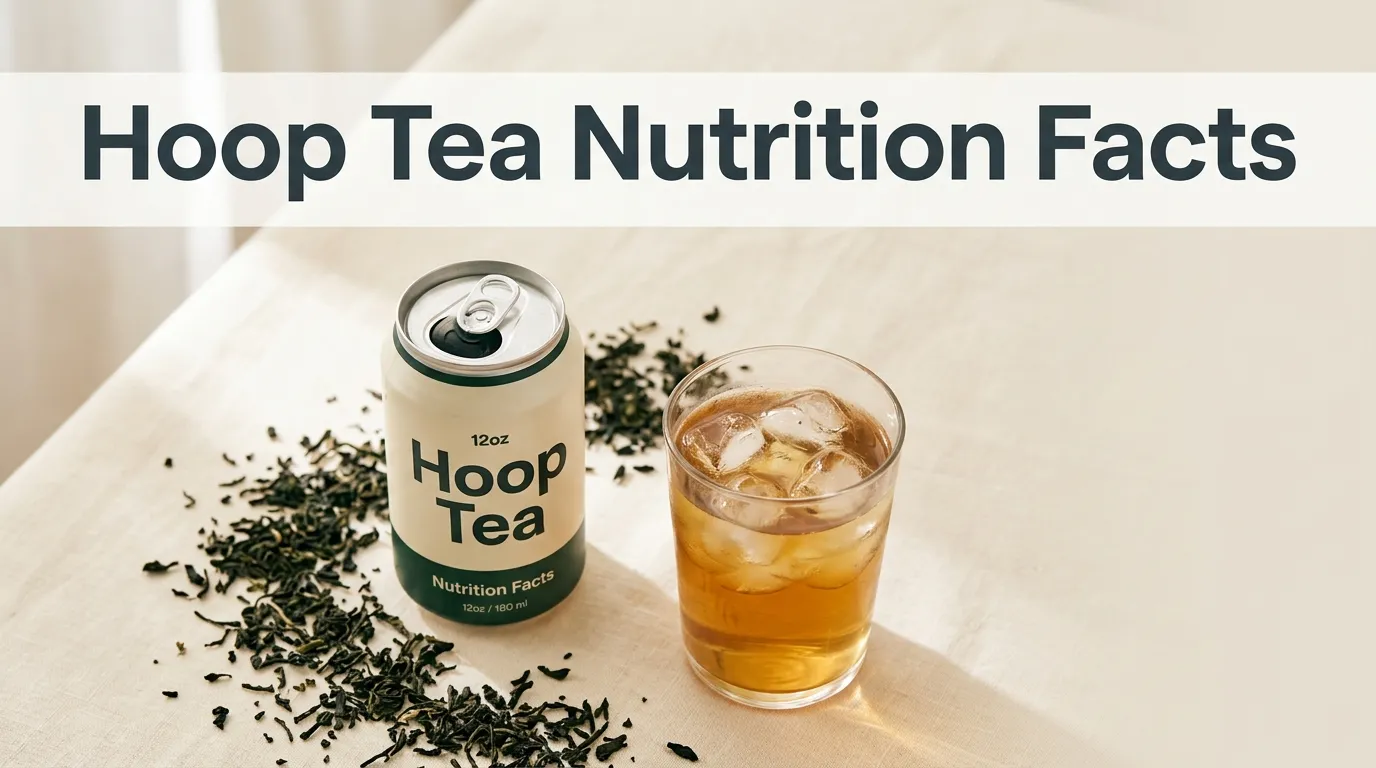
Hoop Tea nutrition facts reveal a beverage that drinks like iced tea but carries the nutritional weight of a full-sugar soda combined with a standard alcoholic drink. A single 12-ounce serving of the original flavor delivers approximately 190 to 200 calories and 20 to 22 grams of added sugar.
That sugar load matters because it represents roughly 80 to 88 percent of the American Heart Association’s entire daily added sugar limit for women, delivered in one can. The tea base provides a negligible amount of the antioxidants you would get from traditionally brewed tea, and the alcohol content directly impairs your body’s ability to hydrate. This article breaks down every line of the label, compares it against competing alcoholic beverages, examines the science of mixing alcohol with tea compounds, and gives you a clear, evidence-based verdict on where this drink fits in a health-conscious eating pattern.
Hoop Tea Nutrition Facts: A Complete Label Analysis
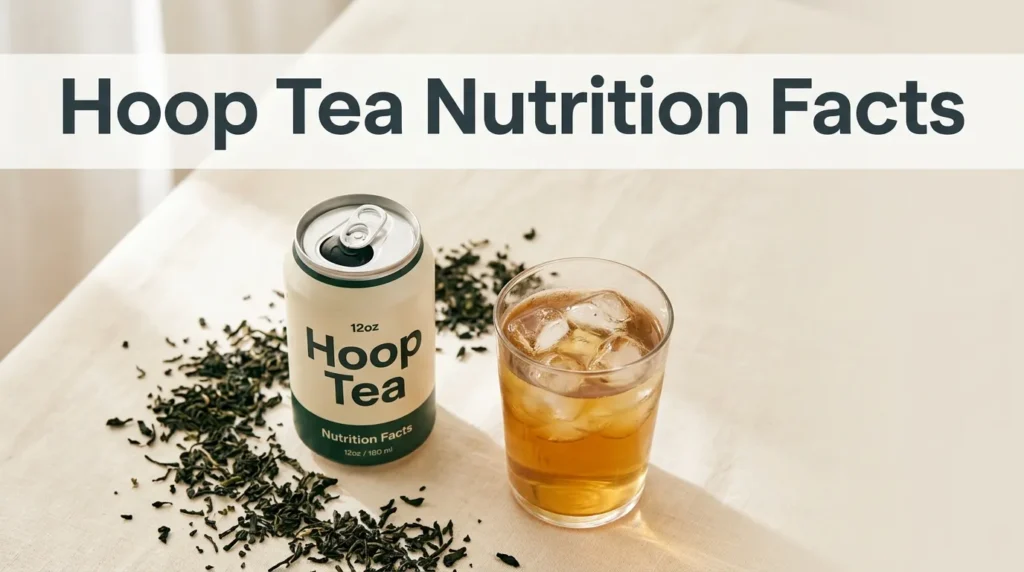
A complete label analysis of Hoop Tea starts with recognizing it as a malt-based alcoholic beverage flavored with brewed tea, not a health drink. The standard nutrition panel for the original flavor, based on a 12-fluid-ounce can, paints a clear picture of a high-sugar, nutrient-void alcohol product.
The calorie count sits between 190 and 200, almost entirely derived from two sources: alcohol and added sugar. You get zero grams of fat, zero grams of protein, and zero grams of fiber. The sodium content is minimal, registering around 10 to 15 milligrams per can, which is less than 1 percent of the daily value. There are no vitamins listed on the label, and any micronutrients native to the tea leaves were largely lost during the brewing, extraction, and fermentation process used to create a shelf-stable malt beverage.
What this label does not tell you is equally important. The Dietary Guidelines for Americans 2020-2025 define a standard drink as containing 14 grams of pure alcohol. Hoop Tea packs that into a can that also delivers more sugar than a glazed donut. When you look at the complete nutritional picture, the product functions as an empty calorie delivery system with a mild tea flavor. The alcohol disrupts your metabolic priority, causing your liver to pause fat oxidation to process the ethanol first, while the liquid sugar triggers an insulin response without providing any satiety.
| Nutrient Component | Amount Per 12 fl oz | Context |
|---|---|---|
| Calories | 190-200 kcal | Equivalent to two slices of white bread |
| Total Carbohydrate | 20-22 g | All from added sugar |
| Added Sugar | 20-22 g | 80-88% of AHA daily limit for women |
| Protein | 0 g | No nutritional contribution |
| Sodium | 10-15 mg | Less than 1% DV |
| Alcohol by Volume | 5.0% | One standard drink |
Hoop Tea Original Nutrition Facts: The Baseline
Hoop Tea Original nutrition facts establish the baseline from which all other flavors deviate slightly, and that baseline is a 190 to 200 calorie can with 20 to 22 grams of sugar and five percent alcohol by volume. The original flavor is built on a malt liquor base with brewed black tea extract, cane sugar, and citric acid.
Malt liquor is a fermented beverage made from malted barley, which means this product contains gluten. Anyone with celiac disease or non-celiac gluten sensitivity needs to know that the malt base disqualifies Hoop Tea from being labeled gluten-free. The ingredient declaration lists “malt liquor” first, followed by “brewed tea extract,” then cane sugar, meaning the tea component is secondary to the alcohol base both in manufacturing order and in physiological impact.
The original flavor represents the closest thing to a straightforward alcoholic iced tea in the product line. It contains no fruit juice additions, no additional flavor syrups beyond the base recipe, and no artificial sweeteners. This simplicity makes it the most useful benchmark for comparing against the brand’s spiked varieties and against competing products like hard seltzers or malt-based cocktails. From a nutrition perspective, the original flavor and the spiked versions are nearly identical in calories, sugar, and alcohol. The differences come down to natural flavor extracts and, in some cases, citric acid adjustments to balance fruitier profiles.
Key Takeaway: Hoop Tea Original delivers 200 calories and 22 grams of sugar in a gluten-containing malt base with only trace tea compounds, making it an occasional indulgence rather than a daily beverage.
Hoop Tea Nutrition Facts Sugar: A Deep Dive
Hoop Tea nutrition facts sugar analysis reveals that a single 12-ounce can contains 20 to 22 grams of added sugar, all of it coming from cane sugar listed on the ingredient panel. This is not fruit juice concentrate, honey, or agave. It is fully refined sucrose dissolved into the liquid.
The physiological problem with liquid sucrose in an alcoholic beverage is the speed at which it hits your bloodstream. When you eat a piece of fruit, the sugar is packaged with fiber, which slows digestion and blunts the blood glucose spike. When you drink an alcoholic iced tea, the sugar arrives in your small intestine rapidly, absorbed alongside ethanol, which your liver is already working overtime to metabolize. Your body prioritizes clearing the alcohol first, which means the sugar is more likely to be stored as fat in the short term, particularly if you are drinking Hoop Tea alongside a meal or snacks that already meet your energy needs.
The American Heart Association recommends that adult women consume no more than 25 grams of added sugar per day and adult men no more than 36 grams. One can of Hoop Tea uses up 80 to 88 percent of the women’s daily budget and 55 to 61 percent of the men’s. If you drink two cans during a social afternoon, you have consumed 40 to 44 grams of added sugar from the beverage alone, exceeding every major health organization’s daily recommendation in the time it takes to finish a couple of drinks.
| Organization | Daily Added Sugar Limit | One Hoop Tea Can | % of Limit (Women) | % of Limit (Men) |
|---|---|---|---|---|
| American Heart Association | 25g (W) / 36g (M) | 22g | 88% | 61% |
| Dietary Guidelines for Americans | <10% of total calories (approx 50g for 2000 kcal diet) | 22g | 44% | 44% |
| World Health Organization | <10% of total calories, ideally <5% | 22g | 44% (10% target) | 44% |
Hoop Tea Spiked Iced Tea Nutrition Facts by Flavor
Hoop Tea Spiked Iced Tea nutrition facts vary minimally across the flavor lineup, with most versions clustering tightly around the 190 to 200 calorie mark with 20 to 22 grams of sugar per 12-ounce can. The “spiked” designation in the product name refers to the alcohol content, not to an additional nutritional component or a stronger formulation.
The brand’s fruit-forward flavors, such as peach, mango, or lemon, rely on natural flavor extracts and citric acid to build their taste profile. Natural flavors are proprietary mixtures derived from plant or animal sources, and they do not meaningfully alter the calorie, sugar, or carbohydrate totals. What they can do is introduce small amounts of additional compounds from their source materials, but at the concentrations used in a mass-market malt beverage, these amounts are measured in parts per million and have no nutritional significance.
A practical distinction worth making involves the color and perceived sweetness. Some fruit flavors can taste sweeter even when the sugar content is identical, simply because fruit-associated aromatic compounds prime your brain to expect sweetness. This sensory illusion can lead you to perceive one flavor as “healthier” or “lighter” than another when, in reality, you are consuming the same sugar and alcohol load. The label is the only reliable guide. When you check the nutrition facts panel across flavors, the numbers almost always match within a one to two gram margin, which is well within standard rounding allowances for food labeling.
Hoop Tea Calories and Serving Size: What You’re Actually Drinking
Hoop Tea calories and serving size deserve scrutiny because the 12-ounce can is often consumed faster than a beer of the same volume, leading to a miscalibration of perceived intake. A single can provides roughly 190 to 200 calories, almost all of which come from alcohol and sugar.
Alcohol contributes seven calories per gram, sitting between carbohydrate and fat in caloric density. The five percent alcohol by volume in a 12-ounce Hoop Tea works out to roughly 0.6 ounces of pure ethanol, which translates to about 98 calories from alcohol alone. The remaining 90 to 100 calories come from the 20 to 22 grams of carbohydrate, which is all sugar. This dual fuel source makes Hoop Tea a calorie-dense beverage that provides zero satiety. You will not feel full after drinking one, and the alcohol may actually stimulate appetite through its effect on hypothalamic neurons that regulate hunger signaling.
The serving size printed on the label is the entire 12-ounce can, which is standard for malt beverages in the United States. However, many people treat a spiked iced tea as a session drink, consuming two or three cans over an afternoon. At two cans, you have ingested 380 to 400 calories and 40 to 44 grams of added sugar. At three cans, you are at 570 to 600 calories and 60 to 66 grams of sugar before you have eaten a single bite of food. These are not numbers that fit easily into a balanced dietary pattern without significant adjustment elsewhere in the day.
Key Takeaway: One can of Hoop Tea represents a full standard drink plus a dessert-level sugar load, and drinking multiple cans rapidly escalates your total calorie and sugar consumption beyond what most dietary patterns can accommodate.
Hoop Tea Ingredients List Analysis: From Malt to Tea
Hoop Tea ingredients list analysis starts with malt liquor, which is the primary fermentable base and the ingredient that defines both the product’s alcohol content and its carbohydrate profile. Malt liquor is produced by fermenting malted barley with water, then often adding adjuncts like corn or rice to boost the alcohol without adding excessive body.
After the malt base, you find brewed tea extract listed as the second ingredient. This extract is not a freshly steeped tea infusion. It is a concentrated tea product processed for stability in an alcoholic, acidic, shelf-stable beverage. During this processing, the polyphenol structure of the tea undergoes significant changes. Freshly brewed green tea contains high levels of epigallocatechin gallate, or EGCG, along with other catechins that are unstable in solution over time. In a malt beverage with a pH adjusted by citric acid and stored for weeks or months, these compounds oxidize and degrade. The tea in Hoop Tea functions primarily as a flavoring agent, not as a functional source of antioxidants.
Cane sugar appears next on the ingredient panel, providing the entire 20 to 22 grams of added sugar. Citric acid follows, serving as both a preservative and a flavor brightener that mimics the tartness you would get from lemon in a traditional iced tea. Natural flavors round out the list, adding the specific fruit or tea notes that differentiate one can from another. The label also carries a government warning about alcohol and a declaration that the product contains sulfites, which are common in fermented beverages and can trigger reactions in sensitive individuals.
Hoop Tea Alcohol Content Explained: One Standard Drink
Hoop Tea alcohol content is five percent alcohol by volume, which places one 12-ounce can squarely within the definition of a single standard drink as established by the National Institute on Alcohol Abuse and Alcoholism. A standard drink in the United States contains 14 grams, or 0.6 fluid ounces, of pure ethanol, and a 12-ounce beverage at five percent ABV hits that mark exactly.
What complicates the standard drink framing is the beverage’s drinkability. Tea is a beverage most people associate with hydration and casual, repeated consumption. Iced tea is something you sip throughout the day. When that association transfers to a spiked version, it becomes easy to drink two or three cans without the same psychological registration that you would have when counting bottles of beer or glasses of wine. Two cans push you to the limit of moderate drinking as defined by the Dietary Guidelines for Americans, which is up to two drinks per day for men and one for women. Three cans exceed it.
The alcohol in Hoop Tea is metabolized primarily by the enzyme alcohol dehydrogenase in your liver, which converts ethanol to acetaldehyde, a toxic intermediate that your body must further break down into acetate. This metabolic pathway takes priority over almost every other liver function, including glucose regulation and fat metabolism. While your liver processes the alcohol from a Hoop Tea, it is not efficiently managing your blood sugar or burning fat, which is a physiological reality every nutrition-conscious drinker should understand.
Hoop Tea Sugar Content Comparison: How It Stacks Up
Hoop Tea sugar content comparison against other alcoholic beverages shows it sitting among the highest-sugar options in the ready-to-drink category. A 12-ounce can with 22 grams of sugar contains roughly five and a half teaspoons of sugar, which is more than many consumers realize.
A standard 12-ounce light beer contains approximately zero to three grams of sugar and about 100 calories. A typical hard seltzer runs between one and two grams of sugar and 90 to 100 calories. A five-ounce glass of dry wine has roughly one gram of residual sugar. Hoop Tea, at 22 grams of sugar and 190 to 200 calories, aligns much more closely with a regular soda or a sweetened cocktail than it does with these lighter alternatives. It also lands near the territory of a rum and cola, which pairs a shot of rum at around 97 calories with eight ounces of cola at roughly 90 calories and 22 grams of sugar.
The comparison table below illustrates the stark difference. If your goal is to minimize sugar intake while enjoying an alcoholic beverage, hard seltzer, light beer, dry wine, or a spirit with a zero-calorie mixer all outperform Hoop Tea by a wide margin. Hoop Tea’s nutritional profile is not uniquely bad within the broader landscape of alcoholic beverages. Sweet wines, dessert cocktails, and cream liqueurs all carry higher sugar loads. But within the specific category of canned, sessionable, ready-to-drink malt beverages marketed for casual outdoor consumption, it sits on the high-sugar end of the spectrum.
| Beverage (12 fl oz unless noted) | Calories | Sugar (g) | ABV |
|---|---|---|---|
| Hoop Tea Original | 190-200 | 20-22 | 5.0% |
| Light Beer (average) | 100 | 0-3 | 4.2% |
| Hard Seltzer (average) | 100 | 1-2 | 5.0% |
| Regular Soda (Coca-Cola) | 140 | 39 | 0.0% |
| Dry White Wine (5 fl oz) | 120 | 1 | 12.0% |
| Rum and Cola (8 fl oz cola) | 185 | 22 | Varies |
Key Takeaway: Hoop Tea carries a sugar load comparable to a rum and cola or a non-alcoholic soda, placing it on the high-sugar end of the ready-to-drink alcohol category and making it a poor choice for anyone actively limiting added sugar.
Hoop Tea Carb Count and Keto Compatibility
Hoop Tea carb count lands at 20 to 22 grams of net carbohydrate per 12-ounce can, all of it from sugar, which immediately disqualifies it from compatibility with a standard ketogenic diet. A properly formulated keto diet typically restricts carbohydrate intake to 20 to 50 grams of total carbs per day to maintain a state of nutritional ketosis. One Hoop Tea can consume the entire lower end of that allowance.
The carbohydrate source matters here. These are not complex carbohydrates from whole grains or fiber-rich vegetables that digest slowly. They are simple sugars dissolved in liquid, absorbed rapidly, and guaranteed to provoke an insulin response that will suppress ketone production. The alcohol itself does not directly kick you out of ketosis in the way carbohydrates do, but your liver will pause ketone production while it metabolizes the ethanol, which creates a double metabolic strike against ketosis maintenance.
For someone following a low-carb diet that is less strict than full keto, say in the 50 to 100 gram range, a single Hoop Tea can still represents a meaningful fraction of the daily carbohydrate budget. The decision to drink one becomes a trade-off. You accept that the can will use 20 to 40 percent of your day’s carbohydrate allowance and provide no fiber, no micronutrients, and no satiety in return. There are lower-carb alcoholic tea alternatives emerging in 2026 that use erythritol, allulose, or monk fruit sweetener blends, and those products drop the carb count to the two to five gram range per can, offering a more keto-compatible option for anyone unwilling to give up the spiked tea experience.
Hoop Tea Caffeine and Polyphenol Content: The Tea Component
Hoop Tea caffeine and polyphenol content represents the most misunderstood aspect of this product. The tea extract used in production does introduce some caffeine, typically estimated between 15 and 30 milligrams per 12-ounce can based on the concentration of the extract and the brewing parameters used during manufacturing. For comparison, a standard eight-ounce cup of home-brewed black tea contains 40 to 70 milligrams of caffeine. The amount in Hoop Tea is low enough that most people will not register it as a stimulant effect, but it is present.
The polyphenol story is more disappointing. Freshly brewed black tea is rich in theaflavins and thearubigins, polyphenol compounds formed during the oxidation of tea leaves that have documented antioxidant and anti-inflammatory properties in human studies. When tea extract is processed into a malt beverage base, exposed to heat, acidified with citric acid, and stored in cans for weeks or months, these delicate polyphenol structures degrade. The NIH National Center for Complementary and Integrative Health has noted that tea polyphenol stability depends heavily on pH, temperature, and storage conditions, and an alcoholic, acidic, ambient-stored beverage represents an aggressively poor environment for polyphenol preservation.
What you are left with is tea flavor without meaningful tea function. The beverage tastes like tea, which provides a sensory experience that may lead consumers to associate it with the health halo of traditionally brewed tea, but the nutritional reality is that the antioxidant capacity is negligible compared to a cup of freshly steeped black or green tea. If your goal is to consume tea for its documented health benefits, drink tea. If you want an alcoholic beverage that tastes like tea, Hoop Tea will serve that purpose but will not provide the bioactive compounds that make tea a health-supporting food.
Key Takeaway: Hoop Tea delivers a mild caffeine dose and a tea flavor profile but nearly none of the antioxidant polyphenols that make traditional brewed tea a health-supporting beverage, so do not count it toward your daily tea intake for health purposes.
Alcoholic Tea vs Hard Seltzer Nutrition: A 2026 Comparison
Alcoholic tea vs hard seltzer nutrition comparison in 2026 continues to favor hard seltzer for anyone prioritizing lower sugar and lower calorie intake. Hard seltzer, which is essentially carbonated water with an alcohol base derived from fermented cane sugar or malt, typically delivers 90 to 100 calories, one to two grams of sugar, and two to three grams of total carbohydrate per 12-ounce serving.
Hoop Tea doubles the calorie count and delivers roughly ten to twenty times the sugar content at the same serving size and the same alcohol by volume. The alcohol base in a hard seltzer is often a neutral spirit or a fermented sugar wash that contributes ethanol without residual sweetness. Hoop Tea uses a malt liquor base that contributes both ethanol and a heavier mouthfeel, then adds cane sugar on top for sweetness, creating a layered carbohydrate load that hard seltzer entirely avoids.
The flavor experience is where the trade-off becomes personal. Hard seltzer delivers a crisp, carbonated, lightly flavored experience that some consumers find thin or artificial. Hoop Tea delivers a still, full-bodied, sweet tea experience that tastes closer to a familiar non-alcoholic beverage. The question for a nutrition-conscious consumer is whether that flavor difference is worth 90 to 100 extra calories and 20 extra grams of sugar per can. In a vacuum, the answer is no. In the context of a social gathering where you will drink one can and genuinely enjoy it, the difference is not catastrophic. The problem emerges when the pleasant taste encourages a second or third can, at which point the nutritional gap between Hoop Tea and hard seltzer widens into a chasm.
| Attribute | Hoop Tea (12 fl oz) | Hard Seltzer (12 fl oz) |
|---|---|---|
| Calories | 190-200 | 90-100 |
| Sugar | 20-22 g | 1-2 g |
| Total Carbs | 20-22 g | 2-3 g |
| ABV | 5.0% | 5.0% |
| Base | Malt liquor | Fermented cane sugar or malt |
| Carbonation | Still or lightly carbonated | Sparkling |
| Gluten | Contains gluten | Often gluten-free (check label) |
Alcohol, Tea, and Hydration Science: The Net Effect
Alcohol, tea, and hydration science converge on a clear conclusion: Hoop Tea is a net dehydrating beverage despite its tea base and liquid form. The alcohol suppresses vasopressin, also known as antidiuretic hormone, which signals your kidneys to retain water. When vasopressin drops, your kidneys excrete more water through urine, and you lose fluid faster than you would drinking an equivalent volume of water or non-alcoholic tea.
The mild caffeine content in Hoop Tea adds a secondary but mild diuretic stimulus, though at 15 to 30 milligrams per can, this effect is far less significant than the alcohol’s impact. The sodium content is negligible, so there is no meaningful electrolyte replacement happening to offset the fluid loss. A beverage that hydrates effectively, like an oral rehydration solution or even plain water, has either a very low or carefully balanced osmolality and contains sodium and glucose in ratios that promote water absorption through the small intestine.
Hoop Tea sits on the opposite end of that spectrum. It delivers a high sugar concentration that slows gastric emptying and a diuretic agent that accelerates renal water loss. The net physiological effect is that your body loses more fluid processing the beverage than the beverage itself provides in the short term. This does not mean one can of Hoop Tea will dangerously dehydrate a healthy adult drinking it casually. It does mean that reaching for Hoop Tea on a hot day when you are genuinely thirsty and behind on your water intake will worsen your fluid deficit rather than correct it. Plain water or a non-alcoholic electrolyte beverage is the correct tool for hydration. Hoop Tea is a recreational drink that you should consume alongside extra water, not in place of it.
Key Takeaway: Hoop Tea costs your body more water than it provides due to alcohol’s diuretic effect and does not contain the electrolytes needed to offset this loss, so pair every can with a full glass of water.
Is Hoop Tea Healthy for You? An Objective Verdict
Is Hoop Tea healthy for you? No health professional would classify any five percent ABV malt beverage with 20 to 22 grams of added sugar as a health-promoting food or beverage. It is an alcoholic indulgence that provides empty calories, spikes blood sugar, contributes to your daily added sugar limit, and impairs liver function and hydration status for the duration of its metabolism.
The question consumers often mean when they ask this is whether Hoop Tea is healthier than other alcoholic options. Compared to a sugary cocktail made with juice, syrup, and multiple shots of liquor, Hoop Tea is calorically similar or slightly lower. Compared to a craft beer, which might clock in at 200 to 300 calories with 15 to 25 grams of carbohydrate, it is comparable. Compared to light beer, hard seltzer, dry wine, or a spirit with a zero-calorie mixer, it is significantly worse on both sugar and total calorie counts.
The Academy of Nutrition and Dietetics position on alcohol and health is that if you do not currently drink, there is no health-based reason to start, and if you do drink, moderation is essential. Hoop Tea fits into a moderate drinking pattern as an occasional choice, not a daily staple. The tea flavoring does not redeem it. The antioxidants are not present in meaningful amounts. The hydration you might associate with iced tea is reversed by the alcohol. This is a product designed for enjoyment, not for nutrition, and labeling it otherwise would be dishonest.
Who Should Avoid Hoop Tea Completely
Who should avoid Hoop Tea completely includes several groups for whom the combination of alcohol, sugar, gluten, and caffeine poses a specific and elevated risk. Pregnant individuals and those trying to conceive should avoid Hoop Tea entirely, as no amount of alcohol has been established as safe during pregnancy by the Centers for Disease Control and Prevention or the American College of Obstetricians and Gynecologists.
People with diabetes or insulin resistance face a dual challenge from Hoop Tea. The alcohol can cause delayed hypoglycemia hours after consumption by impairing the liver’s ability to release stored glucose, while the immediate 22-gram sugar load spikes blood glucose shortly after drinking. This unpredictable glycemic pattern makes Hoop Tea a particularly poor choice for anyone managing blood sugar with medication or insulin. A registered dietitian or endocrinologist can provide individualized guidance on alcohol and blood sugar management.
Individuals with celiac disease or confirmed non-celiac gluten sensitivity must avoid Hoop Tea because of its malted barley base. Malt liquor is not gluten-free, and even trace gluten exposure can cause intestinal damage and systemic symptoms in those with celiac disease. Anyone taking medications that interact with alcohol, including many antidepressants, anxiolytics, pain medications, and sedatives, should review their prescription labels and consult their pharmacist before consuming any alcoholic product. People with a history of alcohol use disorder should also avoid this product, as the pleasant tea flavor and easy drinkability can make moderation more challenging than it might be with a less palatable alcoholic beverage.
How to Fit Hoop Tea Into a Balanced Diet
How to fit Hoop Tea into a balanced diet comes down to treating it as a dessert-level indulgence and adjusting your remaining food and beverage choices accordingly. If you plan to drink one can, treat the 200 calories and 22 grams of sugar as a line item in your daily energy and sugar budget, much like you would account for a slice of cake or a pastry.
A practical strategy involves offsetting the sugar load by keeping your other carbohydrate sources for the day focused on fiber-rich, complex options. Pair the Hoop Tea with a meal that contains protein, healthy fat, and vegetables to slow gastric emptying and blunt the blood sugar spike. Drink a full 12-ounce glass of plain water alongside the can to stay ahead of the dehydrating effect and to naturally pace your consumption.
The Dietary Guidelines for Americans allow for discretionary calories within a healthy eating pattern. A 200-calorie Hoop Tea fits into that category for most adults with an energy intake above 1,800 calories per day, provided the rest of the day’s food choices are nutrient-dense. What does not work is drinking two or three cans while eating a standard American diet and expecting no metabolic consequence. Frequency matters as much as quantity. Drinking Hoop Tea once or twice a month at a social event is a different nutritional proposition than making it your weekend go-to beverage from May through September. The sweet spot, if you enjoy this product, is one can, occasionally, with food, chased by water, and counted honestly against your daily sugar allowance.
Key Takeaway: Account for Hoop Tea as you would a dessert, cap yourself at one can per occasion, offset the sugar with fiber-rich foods at the same meal, drink extra water, and keep consumption occasional rather than routine.
Frequently Asked Questions About Hoop Tea Nutrition
How many calories are in a 12 oz Hoop Tea?
A 12-ounce can of Hoop Tea Original contains approximately 190 to 200 calories, all derived from alcohol and added sugar with no protein, fat, or fiber contributing.
This makes one can roughly equivalent in calories to two slices of white bread or a small pastry.
The calorie count is nearly identical across most Hoop Tea flavors.
Does Hoop Tea have a lot of sugar?
Yes, a single 12-ounce Hoop Tea contains 20 to 22 grams of added sugar, which is roughly five and a half teaspoons.
This amount represents 80 to 88 percent of the American Heart Association’s daily added sugar recommendation for women and 55 to 61 percent for men.
The sugar comes from cane sugar listed on the ingredient panel, not from fruit juice or natural sweeteners.
Is Hoop Tea gluten-free?
No, Hoop Tea is not gluten-free because its alcohol base is malt liquor fermented from malted barley, which contains gluten.
Anyone with celiac disease, wheat allergy, or non-celiac gluten sensitivity should avoid this product entirely.
The gluten protein is intrinsic to the malt base and is not removed during fermentation or filtration.
How much caffeine is in Hoop Tea compared to regular iced tea?
Hoop Tea contains an estimated 15 to 30 milligrams of caffeine per 12-ounce can, which is significantly less than a standard 8-ounce cup of brewed black tea at 40 to 70 milligrams.
The low caffeine content is a result of using processed tea extract rather than freshly steeped tea leaves.
You are unlikely to feel a noticeable stimulant effect from one or two cans beyond what the alcohol already produces.
Is Hoop Tea healthier than beer or hard seltzer?
Hoop Tea is comparable in calories and sugar to a full-calorie craft beer but significantly higher in sugar and calories than light beer or hard seltzer.
A typical hard seltzer has 90 to 100 calories and one to two grams of sugar, while Hoop Tea has 190 to 200 calories and 22 grams of sugar at the same alcohol content.
If minimizing sugar and calorie intake is your priority, hard seltzer or light beer are objectively better choices.
Can you drink Hoop Tea on a keto diet?
No, a single 12-ounce can of Hoop Tea contains 20 to 22 grams of net carbohydrate, which is the entire daily carbohydrate allowance for a strict ketogenic diet.
The sugar will provoke an insulin response that suppresses ketone production, and the alcohol will cause your liver to pause ketone metabolism while it processes the ethanol.
Lower-carb alcoholic tea alternatives sweetened with erythritol or monk fruit may be compatible with a keto diet, but Hoop Tea is not.
Even with the most rigorous label analysis, Hoop Tea remains what it is: an alcoholic indulgence that tastes like the tea you associate with refreshment but performs in your body like a sugary cocktail. That is not a moral judgment. It is a nutritional fact.
One can on a warm afternoon, accounted for in your sugar budget, paired with food and chased with water, will not derail your health. What matters more than the occasional can is the pattern. If Hoop Tea has replaced plain water as your hydration tool or hard seltzer as your default weekend drink, the extra sugar and calories will compound. You now have the numbers, the comparisons, and the physiological context to make that call for yourself.
Choose your beverages with the same clarity you apply to your food. Read the label. Account for the sugar. Drink the water. Move on.