Plantain Nutrition Facts: Complete 2026 Guide to Calories, Carbs, and Health Benefits
Plantains pack a serious nutritional punch that surprises most people who mistake them for bananas. A medium plantain (approximately 179 grams) contains 218 calories, 57 grams of carbohydrates, 4.1 grams of fiber, and an impressive 893 milligrams of potassium . Unlike bananas that you eat raw, plantains are cooking fruits that change their nutritional profile dramatically as they ripen from green to yellow to black.
This complete 2026 guide breaks down everything you need to know about plantain nutrition. You will learn the difference between unripe and ripe plantain nutrition facts, how cooking methods change calorie and nutrient content, and why plantains might be one of the best carbohydrate sources for blood sugar management. Whether you are frying tostones, boiling green plantains, or baking sweet maduros, understanding what is in each serving helps you make better choices for your health goals.
Plantain Nutrition Facts: The Complete Macro Breakdown
The plantain nutrition facts show a food that is predominantly carbohydrate-based with minimal fat and moderate protein. According to the USDA FoodData Central database, a standard medium plantain (179 grams) delivers 218 calories, 57.08 grams of total carbohydrates, 4.1 grams of dietary fiber, 26.85 grams of sugar, and 2.33 grams of protein . The fat content is negligible at 0.66 grams per medium fruit.
Plantains are naturally free from cholesterol and very low in sodium, with only 7 milligrams per serving . This makes them an heart-healthy carbohydrate choice for most people. The carbohydrate composition changes with ripeness, which we will cover in detail later. For now, know that green plantains contain more resistant starch, while yellow and black plantains have higher sugar content.
| Nutrient | Amount per Medium Plantain (179g) | % Daily Value (2000 calorie diet) |
|---|---|---|
| Calories | 218 | 11% |
| Total Carbohydrates | 57.08 g | 21% |
| Dietary Fiber | 4.1 g | 15% |
| Sugars | 26.85 g | – |
| Protein | 2.33 g | 5% |
| Total Fat | 0.66 g | 1% |
| Sodium | 7 mg | 0% |
| Potassium | 893 mg | 19% |
| Vitamin C | 32.9 mg | 37% |
| Vitamin A | 100 mcg | 11% |
| Iron | 1.07 mg | 6% |
| Calcium | 5 mg | 0% |
Key Takeaway: One medium plantain provides nearly 20 percent of your daily potassium needs and 37 percent of your vitamin C requirements, making it more nutrient-dense than white rice or regular pasta as a carbohydrate base.
Unripe Plantain Nutrition Facts: The Lower Sugar Option
Unripe plantain nutrition facts reveal a food with significantly less sugar and more resistant starch than its ripe counterpart. A 100-gram serving of cooked unripe plantain contains 116 calories, 31.9 grams of carbohydrates, 2.3 grams of dietary fiber, and only 0.1 grams of fat . The sugar content in unripe plantains is dramatically lower at just 2.4 grams per serving compared to ripe plantains .
The resistant starch in unripe plantains is what makes them special. According to a 2026 study published in the Journal of Clinical and Diagnostic Research, plantains contain Resistant Starch Type II (RS2), a granular starch that remains undigested in the small intestine and gets fermented in the large intestine by gut bacteria . This RS2 content provides benefits similar to fiber without spiking blood glucose.
People with diabetes or prediabetes often do better with unripe plantains. The low sugar content combined with high resistant starch means slower glucose absorption into the bloodstream. Unripe plantains also maintain their firm texture when cooked, making them perfect for boiling into mofongo, slicing into tostones, or grating into savory dishes.
Ripe vs Unripe Plantain Nutrition: How Ripeness Changes Everything
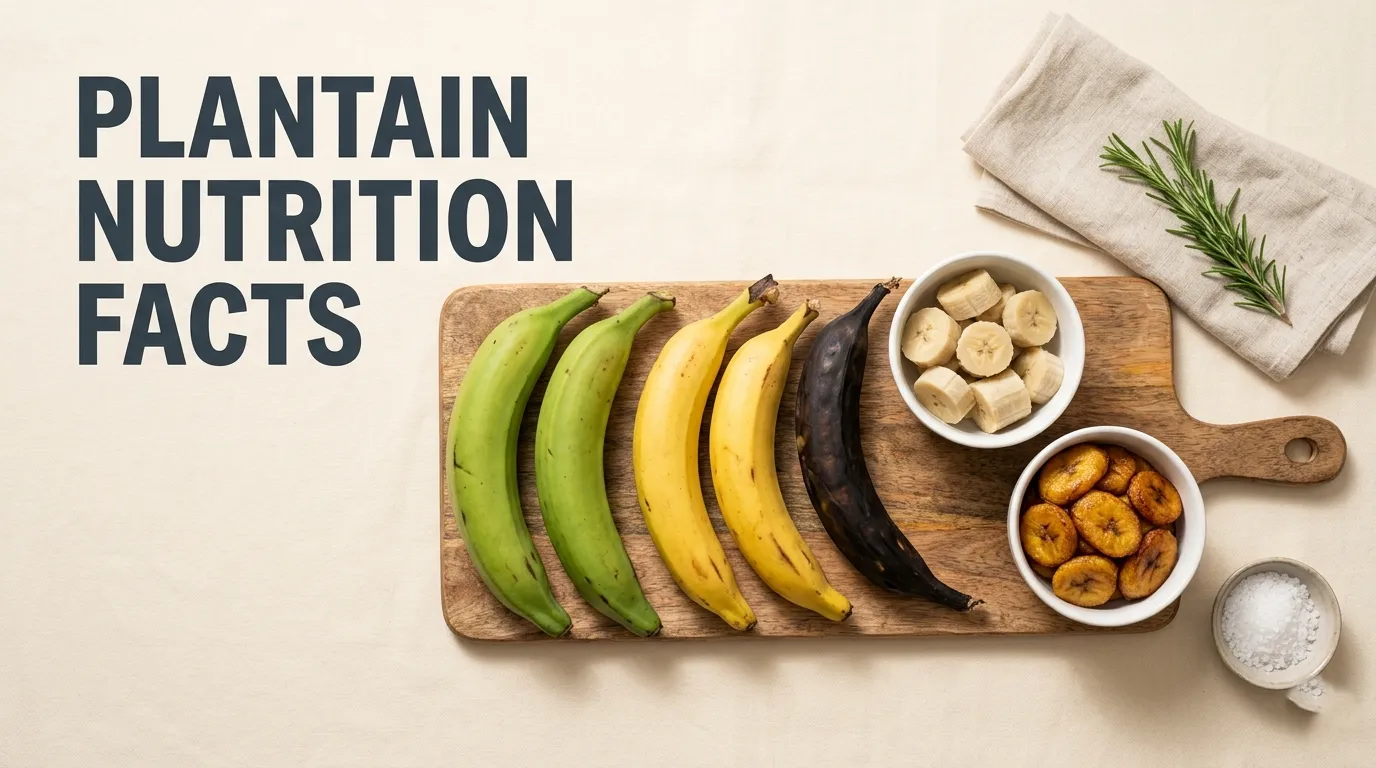
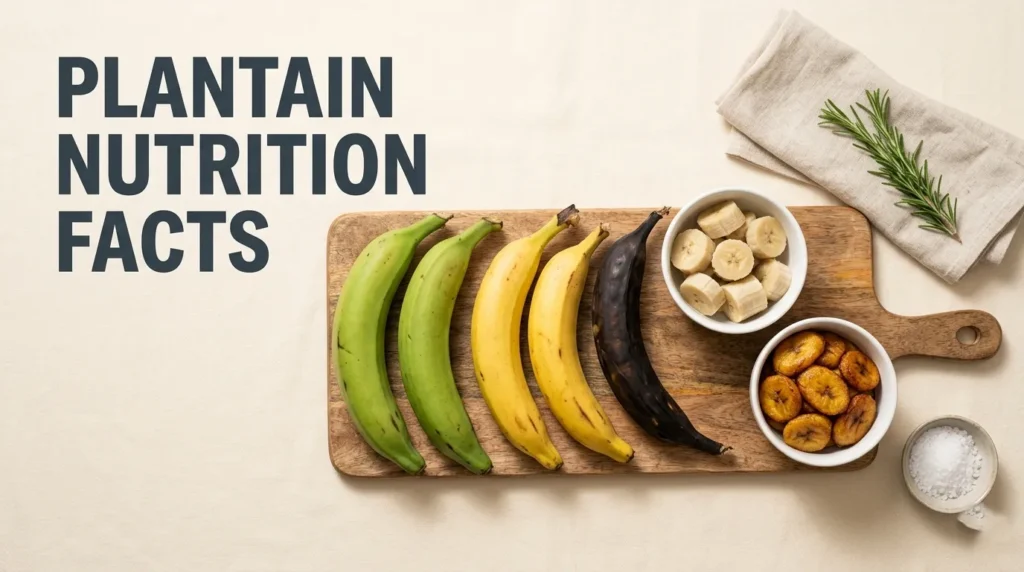
The difference between ripe and unripe plantain nutrition is substantial, primarily in sugar content, fiber levels, and resistant starch availability. Underripe green plantains contain 2.5 grams of fiber and 2.4 grams of sugar per serving. Ripe yellow plantains contain 2.1 grams of fiber but 14.2 grams of sugar. Overripe black plantains contain only 1.8 grams of fiber and 19.2 grams of sugar .
As plantains ripen, enzymes convert starches into simple sugars. This process increases sweetness but reduces the resistant starch that makes green plantains beneficial for blood sugar control. The glycemic index changes too. Unripe plantains have a low glycemic index, while overripe plantains approach a medium glycemic index score.
| Ripeness Stage | Fiber (grams per serving) | Sugar (grams per serving) | Resistant Starch | Best Cooking Use |
|---|---|---|---|---|
| Underripe (Green) | 2.5 | 2.4 | High | Tostones, boiling, chips |
| Ripe (Yellow) | 2.1 | 14.2 | Moderate | Fried, baked, broiled |
| Overripe (Black) | 1.8 | 19.2 | Low | Sweet maduros, desserts |
Key Takeaway: The ripening process increases sugar content by nearly 800 percent from green to black plantains. If you are managing blood sugar, choose green or yellow plantains and skip the overripe black ones.
How Many Calories in a Plantain by Weight and Serving Size
The calories in a plantain vary by weight, preparation method, and ripeness. A 100-gram serving of raw plantain contains approximately 122 calories . A medium whole plantain (179 grams) contains 218 calories. A large plantain (220 to 250 grams) can contain 250 to 300 calories before cooking.
Cooking methods change the calorie count in two ways. Boiled or baked plantains retain approximately the same calories as raw, since no fat is added. Fried plantains absorb oil, dramatically increasing calories and fat content. One cup of fried ripe plantains (maduros) can contain 350 to 400 calories with 15 to 20 grams of fat, compared to 180 calories for the same amount of baked plantain.
Calorie counts by common serving sizes:
- 1 ounce (28g) raw plantain: 35 calories
- 100 grams raw plantain: 122 calories
- 1 cup sliced raw plantain (130g): 181 calories
- 1 medium plantain (179g): 218 calories
- 1 cup boiled green plantain (200g): 232 calories
- 1 cup fried sweet plantains (150g): 280 to 350 calories
People tracking calories for weight loss should measure portions before cooking and account for any oil used. A tablespoon of oil adds approximately 120 calories to your plantain serving.
Plantain Carbs: Understanding the Carbohydrate Profile
Plantain carbs are complex carbohydrates that provide sustained energy, unlike simple sugars that cause rapid blood sugar spikes. A medium plantain contains 57 grams of total carbohydrates, but the net carbs (total carbs minus fiber) come to approximately 53 grams . This carb density makes plantains an excellent energy source for athletes and active individuals.
The type of carbohydrate in plantains changes with ripeness. Green plantains contain primarily resistant starch and amylose, both of which digest slowly. Yellow plantains contain a mix of resistant starch, amylose, and free sugars. Black plantains contain mostly free sugars (glucose, fructose, and sucrose) with minimal resistant starch remaining .
Resistant starch functions like soluble fiber in the body. It feeds beneficial gut bacteria and produces short-chain fatty acids that support colon health. According to a 2026 research paper, the resistant starch in plantains is classified as RS Type II, which is naturally occurring in raw starchy foods . This type of resistant starch survives cooking better than some other forms, though boiling and baking preserve more than frying.
Key Takeaway: Net carb counting matters for people on low-carb or diabetic diets. One medium green plantain contains approximately 53 grams of net carbs, which is similar to two slices of bread plus a cup of rice combined.
Plantain Potassium Benefits for Heart Health and Blood Pressure
The potassium in plantains offers real cardiovascular benefits that go beyond generic nutrition claims. One medium plantain delivers 893 milligrams of potassium, which is 19 percent of the daily value . For comparison, a medium banana contains about 422 milligrams of potassium. Plantains provide more than double the potassium per serving.
Potassium works as an electrolyte that counteracts sodium’s effects on blood pressure. The mechanism involves the kidneys. When you consume adequate potassium, your kidneys excrete more sodium through urine. This reduces blood volume and lowers pressure on artery walls. The American Heart Association recommends 4,700 milligrams of potassium daily for adults, and one plantain covers nearly one-fifth of that target.
People with hypertension or those at risk for stroke should pay attention to plantains as a potassium source. Unlike potassium supplements, which can be dangerous in high doses, dietary potassium from whole foods like plantains carries no overdose risk for people with healthy kidneys. However, individuals with chronic kidney disease or those taking potassium-sparing diuretics should talk to their nephrologist before increasing plantain intake significantly.
Plantain Fiber Content and Digestive Health Benefits
The plantain fiber content ranges from 1.8 grams to 2.5 grams per serving depending on ripeness, with green plantains providing the most fiber at 2.5 grams per serving . While this may not sound like much, remember that plantains are often eaten as a side dish alongside beans, vegetables, and protein, creating a cumulative fiber effect.
Fiber from plantains comes in two forms. Soluble fiber dissolves in water and forms a gel in your digestive tract, which slows digestion and helps regulate blood sugar. Insoluble fiber adds bulk to stool and speeds up intestinal transit. Both types are present in plantains, with green plantains containing more insoluble fiber and resistant starch, which functions similarly.
The resistant starch in unripe plantains deserves special attention for digestive health. According to research from the Journal of Clinical and Diagnostic Research, resistant starch from plantains ferments in the large intestine and produces short-chain fatty acids that nourish colon cells . This fermentation process also supports a healthy gut microbiome composition.
Key Takeaway: For maximum fiber and digestive benefits, choose green plantains and cook them using boiling or baking rather than frying. One cup of boiled green plantains provides nearly 5 grams of fiber plus resistant starch.
Plantain Vitamins and Minerals: Micronutrient Deep Dive
Plantain vitamins and minerals include significant amounts of vitamin C, vitamin A, vitamin B6, magnesium, and iron. One medium plantain provides 32.9 milligrams of vitamin C, which is 37 percent of the daily value . This vitamin C content supports immune function, collagen production, and iron absorption from other foods.
The vitamin A content in plantains comes primarily from provitamin A carotenoids, which the body converts to active retinol. A medium plantain delivers 100 micrograms of vitamin A (11 percent DV) . For context, the beta-carotene in plantains increases as the fruit ripens, making yellow and black plantains better sources of vitamin A than green ones.
Magnesium is another standout mineral in plantains, with approximately 50 milligrams per medium fruit. Magnesium supports muscle function, nerve transmission, blood pressure regulation, and over 300 enzymatic reactions in the body. Plantains also provide smaller amounts of iron (1.07 mg or 6 percent DV) and calcium (5 mg or 0 percent DV) .
Key vitamins and minerals in one medium plantain:
- Vitamin C: 32.9 mg (37% DV) – supports immune cells and antioxidant protection
- Potassium: 893 mg (19% DV) – regulates blood pressure and muscle contractions
- Vitamin A: 100 mcg (11% DV) – maintains vision and immune function
- Vitamin B6: approximately 0.3 mg (15% DV) – aids protein metabolism and neurotransmitter production
- Magnesium: approximately 50 mg (12% DV) – supports muscle and nerve function
- Iron: 1.07 mg (6% DV) – carries oxygen in red blood cells
Plantain vs Banana Nutrition: Key Differences You Should Know
Plantain vs banana nutrition differs in calorie density, sugar content, fiber levels, and culinary use. A medium plantain contains 218 calories and 57 grams of carbohydrates, while a medium banana contains 105 calories and 27 grams of carbohydrates . Plantains are significantly more calorie-dense because they are starchier and contain less water.
The sugar difference is even more striking. A ripe banana contains approximately 14 grams of sugar. A ripe plantain of the same size contains approximately 27 grams of sugar . However, a green plantain contains only 2.4 grams of sugar, which is less than a green banana. This means plantains offer more flexibility for people who want control over sugar intake.
Nutritionally, plantains are superior in several categories. Plantains provide more potassium (893 mg vs 422 mg per serving), more vitamin C (32.9 mg vs 10.3 mg), and more fiber (4.1 g vs 3.1 g) than bananas . Bananas have slightly more vitamin B6. Neither fruit contains significant fat or protein. The biggest practical difference is preparation: bananas are eaten raw, while plantains must be cooked to be palatable.
Key Takeaway: Plantains are not just larger bananas. They have a completely different nutritional profile and culinary purpose. Substituting plantains for bananas will double your calorie and carb intake per serving.
Glycemic Index of Plantains: What the Research Says
The glycemic index of plantains ranges from 40 to 60 depending on ripeness and cooking method, with green plantains at the low end and overripe plantains at the higher end . Foods with a GI below 55 are considered low glycemic. Unripe green plantains consistently score below 45, making them a favorable carbohydrate choice for blood sugar management.
The mechanism behind plantains’ blood sugar effects involves their fiber and resistant starch content. Fiber forms a gel-like substance in the digestive tract that slows gastric emptying and glucose absorption. Resistant starch bypasses digestion in the small intestine entirely, meaning its carbohydrates never enter the bloodstream as glucose .
According to Verywell Health reporting in 2026, the impact on blood sugar depends more on ripeness than on cooking method. Baking generally produces the lowest blood sugar spike, followed by boiling. Frying can slow starch digestion due to higher fat content, but this benefit is offset by the added calorie load . For stable blood sugar, choose green plantains and bake or boil them.
A 2026 study explored plantain-based snacks specifically for diabetic populations. The researchers developed a plantain bhujia (a fried savory snack) using 65 percent unripe plantain flour and found it had good sensory acceptability while leveraging the resistant starch content for better glucose control .
Are Plantains Healthy for Weight Management and Metabolic Health
Plantains are healthy for most people, but whether they help with weight management depends entirely on portion size and preparation method. A medium boiled green plantain contains 218 calories and 4 grams of fiber, making it a moderately calorie-dense carbohydrate. The fiber and resistant starch promote satiety, which means you feel full longer after eating them.
People trying to lose weight should measure plantain portions carefully. One medium plantain contains 57 grams of carbohydrates, which is roughly equivalent to four slices of bread or two cups of cooked rice. Eating a whole plantain alongside rice, beans, and protein can push a meal past 100 grams of carbohydrates quickly. The better strategy is to treat plantains as your starch portion, not an addition to other starches.
The same plantain becomes a weight loss challenge when fried. One cup of fried ripe plantains (maduros) contains approximately 350 calories and 18 grams of fat, compared to 180 calories and 0.5 grams of fat for baked plantains. The cooking oil transforms a nutrient-dense whole food into a calorie-dense indulgence. Baked, boiled, or air-fried plantains are the weight-loss-friendly versions.
Key Takeaway: Plantains are not inherently fattening or slimming. A serving of boiled green plantain is a reasonable carbohydrate choice for weight maintenance or loss. A serving of fried maduros is a dessert-calorie food best reserved for occasional enjoyment.
How to Cook Plantains Without Destroying Nutritional Value
Cooking plantains changes their nutritional profile, but you can preserve most nutrients by choosing the right methods. Boiling and steaming preserve the highest amount of resistant starch and water-soluble vitamins like vitamin C and B vitamins. Baking at moderate temperatures (375°F / 190°C) preserves more nutrients than frying while still developing sweetness through caramelization.
Frying causes the most nutrient loss. High heat degrades vitamin C and some B vitamins. Oil absorption adds fat and calories. However, frying does not completely destroy resistant starch, which remains partially intact . The bigger issue with frying is the calorie load from absorbed oil, not the nutrient loss.
To maximize nutrition when cooking plantains:
- Choose green or yellow plantains over black for lower sugar and higher resistant starch
- Boil or steam for 15 to 20 minutes until fork-tender
- Bake sliced plantains at 375°F for 15 to 20 minutes with minimal oil spray
- Air fry at 350°F for 10 to 12 minutes using one teaspoon of oil
- Avoid deep frying or pan frying in more than one tablespoon of oil
- Season with herbs and spices instead of salt-heavy seasoning blends
People with diabetes should boil green plantains rather than frying them. The boiling process preserves more resistant starch, which means less glucose impact compared to fried plantains .
Plantain Nutrition for Diabetics: What You Need to Know
Plantain nutrition for diabetics requires understanding ripeness, portion control, and preparation method. Unripe green plantains are the best choice for people with diabetes because they contain only 2.4 grams of sugar and high levels of resistant starch per serving . The resistant starch does not raise blood glucose because it is not digested in the small intestine.
A 2026 study specifically investigated plantain-based snacks for diabetic populations. The researchers developed a product using 65 percent unripe plantain flour mixed with gram flour, noting that plantains are rich in resistant starch that remains undigested in the small intestine and gets fermented in the large intestine through the gut microbiome . This resistant starch content is the primary reason plantains appear promising for blood sugar management.
People with diabetes should limit portion sizes to one-half of a medium plantain (approximately 100 grams) as part of a meal. This serving provides about 15 grams of effective carbohydrates after accounting for fiber and resistant starch. Pair plantains with protein and healthy fat to further slow glucose absorption. For example, boiled green plantains with grilled chicken and avocado create a balanced meal with minimal blood sugar impact.
The glycemic impact varies significantly between preparation methods. Boiled green plantains produce the smallest blood sugar rise. Baked yellow plantains produce a moderate rise. Fried sweet plantains (maduros) produce the largest rise due to the combination of higher sugar content and faster digestion from the cooking process .
Key Takeaway: If you have diabetes or prediabetes, eat green plantains boiled or baked, limit portions to half a plantain, and always pair with protein and fat. Skip black plantains and fried preparations entirely.
Frequently Asked Questions About Plantain Nutrition Facts
How many calories are in one medium plantain?
A medium plantain (179 grams) contains 218 calories before cooking . Boiled or baked plantains retain approximately the same calories. Fried plantains absorb oil and contain significantly more calories, ranging from 280 to 400 calories per serving depending on how much oil is absorbed.
Are plantains healthier than bananas?
Plantains provide more potassium, more vitamin C, and more fiber than bananas per serving, but they are also higher in calories and total carbohydrates . A medium plantain contains 893 mg of potassium compared to 422 mg in a banana. Which is healthier depends on your goals. For blood sugar control, green plantains are better than bananas. For low-calorie snacking, bananas are better than ripe plantains.
Which has less sugar, green plantains or ripe plantains?
Green unripe plantains contain 2.4 grams of sugar per serving, while ripe yellow plantains contain 14.2 grams of sugar per serving, and overripe black plantains contain 19.2 grams of sugar per serving . Green plantains have approximately one-sixth the sugar of yellow plantains. This is why green plantains are recommended for people managing diabetes.
Can you eat plantains on a low carb diet?
Plantains are not suitable for strict low-carb diets like keto. One medium plantain contains 57 grams of total carbohydrates and approximately 53 grams of net carbs . This equals or exceeds the daily carb allowance on most low-carb diets. However, people on moderate carbohydrate diets (100 to 150 grams daily) can include half a plantain as part of a meal.
Does cooking plantains increase their glycemic index?
Cooking plantains can increase their glycemic index, but ripeness plays a larger role. Boiled green plantains have a low GI. Baked yellow plantains have a medium GI. The cooking process reduces some resistant starch, but green plantains retain enough resistant starch even after cooking to keep blood sugar impact relatively low . Frying does not significantly change the GI but adds substantial calories and fat.
What is the best way to eat plantains for maximum nutrition?
The best way to eat plantains for maximum nutrition is to boil or bake green unripe plantains with minimal added fat. This preparation preserves resistant starch content, keeps calories low, and maintains water-soluble vitamins. Season with herbs, garlic, or citrus juice instead of salt-heavy seasonings. Pair with lean protein and non-starchy vegetables for a complete meal.
Plantains deserve a regular spot in a healthy diet, but only when you understand how ripeness and cooking methods change what you are actually eating. Green boiled plantains offer resistant starch, low sugar, and excellent potassium content. Fried sweet plantains offer mostly sugar and fat. The same fruit transforms completely from one preparation to the next. Choose green. Choose boiled or baked. Measure your portion. Your body will thank you.