Jack in the Box Nutrition Facts: 2026 Menu Guide
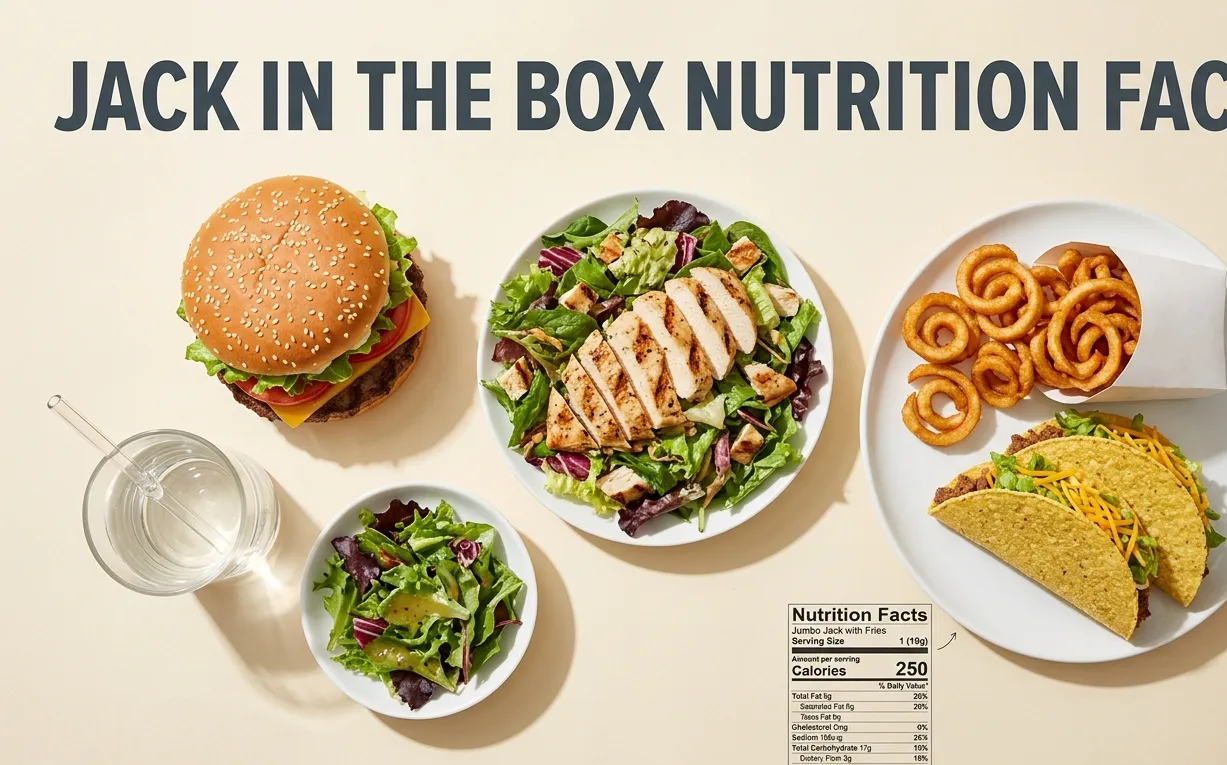
Jack in the Box menu items span a massive nutritional range from a relatively reasonable grilled chicken salad at 350 calories to a single Ultimate Cheeseburger that delivers 930 calories and more than a full day’s worth of saturated fat. The restaurant’s nutrition facts reveal a menu where your choices at the speaker box determine whether you consume a meal that roughly fits within dietary guidelines or a single sandwich that exceeds your entire daily sodium limit before you add fries and a drink.
The reason Jack in the Box nutrition facts demand attention is that the chain’s menu contains some of the highest-calorie and highest-sodium individual items in the fast-food industry. A 2024 nutritional analysis by the Center for Science in the Public Interest identified multiple Jack in the Box burgers as exceeding 1,300 milligrams of sodium per sandwich. The American Heart Association recommends a daily sodium limit of 2,300 milligrams for adults, with an ideal limit of 1,500 milligrams for people with hypertension. A single combo meal at Jack in the Box can easily deliver 3,000 to 4,000 milligrams of sodium.
This article walks you through the complete nutritional breakdown of Jack in the Box’s 2026 menu, item by item and category by category. You will see exactly how many calories each burger, chicken sandwich, side, breakfast item, and shake contains, where the sodium trouble spots hide, which menu items qualify as reasonable choices, and how to customize your order to cut hundreds of calories and grams of fat without giving up the convenience of the drive-thru.
Jack in the Box Nutrition Facts
Jack in the Box nutrition facts cover a menu built around burgers, fried chicken, tacos, breakfast sandwiches, curly fries, and milkshakes, with calorie counts ranging from 150 calories for a small side to over 1,200 calories for a large combo meal. The restaurant’s nutritional profile reflects the standard fast-food model: high calorie density, elevated sodium, significant saturated fat, refined carbohydrates from white flour buns and fried breading, and added sugars from sauces and beverages.
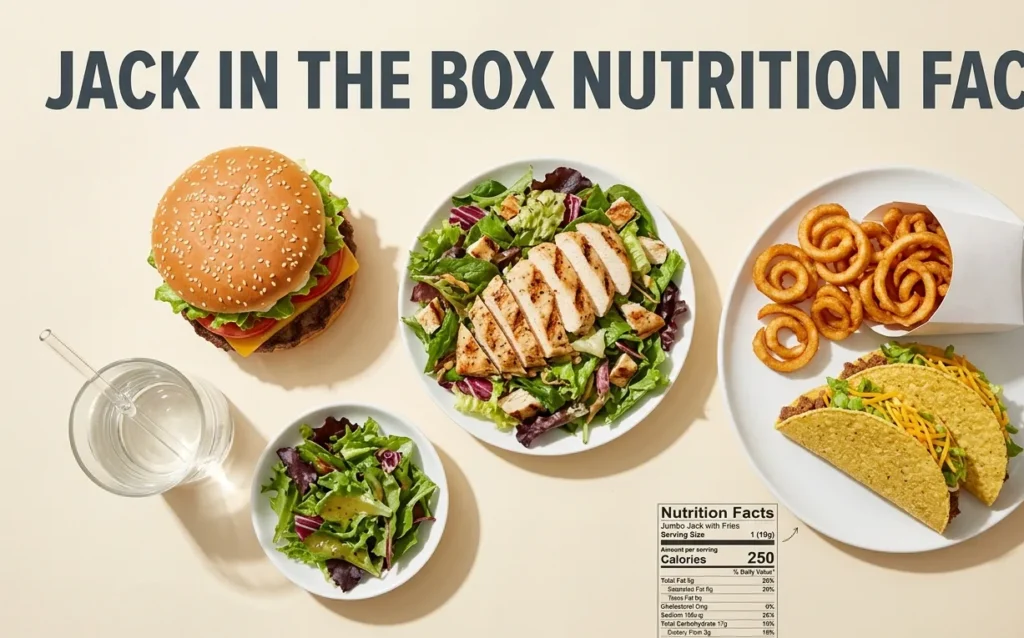
The nutritional data for every Jack in the Box menu item is publicly available under the FDA’s menu labeling regulations, which require restaurant chains with 20 or more locations to disclose calorie information on menus and make full nutrition facts available upon request. This data reveals that most individual burger and chicken sandwich items fall between 500 and 930 calories, most sides add 200 to 600 calories, and regular soft drinks add 150 to 300 calories. A standard combo meal consisting of a Jumbo Jack, medium curly fries, and a medium Coke totals approximately 1,200 calories.
What distinguishes Jack in the Box nutritionally from competitors like McDonald’s or Wendy’s is the presence of unusual menu items that break the standard burger-and-fries mold. The chain’s tacos, egg rolls, and extensive breakfast menu create nutritional outliers that do not have direct equivalents at other major fast-food chains. The tacos, for example, are deep-fried rather than griddled, which changes their fat and calorie profile compared to what customers might expect from a taco.
The ingredient composition of Jack in the Box menu items includes standard fast-food components: beef patties made from ground beef, chicken breast filets that may be grilled or battered and fried, enriched wheat flour buns, American cheese slices, mayonnaise-based sauces, lettuce, tomato, and pickles. The frying oil is a vegetable oil blend that may include soybean oil, canola oil, and palm oil depending on the item and the restaurant location’s supply chain.
Jack in the Box Menu Nutrition
Jack in the Box menu nutrition spans a wider range than most fast-food competitors because the menu mixes standard burgers with Mexican-inspired items, egg rolls, and an all-day breakfast lineup. The nutritional quality of your meal depends entirely on which section of the menu you order from and whether you customize your items to reduce calorie and sodium density.
The menu categories that dominate nutritional quality are the salads and grilled chicken items. The Grilled Chicken Salad with low-fat balsamic vinaigrette dressing provides roughly 350 calories, 35 grams of protein, and a moderate sodium level compared to the rest of the menu. The grilled chicken sandwich, ordered without mayonnaise, delivers about 430 calories and 30 grams of protein. These items represent the nutritional ceiling for the Jack in the Box menu.
The lowest-nutritional-quality menu categories are the large burgers, the fried sides, and the milkshakes. The Ultimate Cheeseburger, Buttery Jack, and Bacon Cheeseburger all exceed 700 calories per sandwich. A large order of curly fries adds 550 calories. A regular Oreo milkshake adds 740 calories. The combination of one large burger, one large fry, and one milkshake creates a single meal containing roughly 2,000 calories, which is the total daily calorie reference used for FDA nutrition labeling.
Table: Jack in the Box Menu Categories Ranked by Average Calorie Density
| Menu Category | Calorie Range | Sodium Range (mg) | Best Choice Within Category |
|---|---|---|---|
| Salads | 350-600 | 700-1,200 | Grilled Chicken Salad with low-fat dressing |
| Grilled Chicken | 430-550 | 900-1,300 | Grilled Chicken Sandwich (no mayo) |
| Burgers (small) | 400-600 | 650-1,000 | Hamburger (plain) |
| Burgers (large) | 700-930 | 1,100-1,600 | Jumbo Jack (no cheese, no mayo) |
| Fried Chicken | 600-800 | 1,200-1,800 | 4-piece Chicken Strips |
| Breakfast | 300-700 | 600-1,500 | Breakfast Jack |
| Tacos & Snacks | 170-400 | 300-700 | 2 Tacos |
| Sides | 200-600 | 300-800 | Side Salad |
| Shakes & Desserts | 500-900 | 200-500 | Mini Chocolate Shake |
The nutritional spread within categories means you can eat at Jack in the Box and consume either 450 calories or 1,800 calories depending on your ordering decisions. The menu accommodates both outcomes without making the distinctions obvious at the point of purchase.
Key Takeaway: Jack in the Box menu nutrition splits into two distinct tiers: grilled chicken and salads under 550 calories and under 1,200 mg sodium, and fried burgers and combos that can exceed 1,500 calories and 3,000 mg sodium in a single meal.
Jack in the Box Calories
Jack in the Box calories per menu item range from 150 for a small order of value fries to 930 for an Ultimate Cheeseburger and over 1,200 for a large combo meal with a burger, large fries, and a large soft drink. The calorie counts follow predictable patterns: burgers with multiple patties, bacon, and cheese add calories quickly, fried items carry more calories than grilled versions of the same protein, and mayonnaise-based sauces add 50 to 100 calories per tablespoon.
The calorie distribution within a typical Jack in the Box burger breaks down to roughly 40 to 50 percent of calories from fat, 25 to 30 percent from carbohydrates, and 20 to 25 percent from protein. A Jumbo Jack delivers 590 calories with 38 grams of fat, 47 grams of carbohydrates, and 25 grams of protein. The fat content represents 342 of those 590 calories, or 58 percent. This fat-heavy calorie distribution is characteristic of fast-food burgers and distinguishes them from homemade burgers, where the fat percentage can be controlled through leaner beef selection and cooking methods.
The calorie impact of add-ons and customizations matters more than most customers realize. Adding cheese to a burger adds approximately 50 to 70 calories. Adding bacon adds 70 to 90 calories. Adding a second beef patty adds 200 to 250 calories. Mayonnaise adds 90 calories per tablespoon. Removing these additions works in reverse, cutting 300 to 400 calories from a large burger. Ordering a Jumbo Jack without cheese and without mayonnaise reduces the calorie count from 590 to approximately 450, a 140-calorie reduction from two simple omissions.
Beverage choice drives a significant portion of the total meal calorie count. A large Coca-Cola at Jack in the Box contains approximately 290 calories, all from added sugar. A large unsweetened iced tea contains zero calories. A bottled water contains zero calories. Choosing water or unsweetened tea over a large soda removes nearly 300 calories from the meal without affecting food quantity or satisfaction.
Jack in the Box Burger Calories
Jack in the Box burger calories range from 400 calories for a basic Hamburger to 930 calories for the Ultimate Cheeseburger, with most of the chain’s signature burgers falling between 590 and 820 calories. The burger category is the nutritional centerpiece of the Jack in the Box menu, and the calorie variation within this category determines whether a meal fits within reasonable dietary limits or exceeds a full day’s calorie needs in one sandwich.
The Hamburger, the simplest and lowest-calorie burger on the menu, contains a single beef patty, a regular bun, ketchup, mustard, and pickles. At approximately 400 calories, it represents the baseline burger. From this starting point, every addition pushes the calorie count higher. Adding cheese creates a Cheeseburger at roughly 460 calories. Adding a second patty creates a Double Hamburger at roughly 580 calories. Adding bacon and cheese to a single patty creates a Bacon Cheeseburger at roughly 620 calories.
The Jumbo Jack, one of the chain’s signature items, contains a larger beef patty, lettuce, tomato, pickles, chopped onion, and mayonnaise on a sesame seed bun. At 590 calories with 38 grams of fat and 870 milligrams of sodium, the Jumbo Jack is a mid-range burger by fast-food standards. Ordering it without mayonnaise reduces the calorie count by approximately 90 calories and cuts 10 grams of fat, primarily saturated fat from the egg-yolk-based mayonnaise.
The Sourdough Jack and Buttery Jack represent the upper tier of burger calorie counts. The Sourdough Jack, with its beef patty, bacon, Swiss-style cheese, tomato, and mayonnaise on toasted sourdough bread, delivers approximately 720 calories. The Buttery Jack, with its garlic-herb butter added to the standard bacon cheeseburger build, reaches approximately 820 calories. These two burgers individually deliver 36 to 41 percent of the daily calorie reference used in FDA nutrition labeling.
Key Takeaway: The difference between Jack in the Box’s lowest-calorie burger and its highest-calorie burger is 530 calories. Ordering the Hamburger instead of the Ultimate Cheeseburger saves more calories than an entire medium order of curly fries contains.
Jack in the Box Sourdough Jack Nutrition
The Jack in the Box Sourdough Jack contains approximately 720 calories, 45 grams of total fat, 15 grams of saturated fat, 47 grams of carbohydrates, 31 grams of protein, and 1,080 milligrams of sodium. This burger sits in the upper-middle tier of the Jack in the Box burger lineup, delivering more protein than the Jumbo Jack but with substantially more fat and more than 1,000 milligrams of sodium in a single sandwich.
The nutritional profile of the Sourdough Jack is driven by its ingredient build: a beef patty, bacon, a slice of Swiss-style cheese, tomato, mayonnaise, and ketchup served on two slices of toasted sourdough bread instead of a standard hamburger bun. The sourdough bread contributes roughly the same calorie and carbohydrate load as a regular bun but adds a distinct flavor that the chain markets as a premium feature. The bacon adds approximately 70 to 90 calories and contributes saturated fat and sodium. The Swiss-style cheese adds roughly 60 to 70 calories. The mayonnaise adds roughly 90 calories.
The sodium content of the Sourdough Jack at 1,080 milligrams is noteworthy because it represents 47 percent of the American Heart Association’s recommended daily sodium limit of 2,300 milligrams in a single sandwich before adding any sides or a beverage. For the approximately 47 percent of U.S. adults who have hypertension, according to CDC data, the AHA’s ideal sodium limit of 1,500 milligrams per day means one Sourdough Jack uses 72 percent of the daily sodium budget.
Customizing the Sourdough Jack can reduce its nutritional impact. Ordering it without bacon removes roughly 80 calories and 250 milligrams of sodium. Ordering it without mayonnaise removes roughly 90 calories and 90 milligrams of sodium. Ordering it without cheese removes roughly 65 calories and 150 milligrams of sodium. A Sourdough Jack ordered without bacon and mayonnaise lands around 550 calories and 740 milligrams of sodium, a meaningful reduction from the standard build.
Jack in the Box Ultimate Cheeseburger Calories
The Jack in the Box Ultimate Cheeseburger contains approximately 930 calories, 65 grams of total fat, 25 grams of saturated fat, 47 grams of carbohydrates, 40 grams of protein, and 1,470 milligrams of sodium. This burger is the highest-calorie single sandwich on the Jack in the Box core menu and represents one of the most calorically dense items available at any major fast-food chain.
The Ultimate Cheeseburger achieves its nutritional density through its build: two large beef patties, two slices of American cheese, mayonnaise, ketchup, mustard, lettuce, tomato, pickles, and chopped onion on a sesame seed bun. The double patty construction is the primary driver of the calorie and fat content. Each beef patty contributes approximately 250 calories and 20 grams of fat. The two slices of American cheese add roughly 120 calories. The mayonnaise adds roughly 90 calories. The bun contributes roughly 180 calories.
The saturated fat content of the Ultimate Cheeseburger at 25 grams exceeds the American Heart Association’s recommended daily limit of 13 grams of saturated fat for a 2,000-calorie diet by nearly double. This single sandwich uses 192 percent of the recommended daily saturated fat limit. The sodium content at 1,470 milligrams represents 64 percent of the 2,300-milligram daily limit. A meal consisting of an Ultimate Cheeseburger, medium curly fries, and a medium Coke totals approximately 1,800 calories, 2,500 milligrams of sodium, and 30 grams of saturated fat.
The protein content of the Ultimate Cheeseburger at 40 grams is substantial and represents roughly 80 percent of the 50-gram daily protein target for a 2,000-calorie diet. This protein density is one reason the burger is satiating despite its nutritional drawbacks. A person who eats an Ultimate Cheeseburger consumes adequate protein for most of a day in one sandwich.
Key Takeaway: The Ultimate Cheeseburger’s 930 calories, 25 grams of saturated fat, and 1,470 milligrams of sodium make it one of the most nutritionally consequential single items in fast food. Splitting it with another person or choosing a single-patty burger instead cuts the nutritional load in half.
Jack in the Box Chicken Sandwich Nutrition
Jack in the Box chicken sandwich nutrition varies significantly between the grilled and fried versions. The Grilled Chicken Sandwich contains approximately 510 calories, 23 grams of fat, 5 grams of saturated fat, 44 grams of carbohydrates, 33 grams of protein, and 1,090 milligrams of sodium. The fried chicken sandwich options, including the Homestyle Ranch Chicken Club and the Jack’s Spicy Chicken, range from 680 to 810 calories.
The Grilled Chicken Sandwich represents one of the better nutritional choices on the Jack in the Box menu, particularly when ordered without mayonnaise. Removing the mayonnaise reduces the calorie count by approximately 90 calories and cuts the fat content by 10 grams. The protein content of 33 grams makes this sandwich highly satiating relative to its calorie count, which is an advantage for people eating at Jack in the Box as part of a weight management strategy.
The fried chicken sandwiches carry a significant nutritional penalty from the breading and frying process. A grilled chicken breast contains roughly 3 to 4 grams of fat. A breaded and fried chicken breast filet contains 15 to 20 grams of fat, with the additional fat coming from the breading that absorbs oil during frying and the oil that adheres to the breading surface. The Homestyle Ranch Chicken Club adds bacon, ranch dressing, and cheese, pushing the total to roughly 800 calories with 45 grams of fat.
The sodium content across chicken sandwiches is consistently high, regardless of preparation method. The Grilled Chicken Sandwich contains 1,090 milligrams of sodium, which is only slightly less than the fried versions. The sodium comes primarily from the seasoning on the chicken, the bun, and the condiments. The grilled option is not a low-sodium choice. It is a lower-fat, lower-calorie choice with comparable sodium.
Quick Tip:
- Grilled Chicken Sandwich, no mayo: roughly 420 calories, 13g fat, 33g protein
- Add barbecue sauce instead of mayo: adds 40 calories instead of 90
- Order the grilled filet on its own (no bun) with a side salad for a lower-carbohydrate option
- The fried chicken sandwiches add 150 to 300 calories from the breading and frying alone compared to grilled
Jack in the Box Tacos Nutrition Facts
Jack in the Box tacos nutrition facts reveal that two tacos, the standard serving, contain approximately 340 calories, 20 grams of total fat, 5 grams of saturated fat, 30 grams of carbohydrates, 10 grams of protein, and 560 milligrams of sodium. These tacos are a unique menu item in the fast-food industry: deep-fried rather than griddled, filled with a seasoned beef mixture, and served with a slice of American cheese and lettuce inside the shell.
The deep-fried preparation method distinguishes Jack in the Box tacos nutritionally from traditional Mexican tacos. A standard street taco made with a corn tortilla, grilled meat, onion, and cilantro typically contains 150 to 200 calories. The Jack in the Box version adds calories from the oil absorbed during frying and from the American cheese, which is not a traditional taco ingredient. The frying process also creates a sealed, crispy shell that holds the fillings but adds fat.
The protein content of two tacos at 10 grams is lower than what most people expect from a meat-containing menu item. The filling contains beef but also includes textured vegetable protein and soy grits, which extend the meat and reduce the cost per taco. The ingredient statement for the taco filling includes beef, water, textured vegetable protein, soy grits, and a seasoning blend. The protein dilution from soy extenders means the tacos deliver less animal protein than a beef patty of comparable weight.
The sodium content of two tacos at 560 milligrams is moderate by fast-food standards. A single Jumbo Jack contains 870 milligrams of sodium, making the tacos a lower-sodium option than most burgers. However, the tacos are small and not particularly filling on their own. Customers often order four tacos, which doubles the nutritional numbers to 680 calories and 1,120 milligrams of sodium.
Jack in the Box Curly Fries Nutrition
Jack in the Box curly fries nutrition depends on the size ordered, with a small serving containing approximately 300 calories, 16 grams of fat, 38 grams of carbohydrates, 3 grams of protein, and 480 milligrams of sodium. A medium serving contains roughly 420 calories, 22 grams of fat, 52 grams of carbohydrates, 4 grams of protein, and 680 milligrams of sodium. A large serving contains approximately 550 calories, 28 grams of fat, 68 grams of carbohydrates, 5 grams of protein, and 860 milligrams of sodium.
The curly fry is a seasoned, spiral-cut potato product that is par-fried at the processing facility, frozen, and then finish-fried at the restaurant. The double-frying process is standard for fast-food french fries and curly fries because it creates the crispy exterior and fluffy interior that customers expect. The nutritional consequence of double-frying is that the potato absorbs oil during both frying stages, increasing the fat and calorie content compared to a baked or air-fried potato of the same weight.
The seasoning blend on curly fries adds sodium beyond what plain french fries contain. The seasoning typically includes salt, onion powder, garlic powder, paprika, and sometimes monosodium glutamate or autolyzed yeast extract for savory flavor enhancement. A medium order of Jack in the Box curly fries contains 680 milligrams of sodium, which is more than the 560 milligrams in two tacos. The fries alone deliver 30 percent of the American Heart Association’s daily sodium limit.
The carbohydrate content of curly fries, at 52 grams for a medium order, represents a substantial glycemic load. The combination of refined potato starch and absorbed oil creates a high-calorie, high-glycemic-index food that digests quickly and produces a rapid blood glucose rise followed by an insulin response. For people with diabetes or insulin resistance, the curly fries present a blood sugar management challenge.
Key Takeaway: A medium order of curly fries adds 420 calories and 680 milligrams of sodium to your meal. Ordering a small instead of a large saves 250 calories and 380 milligrams of sodium.
Jack in the Box Egg Rolls Nutrition
Jack in the Box egg rolls contain approximately 180 calories, 10 grams of total fat, 2 grams of saturated fat, 18 grams of carbohydrates, 5 grams of protein, and 380 milligrams of sodium per egg roll. A standard order includes three egg rolls, bringing the total to approximately 540 calories, 30 grams of fat, 54 grams of carbohydrates, 15 grams of protein, and 1,140 milligrams of sodium.
The egg rolls are another unusual menu item that distinguishes Jack in the Box from competitors. They consist of a wheat flour wrapper filled with a mixture of pork, cabbage, celery, carrots, onion, and seasonings, then deep-fried until the wrapper is crispy and golden. The filling composition is similar to a standard Chinese-American egg roll, with the vegetable content providing some micronutrients and fiber that are absent from french fries.
The deep-frying preparation adds the same nutritional concerns that apply to the tacos and curly fries. The wrapper absorbs oil during frying, contributing to the total fat and calorie count. A single egg roll at 180 calories is comparable to a small taco. Three egg rolls at 540 calories are comparable to a Jumbo Jack in calorie content but deliver less protein and more carbohydrates than a burger.
The sodium content of three egg rolls at 1,140 milligrams is high and represents 50 percent of the daily sodium limit. The sodium comes from the filling seasoning, which typically contains salt, soy sauce powder, and flavor enhancers, and from salt in the wrapper dough. For someone managing sodium intake, the egg roll order is a sodium-dense choice that does not provide the satiety of a comparable-calorie burger.
Jack in the Box Breakfast Nutrition
Jack in the Box breakfast nutrition spans from the relatively modest Breakfast Jack at approximately 300 calories to the Extreme Sausage Sandwich at roughly 680 calories. The breakfast menu includes sandwiches built on biscuits, croissants, sourdough bread, and regular buns, with egg, cheese, and breakfast meat combinations that determine the calorie, fat, and sodium content.
The Breakfast Jack is the lowest-calorie breakfast sandwich on the menu. It contains a fried egg, a slice of ham, and American cheese on a regular hamburger-style bun. At approximately 300 calories with 16 grams of protein and 750 milligrams of sodium, it represents a reasonable fast-food breakfast option. The sodium content is still high, but the overall calorie and macronutrient profile is manageable within a daily eating pattern.
The biscuit-based breakfast sandwiches carry higher calorie counts because the biscuit itself contains more fat and calories than a bun or English muffin. A biscuit at Jack in the Box is made with enriched flour, buttermilk, shortening, and butter, creating a dense, flaky bread that contributes roughly 250 to 280 calories before any fillings are added. A Sausage Biscuit with egg and cheese reaches approximately 570 calories. The same sausage, egg, and cheese on a bun instead of a biscuit would reduce the calorie count by 100 to 150 calories.
The Breakfast Burrito offerings add another category to the morning menu. A sausage breakfast burrito contains scrambled eggs, sausage, cheese, and possibly hash browns or potatoes wrapped in a flour tortilla. The calorie count runs approximately 500 to 600 calories per burrito, with sodium levels that typically exceed 1,000 milligrams.
Key Takeaway: The Breakfast Jack at 300 calories is the most nutritionally manageable breakfast sandwich. The biscuit and croissant-based sandwiches add 150 to 300 calories from the bread alone compared to a bun-based breakfast sandwich.
Jack in the Box Milkshake Calories
Jack in the Box milkshake calories range from approximately 520 calories for a small vanilla shake to over 1,000 calories for a large Oreo shake. The milkshake category represents the highest-calorie-density items on the Jack in the Box dessert menu, combining ice cream or soft serve with flavored syrups, mix-ins, and toppings.
A regular chocolate milkshake contains roughly 680 calories, 20 grams of fat, 13 grams of saturated fat, 110 grams of carbohydrates, 90 grams of sugar, and 14 grams of protein. The sugar content of 90 grams is equivalent to approximately 22 teaspoons of sugar and exceeds the American Heart Association’s recommended daily added sugar limit of 36 grams for men and 25 grams for women by a factor of 2.5 to 3.6 times. The sugar in a milkshake comes from the ice cream base, which contains both naturally occurring milk sugar and added sweeteners, plus the flavored syrup.
The Oreo milkshake adds crushed Oreo cookies to the vanilla ice cream base, pushing the calorie count for a regular size to approximately 740 calories. A large Oreo milkshake reaches roughly 1,000 calories, which is more than the Ultimate Cheeseburger. The cookie pieces add refined carbohydrates, additional sugar, and cocoa solids that contribute to the calorie and carbohydrate load without adding meaningful nutritional value.
The milkshake as a beverage accompaniment to a burger and fries meal creates a nutritional pile-up. A Jumbo Jack (590 calories), medium curly fries (420 calories), and a regular chocolate milkshake (680 calories) total 1,690 calories, 85 grams of fat, and 160 grams of sugar in a single meal. This meal combination exceeds the daily calorie needs for many adults and contains more than 5 times the recommended daily added sugar intake.
Healthiest Items at Jack in the Box
The healthiest items at Jack in the Box in 2026 are the Grilled Chicken Salad with low-fat balsamic vinaigrette, the Grilled Chicken Sandwich ordered without mayonnaise, the Breakfast Jack, the basic Hamburger, and the side salad as a replacement for fried sides. These items share common nutritional characteristics: they stay under 550 calories, contain protein from chicken or beef without excessive breading or frying, and avoid the extreme sodium levels found in the larger burgers and fried combos.
The Grilled Chicken Salad provides the best overall nutritional profile on the menu. It includes mixed greens, grilled chicken breast strips, shredded carrots, grape tomatoes, and croutons. With the low-fat balsamic vinaigrette dressing, the salad delivers approximately 350 calories, 35 grams of protein, 15 grams of fat, and roughly 1,000 milligrams of sodium. The fiber from the vegetables and the protein from the chicken create a satiating meal that leaves room in the daily calorie budget for other foods.
The Grilled Chicken Sandwich without mayonnaise is the best handheld option. At roughly 420 calories with 33 grams of protein, it provides lean protein on a bun without the fried breading that adds 150 to 300 calories to the fried chicken sandwiches. Adding lettuce, tomato, and mustard creates flavor without the calorie load of mayonnaise or ranch-based sauces. The sodium remains a concern at roughly 1,000 milligrams, but this is lower than the 1,200 to 1,800 milligrams in the fried chicken sandwiches.
Table: Healthiest Jack in the Box Items by Category
| Menu Item | Calories | Protein (g) | Sodium (mg) | Notes |
|---|---|---|---|---|
| Grilled Chicken Salad | 350 | 35 | 1,000 | With low-fat balsamic dressing |
| Grilled Chicken Sandwich | 420 | 33 | 1,090 | No mayonnaise |
| Hamburger | 400 | 18 | 650 | Basic single patty |
| Breakfast Jack | 300 | 16 | 750 | Ham, egg, cheese on bun |
| Side Salad | 50 | 3 | 65 | Without dressing |
| Chicken Strips (4 pc) | 500 | 28 | 1,200 | Grilled option where available |
These healthier choices work because they manage the three biggest nutritional liabilities at Jack in the Box: excess calories from fat and frying, extreme sodium from seasoning and processed ingredients, and added sugar from sauces and beverages. Pairing any of these items with water, unsweetened iced tea, or diet soda instead of a full-sugar soft drink or milkshake keeps the total meal nutrition in a reasonable range.
Key Takeaway: The Grilled Chicken Salad and Grilled Chicken Sandwich without mayo are the two best nutritional choices on the Jack in the Box menu. They deliver high protein with manageable calorie and fat levels and lower sodium than the fried alternatives.
Low Calorie Jack in the Box Options
Low calorie Jack in the Box options are menu items that stay under 400 calories, allowing a person to eat at the restaurant while maintaining a calorie deficit for weight management or fitting a fast-food meal into an otherwise calorie-controlled day. The viable under-400-calorie choices include the Hamburger, the Breakfast Jack, the two-taco order, a small order of curly fries, a side salad, and any of the smaller chicken strip orders.
Building a satisfying low-calorie meal at Jack in the Box requires combining items strategically. A Hamburger at 400 calories plus a side salad at 50 calories with a small amount of dressing totals roughly 500 calories. A Breakfast Jack at 300 calories with a black coffee totals 305 calories. Two tacos at 340 calories plus a side salad totals 390 calories. These combinations produce meals that are nutritionally reasonable and calorically controlled.
The strategy of ordering from the value menu or “snack” section produces lower-calorie outcomes than ordering from the main burger or combo sections. The value menu items are smaller by design, which naturally limits calories. A Jr. Jack, when available, provides a burger experience at roughly 400 calories. The smaller portion sizes of value menu items make it harder to accidentally consume 800 to 900 calories in a single sandwich.
Beverage choice is the simplest calorie-control lever at Jack in the Box. A large Coca-Cola adds 290 calories. A large unsweetened iced tea adds zero calories. Switching from a regular soda to a diet soda, unsweetened tea, or water saves 150 to 300 calories per drink. Over the course of a year of weekly visits, this single substitution represents roughly 7,800 to 15,600 saved calories.
Bullet List: Low Calorie Jack in the Box Meals Under 500 Calories
- Hamburger (400 cal) + Side Salad with light dressing (80 cal) = 480 calories
- Breakfast Jack (300 cal) + Black Coffee (5 cal) = 305 calories
- 2 Tacos (340 cal) + Diet Soda (0 cal) = 340 calories
- Grilled Chicken Salad with low-fat balsamic (350 cal) = 350 calories
- 4-piece Chicken Strips (500 cal) — at the upper limit for a “low calorie” single item
Jack in the Box Salad Nutrition
Jack in the Box salad nutrition offers the best nutritional profile on the entire menu, with the Grilled Chicken Salad delivering 350 calories, 35 grams of protein, 15 grams of total fat, 3 grams of saturated fat, 20 grams of carbohydrates, 4 grams of fiber, and approximately 1,000 milligrams of sodium when served with the low-fat balsamic vinaigrette dressing. The salad is the only menu category that provides meaningful vegetable content and dietary fiber.
The salad lineup includes the Grilled Chicken Salad and a side salad. The Grilled Chicken Salad contains mixed greens, grilled chicken breast strips, shredded carrots, grape tomatoes, croutons, and a choice of dressing. The protein content of 35 grams makes this salad highly satiating, and the vegetable base provides vitamins A and C, potassium, and fiber that are absent from burger-and-fry meals.
The dressing choice determines whether the salad remains a healthy option or becomes a calorie delivery system that rivals a burger. The low-fat balsamic vinaigrette adds approximately 40 calories and 280 milligrams of sodium per packet. The ranch dressing adds approximately 160 calories and 320 milligrams of sodium per packet. The blue cheese dressing adds approximately 180 calories and 350 milligrams of sodium. Choosing ranch over balsamic turns a 350-calorie salad into a 470-calorie salad, which is still reasonable but erodes the calorie advantage over a grilled chicken sandwich.
The sodium content of the Grilled Chicken Salad at 1,000 milligrams with low-fat dressing is the primary nutritional weakness. The sodium comes from the chicken breast seasoning, which typically includes salt, sodium phosphates, and flavoring agents, and from the dressing. The salad sodium level is comparable to a burger, which surprises many people who assume salad means low sodium. The vegetable and protein quality are higher than a burger, but the sodium content does not give the salad a free pass.
Key Takeaway: The Grilled Chicken Salad with low-fat balsamic vinaigrette is the single best nutritional choice at Jack in the Box. It delivers 35 grams of protein, 4 grams of fiber, and meaningful vegetable intake at 350 calories.
Jack in the Box Sodium Content
Jack in the Box sodium content ranges from moderate levels in simple items like the basic Hamburger at 650 milligrams to extreme levels in combo meals that exceed 3,500 milligrams, or more than 150 percent of the American Heart Association’s daily limit of 2,300 milligrams. Sodium is the most consistent nutritional problem across the entire Jack in the Box menu, affecting even the items that perform well on calories and fat.
The sodium density of Jack in the Box food reflects the fast-food industry’s reliance on salt as a flavor delivery system in food that is prepared quickly from processed ingredients. Sodium appears in the beef patty seasoning, the chicken breading, the bun dough, the cheese, the bacon, the condiments, the fry seasoning, the salad dressing, and virtually every other component. Even if a customer adds no salt at the table, the food arrives pre-loaded with sodium from every stage of processing and preparation.
A single meal of a Jumbo Jack with cheese (920 mg sodium), medium curly fries (680 mg sodium), and a medium Coke (45 mg sodium) totals 1,645 milligrams of sodium. This is 72 percent of the daily limit. Adding bacon to the burger or upgrading to a large fry pushes the total past the daily limit. A meal of an Ultimate Cheeseburger (1,470 mg), large curly fries (860 mg), and a regular milkshake (340 mg) totals 2,670 milligrams of sodium, exceeding the daily limit by 16 percent.
For people managing hypertension, kidney disease, or heart failure, the sodium levels at Jack in the Box require careful navigation. The basic Hamburger at 650 milligrams and the side salad at 65 milligrams are among the few items that stay under 700 milligrams. Ordering these items and avoiding cheese, bacon, large portion sizes, and fried sides creates a meal that fits within a sodium-restricted eating pattern. Requesting no added salt on burger patties, where the kitchen can accommodate this, further reduces the sodium load.
Frequently Asked Questions About Jack in the Box Nutrition
What is the lowest calorie burger at Jack in the Box?
The Hamburger is the lowest calorie burger at Jack in the Box at approximately 400 calories.
It contains a single beef patty, regular bun, ketchup, mustard, and pickles without cheese or mayonnaise.
Removing the bun and ordering the patty on its own with a side salad reduces the calorie count further to roughly 250 calories for the patty alone.
How much sodium is in a Jack in the Box taco?
Two Jack in the Box tacos contain approximately 560 milligrams of sodium.
A single taco contains roughly 280 milligrams of sodium.
The sodium comes from the seasoned beef filling, the American cheese slice, and salt in the deep-fried shell.
Are Jack in the Box salads actually healthy?
The Grilled Chicken Salad with low-fat balsamic vinaigrette is genuinely healthy at 350 calories and 35 grams of protein with vegetable fiber and micronutrients.
The sodium content at roughly 1,000 milligrams is the nutritional weakness of the salad.
Choosing ranch or blue cheese dressing adds 120 to 140 calories and turns the salad into a higher-calorie meal.
What is the healthiest breakfast item at Jack in the Box?
The Breakfast Jack is the healthiest breakfast item at approximately 300 calories with 16 grams of protein and 750 milligrams of sodium.
It contains a fried egg, ham, and American cheese on a regular bun.
The biscuit and croissant breakfast sandwiches add 150 to 300 extra calories from the bread alone.
How many calories are in Jack in the Box curly fries?
A small order of curly fries contains approximately 300 calories.
A medium order contains roughly 420 calories.
A large order contains approximately 550 calories with 860 milligrams of sodium.
Can you eat at Jack in the Box on a low-sodium diet?
Eating at Jack in the Box on a low-sodium diet requires ordering the Hamburger at 650 milligrams or the side salad at 65 milligrams and avoiding cheese, bacon, fried items, and large portion sizes.
Most combo meals exceed the American Heart Association’s recommended sodium limit of 2,300 milligrams in a single meal.
Requesting no added salt on burger patties where the kitchen can accommodate this helps reduce the sodium content further.
Jack in the Box delivers exactly what you expect from fast food: convenience, consistency, and flavor engineered through fat, salt, and sugar. The nutritional numbers on the menu board tell a story of extreme variation. You can walk out of the drive-thru with a 350-calorie grilled chicken salad that leaves room for the rest of your day’s eating, or you can walk out with a 1,800-calorie burger, fry, and shake combo that exceeds your daily calorie budget before dinner.
The single most useful piece of information from this entire breakdown is that customization is your most powerful tool. Removing mayonnaise cuts 90 calories. Skipping cheese saves 60 calories. Ordering grilled instead of fried saves 150 to 300 calories. Choosing water or unsweetened tea instead of soda saves 150 to 300 calories. Adding a side salad instead of fries saves 300 calories. Stack three or four of these decisions, and you transform a 1,500-calorie meal into a 500-calorie meal without changing restaurants.
If you eat at Jack in the Box regularly and want to keep your nutrition on track, pick one or two items from the healthier section of this guide and make them your standard order. The Grilled Chicken Salad with balsamic dressing. The Grilled Chicken Sandwich without mayo. The Breakfast Jack with black coffee. Make those your defaults, and save the Ultimate Cheeseburger for the rare occasion when the indulgence is deliberate, not accidental.