Tofu Health Benefits 2026: Evidence, Nutrition and Safety Guide
The health benefits of tofu include well-documented cholesterol reduction, a complete plant protein source that matches animal protein quality, and potential relief from menopause hot flashes through isoflavone content. The evidence for heart health is strong. The evidence for bone health and menopause symptom relief is moderate. The fears about estrogen-like effects and cancer risk are largely unsupported by the weight of current research.
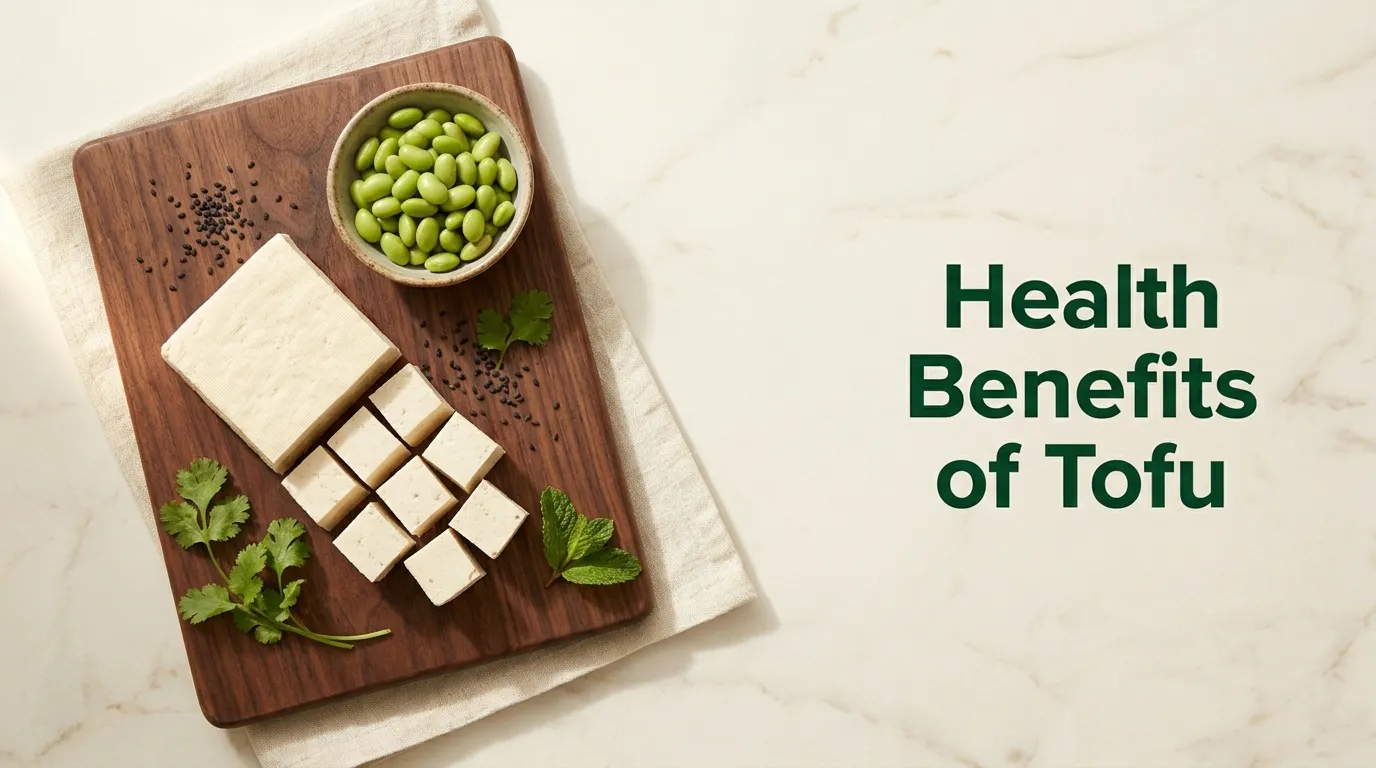
The USDA FoodData Central database records that a 100-gram serving of firm tofu, roughly half a standard block, provides 8 grams of complete protein, 350 milligrams of calcium when calcium-set, and approximately 25 to 50 milligrams of isoflavones, the soy compounds responsible for most of tofu’s health effects and also most of its controversy. The same serving contains just 76 calories and less than 1 gram of saturated fat. The nutritional profile makes tofu an unusually nutrient-dense protein source by any measure.
This guide walks you through every major health claim about tofu with clear evidence quality ratings, explains the specific compounds responsible for each effect, addresses the estrogen and thyroid concerns directly, and provides practical guidance on tofu types, serving sizes, and how preparation methods change what you’re actually getting. You’ll finish knowing exactly what the science says about tofu and whether it belongs in your eating pattern.
Health Benefits of Tofu: What the Research Actually Shows
Health benefits of tofu with the strongest research support include reduction in LDL cholesterol through soy protein intake, provision of complete plant-based protein comparable to animal sources, and contribution to daily calcium needs when calcium-set. Benefits with moderate evidence include modest reduction in menopause hot flash frequency, support for bone mineral density in postmenopausal women, and potential reduction in prostate cancer risk. The evidence for direct weight loss effects independent of calorie displacement is weak.
The research on tofu is more mature than for many other plant foods because soy has been studied intensively for decades, driven by both interest in its health effects and concern over its safety. The FDA’s 1999 health claim authorizing a link between soy protein and reduced heart disease risk, which remains in place though the FDA proposed updating the language in 2017, was based on a substantial body of randomized controlled trials showing that 25 grams of soy protein per day reduces LDL cholesterol by 3 to 5 percent. This is a modest reduction, meaningful at the population level.
The isoflavones in tofu, primarily genistein, daidzein, and glycitein, are structurally similar to human estradiol and can bind to estrogen receptors. This structural similarity is the source of both tofu’s potential benefits for menopause symptoms and bone health and the persistent fears about feminizing effects and cancer risk. The biological reality is more nuanced than either the marketing or the fear suggests. Isoflavones are selective estrogen receptor modulators. They do not act identically to human estrogen. They activate some estrogen receptor pathways and block others depending on the tissue type, the dose, and the individual’s circulating estrogen levels.
| Health Benefit | Evidence Strength | Key Compounds | Mechanism Summary |
|---|---|---|---|
| LDL cholesterol reduction | Strong | Soy protein, isoflavones | Increased LDL receptor activity in liver |
| Complete plant protein | Well-established | All 9 essential amino acids | PDCAAS score of 0.98-1.0 |
| Calcium for bone health | Strong (calcium-set) | Calcium sulfate coagulant | Direct calcium provision, comparable to dairy |
| Menopause hot flash reduction | Moderate | Genistein, daidzein | SERM-like estrogen receptor modulation |
| Bone density support | Moderate | Isoflavones, calcium | Reduced bone resorption markers |
| Prostate cancer risk reduction | Moderate (epidemiological) | Genistein, daidzein | Anti-proliferative signaling in prostate tissue |
| Weight loss | Weak | Protein satiety | Indirect through calorie displacement |
| Breast cancer protection | Preliminary to moderate | Isoflavones | Early life exposure may be protective |
A 2023 meta-analysis published in the journal Nutrients examined 46 randomized controlled trials of soy protein and isoflavones and confirmed the LDL-lowering effect while finding no evidence of feminizing hormonal changes in men. The evidence base has matured. The safety concerns that dominated soy discussions in the early 2000s have been largely addressed by larger, longer, and better-designed studies.
Is Tofu Good for You? An Evidence-Based Verdict
Is tofu good for you? Yes, tofu is a nutrient-dense, complete-protein food that research associates with improved cardiovascular markers, potential menopause symptom relief, and bone health support when consumed as part of an overall healthy dietary pattern. The evidence for benefit is stronger than the evidence for harm across every health outcome that has been studied.
The Academy of Nutrition and Dietetics position on vegetarian diets, updated in 2021, identifies tofu as a protein-rich food suitable for all life stages including pregnancy, lactation, infancy, childhood, and older adulthood. The Dietary Guidelines for Americans 2020-2025 include tofu in the protein foods group alongside meat, poultry, eggs, seafood, and legumes, a recognition that reflects tofu’s established nutritional value.
The “is it good for you” question is complicated by the fact that tofu is often consumed as part of broader dietary patterns that themselves affect health. In traditional Asian diets, tofu is eaten alongside vegetables, rice, fish, and fermented foods in an overall pattern associated with lower rates of cardiovascular disease and certain cancers. When researchers attempt to isolate tofu’s effects, they are looking at one component of a dietary pattern that works through multiple synergistic pathways. The tofu contributes. It does not act alone.
| Health Metric | Tofu vs. Red Meat | Tofu vs. Chicken | Tofu vs. Legumes |
|---|---|---|---|
| Saturated fat | Much lower | Lower | Comparable |
| Protein quality | Comparable | Comparable | Higher (tofu more complete) |
| Fiber | Higher (0.3g vs 0g) | Comparable | Lower than whole legumes |
| Isoflavones | Present (25-50mg) | None | None (except other soy) |
| Calcium (calcium-set) | Much higher | Much higher | Higher |
| Iron | Comparable | Comparable | Lower than lentils |
| Processing level | Moderate (coagulated) | Minimal | Minimal |
Tofu is good for you in the way that minimally processed, nutrient-dense plant foods are generally good for you. It provides protein, micronutrients, and bioactive compounds with minimal saturated fat and no cholesterol. It is not a miracle food. It is also not a hormonal disruptor that will feminize men or cause breast cancer. The middle ground where the evidence actually sits is less dramatic than either the marketing or the fear, and it is genuinely favorable to tofu.
Key Takeaway: Tofu is a nutritionally excellent food backed by decades of research showing cardiovascular benefit and no validated hormonal harm, making it appropriate for nearly everyone except those with soy allergy.
Tofu Nutrition Facts: Complete Macro and Micro Breakdown
Tofu nutrition facts for a 100-gram serving of firm, calcium-set tofu include 76 calories, 8.1 grams of protein, 4.8 grams of total fat with only 0.7 grams of saturated fat, 1.9 grams of carbohydrates, and 0.3 grams of dietary fiber. The micronutrient profile is notable for calcium at 350 milligrams, 27 percent of the Daily Value, iron at 5.4 milligrams, 30 percent DV, and manganese at 0.6 milligrams, 26 percent DV.
The nutritional profile of tofu varies significantly depending on firmness and coagulant type. Firmer tofu contains more protein, fat, and calories per gram because more water has been pressed out, concentrating the solids. Silken tofu contains more water and therefore fewer calories and less protein per serving. The coagulant determines calcium content. Calcium sulfate-set tofu provides roughly 300 to 400 milligrams of calcium per 100 grams. Magnesium chloride-set tofu, common in Japanese-style tofu, provides less calcium but more magnesium.
The USDA FoodData Central database provides complete nutritional data for multiple tofu types. Understanding these differences helps you choose the right tofu for your nutritional goals. If you want maximum calcium, choose calcium-set firm tofu. If you want the lowest calorie option for blending into smoothies or sauces, choose silken tofu. If you want maximum protein density for stir-frying or grilling, choose extra-firm or sprouted tofu.
| Tofu Type (100g) | Calories | Protein | Fat | Calcium | Iron |
|---|---|---|---|---|---|
| Silken, soft | 55 | 5.3g | 2.7g | 31mg (2% DV) | 1.1mg (6% DV) |
| Regular, raw | 76 | 8.1g | 4.8g | 350mg (27% DV)* | 5.4mg (30% DV) |
| Firm, calcium-set | 80 | 8.2g | 5.0g | 350mg (27% DV) | 5.4mg (30% DV) |
| Extra-firm | 94 | 10.6g | 5.9g | 380mg (29% DV)* | 1.7mg (9% DV) |
| Sprouted (firm) | 85 | 9.0g | 5.0g | 200mg (15% DV) | 1.5mg (8% DV) |
*Calcium content depends on coagulant type; magnesium chloride-set versions will have lower calcium
The fat in tofu is predominantly polyunsaturated and monounsaturated, with very little saturated fat. The 0.7 grams of saturated fat per 100-gram serving is roughly 4 percent of the American Heart Association’s recommended daily limit of 13 grams for a 2,000-calorie diet. Tofu contains no cholesterol. The fatty acid profile includes alpha-linolenic acid, the plant-based omega-3 fatty acid, in small amounts.
Tofu Protein Content: Complete Plant Protein Analysis
Tofu protein content ranges from 5 to 11 grams per 100-gram serving depending on firmness, with extra-firm tofu providing the highest protein density. Tofu is a complete protein, meaning it contains all nine essential amino acids in proportions that meet human requirements. The Protein Digestibility Corrected Amino Acid Score for soy protein is 0.98 to 1.0, equivalent to animal proteins like beef, egg, and milk.
The complete protein status of tofu distinguishes it from most other plant protein sources. Beans, lentils, grains, nuts, and seeds are typically low in one or more essential amino acids. Soy, and therefore tofu, is the notable exception. A 2019 study published in the American Journal of Clinical Nutrition confirmed that soy protein supports muscle protein synthesis at rates comparable to whey and beef protein when matched for total protein content, making tofu a viable protein source for athletes, older adults concerned about muscle maintenance, and anyone seeking to meet protein needs from plant sources.
The protein in a standard serving of firm tofu, roughly half a block or 100 grams, provides 8 grams of protein. This is equivalent to the protein in one large egg, a cup of milk, or roughly one ounce of cooked meat. The Recommended Dietary Allowance for protein is 0.8 grams per kilogram of body weight, which works out to roughly 56 grams per day for a 70-kilogram adult. A single serving of firm tofu covers about 14 percent of that requirement.
| Protein Source (100g cooked) | Protein (g) | Complete? | Saturated Fat (g) | Fiber (g) |
|---|---|---|---|---|
| Extra-firm tofu | 10.6 | Yes | 0.7 | 0.5 |
| Chicken breast | 31.0 | Yes | 1.0 | 0 |
| Beef (85% lean ground) | 26.0 | Yes | 6.0 | 0 |
| Salmon (Atlantic) | 20.4 | Yes | 3.1 | 0 |
| Lentils (boiled) | 9.0 | No (low methionine) | 0.1 | 7.9 |
| Chickpeas (boiled) | 8.9 | No (low methionine) | 0.3 | 7.6 |
| Firm tofu | 8.2 | Yes | 0.7 | 0.3 |
Tofu is less protein-dense than meat. You need to eat a larger volume of tofu to get the same protein as a smaller portion of chicken or beef. This can be an advantage if you want to feel full on fewer calories. It can be a challenge if you are an athlete with very high protein needs or someone with a small appetite who struggles to eat enough volume. For most people eating a mixed diet, tofu provides a useful protein contribution without the saturated fat that accompanies many animal protein sources.
Key Takeaway: Tofu is a complete protein with quality comparable to animal sources, providing 8 to 11 grams per serving, making it one of the few plant foods suitable as a primary protein source without requiring food combining.
Tofu Isoflavones: Genistein, Daidzein, and How They Work
Tofu isoflavones are bioactive compounds from soybeans, primarily genistein, daidzein, and glycitein, that have a chemical structure similar to human estradiol and can bind to estrogen receptors throughout the body. A 100-gram serving of firm tofu contains approximately 25 to 50 milligrams of total isoflavones, with genistein making up roughly 50 to 60 percent of that total and daidzein making up 30 to 40 percent.
Isoflavones are classified as phytoestrogens, plant compounds with estrogen-like activity. The term “phytoestrogen” is accurate and misleading in equal measure. Isoflavones do bind to estrogen receptors, but they do so with much lower affinity than human estradiol, roughly 100 to 1,000 times weaker depending on the specific isoflavone and receptor type. More importantly, isoflavones are selective estrogen receptor modulators. They activate some estrogen pathways and block others depending on the target tissue, the concentration, and the presence or absence of the body’s own estrogen.
Daidzein metabolism depends on gut bacteria. Approximately 30 to 50 percent of people harbor gut bacteria capable of converting daidzein into equol, a more potent isoflavone metabolite with stronger estrogen receptor binding. Equol producers may experience greater health effects from soy consumption than non-producers, which partly explains the variability in research findings on soy and menopause symptoms or bone health. If you are an equol non-producer, the isoflavones in tofu may have weaker biological effects in your body.
| Isoflavone | Typical Content per 100g Firm Tofu | Function |
|---|---|---|
| Genistein | 15-25mg | Primary soy isoflavone, strongest estrogen receptor beta affinity |
| Daidzein | 10-20mg | Precursor to equol in equol-producing individuals |
| Glycitein | 2-6mg | Minor soy isoflavone, less studied |
Isoflavones are the source of both tofu’s documented benefits and its persistent controversies. The cholesterol-lowering effect of soy protein may be partially isoflavone-dependent. The reduction in menopause hot flash frequency observed in some studies is isoflavone-mediated. The fears about feminizing effects and breast cancer are also isoflavone-mediated, though the weight of evidence does not support those fears at dietary intake levels.
Tofu Heart Health: The Cardiovascular Evidence
Tofu heart health benefits are supported by strong evidence showing that soy protein reduces LDL cholesterol, modestly lowers blood pressure, and improves endothelial function when consumed regularly. The cardiovascular benefit of tofu comes from multiple mechanisms including its soy protein content, its isoflavone content, and its role as a low-saturated-fat replacement for animal protein sources.
The FDA’s health claim for soy protein and heart disease, established in 1999, states that “25 grams of soy protein a day, as part of a diet low in saturated fat and cholesterol, may reduce the risk of heart disease.” This claim requires 6.25 grams of soy protein per serving, which a 100-gram serving of firm tofu at 8 grams easily meets. While the FDA proposed updating the language in 2017 based on newer evidence showing the effect is smaller than originally estimated, the underlying finding has not been overturned. Soy protein lowers LDL cholesterol.
A 2019 meta-analysis published in the Journal of the American Heart Association examined 46 randomized controlled trials and found that soy protein reduced LDL cholesterol by 3 to 5 percent on average. The reduction was larger in people with higher baseline cholesterol levels. The mechanism involves increased LDL receptor expression in the liver, which pulls more LDL particles from the bloodstream. Soy protein peptides, isoflavones, and the displacement of saturated fat from the diet all contribute.
| Cardiovascular Marker | Effect of Regular Soy/Tofu Intake | Evidence Strength |
|---|---|---|
| LDL cholesterol | 3-5% reduction with 25g soy protein/day | Strong |
| Total cholesterol | 2-4% reduction | Strong |
| Triglycerides | Modest reduction, not always significant | Moderate |
| Blood pressure | 2-4 mmHg systolic reduction | Moderate |
| Endothelial function | Improved flow-mediated dilation | Moderate |
| HDL cholesterol | No consistent effect | N/A |
| C-reactive protein | Possible reduction, inconsistent | Preliminary |
The American Heart Association includes soy protein foods like tofu in its dietary recommendations for cardiovascular health. Replacing saturated fat sources, such as fatty cuts of red meat and full-fat dairy, with tofu is a straightforward dietary substitution that improves multiple cardiovascular risk markers simultaneously. You get less saturated fat, no dietary cholesterol, more polyunsaturated fat, and the LDL-lowering effect of soy protein itself.
Tofu Cholesterol: How Soy Protein Affects LDL
Tofu cholesterol effects center on soy protein’s ability to lower LDL cholesterol by 3 to 5 percent when consumed at 25 grams of soy protein per day. Four servings of firm tofu totaling roughly 300 grams, about one and a half standard blocks, would provide this amount. The cholesterol-lowering mechanism works through upregulation of LDL receptors in the liver, increased bile acid excretion, and the displacement of saturated fat from the diet.
The LDL reduction is modest, not dramatic. A person with an LDL cholesterol of 130 milligrams per deciliter might see a reduction to roughly 124 to 126 mg/dL with daily tofu consumption in the context of an overall heart-healthy diet. This reduction is clinically meaningful at the population level. It is not a replacement for medication in people with severely elevated cholesterol or established cardiovascular disease. It is a dietary strategy that contributes to cholesterol management alongside other lifestyle and medical interventions.
The cholesterol benefit of tofu is not additive on top of an already optimized statin dose. If you take a statin that has reduced your LDL significantly, adding tofu to your diet may provide a small additional benefit through dietary mechanisms different from the statin’s HMG-CoA reductase inhibition. A cardiologist or primary care physician can review your lipid panel and help you understand how dietary strategies fit into your overall cholesterol management plan.
| To Achieve 25g Soy Protein (FDA Heart Health Threshold) | Servings Required |
|---|---|
| Firm tofu (100g, 8g protein) | ~3 servings (300g) |
| Extra-firm tofu (100g, 10.6g protein) | ~2.5 servings (250g) |
| Silken tofu (100g, 5g protein) | ~5 servings (500g) |
| Edamame (100g, 11g protein) | ~2.3 servings (230g) |
| Soy milk (240ml, 8g protein) | ~3 cups |
Consuming 300 grams of tofu daily is more than most people eat. The practical cholesterol benefit from tofu at typical intake levels of 100 to 150 grams per day is therefore smaller than the maximum effect demonstrated in trials. The benefit is still real and contributes to the cumulative effect of multiple heart-healthy dietary choices.
Key Takeaway: Tofu lowers LDL cholesterol by 3 to 5 percent through soy protein at 25 grams per day, a modest but meaningful effect that works alongside other heart-healthy dietary changes.
Tofu Weight Loss: Satiety, Calories, and Metabolic Effects
Tofu weight loss effects are indirect, working through protein-induced satiety at relatively low calorie density rather than through any specific fat-burning or metabolism-enhancing property. Tofu does not contain compounds that directly increase metabolic rate or fat oxidation. It supports weight management by providing filling protein in a lower-calorie package than many animal protein sources.
The satiety argument for tofu is reasonable. Protein is the most satiating macronutrient. A 100-gram serving of firm tofu provides 8 grams of protein at 76 calories, a protein-to-calorie ratio of roughly 1 gram of protein per 10 calories. Chicken breast provides roughly 1 gram of protein per 5 calories. Tofu is less protein-dense than lean poultry, but it is comparable to eggs and higher in protein per calorie than legumes. The moderate calorie density combined with complete protein makes tofu a useful food for people managing their weight.
Weight loss occurs when calorie expenditure exceeds calorie intake over time. Replacing higher-calorie, higher-saturated-fat protein sources with tofu contributes to a calorie deficit if the substitution reduces total calorie intake. A 2018 study published in the journal Obesity found that plant-based dietary patterns that included soy foods were associated with greater weight loss over 12 months compared to standard low-fat diets, but the effect was driven by the overall dietary pattern rather than soy specifically.
| 100g Protein Source | Calories | Protein (g) | Fat (g) | Satiety Index Estimate |
|---|---|---|---|---|
| Extra-firm tofu | 94 | 10.6 | 5.9 | Moderate to high |
| Chicken breast (cooked) | 165 | 31.0 | 3.6 | High |
| 85% lean ground beef | 250 | 26.0 | 15.0 | High |
| Eggs (2 large) | 140 | 12.6 | 9.5 | High |
| Lentils (boiled) | 116 | 9.0 | 0.4 | High (fiber) |
| Firm tofu | 76 | 8.2 | 4.8 | Moderate |
People using tofu for weight management should be mindful of preparation method. Fried tofu absorbs cooking oil and can double or triple in calorie content. Deep-fried tofu puffs contain roughly 270 calories per 100 grams compared to 76 calories for the same weight of raw firm tofu. Baking, steaming, or pan-searing with minimal oil preserves tofu’s calorie advantage.
Tofu Menopause: Hot Flashes, Bone Loss, and Soy
Tofu menopause benefits include a modest reduction in hot flash frequency and severity for some women, attributed to the isoflavones genistein and daidzein acting as weak selective estrogen receptor modulators during the estrogen decline of menopause. The effect is real but variable, with equol-producing women more likely to experience benefit than non-producers.
The North American Menopause Society’s 2023 position statement on non-hormonal therapies for vasomotor symptoms includes a qualified acknowledgment of soy isoflavones. The society notes that isoflavone supplements at doses of 50 milligrams per day or more may reduce hot flash frequency by roughly 25 to 50 percent compared to placebo in some studies. A 100-gram serving of firm tofu provides 25 to 50 milligrams of isoflavones, meaning that one to two servings daily could reach the dose range studied for hot flash relief.
The variability in response to soy isoflavones for menopause symptoms is partially explained by equol production status. Women who harbor the gut bacteria that convert daidzein to equol experience greater symptom relief from soy isoflavones than non-producers. This is not something most people can test outside of research settings, but it explains why some women report significant relief from adding tofu to their diet while others notice no difference.
| Menopause Symptom | Soy Isoflavone Effect | Evidence Strength |
|---|---|---|
| Hot flashes | 25-50% reduction in frequency with 50mg isoflavones/day | Moderate |
| Night sweats | Possible reduction, less studied than hot flashes | Preliminary to moderate |
| Vaginal dryness | Minimal or no effect | Weak |
| Mood changes | Possible modest improvement | Preliminary |
| Bone density loss | Slowed bone resorption | Moderate |
The phytoestrogen effect of tofu on menopause symptoms is dose-dependent and individual. It will not replace hormone therapy for women with severe symptoms. For women with mild to moderate hot flashes who prefer a dietary approach or cannot use hormone therapy, two servings of tofu per day providing roughly 50 milligrams of isoflavones is a reasonable strategy with limited downside.
Key Takeaway: Tofu provides 25 to 50 milligrams of isoflavones per serving and may reduce hot flash frequency in menopausal women, particularly equol-producers, though the effect is modest and variable compared to pharmaceutical options.
Tofu Benefits for Women: Hormonal and Long-Term Health
Tofu benefits for women extend beyond menopause symptom relief to include potential protection against breast cancer when consumed during adolescence and early adulthood, support for bone density during the postmenopausal years, and contribution to iron intake during the reproductive years. The evidence is nuanced, with different effects at different life stages.
The relationship between soy consumption and breast cancer has been studied extensively with findings that are more reassuring than alarming. Observational studies of Asian populations where tofu is a lifelong dietary staple consistently find that higher soy intake is associated with lower breast cancer incidence and lower recurrence rates in breast cancer survivors. A 2020 study published in the journal Cancer followed over 6,000 breast cancer survivors and found that those with the highest soy isoflavone intake had a 21 percent lower risk of all-cause mortality compared to those with the lowest intake.
The timing hypothesis suggests that soy exposure during adolescence, when breast tissue is developing, may be particularly protective by promoting cellular differentiation in breast tissue. This hypothesis is supported by animal studies and observational data in humans but has not been tested in a randomized controlled trial, which would be logistically difficult. What the evidence does not support is the fear that soy causes breast cancer or that breast cancer survivors must avoid tofu.
| Life Stage | Tofu Benefit | Evidence |
|---|---|---|
| Adolescence | Possible breast tissue differentiation, long-term protection | Observational |
| Reproductive years | Iron, protein, calcium intake | Well-established nutrition |
| Perimenopause | Menstrual cycle regularity, iron | Established nutrition |
| Menopause | Hot flash reduction, bone density | Moderate for symptoms |
| Postmenopause | Bone density, cardiovascular protection | Moderate to strong |
| Breast cancer survivorship | No harm, possible reduced recurrence | Moderate, observational |
The iron in tofu, 5.4 milligrams per 100 grams or 30 percent of the Daily Value, is non-heme iron, which is less absorbable than the heme iron in meat. Women of reproductive age have higher iron requirements, 18 milligrams per day, than men. Pairing tofu with a source of vitamin C, such as bell peppers, tomatoes, or citrus, enhances non-heme iron absorption. The iron in tofu contributes meaningfully to meeting iron needs when consumed regularly.
Tofu Estrogen Myths: Separating Facts from Fear
Tofu estrogen myths include the persistent but incorrect belief that eating tofu will cause men to develop breast tissue, lower testosterone, or become feminized, and the related fear that soy isoflavones act identically to human estrogen in the body. These claims are not supported by clinical evidence. The isoflavones in tofu are selective estrogen receptor modulators that behave differently from estradiol and do not produce feminizing effects in men at dietary intake levels.
The origin of these myths is traceable to two sources: the structural similarity between isoflavones and estradiol, which led to early laboratory studies showing weak estrogen receptor binding, and a small number of case reports of men consuming extremely high soy intake, 10 to 20 servings per day, that were widely publicized. Case reports are not generalizable. They describe individuals, not populations.
A 2020 meta-analysis published in the journal Reproductive Toxicology examined 41 clinical studies on soy and male reproductive hormones. The analysis found no significant effects of soy protein or isoflavone intake on total testosterone, free testosterone, estradiol, or sex hormone binding globulin in men. The doses studied ranged up to 70 grams of soy protein and 150 milligrams of isoflavones per day, far above typical dietary intake. A man would need to eat roughly 3 to 6 blocks of tofu daily to reach those levels.
Common tofu estrogen myths and the evidence that disproves them:
- Myth: Tofu gives men breasts. Reality: Clinical trials and meta-analyses find no effect on breast tissue, testosterone, or estrogen levels in men at dietary intake levels.
- Myth: Tofu isoflavones are identical to human estrogen. Reality: Isoflavones bind preferentially to estrogen receptor beta, not alpha, producing tissue-specific effects different from estradiol.
- Myth: Tofu lowers testosterone. Reality: A 2020 meta-analysis of 41 studies found no effect on testosterone or free testosterone.
- Myth: Tofu is unsafe for children. Reality: Soy-based infant formulas have been used safely for decades. The Academy of Nutrition and Dietetics affirms soy protein as appropriate for all life stages.
- Myth: Tofu causes thyroid problems. Reality: In iodine-sufficient individuals, moderate soy intake does not impair thyroid function.
The persistence of these myths despite decades of contrary evidence reflects the power of a biologically plausible-sounding mechanism, isoflavones look like estrogen, amplified by internet echo chambers. The clinical reality is that dietary tofu consumption does not produce feminizing hormonal effects in men, does not lower testosterone, and does not impair fertility.
Key Takeaway: The fear that tofu acts like estrogen in the body and feminizes men is not supported by clinical evidence, with meta-analyses of over 40 studies finding no hormonal effects at dietary intake levels.
Tofu Bone Health: Calcium, Isoflavones, and Density
Tofu bone health benefits arise from two distinct mechanisms: direct calcium provision when tofu is calcium-set, providing roughly 350 milligrams of calcium per 100-gram serving, and the effect of isoflavones on bone remodeling, which may slow the bone resorption that accelerates after menopause. The calcium benefit is straightforward nutrition. The isoflavone benefit is more complex and less potent.
Calcium-set tofu is one of the best plant-based calcium sources available. The 350 milligrams of calcium in 100 grams of firm, calcium-set tofu equals 27 percent of the 1,000 to 1,200 milligram Daily Value for adults. This calcium is well absorbed, with bioavailability comparable to calcium from cow’s milk according to research published in the American Journal of Clinical Nutrition. For people who avoid dairy, tofu is a practical way to meet calcium needs without supplementation.
The isoflavone effect on bone operates through estrogen receptor beta in bone tissue. As estrogen levels decline at menopause, bone resorption, the breakdown of bone tissue, accelerates beyond the rate of bone formation, leading to net bone loss. Isoflavones bind weakly to estrogen receptors in bone and may partially compensate for declining estrogen, slowing the rate of bone resorption. A 2019 meta-analysis in the journal Osteoporosis International found that soy isoflavone supplementation was associated with a small but statistically significant improvement in bone mineral density at the lumbar spine in postmenopausal women over 12 to 24 months.
| Tofu Type (100g) | Calcium Content | Isoflavone Content | Best For |
|---|---|---|---|
| Calcium-set firm | 350mg (27% DV) | 25-50mg | Bone health, calcium needs |
| Magnesium-set firm | 150mg (12% DV) | 25-50mg | General use, less processed |
| Silken (calcium-set) | 31mg (2% DV) | 15-25mg | Smoothies, sauces, low calorie |
| Extra-firm | 380mg (29% DV)* | 30-55mg | Grilling, stir-frying, max protein |
*Calcium content depends on coagulant; check the label
The bone health benefit of tofu is meaningful but not as potent as weight-bearing exercise, adequate vitamin D status, or, for women at high fracture risk, prescription osteoporosis medication. Tofu supports bone health as part of a comprehensive approach. It does not prevent or treat osteoporosis on its own.
Tofu Cancer Risk: Breast, Prostate, and What the Data Shows
Tofu cancer risk is a topic where the evidence is more reassuring than the popular fear suggests. The weight of observational research indicates that dietary soy intake is associated with lower risk of prostate cancer in men and either no effect or a protective effect for breast cancer in women, particularly when soy consumption begins in adolescence. The International Agency for Research on Cancer does not classify soy or isoflavones as carcinogenic.
The breast cancer concern originated from the observation that isoflavones can stimulate estrogen receptor-positive breast cancer cells in laboratory dishes at high concentrations. Laboratory cell culture conditions do not replicate human dietary exposure. In the human body, isoflavones from tofu circulate at nanomolar concentrations, far lower than the micromolar concentrations used in cell studies that showed proliferation. Observational studies in humans consistently find either no association or a protective association between dietary soy and breast cancer outcomes.
The prostate cancer evidence is similarly positive. A 2018 meta-analysis published in the journal Nutrients examined 30 studies on soy intake and prostate cancer and found that higher soy consumption was associated with a 29 percent reduction in prostate cancer risk. The mechanism may involve genistein’s ability to inhibit prostate cell proliferation and angiogenesis, the growth of new blood vessels that tumors need to expand.
| Cancer Type | Association with Dietary Soy/Tofu | Evidence Strength |
|---|---|---|
| Breast cancer incidence | Possible protective effect | Moderate (observational) |
| Breast cancer recurrence | Lower recurrence and mortality | Moderate (observational) |
| Prostate cancer | 29% risk reduction in high vs. low intake | Moderate (observational) |
| Colorectal cancer | Possible modest protective effect | Preliminary |
| Endometrial cancer | Possible protective effect | Preliminary |
The American Cancer Society does not specifically recommend soy for cancer prevention. It also does not advise cancer survivors to avoid soy foods. The organization’s position reflects the evidence that dietary soy is not harmful and may be beneficial, while acknowledging that the data comes primarily from observational studies rather than randomized trials.
For breast cancer survivors, the current evidence supports moderate tofu consumption of one to two servings per day as part of a healthy dietary pattern. An oncologist who knows your specific cancer type, receptor status, and treatment history can provide individualized guidance.
Key Takeaway: Dietary tofu consumption is not associated with increased cancer risk and is linked to lower prostate cancer risk in observational studies, with no evidence that soy foods harm breast cancer survivors at moderate intake levels.
Tofu vs Meat Protein: Complete Nutritional Comparison
Tofu versus meat protein compares a moderate-protein, low-saturated-fat, plant-based food with animal proteins that are more protein-dense but carry higher saturated fat and zero fiber or isoflavones. Both provide complete protein. They differ in almost every other nutritional parameter.
The protein density difference is the most practical distinction. You need roughly 300 grams of firm tofu to match the protein in 100 grams of cooked chicken breast. If you are an athlete with protein needs of 1.6 to 2.0 grams per kilogram of body weight, meeting those needs exclusively through tofu requires larger food volumes than meeting them through lean meat. For most people eating a mixed diet, the protein density difference is manageable.
The saturated fat difference favors tofu. A 100-gram serving of firm tofu contains 0.7 grams of saturated fat. The same weight of 85 percent lean ground beef contains 6 grams. If you replace one serving of beef with tofu daily, you reduce your saturated fat intake by roughly 5 grams per day. Over time, that substitution alone can shift your saturated fat intake below the American Heart Association’s recommended limit.
| Nutrient (per 100g cooked) | Firm Tofu | Chicken Breast | Beef (85% lean) | Salmon |
|---|---|---|---|---|
| Calories | 76 | 165 | 250 | 206 |
| Protein | 8.2g | 31.0g | 26.0g | 20.4g |
| Total Fat | 4.8g | 3.6g | 15.0g | 13.4g |
| Saturated Fat | 0.7g | 1.0g | 6.0g | 3.1g |
| Cholesterol | 0mg | 85mg | 80mg | 63mg |
| Fiber | 0.3g | 0g | 0g | 0g |
| Iron | 5.4mg | 1.0mg | 2.8mg | 0.3mg |
| Calcium | 350mg* | 5mg | 18mg | 12mg |
| Isoflavones | 25-50mg | 0mg | 0mg | 0mg |
| Omega-3 | 0.3g ALA | 0.1g | 0.1g | 2.3g EPA/DHA |
*Calcium-set tofu; magnesium-set has lower calcium
The healthiest choice is not tofu or meat in isolation. It is the overall dietary pattern. Replacing some meat meals with tofu reduces saturated fat intake, adds isoflavones and calcium, and maintains protein quality. This does not require eliminating meat. It requires treating tofu as one protein option among several in a varied diet.
Tofu Thyroid: Goitrogens, Iodine, and Medication Timing
Tofu thyroid concerns are valid in specific circumstances and overblown in general. Tofu contains goitrogens, compounds that can interfere with thyroid hormone production by inhibiting thyroid peroxidase, the enzyme that incorporates iodine into thyroid hormones. In practice, this is only a concern for people with iodine deficiency or those taking levothyroxine who consume soy simultaneously with their medication.
Iodine sufficiency is the key factor. In iodine-sufficient populations, which includes most people in developed countries who use iodized salt or consume dairy and seafood, the goitrogenic effect of dietary soy is clinically insignificant. The thyroid gland has adequate iodine reserves to overcome the mild inhibition. The NIH Office of Dietary Supplements notes that soy foods do not cause thyroid dysfunction in people with adequate iodine intake.
The medication timing issue is separate from the goitrogen concern. Soy protein and other foods can reduce the absorption of levothyroxine, the most commonly prescribed thyroid hormone replacement medication. The solution is not to avoid tofu. It is to separate tofu consumption from medication timing. The standard clinical recommendation is to take levothyroxine on an empty stomach, at least 30 to 60 minutes before eating, and to wait at least 4 hours before consuming soy foods.
| Thyroid Concern | Who Is Affected | Solution |
|---|---|---|
| Goitrogenic effect | Only iodine-deficient individuals | Ensure adequate iodine intake (150mcg/day RDA) |
| Levothyroxine absorption | Anyone taking thyroid medication | Take medication on empty stomach, separate from soy by 4 hours |
| TSH monitoring | Soy consumers starting or adjusting intake | Monitor TSH 6-8 weeks after dietary changes |
People with hypothyroidism on levothyroxine can continue eating tofu. They should take their medication consistently in the morning on an empty stomach and maintain a consistent interval between medication and soy consumption. If soy intake changes substantially, such as adopting a vegetarian diet that includes daily tofu, a follow-up TSH test 6 to 8 weeks later allows the prescribing physician to adjust the medication dose if needed.
Key Takeaway: Tofu is safe for thyroid function in iodine-sufficient people, and those on levothyroxine simply need to separate medication from soy intake by 4 hours rather than eliminate tofu entirely.
How Much Tofu Per Day: Safe and Beneficial Serving Sizes
How much tofu per day falls into a safe and beneficial range of 100 to 200 grams, roughly half to one standard block, providing 8 to 16 grams of protein and 25 to 100 milligrams of isoflavones. This intake level is consistent with traditional consumption patterns in Asian populations and with the soy protein amounts used in most clinical trials demonstrating health benefits.
There is no official upper limit for tofu consumption from any major health organization. The concerns about excessive soy intake are theoretical and based on extrapolation from high-dose isoflavone supplement studies, not dietary tofu consumption. Populations in Japan, China, and Korea have consumed tofu and other soy foods at levels of 1 to 3 servings daily for centuries without evidence of harm. The Shanghai Women’s Health Study and other large Asian cohort studies that found protective associations between soy and health outcomes documented typical intakes of 1 to 2 servings per day.
The practical upper limit is determined by dietary variety rather than toxicity. If you eat more than 3 to 4 servings of tofu daily, you are likely displacing other nutrient-dense foods that provide different nutritional profiles. The Dietary Guidelines for Americans 2020-2025 recommend variety within the protein foods group, not exclusive reliance on any single protein source.
| Daily Tofu Intake | Servings | Protein | Isoflavones | Assessment |
|---|---|---|---|---|
| 0-50g | 0-0.25 block | 0-4g | 0-25mg | Minimal nutritional contribution |
| 50-100g | 0.25-0.5 block | 4-8g | 12-50mg | Modest intake, good for beginners |
| 100-200g | 0.5-1 block | 8-16g | 25-100mg | Traditional intake, health benefits documented |
| 200-300g | 1-1.5 blocks | 16-24g | 50-150mg | Higher end of traditional intake |
| 300g+ | 1.5+ blocks | 24g+ | 75mg+ | May limit dietary variety |
To find your optimal tofu intake:
- Start with 100 grams, roughly half a block, three to four times per week. This provides a meaningful protein and isoflavone contribution without requiring major dietary restructuring.
- If you are using tofu for a specific health goal such as cholesterol reduction or menopause symptom relief, aim for 100 to 200 grams daily, the dose range closest to clinical trials showing benefit.
- Monitor how you feel. Soy intolerance is uncommon but real. If you experience digestive discomfort, reduce your intake or try different tofu types. Silken tofu is often better tolerated than firm.
- Maintain dietary variety. Rotate tofu with other plant proteins like legumes, nuts, and seeds and with animal proteins if your diet includes them.
- If you have thyroid concerns, a history of estrogen receptor-positive breast cancer, or a soy allergy history, discuss your tofu intake with the relevant specialist before making substantial changes.
Frequently Asked Questions About Tofu Health Benefits
What are the main health benefits of eating tofu?
The main health benefits of tofu include LDL cholesterol reduction through its soy protein, provision of complete plant-based protein, calcium for bone health when calcium-set, and potential reduction in menopause hot flashes through isoflavones.
Tofu also provides iron, manganese, and other minerals while containing very little saturated fat and no cholesterol.
The evidence is strongest for heart health and protein quality, moderate for menopause and bone effects, and reassuring on safety concerns including estrogen myths and cancer risk.
Does tofu contain estrogen?
Tofu does not contain human estrogen or any animal hormones.
It contains isoflavones, plant compounds classified as phytoestrogens because they can bind to estrogen receptors, but they are structurally different from human estradiol and act as selective estrogen receptor modulators.
Isoflavones are 100 to 1,000 times weaker than human estrogen in their receptor binding and do not produce feminizing effects in men at dietary intake levels.
Is tofu safe for men to eat?
Tofu is safe for men to eat and does not lower testosterone, increase estrogen, or cause feminizing effects at dietary intake levels.
A 2020 meta-analysis of 41 clinical studies found no effect of soy protein or isoflavones on male reproductive hormones.
Observational studies in Asian populations where men consume soy foods regularly show no evidence of hormonal disruption or fertility problems.
How much tofu can I eat per day?
One to two servings of tofu per day, roughly 100 to 200 grams or half to one full block, is a safe and beneficial intake range consistent with traditional Asian consumption and the amounts used in clinical trials showing health benefits.
There is no established upper limit for dietary tofu, and populations consuming 1 to 3 servings daily for centuries show no evidence of harm.
Dietary variety remains important, and exclusive reliance on tofu for all protein needs is not necessary or recommended.
Which type of tofu is healthiest?
The healthiest tofu type depends on your nutritional goal, but calcium-set firm tofu provides the best combination of protein density, calcium content, and isoflavone levels for most people.
Extra-firm tofu offers the most protein per serving, making it ideal for athletes or those prioritizing protein.
Silken tofu is lowest in calories and works well in smoothies and sauces but provides less protein and calcium per serving.
Can tofu interfere with thyroid medication?
Tofu can reduce the absorption of levothyroxine, the most common thyroid medication, if consumed at the same time as the medication.
The solution is to take levothyroxine on an empty stomach and wait at least 4 hours before eating tofu or other soy foods.
In iodine-sufficient individuals, the goitrogenic compounds in tofu do not impair thyroid function, and regular tofu consumption does not cause thyroid disease.
Tofu has been studied more thoroughly than almost any other plant food, and the evidence converges on a clear conclusion. It is a nutritionally excellent, safe, and health-supporting food for the vast majority of people. The protein is complete and comparable to animal sources. The isoflavones modestly benefit heart health, bone density, and menopause symptoms without causing the hormonal disruption that internet fearmongering claims. The calcium-set versions provide bioavailable calcium that supports bone health.
The fears about estrogen, feminization, cancer, and thyroid damage are either unsupported by evidence or manageable with simple strategies like medication timing and ensuring adequate iodine intake. These fears have persisted despite decades of contrary research because simple, biologically plausible-sounding mechanisms spread faster than nuanced evidence.
If you enjoy tofu, eat it in the amounts that fit your dietary pattern without worry. If you have a specific health concern related to soy, discuss it with the relevant specialist who knows your individual history. For everyone else, tofu is what the Dietary Guidelines for Americans 2020-2025 say it is: a protein food that belongs in a healthy dietary pattern.