Orzo Nutrition Facts 2026: Is This Pasta Healthy?
INTRO:
A single two-ounce dry serving of traditional enriched orzo delivers 200 calories, 42 grams of carbohydrate, 7 grams of protein, and a meaningful dose of iron, selenium, and four different B vitamins. What makes orzo nutritionally distinct from other pasta shapes is not the numbers themselves but how it behaves at mealtime.
Orzo is small and rice-shaped, which means it often gets used in ways that regular spaghetti does not. It goes into soups where the broth becomes part of the meal. It gets stirred into pilafs with butter and oil. It appears in cold salads where the portion size can easily double without the eater noticing. The USDA FoodData Central database confirms that orzo shares an identical nutritional profile with standard enriched spaghetti. The difference is not the pasta. It is the eating context.
This guide breaks down the complete nutritional picture of orzo in 2026. You will learn the exact macro and micro numbers for white, whole wheat, and legume-based varieties, how orzo compares directly to white and brown rice, what enrichment actually adds back, where orzo lands on the glycemic index, and who genuinely needs to avoid it.
Orzo Nutrition Facts
The USDA FoodData Central database records that a two-ounce dry serving of enriched orzo contains 200 calories, 42 grams of total carbohydrate, 7 grams of protein, 1 gram of fat, and 2 grams of dietary fiber. The same serving provides approximately 1.8 milligrams of iron, 40 micrograms of selenium, and significant amounts of thiamin, riboflavin, niacin, and folic acid.
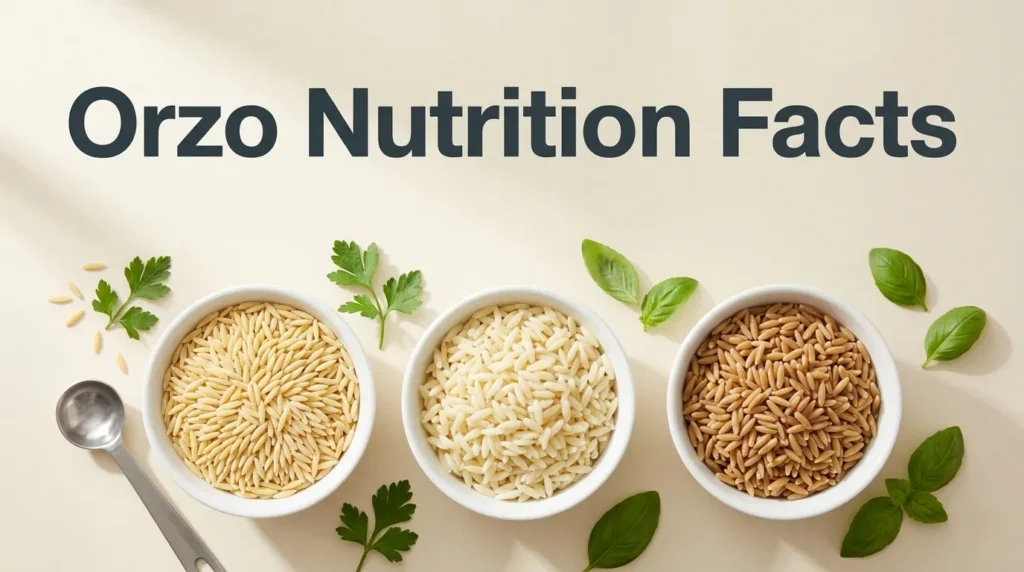
These numbers are effectively identical to every other enriched semolina pasta shape on the market. Orzo is not nutritionally unique among pasta. The shape changes how it cooks and how it gets portioned onto a plate, not the underlying macronutrient composition. The enrichment is what distinguishes modern orzo from a purely refined carbohydrate. After the durum wheat is milled and the bran and germ are removed, the FDA requires that specific nutrients, thiamin, riboflavin, niacin, folic acid, and iron, be added back to match or exceed the levels found in the whole grain. This is a public health intervention, not a marketing feature. Folic acid fortification was mandated in 1998 specifically to reduce neural tube defects in developing fetuses.
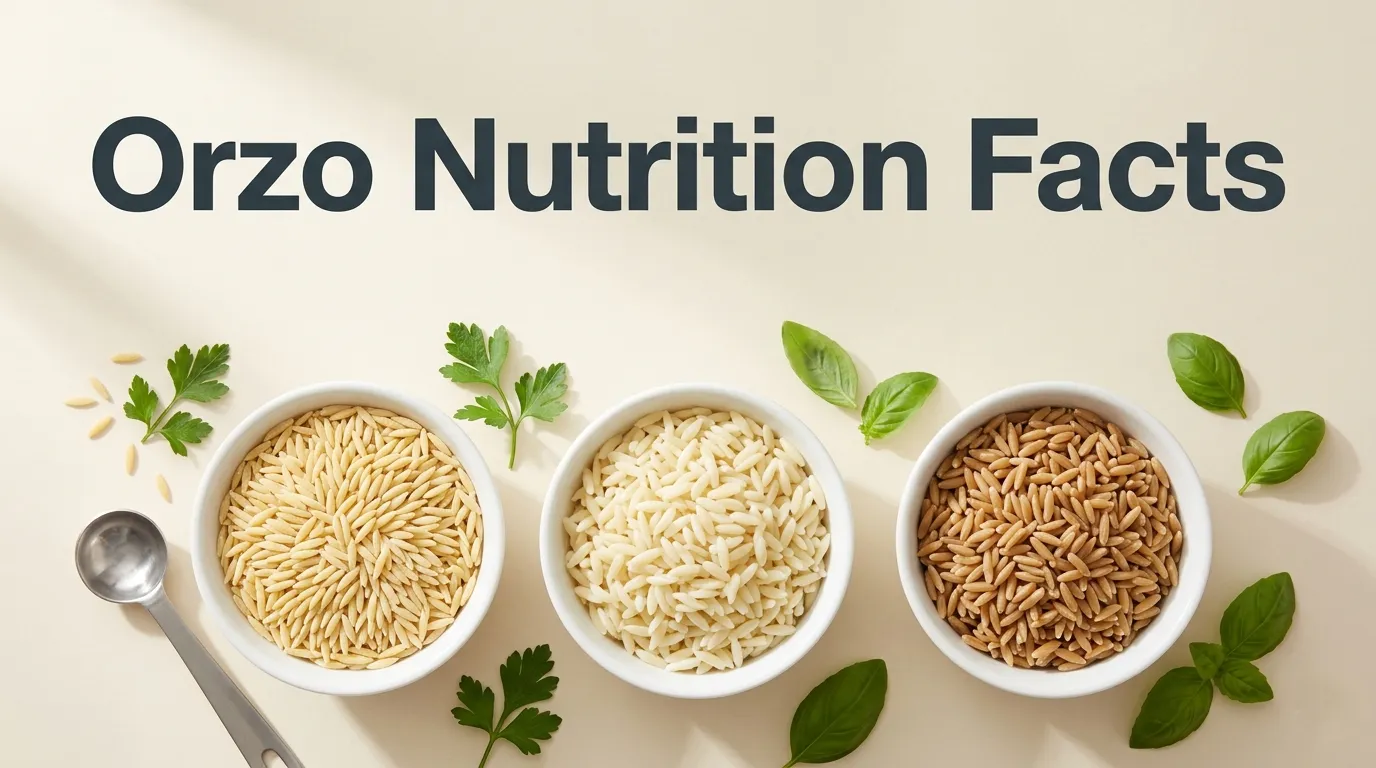
The micronutrients that enrichment does not replace are the ones that matter for a complete nutritional comparison. Whole wheat orzo retains magnesium, phosphorus, vitamin E, and the full fiber complement that the refining process strips away. The enrichment adds back a targeted list of five nutrients. It leaves behind everything else.
| Nutrient | White Orzo (2 oz dry) | % Daily Value | Whole Wheat Orzo (2 oz dry) |
|---|---|---|---|
| Calories | 200 kcal | 10% | 190 kcal |
| Protein | 7 g | 14% | 8 g |
| Total Carbohydrates | 42 g | 15% | 38 g |
| Dietary Fiber | 2 g | 7% | 6 g |
| Iron | 1.8 mg | 10% | 2.5 mg |
| Selenium | 40 mcg | 73% | 45 mcg |
| Thiamin (B1) | 0.5 mg | 42% | 0.3 mg |
| Folate | 170 mcg DFE | 43% | 30 mcg |
| Magnesium | 18 mg | 4% | 60 mg |
Whole wheat orzo values are approximate and vary by brand. Daily Values are based on a 2,000-calorie diet.
Key Takeaway: Traditional enriched orzo is a refined carbohydrate with a targeted vitamin and mineral add-back. Whole wheat orzo retains the naturally occurring fiber, magnesium, and phosphorus that refining removes.
Orzo Calories
A two-ounce dry serving of traditional orzo contains 200 calories. When cooked, that same serving absorbs water and expands to approximately one cup, still delivering 200 calories but with a much larger physical volume that creates a different satiety experience.
The calorie density of dry orzo is high. Two ounces is a small amount of dry pasta. It looks like roughly a quarter cup of tiny rice-shaped pieces. Most home cooks pouring dry orzo directly into a pot without measuring will easily pour three to four ounces, adding 300 to 400 calories to the dish before any oil, butter, cheese, or protein touches the pan. Restaurant portions of orzo as a side dish typically run four to six ounces dry, translating to 400 to 600 calories just from the pasta base. This is where orzo’s small shape works against portion awareness. The individual pieces are tiny. A large spoonful does not look like much. But calorie for calorie, orzo is identical to spaghetti, penne, and fettuccine. The shape tricks the eye into underestimating the quantity.
Cooked orzo is a different visual experience. One cup of cooked orzo is a substantial mound on a plate. It looks like a reasonable portion because it is one. The problem arises when orzo is served as part of a mixed dish, a pilaf with butter and parmesan, a cold salad with olive oil and feta, a soup where the broth makes the pasta volume hard to assess. In these contexts, the orzo calories blend into the overall dish, and a person who would never knowingly eat 400 calories of plain pasta can easily consume 500 calories of orzo salad without recognizing it.
Orzo Carbs
A two-ounce dry serving of orzo contains 42 grams of total carbohydrate. Of that, approximately 2 grams are dietary fiber and less than 1 gram is sugar. The remaining 39 grams are complex carbohydrates in the form of starch, primarily amylopectin and amylose from the durum wheat endosperm.
These carbohydrates digest rapidly in the small intestine. Amylase enzymes begin breaking the starch chains into individual glucose molecules within minutes of ingestion. The glucose enters the bloodstream through the intestinal wall, triggering the pancreas to release insulin. For a metabolically healthy person, this is a routine physiological event. The insulin shuttles glucose into muscle and liver cells, and blood sugar returns to baseline within roughly two hours. For someone with insulin resistance or type 2 diabetes, the same 42-gram carbohydrate load from refined orzo can produce a blood glucose spike that the body struggles to clear efficiently. The American Diabetes Association notes that portion control and carbohydrate counting are primary strategies for blood glucose management when consuming refined grains.
The amylose to amylopectin ratio in durum wheat pasta is approximately 25 to 75. This matters for glycemic response. Amylose is a linear starch molecule that packs tightly and resists digestion. Amylopectin is a branched molecule that enzymes attack rapidly. The higher amylopectin content in durum wheat means orzo digests faster than, for example, basmati rice, which has a higher amylose content. The cooking method and final temperature of the pasta also matter, a point discussed in detail in the glycemic index section.
Orzo Protein
A two-ounce dry serving of orzo provides 7 grams of protein. This protein comes from the gluten complex in durum wheat, specifically the proteins gliadin and glutenin, which form gluten when water is added and the dough is kneaded.
Orzo protein is incomplete. Like all wheat products, it is low in the essential amino acid lysine. The protein digestibility corrected amino acid score (PDCAAS) for wheat gluten is approximately 0.25 to 0.4, compared to 1.0 for animal proteins like egg and whey. This does not mean the protein is useless. It means that orzo cannot serve as a primary protein source in a meal or a diet. The 7 grams of protein is a contribution, not a centerpiece. In a practical meal, orzo is almost always paired with foods that complement its amino acid profile. A classic Mediterranean orzo salad with feta cheese and chickpeas pairs the lysine-deficient wheat protein with lysine-rich dairy and legume proteins. The combination creates a complete amino acid profile in the meal even though the orzo itself remains incomplete.
The protein content is one of the main nutritional distinctions between orzo and white rice. White rice provides roughly 3 to 4 grams of protein per equivalent dry serving. Orzo provides nearly double that. For someone choosing between a rice side dish and an orzo side dish based purely on which one contributes more to their daily protein target, orzo wins. The difference is not enormous, but across multiple meals per week, it adds up.
Key Takeaway: Orzo gives you 7 grams of incomplete but useful protein per serving. It beats white rice on protein but cannot stand alone as a protein source without complementary foods.
Is Orzo Pasta Healthy
Traditional enriched orzo is a refined carbohydrate that provides quick energy and several B vitamins through fortification, but it lacks the fiber and phytonutrients that define a nutrient-dense whole grain. It is neither a health food nor an unhealthy food. It is a refined grain product with a specific nutritional profile that fits some dietary patterns better than others.
The Dietary Guidelines for Americans 2020-2025 recommend that at least half of all grain consumption be whole grains. Traditional white orzo does not count toward this recommendation. Whole wheat orzo does. This is the clearest nutritional distinction that matters for public health. A person eating a diet rich in vegetables, lean proteins, legumes, and healthy fats can include white orzo as their refined grain allocation without any negative health consequence. A person whose diet is already heavy in refined grains from bread, crackers, pizza, and snack foods is adding another refined carbohydrate to a pattern that already needs more whole grains.
The enrichment makes traditional orzo nutritionally superior to unenriched refined grains. The folic acid, iron, and B vitamins are real additions that prevent genuine deficiency diseases. Populations with limited access to fresh produce and animal protein benefit measurably from grain enrichment. The individual consumer cooking orzo in a well-equipped home kitchen with a varied diet is not relying on pasta enrichment to meet their nutrient needs. For them, the whole wheat version is the objectively more nutrient-dense choice.
Whole Wheat Orzo Nutrition
Whole wheat orzo retains the bran and germ of the durum wheat kernel, delivering 6 grams of fiber per two-ounce dry serving, 60 milligrams of magnesium, and higher levels of phosphorus, manganese, and vitamin E than traditional enriched white orzo. The trade-off is a nuttier flavor and slightly chewier texture.
The fiber differential between white and whole wheat orzo is the single most nutritionally relevant number on this page. Two grams versus six grams of fiber per serving changes the metabolic impact of the meal. Fiber slows gastric emptying. It delays the absorption of glucose into the bloodstream. It feeds short-chain fatty acid producing bacteria in the colon. It increases meal satiety. The four extra grams of fiber in whole wheat orzo may not sound like much. Across a full day of eating, choosing whole grains over refined grains at every grain opportunity can double a person’s total fiber intake. The magnesium in whole wheat orzo is another meaningful difference. A two-ounce serving provides 60 milligrams, roughly 15 percent of the Daily Value. Magnesium is a co-factor in over 300 enzymatic reactions, including those involved in blood pressure regulation and insulin signaling. The Dietary Guidelines consistently identify magnesium as a nutrient of concern because large segments of the population do not meet the Recommended Dietary Allowance.
The phytonutrients in the bran layer, lignans, phenolic acids, and flavonoids, are entirely absent from white orzo. These compounds have antioxidant and anti-inflammatory properties that observational studies consistently associate with reduced chronic disease risk. The effect size for any single compound is small. The cumulative effect across years of whole grain consumption is measurable in epidemiological data.
| Nutrient | White Orzo (2 oz) | Whole Wheat Orzo (2 oz) | Difference |
|---|---|---|---|
| Calories | 200 | 190 | Minus 10 |
| Fiber | 2 g | 6 g | Plus 4 g |
| Protein | 7 g | 8 g | Plus 1 g |
| Magnesium | 18 mg | 60 mg | Plus 42 mg |
| Phosphorus | 60 mg | 180 mg | Plus 120 mg |
| Iron | 1.8 mg | 2.5 mg | Plus 0.7 mg |
| Folate | 170 mcg | 30 mcg | Minus 140 mcg |
The folate reduction in whole wheat orzo is because whole grain flour is not enriched. The natural folate content is lower than the fortified level in white orzo.
Orzo vs Rice Nutrition
Orzo and white rice are nutritionally similar in calorie and carbohydrate content, but orzo provides approximately 75 percent more protein, substantially more selenium and B vitamins through enrichment, and a slightly higher glycemic load. Brown rice offers more fiber and magnesium than white orzo, making it the more nutrient-dense choice in that specific comparison.
The protein difference is the headline. Two ounces of dry orzo contain 7 grams of protein. Two ounces of dry white rice contain 4 grams. Over a meal where the grain component is 200 calories, the orzo gives you an extra 3 grams of protein. This is a modest advantage, but if you are tracking protein intake and choosing between a rice bowl and an orzo bowl, the orzo version edges ahead. The micronutrient comparison favors orzo for the enriched nutrients. White rice is typically enriched as well, but the specific amounts vary. Orzo as a pasta tends to carry slightly higher levels of iron and B vitamins per serving than enriched white rice. Selenium is the standout. A serving of orzo provides roughly 73 percent of the Daily Value for selenium. Rice provides selenium only if it was grown in selenium-rich soil, which is variable and often unlabeled.
Brown rice versus white orzo is where the comparison gets more interesting. Brown rice provides 3.5 grams of fiber per serving compared to 2 grams in white orzo. It also provides magnesium and phosphorus that white orzo lacks. If fiber and mineral density are the priority, brown rice beats white orzo. Whole wheat orzo beats both. The hierarchy is clear. Whole grain beats refined grain across the board. Among refined grains, orzo and white rice are close nutritional cousins with orzo holding a small protein advantage.
| Grain (2 oz dry) | Calories | Protein | Fiber | Glycemic Index |
|---|---|---|---|---|
| White Orzo | 200 | 7 g | 2 g | 50 to 55 |
| White Rice | 200 | 4 g | <1 g | 70 to 75 |
| Whole Wheat Orzo | 190 | 8 g | 6 g | 40 to 45 |
| Brown Rice | 200 | 5 g | 3.5 g | 50 to 55 |
Key Takeaway: Orzo and white rice are calorie equivalents, but orzo brings slightly more protein and B vitamins. Brown rice beats white orzo on fiber. Whole wheat orzo beats everything in this comparison group.
Orzo Fiber
Traditional white orzo provides 2 grams of dietary fiber per two-ounce dry serving. Whole wheat orzo provides 6 grams. The four-gram difference represents the bran and germ that are present in the whole grain kernel and absent from the refined version.
The fiber in orzo is primarily insoluble fiber from the wheat endosperm cell walls. Insoluble fiber adds bulk to stool and accelerates intestinal transit time. It does not dissolve in water, does not form a gel in the stomach, and does not directly lower blood cholesterol. The soluble fiber that does those things, beta-glucan for example, is present in wheat only in small amounts. Barley and oats are richer sources. The insoluble fiber in orzo is still valuable. It prevents constipation. It contributes to the physical sensation of fullness by adding volume to the stomach contents. It is simply a more mechanically oriented fiber than the metabolically active soluble fibers found in other grains.
The 2 grams of fiber in white orzo is low enough that a meal built entirely around it, a bowl of orzo with a small amount of vegetables and cheese, may not trigger the satiety signals that a higher-fiber meal would produce. Adding beans, lentils, or a generous portion of roasted vegetables to the orzo dish is the practical solution. The fiber comes from the meal composition, not from the pasta itself. Whole wheat orzo solves this problem at the ingredient level by building the fiber into the pasta.
Orzo Serving Size
The standard serving size for dry orzo is 2 ounces or 56 grams, which yields approximately 1 cup of cooked orzo. The Dietary Guidelines for Americans recommend 3 to 5 ounce-equivalents of grains per day for most adults, meaning a two-ounce serving of orzo represents 40 to 65 percent of a full day’s grain allocation.
Most people do not measure pasta before cooking it. A handful tossed into boiling water or a pour directly from the box is the standard home method. This leads to serving sizes that are frequently double or triple the labeled portion. A “bowl” of orzo at home easily contains 3 to 4 ounces dry, delivering 300 to 400 calories and 60 to 80 grams of carbohydrate before toppings. Restaurant servings of orzo as a side dish or as the base of a bowl can reach 6 to 8 ounces dry, pushing the calorie count over 600 for the pasta alone. The Mediterranean diet, often cited as a model for healthy grain consumption, uses pasta as a small component of a meal dominated by vegetables, legumes, and olive oil. An Italian primo piatto of pasta is typically 2 to 3 ounces dry, served as a first course before the protein and vegetable second course. The American interpretation, a large bowl of pasta as the entire meal, doubles or triples that portion.
Practical portion control for orzo starts with measuring it dry at least once. Pour what looks like a normal serving into a bowl. Weigh it. Almost everyone overestimates what 2 ounces of dry orzo looks like. Once you have the visual reference, you can estimate more accurately in the future.
Orzo Glycemic Index
Orzo made from refined semolina has a glycemic index of approximately 50 to 55, placing it in the low to moderate range on the glycemic index scale. This is lower than white rice, which ranks around 70 to 75, and comparable to other durum wheat pasta shapes.
The glycemic index of pasta is lower than many people expect given its carbohydrate density. Several factors explain this. Durum wheat semolina has a relatively high protein content for a grain, and the protein forms a physical matrix around the starch granules. This matrix slows enzymatic access to the starch, delaying glucose release. The extrusion process pasta undergoes compacts the starch granules, further reducing the surface area available to digestive enzymes. The cooking method matters directly. Al dente pasta, cooked firm and slightly resistant to the bite, has a lower glycemic index than pasta cooked until soft. The firmer the pasta, the slower the starch gelatinization and the slower the glucose release into the bloodstream.
Cooling cooked orzo increases its resistant starch content. When pasta is cooked and then chilled, some of the gelatinized starch retrogrades into a crystalline structure that resists digestion in the small intestine. This resistant starch travels to the colon where gut bacteria ferment it, producing short-chain fatty acids. A cold orzo salad made the night before and eaten from the refrigerator has a measurably lower glycemic impact than the same orzo eaten hot immediately after boiling. For someone managing blood glucose, this is a practical, zero-cost modification.
Quick Tip:
- Cook orzo al dente. Soft, overcooked orzo digests faster and spikes blood glucose more sharply.
- Chill cooked orzo before eating it. The resistant starch content increases as the pasta cools.
- Pair orzo with protein, fat, and fiber. A lemon chicken orzo soup or a chickpea orzo salad has a lower glycemic load than plain orzo with butter.
Orzo Enriched
Enriched orzo has had thiamin, riboflavin, niacin, folic acid, and iron added back after the refining process removed them. This enrichment is mandated by the FDA for all refined wheat products sold in the United States under standards of identity established in the mid-20th century.
The enrichment program was originally designed to combat pellagra, a niacin deficiency disease that killed thousands of Americans in the early 1900s. The B vitamins were added to refined flour in the 1940s, and pellagra disappeared from the United States within a decade. Folic acid was added to the enrichment standard in 1998 after randomized controlled trials demonstrated that folic acid supplementation before and during early pregnancy reduced the incidence of neural tube defects by 50 to 70 percent. The Centers for Disease Control and Prevention estimates that folic acid fortification prevents approximately 1,300 neural tube defect-affected pregnancies annually in the United States. A serving of enriched orzo provides roughly 43 percent of the Daily Value for folate. This is not a trivial amount. For a woman of childbearing age who may become pregnant, the folate in enriched grains functions as a population-level safety net.
The nutrients that enrichment does not replace are instructive. Magnesium, phosphorus, manganese, vitamin E, vitamin B6, and the full fiber complement are present in whole wheat and absent in enriched white flour. The enrichment program was never intended to make refined grains nutritionally equivalent to whole grains. It was designed to prevent specific deficiency diseases. It succeeded. The existence of enrichment does not change the fact that whole wheat orzo is the more complete food.
Key Takeaway: Enrichment is a public health success story, not a marketing gimmick. The nutrients added back prevent real diseases, but whole wheat orzo still delivers more total nutrition.
Dry Orzo vs Cooked Orzo Nutrition
Dry orzo and cooked orzo are the same food at different water contents. Two ounces of dry orzo and one cup of cooked orzo contain identical calories, macronutrients, and micronutrients. The only nutritional difference is that cooking forms a small amount of resistant starch that was not present in the raw pasta.
The practical implication of this is that recipe calculations must specify whether the orzo measurement is dry or cooked. A recipe calling for “one cup of orzo” without clarification can mean 200 calories if referring to cooked orzo or roughly 800 calories if referring to the equivalent volume of dry orzo that yields one cup cooked. This is a common source of unintentional calorie overconsumption in home cooking. The weight change from dry to cooked is consistent. Orzo absorbs approximately 1.5 times its weight in water during boiling. Two ounces of dry orzo becomes roughly five ounces of cooked orzo. The volume increase is even more dramatic. Two ounces of dry orzo grows from roughly a quarter cup to a full cup when cooked.
The resistant starch that forms during cooking and cooling has been measured in laboratory studies. Hot cooked pasta contains approximately 1 to 2 percent resistant starch by weight. Cooled pasta contains 2 to 4 percent. Reheated pasta retains some of the resistant starch but not all of it. This is a small but real metabolic advantage for meal-prepped orzo salads and next-day leftovers. The effect is not large enough to change the fundamental glycemic classification of the food, but it is a genuine nutritional phenomenon, not a wellness myth.
| Measurement | Calories | Carbohydrates | Protein | Weight |
|---|---|---|---|---|
| 2 oz Dry Orzo | 200 | 42 g | 7 g | 56 g |
| 1 cup Cooked Orzo | 200 | 42 g | 7 g | 140 g |
| 1 cup Dry Orzo (volume) | ~800 | ~168 g | ~28 g | ~224 g |
The final row illustrates the danger of measuring dry orzo by volume instead of weight. One cup of dry orzo is roughly four servings.
Orzo Weight Loss
Orzo can be part of a weight loss diet when the portion is controlled, the pasta is paired with lean protein and vegetables, and the meal is built around whole wheat or legume-based orzo for the added fiber and satiety. Plain white orzo with butter and parmesan is calorie-dense, low in fiber, and easy to overeat.
The weight loss equation for orzo comes down to three factors: portion control, meal composition, and the specific type of orzo chosen. Portion control is the most important. Two ounces of dry orzo per person is a reasonable weight loss serving. Three to four ounces is a maintenance or surplus serving. The difference is 100 to 200 calories that compound across multiple meals per week. Measuring orzo dry before cooking is the single most effective calorie control tactic available. Meal composition determines satiety. Two ounces of orzo tossed with four ounces of grilled chicken breast, a cup of roasted broccoli, and a tablespoon of olive oil is a 500-calorie meal with 40 grams of protein and 8 grams of fiber. Two ounces of orzo tossed with two tablespoons of butter and a sprinkle of cheese is a 400-calorie side dish with minimal protein and no fiber. The same pasta base. Radically different satiety outcomes.
The type of orzo matters for the fiber equation. Whole wheat orzo at 6 grams of fiber per serving keeps the stomach fuller longer than white orzo at 2 grams. Legume-based orzo made from chickpeas or red lentils provides 12 to 14 grams of protein and 5 to 8 grams of fiber per serving, making it the most satiating option and the best fit for a weight loss context where hunger between meals is the main compliance challenge.
Orzo Keto
Traditional orzo is incompatible with a ketogenic diet. A single two-ounce dry serving contains 42 grams of carbohydrate, which by itself exceeds the 20 to 50 gram daily carbohydrate limit that defines nutritional ketosis. Even a half serving would consume a significant portion of the day’s carbohydrate budget.
The standard response to pasta cravings on a ketogenic diet is substitution, not portion reduction. Reducing orzo to a one-ounce serving to fit a keto macro target results in a truly tiny amount of cooked pasta, roughly half a cup, that leaves most people unsatisfied and more likely to abandon the diet. The better solution is a pasta alternative. Legume-based orzo made from chickpeas, red lentils, or edamame provides 15 to 20 grams of net carbohydrate per serving, still high for strict keto but potentially manageable in a more liberal low-carb approach of 50 to 100 grams daily. Shirataki rice or kelp noodle products cut into rice-sized pieces can approximate the orzo texture with near-zero carbohydrates, but they require a willingness to adapt to a very different mouthfeel and flavor profile.
For someone committed to a ketogenic or very low-carbohydrate diet, orzo is essentially off the table. The carbohydrate density is too high to fit within the macro constraints. This is not a value judgment about orzo. It is a straightforward arithmetic constraint. The person who eats a low-carb diet at 100 grams of daily carbohydrate can potentially fit a half serving of whole wheat orzo into a carefully planned day. The person targeting 20 grams of net carbs cannot.
Orzo Gluten Free
Traditional orzo made from durum wheat semolina is not gluten-free. It contains the gluten-forming proteins gliadin and glutenin, which are toxic to individuals with celiac disease and can trigger inflammatory responses in people with non-celiac gluten sensitivity.
The Celiac Disease Foundation states that wheat, barley, and rye are the primary gluten-containing grains. Orzo is made from wheat. It must be avoided by anyone with celiac disease. The consequences of gluten exposure for a celiac individual include small intestinal villous atrophy, malabsorption of nutrients, and systemic inflammation. This is not a preference or a mild intolerance. It is an autoimmune reaction. Cross-contamination is the second layer of risk. Orzo cooked in pasta water shared with gluten-free pasta, or orzo served from a bulk bin where scoops migrate between wheat and gluten-free grains, is unsafe. Restaurants that cook orzo and gluten-free pasta in the same water create a cross-contaminated product even if the gluten-free pasta itself is safe.
Legume-based orzo alternatives made from chickpeas, red lentils, green lentils, or edamame are naturally gluten-free. They are manufactured from legumes, not wheat, and contain no gluten proteins. They are the appropriate substitution for anyone requiring a gluten-free diet. The texture and cooking time differ from wheat orzo. Legume orzo cooks faster and can become mushy if over-boiled. The flavor is earthier and more bean-forward. These are acceptable trade-offs for the gluten-free eater who wants an orzo-like shape and experience without wheat.
Key Takeaway: Traditional orzo contains wheat gluten and is unsafe for celiac disease. Legume-based alternatives made from chickpeas or lentils are gluten-free and provide the same rice-shaped pasta experience.
FAQ Section
Frequently Asked Questions About Orzo Nutrition
Is orzo healthier than rice?
White orzo has a small nutritional edge over white rice with 75 percent more protein and higher B vitamin content from enrichment.
Brown rice is higher in fiber and magnesium than white orzo, making it the better choice in that comparison.
Whole wheat orzo beats both white rice and brown rice on fiber and protein while matching brown rice on mineral density.
Does orzo have gluten?
Yes, traditional orzo is made from durum wheat semolina and contains gluten.
It is unsafe for anyone with celiac disease or a wheat allergy.
Gluten-free alternatives made from chickpeas, red lentils, or edamame provide the orzo shape and cooking experience without wheat gluten.
How many calories are in a cup of cooked orzo?
One cup of cooked orzo contains approximately 200 calories.
This is the yield from two ounces of dry orzo cooked in water.
Adding oil, butter, cheese, or sauce increases the calorie count substantially above the pasta base.
Is orzo good for weight loss?
Orzo can be part of a weight loss diet when measured dry, paired with lean protein and vegetables, and chosen in the whole wheat or legume-based form for added fiber.
The main weight loss risk with orzo is portion creep because the small rice-like shape makes it easy to accidentally serve 300 to 400 calories instead of the intended 200.
Whole wheat orzo at 6 grams of fiber per serving provides greater satiety than white orzo at 2 grams.
Can you eat orzo on a low-carb diet?
Traditional orzo is not compatible with a strict ketogenic diet because a single serving contains 42 grams of carbohydrate.
A more moderate low-carb diet of 80 to 100 grams of daily carbohydrate can potentially include a half serving of whole wheat orzo if the rest of the day’s carbohydrate intake is tightly managed.
Legume-based orzo alternatives provide slightly lower net carbohydrates but are still not keto-compatible at full serving sizes.
What is the healthiest type of orzo?
Whole wheat orzo is the healthiest wheat-based option because it retains the bran and germ, providing 6 grams of fiber, magnesium, phosphorus, and phytonutrients absent from white orzo.
Legume-based orzo made from chickpeas or lentils is the healthiest option overall, with higher protein and fiber than any wheat-based variety.
The healthiest choice depends on your dietary needs: whole wheat for general health, legume-based for gluten-free and higher protein, and traditional white orzo for occasional use in a diet already rich in whole foods.
CLOSING:
You now know exactly what is in a serving of orzo, whether it is the white enriched version in your pantry, the whole wheat bag you have been meaning to try, or the chickpea alternative catching your eye at the grocery store. The numbers are clear. Orzo is a refined grain with a targeted vitamin add-back, a solid protein contribution for a grain, and a glycemic index that is lower than most people expect, especially when you cook it al dente and let it cool.
The single best move you can make with this information is to measure your orzo dry once, see what two ounces actually looks like in your pot, and decide which variety earns a permanent spot in your kitchen. Whole wheat orzo gives you fiber and minerals. Legume orzo gives you protein and gluten freedom. White orzo gives you a familiar texture with enrichment-backed B vitamins.
Pick the one that matches your goals. Measure it before you cook it. Build the meal around vegetables and protein instead of making the pasta the main event. Then eat it without guilt, because you know exactly what is in the bowl.