Ramen Nutrition Facts 2026: Instant vs. Restaurant Guide
A standard package of instant ramen noodles (85-100g serving) contains approximately 380-470 calories, 14-22 grams of fat, 52-63 grams of carbohydrates, and 8-11 grams of protein. The nutrition profile varies dramatically between instant ramen, fresh restaurant ramen, and noodles prepared without the seasoning packet.
The sodium content in a single serving of instant ramen is one of the biggest health concerns. Most instant ramen packages contain between 1,390 mg and 1,520 mg of sodium per serving. This represents nearly 60-66 percent of the recommended daily limit of 2,300 mg set by the Dietary Guidelines for Americans 2020-2025. A 2022 study published in the Journal of Nutrition found that regular instant noodle consumption was associated with a higher risk of metabolic syndrome, particularly in young women.
This guide covers everything you need to know about ramen nutrition in 2026. You will find complete calorie and macro breakdowns for instant ramen, restaurant ramen, and noodles without seasoning. You will also learn how preparation methods affect nutrition, healthier preparation tips, and how ramen fits into different dietary patterns like low sodium, low carb, and weight loss plans.
Key Takeaway: The seasoning packet is responsible for the vast majority of sodium in instant ramen. Using half the packet or making your own broth cuts sodium by 50 percent or more.
Ramen Nutrition Facts
Ramen noodles are primarily a carbohydrate source with significant fat content from the deep frying process used in instant noodle production. A standard 85-100g serving of instant ramen provides approximately 377-465 calories, with the calorie split averaging 50-60 percent from carbohydrates, 30-40 percent from fat, and 10-15 percent from protein.
The noodles themselves are made from wheat flour, water, salt, and an alkaline mineral water called kansui, which gives ramen its characteristic yellow color and springy texture. Instant ramen noodles are pre-cooked and then deep fried to remove moisture, which is why they cook in just 2-3 minutes but contain more fat than fresh ramen noodles.
Fresh or restaurant ramen noodles are not deep fried. A 218g serving of prepared restaurant-style ramen noodles contains approximately 255 calories, 1.1g fat, 52g carbohydrates, and 8.9g protein. The lower fat content makes fresh ramen a significantly different nutritional product from instant varieties.
Restaurant Ramen Nutrition Facts
Restaurant ramen nutrition facts vary widely based on broth type, noodle preparation, and toppings. A typical bowl of restaurant ramen (including broth, noodles, chashu pork, egg, and vegetables) contains 600-900 calories, 25-45g fat, 60-80g carbohydrates, and 25-35g protein. The broth alone contributes 100-300 calories and 500-1,000 mg sodium.
Different broth types produce different nutrition profiles:
- Tonkotsu (pork bone broth): Highest in fat and calories, richest flavor
- Shoyu (soy sauce broth): Moderate calories, highest sodium
- Shio (salt broth): Lower fat, but very high sodium
- Miso broth: Moderate fat, contains beneficial probiotics
The protein in restaurant ramen comes primarily from the chashu pork (braised pork belly) and soft boiled egg. A typical restaurant ramen bowl provides 25-35g protein, making it a more balanced meal than instant ramen. However, the sodium content remains a concern, with most restaurant bowls containing 1,500-2,500 mg sodium per serving.
Key Takeaway: Restaurant ramen has less fat than instant ramen but often more sodium. The addition of protein and vegetables makes it a more nutritionally complete meal.
Nutrition Facts For One Package Of Ramen Noodles
| Brand / Type | Serving Size | Calories | Total Fat | Carbs | Protein | Sodium |
|---|---|---|---|---|---|---|
| Nissin Chicken Ramen | 85g | 377 | 14.5g | 53.6g | 8.2g | 5.6g salt equivalent |
| Maruchan Miso Ramen | 100g | 465 | 22.0g | 55.9g | 10.9g | 6.9g salt equivalent |
| Nongshim Tantanmen | 1 bowl | 470 | 20g | 63g | 9g | 1,520mg |
| Samyang Buldak | 1 package | 430 | 13g | 70g | 9g | 1,390mg |
| Public Goods Ramen | 95g | 290 | 3g | 58g | 10g | 1,510mg |
The wide variation in calories and fat between brands reflects differences in noodle production methods. Public Goods ramen contains only 3g of fat per serving because their noodles are air dried rather than deep fried. This represents a growing trend toward healthier instant ramen options in 2026.
Most instant ramen packages contain little to no fiber, typically 1-4g per serving. The protein content ranges from 8-11g, which is modest for a meal’s worth of calories. The lack of vegetables or complete protein sources means instant ramen alone does not constitute a balanced meal.
Key Takeaway: Air dried ramen noodles contain approximately 75-80 percent less fat than traditional deep fried instant noodles, making them a better choice for everyday consumption.
Ramen Nutrition Facts Without Seasoning
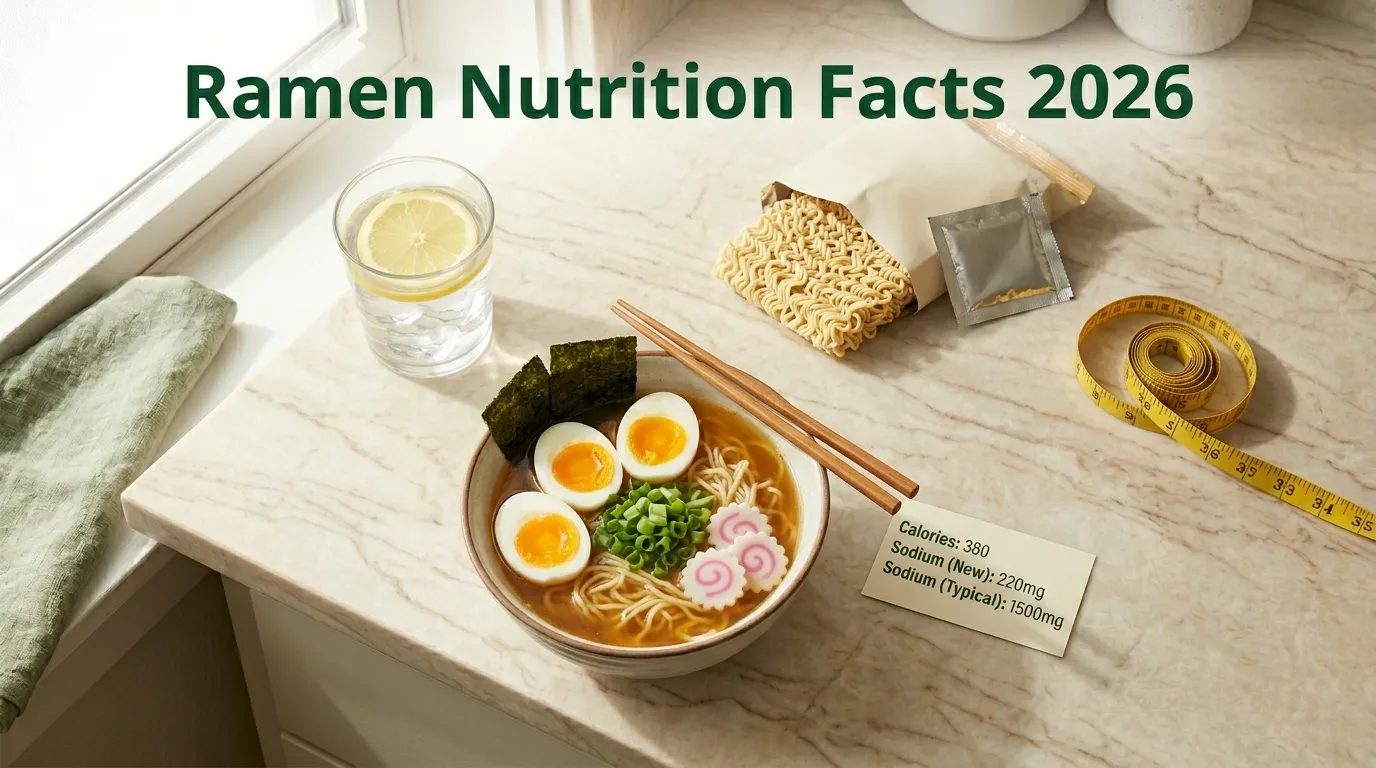
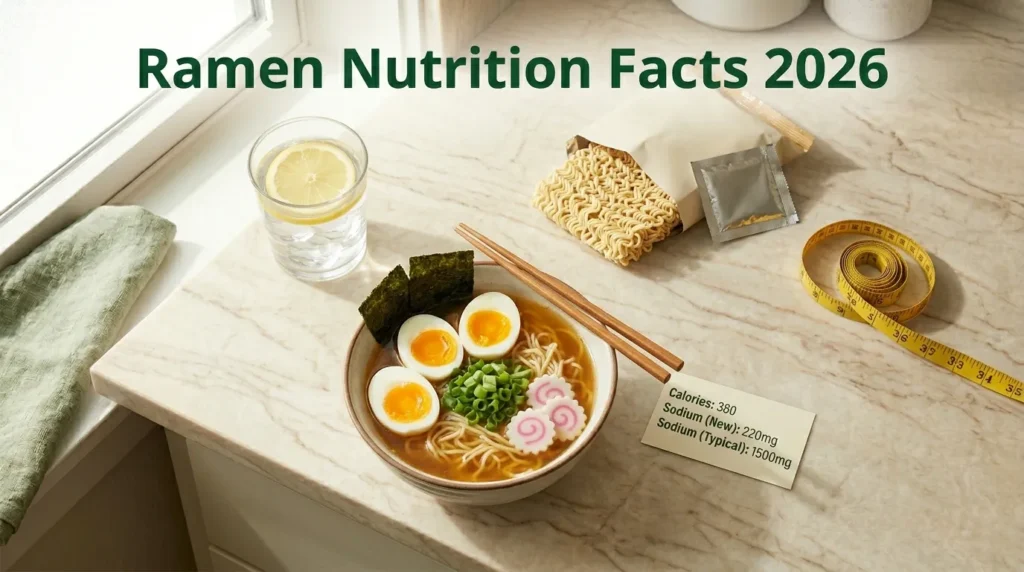
Ramen noodles without the seasoning packet contain approximately 380 calories, 14g fat, 52g carbohydrates, and 10g protein per block. The sodium content drops dramatically from 1,500+ mg to just 220 mg when the seasoning packet is omitted.
The seasoning packet is responsible for nearly all of the sodium, added sugar, and artificial flavorings in instant ramen. A single packet contains 1,200-1,500 mg of sodium, plus monosodium glutamate (MSG), dehydrated vegetables, and artificial chicken or beef flavoring. By discarding the packet, you eliminate over 85 percent of the sodium.
Without the seasoning packet, ramen noodles become a blank canvas. You can control exactly what goes into your bowl, adding fresh vegetables, lean protein, and homemade broth or sauce. This approach transforms instant ramen from a high sodium, low nutrient meal into a quick cooking noodle base that can support a healthy diet.
How to prepare ramen noodles without the seasoning packet:
- Step 1: Bring 2 cups of water to a rolling boil in a small pot.
- Step 2: Add the ramen noodle block and cook for 2-3 minutes until noodles separate.
- Step 3: Drain the noodles in a colander and rinse briefly with cold water to remove excess starch and surface oil.
- Step 4: Discard the cooking water (and the seasoning packet) entirely.
- Step 5: Return noodles to the pot with 1 cup of low sodium broth or water with your own seasonings.
Key Takeaway: Ditching the seasoning packet is the single most effective way to make instant ramen healthier. You lose the MSG and artificial flavors but gain complete control over sodium and ingredients.
How Cooking Method Changes Ramen Nutrition
The way you prepare ramen noodles dramatically affects their final nutritional profile. Boiling and draining reduces fat content slightly, as some oil from deep fried noodles leaches into the cooking water. Rinsing noodles after cooking removes additional surface oil and starch.
Adding ingredients to your ramen changes the nutrition profile in both positive and negative directions. Adding vegetables increases fiber, vitamins, and minerals. Adding a soft boiled egg adds 70 calories and 6g protein. Adding chashu pork or chicken adds 150-250 calories and 15-20g protein. Adding extra oil, butter, or creamy ingredients increases fat and calories.
Cooking method comparison for instant ramen:
| Preparation Method | Calories | Sodium | Fat | Notes |
|---|---|---|---|---|
| Standard (full packet) | 380-470 | 1,500mg | 14-22g | As packaged |
| Half seasoning packet | 380-470 | 750mg | 14-22g | Lower sodium |
| No seasoning packet | 380-470 | 220mg | 14-22g | Lowest sodium |
| Drained and rinsed | 330-410 | varies | 10-16g | Removes surface oil |
| Air dried noodles | 290 | 1,510mg | 3g | Much lower fat |
Key Takeaway: Draining and rinsing instant noodles removes approximately 30-50 calories worth of surface oil. This small reduction adds up over multiple servings.
Ramen Vitamins and Minerals
Instant ramen noodles are fortified with several B vitamins to replace nutrients lost during processing. A single serving of Nissin Chicken Ramen contains 0.61mg of Vitamin B1 (thiamin) and 0.74mg of Vitamin B2 (riboflavin). Maruchan Miso Ramen provides 0.29mg B1 and 0.40mg B2 per serving.
These B vitamins play essential roles in energy metabolism. Thiamin helps convert carbohydrates into energy, while riboflavin supports cellular function and growth. The fortification levels are significant, with one serving providing approximately 40-55 percent of the daily recommended intake for these vitamins.
Calcium is another added mineral in instant ramen. Nissin ramen contains 278mg of calcium per serving, while Maruchan contains 190mg. This represents 19-28 percent of the daily recommended intake for adults. Iron content varies by brand, ranging from 0.68mg to 1.1mg per serving.
Key micronutrients in instant ramen (average per serving):
- Vitamin B1 (Thiamin): 0.3-0.6mg (25-50% DV)
- Vitamin B2 (Riboflavin): 0.4-0.7mg (30-55% DV)
- Calcium: 150-280mg (15-28% DV)
- Iron: 0.7-1.1mg (4-6% DV)
- Potassium: 140-230mg (4-5% DV)
- No significant Vitamin D, C, or A
Key Takeaway: Fortified ramen provides meaningful amounts of B vitamins and calcium that you do not get from plain pasta. However, these benefits come with high sodium that may outweigh the nutritional gains.
Ramen Sodium Content Analysis
The sodium content in ramen is the primary health concern for regular consumers. A single serving of instant ramen contains 1,390-1,520mg of sodium, which represents 60-66 percent of the FDA’s recommended daily limit of 2,300mg. Eating one package uses up two-thirds of your daily sodium allowance in a single meal.
Restaurant ramen sodium levels are similar or higher. A typical bowl of tonkotsu or shoyu ramen contains 1,500-2,500mg of sodium, depending on the broth concentration and added soy sauce. Some restaurant bowls exceed 3,000mg of sodium, surpassing the daily limit by 30 percent.
The American Heart Association recommends an ideal limit of 1,500mg of sodium per day for adults with high blood pressure. A single serving of instant ramen approaches or exceeds this entire limit. For individuals with hypertension, heart disease, or kidney disease, regular ramen consumption requires careful planning and portion control.
Quick Tip: To reduce sodium without losing all flavor, use half the seasoning packet and add your own spices (garlic powder, onion powder, black pepper, red pepper flakes). This cuts sodium by 50 percent while maintaining taste.
Are There Healthier Ramen Options In 2026
The ramen market has expanded significantly to include healthier options. Air dried ramen noodles, such as Public Goods brand, contain only 3g of fat per serving compared to 14-22g in traditional deep fried noodles. These products cook in the same amount of time but have a dramatically different nutritional profile.
Several brands now offer lower sodium ramen options with 25-40 percent less sodium than standard packages. Some products have achieved this by reformulating the seasoning packet to use potassium chloride instead of sodium chloride, reducing sodium while maintaining saltiness. Other brands have eliminated MSG, which naturally reduces sodium content.
Gluten free ramen noodles made from rice flour, buckwheat, or mung bean starch are widely available in 2026. These options cater to customers with celiac disease or gluten sensitivity. However, gluten free ramen typically contains less protein and may have a different texture than wheat based noodles.
Healthier ramen options ranked:
- Fresh restaurant ramen – Lowest fat, highest protein, contains vegetables
- Air dried instant ramen – 75-80% less fat than fried noodles
- Lower sodium ramen – 25-40% less sodium than standard
- Gluten free ramen – Suitable for celiac, check protein content
- Standard instant ramen (half seasoning) – Acceptable occasionally
Key Takeaway: In 2026, you have genuine alternatives to traditional high fat, high sodium instant ramen. Read labels and look for “air dried” or “lower sodium” on packaging.
Ramen For Specific Diets
Low sodium diet: Ramen presents a challenge for low sodium eating. The best approach is to discard the seasoning packet entirely and make your own broth using low sodium stock (140mg or less per cup). Add flavor with ginger, garlic, green onions, and a splash of rice vinegar. Limit or avoid soy sauce, which is naturally high in sodium.
Low carb / Keto diet: Traditional ramen noodles are made from wheat flour and contain 50-70g of carbohydrates per serving. This exceeds daily carb limits for most low carb diets. Alternatives include shirataki noodles (konjac root, 0g net carbs) or zucchini noodles (zoodles) made from spiralized zucchini. These substitutes work well in ramen broth.
Diabetic diet: The high carbohydrate content of ramen noodles can cause rapid blood glucose spikes. A standard serving contains 50-70g of carbohydrates with minimal fiber (1-4g) to slow absorption. Diabetic individuals should eat ramen in small portions (half a package), always pair with protein and vegetables, and test blood glucose response individually.
Weight loss: A bowl of restaurant ramen contains 600-900 calories, which can fit into a weight loss plan if accounted for. Instant ramen alone is not satiating due to low protein and fiber content. To make ramen more filling, add 100g of vegetables (broccoli, spinach, mushrooms), a soft boiled egg (70 calories, 6g protein), and 100g of lean protein like chicken breast (165 calories, 31g protein).
Key Takeaway: Ramen can fit into most diets with strategic modifications. The key is controlling portions, adding nutrient dense ingredients, and being aware of sodium and carbohydrate content.
Ramen vs. Other Noodles Comparison
| Noodle Type | Calories (per 100g cooked) | Fat | Carbs | Protein | Sodium | Notes |
|---|---|---|---|---|---|---|
| Instant Ramen | 377-470 | 14-22g | 53-63g | 8-11g | 1,500mg | Deep fried, fortified |
| Fresh Ramen | 117 | 1g | 24g | 4g | 42mg | Not fried, requires refrigeration |
| Udon | 140 | 1g | 28g | 4g | 200mg | Thick, chewy wheat noodle |
| Soba | 110 | 0.5g | 22g | 5g | 150mg | Buckwheat, gluten free options |
| Rice Noodles | 110 | 0.5g | 25g | 1g | 15mg | Gluten free, lower protein |
| Shirataki | 10 | 0g | 3g (fiber) | 0g | 10mg | Keto friendly, no carbs |
Fresh ramen noodles are nutritionally superior to instant ramen in every category except convenience. They contain approximately one-third the calories, one-tenth the fat, and a fraction of the sodium. The trade off is that fresh ramen must be refrigerated and cooks in 2-3 minutes, only slightly longer than instant.
For everyday noodle eating, air dried instant ramen offers the best compromise between convenience and nutrition. It provides the quick cooking time of instant noodles with significantly less fat than deep fried varieties.
Key Takeaway: Fresh ramen noodles are not a health food, but they are a much better choice than instant ramen. The difference in fat and sodium is substantial enough to warrant seeking out fresh or frozen ramen when possible.
Frequently Asked Questions About Ramen Nutrition Facts
H3: How many calories are in one package of instant ramen?
One standard package of instant ramen contains 377-470 calories per serving, depending on the brand and noodle type. Air dried ramen contains approximately 290 calories per package, which is 75-80 percent fewer calories from fat.
H3: Is ramen bad for you?
Instant ramen is high in sodium (1,390-1,520mg per serving) and saturated fat when consumed regularly. Occasional consumption is fine for healthy individuals. Regular consumption is associated with higher risk of metabolic syndrome, particularly in women. Restaurant ramen with vegetables and protein can be a balanced meal if sodium is managed.
H3: How much sodium is in a bowl of restaurant ramen?
A typical bowl of restaurant ramen contains 1,500-2,500mg of sodium, depending on broth type and added soy sauce. Tonkotsu broth generally contains less sodium than shoyu or shio broth. Ask the restaurant to serve broth on the side so you can control how much you consume.
H3: Can I eat ramen on a low sodium diet?
Yes, but you must modify it significantly. Discard the seasoning packet entirely, use low sodium broth (140mg or less per cup), and add your own spices. Never use the included packet, which contains 1,200-1,500mg of sodium on its own. Homemade ramen broth can be made with 200mg of sodium or less per serving.
H3: What is the healthiest type of ramen?
Fresh ramen noodles from a restaurant or refrigerated section are healthiest, with 255 calories, 1.1g fat, and 8.9g protein per serving. Air dried instant ramen (like Public Goods) is the healthiest packaged option, with 290 calories and only 3g fat per serving. Both options still require attention to sodium content.
H3: How many carbs are in ramen noodles without the seasoning packet?
Ramen noodles without seasoning contain 52-70g of carbohydrates per serving. The seasoning packet adds negligible carbohydrates. Removing the packet does not change the carbohydrate content, which comes entirely from the wheat flour noodles. The fiber content is low at 1-4g per serving.
Understanding ramen nutrition facts empowers you to make better choices whether you are grabbing an instant cup or dining at a ramen shop. The single most effective change for instant ramen eaters is switching to air dried noodles and ditching the seasoning packet. This simple swap reduces fat by 75 percent and sodium by 85 percent while keeping the quick cooking convenience.
For restaurant ramen, focus on broth choice (lighter broths have less fat and sodium), add plenty of vegetables, and consider sharing a bowl or taking half home. Ramen can be part of a healthy diet when eaten occasionally and prepared thoughtfully. Use the nutrition tables in this guide to compare options, and always check labels for sodium and fat content before buying.