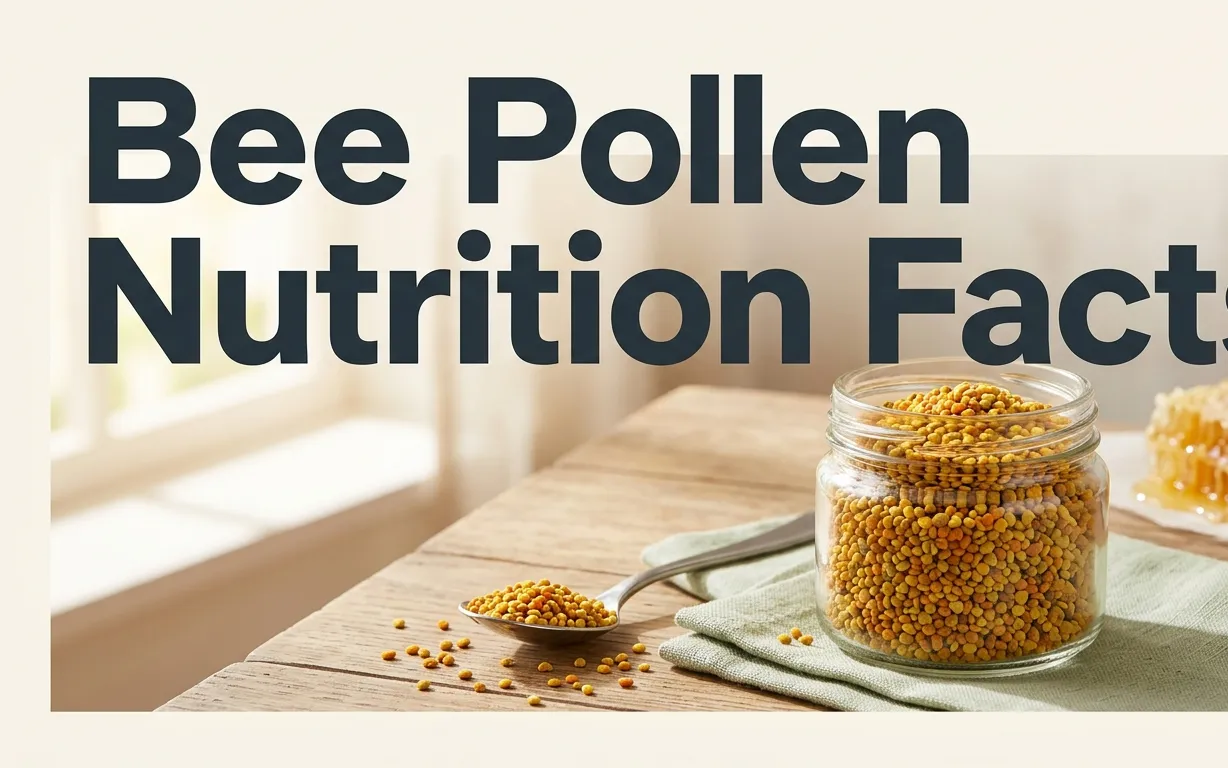
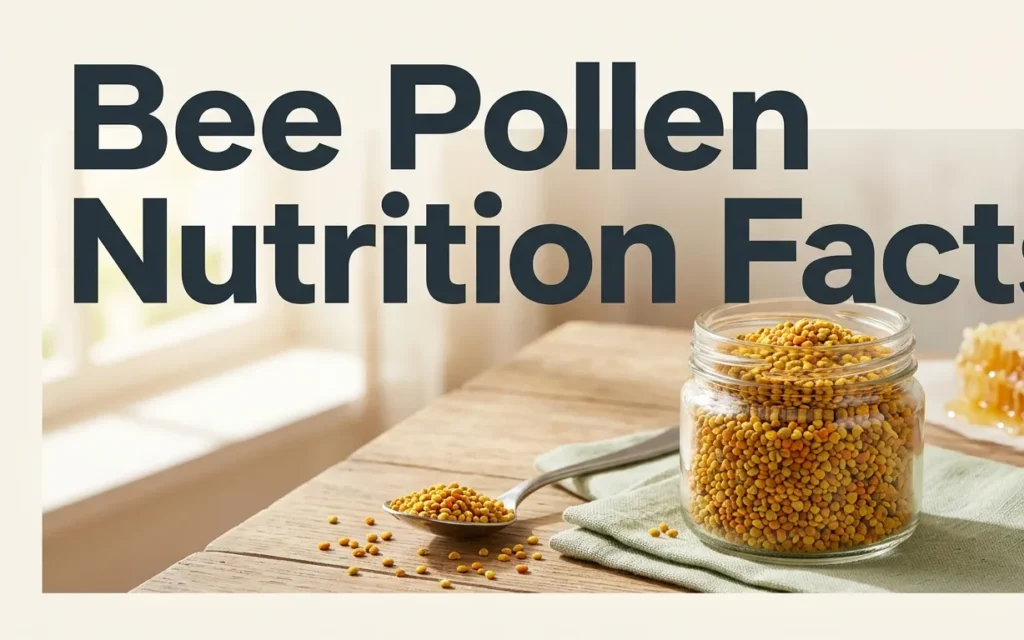
Bee Pollen Nutrition Facts 2026: Full Macro & Vitamin Breakdown
Bee pollen nutrition facts reveal a concentrated source of macronutrients and micronutrients, delivering roughly 16 to 20 calories, 1.5 grams of protein, and measurable amounts of B vitamins and polyphenols per single teaspoon. This granular substance, collected by honeybees, functions as a multi-nutrient biological package rather than an empty-calorie sweetener.
The interest in bee pollen’s exact nutritional composition has spiked because consumers are moving away from “superfood” marketing and toward evidence-based eating. According to the USDA FoodData Central database, bee pollen contains over 250 distinct biological substances, yet a standard 5-gram teaspoon meets less than 5% of your daily protein needs and only a fractional amount of most vitamins. Its value lies less in filling macronutrient gaps and more in the synergistic function of its minor compounds, including quercetin, rutin, and specific B-complex vitamins.
This article breaks down the precise calorie count, macronutrient profile, vitamin spectrum, and amino acid content of standard bee pollen granules. You will see exactly how fresh pollen compares to dried and processed forms and learn where this substance fits into a daily eating pattern. No vague wellness talk. Only the specific numbers, measured in grams and milligrams, that you need to make an informed decision about whether bee pollen belongs in your 2026 nutrition plan.
Bee pollen nutrition facts
A 1-teaspoon serving of raw bee pollen weighs approximately 5 grams and provides a dense nutritional matrix composed of 1.2 to 1.8 grams of protein, 2.5 to 3.5 grams of carbohydrates, and 0.3 to 0.5 grams of dietary fat. This specific macro split translates to roughly 35% to 40% carbohydrates, 25% to 35% protein, and 5% to 10% fat, with the remaining mass coming from water, fiber, and mineral ash.
One factor that makes these bee pollen nutrition facts particularly variable is the botanical source. Pollen harvested from clover fields in Canada will look and measure differently than pollen taken from chestnut trees in Italy. The protein content can swing from a low of 15% in some grass pollens to a high of 35% in select cruciferous plant pollens. The sugar profile is similarly plant-dependent, with fructose typically dominating over glucose and sucrose, and a notable amount of complex polysaccharides that act as prebiotic fiber in the lower digestive tract.
The water content of fresh, non-dehydrated bee pollen runs between 20% and 30%, which significantly dilutes the nutrient density per gram when compared to shelf-stable dried granules. A dried 5-gram serving packs roughly the same nutrients as 7 to 8 grams of fresh, undried pollen. If you track your food intake precisely, you must confirm whether the nutrition label on your jar references a fresh or dehydrated weight.
- Protein: 1.2-1.8 grams (highly variable based on floral source).
- Carbohydrates: 2.5-3.5 grams (including fiber and natural sugars).
- Fat: 0.3-0.5 grams (mostly unsaturated fatty acids).
- Fiber: 0.4-0.7 grams (including the indigestible exine shell).
- Calories: 16-20 kcal per level teaspoon.
What is bee pollen
Bee pollen is the mixture of flower pollen grains, nectar or honey, and salivary enzymes from worker honeybees (Apis mellifera), packed into granules as the hive’s primary source of non-honey nutrition. Worker bees collect dust-like pollen particles from flower anthers and use their mandibles and forelegs to pack the grains into pelletized corbicular loads on their hind legs. These forager-leg pellets are what we ultimately harvest at the hive entrance.
The critical structural component you need to know about is the pollen grain’s outer layer, called the exine shell. This wall is made of sporopollenin, one of the most chemically inert biological polymers in nature. The sporopollenin coat functions as armor, protecting the grain’s internal cytoplasm, enzymes, and genetic material from ultraviolet radiation and digestive destruction. This same armor directly impacts how many nutrients your body can actually extract from whole bee pollen granules.
Once the forager returns to the hive, house bees pack these pellets into honeycomb cells with a small amount of honey and glandular secretions, sealing the top with a drop of honey. Inside the cell, lactic acid bacteria ferment the mixture anaerobically for about two weeks, creating a different product called bee bread. This fermentation predigests the tough exine shell and transforms the original enzymatic profile. The raw fresh granules sold in health stores have not yet undergone this transformation.
Key Takeaway: Bee pollen is a raw, enzymatically active ingredient with a protective shell, not an inert powder. Its nutrient accessibility depends almost entirely on what happens to that shell between harvest and consumption.
Calories in bee pollen
One level teaspoon of dried bee pollen contains approximately 16 to 20 calories, while a standard tablespoon serving holds about 48 to 60 calories. This puts bee pollen in a similar calorie density range as chia seeds or dried coconut but at a much smaller typical daily intake. Because most people consume only 1 to 2 teaspoons per day, the calorie contribution to a 2,000-calorie diet is functionally negligible.
The calorie source splits roughly 50% from complex and simple carbohydrates and 40% from protein, with the remaining 10% coming from fatty acids. This departs sharply from honey and refined sugar, where carbohydrates can account for 98% or more of the caloric content. The modest protein fraction contributes to satiety in a way that a teaspoon of honey or agave nectar cannot match.
Table: Bee Pollen Calories by Serving Size
| Serving Size | Weight | Approximate Calories | Protein Contribution (g) |
|---|---|---|---|
| 1 teaspoon | 5 g | 16-20 kcal | 1.2-1.8 g |
| 1 tablespoon | 15 g | 48-60 kcal | 3.6-5.4 g |
| 1 ounce | 28 g | 90-110 kcal | 6.7-10.0 g |
| 100 grams | 100 g | 320-400 kcal | 24-35 g |
If you are using bee pollen specifically as a protein supplement, the calorie math is less favorable than whole food alternatives. To get 10 grams of protein from bee pollen, you need to consume roughly 6 to 7 teaspoons, which supplies 120 to 140 calories. The same 10 grams of protein from egg whites costs you about 50 calories and zero allergy risk. Use bee pollen as a micronutrient and phytonutrient booster, not as a macro-focused protein source.
Bee pollen macronutrients protein carbs fat
The macronutrient triad in bee pollen consists of 24% to 35% protein, 35% to 55% total carbohydrates, and 5% to 10% lipids, though these ranges shift measurably with the plant species of origin. Pollen from oilseed rape delivers more crude protein and methionine than pollen from sunflower, while chestnut pollen skews higher in unsaturated fatty acids, particularly linoleic and alpha-linolenic acid.
The carbohydrate fraction is not simply sugar. Approximately one-third of the carbohydrates exist as complex polysaccharides and prebiotic fiber that resist digestion in the small intestine and pass to the colon. There, specific bacterial strains ferment these polysaccharides, producing short-chain fatty acids that support the intestinal barrier. The remaining two-thirds are simple sugars, with fructose consistently outranking glucose and sucrose across all tested pollen varieties.
The fat profile is predominantly polyunsaturated, with small amounts of plant sterols including beta-sitosterol. Because the total fat mass per serving is only 0.3 to 0.5 grams, the fatty acid contribution to your daily requirement is minimal, but the sterols and phospholipids present appear to participate in the anti-inflammatory mechanisms attributed to bee pollen in clinical studies. If you are tracking macronutrient ratios tightly, count bee pollen grams as a mixed food rather than isolating it cleanly into a single macro bin.
- Protein (24-35%): Contains all nine essential amino acids but usually limiting in methionine or lysine.
- Carbohydrates (35-55%): About 65% simple sugars (fructose:glucose ratio ~1.5:1) and 35% complex fiber and polysaccharides.
- Fat (5-10%): Unsaturated dominant, includes alpha-linolenic acid (omega-3) and linoleic acid (omega-6) in a ratio near 0.4:1.
Bee pollen vitamins and minerals list
A 5-gram teaspoon of bee pollen provides a spectrum of water-soluble B-complex vitamins and trace minerals, though not in quantities that approach the Recommended Dietary Allowances (RDAs) set by the NIH Office of Dietary Supplements. The standout contributors per teaspoon include approximately 0.48 mg of niacin (B3), 0.2 mg of pantothenic acid (B5), and 0.06 mg of riboflavin (B2). These figures represent about 3% of your daily B3 requirement, a useful but not dominant contribution.
Fat-soluble vitamins appear as provitamin A carotenoids (beta-carotene, lutein) and various tocopherols collectively reported as vitamin E activity. The alpha-tocopherol content per 5-gram serving lands near 0.5 mg, contributing around 3% of the adult RDA. Vitamin D and vitamin K are not reliably present in bee pollen in quantities that register on standard assays. If a label suggests otherwise, the pollen has likely been fortified or the figure represents a laboratory detection limit, not a nutritionally meaningful level.
The mineral content tells a similar story of modest but real contribution. Potassium leads at roughly 25 mg per teaspoon, followed by magnesium (4 to 6 mg), calcium (3 to 5 mg), zinc (0.2 to 0.3 mg), and iron (0.1 to 0.2 mg). Selenium, chromium, and manganese appear in trace amounts that vary with the selenium content of the soil in which the source plants grew. Bee pollen is not a substitute for a mineral supplement, but it does deliver a broader mineral base than honey, which is essentially mineral-free.
Table: Key Vitamins and Minerals in 1 Teaspoon (5g) Bee Pollen
| Nutrient | Amount per 5g | Percentage of Adult RDA | Primary Function |
|---|---|---|---|
| Niacin (B3) | 0.48 mg | 3% (16 mg RDA) | Energy metabolism, DNA repair |
| Pantothenic Acid (B5) | 0.20 mg | 4% (5 mg AI) | Coenzyme A synthesis |
| Riboflavin (B2) | 0.06 mg | 4-5% (1.3 mg RDA) | Electron transport chain |
| Vitamin E | 0.50 mg | 3% (15 mg RDA) | Membrane antioxidant |
| Potassium | 25 mg | <1% (2,600-3,400 mg AI) | Fluid balance, nerve signaling |
| Zinc | 0.25 mg | 2% (11 mg RDA) | Immune function, wound healing |
Key Takeaway: Bee pollen’s vitamin and mineral profile offers breadth, not depth. Think of it as a biodiversity contribution to your micronutrient intake, not a primary source of any single vitamin.
Bee pollen amino acid profile
Bee pollen contains all nine essential amino acids, classifying it as a complete protein source in chemical terms. The average concentration of total amino acids per 100 grams of dried pollen ranges from 14 to 25 grams, but the functional availability of these amino acids depends on the digestibility barriers covered in the next section. Leucine, the branched-chain amino acid most strongly associated with muscle protein synthesis signaling, registers between 0.8 and 1.2 grams per 100-gram serving.
The limiting amino acid in most tested pollen samples is methionine, with cysteine also appearing in suboptimal ratios when compared to the reference protein standard used in the Digestible Indispensable Amino Acid Score (DIAAS) calculation. Lysine and tryptophan levels tend to be adequate for maintenance but marginal for supporting anabolic demands during active muscle building or pregnancy. If bee pollen serves as your sole or primary protein source, a methionine deficiency would eventually develop, though this scenario is unrealistic given the small serving sizes involved.
Plant-source variability matters here more than it does for any other nutrient class. A 2023 analysis published in Nutrients documented that pollen from faba bean flowers contained 33% more lysine than pollen from wild blackberry flowers harvested in the same region. If your primary nutrition interest in bee pollen is the amino acid profile, ask the supplier for the specific floral source or look for a lot-specific certificate of analysis that quantifies the full amino acid panel.
- Leucine: 0.8-1.2 g per 100g (signals mTOR, supports muscle repair).
- Lysine: 0.7-1.1 g per 100g (often second-limiting after methionine).
- Methionine: 0.2-0.4 g per 100g (most common first limiting amino acid).
- Tryptophan: 0.1-0.3 g per 100g (precursor to serotonin and melatonin).
- Valine, Isoleucine: 0.6-1.0 g per 100g (BCAAs working with leucine).
Antioxidants and bioactive compounds in bee pollen
The primary bioactive compounds in bee pollen are polyphenols, specifically flavonols (quercetin, kaempferol, rutin) and phenolic acids (caffeic acid, ferulic acid, chlorogenic acid), which function as direct free radical scavengers and cell-signaling modulators. The total polyphenol content per 100 grams of pollen falls between 700 and 2,500 mg of gallic acid equivalents, a range that overlaps with antioxidant-dense foods like blueberries and dark chocolate.
Quercetin appears in concentrations of 10 to 50 mg per 100 grams across common pollen varieties and functions by inhibiting the lipoxygenase and cyclooxygenase enzymes that drive inflammatory prostaglandin synthesis. Rutin, a quercetin glycoside sometimes called rutoside, reinforces capillary walls and may reduce vascular permeability, which partially explains the traditional use of bee pollen for reducing seasonal allergy symptoms.
The enzymatic complement in raw, non-heat-treated bee pollen includes catalase, amylase, invertase, and acid phosphatase. These enzymes are not just nutritional curiosities. Amylase breaks down starch into maltose, and invertase cleaves sucrose into glucose and fructose, which means that fresh pollen continues to digest itself enzymatically if left at room temperature. This is why fresh pollen ferments and spoils unless dried or frozen. Heat above 118 degrees Fahrenheit (48 degrees Celsius) denatures these enzymes permanently, converting an enzymatically active food into an inert nutrient powder.
Key Takeaway: The antioxidant and enzyme content is what separates fresh, raw bee pollen from dried, processed forms. If the enzymes are dead, you are consuming only the structural nutrients, not the full biological matrix.
Digestibility of bee pollen
The digestibility of whole, intact bee pollen granules is markedly low, with studies indicating that only 10% to 20% of the internal cytoplasmic nutrients are released during human digestive transit. The sporopollenin exine shell prevents gastric acid and pancreatic enzymes from penetrating the grain surface. The pollen grain exits the body largely intact if the shell is not mechanically or enzymatically ruptured before ingestion.
Grinding bee pollen into a fine powder before consumption raises the nutrient accessibility to an estimated 60% to 80%, bringing the amino acid and micronutrient release closer to what food composition tables suggest is present. A 2021 study published in the Journal of Agricultural and Food Chemistry demonstrated that milling pollen grains increased the extractable protein fraction from 18% to 76% compared to whole granules in an in vitro digestion model. This is the single most impactful step you can take to increase the nutritional value of your bee pollen without heating it.
Enzymatic predigestion via fermentation, the process that naturally produces bee bread in the hive, accomplishes a similar rupture of the exine shell through microbial action rather than physical force. Soaking whole granules in warm water or milk for 30 to 60 minutes softens the outer layer and initiates osmotic swelling but does not fully disrupt sporopollenin. For maximum nutrient extraction, grind the granules first, then soak them in liquid at a temperature below 118 degrees Fahrenheit. Swallowing whole, dry granules and expecting complete digestion is equivalent to swallowing whole flax seeds and expecting omega-3 absorption.
Table: Digestibility by Processing Method
| Processing Method | Estimated Protein Digestibility | Enzyme Activity Retained | Practical Note |
|---|---|---|---|
| Whole dry granules | 10-20% | Yes (if raw) | Poor nutrient access; granule passes intact |
| Soaked in water (30 min) | 20-35% | Yes (if raw) | Modest improvement; shell remains intact |
| Ground into powder | 60-80% | Yes (if milled cold) | Massive bioavailability increase |
| Fermented (bee bread) | 65-85% | Partially (lactic acid active) | Naturally predigested by bacteria |
| Heat-dried (140°F+) | 15-25% | No (enzymes denatured) | Shelf-stable but biologically dead |
Fresh bee pollen vs dried bee pollen nutrition
Fresh bee pollen retains 20% to 30% moisture content, active endogenous enzymes, and a short shelf life of approximately one week at room temperature or several months when frozen. Dried bee pollen is mechanically dehydrated or freeze-dried to reduce water activity below 5%, creating a shelf-stable product that can sit in a pantry for 12 to 18 months without spoiling. The nutritional trade-off lies almost entirely in the loss of heat-sensitive vitamins and the permanent deactivation of the enzyme system.
Vitamin C, thiamine (B1), and pantothenic acid (B5) are the nutrients most sensitive to thermal degradation during the drying process. If the pollen is dried at temperatures exceeding 140 degrees Fahrenheit, thiamine loss can exceed 50%, and vitamin C becomes undetectable. Freeze-dried pollen preserves thiamine and pantothenic acid levels close to those measured in fresh samples but still strips away the water-soluble enzymatic activity because the cold process does not denature proteins, it simply removes the aqueous medium in which those enzymes operate.
Fresh pollen that is not handled correctly creates a food safety concern. Moisture levels above 20% support mold growth, specifically Aspergillus and Penicillium species, within 24 to 48 hours at room temperature. A sour or fermented smell indicates that the natural yeasts and bacteria have begun converting sugars into alcohols and acids, which may or may not be desirable depending on whether you intended to ferment the pollen. If you purchase fresh pollen, transfer it to the freezer in an airtight container the moment you bring it home unless you plan to consume it within 48 hours.
- Fresh Pollen: Enzymatically active, higher B1 and C, requires freezing, 7-day fridge life, 20-30% moisture.
- Freeze-Dried Pollen: Vitamin retention high, enzymes non-functional, shelf-stable, 2-5% moisture, most expensive.
- Conventional Heat-Dried Pollen: Longest shelf life, vitamin loss proportional to drying temperature, enzyme-dead, lowest cost.
Bee pollen vs bee bread nutritional comparison
Bee bread is bee pollen that has undergone lactic acid fermentation inside the honeycomb for two weeks, resulting in a darker, more acidic product with partially predigested proteins and a reduced sugar content. The fermentation process, driven by Lactobacillus species naturally present in the hive, lowers the pH to around 4.0 and converts simple sugars into lactic acid. This acidification functions as a natural preservative that also denatures allergenic proteins responsible for triggering oral allergy syndrome in pollen-sensitive individuals.
Nutritionally, bee bread contains 20% to 25% less simple sugar than the equivalent weight of raw bee pollen because the bacteria consume the fructose and glucose as substrate. The protein content percentage by weight remains similar, but the free amino acid fraction increases as bacterial proteases break down larger storage proteins into peptides and free amino acids. A person consuming bee bread absorbs more leucine and lysine per gram than a person consuming whole, unfermented pollen granules because the exine shells are compromised by the microbial action.
The lactic acid content of bee bread, typically 2% to 4% by weight, introduces probiotic metabolites that raw pollen lacks. This is not a probiotic supplement in the sense of delivering live cultures unless the bee bread is consumed raw and unheated, but the postbiotic acids and peptides modulate the gut microenvironment in ways that raw pollen does not. If you must choose between a raw pollen that you cannot digest and a fermented bee bread with half the sugar and triple the absorbable amino acids, the bee bread offers a superior nutritional yield per gram, provided you can source it from a reliable apiarist who does not heat-treat the product.
Table: Bee Pollen vs Bee Bread per 100g
| Nutrient Component | Raw Bee Pollen | Bee Bread (Fermented) |
|---|---|---|
| Simple Sugars | 20-30 g | 10-18 g (reduced via fermentation) |
| Lactic Acid | 0 g | 2-4 g (preservative, postbiotic) |
| Free Amino Acids | 0.5-1.5 g | 2.5-4.5 g (higher bioavailability) |
| pH | 5.5-6.5 | 3.8-4.2 (acidic) |
| Allergenicity Potential | Higher | Reduced (partial protein hydrolysis) |
| Shelf Stability | Requires freezing | Stable at cool room temp for months |
Key Takeaway: Fermented bee bread fixes the two biggest weaknesses of raw pollen: poor protein digestibility and high sugar content. If you tolerate the sour taste, it is the nutritionally superior bee product.
How much bee pollen per day
Most clinical research on bee pollen has used a daily dose between 1 and 2 tablespoons (15 to 30 grams) when studying metabolic effects, while general wellness and maintenance dosing in traditional practices starts at a quarter teaspoon and gradually increases to 1 teaspoon per day. The conservative approach matters because bee pollen is a complex, biologically active substance that interacts with the immune system, not a nutritionally inert powder.
Begin with 3 to 5 individual granules placed under the tongue for buccal absorption. Monitor for any tingling, itching, or swelling in the mouth, lips, or throat over the next 30 minutes. If no reaction occurs, increase to a quarter teaspoon the following day. A graduated introduction over 7 to 10 days allows your immune system to recognize the foreign pollen proteins without mounting a systemic response. Jumping directly to a full tablespoon is the single most common reason for bee pollen adverse event reports.
For therapeutic use, such as supporting seasonal allergy desensitization, the goal is typically 1 teaspoon daily, taken consistently for 8 to 12 weeks before and during the pollen season. Athletes using bee pollen for recovery support have been studied at doses of 20 to 30 grams per day (roughly 4 to 6 teaspoons), split across multiple meals. These higher doses should only be attempted after a full allergy tolerance assessment and ideally under the supervision of a registered dietitian familiar with apitherapy.
- Day 1-3: 3-5 individual granules (sublingual tolerance test).
- Day 4-7: ¼ teaspoon.
- Week 2: ½ teaspoon.
- Week 3+: 1 teaspoon (standard daily dose).
- Athletic/Therapeutic Dose: 2-6 teaspoons, split across meals, only after tolerance confirmed.
Health benefits of bee pollen scientifically
The most reproducible health benefit of bee pollen observed in controlled human trials is the reduction of systemic inflammatory markers, specifically interleukin-6 (IL-6) and tumor necrosis factor-alpha (TNF-α), when taken at doses of 20 to 30 grams daily over 4 to 8 weeks. A 2023 randomized controlled trial published in Nutrients assigned 40 adults with metabolic syndrome to either a placebo or 25 grams of mixed-floral bee pollen daily and reported a 22% reduction in serum IL-6 levels in the bee pollen group relative to baseline.
Prostate comfort and urinary flow improvement represent a second clinically studied benefit, concentrated specifically in pollen extracts rather than whole granules. Rye grass pollen extract, sold as a standardized pharmaceutical-grade product in parts of Europe, has demonstrated modest improvements in nighttime urinary frequency and flow rate in men with benign prostatic hyperplasia (BPH) across multiple double-blind studies. The mechanism appears to involve cyclooxygenase inhibition and smooth muscle relaxation in the bladder neck. Whole bee pollen granules have not been proven equivalent to the standardized extract.
Seasonal allergy desensitization remains the most commonly sought-after benefit in the complementary medicine community, yet the evidence base here is mixed and highly location-dependent. The rationale holds that consuming small amounts of local pollen introduces the allergens through the oral mucosa, inducing tolerance via the same immunological pathway as sublingual immunotherapy (SLIT). The problem is that bee pollen contains pollen from multiple plant species, and you cannot guarantee that the specific grass or tree triggering your symptoms is present in the granules. Local honey shares this limitation but with a far lower pollen concentration per gram.
Bee pollen side effects and allergy risk
Bee pollen can trigger immunoglobulin E (IgE)-mediated allergic reactions ranging from mild oral pruritus (itchy mouth) to full anaphylactic shock, especially in individuals with a known history of seasonal rhinitis, asthma, or atopic dermatitis. The American Academy of Allergy, Asthma & Immunology (AAAAI) recognizes bee pollen as a potent sensitizer, not a hypoallergenic food. Pollen from plants in the Asteraceae family, including ragweed, daisy, and sunflower, is particularly cross-reactive and dangerous for ragweed-allergic individuals.
Symptoms of a mild reaction include tingling or burning of the oral mucosa, lip swelling, and pharyngeal itching within minutes of ingestion. A moderate reaction adds urticaria (hives), gastrointestinal cramping, and wheezing. A severe reaction involves laryngeal edema, dyspnea, hypotension, and loss of consciousness. Any symptom above simple oral tingling warrants immediate discontinuation and a visit to an allergist who can perform a skin-prick test to identify the specific pollen triggers.
People with a history of anaphylaxis to bee stings should exercise separate caution. Bee venom allergy is mediated by a different set of allergens (phospholipase A2, hyaluronidase) than pollen proteins, so a sting allergy does not automatically predict a pollen reaction. However, because bee pollen can contain trace amounts of bee body parts, fecal matter, and venom proteins from the collection and packing process, the theoretical cross-contamination risk exists. An allergist can differentiate between venom allergy and inhalant pollen sensitization using component-resolved diagnostics.
- Mild Reaction: Oral itching, lip tingling, mild throat irritation. Stop consumption and consult an allergist.
- Moderate Reaction: Hives, stomach cramps, wheezing, facial swelling. Seek urgent medical evaluation.
- Severe Reaction (Anaphylaxis): Difficulty breathing, throat closure, hypotension, loss of consciousness. Requires epinephrine and emergency transport.
Who should avoid bee pollen
Pregnant or breastfeeding individuals should avoid bee pollen due to a complete absence of safety data. The documented uterine stimulatory effects of certain pollen extracts in animal models, combined with the theoretical risk of introducing immunogenic proteins to a developing fetal immune system, place this substance firmly in the “better avoided” category during gestation and lactation. The Academy of Nutrition and Dietetics does not list bee pollen as a recommended prenatal or postnatal supplement.
Individuals with severe asthma, atopic dermatitis, or eosinophilic esophagitis (EoE) belong in the same exclusion group. The introduction of concentrated airborne allergens into the gastrointestinal tract of someone with an already hyperreactive immune system has triggered documented episodes of acute bronchospasm and esophageal eosinophilia. People taking warfarin or direct oral anticoagulants should discuss bee pollen with their prescribing physician before use, as the modest vitamin K content and the potential for coumarin-like compounds in certain pollen varieties could theoretically alter anticoagulation stability, though clinical reports of this interaction are anecdotal.
Anyone with known allergy to any plant in the Asteraceae, Chenopodiaceae, or Poaceae families should assume cross-reactivity until proven otherwise through supervised oral challenge. This covers ragweed, chrysanthemum, lamb’s quarters, and virtually all grass pollens. If you carry an epinephrine auto-injector for any food or environmental allergy, do not consume bee pollen without first consulting the allergist who prescribed the device.
- Pregnancy/Breastfeeding: No safety data available; avoid.
- Severe Asthma/EoE: Documented bronchospasm and eosinophilic triggers exist.
- Anticoagulant Users: Potential interaction with warfarin (anecdotal); discuss with physician.
- Asteraceae/Poaceae Allergy: Assume cross-reactivity; requires allergist evaluation.
Key Takeaway: The exclusion list for bee pollen is longer and more serious than most supplement marketing acknowledges. If you have any airway, skin, or immune hyperreactivity condition, the risk/reward calculus almost never favors experimenting with bee pollen.
How to store bee pollen for maximum nutrition
Fresh bee pollen must be stored frozen at 0 degrees Fahrenheit (-18 degrees Celsius) or colder from the moment it leaves the hive until minutes before consumption. Freezing halts the endogenous enzyme activity that otherwise converts the sugars into alcohol and acids through spontaneous fermentation. It also prevents the mold growth that flourishes in the 20% to 30% moisture environment of fresh granules.
Dried bee pollen with moisture content below 5% is shelf-stable at cool room temperature (60 to 70 degrees Fahrenheit) when stored in an airtight, opaque container. Light exposure degrades the riboflavin (B2) and beta-carotene content through photo-oxidation, while oxygen accelerates the rancidification of the polyunsaturated fatty acids. A vacuum-sealed glass jar stored in a dark pantry represents the optimal dry pollen storage strategy. Do not store dried pollen in the refrigerator door, where temperature fluctuations from repeated opening introduce condensation and raise the local water activity enough to support mold germination.
Frozen pollen can move directly from freezer to mouth without thawing, but grinding frozen granules is easier after a 5-minute countertop rest. Never refreeze pollen that has thawed completely. The freeze-thaw cycle ruptures the remaining intact exine shells and releases internal moisture that dilutes the dry matter and creates a breeding ground for bacteria. Freeze pollen in small, single-week-use portions so that you open only what you plan to consume in the next 7 days.
- Fresh Pollen: Freeze immediately at 0°F (-18°C) in an airtight container. Shelf life: 6-12 months frozen.
- Dried Pollen: Vacuum-sealed opaque jar in a cool, dark pantry (60-70°F). Shelf life: 12-18 months.
- Freeze-Dried Pollen: Same storage as dried. Superior shelf life due to lower initial moisture.
- Thawed Pollen: Consume within 7 days. Do not refreeze.
How to read a bee pollen supplement label
The first element to check on a bee pollen supplement label is the country of origin and the specific floral source statement. A label that reads “mixed floral bee pollen from Canadian wildflower and clover fields” gives you substantially more quality and consistency information than one that simply says “bee pollen.” The botanical source directly predicts the amino acid balance and the allergen panel. Second, confirm whether the product is labeled as raw, dried, or freeze-dried.
The Supplement Facts panel should list the serving size in both grams and a household measure, such as “1 teaspoon (5 g).” Check the protein content per serving. If the label states 0 grams of protein per 5-gram serving, you are either looking at a mislabeled product or a pollen that has been diluted with a filler. Genuine bee pollen at a 5-gram serving should list approximately 1 to 1.5 grams of protein on a properly calculated label.
Look for third-party testing seals that verify the absence of heavy metals, pesticides (specifically neonicotinoids and miticides used in commercial beekeeping), and microbial contamination. A certificate of analysis (COA) that measures the mold and yeast count matters specifically for a product that starts at 20% to 30% moisture and can support fungal overgrowth if dried improperly. Reputable suppliers test every lot and post the COA publicly or provide it upon request.
- Country and Floral Origin: Named region and plant species if possible.
- Processing Method: Raw, dried (<118°F), freeze-dried, or heat-dried. Avoid heat-dried if enzyme activity matters.
- Protein Content Per Serving: 5-gram serving should show at least 1 gram of protein. Zero protein is a red flag.
- Third-Party Testing: Heavy metals (lead, cadmium, arsenic), pesticides (neonicotinoids), and microbial (yeast, mold, E. coli, Salmonella).
- Moisture Content (Ideal): Fresh: 20-30% (requires frozen storage). Dried/Freeze-Dried: <5% (pantry-stable).
Frequently Asked Questions About Bee Pollen Nutrition
Does bee pollen have a complete amino acid profile?
Chemically, yes. Bee pollen contains all nine essential amino acids required from the human diet.
However, the functional digestibility of those amino acids from whole granules is poor, often below 20%, which means the complete profile on paper does not translate to complete absorption.
Grinding the granules into powder improves the effective amino acid release to levels that make the essential amino acids biologically available.
Can you eat bee pollen if you have seasonal allergies?
No, not without a specific tolerance test supervised by an allergist.
Bee pollen is a concentrated allergen source and frequently triggers cross-reactive oral allergy syndrome or anaphylaxis in pollen-sensitized individuals.
Some people use local bee pollen for desensitization, but this should never be attempted without medical supervision if you have a history of moderate to severe seasonal allergies.
Is fresh bee pollen better than dried?
Fresh bee pollen contains active enzymes, higher B1 and vitamin C levels, and a living biological matrix that dried pollen loses.
Dried pollen offers shelf stability and safety from mold growth that fresh pollen cannot provide without freezing.
If you can source truly fresh pollen, freeze it immediately, and consume it within 6 months, it is nutritionally superior. If you need a pantry-stable product, freeze-dried pollen is the second-best option, ahead of heat-dried.
How many calories are in a tablespoon of bee pollen?
Approximately 48 to 60 calories, based on a standard 15-gram tablespoon serving.
The calorie contribution is small enough that it does not require significant adjustment to a standard 2,000-calorie daily intake.
Most people consume 1 teaspoon (16 to 20 calories) as a standard daily dose.
Does bee pollen need to be refrigerated?
Fresh bee pollen needs to be frozen, not just refrigerated, because refrigeration temperatures slow but do not stop enzymatic and microbial spoilage.
Dried bee pollen with less than 5% moisture is shelf-stable in a cool, dark pantry and should not be stored in a humid refrigerator door.
Freeze-dried pollen follows the same storage rules as conventionally dried pollen.
Can bee pollen help you lose weight?
No direct evidence supports bee pollen as a weight loss agent.
The modest protein and fiber content per teaspoon might contribute marginal satiety, but the effect size is too small to drive meaningful weight change.
Bee pollen should be understood as a micronutrient and phytonutrient supplement, not a metabolic weight loss tool.
The numbers on a bee pollen nutrition label tell an incomplete story. At 16 to 20 calories per teaspoon with approximately 1.5 grams of protein, it presents as a modest, nutrient-dense food. The real variable is not what the label shows but what your body can access. A whole, intact pollen granule passes through you as a resistant starch and protein complex, delivering perhaps 15% of its listed value. That same teaspoon ground into powder and dissolved in water releases amino acids, B vitamins, and flavonoid antioxidants at a level that justifies its place in a daily nutrition plan.
Your first step is not buying the most expensive jar. It is deciding whether your health history permits safe consumption. If you carry an asthma diagnosis, a known ragweed sensitivity, or an epinephrine auto-injector, the conversation ends there. If you clear the safety threshold, find a supplier who names the floral source, stores the pollen frozen or freeze-dried, and provides a certificate of analysis with every lot. Grind the granules before you swallow them. The difference between a 15% absorption rate and a 75% absorption rate is not a trivial detail. It is the difference between taking bee pollen and absorbing it.