Cutwater Espresso Martini Nutrition Facts 2026: Full Breakdown
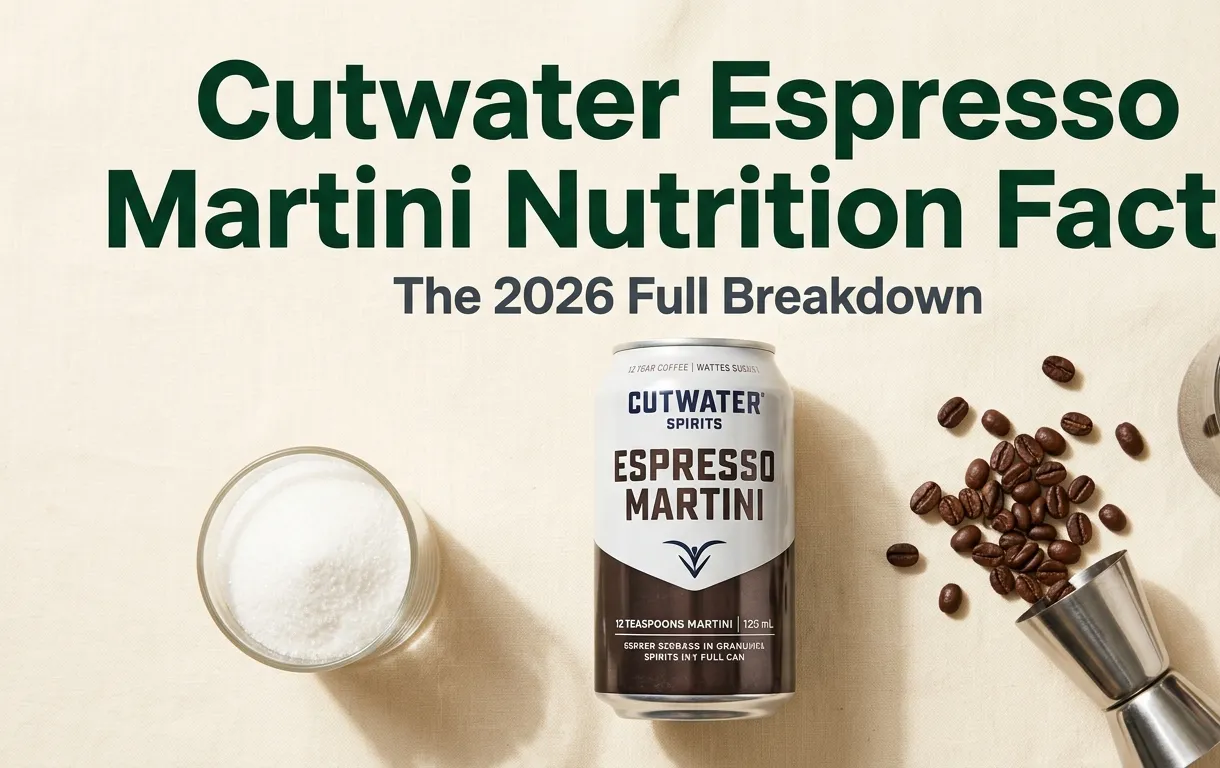
A single 355 ml can of Cutwater Espresso Martini contains approximately 440 calories, 56 grams of total carbohydrates, and 48 grams of sugar when consumed as the full can, which the label indicates contains about two 5-ounce servings. The numbers on the back panel tell only part of the story, and the serving size split is the first detail you need to understand before you can make any sense of what you are actually drinking.
The American Heart Association recommends that adult women limit added sugar intake to 25 grams per day and adult men to 36 grams per day. A full can of Cutwater Espresso Martini contains nearly double the AHA’s entire daily added sugar limit for women and exceeds the men’s limit by 12 grams in a single beverage. That fact alone does not mean you cannot drink it, but it means you should treat this product as an indulgent dessert-level choice rather than a casual everyday cocktail if you are paying attention to your nutrition.
This breakdown covers every number on the nutrition facts panel, explains what each one means for your daily intake, walks through the full ingredient list, reveals how much caffeine and alcohol you are actually consuming, compares this canned cocktail to a homemade version and to competing products, and gives you the information you need to decide whether this drink belongs in your rotation.
Cutwater Espresso Martini Nutrition Facts
The Cutwater Espresso Martini nutrition facts panel reports values per 5-ounce serving, with one 355 ml can containing approximately two servings, which means you must double every number on the label if you plan to drink the entire can. The FDA requires that nutrition information be presented per serving as determined by the manufacturer, and Cutwater has set their serving size at 5 fluid ounces, slightly less than a standard 1.5-ounce shot plus mixer formulation typical of bar-made cocktails.

Per the product label, one 5-ounce serving provides 220 calories, 3 grams of total fat including 1 gram of saturated fat, 10 milligrams of cholesterol, 35 milligrams of sodium, 28 grams of total carbohydrate with 0 grams of dietary fiber, 24 grams of total sugars all of which are added sugars, and 2 grams of protein. Micronutrient contributions are minimal: calcium at 2 percent of the Daily Value and potassium also at 2 percent, with no significant iron, vitamin D, or other vitamin or mineral content.
The total can, when both servings are consumed, delivers 440 calories, 56 grams of carbohydrate, 48 grams of added sugar, and 4 grams of protein. The Dietary Guidelines for Americans 2020-2025 recommend that added sugars account for less than 10 percent of total daily calories, which on a 2,000 calorie diet equals a maximum of 50 grams of added sugar from all food and beverage sources combined. One can of this product uses 48 of those 50 grams, leaving almost no room for any other added sugar in the entire day.
These numbers place this cocktail firmly in the category of indulgence beverages, comparable to a large dessert or a full-sugar soda rather than a typical alcoholic drink. A 12-ounce can of regular Coca-Cola contains 39 grams of sugar, meaning this espresso martini has roughly 23 percent more sugar than a full can of soda. Understanding that comparison makes the nutrition facts panel more concrete than abstract numbers alone can provide.
Key Takeaway: The nutrition facts on the can are per half-can serving, and finishing the entire can doubles every number, putting you at 440 calories and 48 grams of added sugar in one sitting.
Cutwater Espresso Martini Calories
A full 355 ml can of Cutwater Espresso Martini contains approximately 440 calories, which is roughly equivalent to a fast-food cheeseburger or three and a half slices of pepperoni pizza by calorie count alone. These calories come primarily from two sources: the ethanol in the vodka and the added sugar used to sweeten the cocktail, with a small contribution from the fat in the cream component and the minimal protein in the milk-derived ingredients.
Ethanol provides 7 calories per gram, which is nearly double the 4 calories per gram found in carbohydrates and protein and closer to the 9 calories per gram in fat. The 13 percent alcohol by volume content means that approximately 46 milliliters of pure ethanol exist in the full can. At a density of 0.789 grams per milliliter, that equals roughly 36 grams of ethanol, contributing approximately 254 calories from alcohol alone. The remaining 186 calories come from the carbohydrate fraction, primarily the added sugars, and the small amounts of fat and protein.
These are what nutrition professionals call “empty calories.” The term, used in the Dietary Guidelines for Americans, refers to calories from added sugars and solid fats, and in this case also alcohol, that provide energy but deliver almost no essential vitamins, minerals, fiber, or other beneficial compounds. The 2 percent Daily Value for calcium and potassium per serving amounts to a negligible micronutrient contribution that does not meaningfully offset the calorie load.
For someone tracking daily calorie intake, this single beverage occupies a substantial portion of the daily budget. On a 1,500 calorie per day weight loss plan, one can represents 29 percent of the entire day’s calories. On a standard 2,000 calorie reference diet, it is 22 percent. Neither scenario leaves a lot of nutritional flexibility for the rest of the day, which is why this drink works best as an occasional indulgence rather than a regular habit for anyone monitoring their energy intake.
Key Takeaway: At 440 calories for the full can, with over half from alcohol alone, this drink carries the caloric weight of a small meal without providing any meaningful nutritional return.
Cutwater Espresso Martini Sugar Content
A full can of Cutwater Espresso Martini contains 48 grams of total sugar, all of which is classified as added sugar, which equals approximately 12 teaspoons of granulated sugar. The American Heart Association recommends that women consume no more than 25 grams of added sugar per day and men no more than 36 grams. One can of this product delivers 192 percent of the AHA’s daily added sugar limit for women and 133 percent for men.
The body processes added sugars differently from naturally occurring sugars found in whole foods like fruit or plain dairy products. Added sugars enter the bloodstream rapidly without the buffering effect of fiber, protein, or complex carbohydrates, causing a sharp insulin response. A 2023 review published in the journal Nutrients reinforced the association between high added sugar intake from sugar-sweetened beverages and increased risk of weight gain, type 2 diabetes, and cardiovascular disease. The review specifically identified liquid sources of added sugar as particularly problematic because the body does not register liquid calories with the same satiety signaling as solid food.
The sugar content in this product comes from the sweeteners added during manufacturing, not from the lactose in any milk-derived ingredient. The ingredient list confirms the presence of added sweeteners, and the nutrition facts label shows that all 24 grams of sugar per 5-ounce serving come from added sugars rather than naturally occurring sources. This matters for consumers following the FDA’s updated nutrition labeling, which requires added sugars to be declared separately so consumers can distinguish between sugars inherent to ingredients like milk or fruit and sugars added during production.
To visualize 12 teaspoons of sugar, picture a standard teaspoon measure piled level with white granulated sugar, repeated twelve times. Most people would not spoon that amount into their coffee or tea, yet the premixed format of a canned cocktail obscures the quantity in a way that makes it easy to consume without awareness of the volume. This is the same reason nutrition educators often recommend visualizing sugar in teaspoons when teaching label reading skills.
Cutwater Espresso Martini Carbs
A full can of Cutwater Espresso Martini contains 56 grams of total carbohydrate, with zero grams of dietary fiber, meaning all 56 grams count as net carbohydrates that directly impact blood glucose levels. For context, the FDA’s Daily Value for total carbohydrate is 275 grams per day based on a 2,000 calorie diet, which means this single beverage supplies 20 percent of the daily carbohydrate reference amount.
The carbohydrate content comes exclusively from sugars and other simple carbohydrates added during formulation. There are no complex carbohydrates, no starches, and no fiber present in this product. Simple carbohydrates, particularly in liquid form, are absorbed rapidly through the small intestine and enter the bloodstream within minutes, producing a blood glucose spike that the pancreas must respond to with an insulin release. For individuals without diabetes or insulin resistance, the body handles this effectively in the short term. For the estimated 38 million Americans living with diabetes and the additional 98 million with prediabetes according to the CDC’s 2024 National Diabetes Statistics Report, this carbohydrate load requires careful accounting within their daily carbohydrate budget.
The absence of fiber is notable because dietary fiber slows carbohydrate absorption and moderates the blood glucose response. Whole food carbohydrate sources like fruit, vegetables, whole grains, and legumes contain fiber that blunts blood sugar spikes. Processed liquid carbohydrate sources contain no such buffer, which is why the glycemic impact of 56 grams of liquid sugar differs meaningfully from 56 grams of carbohydrate consumed as, for example, a bowl of steel-cut oatmeal with berries.
Anyone counting carbohydrates, whether for diabetes management, weight control, or general health awareness, should treat the full can as delivering 56 grams of carbohydrate that will behave as rapid-acting sugar in the body. Splitting the can into the manufacturer’s stated two-serving size would halve that to 28 grams per sitting, which is still a meaningful carbohydrate load equivalent to two slices of bread.
Key Takeaway: With 56 grams of net carbohydrates and zero fiber in the full can, this drink delivers a rapid blood sugar impact comparable to drinking a full-sugar soda, not an incidental carb source.
Cutwater Espresso Martini Ingredients
The Cutwater Espresso Martini ingredient list, as stated on the product packaging and verified through the Cutwater Spirits website, includes Cutwater vodka, cold brew coffee, natural flavors, cream, and sweeteners. The exact formulation is proprietary, but the listed components reveal a product built around the classic espresso martini template of vodka, coffee, and a sweetened cream element designed to replicate the foam and mouthfeel of a freshly shaken cocktail.
Cutwater vodka serves as the alcohol base. The brand produces its own vodka, which it describes as award-winning, though specific award details are not nutritionally relevant. Vodka is a distilled spirit made from fermented grains or other agricultural products, and the distillation process removes most congeners and residual materials, leaving primarily ethanol and water. For individuals with celiac disease or gluten sensitivity, the Celiac Disease Foundation states that distilled spirits made from gluten-containing grains are generally considered safe because the gluten protein does not carry through the distillation process. However, any added ingredients post-distillation could reintroduce gluten, so consumers with severe sensitivity should verify with the manufacturer.
Cold brew coffee provides the espresso flavor and the caffeine content. Cold brew is made by steeping coffee grounds in cold or room temperature water for 12 to 24 hours, producing a concentrate that is typically less acidic than hot-brewed coffee. The coffee contributes not only flavor and caffeine but also chlorogenic acids, which are polyphenolic antioxidant compounds naturally present in coffee beans. A 2021 study in the Journal of Agricultural and Food Chemistry documented that cold brew coffee retains a significant proportion of the chlorogenic acid content of the original beans, though the absolute amount in a 5-ounce serving of this cocktail would be small.
Natural flavors, a term regulated by the FDA under 21 CFR 101.22, refers to flavoring substances derived from plant or animal sources whose function is flavor rather than nutrition. The term encompasses a wide range of extracted, distilled, or otherwise processed flavor compounds. The FDA requires that natural flavors be safe for their intended use, and the specific compounds in this product are proprietary.
Cream and sweeteners round out the ingredient list, providing the body, mouthfeel, and sweetness that characterize an espresso martini. The cream contributes the small amount of saturated fat and cholesterol visible on the nutrition facts panel. The sweeteners contribute the 24 grams of added sugar per serving, though the specific sweetener type or types used are not broken out on the publicly available ingredient statement.
Key Takeaway: The ingredient list follows the classic espresso martini formula of vodka, coffee, cream, and sugar, repackaged in a shelf-stable canned format that preserves the flavor profile but concentrates the sugar content.
Cutwater Espresso Martini Caffeine Content
The caffeine content of Cutwater Espresso Martini is not explicitly declared on the product label, which is permitted under current FDA labeling regulations that do not require caffeine disclosure on alcoholic beverages. Based on the product’s use of cold brew coffee as a listed ingredient and consumer reports that estimate the caffeine content, a full 355 ml can likely contains between 60 and 100 milligrams of caffeine. This estimate places it in the range of a single 8-ounce cup of brewed coffee, which typically contains 80 to 100 milligrams of caffeine according to the USDA FoodData Central database.
The FDA considers 400 milligrams of caffeine per day to be an amount not generally associated with dangerous or negative effects in healthy adults. At an estimated 60 to 100 milligrams per can, the caffeine content of this product does not by itself approach the daily caution threshold. What makes the caffeine in this product different from a morning cup of coffee is the simultaneous presence of alcohol, which changes how the body experiences and responds to the stimulant.
Caffeine is a central nervous system stimulant that works primarily by blocking adenosine receptors in the brain. Adenosine is a neurotransmitter that builds up during wakefulness and promotes sleepiness. By blocking adenosine binding, caffeine reduces the perception of fatigue and increases alertness. Alcohol is a central nervous system depressant that enhances the effects of the inhibitory neurotransmitter GABA. When the two are consumed together, the caffeine can partially mask the subjective feeling of intoxication without reducing the actual impairment caused by alcohol.
This masking effect is the primary safety concern the CDC has identified with caffeinated alcoholic beverages. A person who does not feel as drunk as they actually are may make decisions about driving, additional drinking, or other risky activities based on a false sense of sobriety. The actual blood alcohol concentration is determined by the amount of alcohol consumed, not by how alert or tired the person feels, and caffeine does not accelerate the rate at which the liver metabolizes ethanol.
Key Takeaway: The estimated caffeine content is roughly equal to one cup of coffee, and the real concern is not the caffeine amount itself but its interaction with alcohol, which can mask perceived intoxication without reducing actual impairment.
Cutwater Espresso Martini Alcohol Content
Cutwater Espresso Martini is labeled at 13 percent alcohol by volume, which means 13 percent of the total liquid volume in the can is pure ethanol. A full 355 ml can at 13 percent ABV contains approximately 46 milliliters of pure ethanol, which equates to 2.2 standard drinks according to the CDC and NIAAA definition of a standard drink as containing 14 grams or 0.6 fluid ounces of pure alcohol.
The Dietary Guidelines for Americans 2020-2025 define moderate drinking as up to one drink per day for women and up to two drinks per day for men. The guidelines further specify that “one drink” means a drink containing 14 grams of pure alcohol, which translates to 12 fluid ounces of 5 percent ABV beer, 5 fluid ounces of 12 percent ABV wine, or 1.5 fluid ounces of 40 percent ABV distilled spirits. A full can of Cutwater Espresso Martini at 355 ml and 13 percent ABV exceeds the single-drink threshold and constitutes more than two standard drinks.
The body metabolizes alcohol at a relatively fixed rate of approximately one standard drink per hour, though this varies based on body weight, sex, liver enzyme activity, food intake, and genetic factors. Ethanol is metabolized primarily by the enzyme alcohol dehydrogenase in the liver, which converts ethanol to acetaldehyde, a toxic intermediate compound. Acetaldehyde is then converted to acetate by aldehyde dehydrogenase and eventually broken down to carbon dioxide and water. The liver processes alcohol before other energy sources because ethanol cannot be stored, which means fat burning pauses while alcohol is being metabolized.
From a calorie accounting standpoint, the 46 ml of ethanol contributes roughly 254 calories to the can. Because alcohol is the body’s fourth macronutrient energy source after carbohydrates, fat, and protein but provides no essential nutrients, these calories are considered empty. They provide energy that must be burned or stored but carry no vitamins, minerals, fiber, or other beneficial compounds.
Cutwater Espresso Martini Serving Size
The Cutwater Espresso Martini label defines one serving as 5 fluid ounces, with the 355 ml can containing approximately two servings. This serving size determination has meaningful implications for how the nutrition numbers are presented, because every calorie, sugar, and nutrient value on the panel must be mentally doubled if the consumer drinks the entire can, which the single-serve packaging format strongly encourages.
The FDA’s updated nutrition labeling regulations require that serving sizes reflect the amount of food or beverage that people typically consume in one sitting, not the amount they should consume. For beverages in containers that are typically consumed in one sitting, the label must reflect the entire container as one serving. However, this rule applies to non-alcoholic beverages. Alcoholic beverages fall under the jurisdiction of the Alcohol and Tobacco Tax and Trade Bureau for labeling purposes, not the FDA, which creates a regulatory gap where alcohol products can declare serving sizes that differ from realistic consumption patterns.
A 2019 study published in the Journal of Studies on Alcohol and Drugs found that consumers consistently underestimate the number of standard drinks in a container when the alcohol content is high and the container is large. A 355 ml can designed to be opened and consumed as a single unit, with no resealable closure, signals through its packaging that it constitutes one serving regardless of what the fine print on the label states.
For someone who drinks the entire can, as the packaging design expects, the per-serving numbers must be doubled. The 220 calories become 440. The 24 grams of sugar become 48. The 28 grams of carbohydrate become 56. This is not a trick on the manufacturer’s part, it is simply how the labeling regulations work, and it falls on the consumer to read carefully and do the math. Understanding that the front of the can says one thing and the back panel assumes something different is essential to making an accurate nutritional assessment.
Key Takeaway: The label math assumes you will stop at half the can, but the packaging is designed for full consumption, and every nutrition number must be doubled to reflect what most people actually drink.
Cutwater Canned Cocktail Nutrition
The Cutwater canned cocktail product line spans multiple flavors including the Espresso Martini, Margarita, Mai Tai, White Russian, and others, and their nutritional profiles vary significantly based on the specific ingredients required for each recipe. The Espresso Martini sits toward the higher end of the calorie and sugar spectrum within the Cutwater lineup because it combines alcohol, coffee, cream, and sweeteners in a formulation that concentrates calories from multiple sources.
A comparison across select Cutwater canned cocktail varieties shows the range of nutritional values:
| Cutwater Variety | Calories per 12 oz | Sugar per 12 oz | ABV |
|---|---|---|---|
| Espresso Martini | 440 | 48g | 13% |
| Classic Margarita | 400 | 36g | 12.5% |
| Vodka Mule | 240 | 22g | 10% |
| Mai Tai | 380 | 40g | 12% |
| Tequila Paloma | 220 | 18g | 7.5% |
The Espresso Martini ranks highest in calories and sugar among the varieties compared here. The cream component, which is absent from citrus-based cocktails like the Margarita and Paloma, contributes additional fat and calories. The coffee component requires more sweetener to balance the bitterness of the coffee, which increases the sugar content relative to cocktails that get their flavor primarily from fruit juices or botanical ingredients.
The ABV also matters. Higher alcohol content means more ethanol, and ethanol carries 7 calories per gram. The Espresso Martini and Margarita have the highest ABVs in the lineup, which partially explains their higher calorie counts. The Paloma has the lowest ABV and correspondingly fewer calories, though its sugar content also trends lower because the grapefruit flavor requires less sweetener to achieve balance than coffee or citrus-liqueur combinations.
Consumers who enjoy the Cutwater product line but want to moderate their nutritional intake can compare across varieties to find options that align more closely with their calorie and sugar goals. The Paloma, for instance, delivers a similar ready-to-drink convenience with roughly half the calories and one-third the sugar of the Espresso Martini.
Key Takeaway: The Espresso Martini is the most calorically dense option in the Cutwater canned cocktail lineup, driven by its combination of high ABV, cream content, and the sugar required to balance the coffee bitterness.
How Many Calories in a Cutwater Espresso Martini
There are 440 calories in a full 355 ml can of Cutwater Espresso Martini, which doubles the 220 calories listed per 5-ounce serving on the nutrition facts panel. This calorie count represents 22 percent of the standard 2,000 calorie daily reference intake used by the FDA for nutrition labeling, making it a substantial single-item contribution to the day’s energy intake.
Breaking down where the 440 calories come from helps contextualize the number. Ethanol contributes approximately 254 calories based on the 36 grams of pure alcohol in the can. Carbohydrates contribute approximately 224 calories based on the 56 grams of total carbohydrate. Fat contributes approximately 27 calories based on 3 grams of total fat per full can. Protein contributes approximately 8 calories based on 2 grams of protein per full can. These numbers illustrate that alcohol and sugar are the primary calorie drivers, with fat and protein playing only minor supporting roles.
The calorie density of this beverage can be compared to common food items to make the number more concrete. A McDonald’s cheeseburger contains approximately 300 calories. A slice of pepperoni pizza from a large chain contains approximately 300 calories. A 12-ounce can of Coca-Cola contains 140 calories. At 440 calories, the Cutwater Espresso Martini exceeds a cheeseburger, approaches one and a half slices of pizza, and triples a can of soda. None of these comparisons are perfect nutritional equivalences, but they illustrate that this single beverage carries the energy content of a small meal.
For someone trying to maintain a calorie deficit for weight loss, a 440-calorie beverage represents a significant discretionary expenditure. Registered dietitians frequently advise clients to “eat their calories rather than drink them” because liquid calories do not produce the same satiety response as solid food. A study published in the American Journal of Clinical Nutrition in 2022 reinforced that beverage calories are less well compensated for at subsequent meals than solid food calories, meaning people tend to eat the same amount at their next meal regardless of whether they consumed liquid calories beforehand.
Key Takeaway: At 440 calories for the full can, this drink sits squarely in the calorie range of a small meal, and liquid calories of this magnitude are poorly compensated for by the body’s appetite regulation systems.
How Much Sugar Is in Cutwater Espresso Martini
A full can of Cutwater Espresso Martini contains 48 grams of sugar, which is equivalent to 12 teaspoons of granulated white sugar or roughly the sugar content of one and a quarter standard 12-ounce cans of Coca-Cola. The American Heart Association recommends a daily added sugar limit of 25 grams for women and 36 grams for men, meaning one can of this product supplies nearly double the entire daily allowance for women and significantly exceeds the limit for men.
The World Health Organization similarly recommends that added sugars comprise less than 10 percent of total daily energy intake, with a conditional recommendation to limit to below 5 percent for additional health benefits. On a 2,000 calorie diet, 10 percent equals 50 grams of added sugar. The 48 grams in one can of Cutwater Espresso Martini occupies 96 percent of the WHO’s 10 percent threshold, leaving virtually no room for any other source of added sugar in the day without exceeding the guideline.
High sugar intake from beverages is associated with specific health risks beyond the calorie content alone. A 2023 meta-analysis published in the British Journal of Nutrition reviewed 42 observational studies and found consistent associations between sugar-sweetened beverage consumption and increased risk of metabolic syndrome, a cluster of conditions including elevated blood pressure, high blood sugar, excess abdominal fat, and abnormal cholesterol levels. The review noted that liquid sugar sources appeared to carry higher risk than solid food sugar sources, possibly due to the rapid absorption rate and the lack of accompanying fiber, protein, or other nutrients that moderate the metabolic response.
The 48 grams of sugar in this product enter the bloodstream quickly, requiring a proportionate insulin release from the pancreas. Over time, habitual consumption of high-sugar beverages can contribute to insulin resistance, a condition where cells become less responsive to insulin’s signal and the pancreas must produce increasingly more insulin to manage blood glucose. Insulin resistance is a precursor to type 2 diabetes and is a component of metabolic syndrome.
Is Cutwater Espresso Martini Healthy
Cutwater Espresso Martini is not a health-promoting beverage and should be categorized as an indulgence item that provides substantial calories, added sugar, and alcohol with minimal nutritional benefit. The term “healthy” is relative, and no alcoholic cocktail qualifies as a health food, but understanding where this product falls on the spectrum of indulgence beverages helps consumers make informed choices.
The Dietary Guidelines for Americans 2020-2025 state that adults who choose to drink should do so in moderation and should be mindful of the calorie and nutrient contributions of their beverage choices. The guidelines also recommend that most of an individual’s daily calories come from nutrient-dense foods and beverages that provide vitamins, minerals, and other health-promoting compounds. With 440 calories and 48 grams of added sugar delivering only 2 percent of the Daily Value for calcium and potassium, this product does not meet the nutrient density criteria that the guidelines promote for foods and beverages that should make up the majority of the diet.
A registered dietitian evaluating this product would likely classify it as a “sometimes food,” a category reserved for items that provide enjoyment but do not contribute meaningfully to meeting daily nutrient needs. This classification does not mean the product is forbidden or dangerous. It means the product is best consumed occasionally and in the context of an otherwise nutrient-dense dietary pattern rather than as a regular component of daily intake.
The health implications of this product depend almost entirely on frequency of consumption and what else makes up the individual’s overall diet. Someone who eats a vegetable-rich, whole-food diet, exercises regularly, and drinks one Cutwater Espresso Martini on a Saturday evening is making a different choice from someone who drinks several cans per week alongside a diet already high in processed foods and added sugars. The dose, the frequency, and the overall dietary pattern determine the health impact far more than any single ingredient or number on the nutrition panel.
Key Takeaway: This product is an indulgence beverage, not a health food, and its place in a healthy diet depends entirely on how often you drink it and what the rest of your diet looks like.
Ready to Drink Cocktails Nutrition Comparison
The ready-to-drink cocktail market has expanded dramatically since 2020, and nutritional profiles vary widely across brands and formulations. Comparing Cutwater Espresso Martini to other popular RTD espresso martinis and similar canned cocktails helps consumers understand where this product stands within its category.
| RTD Espresso Martini Brand | Calories per 12 oz | Sugar per 12 oz | ABV |
|---|---|---|---|
| Cutwater Espresso Martini | 440 | 48g | 13% |
| On The Rocks Espresso Martini | 380 | 34g | 12% |
| Tip Top Proper Cocktails Espresso Martini | 200 | 14g | 10% |
| Kahlúa Espresso Martini Can | 360 | 42g | 11% |
| Thomas Ashbourne Espresso Martini | 310 | 28g | 12% |
The comparison reveals that Cutwater Espresso Martini sits at the high end for both calories and sugar relative to direct competitors. The cream component in the Cutwater formulation, which not all espresso martini RTDs include, likely accounts for some of the calorie differential. The higher ABV also contributes more ethanol calories per can than lower-proof alternatives.
Tip Top Proper Cocktails produces a significantly lower-calorie espresso martini by using a smaller format can, lower ABV, and a different sweetening approach. Their product delivers a bar-quality cocktail experience with roughly half the calories and one-third the sugar of the Cutwater version. Consumers who enjoy the RTD format but want to moderate their nutritional intake might consider this as an alternative that preserves the espresso martini experience while reducing the nutritional impact.
On The Rocks, another major RTD brand, produces an espresso martini that splits the difference between Cutwater and Tip Top on calories but still packs 34 grams of sugar per can. The category as a whole tends to be high in sugar because coffee’s bitterness requires substantial sweetening to achieve the balanced flavor profile consumers expect from an espresso martini.
Canned Cocktails Sugar Content vs Homemade
A homemade espresso martini typically contains 15 to 25 grams of sugar depending on the recipe, which is substantially less than the 48 grams found in a full can of the Cutwater version. The difference stems from formulation requirements: homemade cocktails are shaken fresh and served immediately, while canned cocktails must remain shelf-stable, maintain consistent flavor across production batches, and deliver the sweet, smooth taste consumers expect from a mass-market product.
The classic espresso martini recipe, as popularized by London bartender Dick Bradsell in the 1980s, combines 1.5 ounces of vodka, 1 ounce of freshly brewed espresso, 0.5 to 0.75 ounces of coffee liqueur such as Kahlúa, and optionally a quarter ounce of simple syrup. Kahlúa contains approximately 11 grams of sugar per ounce. A quarter ounce of simple syrup adds approximately 4 grams of sugar. The total sugar content of a classic homemade espresso martini falls between 15 and 18 grams, with calorie counts around 180 to 200.
A simplified homemade version that omits the simple syrup entirely and relies on the coffee liqueur alone for sweetness reduces the sugar content to approximately 11 grams and the calorie count to roughly 160. The freshly brewed espresso provides a robust coffee flavor that requires less sweetener to achieve balance because the volatile aromatic compounds in fresh espresso contribute complexity that reduces the perception of bitterness without added sugar.
The large sugar gap between homemade and canned versions reflects the different challenges faced by formulators versus home bartenders. Canned products must remain stable for months on a shelf, cannot rely on fresh espresso’s aromatic complexity, and target a sweetness level that appeals to a broad consumer palate. The cream component in the Cutwater version also requires additional sweetness to prevent the product from tasting flat or overly heavy.
Key Takeaway: A homemade espresso martini can deliver the same flavor experience with one-third the sugar and half the calories of the canned version, largely because fresh espresso provides flavor complexity that reduces the need for sweeteners.
Is Canned Espresso Martini Bad for You
Canned espresso martinis are not inherently bad, but consuming them regularly or in large quantities can contribute to excessive calorie, sugar, and alcohol intake, all of which are associated with increased health risks when consumed above recommended thresholds. The product itself is neutral. The pattern of consumption determines whether it becomes a problem.
The alcohol content at 13 percent ABV means one can provides more than two standard drinks. The CDC defines binge drinking as consuming four or more drinks on a single occasion for women and five or more for men. At 2.2 standard drinks per can, a single can does not constitute binge drinking for most adults, but two cans would push most consumers into binge drinking territory. The caffeine content adds a layer of concern because the masking effect can lead to drinking more than intended.
The sugar content of 48 grams per can exceeds the AHA’s daily limit for both men and women in a single serving. Regular consumption of high-sugar beverages is consistently associated with weight gain, increased visceral fat, elevated triglycerides, and higher risk of developing insulin resistance in long-term observational studies. The Nurses’ Health Study and Health Professionals Follow-Up Study, two large prospective cohort studies conducted over multiple decades, have documented associations between sugar-sweetened beverage consumption and increased risk of type 2 diabetes and cardiovascular events.
From a nutritional perspective, the primary concern is displacement. Calories from indulgent beverages can displace calories from nutrient-dense foods, particularly if the beverage is consumed frequently. Someone who drinks 440 calories of espresso martini several times per week is consuming calories that could otherwise provide fiber, vitamins, minerals, phytochemicals, and protein from whole foods. Over time, this displacement effect can contribute to nutrient inadequacies even when total calorie intake is adequate or excessive.
The bottom line is that an occasional canned espresso martini as part of an overall balanced dietary pattern is unlikely to cause health problems for an otherwise healthy adult. Several per week, combined with a diet already high in added sugars and processed foods, presents a different risk profile that warrants closer attention.
Cutwater Espresso Martini Keto Friendly
Cutwater Espresso Martini is not compatible with a ketogenic diet. A full can contains 56 grams of net carbohydrates, which exceeds the typical daily carbohydrate limit of 20 to 50 grams that most ketogenic diet protocols recommend to maintain nutritional ketosis. Even a single 5-ounce serving contains 28 grams of carbohydrate, which would consume more than half of the strictest daily carb allowance.
The ketogenic diet works by restricting carbohydrate intake to a level that forces the body to shift from glucose metabolism to fat metabolism, producing ketone bodies from fatty acids as an alternative fuel source for the brain and other tissues. Maintaining this metabolic state requires consistent carbohydrate restriction, typically below 50 grams per day for most individuals and below 20 grams for those following stricter protocols. A single can of Cutwater Espresso Martini with its 56 grams of carbohydrate would almost certainly disrupt ketosis regardless of what else was consumed that day.
Alcohol itself is metabolized to acetate rather than glucose, so ethanol does not directly raise blood sugar or provide carbohydrate substrate. However, the liver prioritizes alcohol metabolism over ketone production. While the liver is processing alcohol, ketogenesis slows or pauses. This means alcohol can temporarily interrupt ketone production even if no carbohydrates are consumed, though it does not permanently disrupt the metabolic adaptation to a ketogenic diet once the alcohol has been cleared.
For someone following a ketogenic diet who wants an espresso martini experience, a homemade version made with vodka, freshly brewed espresso, and a sugar-free coffee syrup or a small amount of a sugar-free sweetener can deliver a similar flavor profile with close to zero net carbohydrates. Several brands produce sugar-free coffee syrups and liqueur alternatives that use erythritol, stevia, or monk fruit extract as sweeteners. These homemade alternatives can be enjoyed without disrupting the carbohydrate restriction that defines the ketogenic approach.
Key Takeaway: The canned product is incompatible with keto due to its 56 grams of carbohydrate, but a homemade version using sugar-free coffee syrup can replicate the espresso martini experience within ketogenic diet parameters.
Caffeine and Alcohol Mixed Drinks Safety
Caffeine and alcohol mixed drinks present a specific safety concern because caffeine can mask the subjective feeling of intoxication without reducing actual impairment, which may lead to risky decision-making and increased alcohol consumption. The FDA and CDC have both issued guidance on this topic, particularly after the public health controversies surrounding high-caffeine alcoholic beverages like Four Loko in the early 2010s.
The physiological mechanism behind the masking effect is well understood. Caffeine blocks adenosine receptors in the brain. Adenosine builds up during wakefulness and promotes sleepiness, and its accumulation contributes to the sedative effects of alcohol. When caffeine prevents adenosine from binding to its receptors, the drinker feels more alert and less sedated. However, caffeine does not affect the rate at which the liver metabolizes alcohol. Blood alcohol concentration rises at the same rate regardless of whether caffeine is present, and motor coordination, reaction time, and judgment are impaired at the same BAC levels.
A 2020 study published in the Journal of Studies on Alcohol and Drugs found that college students who consumed caffeinated alcoholic beverages were more likely to report binge drinking and alcohol-related consequences than those who drank alcohol without caffeine. The researchers controlled for overall drinking patterns and found that the caffeine-alcohol combination was independently associated with higher risk. This finding does not prove causation but suggests that the combination warrants caution.
The CDC specifically recommends against mixing alcohol with energy drinks or consuming premixed caffeinated alcoholic beverages in the context of situations where alertness is required. The agency’s guidance emphasizes that caffeine does not counteract alcohol’s effects on coordination and judgment. For consumers of Cutwater Espresso Martini, this means understanding that the coffee flavor is not just a flavor, it is a caffeine delivery system, and the alertness that may accompany the drinking experience does not mean impairment is reduced.
A practical safety guideline for consumers of this product is to follow the same drinking limits they would apply to non-caffeinated alcoholic beverages. Do not use the perceived alertness from the caffeine as a signal that it is safe to drive, operate machinery, or consume additional alcohol. The standard guidance that the liver metabolizes approximately one standard drink per hour applies regardless of caffeine intake.
Key Takeaway: Caffeine does not sober you up or reduce alcohol impairment. It only makes you feel more awake while your BAC remains the same, which is why the CDC warns against relying on perceived alertness as a gauge of sobriety.
Alcoholic Coffee Drinks Nutrition Facts
Alcoholic coffee drinks as a category, including espresso martinis, Irish coffees, and coffee-based RTD cocktails, share a common nutritional profile characterized by high sugar content, moderate to high alcohol content, caffeine, and minimal micronutrient contributions. The category ranges from relatively simple preparations like Irish coffee made with hot coffee, Irish whiskey, and a teaspoon of sugar, to complex premixed canned products like the Cutwater Espresso Martini.
Comparing representative alcoholic coffee beverages shows the nutritional range within the category:
| Coffee Cocktail Type | Calories | Sugar | Caffeine (est.) | Alcohol |
|---|---|---|---|---|
| Irish Coffee (8 oz, homemade) | 160 | 8g | 95mg | 1.5 oz whiskey |
| Espresso Martini (homemade) | 180 | 16g | 65mg | 1.5 oz vodka |
| Espresso Martini (Cutwater, 12 oz can) | 440 | 48g | 60-100mg | 2.2 standard drinks |
| White Russian (6 oz, homemade) | 350 | 18g | 0mg | 2 oz vodka |
| Kahlúa and Cream (8 oz) | 320 | 24g | 5mg | 1.5 oz Kahlúa |
The homemade Irish coffee stands out as the lowest-calorie and lowest-sugar option within the category. Hot brewed coffee provides robust flavor without added calories, and the single teaspoon of sugar provides sweetness with only 4 grams of carbohydrate. The absence of cream or liqueur reduces the calorie and sugar load substantially compared to espresso martinis and cream-based coffee cocktails.
The Cutwater Espresso Martini, at the high end of the spectrum, packs roughly 2.5 times the calories and 6 times the sugar of a homemade Irish coffee while delivering a similar caffeine and alcohol experience. The difference is almost entirely attributable to the added sugars and cream used to achieve shelf stability and mass-market palatability in the canned format.
Consumers who enjoy coffee cocktails but want to minimize the nutritional impact have a clear path: homemade preparations using freshly brewed coffee or espresso, a measured pour of spirits, and minimal added sweetener deliver the same flavor experience with a fraction of the sugar and calories. The trade-off is convenience, which is the primary value proposition of the RTD format.
Frequently Asked Questions About Cutwater Espresso Martini Nutrition
How many calories are in a whole can of Cutwater Espresso Martini?
A full 355 ml can of Cutwater Espresso Martini contains 440 calories because the label lists 220 calories per 5-ounce serving and the can holds two servings.
More than half of those calories come from the alcohol itself, with the rest coming primarily from the 48 grams of added sugar and the small amount of cream.
This calorie count represents about 22 percent of a standard 2,000 calorie daily diet.
How much sugar does a Cutwater Espresso Martini have compared to a soda?
A full can of Cutwater Espresso Martini contains 48 grams of sugar, which is about 23 percent more sugar than a 12-ounce can of regular Coca-Cola that contains 39 grams.
That equals 12 teaspoons of sugar in the espresso martini compared to about 10 teaspoons in the soda.
Both exceed the American Heart Association’s daily added sugar limit of 25 grams for women and 36 grams for men in a single serving.
Does Cutwater Espresso Martini contain real coffee and caffeine?
Yes, Cutwater Espresso Martini contains cold brew coffee as a listed ingredient and provides an estimated 60 to 100 milligrams of caffeine per full can, similar to a single cup of brewed coffee.
The caffeine is not declared on the label because FDA regulations do not require caffeine disclosure on alcoholic beverages.
The caffeine from real coffee combines with the 13 percent alcohol content, which can mask perceived intoxication without reducing actual impairment.
Is Cutwater Espresso Martini gluten free?
Cutwater Spirits vodka is distilled from grains, and the distillation process removes gluten protein, making the base spirit generally safe for people with celiac disease according to the Celiac Disease Foundation.
The other listed ingredients, including cold brew coffee, natural flavors, cream, and sweeteners, do not inherently contain gluten.
However, individuals with severe gluten sensitivity should verify directly with the manufacturer about any post-distillation ingredients or cross-contact risks in the production facility.
Can I drink Cutwater Espresso Martini on a keto diet?
No, a full can of Cutwater Espresso Martini contains 56 grams of net carbohydrates, which exceeds the typical daily carbohydrate limit of 20 to 50 grams for a ketogenic diet.
Even a single 5-ounce serving at 28 grams of carbs would consume most of the daily carb allowance on a strict keto protocol.
A homemade espresso martini made with vodka, fresh espresso, and a sugar-free coffee syrup can replicate the experience with close to zero net carbs.
How does the caffeine in an espresso martini interact with the alcohol?
Caffeine blocks adenosine receptors in the brain, which reduces the feeling of drowsiness that alcohol typically produces, making you feel more alert and less intoxicated than you actually are.
This masking effect does not change your blood alcohol concentration or reduce alcohol impairment on coordination, reaction time, or judgment.
The CDC warns that this combination can lead to risky decision-making and increased alcohol consumption because the drinker may not accurately perceive their level of intoxication.
The Cutwater Espresso Martini delivers a convenient, bar-quality cocktail experience that comes with the nutritional equivalent of a dessert and a cup of coffee combined into a single can. At 440 calories and 48 grams of sugar for the amount most people actually drink, this product earns its place as an occasional indulgence rather than a regular addition to a health-conscious drinking rotation. The label’s two-serving split creates a misleading first impression that resolves only when you do the math on the full can.
If you enjoy the espresso martini flavor and want to make it work within your nutritional goals, a homemade version gives you control over every ingredient. You can skip the simple syrup, use freshly pulled espresso for richer flavor that needs less sweetener, and keep the sugar content under 15 grams without sacrificing the experience. The trade-off is five minutes of effort instead of cracking open a can.
Whether you choose the convenience of the canned version or the control of a homemade cocktail, the most useful nutrition habit you can build is reading the full label and understanding what the numbers actually mean for your body. That single habit will serve you better than any set of food rules ever could, and it is the one thing every registered dietitian wishes more people would do before they drink.