Poke Bowl Nutrition Facts: Full Macro and Micro Breakdown for 2026
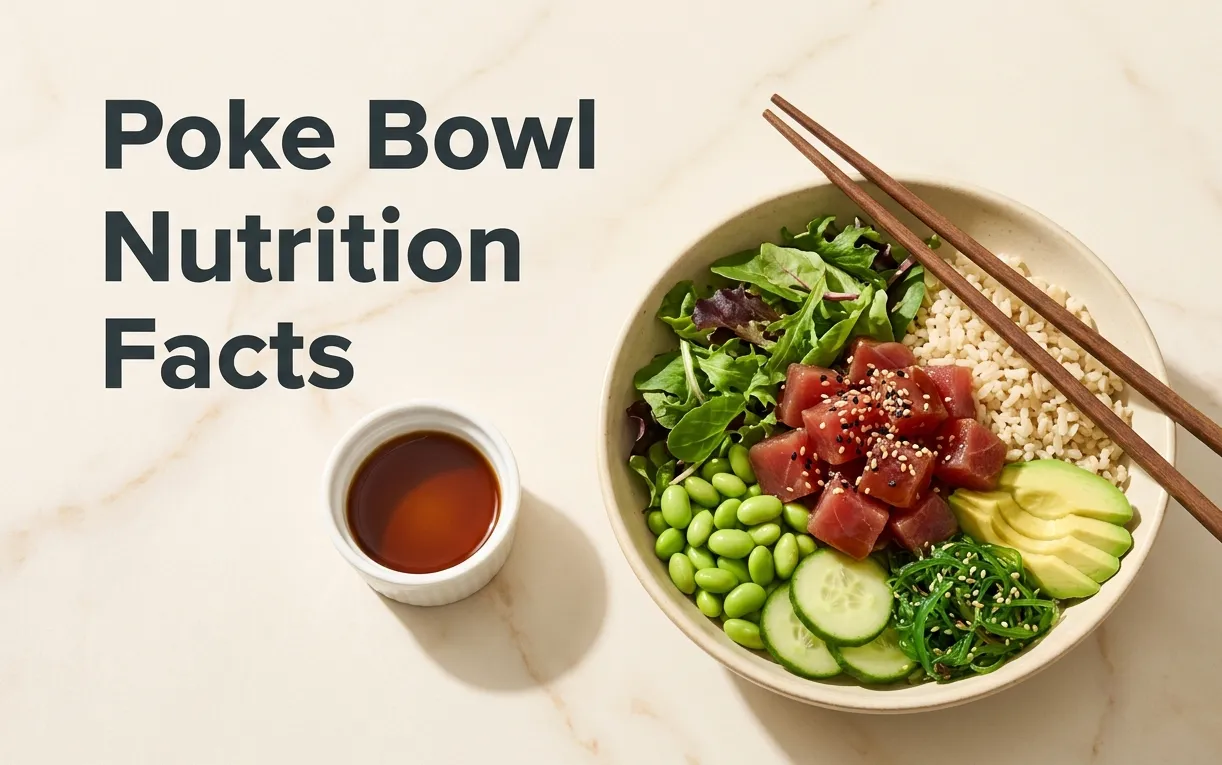
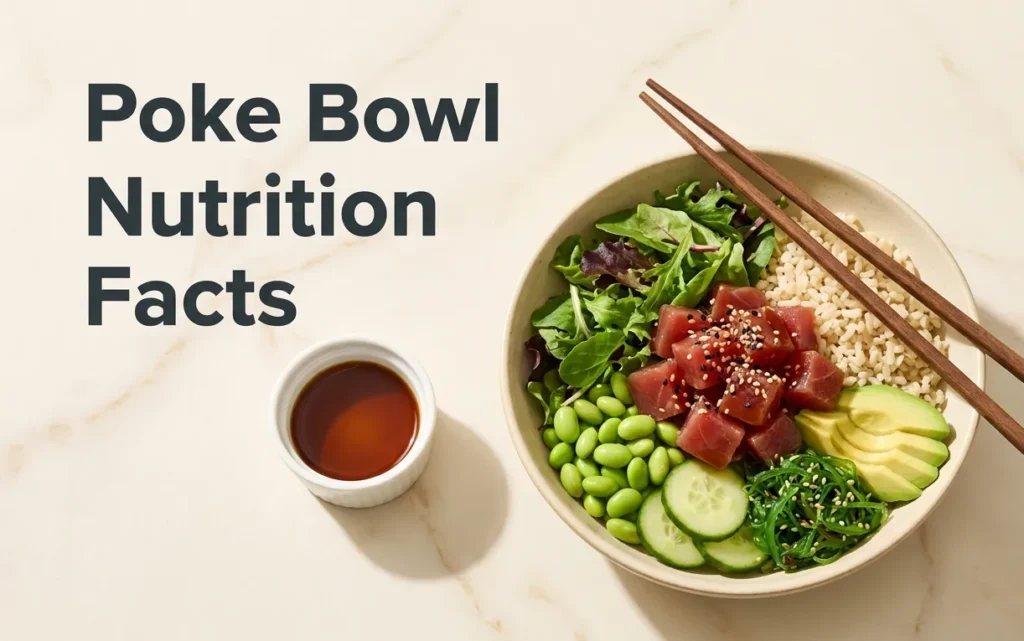
A standard ahi tuna poke bowl with sushi rice, cucumber, edamame, avocado, shoyu sauce, and sesame seeds contains approximately 650 calories, 35 grams of protein, 72 grams of carbohydrates, and 22 grams of fat. The exact nutritional profile shifts dramatically based on your protein choice, with salmon adding more omega-3 fatty acids and a richer fat profile, your base grain dictating the fiber and glycemic response, and the sauce being the single largest variable for sodium content.
Poke bowls occupy a unique nutritional space in the fast-casual food landscape. They combine raw fish, which delivers high-quality protein and the long-chain omega-3 fatty acids eicosapentaenoic acid (EPA) and docosahexaenoic acid (DHA) , with a grain base, fresh vegetables, and a savory sauce that can either be a light ponzu or a sodium-dense shoyu. The Dietary Guidelines for Americans 2020-2025 recommend consuming at least 8 ounces of seafood per week, and a single poke bowl delivers half that quota in one sitting. The nutritional question is not whether the fish is good for you. It is what the rice, the sauce, and the crunchy toppings are doing to the final numbers.
This article breaks down the exact macros for ahi tuna and salmon bowls, compares white rice to brown rice and mixed greens bases, exposes the sodium trap hiding in the sauce cup, explains the mercury safety threshold that limits how many tuna bowls you should eat per week, and provides the specific micro-nutrient data, vitamin D, B12, selenium, potassium, that you will not find on a poke shop menu board. You will walk away knowing exactly how to build a bowl that matches your health goals, whether that goal is muscle gain, weight loss, or simply a delicious lunch that does not spike your blood pressure.
poke bowl nutrition facts overview
A fully assembled poke bowl with ahi tuna, sushi rice, mixed vegetables, avocado, and a standard shoyu-based sauce falls within a caloric range of 550 to 750 calories, with protein spanning 30 to 40 grams, carbohydrates from 60 to 85 grams, and fat from 18 to 28 grams depending on the avocado portion and sauce volume. The bowl is a complete meal that delivers high-quality animal protein, complex carbohydrates from the rice, monounsaturated and polyunsaturated fats from the avocado and fish, and a micronutrient profile anchored by selenium, vitamin B12, and vitamin D.
The nutritional identity of a poke bowl is defined by its Hawaiian-Japanese culinary fusion. The protein is served raw and cubed, not cooked with added oils. This means the fat content of the fish is its natural intramuscular fat, not absorbed cooking fat. An ahi tuna steak is naturally lean, containing approximately 1 gram of fat per 3-ounce serving. The fat in the bowl comes almost entirely from the avocado, the sesame seeds, and any spicy mayo or oil-based sauce drizzled on top. The carbohydrate content is driven almost exclusively by the rice base, which is typically 1 to 1.5 cups of cooked short-grain sushi rice, contributing 45 to 65 grams of carbohydrate on its own.
According to the USDA FoodData Central database, the nutritional profile of a poke bowl is not a single entry you can look up. It is an additive sum of individual ingredients, and the variability between two poke bowls ordered at the same restaurant can be 300 calories depending on whether the server uses a heavy hand with the rice scoop and the sauce ladle. This variability is the central challenge of poke bowl nutrition tracking. The ingredients are fundamentally healthy. The portion sizes and the sauce volume are what determine whether the bowl is a 550-calorie lean protein meal or a 900-calorie sodium bomb.
Key Takeaway: A poke bowl is a nutritional chameleon; the base ingredients are excellent, but the final numbers are determined by the rice portion and the sauce pour, two variables you control at the counter.
poke bowl calories breakdown
The calorie breakdown of a standard poke bowl separates into four categories: the base grain contributes 200 to 300 calories, the raw fish protein contributes 120 to 180 calories, the toppings including avocado and edamame contribute 150 to 200 calories, and the sauce and garnish contribute 80 to 120 calories. The sum range of 550 to 800 calories covers roughly 90% of poke bowls ordered at mainstream fast-casual poke chains in 2026.
The base grain is the single largest calorie contributor, not the fish. A standard scoop of sushi rice weighs approximately 200 grams cooked and delivers 260 calories, almost entirely as starch. Brown rice comes in at a nearly identical 240 calories but adds 3 grams of fiber. Mixed greens as a base drop the calorie contribution from the base category to under 40 calories, which is the single most effective calorie-reduction move in the entire poke bowl build. Swapping rice for greens removes 220 calories from the bowl instantly, a nearly 40% reduction in total energy, without altering the protein or fat quality at all.
The protein portion of a poke bowl, typically 3 to 4 ounces of raw fish, is calorically modest. Ahi tuna contributes 120 calories, Atlantic salmon contributes 160 calories, and tofu contributes 90 calories. The calorie gap between tuna and salmon is only 40 calories, which is less than the variance caused by a heavy versus light hand with the sesame seeds or the avocado scoop. The avocado half in a standard bowl adds approximately 120 calories. The edamame adds 60 calories per quarter-cup scoop. The cucumber and seaweed salad are negligible at under 15 calories each. The spicy mayo drizzle, if added, contributes 90 calories per tablespoon, making it the most calorically dense single ingredient relative to its volume.
poke bowl macros and protein
A standard ahi tuna poke bowl with sushi rice delivers a macro split of approximately 35 grams of protein, 72 grams of carbohydrates, and 22 grams of total fat, with the protein representing 22% of total calories, carbohydrates representing 44%, and fat representing 34%. This macro distribution places the poke bowl in the moderate-protein, moderate-carbohydrate, moderate-fat category, suitable for a general health maintenance diet.
The protein quality in a poke bowl is outstanding by any nutritional standard. Raw tuna and salmon are complete proteins containing all nine essential amino acids in proportions that closely match human muscle tissue requirements. A 4-ounce serving of ahi tuna provides 28 grams of protein with a leucine content of approximately 2.2 grams, which is above the 2.0-gram threshold identified in muscle protein synthesis research as the minimum dose to trigger a measurable anabolic response in young adults. The salmon version provides 25 grams of protein with a slightly higher fat matrix. Both options deliver more than half the protein requirement for an average adult woman in a single meal.
The fat composition is dominated by unsaturated fatty acids. The avocado contributes monounsaturated oleic acid, the same fatty acid profile found in olive oil. The sesame seeds and sesame oil contribute polyunsaturated linoleic acid. The fish contributes EPA and DHA, the long-chain omega-3 polyunsaturated fatty acids with documented anti-inflammatory and cardioprotective properties. The American Heart Association specifically identifies EPA and DHA as beneficial for reducing the risk of coronary heart disease when consumed from seafood sources. The saturated fat content of a poke bowl is low, typically 3 to 5 grams, coming primarily from the avocado and a small amount from the fish itself.
Key Takeaway: The poke bowl’s macro split is protein-forward and unsaturated-fat-heavy, making it a muscle-friendly, heart-healthy meal structure that beats most fast-casual competitors on protein quality.
ahi tuna poke bowl nutrition
A poke bowl made with ahi tuna, also known as yellowfin tuna (Thunnus albacares), provides 28 grams of protein, 1 gram of fat, 120 calories from the fish alone, and a micronutrient profile that includes selenium at 90 micrograms per 4-ounce serving, which is 160% of the Daily Value, and vitamin B12 at 2.5 micrograms, which is over 100% of the Daily Value. Ahi tuna is one of the most nutrient-dense animal proteins available, delivering a complete amino acid profile and two key micronutrients in amounts that exceed the daily requirement in a single serving.
Selenium is an essential trace mineral that is incorporated into selenoproteins, including the glutathione peroxidase family of antioxidant enzymes. These enzymes neutralize hydrogen peroxide and lipid peroxides inside cells, protecting cell membranes from oxidative damage. A 4-ounce serving of ahi tuna provides more selenium than a full day’s requirement, a nutritional feature that is almost unique to ocean fish. Vitamin B12, stored in the tuna’s muscle tissue, is required as a coenzyme for methionine synthase, which converts homocysteine to methionine, and for methylmalonyl-CoA mutase, which processes odd-chain fatty acids. A B12 deficiency causes megaloblastic anemia and irreversible nerve damage, and a single poke bowl prevents that deficiency for an entire day.
The safety consideration that shadows ahi tuna nutrition is mercury. Yellowfin tuna is a large predatory fish that accumulates methylmercury in its muscle tissue through biomagnification up the ocean food chain. The FDA classifies ahi tuna as a “good choice” fish with a recommended consumption limit of one serving per week for adults, including pregnant women. This limit is not a suggestion based on preference. It is a toxicological threshold calculated from the average mercury concentration in yellowfin tuna tissue, approximately 0.35 parts per million, and the Environmental Protection Agency’s reference dose for methylmercury. A 4-ounce serving of ahi tuna provides roughly 40 micrograms of mercury, which is safe as a weekly event but not as a daily lunch habit.
salmon poke bowl nutrition
A poke bowl made with Atlantic salmon (Salmo salar) provides 25 grams of protein, 8 grams of fat, 160 calories from the fish, and a combined EPA plus DHA omega-3 fatty acid content of approximately 1,800 milligrams per 4-ounce serving, which is more than triple the 500-milligram daily target suggested by the Academy of Nutrition and Dietetics for general cardiovascular health. Salmon poke bowls are the omega-3 powerhouse of the poke menu.
The fat in salmon is structurally different from the fat in tuna. Salmon stores lipid droplets throughout its muscle tissue, giving the flesh the characteristic white marbling lines visible in a raw fillet. This intramuscular fat is rich in EPA and DHA, the two long-chain omega-3s that compete with arachidonic acid for the cyclooxygenase and lipoxygenase enzymes that produce inflammatory eicosanoids. By shifting the substrate pool toward EPA, salmon consumption biases the eicosanoid production pathway away from pro-inflammatory prostaglandins and leukotrienes and toward less inflammatory resolvins and protectins. This is the biochemical mechanism behind the anti-inflammatory reputation of fatty fish, and salmon delivers it in a concentration that tuna simply does not match.
The mercury risk profile of salmon is substantially better than that of ahi tuna. Atlantic salmon is low on the ocean food chain and does not bioaccumulate methylmercury to the same degree as large tuna species. The FDA classifies salmon in the “best choices” category, with no specific consumption limit for adults beyond the general seafood recommendation of 8 to 12 ounces per week. This means you can eat a salmon poke bowl two or three times a week without approaching the mercury reference dose, a frequency that is unsafe with ahi tuna. The trade-off is the higher calorie count from the natural fish oils, but those calories come packaged with the EPA and DHA that are doing the cardiovascular work.
Key Takeaway: Salmon wins the omega-3 and mercury-safety comparison hands down; tuna wins on pure protein density and selenium, but the mercury cap limits tuna to once a week.
poke bowl base rice nutrition
The standard sushi rice base in a poke bowl contributes 260 calories, 54 grams of carbohydrates, 1 gram of fiber, and 350 milligrams of sodium from the seasoned rice vinegar mixture that is folded into the rice after cooking. Sushi rice is short-grain white rice that has been milled to remove the bran and germ, leaving a starchy endosperm with a high glycemic index of approximately 75. The seasoning mixture of rice vinegar, sugar, and salt adds both the characteristic tangy flavor and a hidden sodium and sugar payload.
Brown rice as an alternative base provides 240 calories, 48 grams of carbohydrates, and 3.5 grams of fiber per standard scoop. The fiber in brown rice is predominantly insoluble, composed of cellulose and hemicellulose from the intact bran layer. This fiber slows the rate of starch digestion in the small intestine by physically blocking the access of pancreatic amylase to the starch granules, reducing the postprandial glucose spike. A 2023 study published in the Journal of Nutrition found that substituting brown rice for white rice in a mixed meal reduced the incremental area under the glucose curve by approximately 20% compared to the same meal with white rice.
The mixed greens base is the third standard option, contributing 20 calories, 3 grams of carbohydrates, and 2 grams of fiber. The caloric and carbohydrate difference between the greens base and either rice base is approximately 240 calories and 50 grams of carbohydrates, which is large enough to change the entire nutritional category of the meal. A poke bowl over greens is a high-protein, high-fat, low-carbohydrate meal similar to a salad. A poke bowl over rice is a balanced mixed-macronutrient meal. The base choice is the single most powerful lever for customizing the bowl to a specific dietary pattern.
An additional biochemical factor that no competitor article mentions is the retrogradation of starch in cooled sushi rice. Sushi rice is cooked, seasoned, and then cooled to room temperature before being placed in the bowl. This cooling process allows the amylose starch molecules to re-associate into crystalline structures that resist digestion in the small intestine, effectively increasing the resistant starch content compared to freshly cooked hot rice. Resistant starch ferments in the colon into short-chain fatty acids, primarily butyrate, which nourishes colonocytes. The sushi rice in your poke bowl has a slightly lower effective glycemic load than the same rice served hot from a steamer.
poke bowl toppings and sauce nutrition
The toppings and sauce category is where a poke bowl’s nutritional profile swerves from “clean eating” toward “surprisingly indulgent,” with a single tablespoon of spicy mayo adding 90 calories and 10 grams of fat, a drizzle of eel sauce adding 7 grams of sugar, and a crunchy topping like fried onions or tempura flakes adding 60 calories and negligible nutritional value. The sauces are the most calorically dense components of the bowl by volume, and they arrive at the end of the assembly line after you have already made all the healthy choices.
The following table breaks down the nutritional impact of common poke bowl toppings and sauces per standard serving size.
| Topping or Sauce | Serving Size | Calories | Key Nutrient Impact |
|---|---|---|---|
| Avocado | 1/4 fruit (50g) | 120 | 11g monounsaturated fat, 5g fiber |
| Edamame | 1/4 cup (40g) | 60 | 4g protein, 3g fiber |
| Seaweed salad | 1/4 cup (40g) | 35 | Iodine, vitamin K |
| Cucumber | 1/4 cup (40g) | 5 | Hydration, negligible macros |
| Mango | 1/4 cup (40g) | 40 | 9g sugar, vitamin C |
| Spicy mayo | 1 tbsp (15g) | 90 | 10g fat, mostly soybean oil |
| Shoyu (soy sauce) | 1 tbsp (15ml) | 10 | 900mg sodium |
| Ponzu sauce | 1 tbsp (15ml) | 15 | 500mg sodium, citrus flavor |
| Eel sauce | 1 tbsp (15ml) | 40 | 7g sugar, 200mg sodium |
| Sesame seeds | 1 tsp (3g) | 15 | Calcium, manganese |
| Tempura flakes | 2 tbsp (10g) | 60 | Refined carbs, fried in oil |
Shoyu sauce is the default option at most poke restaurants, and it is the primary sodium driver in the bowl. A single tablespoon contains 900 milligrams of sodium, which is 39% of the American Heart Association’s recommended daily limit of 2,300 milligrams. Most poke bowls receive at least one and a half tablespoons, pushing the sodium contribution from the sauce alone over 1,300 milligrams. Ponzu sauce, a citrus-seasoned soy sauce variant, contains roughly half the sodium per tablespoon and adds a bright acidic note that reduces the need for volume. Asking for ponzu instead of shoyu and specifying “light sauce” when ordering are the two most effective sodium-reduction tactics in the poke shop.
poke bowl sodium content
A standard poke bowl with ahi tuna, sushi rice, avocado, edamame, cucumber, and shoyu sauce contains between 1,000 and 2,000 milligrams of sodium, with the majority coming from the seasoned sushi rice at 350 milligrams, the shoyu sauce at 900 to 1,400 milligrams, and any additional soy-based marinades or dressings. The American Heart Association’s recommended daily limit is 2,300 milligrams, and a single poke bowl can consume 60% to 85% of that budget.
The sodium distribution across the bowl components reveals that the fish itself is essentially sodium-free in its natural state. Raw ahi tuna contains approximately 45 milligrams of sodium per 4-ounce serving. The avocado and cucumber add negligible amounts. The edamame, if steamed without salt, adds 5 milligrams. The sodium is concentrated in two places: the rice and the sauce. This is an actionable insight because the rice seasoning is fixed once it leaves the kitchen, but the sauce application happens right in front of you.
The physiological response to a 1,500-milligram sodium meal is a temporary increase in plasma osmolality that triggers thirst and the release of antidiuretic hormone. The kidneys conserve water to dilute the sodium, expanding blood volume and raising systolic blood pressure by 5 to 10 mmHg in salt-sensitive individuals. This response is temporary in healthy people but becomes a chronic stressor if repeated daily. For the 47% of US adults with hypertension, per the CDC, a high-sodium lunch from a poke shop is not a one-time event but part of a dietary pattern that contributes to medication-resistant blood pressure.
Quick Tip:
- Order your sauce on the side in a small cup. You will use approximately half the amount compared to letting the server pour it on.
- Ask for “light rice seasoning” if the shop makes their sushi rice in-house. Some locations can accommodate this.
- Ponzu over shoyu, always, if sodium is a concern.
Key Takeaway: The fish and vegetables are naturally low-sodium; the rice seasoning and the sauce pour are the sodium sources you can control by asking for sauce on the side and choosing ponzu.
is poke bowl healthy
A poke bowl built with salmon or ahi tuna, brown rice or mixed greens, cucumber, edamame, avocado, and a light ponzu sauce is a genuinely healthy meal that delivers high-quality protein, omega-3 fatty acids, fiber, potassium, and multiple B vitamins within a reasonable calorie range. The same bowl drenched in spicy mayo, eel sauce, and tempura flakes with a double scoop of white rice is a calorie-dense, high-sodium, high-sugar meal that still carries the protein and omega-3 benefits but adds an energy load that may not fit a sedentary lifestyle. The poke bowl is as healthy as the decisions made at each station on the assembly line.
The healthiest standard build in 2026 is a salmon poke bowl over mixed greens with edamame, cucumber, avocado, seaweed salad, sesame seeds, and ponzu sauce on the side. This build provides approximately 500 calories, 35 grams of protein, 1,500 milligrams of combined EPA and DHA, 12 grams of fiber, and 800 milligrams of sodium with half the ponzu used. It hits every major nutrient target for a lunch meal without exceeding any upper limit. The salmon provides the omega-3s and vitamin D. The avocado provides monounsaturated fat and potassium. The edamame adds plant protein and fiber. The seaweed salad contributes iodine, which is required for thyroid hormone synthesis.
The nutritional discussion around raw fish safety must be part of the health assessment. Raw fish carries a measurable risk of parasitic infection, specifically from Anisakis simplex, a nematode worm that can burrow into the human gastrointestinal mucosa. The FDA requires that fish intended for raw consumption be frozen to -4 degrees Fahrenheit for at least 7 days, which kills the parasites. Reputable poke shops use previously frozen fish that has met this standard. The risk is not zero, but it is well-controlled by regulation. Pregnant women, immunocompromised individuals, young children, and older adults should still avoid raw fish entirely because the consequences of a foodborne illness are more severe in these groups.
poke bowl for weight loss
A poke bowl can fit into a weight loss diet if you order the mixed greens base instead of rice, choose salmon or ahi tuna as your protein, skip the spicy mayo and crunchy toppings, and use ponzu sauce on the side. This build produces a meal of approximately 450 to 550 calories with 35 grams of protein and 10 to 12 grams of fiber, a protein and fiber combination that maximizes satiety per calorie and fits easily into a 1,500 to 1,800 calorie daily budget.
The satiety science behind this specific build is worth understanding. Protein triggers the release of peptide YY and glucagon-like peptide-1 from L-cells in the small intestine, two hormones that signal the hypothalamus to reduce appetite. The fiber from the mixed greens, edamame, and avocado forms a viscous gel in the stomach that delays gastric emptying, physically extending the time the stomach wall stretch receptors signal fullness. The fat from the salmon and avocado slows digestion further, providing a sustained release of energy rather than the rapid spike and crash associated with a low-fiber, high-carbohydrate meal. This triple mechanism, protein hormones, fiber bulk, and fat delay, makes the poke bowl an unusually effective weight loss meal in its optimized form.
The weight loss build’s nutritional weak point is its low caloric density relative to a standard restaurant meal, which can leave a person accustomed to larger portions feeling psychologically unsatisfied even though their physiological satiety signals are firing. Adding volume through extra cucumber, extra mixed greens, and a double portion of seaweed salad increases the physical size of the bowl without adding meaningful calories. A registered dietitian can help a client with a history of portion distortion adjust to the visual size of a lower-calorie bowl by emphasizing these low-calorie volume additions.
poke bowl vs sushi nutrition
A poke bowl and a sushi roll of equivalent fish quantity differ primarily in the carbohydrate-to-fish ratio, with a standard spicy tuna roll containing 35 grams of rice per ounce of tuna and a poke bowl containing approximately 15 grams of rice per ounce of tuna. The poke bowl provides more protein, more omega-3s, and more vegetable fiber per calorie than a standard sushi roll, largely because the bowl format does not use rice as a structural wrapper around a small core of fish.
The rice-to-fish ratio is the nutritional fulcrum. A spicy tuna roll contains roughly 3 ounces of rice wrapped around 1 ounce of tuna, delivering 250 calories, 30 grams of carbohydrate, and 7 grams of protein. To consume the same 4 ounces of tuna that a poke bowl provides, you would need to eat four spicy tuna rolls, which would deliver 1,000 calories and 120 grams of carbohydrates, almost entirely from white rice. The poke bowl delivers the same 4 ounces of tuna on a base of 1 cup of rice for 650 calories. The bowl is the more protein-efficient format for delivering fish nutrition.
Sushi also tends to include fewer vegetable toppings. A standard roll contains cucumber or avocado at most, while a poke bowl can include edamame, seaweed salad, mango, jalapeno, and mixed greens in meaningful quantities. The vegetable diversity in a poke bowl translates to a broader range of micronutrients, including iodine from the seaweed, folate from the edamame, and vitamin C from the mango. Sushi is a perfectly healthy food in moderation, but the poke bowl’s architecture, a protein-forward bowl with customizable vegetables and sauce, is structurally more aligned with the Dietary Guidelines’ emphasis on making half the plate vegetables and choosing lean protein.
Key Takeaway: The poke bowl beats sushi on the protein-to-carbohydrate ratio because the bowl format frees the fish from being a filling inside a rice wrapper, and the vegetable add-ins are more diverse.
raw fish nutrition benefits and risks
The nutritional benefits of raw fish center on the preservation of heat-sensitive omega-3 fatty acids and the complete delivery of vitamin D and B12 in their natural, unoxidized state. Cooking fish can degrade EPA and DHA by 20 to 30% through thermal oxidation of the polyunsaturated double bonds. Raw fish delivers the full complement of these lipids. The risks center on methylmercury bioaccumulation in large predatory species and the potential for parasitic and bacterial contamination in uncooked tissue.
The omega-3 preservation argument is supported by food chemistry data. A 2018 study in the Journal of Food Composition and Analysis compared the EPA and DHA content of raw versus grilled salmon and found that grilling reduced total long-chain omega-3 content by approximately 25%, with DHA being more susceptible to thermal degradation than EPA. Raw poke preparation avoids this loss entirely. The trade-off is that cooking denatures the thiaminase enzyme present in some raw fish species, an enzyme that can degrade thiamin (vitamin B1) in the human gut. This is a concern with freshwater fish more than with ocean tuna and salmon, which is why freshwater fish is rarely served raw in poke or sushi.
Mercury management is the practical risk that should guide consumption frequency. The FDA classifies ahi tuna as a “good choice” with one serving per week recommended. Salmon is “best choice” with two to three servings per week safe. Albacore tuna (white tuna) falls in the same “good choice” category as ahi but with a slightly different mercury profile. A person eating ahi tuna poke bowls three times a week is exceeding the EPA’s reference dose for methylmercury and accumulating the neurotoxin in their body over time. The mercury does not cause acute symptoms at this intake level. It accumulates gradually in the central nervous system and crosses the placenta in pregnant women, where it can affect fetal neurodevelopment. A primary care physician can order a blood mercury level if there is concern about chronic high intake.
poke bros nutrition facts
Poke Bros, a growing fast-casual poke chain in the United States, publishes nutritional information for its standard bowl builds on its website and in-store nutritional guides. A standard Poke Bros ahi tuna bowl with white rice, cucumber, edamame, avocado, and house shoyu sauce contains approximately 720 calories, 38 grams of protein, 80 grams of carbohydrates, and 24 grams of fat, with sodium at 1,500 milligrams. The chain uses a standardized scoop-and-weigh system that makes its nutritional data more reliable than independent poke shops where the server’s hand size determines the portions.
The Poke Bros menu in 2026 offers a selection of signature bowls that provide pre-calculated nutritional information, a useful feature for anyone tracking macros. The “OG Bowl” with ahi tuna, white rice, cucumber, edamame, avocado, and OG sauce lands at the numbers above. The “Salmon Lover” bowl with Atlantic salmon, brown rice, cucumber, mango, edamame, and ponzu sauce is the chain’s highest omega-3 option. The “Aloha Bowl” with ahi tuna, white rice, pineapple, jalapeno, and spicy ponzu introduces a sweet heat profile with a slightly higher sugar content from the pineapple.
The chain also offers a “Build Your Own” option that allows the same base, protein, topping, and sauce customization available at traditional poke shops. The nutritional calculator on the Poke Bros website updates in real time as you add and remove ingredients, making it one of the more transparent fast-casual chains for nutrition tracking. The sodium levels across their signature bowls are consistently in the 1,200 to 1,800 milligram range, which reflects the standard shoyu and ponzu formulations used in the poke industry and the pre-seasoned sushi rice.
how to build a healthy poke bowl
Building a nutritionally optimized poke bowl in 2026 follows five sequential decisions at the counter, starting with the base and ending with the sauce application. Each decision point either improves or worsens the final nutritional profile, and the cumulative effect of five smart choices produces a meal that is genuinely healthy by any evidence-based standard.
Numbered Step-by-Step Sequence: To build a healthy poke bowl:
- Choose mixed greens or a half-greens half-brown rice blend as your base. The greens drop the base calories from 260 to 20, and the fiber from the mixed greens adds bulk without starch. If you genuinely want rice, request a half scoop and fill the rest of the bowl with greens.
- Select salmon as your protein if you want the omega-3 benefit and the mercury safety margin. Select ahi tuna if you prioritize protein density and have not eaten tuna earlier in the week. Avoid ordering tuna more than once weekly.
- Add cucumber, edamame, seaweed salad, and avocado as your toppings. Skip the tempura flakes, fried onions, and any crunchy topping listed as “crispy” on the menu. The avocado is a healthy fat, but recognize it adds 120 calories, and adjust the rest of your day accordingly.
- Choose ponzu sauce over shoyu to cut the sodium by approximately 40% per tablespoon. Avoid spicy mayo and eel sauce entirely if you are targeting a weight loss calorie deficit.
- Request the sauce on the side in a small cup. Dip your fork into the sauce before each bite rather than pouring the entire cup over the bowl. You will use approximately half the sauce volume and halve the sodium and sugar contribution.
The bowl you have built with these five decisions is a salmon poke bowl over greens with edamame, cucumber, avocado, seaweed salad, and ponzu on the side. It contains approximately 480 calories, 35 grams of protein, 1,500 milligrams of EPA and DHA combined, 10 grams of fiber, and 800 milligrams of sodium with half the ponzu used. This is a nutritionally complete lunch that leaves room for a balanced dinner and fits into a weight loss, muscle maintenance, or general health dietary pattern.
Frequently Asked Questions About Poke Bowl Nutrition
How many calories are in a poke bowl with rice and tuna?
A standard poke bowl with ahi tuna, white sushi rice, cucumber, edamame, avocado, and shoyu sauce contains approximately 650 calories.
The rice base contributes 260 of those calories, the tuna contributes 120, and the avocado and sauce contribute the remaining 270 combined.
Swapping the white rice for mixed greens reduces the total to approximately 430 calories.
Is a poke bowl healthy for weight loss?
A poke bowl can be an excellent weight loss meal if you choose mixed greens as the base, salmon or tuna as the protein, skip the crunchy toppings and spicy mayo, and use ponzu sauce on the side.
A bowl built this way provides approximately 450 to 500 calories, 35 grams of protein, and 10 grams of fiber, a combination that maximizes satiety.
The standard rice-heavy bowl with multiple sauces can exceed 800 calories and is less compatible with a calorie deficit.
How much protein is in a poke bowl?
A standard poke bowl with 4 ounces of ahi tuna contains 35 grams of protein, while a salmon poke bowl contains approximately 32 grams.
Adding edamame increases the total protein by 4 grams per quarter-cup serving.
This amount of protein represents roughly 50 to 60% of the daily requirement for an average adult and is sufficient to maximally stimulate muscle protein synthesis in a single meal.
What is the healthiest base for a poke bowl?
Mixed greens are the healthiest base for calorie control and micronutrient density, contributing 20 calories and 2 grams of fiber.
Brown rice is the healthiest grain base, providing 240 calories and 3.5 grams of fiber with a lower glycemic index than white sushi rice.
A half-greens and half-brown rice mix offers the best balance of satiety, fiber, and the textural satisfaction of rice.
Is it safe to eat raw fish poke bowls every day?
It is not safe to eat ahi tuna poke bowls every day due to methylmercury accumulation, with the FDA recommending a limit of one serving of ahi tuna per week.
Salmon poke bowls are safer for frequent consumption, with the FDA classifying salmon as a “best choice” suitable for two to three servings per week.
A physician can order a blood mercury level test if you have been eating tuna poke bowls multiple times per week and want to assess your exposure.
How much sodium is in a poke bowl with soy sauce?
A poke bowl with standard shoyu sauce contains 1,200 to 2,000 milligrams of sodium, with the sauce alone contributing 900 to 1,400 milligrams.
This represents 52 to 87% of the American Heart Association’s daily recommended limit of 2,300 milligrams.
Ordering sauce on the side and using half the portion can reduce the total sodium to approximately 800 milligrams.
The poke bowl is a nutritional canvas, and you are the painter at every station on the assembly line. The fish is almost always a healthy choice, packed with protein, omega-3s, selenium, and B12. The greens and vegetables are almost always a healthy choice. The rice, the sauce, and the crunchy toppings are where the nutrition math bends toward indulgence.
Order the salmon over greens with ponzu on the side, and you have built a 500-calorie, omega-3-rich, fiber-dense lunch that any registered dietitian would approve. Order a double scoop of rice with ahi tuna, spicy mayo, eel sauce, and tempura flakes, and you have a 900-calorie meal that still delivers great protein but comes with a sodium and sugar load that leaves you sluggish an hour later.
The power is in the build. You now know exactly how to exercise it.